
Bell UH-1 Iroquois “Huey”
The helicopter that defined a war
The two-blade utility helicopter whose “whop-whop” became the soundtrack of Vietnam — carrying troops into battle, lifting the wounded out, and reshaping how armies fight forever.
The Bell UH-1 Huey: the machine that invented air mobility
In 1955 the United States Army issued a requirement that would quietly change the shape of warfare. It wanted a turbine-powered helicopter that could evacuate casualties, move troops and haul cargo — a single, reliable workhorse to replace the underpowered piston helicopters of the Korean War. Bell Helicopter answered with its Model 204, and on 20 October 1956 the prototype, designated XH-40, made its first flight. The Army ordered it into service, and a legend was born.
The name came from the paperwork. The production aircraft was first designated HU-1 — Helicopter, Utility, model 1 — and crews immediately began calling it the “Huey.” When the Pentagon rationalised its designations in 1962 the aircraft officially became the UH-1, and it was formally named Iroquois in the Army’s tradition of naming helicopters after Native American nations. But the nickname had already stuck so hard that Bell eventually cast the word “Huey” onto the anti-torque pedals. To almost everyone, it has only ever been the Huey.
What made the Huey revolutionary was its Lycoming T53 turboshaft. A turbine engine is lighter, more powerful and more reliable than a piston engine of the same output, and it gave the Huey the lifting power to carry a useful load of soldiers or stretchers. Slung beneath a distinctive two-blade semi-rigid main rotor, that engine produced the unmistakable rhythmic “whop-whop” that a generation of soldiers would never forget — the sound of help arriving.
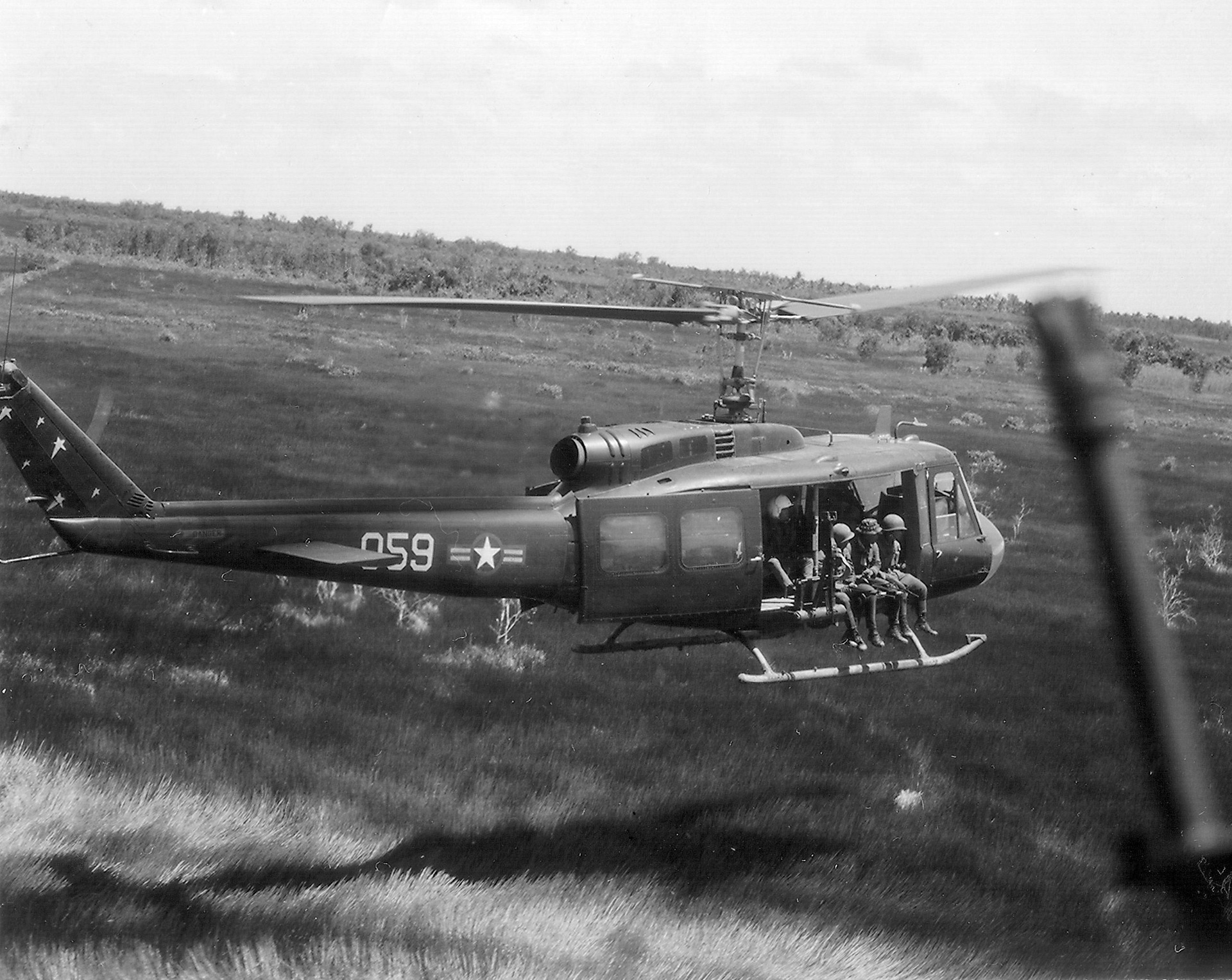
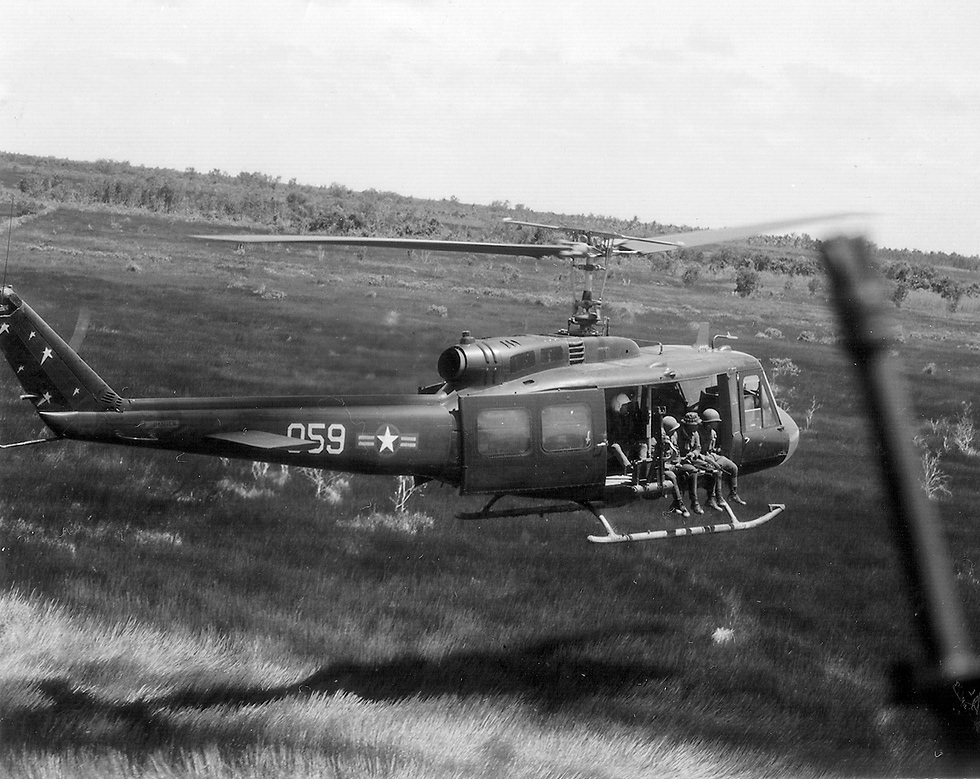
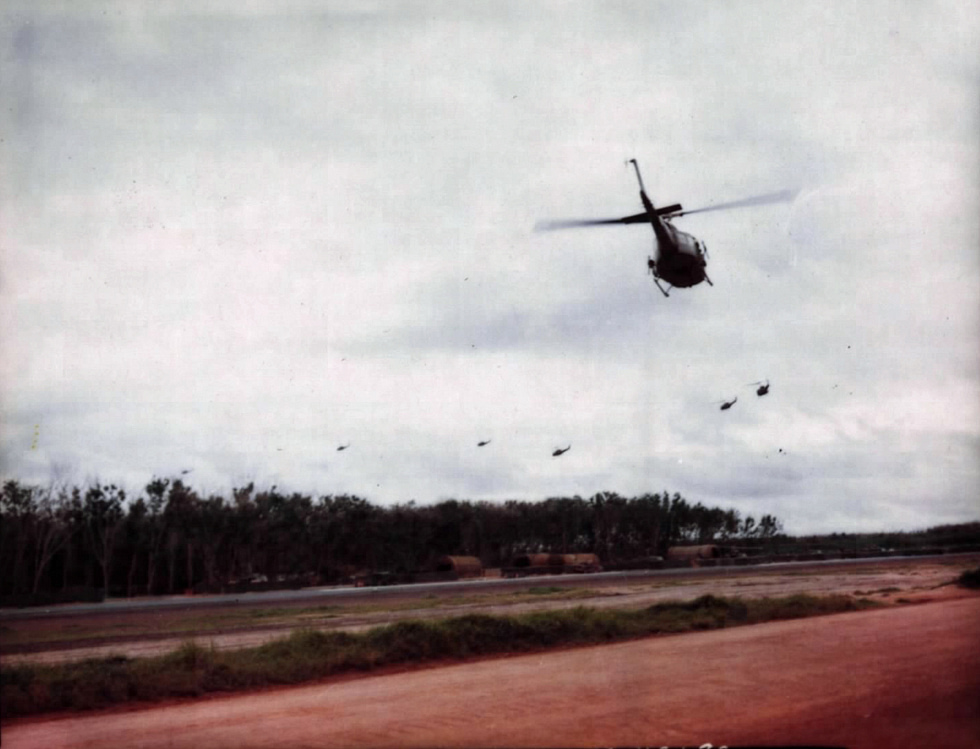
It was Vietnam that made the Huey immortal. The US Army had developed a radical new doctrine — air mobility — in which whole infantry units would be lifted into and out of battle by helicopter, freed from roads and terrain. The Huey was the aircraft that made it real. From 1965 the 1st Cavalry Division (Airmobile) and countless assault helicopter companies flew Hueys into hot landing zones, door gunners hammering away with M60 machine guns as troops leapt from the skids. More than 7,000 Hueys served in the theatre.
If air assault made the Huey famous, medevac made it beloved. Unarmed medical Hueys flying under the radio call-sign “Dustoff” braved fire to lift wounded men straight from the battlefield to surgical hospitals, often within what became known as the golden hour. That speed saved thousands of lives and set a standard for combat casualty evacuation that endures today. The cost was heavy: roughly half of the Hueys that served in Vietnam were lost, and many crews with them.
The Huey never really retired — it multiplied. The short-fuselage UH-1A/B/C (Model 204) gave way to the stretched UH-1D and UH-1H (Model 205), which became the definitive troop-carriers. The twin-engine UH-1N and the civil Bell 212 and 412 spread the design worldwide, and the thoroughly modernised four-blade UH-1Y Venom still serves with the US Marine Corps today. Licence-built in Germany, Italy, Japan and beyond, and flown by dozens of nations, the Huey became one of the most-produced military aircraft in history — and, more than sixty years after that first flight, its descendants are still in the air.
01The Bell UH-1 Huey’s name: how “HU-1” became the most famous nickname in aviation
The Huey owes its name to a designation quirk. When the US Army adopted Bell’s Model 204 it labelled it HU-1 for “Helicopter, Utility, model 1.” Read aloud, “H-U-One” slurred naturally into “Huey,” and the crews who flew and maintained it adopted the name instantly. In 1962 a Department of Defense reorganisation of aircraft designations renamed the type UH-1 and it was officially christened Iroquois, following the Army’s convention of naming its helicopters after Native American peoples — a convention that also gave us the Chinook, Kiowa, Apache and Black Hawk.
But the official name never took. “Huey” was already universal, and Bell embraced it so completely that the name was reportedly cast onto the aircraft’s control pedals. Today “Iroquois” appears mostly in reference books, while “Huey” is understood everywhere from veterans’ reunions to Hollywood. Few aircraft are known so overwhelmingly by an accident of paperwork.
What makes the Bell UH-1 Huey special
The turbine engine that changed everything
The Huey’s heart is the Lycoming T53 turboshaft — roughly 1,100 shp in early models, about 1,400 shp in the definitive UH-1H. A turbine is far lighter and more powerful for its size than the piston engines it replaced, and it transformed what a utility helicopter could carry. That power-to-weight leap is what made a squad of soldiers, or a load of stretchers, a practical payload — and what made air mobility possible in the first place.
A simple two-blade rotor with a signature sound
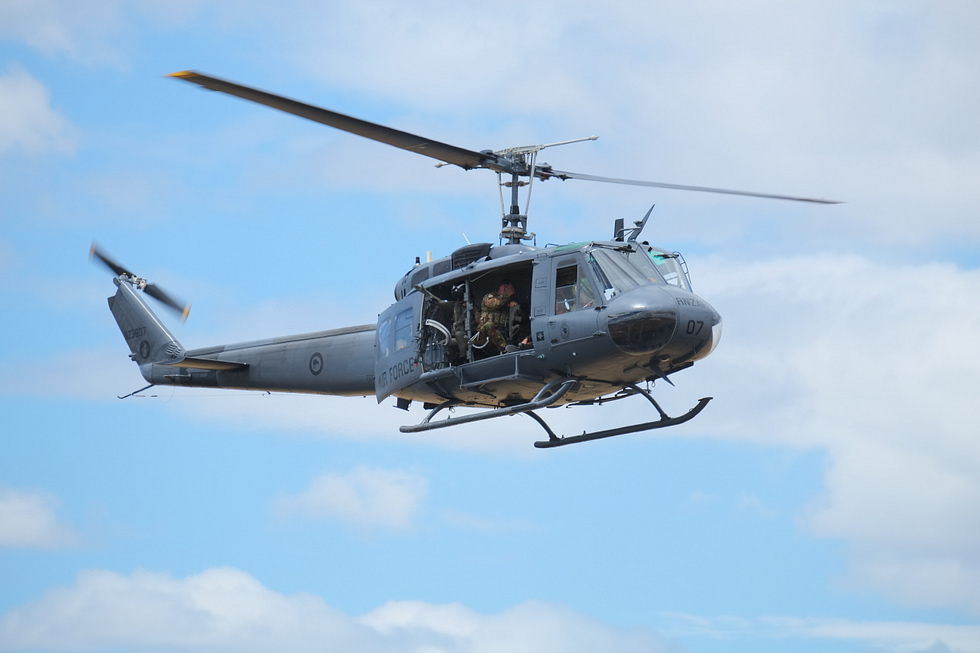
Above the cabin turns a two-blade semi-rigid main rotor on a teetering hub — mechanically simple, rugged and easy to maintain in the field. Its wide, heavy blades give the Huey its unmistakable rhythmic “whop-whop”, produced as each blade slaps the disturbed air of the other. That sound became so identified with the aircraft that it is instantly recognisable to anyone who has seen a Vietnam film.
Wide doors, open sides, endless versatility
The Huey’s cabin was a plain, roomy box with large sliding doors that were usually flown wide open. Troops sat on the floor or the skids and jumped clear in seconds; stretchers slid straight in; door gunners had a clear field of fire. The same airframe could be a troop carrier, an ambulance, a cargo lifter or — bristling with rockets and machine guns — a gunship. That adaptability is why one design filled so many roles.
02The Bell UH-1 Huey as a gunship: rockets, miniguns and the birth of the attack helicopter
Long before the purpose-built AH-1 Cobra arrived, the Army armed the Huey itself. UH-1B and UH-1C gunships — nicknamed “Hogs,” “Frogs” and, with the Navy, “Seawolves” — carried side-mounted rocket pods, forward-firing miniguns and grenade launchers, and door gunners with M60s. They escorted the troop-carrying “slicks” into landing zones and suppressed enemy fire while the infantry disembarked. The gunship Huey proved the concept of the armed helicopter so convincingly that Bell developed the slim, dedicated AH-1 Cobra around the very same engine, transmission and rotor system — making the Huey the direct ancestor of the modern attack helicopter.
03The Bell UH-1 Huey’s engine: why the Lycoming T53 turboshaft was a revolution
The Lycoming (later Honeywell) T53 was one of the first turboshaft engines to enter mass military service, and it defined the Huey. Compared with a piston engine of similar output it was dramatically lighter, more compact and more reliable, and it ran on kerosene rather than volatile avgas. Successive versions raised the power: the T53-L-11 of around 1,100 shp powered many early Hueys, while the T53-L-13 of roughly 1,400 shp gave the UH-1H the muscle to lift a full squad in the heat and altitude of Vietnam. The same engine family went on to power the AH-1 Cobra and the OV-1 Mohawk, and remained in production for decades — a genuine milestone in the turbine age.
04The Bell UH-1 Huey’s variants: from the short 204 to the four-blade UH-1Y Venom
The Huey grew into a sprawling family. The original Model 204 aircraft — UH-1A, UH-1B and UH-1C — had a short cabin and seated fewer troops. Bell then stretched the fuselage into the Model 205, producing the UH-1D and the definitive UH-1H, the classic Vietnam troop-carrier able to seat up to a dozen soldiers. The twin-engine UH-1N (Model 212) added a second engine for safety and power, and the civil Bell 212 и Bell 412 spread the design into commercial, police and offshore work worldwide. The line continues today with the comprehensively rebuilt UH-1Y Venom, which swaps the classic two-blade rotor for a four-blade system and modern avionics and still serves the US Marine Corps. Few aircraft have been developed continuously for so long.
Full Bell UH-1H Huey specifications
Airframe & Performance (UH-1H)
- Экипаж
- 1–2 pilots + crew chief / gunner
- Capacity
- Up to ~11–14 troops, or 6 stretchers
- Fuselage length
- ~12.77 m
- Length (rotors turning)
- ~17.4 m
- Main rotor diameter
- ~14.63 m (48 ft)
- Main rotor disc area
- ~168 m²
- Высота
- ~4.4 m
- Пустой вес
- ~2,365 kg
- Max takeoff weight
- ~4,310 kg (9,500 lb)
- Max speed
- ~220 km/h (135 mph)
- Крейсерская скорость
- ~200 km/h
- Служебный потолок
- ~5,910 m (~19,400 ft)
- Диапазон
- ~510 km
Propulsion, Production & Cost
- Двигатель
- 1 × Lycoming T53-L-13 turboshaft
- Power
- ~1,400 shp (~1,100 shp in early models)
- Main rotor
- Two-blade semi-rigid (teetering)
- Скорость подъема
- ~8.9 m/s (initial)
- First flight
- 20 October 1956 (XH-40)
- Main variants
- UH-1A/B/C (204); UH-1D/H (205); UH-1N; Bell 212/412; UH-1Y
- Operators
- US Army, USMC, USAF, USN + dozens of nations
- Built
- ~16,000 (all variants; commonly cited)
- Unit cost
- No single figure; a UH-1H cost on the order of a few hundred thousand USD in the 1960s–70s
- Cost per flight hour
- Roughly USD 1,000–1,700/hr for legacy UH-1H (estimate; varies widely by source and era)
05The Bell UH-1 Huey’s operating costs: what a legend costs to keep flying
Because the Huey served for decades across many air arms and was frequently rebuilt and re-engined, there is no single authoritative cost-per-flight-hour figure. As a relatively simple single-turbine helicopter it was cheap to run by military standards, and published estimates for the legacy UH-1H in later service commonly fall in the region of USD 1,000–1,700 per flight hour — a fraction of what a modern twin-engine military helicopter costs. Its original flyaway price in the 1960s and 1970s was on the order of a few hundred thousand dollars per airframe, though figures vary by variant, year and how the accounting is done. Today, operating a Huey as a civilian warbird still costs real money in fuel, insurance, overhaul reserves and skilled maintenance, but owners rarely publish exact numbers. Treat any single Huey cost figure as an estimate.
06The Bell UH-1 Huey’s numbers: how many were built and how many served
The Huey is one of the most-produced military aircraft of all time. Total production across all variants and licence-builders is commonly cited at around 16,000 aircraft, though exact totals depend on which sub-types and foreign-built machines are counted. In Vietnam alone, more than 7,000 Hueys served over the course of the war. Losses were severe: authoritative tallies of US helicopter losses in Vietnam put total helicopter losses at roughly 5,000, of which the UH-1 accounted for the largest share — frequently cited at around 3,300 Hueys destroyed. These figures are widely repeated but should be treated as best estimates rather than exact counts.
The Bell UH-1 Huey from prototype to living legend
The requirement
The US Army issues a requirement for a turbine-powered utility and medical evacuation helicopter to replace its piston-engined types. Bell wins with its Model 204.
First flight
The XH-40 prototype flies for the first time on 20 October 1956, powered by the new Lycoming T53 turboshaft.
Enters service as the HU-1
The first production aircraft reach the US Army as the HU-1 — and crews immediately start calling it the “Huey.”
Redesignated UH-1
A Pentagon reorganisation renames the type UH-1 Iroquois, but the Huey nickname is already permanent.
Air mobility in Vietnam
The 1st Cavalry Division (Airmobile) takes the Huey to war, proving the doctrine of lifting entire units into battle by helicopter.
Dustoff and gunships
Unarmed “Dustoff” medevac Hueys save thousands of lives, while armed UH-1B/C gunships escort the troop-carrying “slicks.”
The definitive UH-1H
The stretched, more powerful UH-1H enters service and becomes the classic Vietnam troop-carrier, built in the thousands.
A worldwide workhorse
Licence-built in Germany, Italy and Japan and sold to dozens of nations, the Huey and its Bell 205/212/412 relatives spread across the globe.
The UH-1Y Venom
The comprehensively modernised, four-blade UH-1Y enters US Marine Corps service — keeping the Huey lineage on the front line.
Retired, but still flying
Long retired from US Army service, Hueys fly on with foreign air arms, civil operators, firefighters and warbird owners — and remain among the most recognisable aircraft ever built.
From the flight line: twelve Bell UH-1 Huey stories
A turbine for the Army
Bell answered a 1955 medevac requirement and changed helicopters forever.
Read the full story
How HU-1 became Huey
An accident of military paperwork produced aviation’s most famous nickname.
Read the full story
Lifting armies into battle
The Huey turned a bold theory into a battlefield reality.
Read the full story
The sound of rescue
Unarmed medevac Hueys flew into fire to save the wounded.
Read the full story
Riding the skids
The unarmed troop-carrying Huey was the infantry’s taxi to war.
Read the full story
Hogs, Frogs and Seawolves
Before the Cobra, the Huey armed itself.
Read the full story
A machine gun and an open door
The door gunner became one of the enduring images of Vietnam.
Read the full story
That unmistakable whop
Physics gave the Huey a voice no other aircraft has.
Read the full story
One airframe, a dozen jobs
The plain cabin was the secret to endless adaptability.
Read the full story
A global workhorse
Licence-building sent the Huey to every continent.
Read the full story
Ancestor of the modern fleet
The Huey’s DNA runs through the helicopters that replaced it.
Read the full story
The Huey today
Retired from the US Army, the Huey refuses to disappear.
Read the full story
The Bell UH-1 Huey in pictures
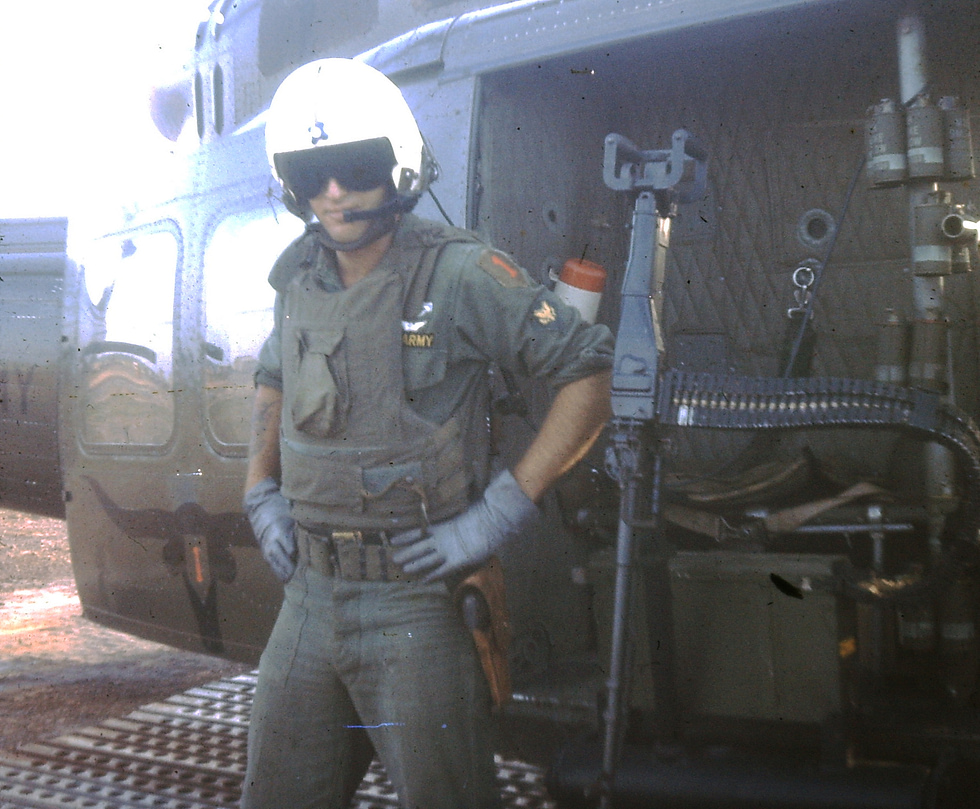
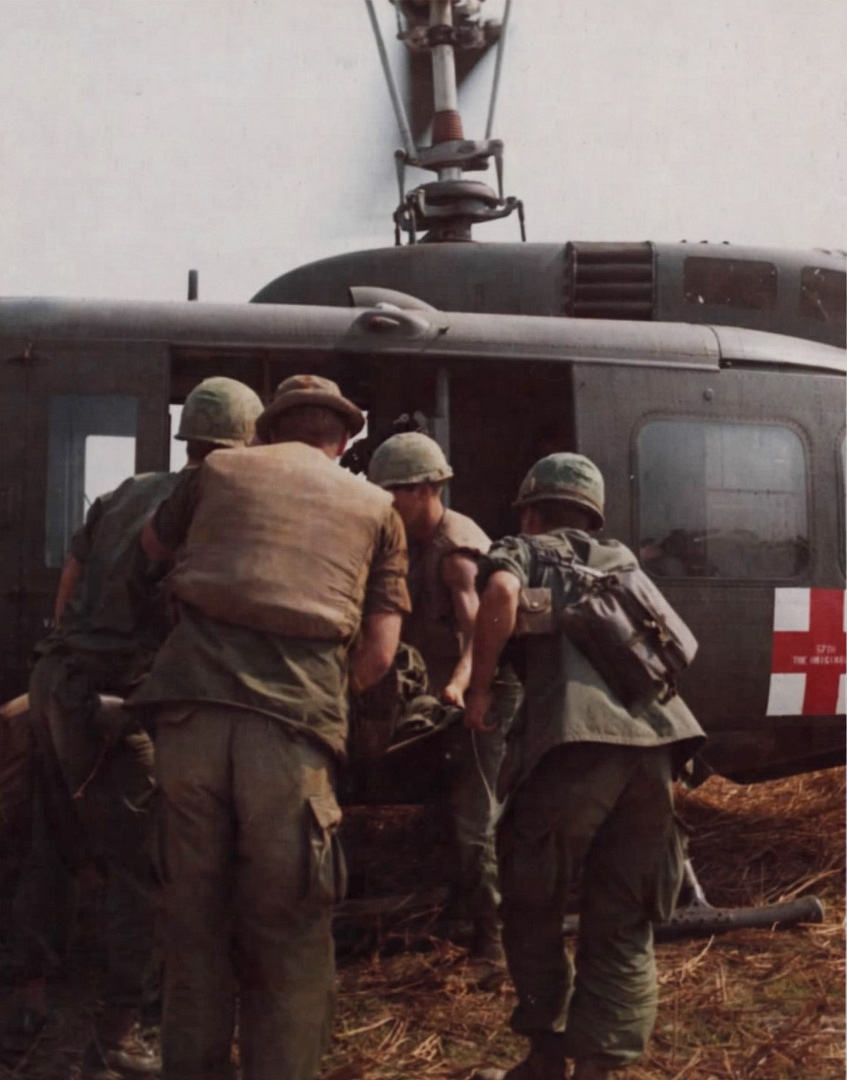
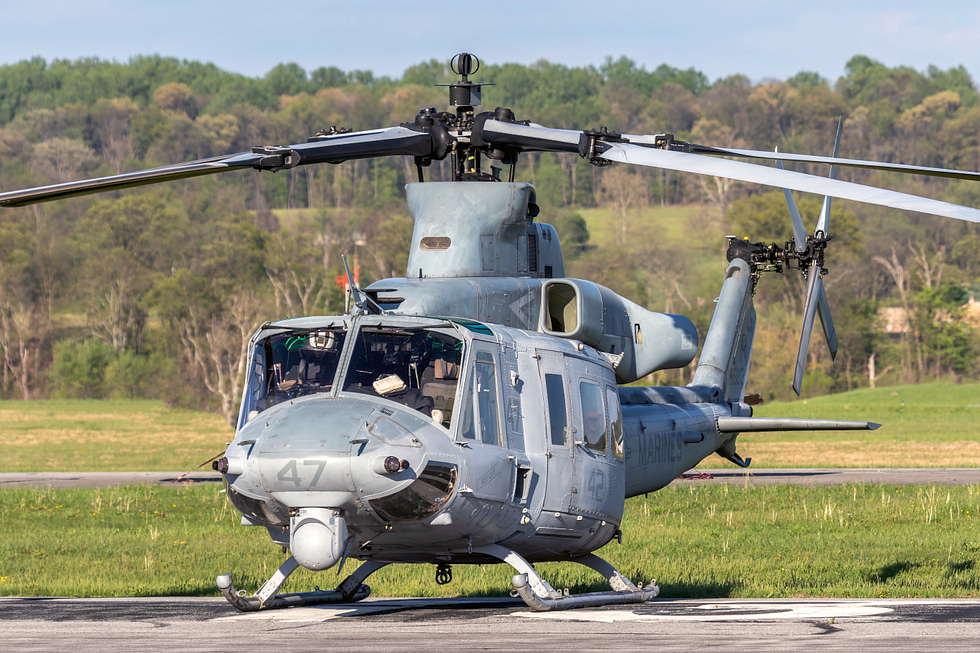
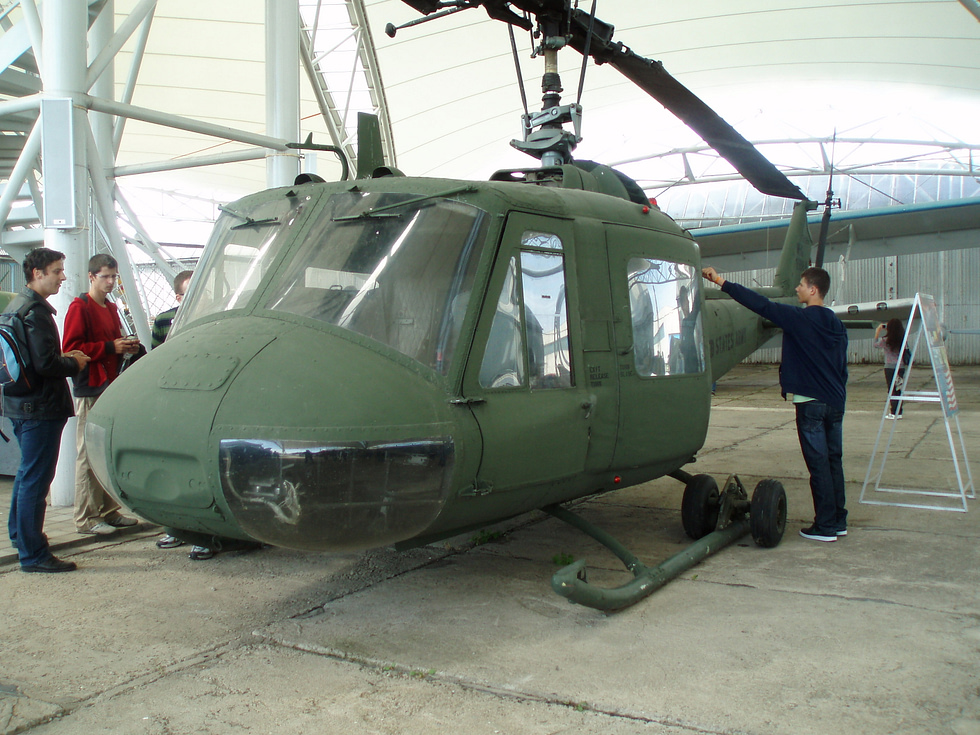
The Bell UH-1 Huey in motion
Flying The Iconic Huey Helicopter During The Vietnam War — from the authoritative Behind The Wings aviation-museum documentary series (Spark / PBS). A close look at how the Huey flew and why it mattered, filmed in a preserved airworthy example.
Where the Bell UH-1 Huey flew
The Bell UH-1 Huey’s record: the workhorse of a war
The Huey was not built to win dogfights — its record is written in troops carried, wounded saved and missions flown. Over the course of the Vietnam War more than 7,000 Hueys served in the theatre, flying millions of sorties in every role from air assault to ambulance. The cost was heavy: roughly half of the Hueys in Vietnam were lost, and the type accounted for the largest single share of US helicopter losses in the war. These figures are widely cited but should be read as best estimates.
See the aircraft that flew alongside it: the Douglas A-1 Skyraider и AC-47 Spooky gunship.
Everything people ask about the Bell UH-1 Huey
Can I fly in a UH-1 Huey?
What is the Bell UH-1 Huey?
Why is it called the Huey?
When did the UH-1 Huey first fly?
What engine does the UH-1 Huey have?
How many UH-1 Hueys were built?
What was the Huey’s role in the Vietnam War?
What is a “Dustoff” Huey?
What are the main UH-1 variants?
Why does the Huey make that distinctive sound?
Is the UH-1 Huey still in service?
What replaced the UH-1 Huey in US Army service?
You can’t fly the UH-1 Huey.
These, you can.
Some legends only live in museums — others are fuelled and waiting. MiGFlug has put civilians in real military jet cockpits since 2004.
 Fly the L-39 AlbatrosThe world’s most-flown jet trainer — aerobatics included
 Fly the F-104 Starfighter“The missile with a man in it”
 Fly the MiG-21The Cold War’s most-produced jet
 Управляйте самолетом T-33 Shooting Star.America’s first jet trainer
 Fly the DH VampireA piece of early jet history
 Fly the S.211Agile Italian jet trainer
 Fly the MB-326The classic Aermacchi jet
 Fly the MiG-15The Soviet legend of the Korean War
Continue the tour
Every fact, checked
- Bell (Bell Flight)The manufacturer’s own history of the Model 204/205 and the UH-1 family.
- U.S. ArmyOfficial Army history of the Huey and Cobra in Vietnam air-mobility operations.
- Smithsonian National Air and Space MuseumCollection entry and history for the Bell UH-1 Iroquois.
- National Museum of the U.S. Air ForceFact sheet on the UH-1 and its Air Force service.
- Vietnam Helicopter Pilots AssociationDetailed tally of US helicopter losses during the Vietnam War.
- Behind The Wings (PBS)Aviation-museum documentary series featuring the airworthy UH-1H.
- Key AeroEstablished aviation reference for UH-1 development, variants and specifications.
- Honeywell / Lycoming T53Background on the T53 turboshaft engine that powered the Huey.