
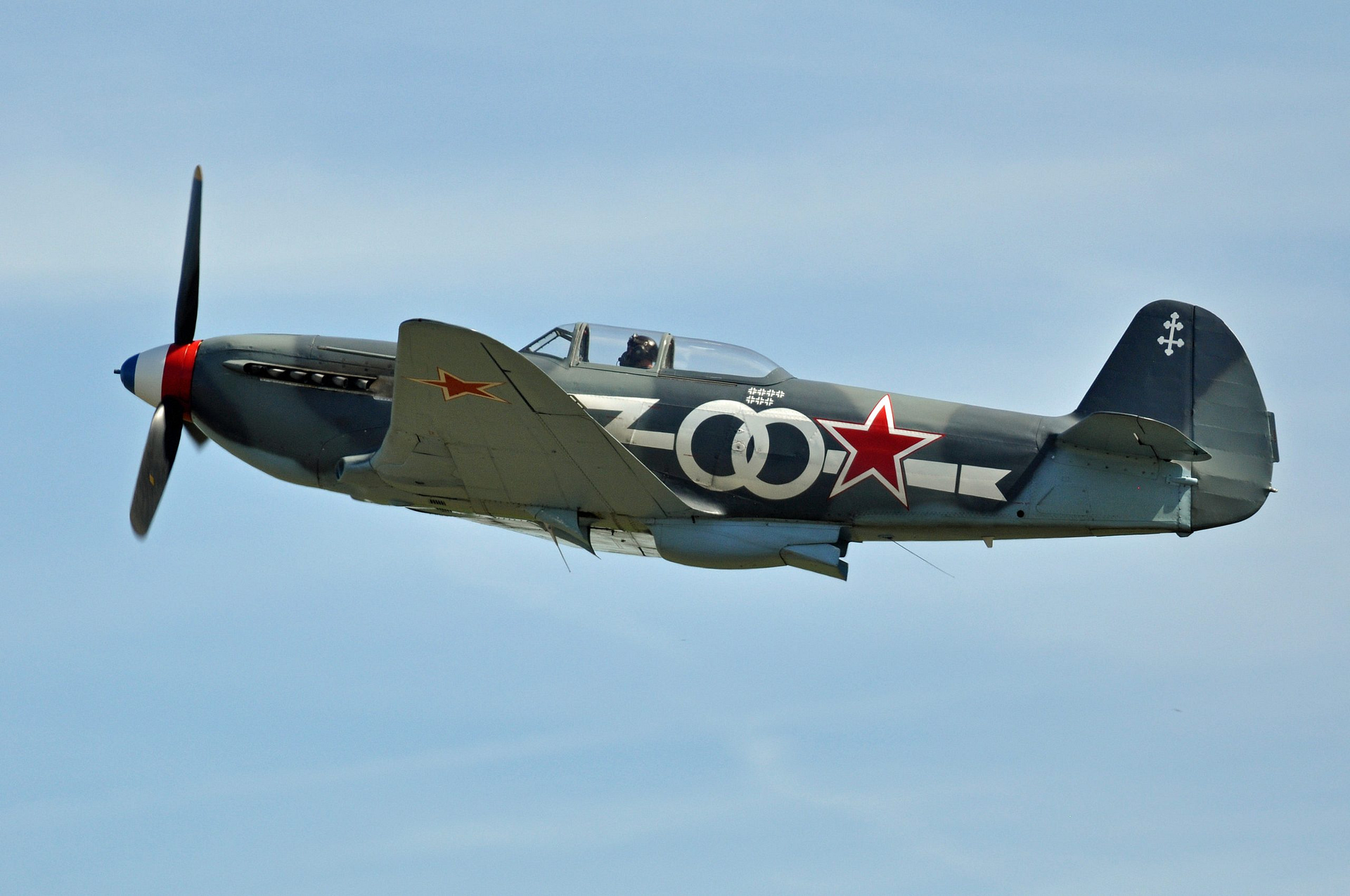
Yakovlev Yak-3
The featherweight of the Eastern Front
A small, light wood-and-metal fighter tuned for low- and medium-altitude air superiority over the Eastern Front — agile, fast-climbing and, by 1944, one of the fighters Luftwaffe pilots were reportedly warned to treat with care down low.
The Yak-3: built light to win the turning fight
The Yakovlev Yak-3 was the end point of a wartime refinement line that ran from the Yak-1 through the lightened Yak-1M. Designed by Alexander Yakovlev’s bureau and reaching front-line units in the summer of 1944, it was one of the smallest and lightest fighters of the Second World War — a deliberate answer to how air combat was actually fought on the Eastern Front, where most fighting happened at low and medium altitude in support of ground offensives.
Rather than chase raw high-altitude speed, the design chased power-to-weight and low wing loading. The airframe was mixed wood and metal — a wooden semi-monocoque fuselage and wooden wings with metal spars and leading edges — a choice driven both by Soviet aluminium shortages and by the goal of a very light machine. Powered by a Klimov VK-105PF2 V-12 of roughly 1,290 hp, the Yak-3 climbed and turned exceptionally well below about 4,000 m. The trade-offs were real: short range and modest performance high up.
Down low it earned respect. A widely repeated account, traceable to aviation historian William Green, holds that German pilots were reportedly advised to avoid combat with clean-nosed Yakovlev fighters below roughly 5,000 m — a claim worth hedging, since it rests on secondhand accounts rather than a surviving order. Armed with a single 20 mm ShVAK cannon firing through the propeller hub and two 12.7 mm machine guns, the Yak-3 was flown most famously by the Free French Normandie-Niemen regiment. It should not be confused with the larger, heavier, longer-ranged Yak-9. About 4,848 were built before wartime production ended in 1946.
01The Yak-3’s low-altitude reputation: what the “avoid combat below 5,000 m” story really says
The idea that the Luftwaffe issued a standing order to avoid dogfighting the Yak-3 at low level is one of the type’s most-repeated claims. Its clearest traceable source is the British aviation historian William Green, whose 1957 Famous Fighters of the Second World War reports a German instruction to avoid combat below about 5,000 m with Yakovlev fighters lacking an oil-cooler intake under the nose — a recognition feature that distinguished the clean-nosed Yak-3 from earlier Yaks.
It is worth treating carefully. No specific dated order, issuing officer or unit has surfaced in accessible sources; the claim rests on a respected historian’s secondhand account rather than a reproduced document, and the altitude is sometimes loosely given as 4,000 m. What is not in doubt is the underlying reason for the reputation: at low and medium altitude the Yak-3’s light weight and low wing loading made it a genuinely dangerous opponent for the Bf 109G and Fw 190A.
What makes the Yak-3 special
Featherweight agility and climb
С low wing loading and a strong power-to-weight ratio, the Yak-3 out-turned and out-climbed the Bf 109G and Fw 190A at the altitudes where the Eastern Front was fought. It reportedly reached 5,000 m in around four and a half minutes. Above roughly 4,000 m its advantage faded, but below it the aircraft was in its element.
Wood, metal and wartime pragmatism
The Yak-3 was built from a wooden fuselage and wooden wings with metal spars and leading edges — a response to Soviet aluminium shortages and the drive for minimum weight. It was simple to build in vast numbers and to repair at rough front-line strips. The price was a short range and, early on, some wing-skin durability concerns.
Firepower for its weight
Standard armament was one 20 mm ShVAK cannon firing through the propeller hub and two 12.7 mm Berezin UBS machine guns in the cowling — concentrated in the nose for accuracy and a strong firepower-to-weight ratio in so light an airframe. The post-war Yak-3P went further, replacing the guns with three 20 mm cannon.
02The Yak-3’s mixed wood-and-metal airframe: why the Soviets built it light
Where American and British designers could lean on abundant aluminium, Soviet industry could not — and Yakovlev turned the constraint into a design philosophy. The Yak-3’s fuselage was a wooden semi-monocoque and its wings were wood with metal spars and leading edges, keeping the empty weight around 2,100 kg. Light weight bought agility and climb; it also meant the airframe carried little fuel, giving the type a genuinely short combat radius. Early production also had to solve wing-skin bonding problems before the aircraft settled into reliable front-line service.
03The Yak-3 versus the Yak-9: two Yakovlev fighters, two very different jobs
The Yak-3 and Yak-9 are often confused: they share the Yakovlev lineage, a similar planform and the same Klimov VK-105 engine family. But they were built for different jobs. The Yak-3 was the small, light, short-ranged dogfighter optimised for the turning fight at low altitude. The Yak-9 was larger, heavier and longer-ranged, a versatile multirole fighter produced in far greater numbers (~16,700 versus ~4,848) and fielded in heavy-hitting sub-types such as the 37 mm-armed Yak-9T. Same engine family, very different missions.
Full Yak-3 specifications
Airframe & Performance
- Экипаж
- 1
- Длина
- ~8.5 m
- Размах крыльев
- 9.2 m
- Высота
- ~2.4 m
- Зона крыла
- ~14.85 m²
- Пустой вес
- ~2,105 kg
- Max takeoff weight
- ~2,700 kg
- Max speed
- ~650 km/h at ~4,000 m
- Служебный потолок
- ~10,700 m (sources vary)
- Диапазон
- ~550–650 km (short-ranged)
- Climb
- ~5,000 m in ~4 min 30 s
Propulsion, Armament & Production
- Двигатель
- 1 × Klimov VK-105PF2 V-12
- Power
- ~1,290 hp (~957 kW)
- Вооружение
- 1 × 20 mm ShVAK + 2 × 12.7 mm UBS
- First flight
- 1944 (Yak-1M prototype 1943)
- Introduced
- Summer 1944
- Built
- ~4,848 (1944–1946)
- Unit cost
- No public market price (state production)
- Cost per flight hour
- No reliable public figure
04The Yak-3’s cost: why no dollar price exists
The Yak-3 was a Soviet state product built for the war effort, never sold on an open market, so there is no meaningful flyaway unit price or cost-per-flight-hour figure in the public record. What made it economically attractive to the USSR is clear enough: its wood-and-metal construction used little scarce aluminium and lent itself to rapid, large-scale manufacture. Any precise dollar figure attached to a wartime Yak-3 today is, in practice, an estimate. The one place real prices do appear is the modern warbird market, where new-build Yak-3M replicas change hands for figures in the hundreds of thousands to low millions of dollars.
From wartime lightweight to airshow warbird
The lightweight prototype
The lightened Yak-1M “Moskit” flies — a cleaned-up, smaller-winged Yak-1 that becomes the basis for the Yak-3.
Series production
The production Yak-3 with the Klimov VK-105PF2 enters manufacture early in the year.
Combat debut
The type reaches the front — among the first units was the 91st IAP — during the great Soviet summer offensive, Operation Bagration.
Normandie-Niemen re-equips
The Free French regiment on the Eastern Front converts fully to the Yak-3.
Two days over East Prussia
On 15–16 October, Normandie-Niemen pilots claimed a large number of German aircraft for light losses — figures commonly cited but hard to verify precisely.
The last victory
The regiment’s final aerial claim is scored near Königsberg on 12 April 1945.
The Yaks fly home
Allowed by Stalin to keep 40 aircraft, the French fly their Yak-3s to France; 37 reach Le Bourget, Paris.
Production ends
Wartime manufacture closes at about 4,848 aircraft; the all-cannon Yak-3P continues briefly afterward.
New-build warbirds
Yakovlev builds new Yak-3M replicas with American Allison engines for collectors; several remain airworthy today.
Twelve Yak-3 stories
From the Yak-1 to a featherweight
The Yak-3 grew out of the lightened Yak-1M “Moskit” prototype of 1943.
Read the full story
Wood, metal and shortage
Its wings were wood with metal leading edges — a deliberate response to Soviet aluminium shortages.
Read the full story
The “avoid combat low” story
A reported German instruction, cited by historian William Green, warned against dogfighting clean-nosed Yaks low down.
Read the full story
Summer 1944
The Yak-3 entered combat during the Soviet summer offensive of 1944.
Read the full story
French aces on the Eastern Front
The Free French regiment fought the whole war on the Soviet-German front and re-equipped with Yak-3s in 1944.
Read the full story
Two days in October 1944
Over 15–16 October 1944 the regiment claimed a string of victories in the East Prussian fighting.
Read the full story
Marcel Albert
Flying the Yak, Marcel Albert became the top French ace of the Eastern Front.
Read the full story
Königsberg, April 1945
The regiment’s final victory was scored on 12 April 1945 — and its victor was killed the same day.
Read the full story
Stalin lets them keep the Yaks
In gratitude, Stalin allowed the French to keep 40 Yak-3s and fly them home.
Read the full story
37 Yaks land at Le Bourget
On 20 June 1945 the returning Yak-3s reached Paris and entered French national legend.
Read the full story
A Yak-3 at Le Bourget
One of the returning aircraft survives in the Musée de l’Air et de l’Espace.
Read the full story
New Yak-3Ms since 1991
From 1991 Yakovlev built new Allison-engined Yak-3M replicas for collectors.
Read the full story
The Yak-3 in pictures
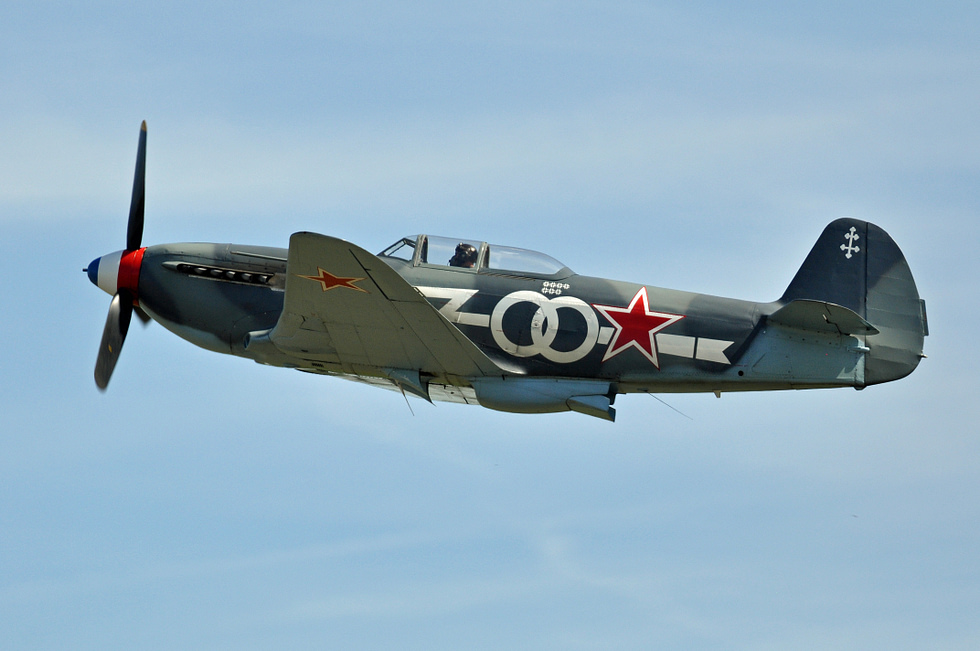
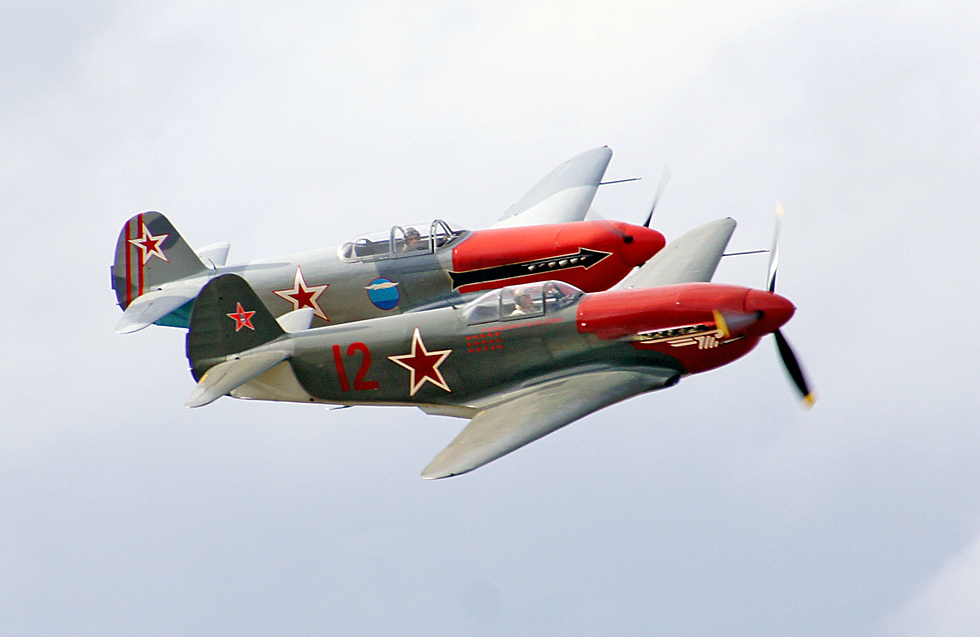
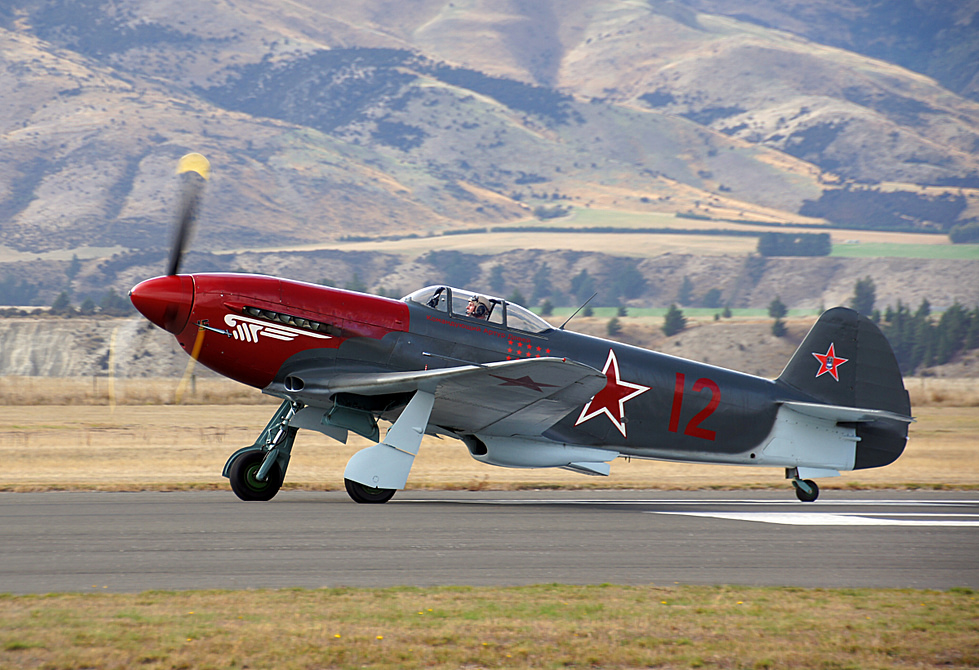
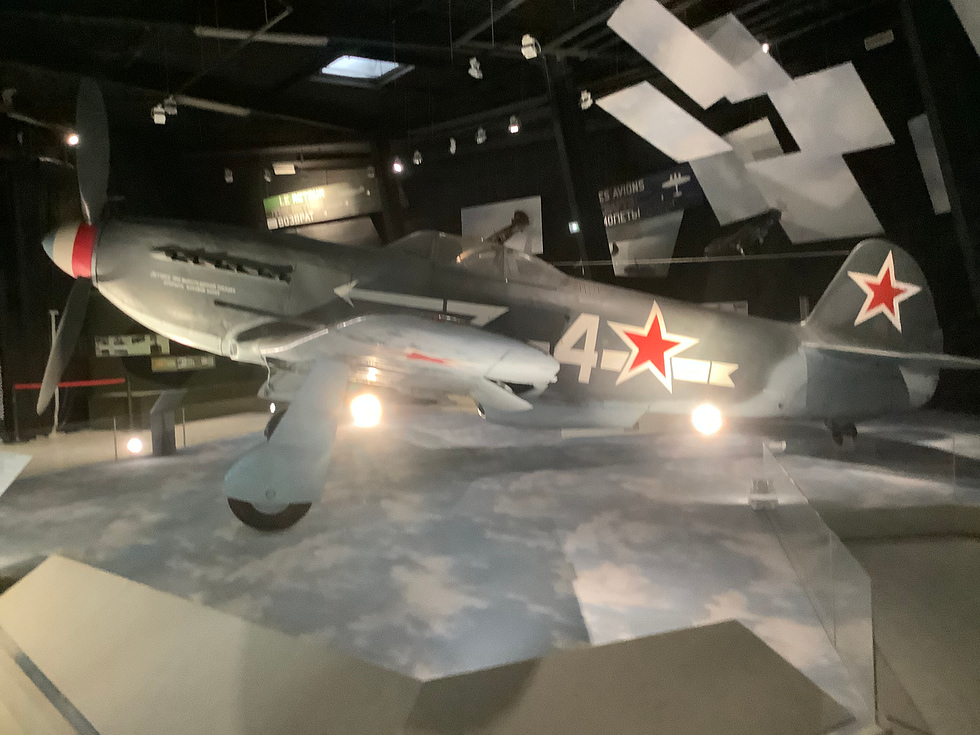
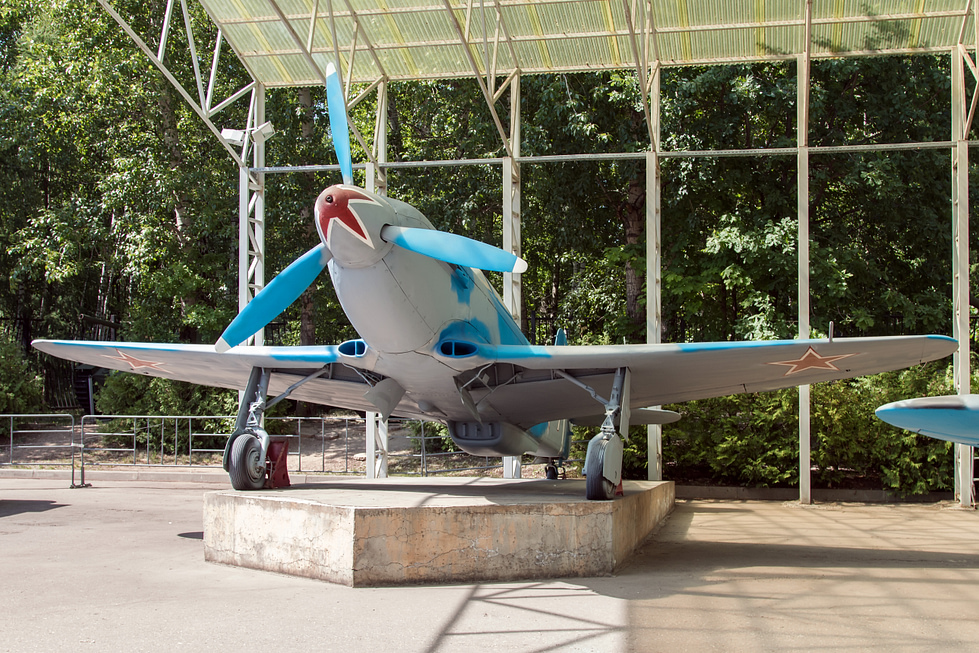
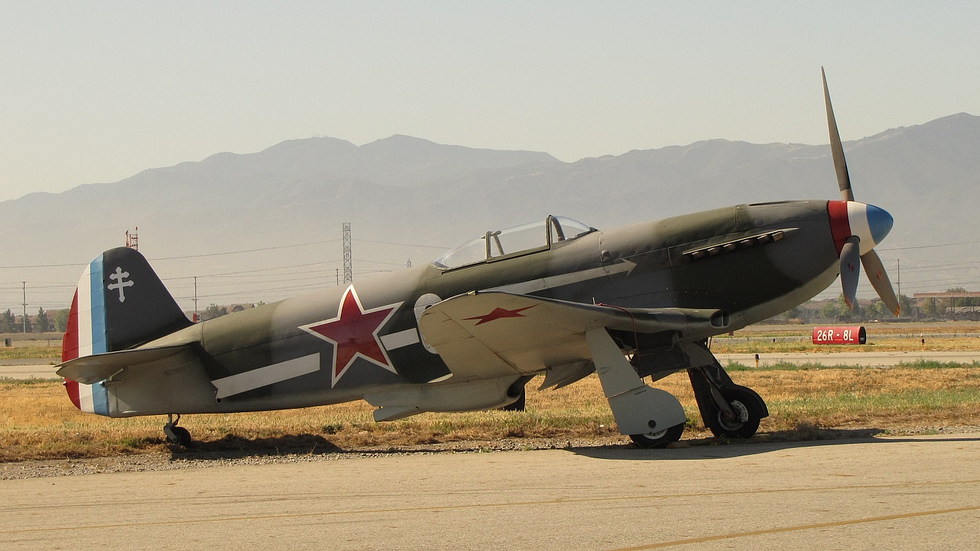
The Yak-3 in motion
A featured Yak-3 video is coming soon. In the meantime, the photo gallery above shows both wartime-preserved airframes and the Allison-powered Yak-3M warbirds that keep the type flying.
Where the Yak-3 flew
The record the Yak-3 earned
The Yak-3’s reputation rests less on a single tally than on where and how it fought: the low-altitude turning battles of 1944–45, where its climb and agility told. Its most-quoted successes belong to the Free French Normandie-Niemen regiment, whose figures are widely cited but, like most wartime claims, best read with caution.
Compare the combat record of every military aircraft. Figures as of July 2026.
Everything people ask about the Yak-3
Can I fly in a Yak-3?
How fast was the Yak-3?
What made the Yak-3 so good in a dogfight?
Were German pilots really told to avoid it?
What is the difference between the Yak-3 and the Yak-9?
Who were the Normandie-Niemen?
How many Yak-3s were built?
Are there any flying Yak-3s today?
You can’t fly the Yak-3.
These, you can.
Some legends only live in museums — others are fuelled and waiting. MiGFlug has put civilians in real military jet cockpits since 2004.
 Fly the L-39 AlbatrosThe world’s most-flown jet trainer — aerobatics included
 Fly the F-104 Starfighter“The missile with a man in it”
 Fly the MiG-21The Cold War’s most-produced jet
 Управляйте самолетом T-33 Shooting Star.America’s first jet trainer
 Fly the DH VampireA piece of early jet history
 Fly the S.211Agile Italian jet trainer
 Fly the MB-326The classic Aermacchi jet
 Fly the MiG-15The Soviet legend of the Korean War
Continue the tour
Every fact, checked
- Musée de l’Air et de l’Espace — Yakovlev Yak-3France’s national air museum; holds an original Normandie-Niemen aircraft (its English spec page carries some numeric typos).
- Smithsonian Air & Space — The French-Russian ConnectionDetailed account of Normandie-Niemen and the 40/37 return flight, with pilot quotes.
- Military Aviation Museum (Virginia Beach)Operates an airworthy new-build Yak-3M; good on the Allison-engine replica story.
- Warfare History NetworkNormandie-Niemen aces, dated combat episodes and victory totals.
- flugzeuginfo.net — Yak-3 dataConsensus technical figures for length, weight, speed and production.
- Old Machine Press — Yak-3 VK-108Rigorous technical history, useful for why the 720 km/h figure is misattributed.
- Skytamer — Yakovlev Yak-3MThe 1991-onward new-production replicas and current airworthy examples.
- William Green, Famous Fighters of the Second World War, Vol. 2 (Macdonald, 1957)Print reference; the traceable origin of the “avoid combat below 5,000 m” claim.