
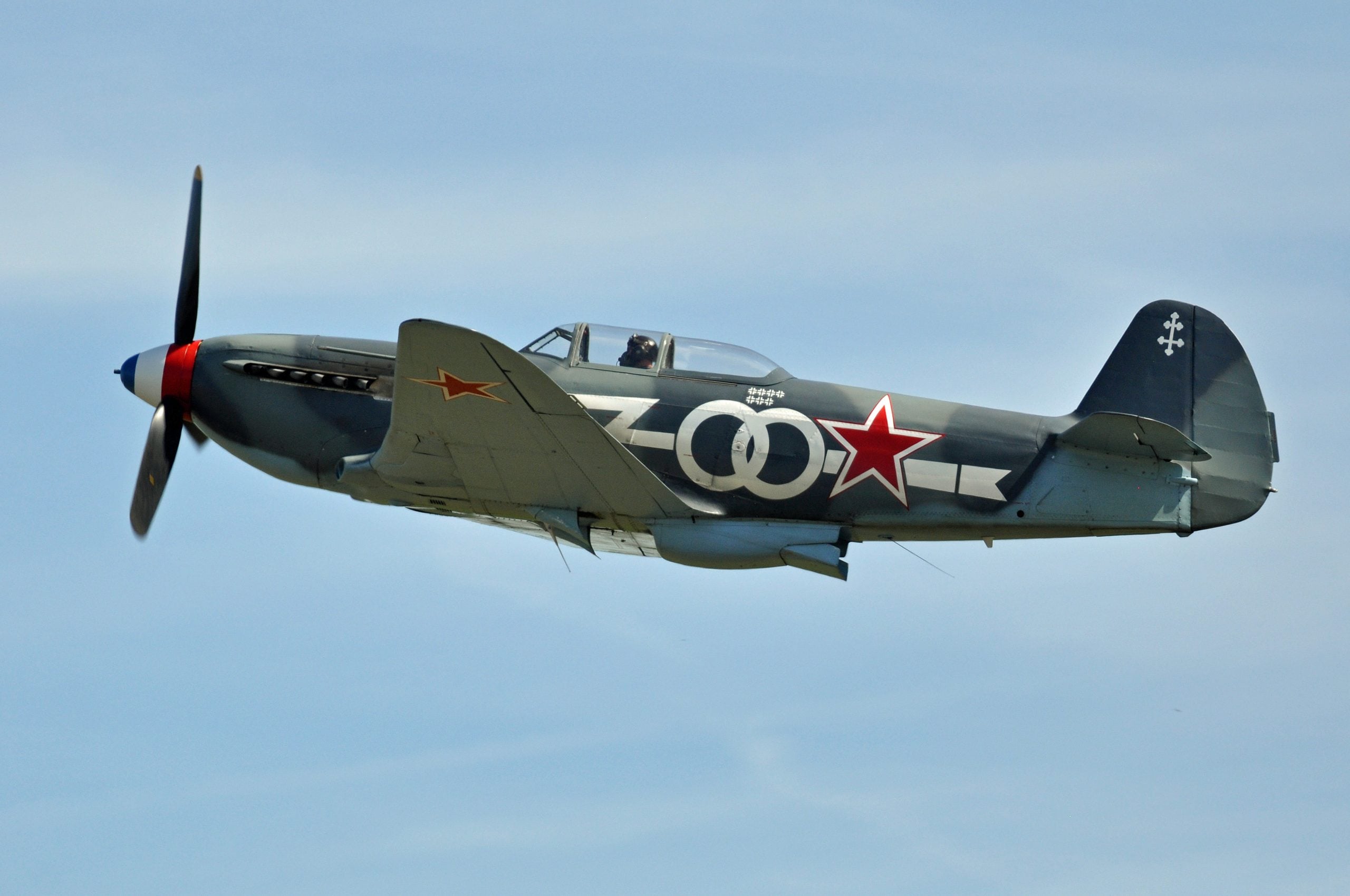
Yakovlev Yak-3
The featherweight of the Eastern Front
A small, light wood-and-metal fighter tuned for low- and medium-altitude air superiority over the Eastern Front — agile, fast-climbing and, by 1944, one of the fighters Luftwaffe pilots were reportedly warned to treat with care down low.
The Yak-3: built light to win the turning fight
The Yakovlev Yak-3 was the end point of a wartime refinement line that ran from the Yak-1 through the lightened Yak-1M. Designed by Alexander Yakovlev’s bureau and reaching front-line units in the summer of 1944, it was one of the smallest and lightest fighters of the Second World War — a deliberate answer to how air combat was actually fought on the Eastern Front, where most fighting happened at low and medium altitude in support of ground offensives.
Rather than chase raw high-altitude speed, the design chased power-to-weight and low wing loading. The airframe was mixed wood and metal — a wooden semi-monocoque fuselage and wooden wings with metal spars and leading edges — a choice driven both by Soviet aluminium shortages and by the goal of a very light machine. Powered by a Klimov VK-105PF2 V-12 of roughly 1,290 hp, the Yak-3 climbed and turned exceptionally well below about 4,000 m. The trade-offs were real: short range and modest performance high up.
Down low it earned respect. A widely repeated account, traceable to aviation historian William Green, holds that German pilots were reportedly advised to avoid combat with clean-nosed Yakovlev fighters below roughly 5,000 m — a claim worth hedging, since it rests on secondhand accounts rather than a surviving order. Armed with a single 20 mm ShVAK cannon firing through the propeller hub and two 12.7 mm machine guns, the Yak-3 was flown most famously by the Free French Normandie-Niemen regiment. It should not be confused with the larger, heavier, longer-ranged Yak-9. About 4,848 were built before wartime production ended in 1946.
01The Yak-3’s low-altitude reputation: what the “avoid combat below 5,000 m” story really says
The idea that the Luftwaffe issued a standing order to avoid dogfighting the Yak-3 at low level is one of the type’s most-repeated claims. Its clearest traceable source is the British aviation historian William Green, whose 1957 Famous Fighters of the Second World War reports a German instruction to avoid combat below about 5,000 m with Yakovlev fighters lacking an oil-cooler intake under the nose — a recognition feature that distinguished the clean-nosed Yak-3 from earlier Yaks.
It is worth treating carefully. No specific dated order, issuing officer or unit has surfaced in accessible sources; the claim rests on a respected historian’s secondhand account rather than a reproduced document, and the altitude is sometimes loosely given as 4,000 m. What is not in doubt is the underlying reason for the reputation: at low and medium altitude the Yak-3’s light weight and low wing loading made it a genuinely dangerous opponent for the Bf 109G and Fw 190A.
What makes the Yak-3 special
Featherweight agility and climb
With a low wing loading and a strong power-to-weight ratio, the Yak-3 out-turned and out-climbed the Bf 109G and Fw 190A at the altitudes where the Eastern Front was fought. It reportedly reached 5,000 m in around four and a half minutes. Above roughly 4,000 m its advantage faded, but below it the aircraft was in its element.
Wood, metal and wartime pragmatism
The Yak-3 was built from a wooden fuselage and wooden wings with metal spars and leading edges — a response to Soviet aluminium shortages and the drive for minimum weight. It was simple to build in vast numbers and to repair at rough front-line strips. The price was a short range and, early on, some wing-skin durability concerns.
Firepower for its weight
Standard armament was one 20 mm ShVAK cannon firing through the propeller hub and two 12.7 mm Berezin UBS machine guns in the cowling — concentrated in the nose for accuracy and a strong firepower-to-weight ratio in so light an airframe. The post-war Yak-3P went further, replacing the guns with three 20 mm cannon.
02The Yak-3’s mixed wood-and-metal airframe: why the Soviets built it light
Where American and British designers could lean on abundant aluminium, Soviet industry could not — and Yakovlev turned the constraint into a design philosophy. The Yak-3’s fuselage was a wooden semi-monocoque and its wings were wood with metal spars and leading edges, keeping the empty weight around 2,100 kg. Light weight bought agility and climb; it also meant the airframe carried little fuel, giving the type a genuinely short combat radius. Early production also had to solve wing-skin bonding problems before the aircraft settled into reliable front-line service.
03The Yak-3 versus the Yak-9: two Yakovlev fighters, two very different jobs
The Yak-3 and Yak-9 are often confused: they share the Yakovlev lineage, a similar planform and the same Klimov VK-105 engine family. But they were built for different jobs. The Yak-3 was the small, light, short-ranged dogfighter optimised for the turning fight at low altitude. The Yak-9 was larger, heavier and longer-ranged, a versatile multirole fighter produced in far greater numbers (~16,700 versus ~4,848) and fielded in heavy-hitting sub-types such as the 37 mm-armed Yak-9T. Same engine family, very different missions.
Full Yak-3 specifications
Baseline note: the figures below describe the standard series Yak-3 of 1944 as built at Saratov Factory No. 292 — Klimov VK-105PF2, one 20 mm ShVAK through the propeller hub and two 12.7 mm UBS over the cowling, no external stores of any kind. Deltas for the first 197 aircraft, the all-cannon Yak-3P, the VK-107A and VK-108 machines and the German fighters it was built to beat are in grey. Three cautions apply to every Yak-3 number in print. First, this aeroplane was optimised for one narrow band of the sky and its data sheet says so: quote its speed without quoting the altitude and you have said almost nothing. Second, the weights. Soviet acceptance figures were flown on hand-finished aircraft that had been waxed and polished at the factory, a genuine production step and worth several km/h; a squadron machine after a winter in the open was not that aeroplane. Third, and this is the one most often got wrong: the Yak-3 did not turn well because it had a light wing loading. It did not. Cutting the wing from 17.15 to 14.85 m² while saving only about 230 kg pushed wing loading up from roughly 168 kg/m² on a Yak-1b to about 178 kg/m². What the Yak-3 actually had was the best power loading and the lowest drag of any Soviet fighter in service, which is why it out-climbed and out-accelerated its opposition and could hold a hard turn without bleeding speed. The small wing bought roll rate and drag reduction, not turn radius. Sources that credit its manoeuvrability to a big wing have the physics backwards.
Dimensions & weights
- Crew
- 1 (the Yak-3UTI trainer of 1945 seated two, and became the Yak-11)
- Length
- 8.50 m (27 ft 11 in) — five centimetres shorter than a Yak-9D and nearly a metre shorter than a P-51D
- Wingspan
- 9.20 m (30 ft 2 in), against 10.00 m on the Yak-1 and 9.74 m on the Yak-9. The clipping was deliberate and repeated: every Yak generation lost span
- Height
- 2.39 m (7 ft 10 in), tail down — low enough that ground crews could reach the cowling fasteners without a stand
- Wing area
- 14.85 m² (159.8 sq ft), cut from the 17.15 m² (184.6 sq ft) carried by every Yak-1, Yak-7 and Yak-9. This single change is the Yak-3
- Aerofoil
- Clark YH, 14 per cent at the root thinning outboard — the same section Yakovlev had used since the I-26 of 1940, so the new wing was a smaller version of a known quantity rather than a new aerodynamic risk
- Structure
- Welded chrome-molybdenum steel-tube fuselage truss with duralumin panels forward and plywood covering aft, replacing the fabric of the Yak-1; two-spar wooden wing with duralumin spar booms and webs, plywood skin, one piece through the fuselage. The wing was still wood, and that decision governs half the entries below
- Empty weight
- 2,105 kg (4,641 lb); Russian factory tables more often print 2,123 kg (4,681 lb) for the same aircraft
- Normal take-off weight
- 2,650 kg (5,842 lb) — against 2,883 kg (6,356 lb) for a Yak-1b and 3,117 kg (6,872 lb) for a Yak-9D. The lightest major single-engine fighter flown by any combatant in 1944
- Maximum take-off weight
- 2,697 kg (5,946 lb). There was no overload case worth the name, because there was nothing to hang on it
- Wing loading
- 178 kg/m² (36.5 lb/sq ft) at normal weight, 182 kg/m² (37.2 lb/sq ft) at maximum. Higher than the Yak-1b it replaced, and almost identical to a Bf 109G-6. The turn advantage came from elsewhere
- Power loading
- 2.76 kg/kW (4.53 lb/hp) — against 3.54 kg/kW (5.82 lb/hp) for a Yak-9D and about 3.2 kg/kW for a Bf 109G-6. This is the number that wins the argument, and it was bought entirely with a tape measure and a set of scales
- Internal fuel
- ~350 litres (~77 imp gal, ~92 US gal, about 255 kg) in wing tanks, cut back from the 408 litres of a Yak-1. Figures between 350 and 370 litres appear in the literature and the difference is not resolved. No Yak-3 of any mark carried a drop tank
- For comparison
- Bf 109G-6 at 3,196 kg (7,046 lb), Spitfire LF Mk IX at about 3,400 kg (7,500 lb), P-51D at 5,262 kg (11,600 lb) loaded. The Mustang weighed as much as two Yak-3s, and flew a mission the Yak-3 could not have attempted
Performance
- Maximum speed
- 646 km/h (401 mph) at 4,100 m (13,450 ft). Russian and German tables also give 655 km/h (407 mph) at 3,100 m (10,170 ft) and 646 km/h at 4,650 m (15,260 ft); the spread reflects different aircraft and different boost settings rather than an unresolved dispute
- Maximum speed, sea level
- 567 km/h (352 mph) — about 34 km/h faster on the deck than a Yak-9D, which is where Eastern Front fights were actually decided
- Rate of climb
- 18.5 m/s (3,640 ft/min) at low level. A Yak-9D managed 13.7 m/s. Nothing else in Soviet service climbed like this, and very little in German service did either
- Time to 5,000 m
- 4 min 30 s (16,400 ft), against 6.1 min for a Yak-9D and roughly 4.8 min for a Bf 109G-6
- Service ceiling
- 10,400 m (34,100 ft); some tables give 10,700 m (35,100 ft). The number is close to meaningless: above about 5,000 m (16,400 ft) the VK-105PF2 was out of breath and the Yak-3 became an ordinary aeroplane
- Time for a full 360° turn
- 17 s at 1,000 m (3,300 ft) — against 19 to 20 s for a Yak-9D and about 20 to 21 s for a Bf 109G-6. Three seconds is a firing position
- Combat range
- 550 km (340 miles). Other tables give 648 km (403 miles) and 885 km (550 miles) for maximum range at economical cruise; the low figure is the one that matters, because it is the one a pilot could use and still fight
- Endurance
- About one hour at combat settings. A Yak-9D could stay up for two and a half. The Yak-3 was a fighter you launched when you already knew where the enemy was
- Take-off run
- 345 m (1,132 ft) at normal weight — short enough for the rough forward strips the VVS was operating from by 1944, which was itself a design requirement
- Landing run
- 580 m (1,900 ft). Long relative to the take-off run, because a clean, light, low-drag aeroplane does not want to stop flying
- Yak-3 (VK-107A), for comparison
- 720 km/h (447 mph) at 5,750 m (18,860 ft) on trials, in an all-metal airframe. On paper the fastest Soviet fighter of the war; in practice 48 aircraft, chronic overheating and a decision to send the engines to the Yak-9U instead
- Yak-3 (VK-108), for comparison
- 745 km/h (463 mph) — the highest speed reached by any Soviet piston-engine aeroplane. One prototype, an engine with a thermal regime its designers never tamed, and no production
- For comparison: Bf 109G-6 and Fw 190A-8
- 640 km/h (398 mph) at 6,600 m and 656 km/h (408 mph) at 6,000 m. Both were faster than a Yak-3 above 6,000 m and both had far heavier guns; below 4,000 m the Yak-3 out-climbed and out-turned them both and could disengage upwards, which no Soviet fighter had reliably been able to do before
Propulsion & systems
- Engine
- 1 × Klimov VK-105PF2, 12-cylinder 60° vee, liquid-cooled — the last and most highly boosted development of the licence-descended Hispano-Suiza 12Y that had powered every Yakovlev fighter since 1940. Manifold pressure was raised from 1,050 to 1,100 mmHg, worth 5 to 6 km/h at low level and 15 m off the take-off run
- Take-off power
- 960 kW (1,290 hp)
- Rated power
- 924 kW (1,240 hp) at 700 m (2,300 ft) in first supercharger speed and 880 kW (1,180 hp) at 2,700 m (8,900 ft) in second; Russian tables vary by a few tens of horsepower depending on the boost schedule assumed
- Displacement
- 35.1 litres (2,142 cu in); bore 148 mm, stroke 170 mm, compression 7.0:1, 95-octane petrol. Twenty-five per cent larger than a Merlin and roughly two-thirds its power — the whole Soviet engine problem in one line
- Engine dry weight
- About 600 kg (1,323 lb) — nearly a quarter of the loaded aeroplane. Yakovlev could not make the engine lighter, so he made everything else lighter instead
- Induction
- Two-speed single-stage centrifugal supercharger, carburettor fed, and therefore intolerant of negative g. A Yak-3 pilot could not bunt away from an attack; he had to roll first, which cost time a Fw 190 pilot did not have to spend
- Propeller
- Three-blade constant-speed unit of 3.00 m (9 ft 10 in) diameter, turning clockwise seen from behind; most Russian sources name the VISh-105SV, some the VISh-61P carried by the Yak-1 and Yak-9
- Cooling — the change everyone could see
- The oil coolers were taken out of the chin and buried in the wing roots, fed by leading-edge intakes, and the water radiator was moved aft into a deeper, better-faired ventral duct. The drag saving was real and the recognition consequence was greater: the Yak-3 has a clean, uninterrupted nose with nothing hanging under it, and that silhouette is what the Luftwaffe warning of 1944 was written about
- Fuel system
- Self-sealing wing tanks only, filled with inert exhaust gas above the fuel. No fuselage tank, no drop tank, no provision for one. The Yak-3 answered the range question by refusing to ask it
- Radio and equipment
- RSI-4 transmitter and receiver on every aircraft, with the aerial mast deleted and the wire run from the fin to the canopy — a few kilograms and a little drag, and typical of how the weight came off. A reflector gunsight replaced the earlier telescopic type, and a one-piece armoured windscreen improved the forward view
- Protection
- 8.5 mm armoured seat back and armour glass in the windscreen. There was no armour behind the pilot’s head and no self-sealing beyond the tanks. This was a fighter that expected to avoid being hit rather than to survive being hit
- Finish
- Series aircraft left the factory waxed and polished. It sounds like a detail and it was worth several km/h, which tells you how little margin there was left to find anywhere else
- Klimov VK-107A, for comparison
- 1,230 kW (1,650 hp) for take-off — 28 per cent more power. It also ran hot, leaked oil, lost pressure in the climb and burned plugs, with an overhaul life measured in a few tens of hours. Yakovlev built 48 all-metal VK-107A Yak-3s and then the engines went to the Yak-9U instead, which is the clearest possible statement of where the VVS thought its priorities lay
04The Yak-3’s cost: why no dollar price exists
The Yak-3 was a Soviet state product built for the war effort, never sold on an open market, so there is no meaningful flyaway unit price or cost-per-flight-hour figure in the public record. What made it economically attractive to the USSR is clear enough: its wood-and-metal construction used little scarce aluminium and lent itself to rapid, large-scale manufacture. Any precise dollar figure attached to a wartime Yak-3 today is, in practice, an estimate. The one place real prices do appear is the modern warbird market, where new-build Yak-3M replicas change hands for figures in the hundreds of thousands to low millions of dollars.
Armament & payload
The Yak-3 carried the lightest battery of any 1944 front-line fighter, and the design accepted that on purpose
One 20 mm ShVAK firing through the hollow propeller shaft and two 12.7 mm UBS synchronised over the cowling: about 2.72 kg (6.0 lb) of metal per second. A Bf 109G-6 with gondola cannon threw more than twice that; a Fw 190A-8 threw nearly three times as much. The Yak-3 was not under-gunned by accident or by shortage. Every kilogram in this aeroplane had to justify itself against the climb rate, and a fourth gun with its ammunition and its structure cost more performance than it bought lethality against the single-engine fighters the Yak-3 was built to kill.
The arrangement had one large virtue beyond weight. All three barrels sat on the centreline within a few centimetres of the thrust line, so there was no convergence range to set and no dispersion cone to learn — which mattered enormously in an air force still sending pilots to the front with a few dozen hours on type. What it did not have was reach or margin for error: nine or ten seconds of cannon fire, no second chance if the first pass missed, and no ability to break up a bomber formation at range. Against Ju 87s and Fw 190 fighter-bombers over the front line that was enough. Against anything armoured, it was not, and Yakovlev spent 1945 trying and failing to fit a 37 mm and a 45 mm gun into an airframe that had no weight left to give. Ammunition figures vary between sources: 150 rounds for the ShVAK and 170 per gun for the UBS are the usual Western numbers, while Russian tables print 120 and 130 to 140 respectively for some production batches. Both are correct for some aircraft, because the fit changed during the run.
Gun
- 1 × 20 mm ShVAK motornaya pushka in the engine vee, firing through the hollow reduction-gear shaft and out of the spinner. About 150 rounds of 20 × 99R at 750 to 790 m/s and roughly 800 rounds per minute — nine or ten seconds of fire
- 2 × 12.7 mm Berezin UBS synchronised above the engine, about 170 rounds each. The first 197 series aircraft carried only one, because the second gun and its ammunition had not yet been cleared against the weight target
- Combined salvo about 2.72 kg (6.0 lb) per second. For scale, a Yak-9D managed roughly 2.0 kg/s, a Bf 109G-6 with the MG 151/20 and two MG 131 about 4 kg/s, and a Fw 190A-8 nearly 7 kg/s
- 3 × 20 mm Berezin B-20 on the Yak-3P from April 1945 — one B-20M in the vee and two synchronised B-20S. The B-20 weighs about 25 kg against the ShVAK’s 40 kg, so three of them cost almost nothing over the old fit and raised the salvo to roughly 3.5 kg/s. This was the gun battery the aeroplane should always have had, and it arrived a month before the war ended
- Attempted and rejected: 1 × 37 mm N-37 with 25 rounds plus two B-20 (Yak-3T), 1 × 45 mm NS-45 (Yak-3K), and one aircraft with a 57 mm OKB-16-57 (Yak-3T-57). All three worked as guns and none worked as fighters
Air-to-air
- No guided weapon existed in any air force during the Yak-3’s service life. Guns and position were the entire argument, and the Yak-3 was built to win the position half
- The service trial is the best evidence there is. The 91st IAP of the 2nd Air Army took the type into action in the summer of 1944 and flew 431 sorties in about three weeks, claiming 23 German aircraft — three Ju 87s, fourteen Bf 109Gs and six Fw 190As — for two Yak-3s lost in combat and three damaged but recovered
- The single most quoted engagement, 18 Yak-3s against 24 Bf 109Gs and Fw 190As, ended with 15 German aircraft claimed for one Yak-3 destroyed and one damaged. English sources date it 16 June 1944 and Russian sources 16 July 1944; the July date fits the regiment’s deployment better. Claims from a unit trial are what the VVS believed, not what the Luftwaffe lost
- The Luftwaffe response was an instruction to its fighter pilots to avoid combat below 5,000 m with Yakovlev fighters that had no oil-cooler intake beneath the nose. It is the most flattering document any Soviet fighter ever received, and it was also becoming obsolete as it was written: the Yak-9U had moved its oil coolers to the wing roots too, so a clean-nosed Yak in the autumn of 1944 might be either
- Total Yak-3 combat losses across the war were 210 aircraft — 60 in 1944 and 150 in 1945 — from a fleet of over 4,000. A low figure, and one that reflects total Soviet air superiority in that period as much as it reflects the aeroplane
Air-to-surface guided
- None, and unlike most of the aircraft in this encyclopedia the absence is not merely a matter of the calendar. The Soviet Union fielded no guided air-to-ground weapon in the Second World War
- The card is kept because it makes the design’s logic visible. The VVS by 1944 had a clear division of labour: the Il-2 attacked the ground, the Pe-2 bombed, the Yak-9 escorted and ranged, and the Yak-3 existed to clear the sky above the battlefield and nothing else
- The attempts to make it an anti-armour aircraft came from the gun end, not the ordnance end. The Yak-3T with the 37 mm N-37 had its cockpit moved 400 mm aft to balance the gun, overheated, and was not built
- Where a Soviet fighter was asked to hit hard targets after 1943 it was generally a Yak-9T with a 37 mm gun, not a Yak-3
Bombs
- None. No bomb racks, no shackles, no wiring, no provision for any of it on any production Yak-3
- This is the single cleanest statement of the design brief. The Yak-1 and Yak-9 could both carry 100 kg bombs and regiments routinely stripped the racks; Yakovlev simply did not fit them in the first place
- The consequence is that the Yak-3 is one of very few major fighters of the war with no secondary role at all. It could not escort far, it could not strike, and it could not intercept high. It could fight over the front line, and that was the whole specification
- Whether that was wise depends on the date. In 1942 it would have been indefensible; in 1944, with the VVS able to specialise because it finally had enough aircraft to go round, it was exactly right
Rockets
- None carried, and the omission was inherited rather than debated. RS-82 rails had already been deleted from the Yak-1 and Yak-7 in the 1942 weight-reduction drive because they cost 15 to 20 km/h for a weapon that could not reliably hit a moving vehicle
- The one rocket the Yak-3 ever carried was fitted to push it, not to be fired at anyone. The Yak-3RD of 1945 had a Glushko RD-1 liquid-fuel booster in the tail and is credited with 782 km/h in test
- That aircraft was destroyed on 16 August 1945, killing the test pilot Viktor Rastorguyev. The mixed-power fighter idea died with it in Soviet service, overtaken within months by the turbojet
- Nothing was ever hung under a Yak-3 wing in squadron service. It is worth saying plainly, because photographs of rocket-armed Yaks are almost always Yak-1s or Yak-7Bs
Pods & other stores
- No drop tanks, on any mark, ever. The wing was too small and too full, and adding external tankage would have destroyed the drag advantage the whole design was built to buy
- No camera installation, no radio compass, no landing light on the standard aircraft. The Yak-9 family carried all three at various times; the Yak-3 carried none, because each of them weighed something
- No oxygen system worth the name on wartime aircraft, which is consistent with an aeroplane not intended to go high. The postwar Yak-3P finally received better instrumentation and equipment
- The single exception to the rule of nothing-external is a turbocharger: the Yak-3TK of 1945 hung TK-3 units on a VK-107A to chase altitude performance, and the high-altitude Yak-3PD with a VK-105PD reached about 13,300 m (43,600 ft) in test. Neither was built in numbers
- The pneumatic system that worked the undercarriage, flaps and brakes was itself a weight-saving choice over hydraulics, and it was the type’s most persistent servicing complaint — leaks, slow retraction and unreliable braking on rough strips
Three typical loadouts
- Front-line air superiority, 91st IAP, 2nd Air Army, summer 1944
- ShVAK with 150 rounds, two UBS with 170 each, full internal fuel, nothing external. Roughly an hour of usable endurance, a 2.72 kg/s battery and the best climb rate on the Eastern Front. Launched on warning against aircraft already over the front line, which is the only mission this fit supports
- Fighter sweep, Normandie-Niémen, East Prussia, spring 1945
- Identical, because there was no other fit. Four squadrons operating over the Neman and into East Prussia with fighter cover as the whole task; the French scored the last 99 of their 273 claimed victories on the Yak-3 in ten months, most of them against Fw 190s at low level. Marcel Albert, the ranking French ace on the type, put it above both the Spitfire and the P-51 for the fight he was actually in
- Postwar air defence, Yak-3P, Soviet Air Force, 1946 to 1952
- Three 20 mm B-20 with roughly 3.5 kg/s, the same airframe, no external stores. 596 built and not one fired in anger. The Yak-3P is what the wartime aeroplane should have been, arriving exactly when a piston fighter had stopped being the answer to anything
Sourcing caveat: salvo weights are the Soviet one-second figures quoted in Russian technical literature, computed on assumptions about rate of fire that do not match Western burst-mass conventions, so cross-type comparisons here are indicative rather than exact. The 91st IAP trial results come from the regiment’s own reports and have never been reconciled against German loss returns.
Variants
Yakovlev spent two years trying to put a bigger engine into the Yak-3 and never managed to make one stay in
The Yak-3 began as a failure. In 1941 the designation belonged to the I-30, an all-metal fighter with slats and three cannon that never entered production because there was no duralumin to build it from. The name was reused in 1943 for something almost opposite in spirit: a Yak-1 with less of everything. The Yak-1M prototype flew on 28 February 1943 with the wing cut to 14.85 m², the oil coolers moved into the wing roots and the fuel reduced; the second prototype, the Dublyor, added plywood fuselage covering in place of fabric, a mastless aerial, a reflector sight and improved cooling. State trials followed in October 1943 and series production began at Saratov in March 1944.
What made it work was the same thing that limited it. Yakovlev had no more power available — the VK-105PF2 was the end of that engine’s development and gave 1,290 hp, which is what a Merlin had produced in 1940. So the entire performance gain came from subtraction: a smaller wing, less fuel, less structure, fewer fittings, no bomb racks, no rocket rails, no external anything, and a factory polish to recover the last few km/h. It produced the best power-to-weight ratio and the best low-level climb of any fighter in Soviet service. It also produced an aeroplane with about an hour of endurance, three guns, a wooden wing whose plywood could delaminate on the pull-out from a fast dive, and a structural life short enough that the VVS planned around replacing airframes rather than repairing them. In 1944, with Soviet factories delivering fighters faster than the front could lose them, that was a rational bargain. In almost any other year of the war it would not have been.
Everything that follows the main production run is an attempt to escape those limits, and almost none of it succeeded. The VK-107A gave 720 km/h and an engine that needed constant attention; the VK-108 gave 745 km/h, the fastest any Soviet piston aeroplane ever flew, and a thermal problem nobody solved; the big-gun conversions worked as guns and ruined the aeroplane; the rocket-boosted version killed its pilot. Only the Yak-3P, which changed nothing but the guns, went into production — and by then the war was over.
- Yak-1M and Yak-1M Dublyor (1943, 2 prototypes)
- The aeroplane itself, under its development name. First prototype flew 28 February 1943 with the reduced wing and wing-root oil coolers; the Dublyor of September 1943 added the plywood-covered rear fuselage, mastless aerial and reflector sight that defined the production standard.
- Yak-3 (VK-105PF2) (March 1944 to 1946, 4,848 of all marks)
- The production aircraft, built at Factory No. 292 at Saratov (3,840) and Factory No. 31 at Tbilisi (1,008). 4,111 were delivered before the German surrender — 2,180 in 1944 and 1,934 in the first half of 1945 — with 737 more built in peacetime. First 197 aircraft with one UBS, all later machines with two.
- Yak-3P (April 1945 to 1946, 596 built)
- Three Berezin B-20 cannon, one in the vee and two synchronised, for barely more weight than the old mixed fit and about 3.5 kg/s of fire. The definitive gun installation, delivered too late for any of the 596 aircraft to see combat. Served into the early 1950s.
- Yak-3T, Yak-3T-57 and Yak-3K (1944 to 1945, prototypes and a handful)
- The big-gun dead ends. Yak-3T with a 37 mm N-37 (25 rounds) and two B-20, cockpit displaced 400 mm aft to balance it, defeated by overheating; Yak-3T-57 with a 57 mm OKB-16-57, one aircraft; Yak-3K with the 45 mm NS-45, judged inferior to the Yak-9K which had the airframe weight to absorb it.
- Yak-3 (VK-107A) (1945 to 1946, 48 built)
- All-metal airframe, 1,650 hp VK-107A, two 20 mm B-20, 720 km/h at 5,750 m — on trials the fastest Soviet fighter of the war. Reached limited squadron service. The engine overheated persistently and what supply there was went to the Yak-9U instead, which ended the programme rather than the aeroplane failing.
- Yak-3 (VK-108), Yak-3TK and Yak-3PD (1944 to 1945, one or two each)
- The altitude and speed experiments. VK-108 of about 1,850 hp reached 745 km/h and never ran cool enough to be trusted; the Yak-3TK added TK-3 turbochargers to a VK-107A; the Yak-3PD on a VK-105PD high-altitude engine was aimed at reconnaissance aircraft over 13,000 m. None was produced.
- Yak-3RD (1945, 1 built)
- Glushko RD-1 liquid-fuel rocket motor in the tail on top of the VK-105PF2, credited with 782 km/h. Destroyed on 16 August 1945, killing test pilot Viktor Rastorguyev. Soviet interest in mixed-power fighters effectively ended there.
- Yak-3U and Yak-3UTI (1945, prototypes)
- The most consequential failures in the list. Yak-3U replaced the Klimov vee with a 1,850 hp Shvetsov ASh-82FN radial in a lengthened, all-metal airframe and reached about 705 km/h; the two-seat Yak-3UTI followed with the smaller ASh-21. The Yak-3U went nowhere, but the Yak-3UTI became the Yak-11, of which nearly 5,000 were built and which is the reason so many Yak-shaped aeroplanes still fly.
- Allied and postwar service (1944 to about 1952, no licence production anywhere)
- Not one Yak-3 was built outside the Soviet Union. Free French Normandie-Niémen converted from the Yak-9 in late July 1944 and fought the rest of the war on it. Yak-3s equipped the Polish 1st Mixed Air Corps from the autumn of 1944 alongside Yak-9s and stayed with Polish fighter regiments into the postwar years. Yugoslav Partisan units received Yak-3s in early 1945 with Yak-7s, Yak-9s and Il-2s; the 1948 break with Stalin cut off spares and fuel overnight and the Yak fleet was progressively cannibalised to keep a fraction of it airworthy. Soviet regiments flew the type until 1952.
On survivors, the Yak-3 poses a problem the Spitfire and Mustang do not, and it is worth stating exactly. This was a deliberately disposable aeroplane: a wooden wing, casein-bonded plywood, an airframe life the VVS measured in a season at the front rather than in years, and no reason whatever to keep one once jets arrived. Around 4,848 were built and the number of genuine wartime airframes that can be seen anywhere today is in low single figures. The best attested is the Yak-3 at the Musée de l’Air et de l’Espace at Le Bourget, restored in Normandie-Niémen markings and the surviving link to the 38 aircraft Stalin gave the regiment in June 1945, which staged through Poznan, Prague, Stuttgart and Saint-Dizier and landed at Le Bourget on 20 June; the rest went to Toussus-le-Noble in February 1946, were used as trainers without spares and were gradually cannibalised out of existence. Aircraft displayed on plinths at Orenburg and outside the Museum-Panorama of the Battle of Stalingrad at Volgograd should be treated with care, since Soviet and Russian monument aircraft of this kind are very often rebuilt or newly made rather than recovered. Everything airworthy is a new-build and should be described as one. Between 1991 and 2002 the Strela works at Orenburg produced 21 aircraft to Yak-3, Yak-7 and Yak-9 patterns from original drawings and tooling, of which 12 all-metal Yak-3M were laid down in 1992 for collectors, with later machines marketed as Yak-3U and Yak-3UA. They are powered by reconditioned Allison V-1710s, or by Pratt & Whitney R-1830 and R-2000 radials in the Yak-3U line — a Yak-3UPW on an R-2000 set a class speed record of 655 km/h (407 mph) at Bonneville on 10 October 2011, which is a fine number and not a Yak-3 number. They live mostly in the United States, with others in Germany, Australia and New Zealand. Separately, a number of surplus Yak-11 trainers have been rebuilt into Yak-3 lookalikes over the years, which muddles registries further. All of these are metal where the original was wood, carry engines Klimov never made, weigh and balance differently and fly a great deal more gently than a 1944 machine ever did. They are superb reproductions of a shape. None of them is the aeroplane the Luftwaffe warned its pilots about.
From wartime lightweight to airshow warbird
The lightweight prototype
The lightened Yak-1M “Moskit” flies — a cleaned-up, smaller-winged Yak-1 that becomes the basis for the Yak-3.
Series production
The production Yak-3 with the Klimov VK-105PF2 enters manufacture early in the year.
Combat debut
The type reaches the front — among the first units was the 91st IAP — during the great Soviet summer offensive, Operation Bagration.
Normandie-Niemen re-equips
The Free French regiment on the Eastern Front converts fully to the Yak-3.
Two days over East Prussia
On 15–16 October, Normandie-Niemen pilots claimed a large number of German aircraft for light losses — figures commonly cited but hard to verify precisely.
The last victory
The regiment’s final aerial claim is scored near Königsberg on 12 April 1945.
The Yaks fly home
Allowed by Stalin to keep 40 aircraft, the French fly their Yak-3s to France; 37 reach Le Bourget, Paris.
Production ends
Wartime manufacture closes at about 4,848 aircraft; the all-cannon Yak-3P continues briefly afterward.
New-build warbirds
Yakovlev builds new Yak-3M replicas with American Allison engines for collectors; several remain airworthy today.
Twelve Yak-3 stories
From the Yak-1 to a featherweight
The Yak-3 grew out of the lightened Yak-1M “Moskit” prototype of 1943.
Read the full story
Wood, metal and shortage
Its wings were wood with metal leading edges — a deliberate response to Soviet aluminium shortages.
Read the full story
The “avoid combat low” story
A reported German instruction, cited by historian William Green, warned against dogfighting clean-nosed Yaks low down.
Read the full story
Summer 1944
The Yak-3 entered combat during the Soviet summer offensive of 1944.
Read the full story
French aces on the Eastern Front
The Free French regiment fought the whole war on the Soviet-German front and re-equipped with Yak-3s in 1944.
Read the full story
Two days in October 1944
Over 15–16 October 1944 the regiment claimed a string of victories in the East Prussian fighting.
Read the full story
Marcel Albert
Flying the Yak, Marcel Albert became the top French ace of the Eastern Front.
Read the full story
Königsberg, April 1945
The regiment’s final victory was scored on 12 April 1945 — and its victor was killed the same day.
Read the full story
Stalin lets them keep the Yaks
In gratitude, Stalin allowed the French to keep 40 Yak-3s and fly them home.
Read the full story
37 Yaks land at Le Bourget
On 20 June 1945 the returning Yak-3s reached Paris and entered French national legend.
Read the full story
A Yak-3 at Le Bourget
One of the returning aircraft survives in the Musée de l’Air et de l’Espace.
Read the full story
New Yak-3Ms since 1991
From 1991 Yakovlev built new Allison-engined Yak-3M replicas for collectors.
Read the full story
The Yak-3 in pictures
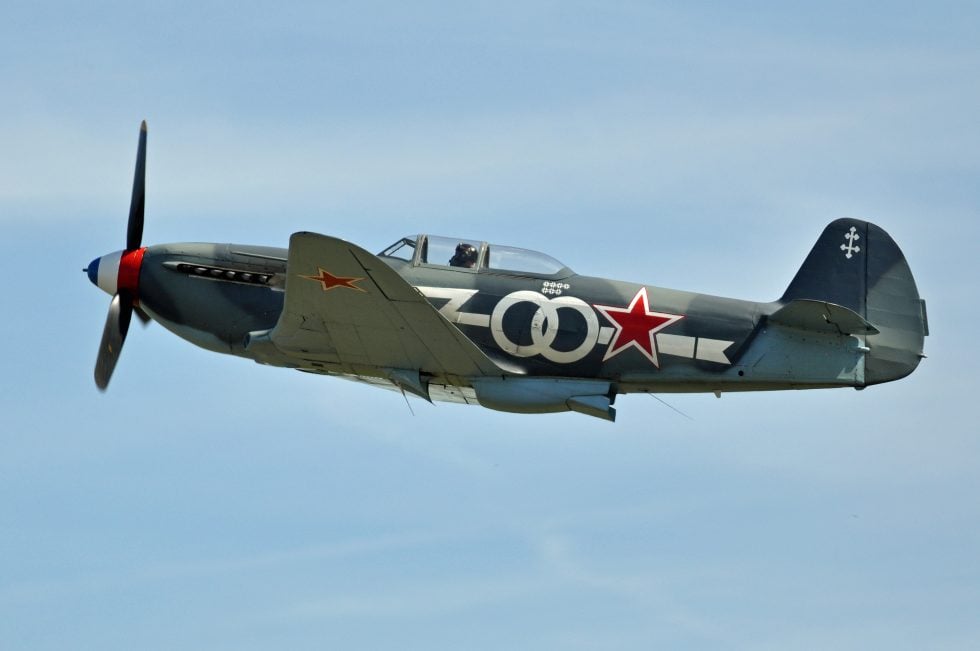
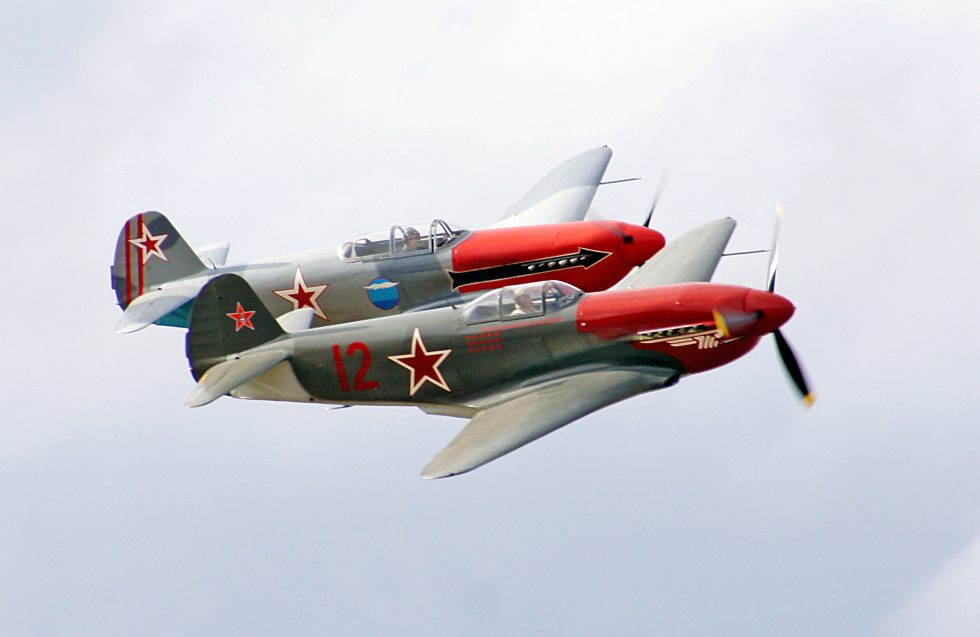
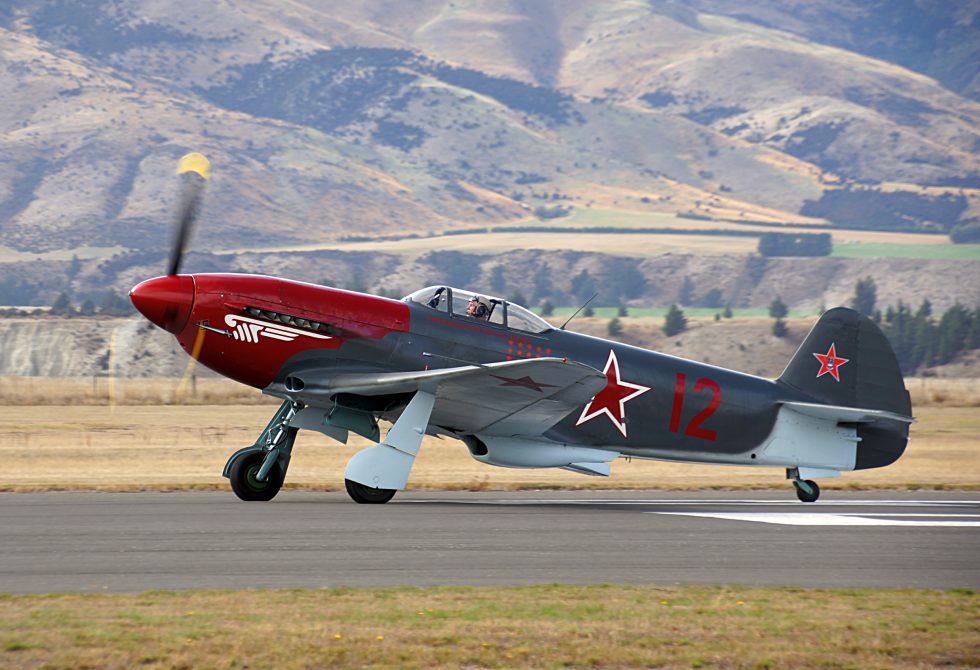
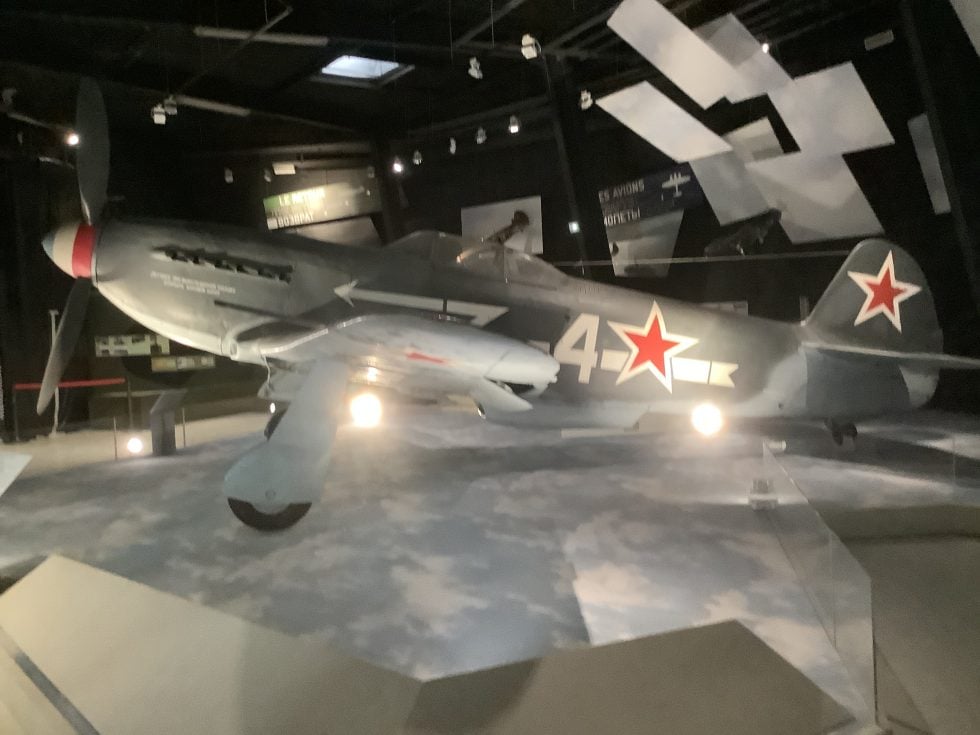
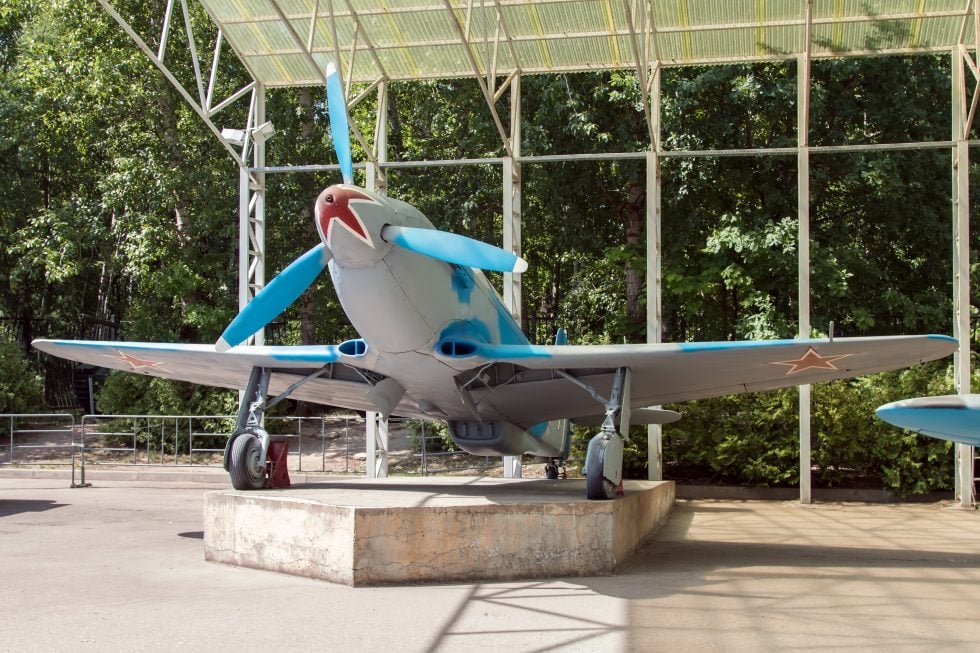
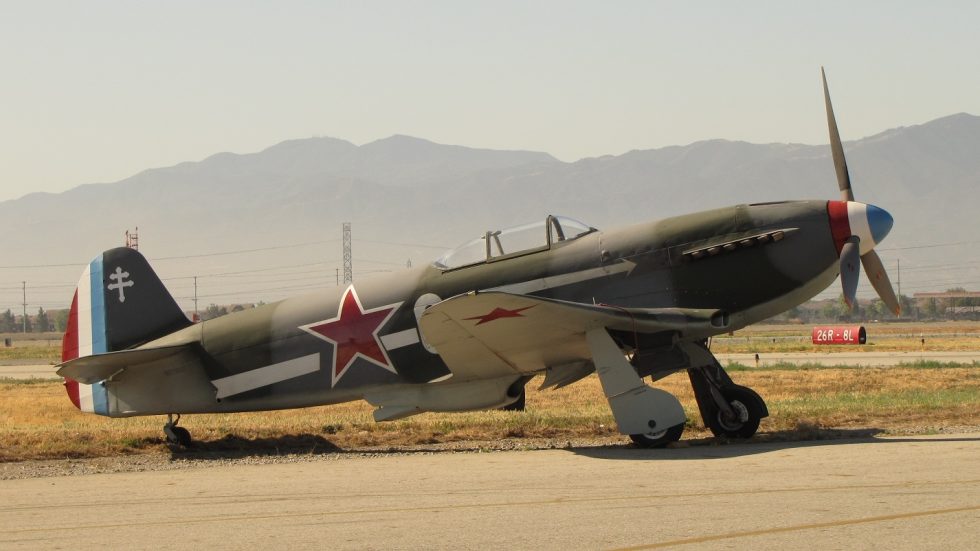
The Yak-3 in motion
A featured Yak-3 video is coming soon. In the meantime, the photo gallery above shows both wartime-preserved airframes and the Allison-powered Yak-3M warbirds that keep the type flying.
Where the Yak-3 flew
The record the Yak-3 earned
The Yak-3’s reputation rests less on a single tally than on where and how it fought: the low-altitude turning battles of 1944–45, where its climb and agility told. Its most-quoted successes belong to the Free French Normandie-Niemen regiment, whose figures are widely cited but, like most wartime claims, best read with caution.
Compare the combat record of every military aircraft. Figures as of July 2026.
Everything people ask about the Yak-3
Can I fly in a Yak-3?
How fast was the Yak-3?
What made the Yak-3 so good in a dogfight?
Were German pilots really told to avoid it?
What is the difference between the Yak-3 and the Yak-9?
Who were the Normandie-Niemen?
How many Yak-3s were built?
Are there any flying Yak-3s today?
You can’t fly the Yak-3.
These, you can.
Some legends only live in museums — others are fuelled and waiting. MiGFlug has put civilians in real military jet cockpits since 2004.
 Fly the L-39 AlbatrosThe world’s most-flown jet trainer — aerobatics included
 Fly the F-104 Starfighter“The missile with a man in it”
 Fly the MiG-21The Cold War’s most-produced jet
 Fly the T-33 Shooting StarAmerica’s first jet trainer
 Fly the DH VampireA piece of early jet history
 Fly the S.211Agile Italian jet trainer
 Fly the MB-326The classic Aermacchi jet
 Fly the MiG-15The Soviet legend of the Korean War
Continue the tour
Every fact, checked
- Musée de l’Air et de l’Espace — Yakovlev Yak-3France’s national air museum; holds an original Normandie-Niemen aircraft (its English spec page carries some numeric typos).
- Smithsonian Air & Space — The French-Russian ConnectionDetailed account of Normandie-Niemen and the 40/37 return flight, with pilot quotes.
- Military Aviation Museum (Virginia Beach)Operates an airworthy new-build Yak-3M; good on the Allison-engine replica story.
- Warfare History NetworkNormandie-Niemen aces, dated combat episodes and victory totals.
- flugzeuginfo.net — Yak-3 dataConsensus technical figures for length, weight, speed and production.
- Old Machine Press — Yak-3 VK-108Rigorous technical history, useful for why the 720 km/h figure is misattributed.
- Skytamer — Yakovlev Yak-3MThe 1991-onward new-production replicas and current airworthy examples.
- William Green, Famous Fighters of the Second World War, Vol. 2 (Macdonald, 1957)Print reference; the traceable origin of the “avoid combat below 5,000 m” claim.