
Do 335 Pfeil
The fastest piston fighter of the war
Dornier’s push-pull “Arrow” — two engines in line, a propeller front and back, and a top speed no other piston fighter could match. It came too late to fight.
The Arrow: Germany’s fastest piston fighter that never fought
The Dornier Do 335 solved an old problem in a radical way. Twin-engined fighters were fast and powerful, but their wing-mounted engines added drag and, if one failed, dangerous asymmetric thrust. Claudius Dornier’s answer, patented decades earlier, was “centreline thrust”: put both engines in the fuselage, one behind the other, driving a propeller at each end.
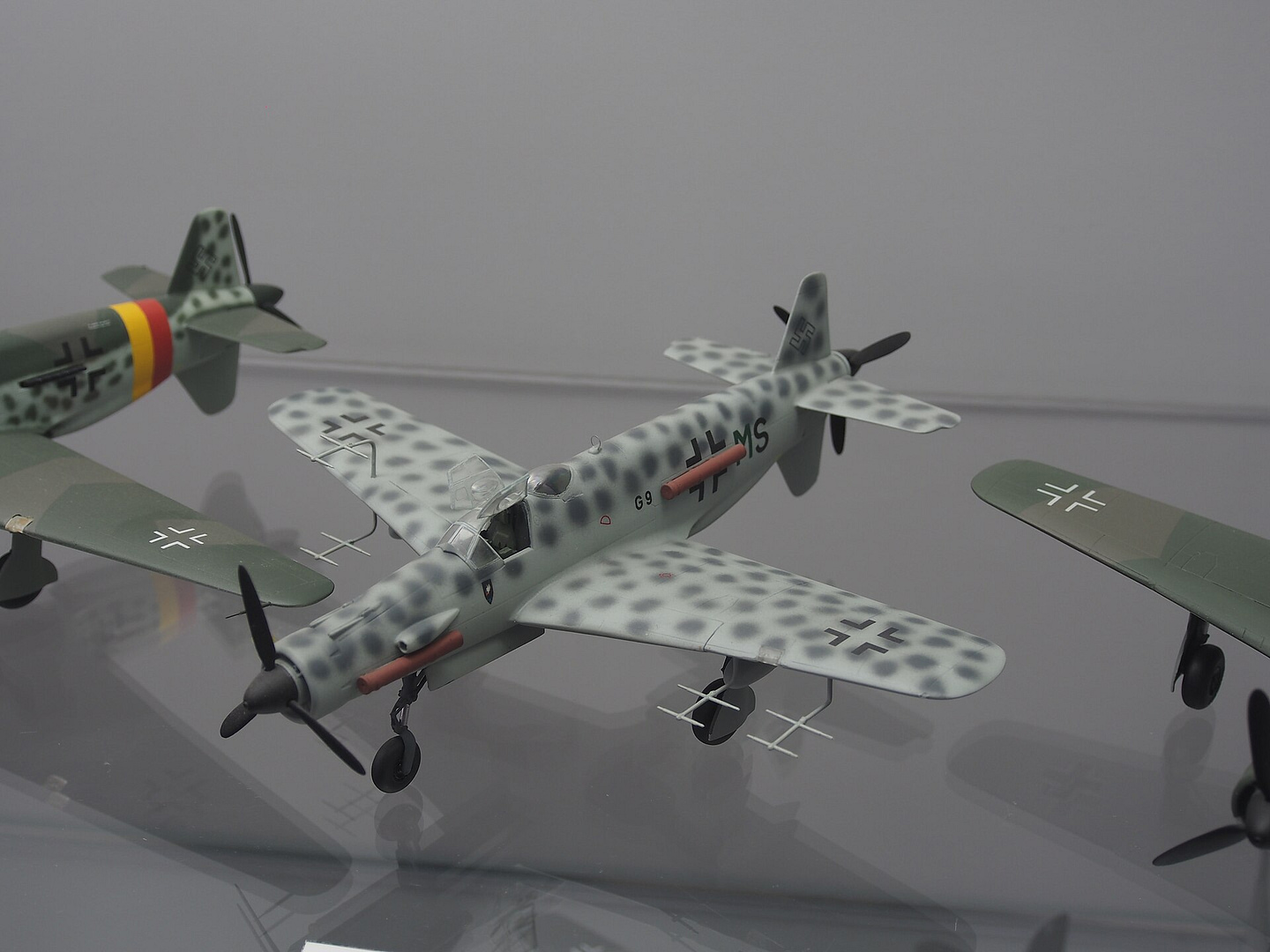
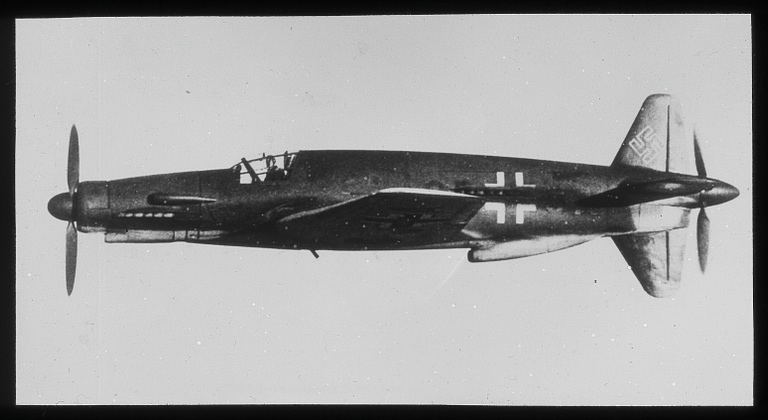
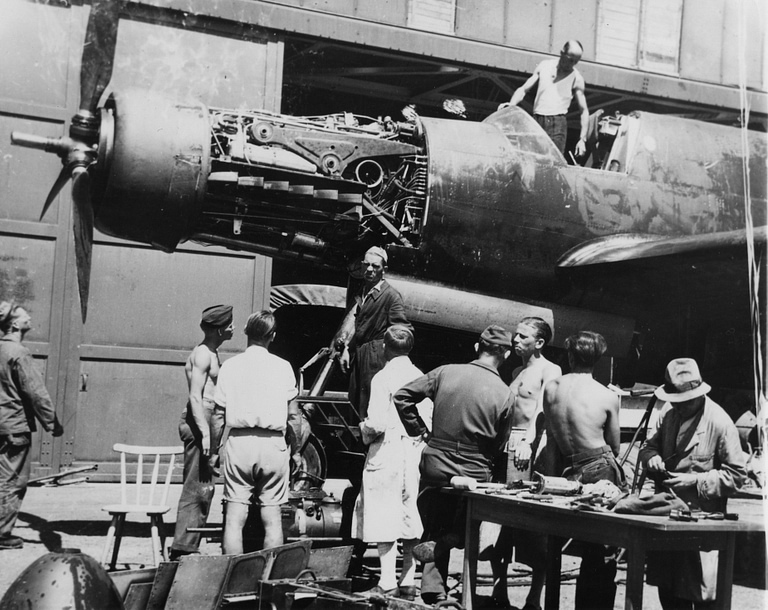
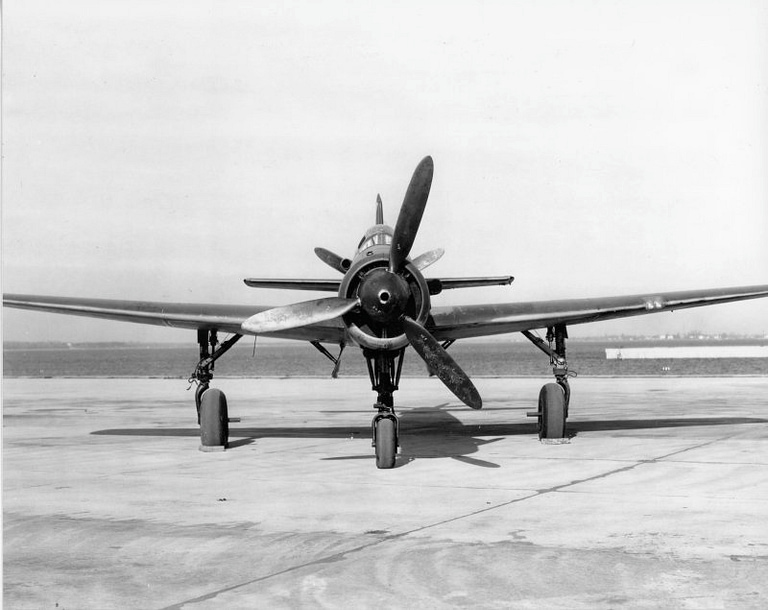
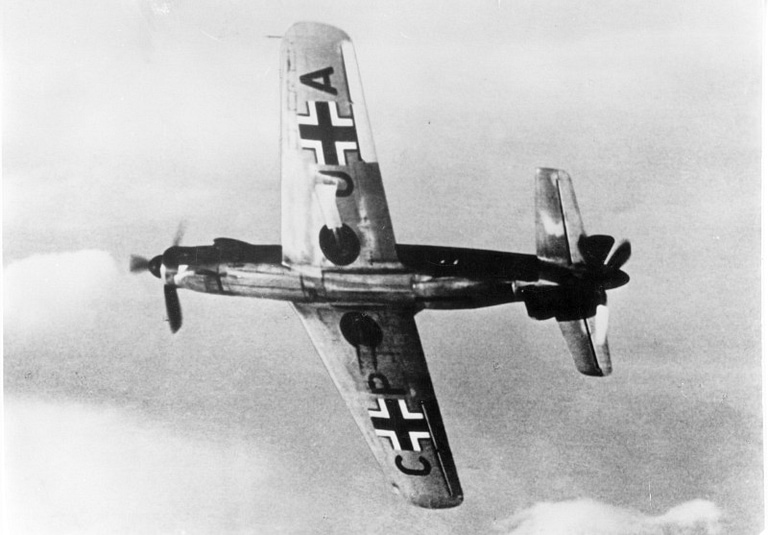
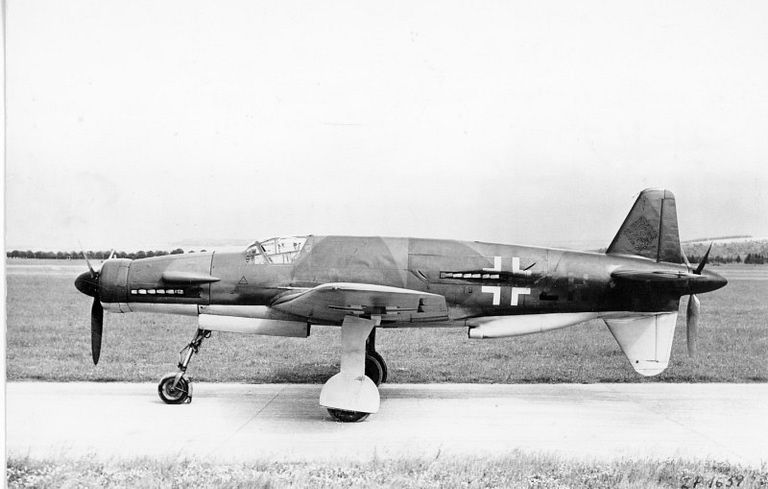
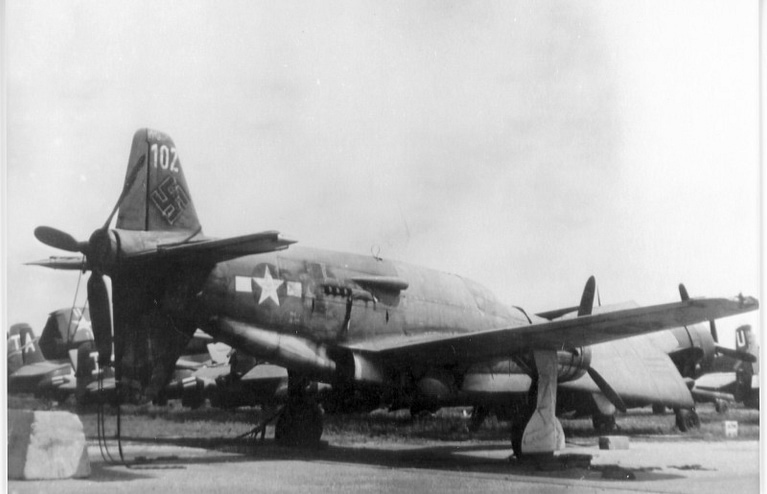
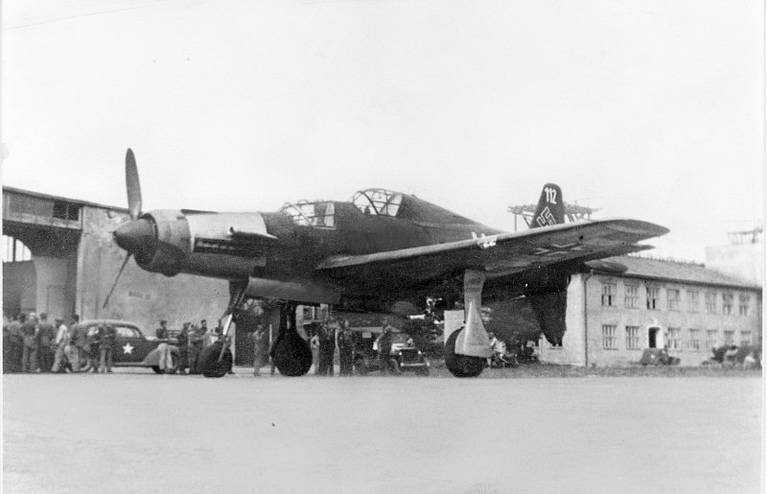
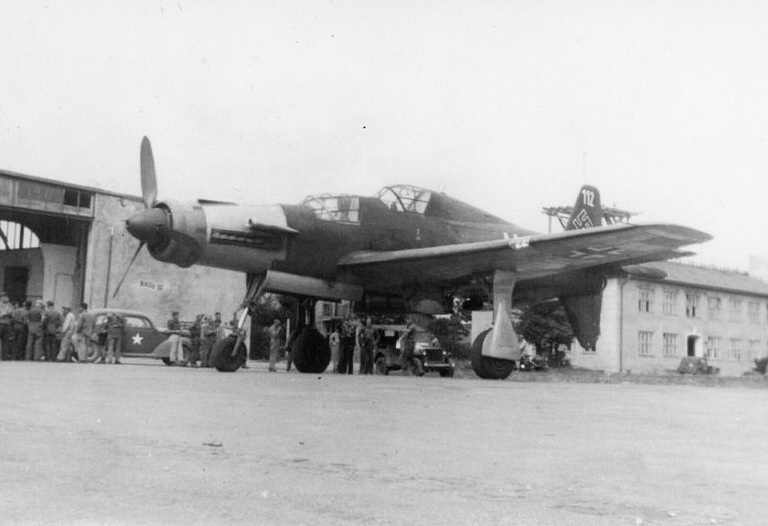
The result looked like nothing else in the sky. A conventional tractor engine and propeller sat in the nose; a second engine sat behind the cockpit, driving a pusher propeller at the tail through a long extension shaft. A cruciform tail, with a fin below the fuselage as well as above, kept that rear propeller clear of the runway on take-off.
The payoff was speed. With two 1,800-horsepower Daimler-Benz V-12s working in line and remarkably little drag, the Pfeil reached about 770 km/h (480 mph) — the fastest piston-engined aircraft of the entire war, quicker than a Mustang or a Tempest.
That rear propeller posed a lethal problem: a pilot bailing out the normal way would be cut to pieces. So Dornier fitted the Do 335 with one of the world’s first ejection seats, together with explosive bolts to blow off the rear propeller and the upper fin before the pilot was fired clear. Few aircraft of the era took crew survival so seriously.
Hitler ordered the Pfeil built as a priority in 1944, but it was already too late. Engine shortages, Allied bombing and the collapse of German industry meant only a few dozen were ever completed, and the type never saw meaningful combat. The one documented Allied encounter came in April 1945, when the French ace Pierre Clostermann met a Do 335 that his Hawker Tempests simply could not catch.
The jet age made the Pfeil obsolete almost before it flew, and it was a technological dead-end — but a brilliant one. A single Do 335 survives today, restored by Dornier itself and preserved at the Smithsonian, the last of the arrows that never got to fly.
01Why the Do 335 mattered: the piston fighter’s last great leap
The Pfeil represents the outer limit of what piston-engined fighter design could achieve. By stacking two engines in line, Dornier extracted twin-engine power with something close to single-engine drag, and pushed level speed past every other propeller fighter of the war.
It arrived, though, at the exact moment the jet engine made that achievement irrelevant. The Do 335 is therefore a kind of magnificent full stop: the piston fighter refined almost to perfection, just as the technology it perfected was being swept aside. Its real legacy is not combat but engineering ambition — and a handful of ideas, like the ejection seat, that outlived it.
How Dornier built the fastest propeller fighter of the war
Centreline thrust
Instead of hanging two engines on the wings, Dornier put them in the fuselage, one behind the other, driving a propeller at each end. The aircraft had all the power of a twin with something close to the drag of a single — and none of the deadly asymmetric handling if one engine failed.
The cruciform tail
A rear-mounted pusher propeller needed protection from the runway, so the Pfeil grew a fin below the fuselage as well as above, forming a cross. The rear engine drove its propeller through a long extension shaft running the length of the aft fuselage.
Escape from the pusher
That rear propeller would have killed any pilot who bailed out normally. Dornier’s answer was strikingly modern: one of the world’s first ejection seats, paired with explosive bolts that blew off the rear propeller and the upper fin an instant before the pilot was fired clear.
02Two engines in line: the physics of speed
The Do 335’s speed came from a simple insight. Drag rises sharply with frontal area and with the interference between engine nacelles and the wing; by burying both engines in a single slender fuselage, Dornier all but eliminated that penalty. The nose engine pulled, the tail engine pushed, and their thrust lines ran straight through the aircraft’s centre.
The reward was a level speed of around 770 km/h — faster than any other piston fighter of the war, and enough that Allied fighters which met the type simply could not close the gap. It was, in effect, the piston engine’s answer to the coming jets, delivered a few months too late to matter.
Dornier Do 335 Pfeil — by the numbers
Airframe & performance
- Mürettebat
- 1 (2 in night-fighter and trainer variants)
- Uzunluk
- 13.85 m (45 ft 5 in)
- Kanat açıklığı
- 13.80 m (45 ft 3 in)
- Boş ağırlık
- ~7,260 kg (16,005 lb)
- Max takeoff weight
- ~9,600 kg (21,160 lb)
- Max speed
- ~770 km/h (480 mph)
- Servis tavanı
- ~11,400 m (37,400 ft)
- Menzil
- ~1,400 km (870 mi)
Powerplant, armament & programme
- Engines
- 2 × Daimler-Benz DB 603E V-12, ~1,800 hp each
- Silahlanma
- 1 × 30 mm MK 103 (hub) + 2 × 20 mm MG 151/20; B-2 added 2 × wing 30 mm
- First flight
- 26 October 1943
- Built
- ~37 completed (production barely begun)
- Operators
- Germany (Luftwaffe) — never operational
- Cost per flight hour
- Not recorded — never entered service
- Variants
- A-1 fighter-bomber; A-6 night fighter; A-12 trainer; B-2 heavy fighter
03Why so few were built
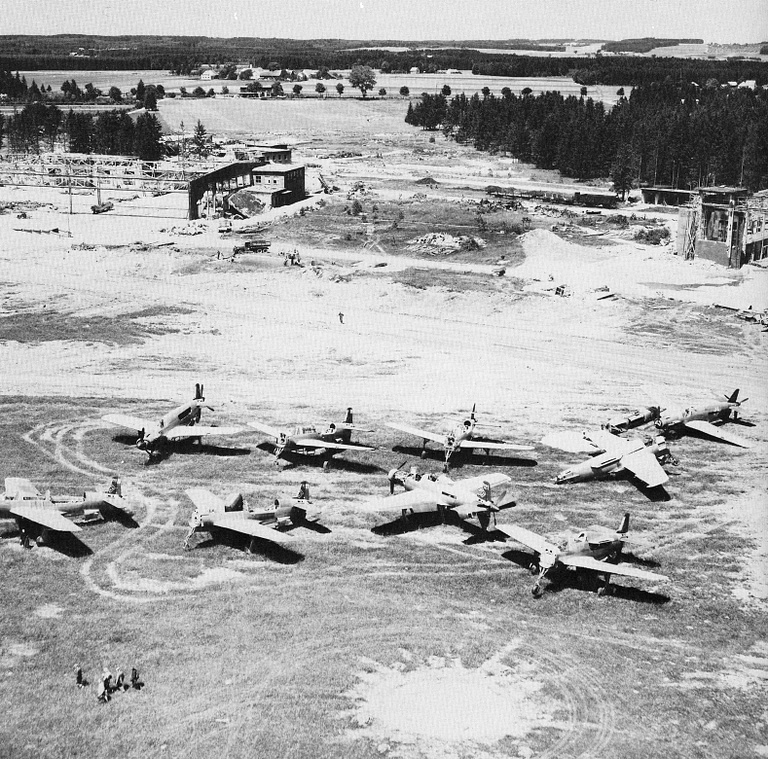
The Pfeil was ordered into priority production in 1944, but that meant little in the last year of the war. The DB 603 engines were in short supply and needed elsewhere; Allied bombing wrecked factories and transport; and skilled labour and materials were vanishing. When US troops reached the Oberpfaffenhofen works in April 1945 they found only a handful of finished aircraft. The numbers above reflect a programme that never really started.
From an old patent to the last piston fighter
An old idea revived
Dornier develops its long-held centreline-thrust concept into a real fighter. The Do 335 V1 prototype makes its first flight on 26 October 1943.
Fast, but delayed
Testing confirms the Pfeil as extraordinarily fast, but engine shortages and shifting priorities slow the programme badly.
Hitler’s priority
Hitler orders the Do 335 built as a priority aircraft — but German industry is already breaking down under the Allied bombing campaign.
Too few to matter
Only a few dozen airframes are completed. The Pfeil never reaches operational units in any meaningful strength and sees no real combat.
The one encounter
French ace Pierre Clostermann reports meeting a Do 335 that easily outruns his Hawker Tempests — the only well-documented Allied sighting.
Captured and preserved
US forces capture surviving Pfeils. One is later restored by Dornier itself and preserved at the Smithsonian — the sole survivor.
Eight chapters in the Arrow’s brief life
An engine at each end
The Do 335’s defining feature was an engine in the nose and another behind the cockpit, driving propellers front and rear.
The full story
Quicker than a Mustang
With two 1,800-horsepower V-12s in line and remarkably low drag, the Pfeil was the fastest piston-engined aircraft of the war.
The full story
Why the Arrow needed an ejection seat
A pilot bailing out of a normal aircraft simply jumped. In the Do 335, the rear propeller would have killed him.
The full story
Ordered too late
In 1944 Hitler ordered the Pfeil built as a priority fighter — but the order came as German industry was collapsing.
The full story
Clostermann’s Tempests can’t catch it
The best-known Allied encounter with a Do 335 ended with the German aircraft simply flying away.
The full story
Nicknames for an odd shape
Officially the Do 335 was the “Pfeil” — Arrow — but its long nose earned it a less flattering name.
The full story
A programme that never started
For all its promise, only a few dozen Do 335s were ever completed — and most of those were unfinished or untested when the war ended.
The full story
One survivor at the Smithsonian
Of every Do 335 built, exactly one complete example survives today.
The full story
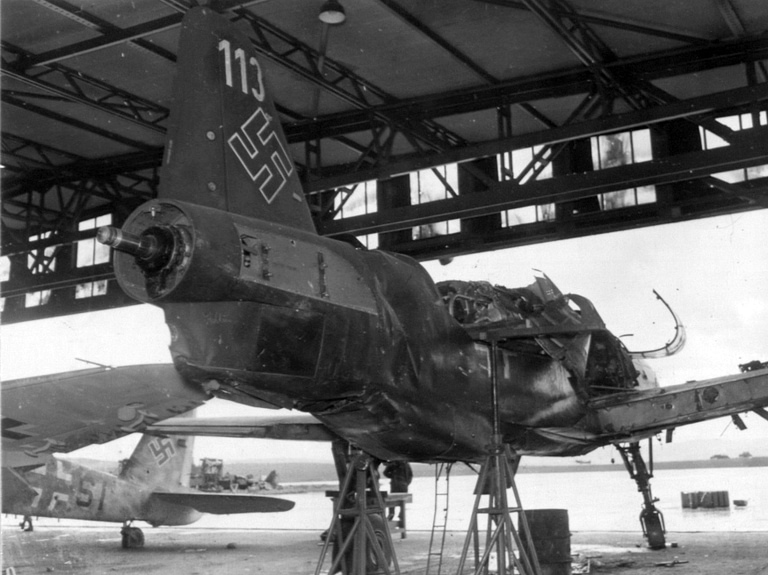
The Pfeil in pictures
See the Arrow in context
Was the Do 335 the best piston fighter of the war — or a brilliant answer to a question the jet age had already made obsolete? This short history traces the Arrow from Dornier’s drawing board to its single surviving airframe.
Video: “Dornier Do 335 Pfeil: The Best Plane of WWII?” by IHYLS (~331,000 views). Embedded via YouTube.
Where the Pfeil was built and flown
The Pfeil, by the numbers
The Do 335 has almost no combat record — and that is precisely its story. Here was one of the most advanced fighters of the war, faster than anything the Allies could put against it, that arrived far too late and in far too small a number to matter. Its record is a measure of lost potential rather than of victories won.
The Do 335 never reached operational service in strength, and its handful of flights were largely trials and ferry sorties; the figures above reflect a fighter that was captured almost before it could fight.
Dornier Do 335 Pfeil — questions & answers
Can you fly a Dornier Do 335 today?
No. Only one Do 335 survives — a static exhibit at the Smithsonian’s Udvar-Hazy Center — and none are airworthy. If you want to fly a real fighter yourself, MiGFlug offers cockpit experiences in genuine jet fighters you can actually strap into.
Why did the Do 335 have two propellers?
It used a “centreline-thrust” layout, with one engine and propeller in the nose and a second engine driving a pusher propeller at the tail. This gave the power of a twin-engined fighter with far less drag and none of the dangerous handling if one engine failed.
Was the Do 335 really the fastest piston fighter of the war?
Yes. At roughly 770 km/h (480 mph) in level flight, the Pfeil was faster than any other piston-engined fighter of the Second World War, including the P-51 Mustang and Hawker Tempest.
Did the Do 335 ever see combat?
Effectively no. Only a few dozen were completed, and the type never reached operational units in strength. The best-documented Allied encounter, in April 1945, ended with the Do 335 simply outrunning the Tempests that spotted it.
How many Do 335s survive?
Just one complete example survives, preserved at the Smithsonian National Air and Space Museum in the United States — restored by Dornier’s own staff in the 1970s.
You can’t fly a Pfeil — but you can fly a fighter jet
The Arrow’s war belongs to history, but the thrill of flying a real fighter doesn’t. With MiGFlug you can strap into a genuine jet — from the L-39 Albatros to a MiG-29 at the edge of space — with an experienced fighter pilot beside you.
 Fly the L-39 AlbatrosThe world’s most-flown jet trainer — aerobatics included
 Fly the F-104 Starfighter“The missile with a man in it”
 Fly the MiG-21The Cold War’s most-produced jet
 T-33 Shooting Star'ı uçurunAmerica’s first jet trainer
 Fly the DH VampireA piece of early jet history
 Fly the S.211Agile Italian jet trainer
 Fly the MB-326The classic Aermacchi jet
 Fly the MiG-15The Soviet legend of the Korean War
Related aircraft
Where these facts come from
- Smithsonian NASM — Do 335 A-0 PfeilThe sole surviving Pfeil, restored by Dornier
- San Diego Air & Space MuseumArchive photography of the type
- WW2 Weapons — Do 335 ArrowTechnical data & variants
- Imperial War MuseumsCaptured-aircraft context
Figures are drawn from museum and reference sources and cross-checked; where sources differ, the most commonly cited value is given. Production totals for the Do 335 vary between sources because so many airframes were incomplete at war’s end.