
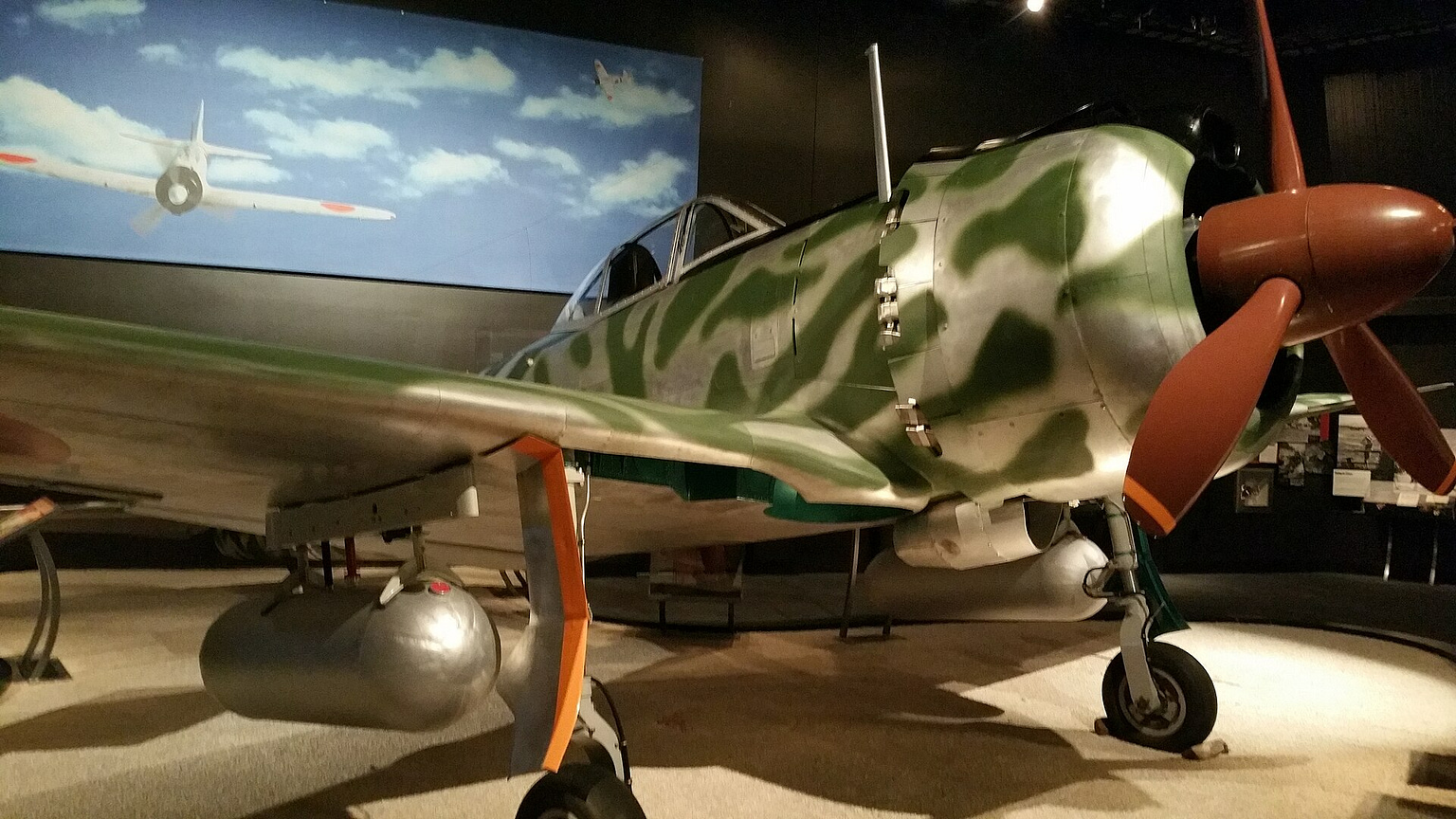
Nakajima Ki-43 Hayabusa
“Oscar”
The Imperial Japanese Army’s most-produced fighter of the Second World War — a featherweight dogfighter so nimble Allied pilots were warned never to turn with it, and so often mistaken for the Navy’s Zero that it earned its own code name.
The Army’s falcon, and the fighter mistaken for a Zero
By the late 1930s the Imperial Japanese Army needed a modern fighter to replace the fixed-undercarriage Nakajima Ki-27 “Nate.” In December 1937 it turned directly to Nakajima, and a design team led by engineer Hideo Itokawa — later a pioneer of Japanese rocketry — produced a slim, retractable-gear monoplane. The prototype first flew in January 1939.
The Army was not immediately impressed. Test pilots found the new machine heavier on the controls and no more agile than the beloved Ki-27, and the programme was nearly rejected. What saved it was a series of revised airframes that shed weight and, decisively, added a set of Fowler-type “butterfly” combat flaps the pilot could deploy in a turning fight to add lift and tighten the circle. With them the lightly loaded aircraft became extraordinarily manoeuvrable, and it was accepted as the Army Type 1 Fighter, named Hayabusa (“Peregrine Falcon”).
The Ki-43 entered service in 1941 and made its combat debut over Burma and Malaya in the final weeks of that year, in the same period as the attack on Pearl Harbor. Because its slender radial-engined silhouette closely resembled the Navy’s A6M Zero, Allied airmen repeatedly logged Army Ki-43s as “Zeros.” Under the Allied reporting-name system it was assigned its own designation — “Oscar” — yet the confusion with the Zero shadowed its reputation for the rest of the war.
Its agility, however, was bought at a steep price. The Oscar was lightly armed — typically just two machine guns — and early examples lacked pilot armour, self-sealing fuel tanks and structural robustness, with wing failures reported during hard manoeuvring. Armour and protected tanks arrived with the improved Ki-43-II, but firepower and toughness remained persistent shortcomings as sturdier, faster Allied fighters such as the P-38, F6F, P-47 and P-51 reached the theatre.
The Hayabusa nonetheless served on nearly every front the Army air force fought over — China, Burma, Malaya and Singapore, the Netherlands East Indies, New Guinea, the Philippines and the defence of the home islands. Increasingly outclassed, it was pushed into home-defence interception and, in the war’s final months, into kamikaze (special-attack) missions. With roughly 5,900 built by Nakajima and Tachikawa, it was the most-produced fighter of the Imperial Japanese Army. It was also flown by allied and client states of the period — notably Thailand and Manchukuo — and, after Japan’s surrender, a handful of captured airframes briefly served other nations.
01Why the Nakajima Ki-43 was nearly rejected — and how the “butterfly” flaps saved it
When the first Ki-43 prototypes flew in 1939, Army test pilots were disappointed: the aircraft felt stiff and unremarkable next to the highly manoeuvrable Ki-27 it was meant to replace, and there was serious talk of abandoning the design. Nakajima’s answer, developed across a run of revised airframes, was a set of Fowler-type combat flaps — the so-called “butterfly” flaps — that could be extended mid-turn to increase wing area and lift.
The effect was transformative. With the flaps deployed, the lightly loaded Hayabusa could out-turn essentially any fighter it met in 1941–42. It is the single engineering change most often credited with turning a near-cancelled prototype into one of the most feared close-in dogfighters of the early Pacific war.
What makes it special
The Ki-43’s “butterfly” combat flaps
The Hayabusa’s signature was its turn. Fowler-type “butterfly” combat flaps could be deployed in a dogfight to add lift, letting the very lightly loaded fighter tighten its circle inside almost any Allied opponent early in the war. It was the specific fix that converted an unloved prototype into a feared close-in fighter — and the reason Allied pilots were warned never to turn with it.
Extreme lightness — and its cost
That agility came from radical weight-saving, which bred real weaknesses. Armament was light — typically just two 12.7 mm Ho-103 machine guns — modest against rugged Allied aircraft. Early Ki-43s also lacked pilot armour and self-sealing fuel tanks, and the thin structure was fragile, with wing failures reported in hard manoeuvres. Armour and protected tanks arrived with the Ki-43-II, but firepower stayed a persistent shortcoming.
The most-produced Army fighter
With roughly 5,900 built by Nakajima and the Tachikawa works, the Hayabusa was the numerical backbone of the Army fighter force. Its scale of production and its presence on every Army air-force front — China, Burma, New Guinea, the Philippines and home defence — make it, statistically, the Imperial Japanese Army’s defining fighter of the war, much as the Zero was for the Navy.
02The Nakajima Ki-43’s fragility: why some early Oscars broke in the air
The weight-saving that made the Hayabusa so agile also left early aircraft structurally delicate. Ground crews reportedly found cracked wings on some airframes after hard combat manoeuvring, and Japanese pilots recalled that abrupt inputs at speed could damage the aircraft. Combined with the absence of armour and self-sealing tanks, this made the early Ki-43-I dangerous to its own pilots as well as lethal to opponents. The strengthened wing, pilot armour and protected fuel tanks of the Ki-43-II addressed the worst of it, but the type never shed its reputation for lightness over toughness.
03The Nakajima Ki-43 variants: from the Ki-43-I to the late-war Ki-43-III
O Ki-43-I (1941) used the lower-output Nakajima Ha-25 radial of about 980–990 hp and carried mixed, often rifle-calibre armament with no protection. The definitive Ki-43-II (from late 1942) fitted the uprated Ha-115 engine of roughly 1,150 hp, added pilot armour and protected tanks, strengthened the wing and standardised twin 12.7 mm guns with bomb racks. The final Ki-43-III, built largely by Tachikawa late in the war, fitted a further-uprated engine (commonly cited around 1,230 hp) for a modest speed gain; a cannon-armed sub-variant was developed but saw little service.
Full specifications
Airframe & Performance
- Mürettebat
- 1
- Uzunluk
- ~8.9 m
- Kanat açıklığı
- ~10.8 m
- Yükseklik
- ~3.3 m
- Boş ağırlık
- ~1,910 kg
- Max takeoff weight
- ~2,900 kg (with stores)
- Max speed
- ~530 km/h (Ki-43-II)
- Servis tavanı
- ~11,200 m
- Menzil
- ~1,600 km; ~3,200 km with drop tanks
- First flight
- January 1939
Powerplant, Armament & Cost
- Motor
- 1 × Nakajima Ha-115 (Army Type 1) 14-cyl radial
- Power
- ~1,150 hp
- Silahlanma
- 2 × 12.7 mm Ho-103 machine guns
- Bomb load
- Provision for 2 × ~250 kg bombs
- Built
- ~5,900 (1941–1945)
- Builders
- Nakajima · Tachikawa
- Unit cost
- No reliable public figure
- Cost per flight hour
- No reliable public figure
04The Nakajima Ki-43’s operating costs: why no reliable price exists
Unlike modern military aircraft, no credible public unit-cost or cost-per-flight-hour figure exists for the Ki-43. It was a 1940s Imperial Japanese wartime product, and Japanese procurement prices from the period were never published in any form comparable to today’s accounting. Any specific monetary figure attached to a Ki-43 should be treated as unsupported. What is well documented is scale rather than price: roughly 5,900 airframes were built, making the Hayabusa the most numerous fighter the Imperial Japanese Army ever fielded.
From near-rejection to the war’s last flights
Requirement issued
The Army asks Nakajima for a successor to the Ki-27 “Nate”; Hideo Itokawa leads the design of what becomes the Ki-43.
First flight
The prototype flies in January. Army test pilots are unimpressed, and the design is nearly abandoned.
The flaps that saved it
Revised airframes shed weight and add the “butterfly” combat flaps; the type is accepted as the Army Type 1 Fighter, Hayabusa.
Combat debut
The Ki-43-I enters service and first fights over Malaya and Burma in the final weeks of 1941, led by the 59th and 64th Sentai.
Katō falls, and the Ki-43-II arrives
Lt Col Tateo Katō of the celebrated 64th Sentai is killed over the Bay of Bengal in May; the better-protected Ki-43-II enters production late in the year.
Outclassed but everywhere
Heavy use over New Guinea, China and the Philippines as newer Allied fighters — P-38, F6F, P-47, P-51 — steadily erode the Oscar’s early edge.
Home defence and kamikaze
Increasingly withdrawn to defend the home islands; in the war’s final phase some Hayabusas are flown in kamikaze special-attack missions.
Post-war afterlife
Production ends at roughly 5,900. Captured Ki-43s briefly serve France in Indochina and Indonesian nationalist forces before spares run out.
From the record: twelve Hayabusa stories
The Army fighter mistaken for a Zero
Allied pilots kept reporting “Zeros” that were really Army Ki-43s.
Read the full story
The butterfly turn
One modification turned a rejected fighter into a dogfighting terror.
Read the full story
“Do not dogfight the Oscar”
Allied pilots learned that turning with the Hayabusa was a losing game.
Read the full story
Two guns and no more
The Oscar could catch you — but struggled to bring you down.
Read the full story
The fragile falcon
Built so light that some examples came apart in the sky.
Read the full story
Satoru Anabuki
The Army’s top-scoring falcon pilot — and a still-argued tally.
Read the full story
“Katō’s Falcons”
Japan’s most famous fighter regiment — and a fallen commander.
Read the full story
Debut over the jungle
The Oscar’s war opened over Malaya and Rangoon.
Read the full story
From dogfighter to special-attack aircraft
Outclassed and outnumbered, some Oscars were sent on one-way flights.
Read the full story
Flown by the other side
Allied crews test-flew the Oscar to learn its gifts and its flaws.
Read the full story
The Oscar in other colours
Japan’s wartime partners flew the Hayabusa too.
Read the full story
French and Indonesian Oscars
The Hayabusa’s last flights were flown under other flags.
Read the full story
The Hayabusa in pictures
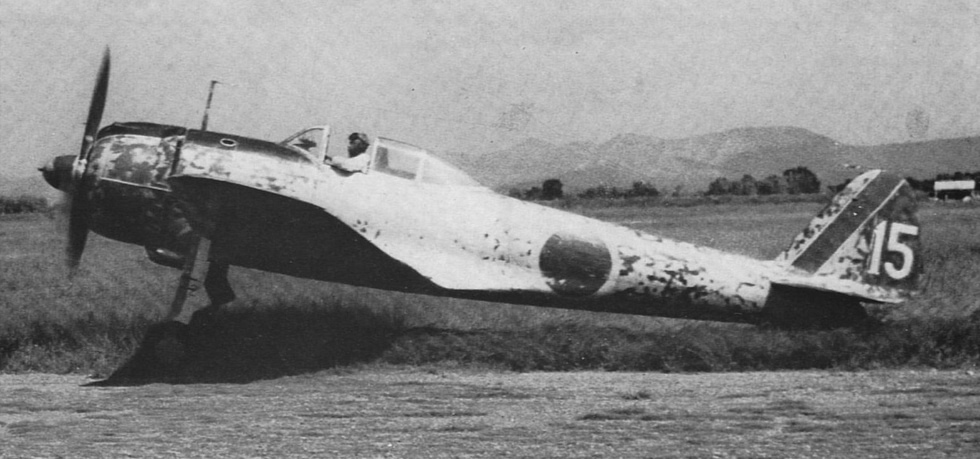
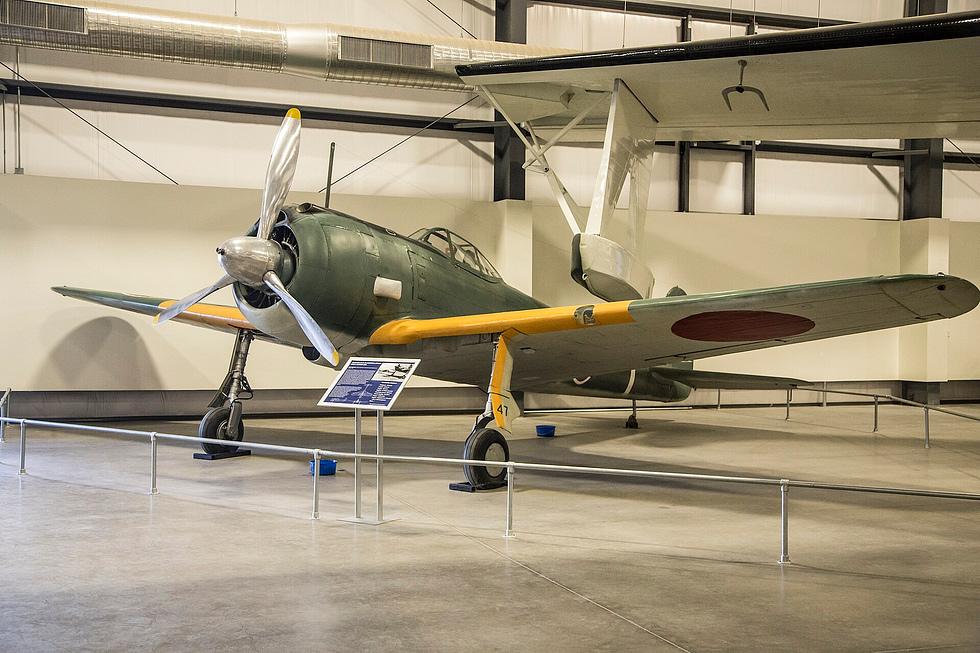
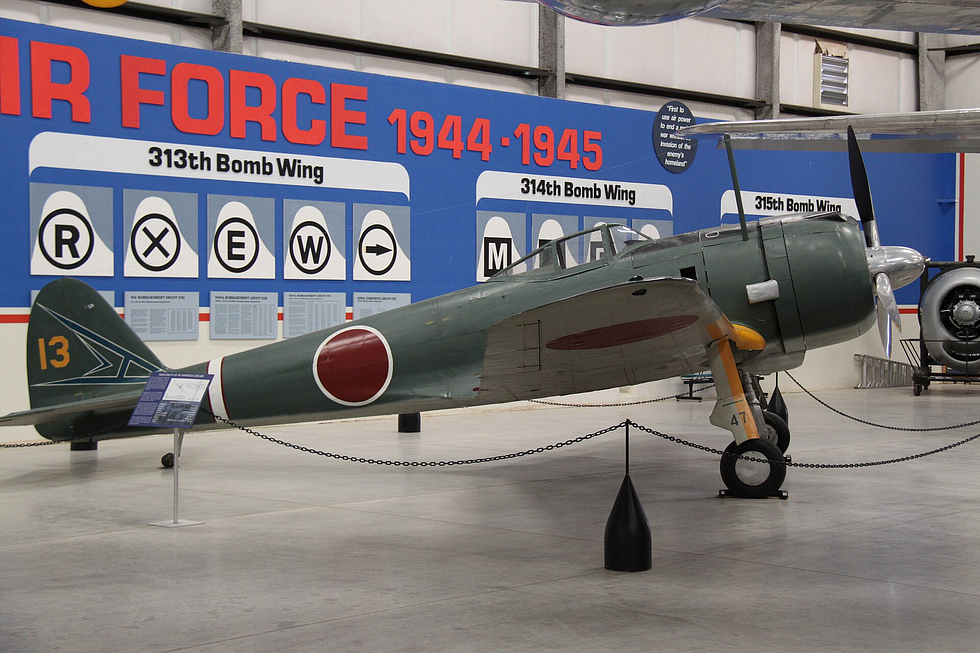
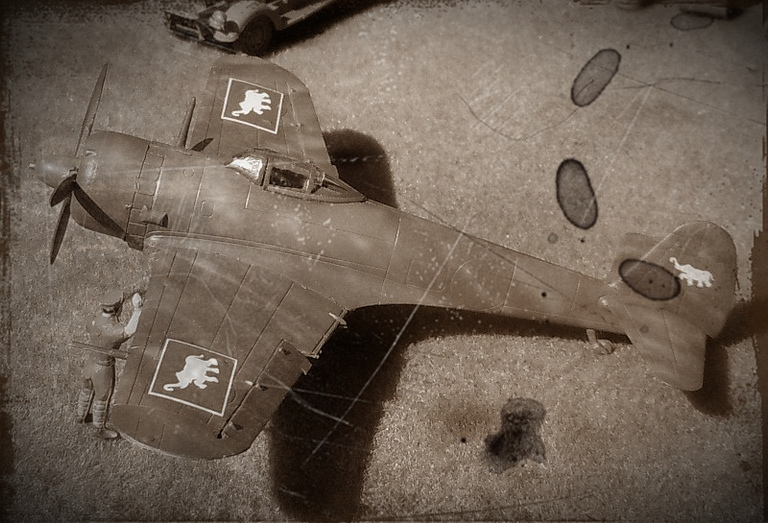
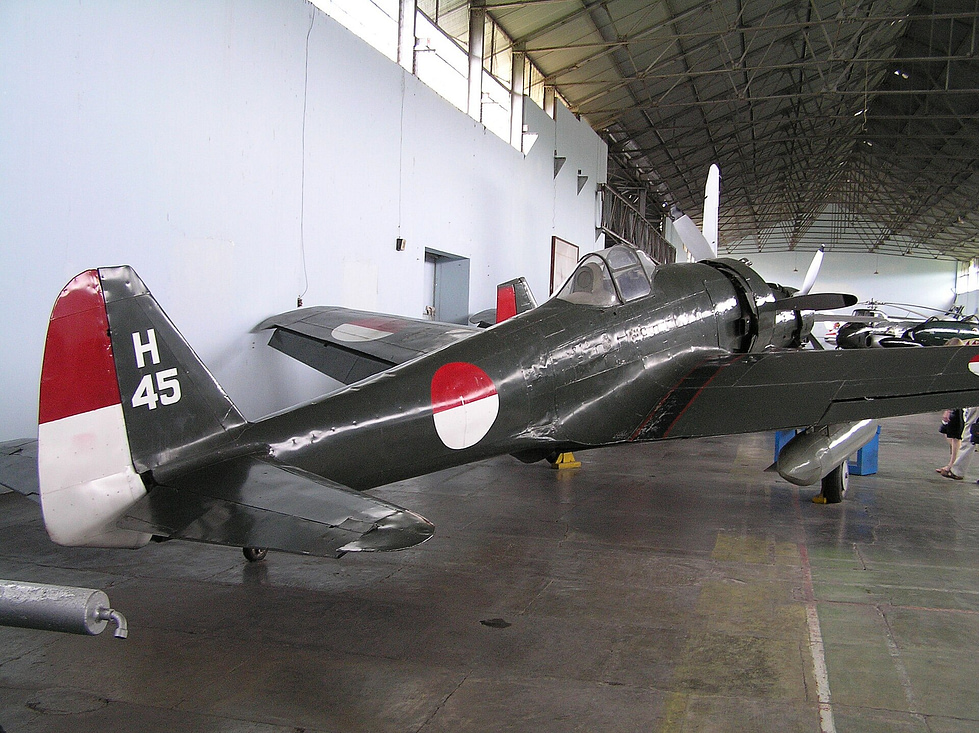
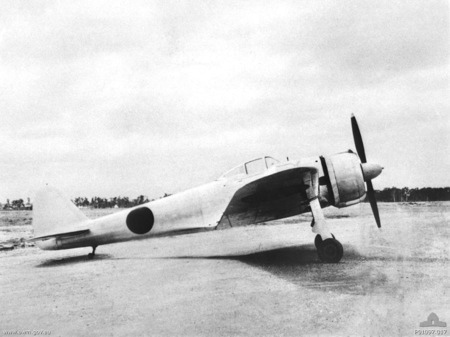
The Hayabusa in motion
A featured video for the Ki-43 Hayabusa is coming soon. In the meantime, explore the photo gallery above and the operations map below.
Where the Hayabusa flew
The score that defines it
The Ki-43’s record is a study in a single virtue and its limits. In 1941–42 its agility made it a dominant close-in dogfighter over Southeast Asia; as the war turned and sturdier, faster Allied fighters arrived, the lightly armed Oscar was steadily outmatched. It remained, throughout, the Imperial Japanese Army’s most numerous and most widely deployed fighter.
Compare the combat record of every military aircraft. Historical figures are commonly cited and vary by source.
Everything people ask about the Ki-43 Hayabusa
Can I fly in a Ki-43?
How agile was the Ki-43?
Why is it called “Oscar”?
How was the Ki-43 different from the Zero?
How many Ki-43s were built?
Was the Ki-43 well armed?
Who was the top Ki-43 ace?
Are there any Ki-43 survivors?
What replaced the Ki-43?
You can’t fly the Hayabusa.
These, you can.
Some legends only live in museums — others are fuelled and waiting. MiGFlug has put civilians in real military jet cockpits since 2004.
 Fly the L-39 AlbatrosThe world’s most-flown jet trainer — aerobatics included
 Fly the F-104 Starfighter“The missile with a man in it”
 Fly the MiG-21The Cold War’s most-produced jet
 T-33 Shooting Star'ı uçurunAmerica’s first jet trainer
 Fly the DH VampireA piece of early jet history
 Fly the S.211Agile Italian jet trainer
 Fly the MB-326The classic Aermacchi jet
 Fly the MiG-15The Soviet legend of the Korean War
Continue the tour
Every fact, checked
- Smithsonian National Air & Space Museum — Ki-43-IIbAuthoritative museum record: development, service history and specifications.
- HistoryOfWar.org — Nakajima Ki-43 HayabusaDetailed development, variant specifications and production breakdown.
- Warfare History Network — Nakajima Ki-43Combat debut, the 64th Sentai, aces and late-war use.
- HistoryNet — “Nakajima’s Fragile Falcon”Structural weaknesses, armament limits and pilot recollections.
- Pacific Eagles — Ki-43 Type 1 HayabusaDevelopment and combat overview of the type.
- Pacific War Online Encyclopedia — Ki-43 “Oscar”Concise technical and tactical reference.
- wwiiafterwwii — Japanese aircraft in post-war French serviceThe French Indochina Ki-43 operation: units, dates and numbers.
- War History Online — Top Japanese fighter acesSatoru Anabuki’s record and the dispute over his tally.