
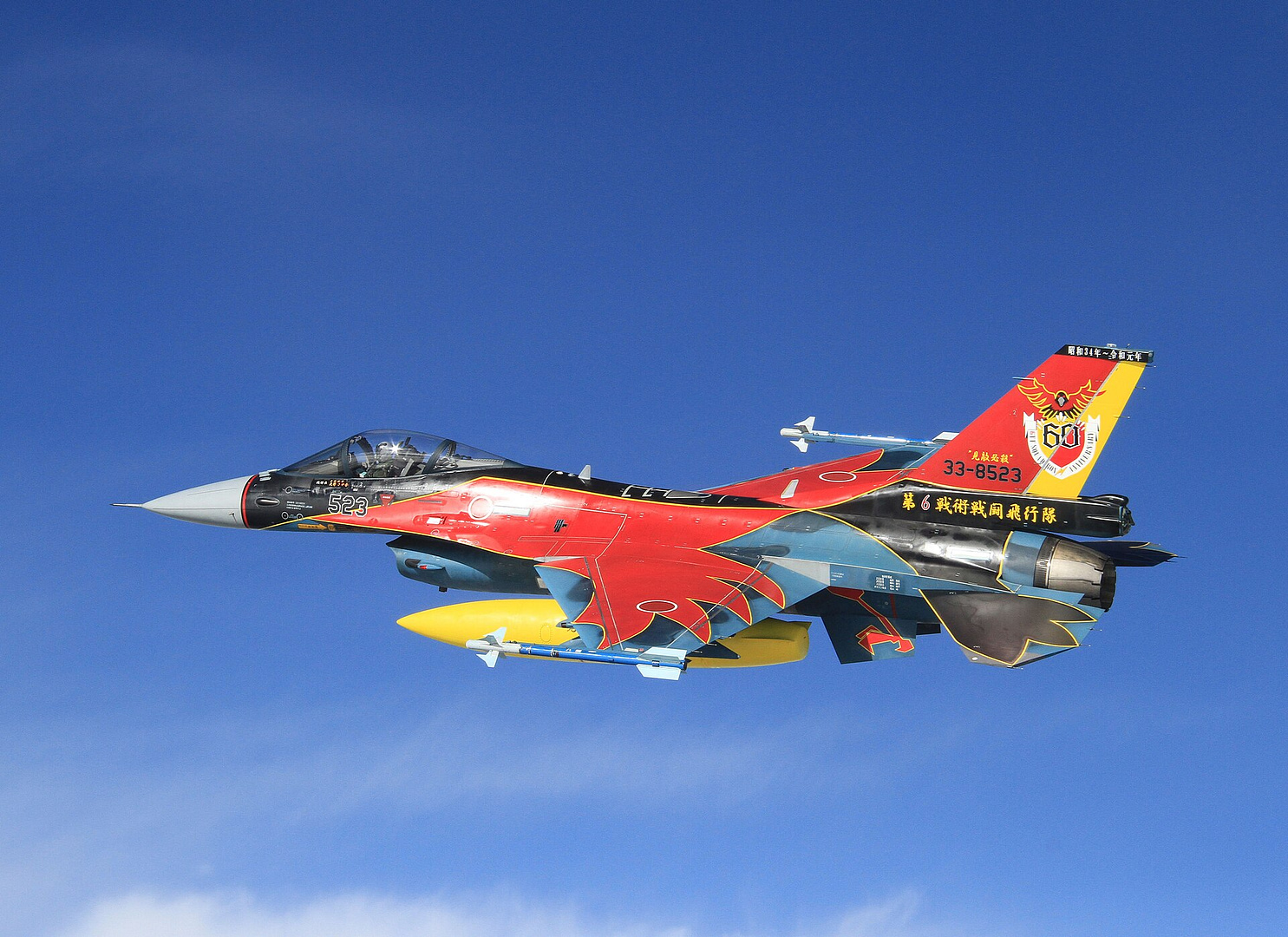
Mitsubishi F-2
“Viper Zero”
Japan’s F-16-derived multirole fighter — an enlarged, composite-winged Fighting Falcon built to hunt ships over the sea, and one of the first fighters in the world to enter service carrying an active electronically scanned array radar.
Japan’s F-16, remade for the sea
In the 1980s Japan set out to replace its ageing Mitsubishi F-1 strike jets with a modern fighter, and it wanted to build that aircraft itself. The programme was called FS-X, and Japanese industry pushed hard for a wholly indigenous design. Washington objected. What followed was one of the most politically charged defence deals of the decade: amid intense US–Japan trade friction, the two governments agreed in the late 1980s that the new fighter would instead be developed from an American design — the General Dynamics (later Lockheed Martin) F-16, specifically the enlarged “Agile Falcon” study. Mitsubishi Heavy Industries became prime contractor, with an American share of the work and a transfer of F-16 technology in one direction and Japanese know-how flowing back the other way.
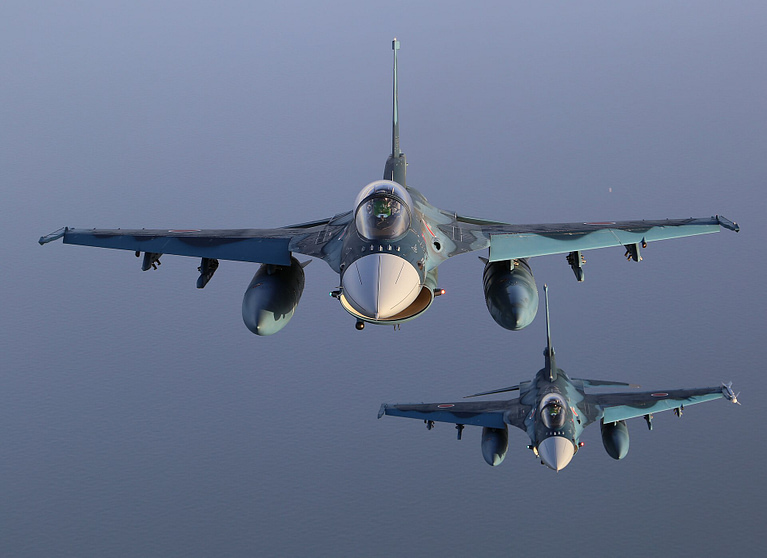
The result, the F-2, looks like an F-16 but is not one. The wing is roughly 25% larger in area, made largely from co-cured graphite-epoxy composite; the fuselage is longer, the nose reshaped, and the whole aircraft optimised for a mission the F-16 was never built for — long-range anti-ship strike over the ocean approaches to the Japanese archipelago, carrying up to four indigenous ASM-2 sea-skimming missiles. Its distinctive ocean-blue camouflage is a working choice, not a cosmetic one.
Under the reshaped nose sat the aircraft’s biggest technical leap: the Mitsubishi Electric J/APG-1, an active electronically scanned array (AESA) radar. When the F-2 entered service in 2000 it was among the very first operational fighters anywhere to fly with an AESA — a technology that would not become standard on American and European fighters until years later. The programme was not cheap: co-developing a bespoke fighter drove unit costs far above a stock F-16, and Japan eventually capped production at 94 aircraft (plus four prototypes) rather than the larger fleet once planned. The line closed in 2011, and the F-2 remains in front-line JASDF service today.
01The Mitsubishi F-2’s origins: how FS-X and US–Japan trade friction turned an F-16 into a Japanese fighter
The FS-X requirement of the mid-1980s set off a hard argument. Japanese planners and industry wanted a domestically designed fighter; the United States, worried about both the strategic implications and the trade balance, pressed Tokyo to buy or adapt an American aircraft. The 1987–88 compromise — formalised in a Memorandum of Understanding — made the new jet an F-16 derivative co-developed by Mitsubishi Heavy Industries and General Dynamics, with a workshare commonly reported at around 60% Japanese to 40% American.
The deal was controversial on both sides of the Pacific: American critics feared handing advanced aerospace technology to a commercial rival, while many in Japan resented being pushed off an indigenous design. Contested figures and framings persist to this day, so treat exact workshare and cost numbers as widely-cited estimates rather than settled facts. What is not in doubt is the outcome — a fighter that is visibly F-16-descended yet substantially Japanese in wing, radar, avionics and mission.
What makes it special
An enlarged F-16, built for the ocean
The F-2 takes the F-16’s layout and stretches it. The wing is about 25% larger in area than a standard Fighting Falcon’s, the fuselage is lengthened and the airframe is stressed for a heavier, longer-ranged anti-ship load — up to four ASM-2 sea-skimming missiles. More wing means more fuel, more range and more stores for the maritime-strike mission that defines the type.
One of the world’s first AESA fighters
The Mitsubishi Electric J/APG-1 active electronically scanned array radar made the F-2, on its 2000 service entry, among the first operational fighters anywhere to carry an AESA — years ahead of most Western types. Early J/APG-1 sets drew criticism over range and reliability; the improved J/APG-2 was later retrofitted across much of the fleet.
A co-cured composite wing
The F-2’s wing is built largely from graphite-epoxy composite using a co-curing process — cutting-edge for a production fighter wing in the 1990s and a genuine Japanese contribution to the design. Paired with indigenous avionics and mission systems, it makes the F-2 far more than a licence-built Viper.
02The Mitsubishi F-2’s J/APG-1 radar: one of the first fighter AESAs in service
An AESA radar replaces a single moving antenna with hundreds of tiny transmit-receive modules, steering the beam electronically. It offers faster scanning, better multi-target tracking and greater resistance to jamming and failure. When the F-2 fielded the J/APG-1 in 2000, that technology was still exotic on fighters — the United States would not field the F-22’s and Super Hornet’s AESAs in numbers until the following years. That makes the F-2 a genuine pioneer, even if the first-generation set was widely reported to underperform its promised detection range. Mitsubishi Electric addressed this with the upgraded J/APG-2, retrofitted to a large part of the fleet to extend range and improve performance with newer air-to-air missiles.
03The Mitsubishi F-2’s composite wing and Japanese avionics: what makes it more than a Viper
Beyond the bigger wing, the F-2’s Japanese content is substantial. The wing’s co-cured graphite-epoxy structure was an ambitious piece of manufacturing for its era; the aircraft carries indigenous mission computers, an integrated electronic-warfare suite, and Japanese weapons such as the AAM-3 and later AAM-4 air-to-air missiles and the ASM-1/ASM-2 anti-ship missiles. The F110 engine is licence-built in Japan by IHI as the F110-IHI-129. The net effect is an aircraft that shares the F-16’s DNA but is tailored, sensor to weapon, to Japan’s maritime defence needs.
Full specifications
Figures are for the single-seat F-2A; the two-seat F-2B is combat-capable but seats a second crew member. Contested values are hedged.
Airframe & Performance
- Mürettebat
- 1 (F-2A) · 2 (F-2B)
- Uzunluk
- ~15.52 m
- Kanat açıklığı
- ~11.13 m (with wingtip missiles)
- Yükseklik
- ~4.96 m
- Kanat alanı
- ~34.8 m² (about 25% larger than the F-16)
- Boş ağırlık
- ~9,530 kg
- Max takeoff weight
- ~22,100 kg
- Max speed
- ~Mach 2.0
- Servis tavanı
- ~18,000 m
- Savaş yarıçapı
- ~830 km (anti-ship profile, estimate)
Propulsion, Armament & Cost
- Motor
- 1 × GE F110-IHI-129 (licence-built by IHI)
- Thrust
- ~131 kN (~29,500 lbf) with afterburner
- Radar
- Mitsubishi Electric J/APG-1 AESA (J/APG-2 upgrade)
- Cannon
- 1 × 20 mm JM61A1 (M61 Vulcan type)
- Anti-ship
- Up to 4 × ASM-1 / ASM-2 sea-skimming missiles
- Air-to-air
- AAM-3, AAM-4, AIM-9, AIM-7
- First flight
- 7 October 1995
- Built
- ~98 (94 production + 4 prototypes, 1996–2011)
- Unit cost
- ~US$100+ million (very high; short run, estimate)
- Cost per flight hour
- No reliable public figure
04The Mitsubishi F-2’s operating costs: why a “Japanese F-16” ended up so expensive
The F-2 is one of the clearest cases of how a bespoke national fighter can cost far more than the aircraft it is based on. Co-developing an enlarged, composite-winged, AESA-equipped derivative — then building it in small numbers on a dedicated line — pushed the flyaway price to a level commonly quoted well above US$100 million per aircraft, several times the cost of a contemporary stock F-16. That expense is the main reason Japan capped production at 94 aircraft rather than the larger fleet once envisaged, and closed the line in 2011.
No official cost-per-flight-hour figure is published for the type, and any precise dollar number attached to the F-2 should be read as an estimate rather than an audited figure.
From FS-X controversy to front-line fighter
The FS-X debate
Japan launches the FS-X programme to replace the Mitsubishi F-1, with industry pushing for an indigenous design.
An F-16 compromise
Amid US–Japan trade friction, the two governments agree the fighter will be developed from the F-16 by Mitsubishi and General Dynamics.
First flight
The first XF-2 prototype flies on 7 October 1995, showing its enlarged composite wing and reshaped nose.
Enters JASDF service
The F-2 joins the Japan Air Self-Defense Force — among the first operational fighters anywhere with an AESA radar.
Production trimmed
Rising costs lead Japan to cap the buy at 94 production aircraft, well short of earlier plans.
Tsunami and the last airframe
The March 2011 Tohoku tsunami wrecks F-2s at Matsushima Air Base; the production line closes that September.
Back from the water
Rebuilt F-2s from Matsushima return to flying status, alongside J/APG-2 radar upgrades across much of the fleet.
The successor
The F-2 is due to retire from the mid-2030s, replaced by the Japan–UK–Italy Global Combat Air Programme (GCAP) fighter.
Twelve F-2 stories
The fighter Japan wanted to build alone
FS-X began as a bid for a wholly indigenous Japanese fighter.
Read the full story
A fighter caught in a trade war
The FS-X deal became a flashpoint in 1980s US–Japan trade tensions.
Read the full story
Why the wing grew
The F-2’s wing is about a quarter larger than the F-16’s — for a reason.
Read the full story
A radar ahead of its time
The F-2 flew an AESA radar before almost any other fighter in service.
Read the full story
The radar that had to grow up
Early J/APG-1 sets were criticised, then substantially improved.
Read the full story
A wing cured in one piece
The F-2’s co-cured composite wing was a real manufacturing gamble.
Read the full story
Built to sink ships
The F-2 exists above all to strike ships approaching Japan.
Read the full story
The wave that drowned a squadron
The 2011 tsunami submerged eighteen F-2s in a single afternoon.
Read the full story
Raised from the salt water
Most of the drowned F-2s were painstakingly rebuilt and flew again.
Read the full story
No shots fired in anger
In more than two decades of service, the F-2 has never seen combat.
Read the full story
The price of building your own
The F-2’s expense capped its own production.
Read the full story
From Viper Zero to sixth generation
The F-2’s replacement is a joint European-Japanese stealth fighter.
Read the full story
The F-2 in pictures
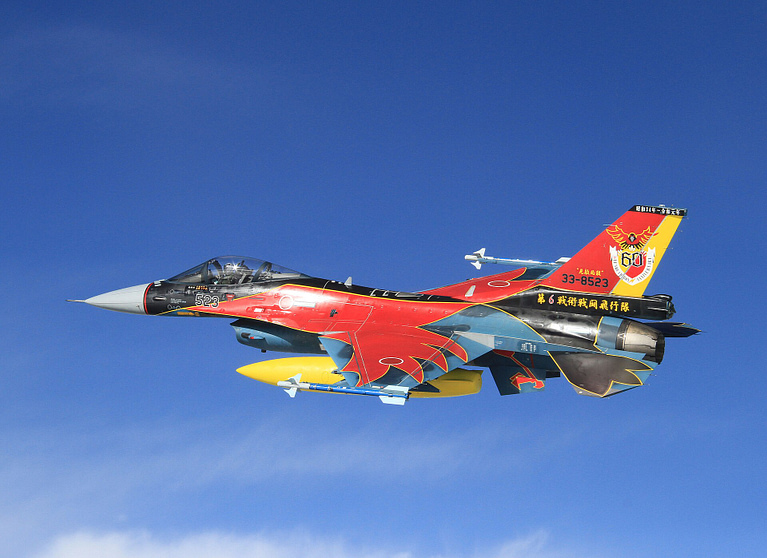
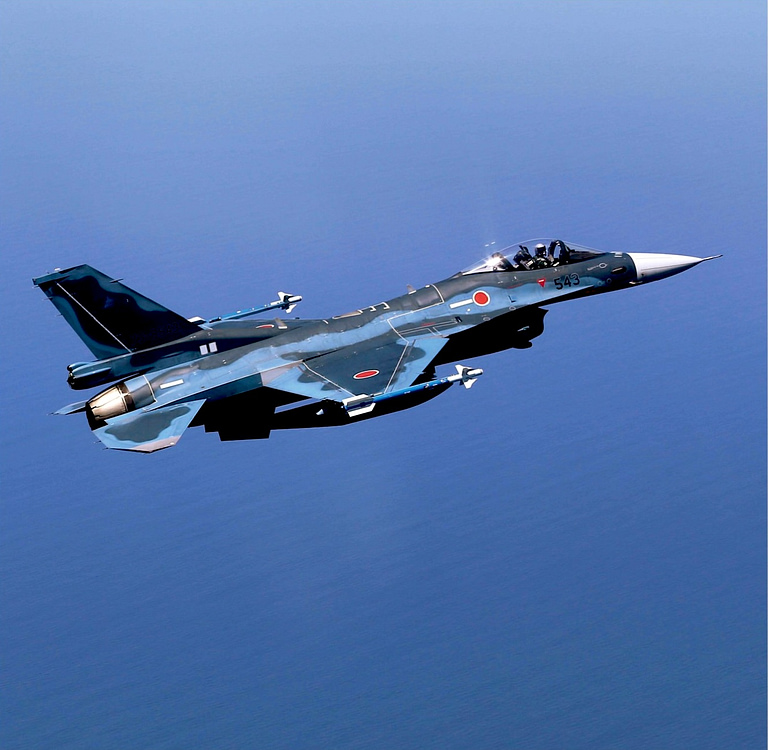
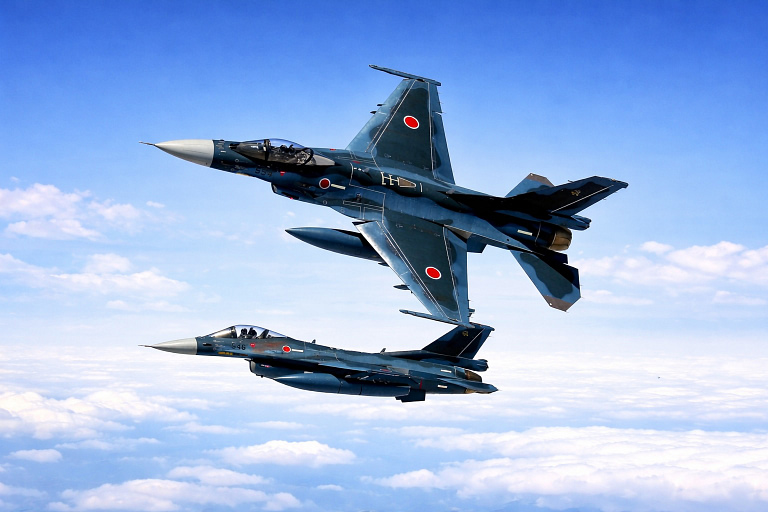
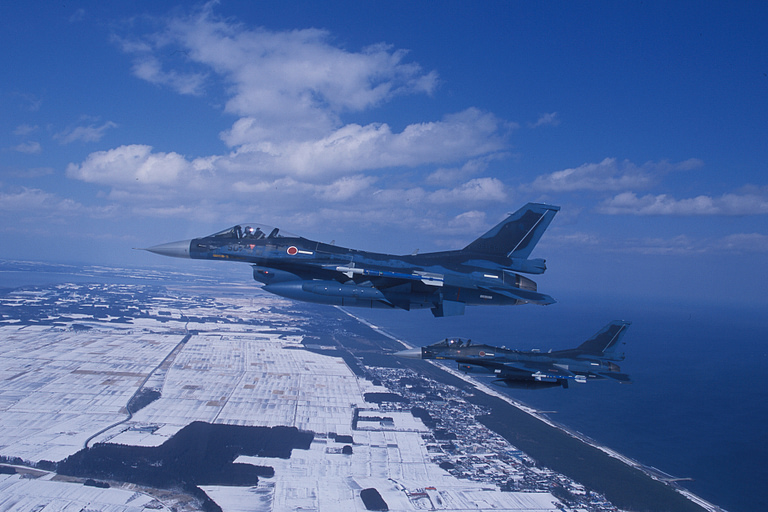
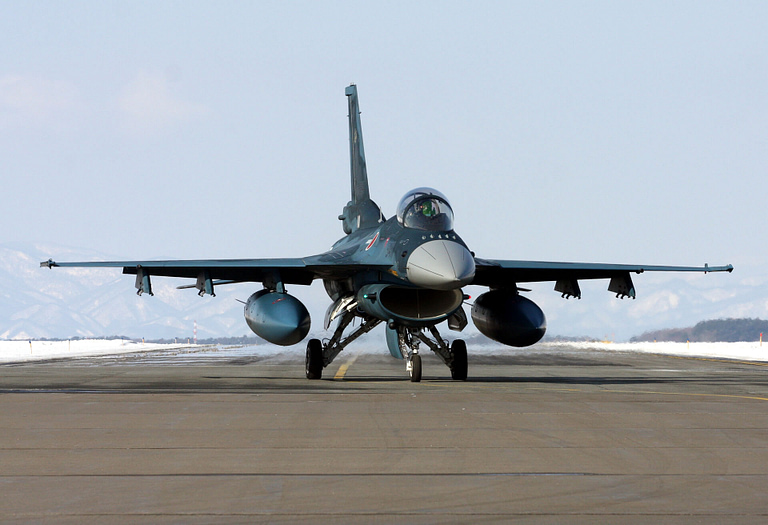
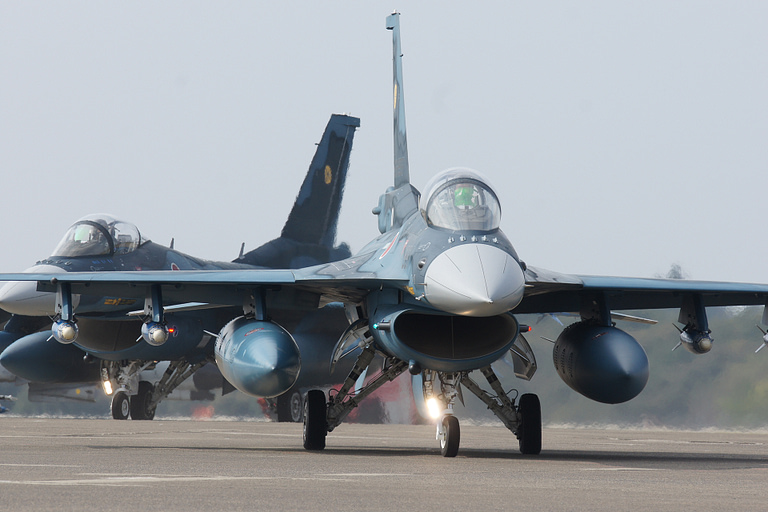
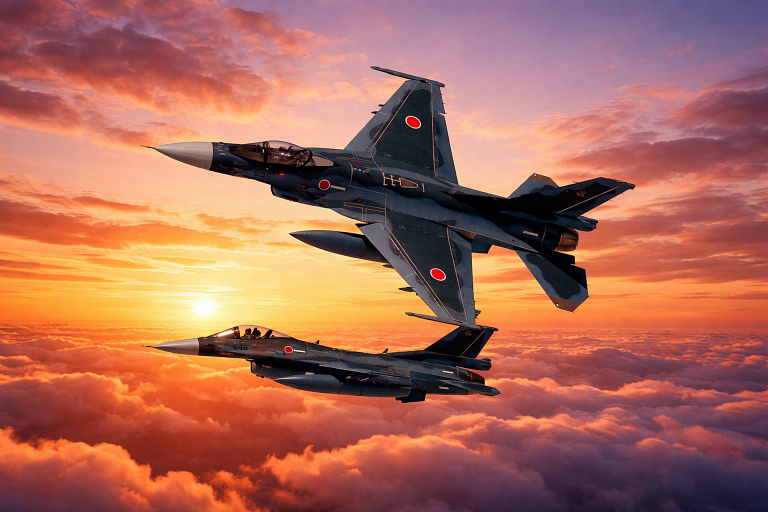
The F-2 in motion
A curated video feature for the Mitsubishi F-2 is coming soon. In the meantime, explore the photo gallery above and the operator map below.
Where the F-2 flies
The record that defines it
The F-2 has never been used in combat. More than two decades into its service life, its record is one of deterrence and readiness rather than kills: standing quick-reaction alert (QRA) against intruding aircraft around Japan’s vast air-defence zones, training relentlessly for the anti-ship mission, and supporting disaster relief at home. Its most dramatic day was not a battle but a natural disaster — the 2011 tsunami that swept eighteen F-2s from Matsushima Air Base, most of which were later rebuilt.
Compare the combat record of every military aircraft. Figures as of July 2026.
Everything people ask about the F-2
Can I fly in a Mitsubishi F-2?
Is the F-2 just a Japanese F-16?
What is the F-2’s main role?
Does the F-2 really have an AESA radar?
What happened to the F-2s in the 2011 tsunami?
How many F-2s were built, and why so few?
Is the F-2 still in service, and what will replace it?
You can’t fly the F-2.
These, you can.
Some legends only live in museums — others are fuelled and waiting. MiGFlug has put civilians in real military jet cockpits since 2004.
 Fly the L-39 AlbatrosThe world’s most-flown jet trainer — aerobatics included
 Fly the F-104 Starfighter“The missile with a man in it”
 Fly the MiG-21The Cold War’s most-produced jet
 T-33 Shooting Star'ı uçurunAmerica’s first jet trainer
 Fly the DH VampireA piece of early jet history
 Fly the S.211Agile Italian jet trainer
 Fly the MB-326The classic Aermacchi jet
 Fly the MiG-15The Soviet legend of the Korean War
Continue the tour
Every fact, checked
- The Aviationist — Mitsubishi F-2 “Viper Zero”Overview of the F-16 derivation, enlarged wing and AESA radar.
- Military Factory — Mitsubishi F-2Specification baseline, armament and production figures.
- Lockheed Martin — F-2 Support FighterThe US industrial partner’s account of the co-development.
- Mitsubishi Heavy Industries — F-2 FighterThe prime contractor’s programme page.
- The EurasianTimes — Japan’s highly modified F-16FS-X politics and the US–Japan trade friction.
- UPI — Japan’s damaged F-2s returning to serviceThe 2011 tsunami losses at Matsushima and the rebuild.
- 19FortyFive — the F-2 and the anti-ship missionThe maritime-strike role and current service context.
- Forecast International — Mitsubishi F-2 reportProgramme history, cost drivers and production cap.