
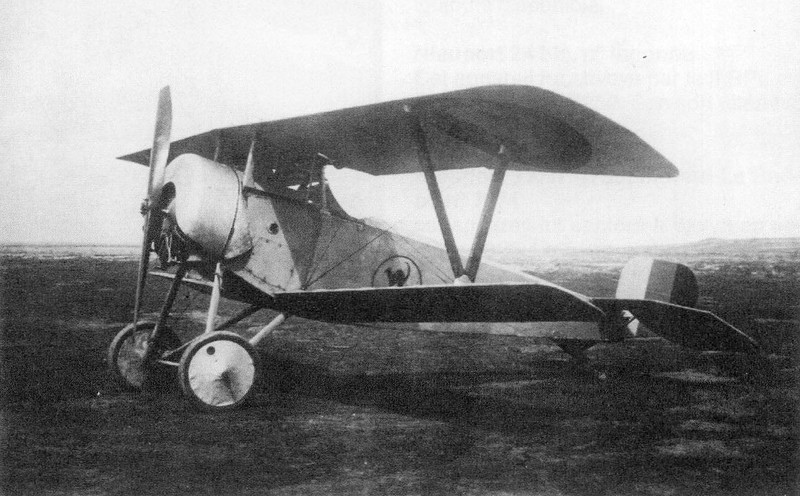
Gustave Delage’s tiny French sesquiplane — the “Bébé” — was light, fast and nimble. Alongside the Airco DH.2 it wrested air superiority back from the Fokker Eindecker over Verdun in 1916, firing a Lewis gun mounted above the wing to clear the propeller.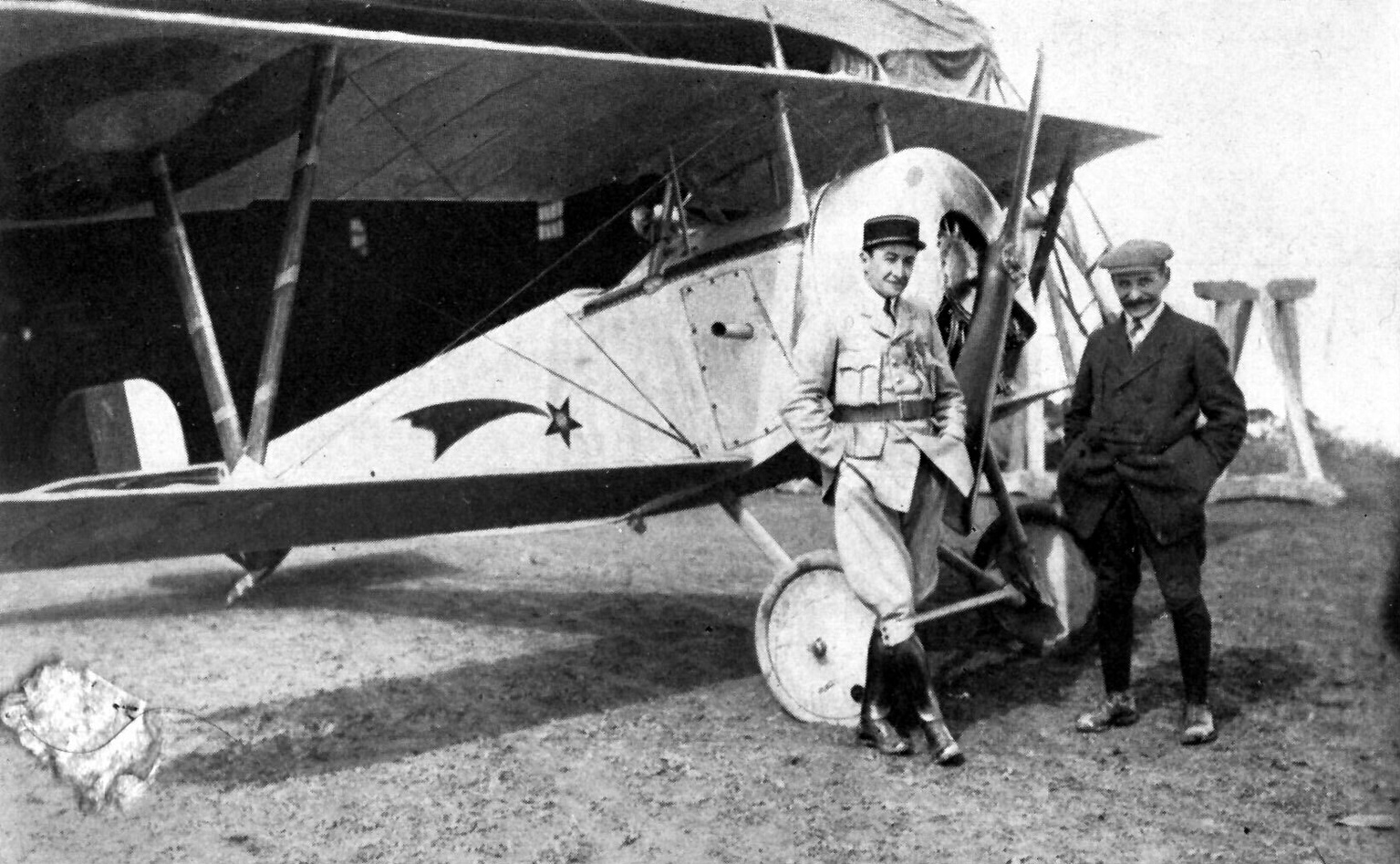
Nieuport 11
“The little scout that broke the Fokker Scourge”
The Nieuport 11 “Bébé”: how a tiny French sesquiplane broke the Fokker Scourge
In the winter of 1915–16 the German Fokker Eindecker, with its synchronised gun firing through the propeller arc, had made the Western Front deadly for Allied airmen — a period the British press called the “Fokker Scourge.” The reply that changed the balance was a tiny French sesquiplane scout, the Nieuport 11 “Bébé” — light enough to out-climb and out-turn the Eindecker, and quick enough to catch it. Alongside the Airco DH.2 and F.E.2b, the little Nieuport helped wrest control of the air back from Germany in the spring of 1916, most famously over Verdun.
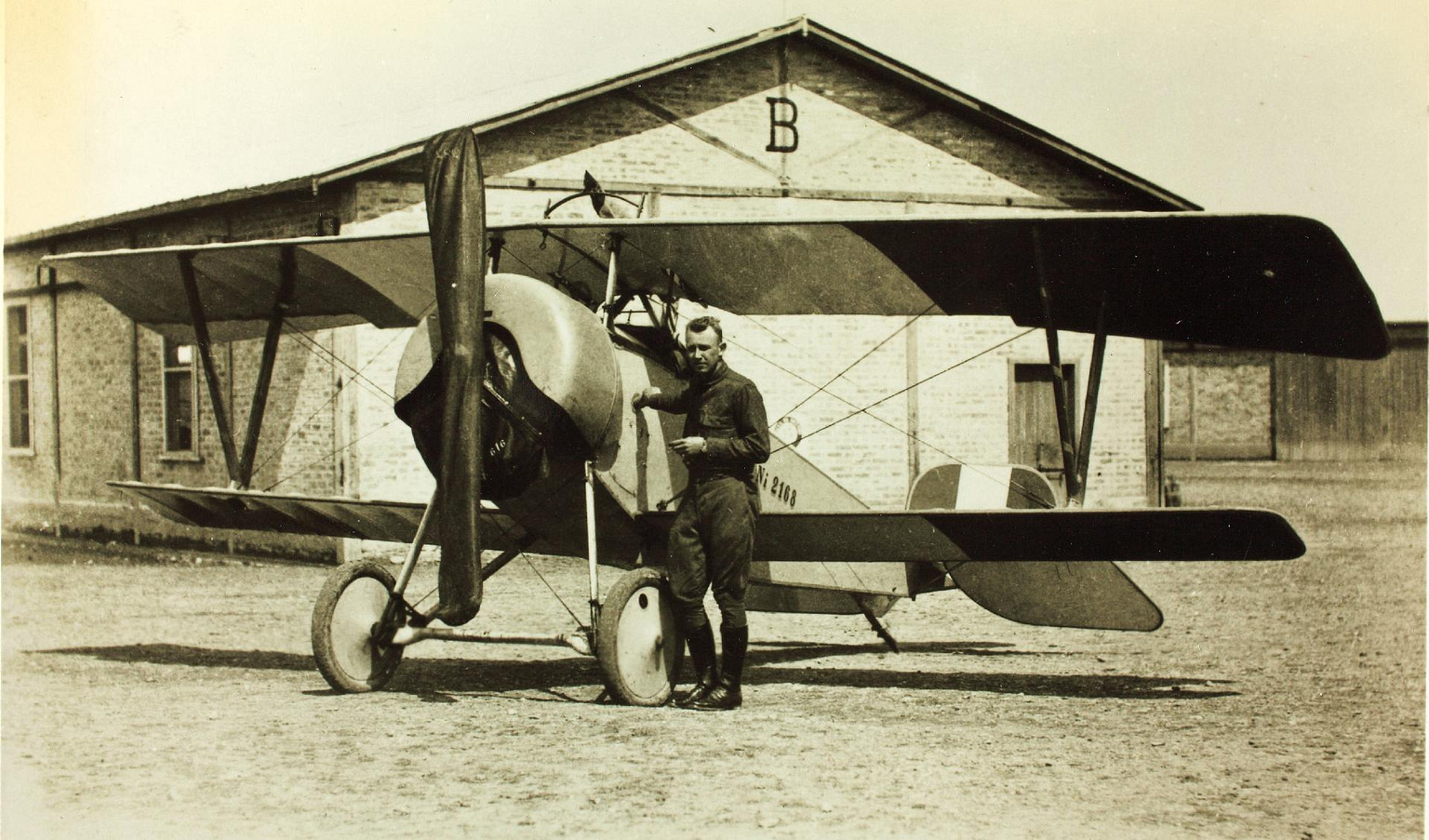
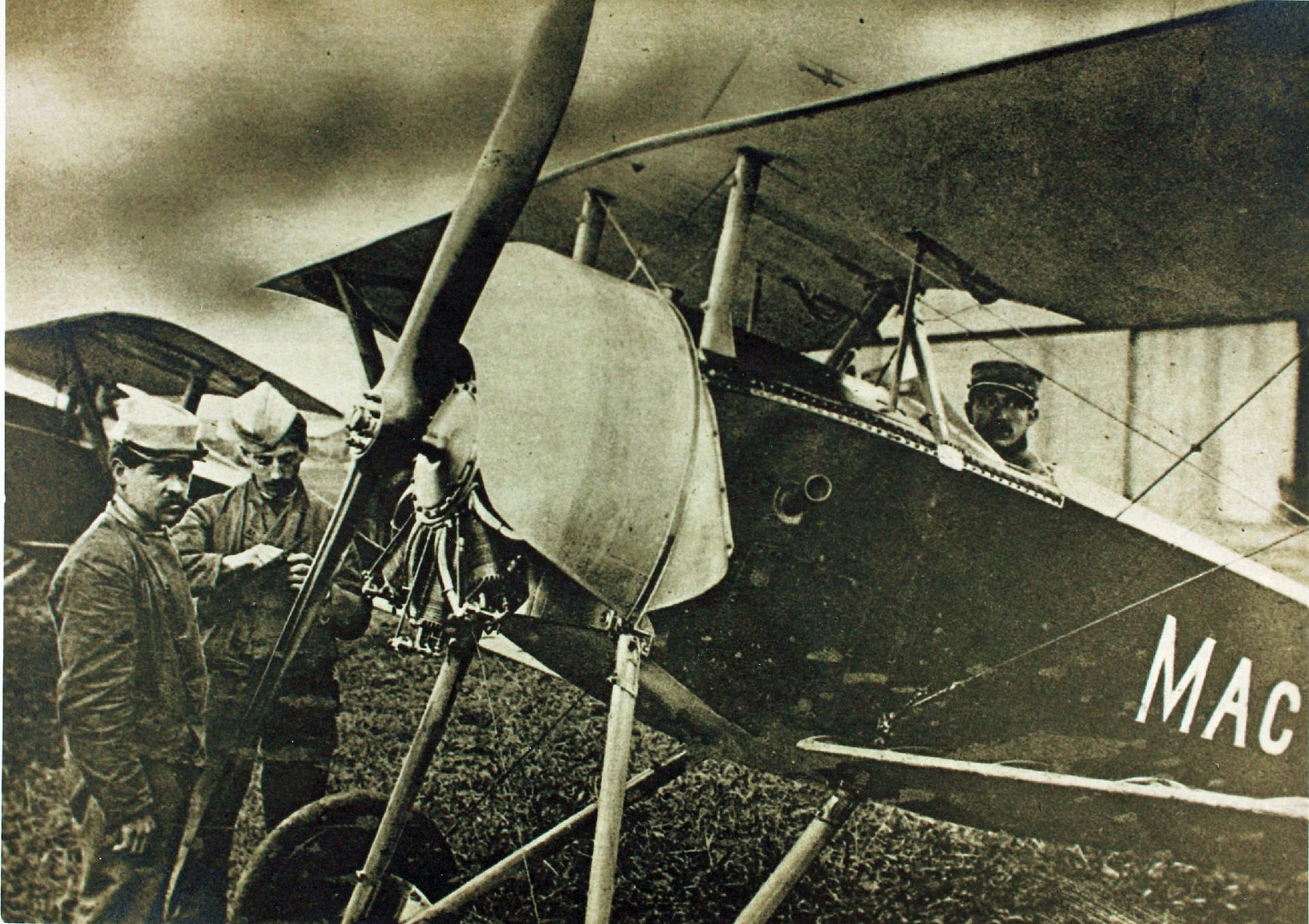
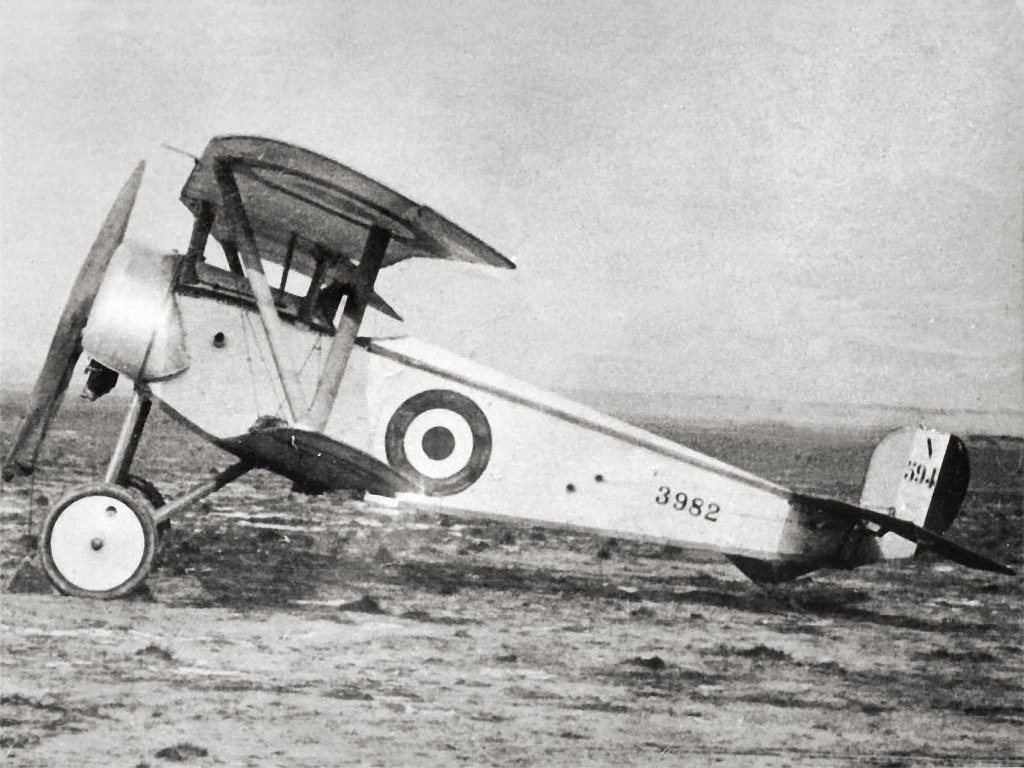
Designed by Gustave Delage, the Bébé — French for “Baby”, a nickname it earned for its small size — was a compact single-seat scout. It introduced the distinctive sesquiplane layout the whole Nieuport family would carry: a normal upper wing over a much narrower lower wing built around a single spar, which gave the pilot an almost unobstructed view downward and forward. On a Le Rhône 9C rotary of only about 80 horsepower it was astonishingly light, climbed well and turned tightly. It reached French escadrilles in the winter of 1915–16 and was an immediate success.
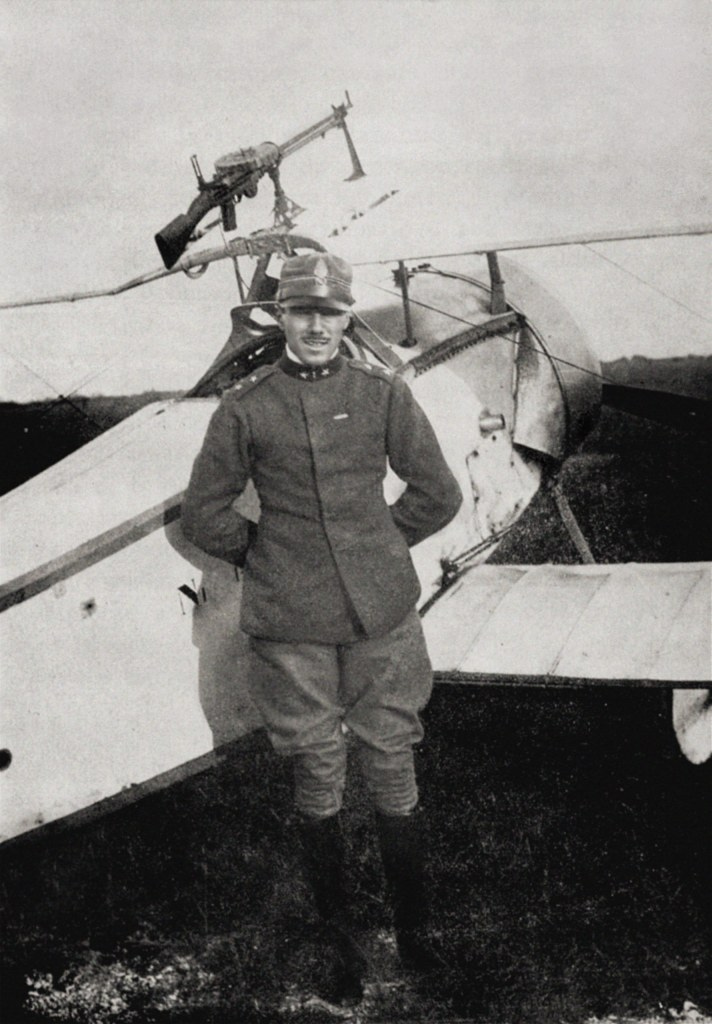
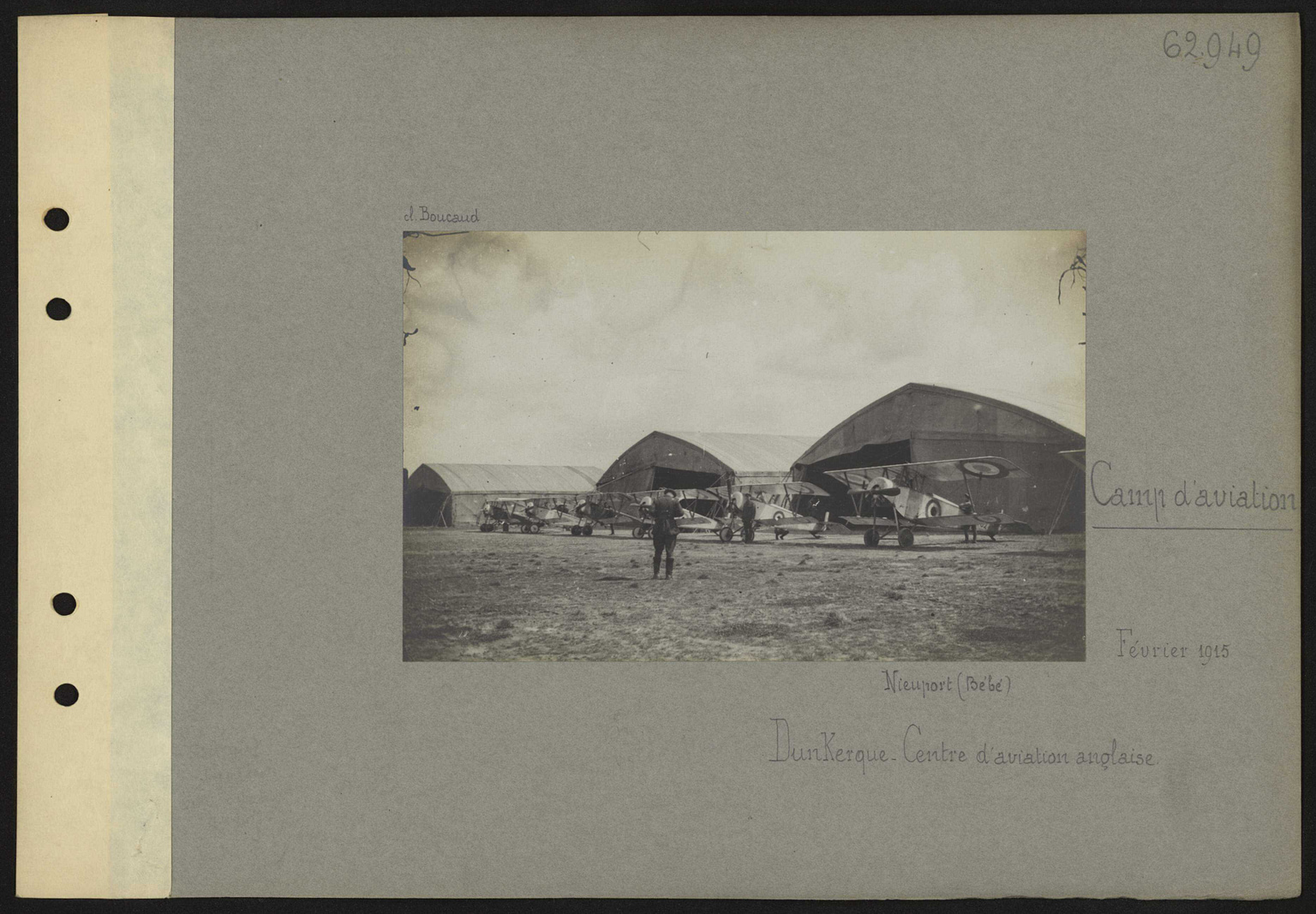
Its influence outran the French air service. Britain’s Royal Naval Air Service and Royal Flying Corps bought the Bébé to cover the gap before their own scouts matured; Italy flew it and licence-built it in large numbers as the Nieuport-Macchi; Russia, Belgium and the Netherlands operated it too. It became an early mount for a startling roster of pilots — Jean Navarre, Charles Nungesser, Georges Guynemer and, in Italy, Francesco Baracca — and for the first half of 1916 it was one of the best fighters over the front.
There was one honest flaw, and it ran in the family. The narrow single-spar lower wing could flex, and in a prolonged dive was known to fail. Pilots learned not to hold high-speed dives too long. And with only about 80 horsepower and a single drum-fed gun, the Bébé was soon outclassed — first by German Albatros scouts, then by its own more powerful successor, the Nieuport 17.
01The Nieuport 11’s origins: Gustave Delage and the birth of the sesquiplane scout
Gustave Delage became Nieuport’s chief designer in 1914 and moved the firm away from its pre-war racing monoplanes toward a series of small, agile biplane scouts. His signature idea was the sesquiplane — a lower wing far narrower than the upper, carried on V-shaped interplane struts.
O Nieuport 11 “Bébé” of 1915 proved the concept: it was one of the aircraft that broke the Fokker Scourge, and it became the direct ancestor of the more powerful Nieuport 17 and the whole Nieuport 16/17/23/24/27 line that followed.
What makes the Nieuport 11 special
The Nieuport 11’s sesquiplane wing: built to see and to turn
The narrow single-spar lower wing gave the Bébé a superb downward and forward view and very light, responsive handling. It could out-turn and out-climb the Fokker Eindecker — the qualities that mattered most in 1916’s close-in dogfights. The trade-off was strength: one spar carries less load than two.
A light 80 hp rotary that made the Bébé quick
O Le Rhône 9C rotary produced only about 80 horsepower, but the whole aircraft weighed barely 350–480 kg. That superb power-to-weight let the Bébé climb and manoeuvre with the best of its day, even if its straight-line speed — around 155–165 km/h — was modest.
A gun mounted above the wing to clear the propeller
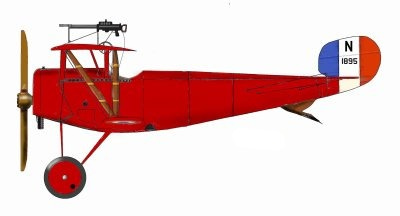
France still lacked a reliable gun-synchronising gear in 1916, so the Bébé’s single 0.303-inch Lewis gun was mounted above the upper wing to fire clear of the propeller arc. It worked — but reloading the drum meant standing up in the cockpit and pulling the gun down on its mounting in the slipstream, an awkward job in combat.
02The Nieuport 11’s sesquiplane wing: the idea that gave the view — and the flaw
A conventional biplane has two full wings braced together for strength. Delage’s sesquiplane replaced the lower wing with a narrow surface built around a single spar, joined to the upper wing by a single V-strut on each side. The pilot could see past it downward and forward; the aircraft was light and turned superbly.
The cost was torsional rigidity. With only one spar, the narrow lower wing could twist under load and, in a prolonged or high-speed dive, was known to flex or even fail — a weakness the whole Nieuport family shared until the sturdier two-spar SPAD arrived.
03The Nieuport 11’s gun: an over-wing Lewis, no synchroniser
The Bébé predated any reliable French synchronising gear, so it carried a single Lewis gun above the upper wing, angled to fire over the spinning propeller arc. On some machines a sliding rail — the kind later formalised on the British Foster mounting — let the pilot pull the gun down to change its 47-round drum in flight.
As gun-synchronising gear matured through 1916, later Nieuports such as the 17 gained a synchronised Vickers firing through the propeller — but the Bébé itself kept its over-wing Lewis to the end of its front-line career.
04The Nieuport 11’s lower-wing weakness: the honest caveat
This is the caveat any honest account of the Nieuport family must include. In a prolonged or high-speed dive, the single-spar lower wing could twist and, in the worst cases, shed its fabric or break up.
Pilots adapted by not holding steep dives, and later the Royal Flying Corps ordered the lower wings strengthened. The Germans admired the layout enough to copy it in the Albatros D.III — which then suffered similar lower-wing troubles — while the Allies eventually moved to the stronger two-spar SPAD.
Nieuport 11 specifications
Figures are for the standard Nieuport 11 “Bébé” with the Le Rhône 9C rotary. Early WWI sources disagree — treat everything here as representative, and where they diverge we have flagged it.
Airframe & Performance
- Mürettebat
- 1 — pilot
- Uzunluk
- ~5.8 m (5.64–5.8 m depending on source)
- Kanat açıklığı
- ~7.55 m (upper wing)
- Yükseklik
- ~2.45 m
- Kanat alanı
- ~13 m²
- Empty / loaded weight
- ~320–350 kg / ~480–550 kg (sources vary)
- Max speed
- ~165 km/h (~102 mph) at sea level; sources vary ~155–167 km/h
- Servis tavanı
- ~4,500 m (~15,000 ft); estimates vary
- Endurance
- ~2 to 2.5 hours
Propulsion, Armament & Production
- Motor
- 1 × Le Rhône 9C rotary, ~80 hp (some fitted Gnome or Clerget)
- Engine type
- 9-cylinder air-cooled rotary
- Silahlanma
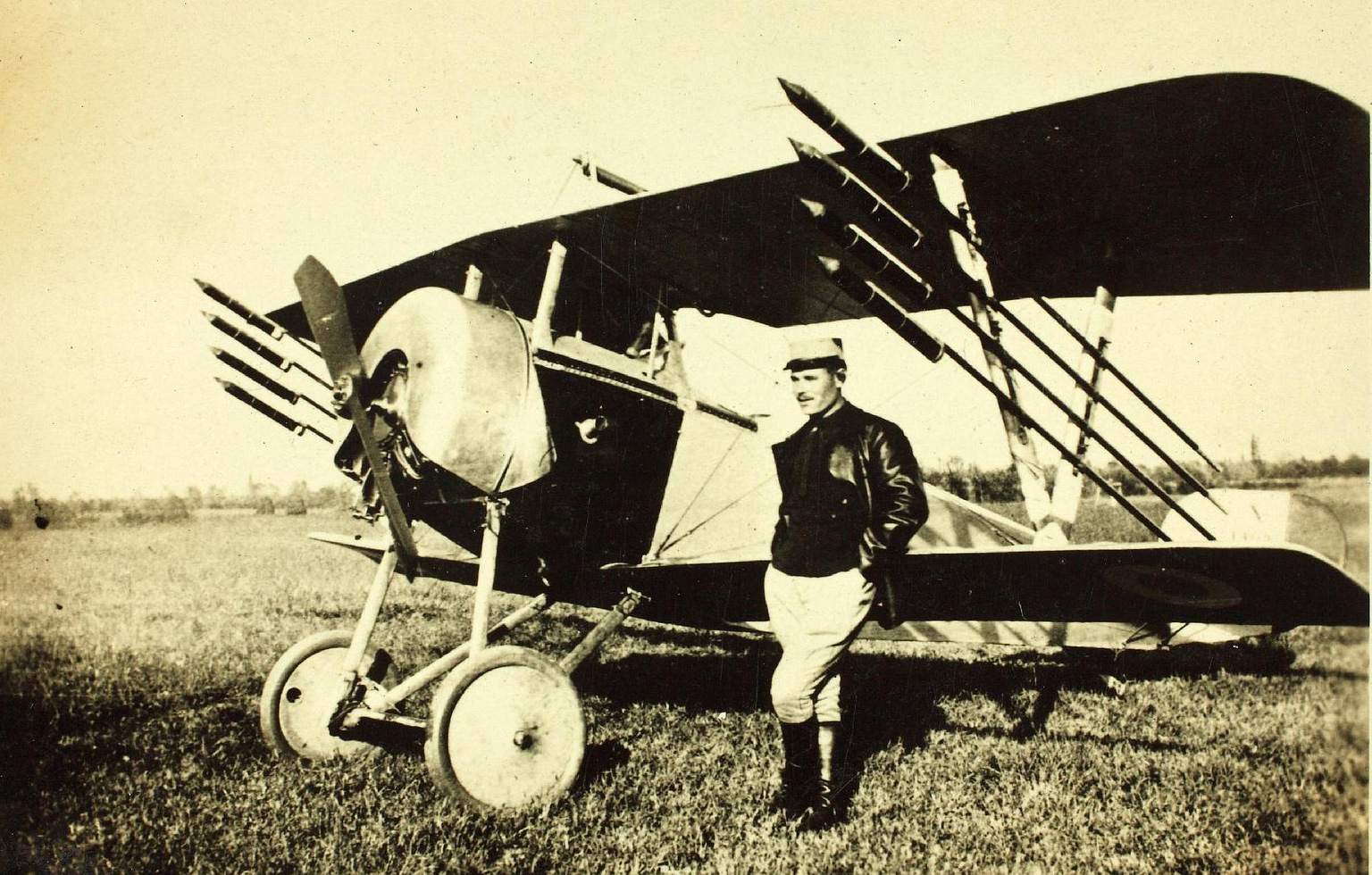
- 1 × 0.303 in Lewis gun above the upper wing (no synchroniser); some carried Le Prieur anti-balloon rockets on the struts
- First flight / service
- 1915; French service from early 1916, prominent over Verdun
- Built
- Figures vary widely — often cited around 7,200+ including large Italian licence production; treat as an estimate
- Manufacturers
- Nieuport (France); Nieuport-Macchi (Italy, licence); Dux (Russia, licence)
- Unit cost
- Not reliably recorded (WWI)
- Cost per flight hour
- Not reliably recorded (WWI); modern airworthy reproductions cost roughly $1,500–3,500/hour to operate (estimate)
05The Nieuport 11 family: from the Bébé to the 16, 17 and beyond
The Bébé sat at the head of a family. A more powerful version with a 110 hp engine became the Nieuport 16 ve Nieuport 17; refinements produced the Nieuport 23, o 24 ve 27, each a little heavier, faster and better armed than the last — but all sharing the sesquiplane silhouette Delage drew for the Nieuport 11.
Production was not confined to France. In Italy, Nieuport-Macchi built the Bébé under licence in large numbers, and in Russia the Dux works assembled it too — so the little Nieuport served far beyond the Western Front.
06The Nieuport 11’s costs: what a 1916 scout was worth
Per-aircraft procurement prices for French 1916 scouts are not reliably recorded in any consistent form, and wartime accounting bears no relation to a modern price. The Bébé was, by the standards of the day, a cheap and simple aeroplane — wood, wire and fabric around a small rotary.
What can be said is what it costs to keep an airworthy reproduction flying today: operators typically report on the order of $1,500–3,500 an hour, driven mostly by the care a century-old rotary design demands.
The Nieuport 11 through the war
Delage joins Nieuport
Gustave Delage takes charge of design at Nieuport and begins the sesquiplane scout line that will lead to the Bébé.
The Nieuport 11 “Bébé” takes shape
The tiny sesquiplane scout is designed and flown in 1915, entering French service around the turn of the year.
Breaking the Fokker Scourge over Verdun
The Bébé reaches the front in numbers and, with the Airco DH.2 and F.E.2b, helps end German air superiority — most visibly in the fighting over Verdun.
Adopted by Britain, Italy, Russia and Belgium
The Allies buy and licence-build the type: the RNAS and RFC fly it, Italy builds it as the Nieuport-Macchi, and Russia assembles it at Dux.
Le Prieur rockets and the balloon war
Nieuport 11s carry Le Prieur rockets on their wing struts to attack German observation balloons — one of the war’s first air-to-ground rocket weapons.
Superseded by its own descendants
More powerful Nieuports — the 16 and the 17 — and then the SPAD take over front-line duties as the Bébé is outclassed.
Second-line and training service
Surviving and licence-built airframes serve on as advanced trainers and in quieter sectors well after their front-line day has passed.
Rare originals and airworthy replicas
A handful of genuine Nieuport 11s survive in museums, and airworthy reproductions keep the Bébé flying at heritage airfields.
The Nieuport 11 in the words of those who flew it
Jean Navarre, the Sentinel of Verdun
France’s flamboyant early ace made his name on the Bébé over Verdun in 1916.
Read the full story
Fighting with a gun above the wing
The Bébé’s Lewis gun sat above the upper wing — deadly, but awkward to reload.
Read the full story
Francesco Baracca’s first victories
Italy’s greatest ace opened his account flying licence-built Nieuports.
Read the full story
Georges Guynemer learns his trade
Before the SPAD made him a legend, France’s beloved ace flew the little Nieuport.
Read the full story
The Escadrille Américaine
American volunteers flew Nieuports in French service before the U.S. entered the war.
Read the full story
Le Prieur rockets against the balloons
Nieuport 11s carried rockets on their struts to burn German observation balloons.
Read the full story
The wing that could not be trusted in a dive
The feature pilots loved — the narrow lower wing — was also its flaw.
Read the full story
Imitation across the trenches
The sesquiplane layout was so good the Germans copied it.
Read the full story
One of the aircraft that broke the Scourge
The Bébé was among the fighters that ended German air superiority in 1916.
Read the full story
Macchi and Dux
The Bébé was built far beyond France, in Italy and Russia.
Read the full story
A gentle second career
Forgiving handling gave the retired Bébé a long life as a trainer.
Read the full story
Rare originals, living replicas
Almost no genuine Bébés remain — but reproductions still fly.
Read the full story
The Nieuport 11 in pictures
The Nieuport 11 in the air
A quality showcase of an airworthy Nieuport 11 reproduction in flight, filmed by the Historical Aviation Film Unit (~67,000 views). It shows the Bébé’s light, agile handling and the sound of its Le Rhône rotary.
Where the Nieuport 11 flew
Designed and built in France, the Bébé fought on the Western Front and at Verdun, served with Britain’s RNAS, Italy, Russia and Belgium, was licence-built in Italy and Russia, and survives today in a few museums and airworthy replicas. Toggle the categories to explore.
The record the Nieuport 11 left behind
Victory tallies from the First World War are unreliable and were often shared or unconfirmed, so the Bébé’s exact combat record cannot be tabulated. What is clear is its strategic effect: alongside the Airco DH.2 and F.E.2b it helped end the Fokker Scourge and restore Allied air superiority in the first half of 1916.
Nieuport 11: your questions answered
Can I fly in a Nieuport 11?
What made the Nieuport 11 so effective in 1916?
Was the Nieuport 11’s lower wing really dangerous?
Which pilots flew the Nieuport 11?
Did the Nieuport 11 end the “Fokker Scourge”?
How many Nieuport 11s were built?
You can’t fly the Nieuport 11.
These, you can.
Some legends only live in museums. But MiGFlug still puts you in the cockpit of genuine military aircraft — from Cold War jet trainers to supersonic fighters.
 Fly the L-39 AlbatrosThe world’s most-flown jet trainer — aerobatics included
 Fly the F-104 Starfighter“The missile with a man in it”
 Fly the MiG-21The Cold War’s most-produced jet
 T-33 Shooting Star'ı uçurunAmerica’s first jet trainer
 Fly the DH VampireA piece of early jet history
 Fly the S.211Agile Italian jet trainer
 Fly the MB-326The classic Aermacchi jet
 Fly the MiG-15The Soviet legend of the Korean War
Explore more of the collection
Every fact, checked
- Royal Air Force Museum — Nieuport Scouts and the Fokker ScourgeDelage’s sesquiplane line and the fight for air superiority in 1916
- Smithsonian National Air and Space Museum — Early Fighter AircraftWWI fighter development and the air war context
- Imperial War Museums — The Birth of Military AviationThe Fokker Scourge and the Allied fightback of 1916
- Musée de l’Air et de l’Espace, Le BourgetFrench national collection of Nieuport and WWI aircraft
- History of War — Nieuport 11Specifications, service history and the Bébé’s role over Verdun
- Museo dell’Aeronautica Gianni CaproniItalian collection holding a Nieuport-Macchi-built Ni.11
- The Vintage Aviator (New Zealand)Builder and operator of flying WWI Nieuport reproductions
- Key Aero — Nieuport 11 and the Nieuport scoutsThe type’s design, handling and modern replicas
- C. Shores, N. Franks & R. Guest — Above the TrenchesReference on Allied aces and their Nieuport victories
- J. M. Bruce — The Aeroplanes of the Royal Flying Corps (Military Wing)Detailed account of RFC Nieuport service and armament