
Nieuport 11
“The little scout that broke the Fokker Scourge”
Gustave Delage’s tiny French sesquiplane — the “Bébé” — was light, fast and nimble. Alongside the Airco DH.2 it wrested air superiority back from the Fokker Eindecker over Verdun in 1916, firing a Lewis gun mounted above the wing to clear the propeller.
The Nieuport 11 “Bébé”: how a tiny French sesquiplane broke the Fokker Scourge
In the winter of 1915–16 the German Fokker Eindecker, with its synchronised gun firing through the propeller arc, had made the Western Front deadly for Allied airmen — a period the British press called the “Fokker Scourge.” The reply that changed the balance was a tiny French sesquiplane scout, the Nieuport 11 “Bébé” — light enough to out-climb and out-turn the Eindecker, and quick enough to catch it. Alongside the Airco DH.2 and F.E.2b, the little Nieuport helped wrest control of the air back from Germany in the spring of 1916, most famously over Verdun.
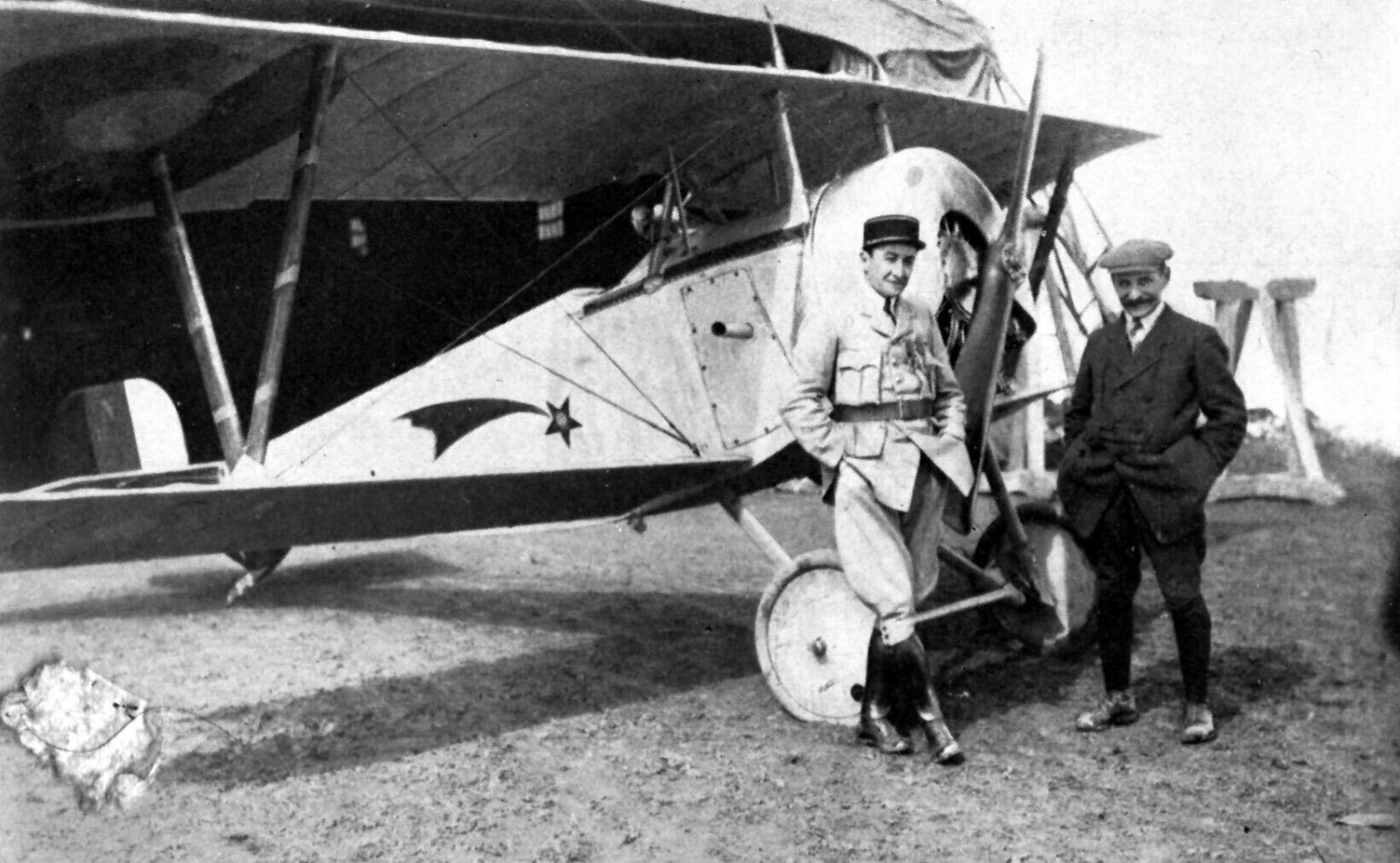
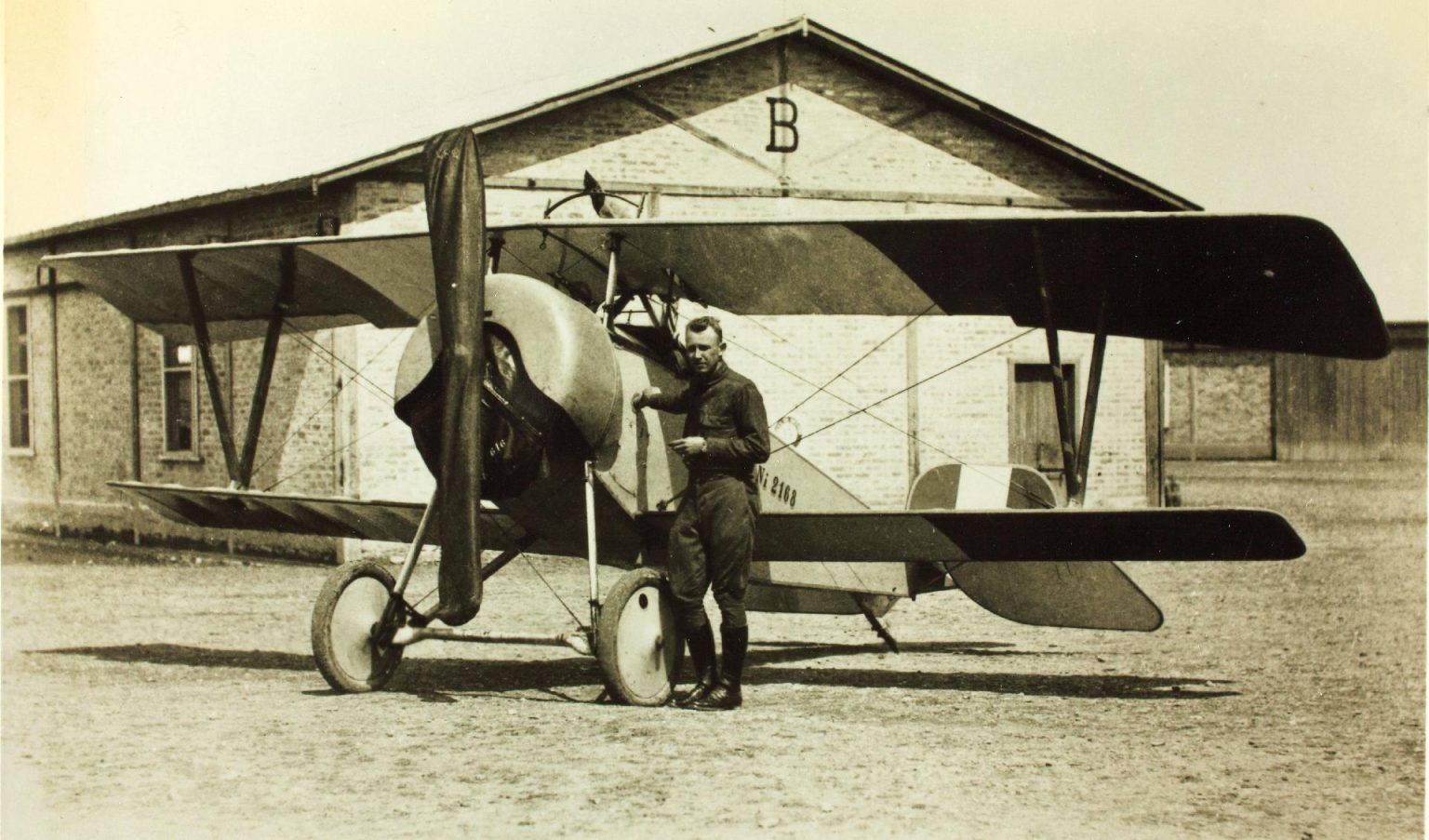
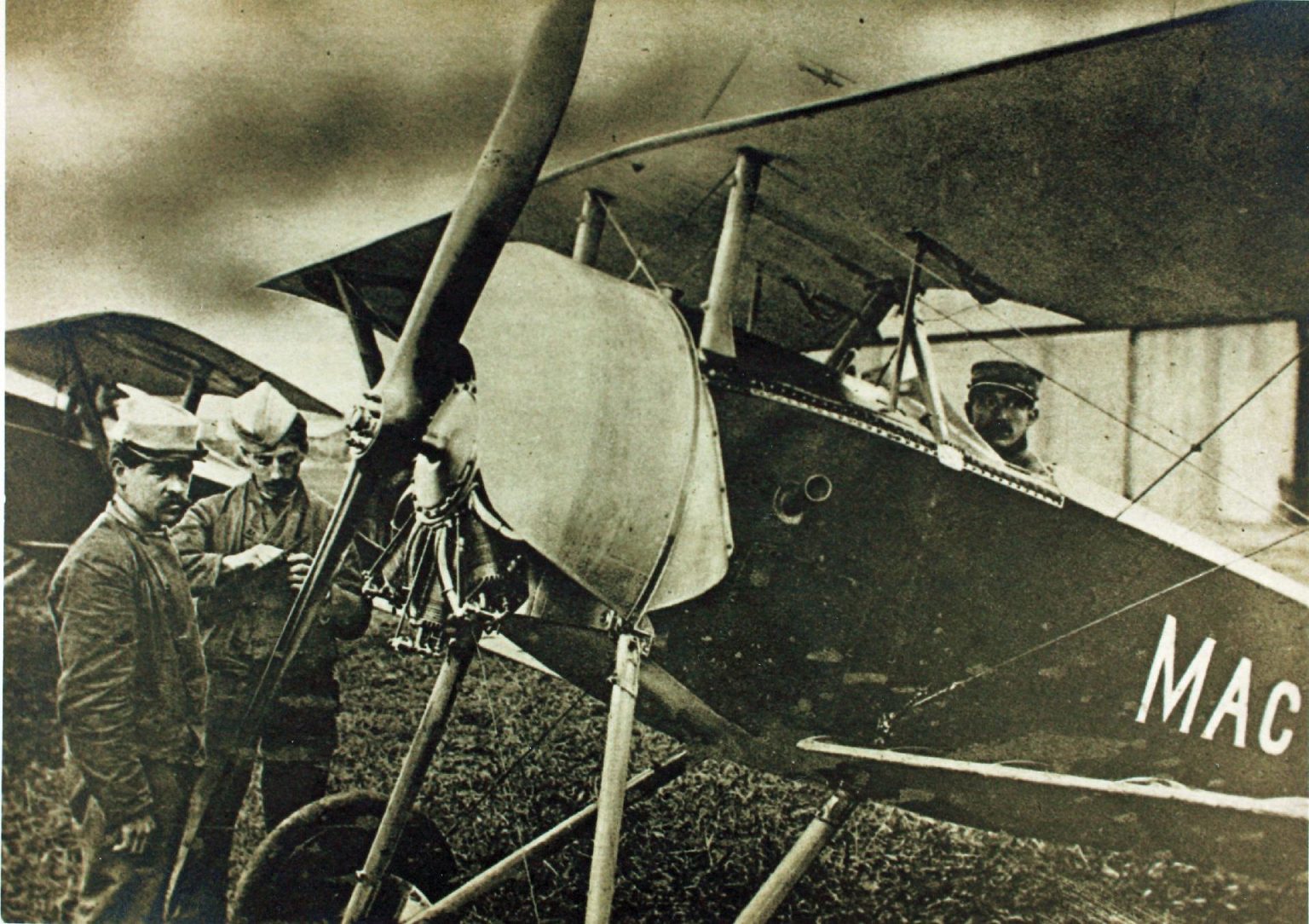
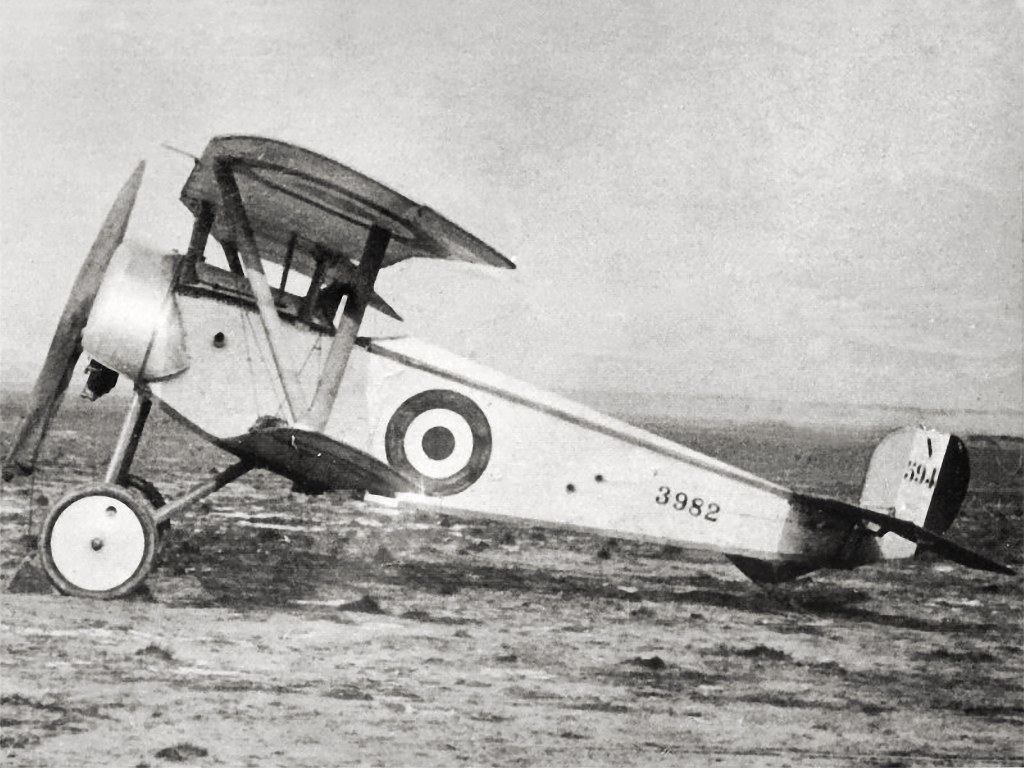
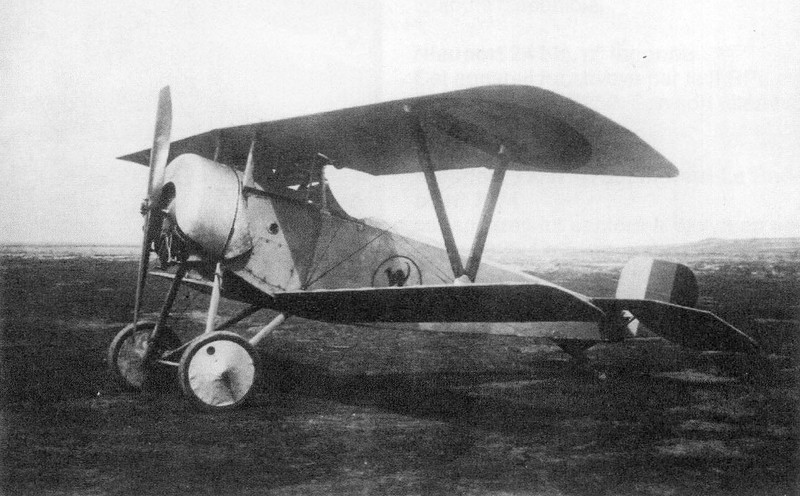
Designed by Gustave Delage, the Bébé — French for “Baby”, a nickname it earned for its small size — was a compact single-seat scout. It introduced the distinctive sesquiplane layout the whole Nieuport family would carry: a normal upper wing over a much narrower lower wing built around a single spar, which gave the pilot an almost unobstructed view downward and forward. On a Le Rhône 9C rotary of only about 80 horsepower it was astonishingly light, climbed well and turned tightly. It reached French escadrilles in the winter of 1915–16 and was an immediate success.
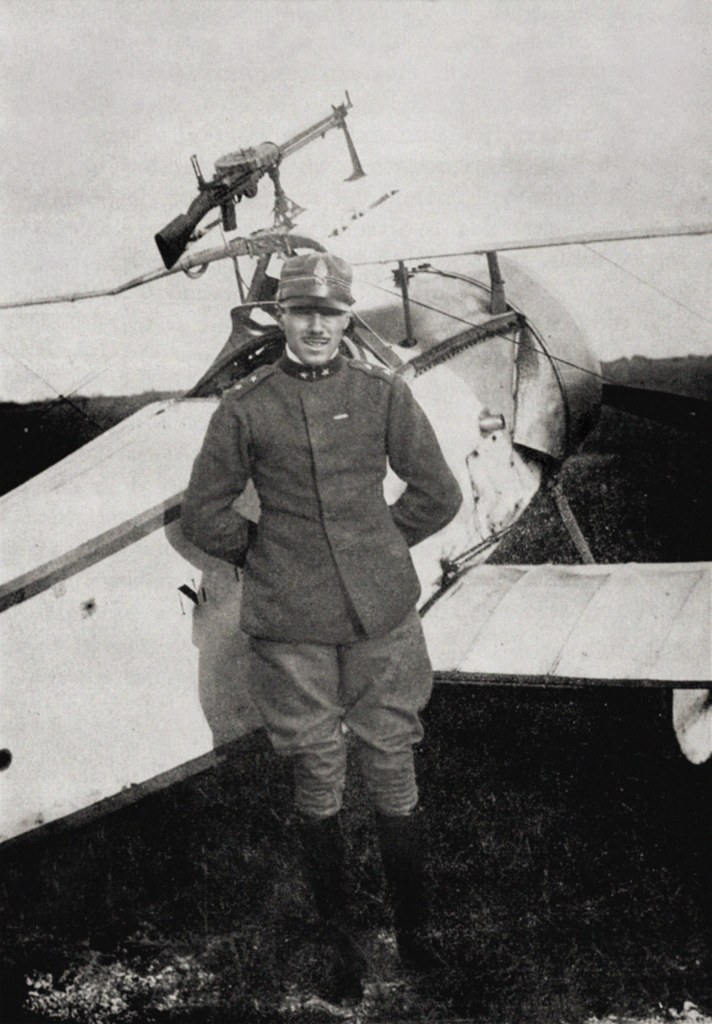
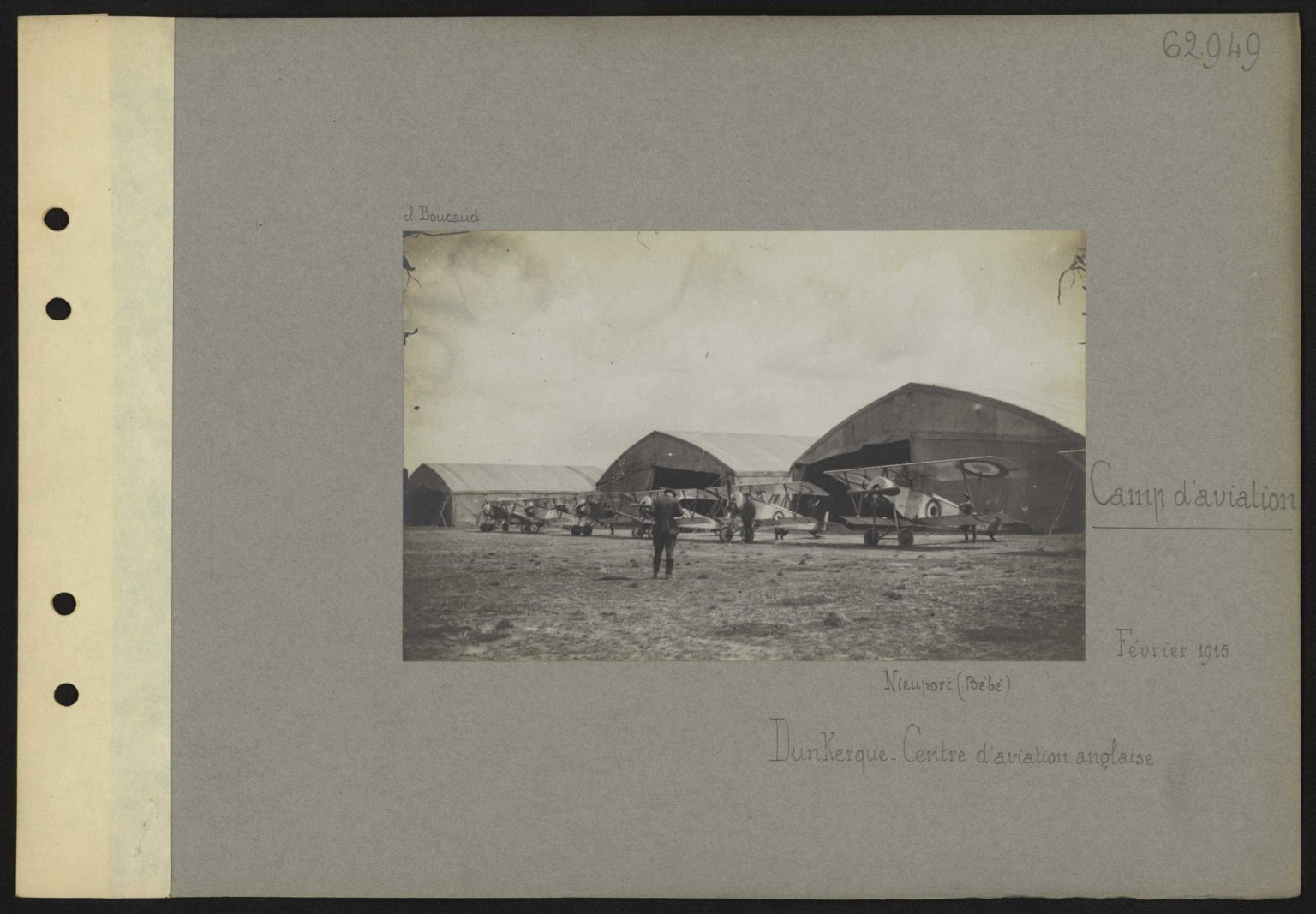
Its influence outran the French air service. Britain’s Royal Naval Air Service and Royal Flying Corps bought the Bébé to cover the gap before their own scouts matured; Italy flew it and licence-built it in large numbers as the Nieuport-Macchi; Russia, Belgium and the Netherlands operated it too. It became an early mount for a startling roster of pilots — Jean Navarre, Charles Nungesser, Georges Guynemer and, in Italy, Francesco Baracca — and for the first half of 1916 it was one of the best fighters over the front.
There was one honest flaw, and it ran in the family. The narrow single-spar lower wing could flex, and in a prolonged dive was known to fail. Pilots learned not to hold high-speed dives too long. And with only about 80 horsepower and a single drum-fed gun, the Bébé was soon outclassed — first by German Albatros scouts, then by its own more powerful successor, the Nieuport 17.
01The Nieuport 11’s origins: Gustave Delage and the birth of the sesquiplane scout
Gustave Delage became Nieuport’s chief designer in 1914 and moved the firm away from its pre-war racing monoplanes toward a series of small, agile biplane scouts. His signature idea was the sesquiplane — a lower wing far narrower than the upper, carried on V-shaped interplane struts.
The Nieuport 11 “Bébé” of 1915 proved the concept: it was one of the aircraft that broke the Fokker Scourge, and it became the direct ancestor of the more powerful Nieuport 17 and the whole Nieuport 16/17/23/24/27 line that followed.
What makes the Nieuport 11 special
The Nieuport 11’s sesquiplane wing: built to see and to turn
The narrow single-spar lower wing gave the Bébé a superb downward and forward view and very light, responsive handling. It could out-turn and out-climb the Fokker Eindecker — the qualities that mattered most in 1916’s close-in dogfights. The trade-off was strength: one spar carries less load than two.
A light 80 hp rotary that made the Bébé quick
The Le Rhône 9C rotary produced only about 80 horsepower, but the whole aircraft weighed barely 350–480 kg. That superb power-to-weight let the Bébé climb and manoeuvre with the best of its day, even if its straight-line speed — around 155–165 km/h — was modest.
A gun mounted above the wing to clear the propeller
France still lacked a reliable gun-synchronising gear in 1916, so the Bébé’s single 0.303-inch Lewis gun was mounted above the upper wing to fire clear of the propeller arc. It worked — but reloading the drum meant standing up in the cockpit and pulling the gun down on its mounting in the slipstream, an awkward job in combat.
02The Nieuport 11’s sesquiplane wing: the idea that gave the view — and the flaw
A conventional biplane has two full wings braced together for strength. Delage’s sesquiplane replaced the lower wing with a narrow surface built around a single spar, joined to the upper wing by a single V-strut on each side. The pilot could see past it downward and forward; the aircraft was light and turned superbly.
The cost was torsional rigidity. With only one spar, the narrow lower wing could twist under load and, in a prolonged or high-speed dive, was known to flex or even fail — a weakness the whole Nieuport family shared until the sturdier two-spar SPAD arrived.
03The Nieuport 11’s gun: an over-wing Lewis, no synchroniser
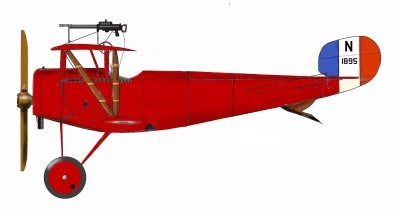
The Bébé predated any reliable French synchronising gear, so it carried a single Lewis gun above the upper wing, angled to fire over the spinning propeller arc. On some machines a sliding rail — the kind later formalised on the British Foster mounting — let the pilot pull the gun down to change its 47-round drum in flight.
As gun-synchronising gear matured through 1916, later Nieuports such as the 17 gained a synchronised Vickers firing through the propeller — but the Bébé itself kept its over-wing Lewis to the end of its front-line career.
04The Nieuport 11’s lower-wing weakness: the honest caveat
This is the caveat any honest account of the Nieuport family must include. In a prolonged or high-speed dive, the single-spar lower wing could twist and, in the worst cases, shed its fabric or break up.
Pilots adapted by not holding steep dives, and later the Royal Flying Corps ordered the lower wings strengthened. The Germans admired the layout enough to copy it in the Albatros D.III — which then suffered similar lower-wing troubles — while the Allies eventually moved to the stronger two-spar SPAD.
Nieuport 11 specifications
Figures are for the standard Nieuport 11 “Bébé” with the Le Rhône 9C rotary. Early WWI sources disagree — treat everything here as representative, and where they diverge we have flagged it.
Baseline note: the figures describe the Nieuport 11 C.1 with the 80 hp Le Rhône 9C rotary, the standard production aircraft, as tabulated by Davilla and Soltan in French Aircraft of the First World War and by Pommier. Deltas for the Nieuport 16 with the 110 hp Le Rhône 9J, for the Italian Nieuport-Macchi 11.000 and for the Russian Dux-built machines are in grey. Climb is given as time to a stated height and endurance in place of range, which is how figures of this period were quoted, and the maximum speed below carries the altitude it was flown at — which is why it reads higher than the sea-level figure that British-derived tables print for the same aeroplane.
Dimensions & weights
- Crew
- 1
- Length
- 5.50 m (18 ft 0½ in) per Davilla; British tables give 19 ft 0¾ in, and the discrepancy is about a foot on an eighteen-foot aeroplane, which nobody has explained
- Upper wingspan
- 7.52 m (24 ft 8 in), chord 1.20 m (3 ft 11 in), two spars
- Lower wingspan
- 7.40 m (24 ft 3 in), chord 0.70 m (2 ft 3½ in), one spar — a lower wing of barely half the chord of the upper, which is what the word sesquiplane means and is the whole argument of the aeroplane
- Wing cellule
- Sesquiplane. Upper and lower planes joined by a single V-strut on each side rather than a pair of parallel struts, with 3 degrees 30 minutes of sweep and ailerons on the upper wing only. Nieuport Type N aerofoil.
- Height
- 2.40 m (7 ft 10½ in) per Davilla; 8 ft 0½ in in British tables
- Wing area
- 13.30 m² (143 sq ft) — tiny, and the reason the Bébé climbed the way it did on 80 hp
- Undercarriage track
- 1.60 m (5 ft 3 in)
- Empty weight
- 320 kg (705 lb) per Davilla; British tables give 772 lb, a difference of about 10 per cent that is probably equipment fit rather than error
- Loaded weight
- 480 kg (1,058 lb) — a figure on which every source agrees exactly, which is unusual enough to be worth stating
- Wing loading at loaded weight
- 36.0 kg/m² (7.4 lb/sq ft)
- Power loading
- 6.00 kg/hp (13.2 lb/hp)
- Production
- French output was never properly recorded and no reliable total exists. Nearly 700 were built under licence in Italy by Nieuport-Macchi, of which 646 were accepted by the Italian air arm; Dux built an unrecorded number in Russia; between five and twenty were copied in the Netherlands. The absence of a French total for one of the decisive aircraft of the war is itself worth noticing.
- Service dates
- First aircraft delivered to the Aéronautique Militaire on 5 January 1916, ninety at the front within the month; concentrated at Verdun February to March 1916; being replaced by the Nieuport 16 and 17 from March 1916; the last Italian unit, 85a Squadriglia, gave up its Nieuport 11s on 4 November 1918
Performance
- Maximum speed at 2,000 m
- 162 km/h (101 mph at 6,560 ft) per Davilla and Pommier — the useful number, because it is the only one with a height attached
- Maximum speed at sea level
- 156 km/h (97 mph), the figure carried by British-derived tables. The two are not necessarily in conflict; a rotary aeroplane could well be faster at 2,000 m than on the deck.
- Time to 2,000 m
- 8 minutes 30 seconds (to 6,560 ft)
- Time to 3,000 m
- 15 minutes 25 seconds (to 9,840 ft) — roughly half the time a DH.2 took to reach 10,000 ft on a quarter more power
- Service ceiling
- 5,000 m (16,400 ft) per Davilla; 4,500 m (14,765 ft) is quoted elsewhere
- Endurance
- 2 hours 30 minutes (2 hours in some tables)
- Still-air range
- 250 km (155 miles), a paper figure derived from endurance rather than a flown one
- Against the Fokker E.III
- Faster, climbed better and out-turned it comprehensively. The Fokker's only remaining advantage was that its gun fired through the propeller and the Nieuport's did not.
- Roll control
- Ailerons rather than the Fokker's wing warping — lighter, quicker and far less tiring, and a straightforward technical generation ahead
- Pitch control
- Conventional fixed tailplane with a hinged elevator, against the Fokker's all-moving balanced Morane-type surface, which was twitchy and easy to overcontrol
- Downward view
- Excellent, and deliberately bought. A lower wing of half chord puts almost nothing under the pilot, which is why the sesquiplane layout survived through the whole V-strut Nieuport family.
- Dive limit
- Disputed, and it matters. Rickard states plainly that the narrow single-spar lower wing was the aircraft's main weakness and could twist at high speed. Wikipedia, following Fitzsimons, argues the aeroelastic flutter occurred only beyond the speeds an 80 hp Nieuport 11 could reach, and that the failures belong to the more powerful later V-strutters and the Albatros D.III. Both cannot be fully right; the balance of evidence is that the weakness was real, latent on the Bébé and lethal on its descendants.
Propulsion & systems
- Engine
- One 80 hp (60 kW) Le Rhône 9C nine-cylinder air-cooled rotary, the whole engine revolving with the propeller about a fixed crankshaft
- Engine dimensions
- Bore 105 mm (4.13 in), stroke 140 mm (5.51 in), capacity 10.89 l (664 cu in), compression 4.5:1
- Rated power
- 80 hp nominal; Lumsden records a maximum of 92 hp (69 kW) at 1,300 rpm. Marketed simply as the "Rhône 80 hp".
- Engine weight
- 121.5 kg (268 lb), diameter 94.5 cm (37.2 in)
- Valve gear and lubrication
- A single cam-operated rocker working both valves through one push-pull rod; castor oil on a total-loss system, mixed with the fuel and thrown out through the exhaust into the pilot's face
- Engine control
- No throttle in the modern sense. Power was set with fuel and air levers and trimmed with a blip switch that cut the ignition.
- Cowling
- The characteristic Nieuport horseshoe cowl, open at the bottom to throw off the castor oil. The Nieuport 16 is distinguished from the 11 chiefly by a larger aperture in front of it and a headrest for the pilot.
- Propeller
- Levasseur 450 two-blade fixed-pitch wooden airscrew
- Fuel
- 91 l (20 Imp gal)
- Gun synchronisation gear
- None, and none existed in French service when the type reached the front. The first French gear, the Alkan-Hamy, was air-tested in a Nieuport 12 on 2 May 1916 and only reached the front in numbers with the Nieuport 17 in mid-1916. The Bébé's over-wing gun is the direct consequence of that gap.
- Alternative engine
- 110 hp (82 kW) Le Rhône 9J on the strengthened Nieuport 16, which was faster and less manoeuvrable and had balance problems the Nieuport 17 was designed to fix
05The Nieuport 11 family: from the Bébé to the 16, 17 and beyond
The Bébé sat at the head of a family. A more powerful version with a 110 hp engine became the Nieuport 16 and the Nieuport 17; refinements produced the Nieuport 23, the 24 and the 27, each a little heavier, faster and better armed than the last — but all sharing the sesquiplane silhouette Delage drew for the Nieuport 11.
Production was not confined to France. In Italy, Nieuport-Macchi built the Bébé under licence in large numbers, and in Russia the Dux works assembled it too — so the little Nieuport served far beyond the Western Front.
06The Nieuport 11’s costs: what a 1916 scout was worth
Per-aircraft procurement prices for French 1916 scouts are not reliably recorded in any consistent form, and wartime accounting bears no relation to a modern price. The Bébé was, by the standards of the day, a cheap and simple aeroplane — wood, wire and fabric around a small rotary.
What can be said is what it costs to keep an airworthy reproduction flying today: operators typically report on the order of $1,500–3,500 an hour, driven mostly by the care a century-old rotary design demands.
Armament & payload
The Bébé's gun sat on top of the wing because France had nothing to put it behind the propeller
One Lewis gun above the upper wing, firing over the propeller arc, is the standard armament of a Nieuport 11 — and like the DH.2's nose-mounted Lewis it is there for exactly one reason. In January 1916 the Allies had no synchronisation gear in service and the Germans did. The Nieuport's answer was more elegant than the pusher's: keep the tractor layout, keep the speed and the climb, and simply put the gun where the propeller is not. The price was paid on every drum change, one-handed, standing up, at three thousand metres, in a slipstream.
The Bébé also carried the first air-to-air rocket ever used in action. That is a footnote in most accounts and it should not be, because for about a month in the spring of 1916 it was one of the more decisive weapons on the Western Front. Gun fits varied by air arm: Hotchkiss on many early French aircraft, Fiat-Revelli on Italian ones until Lewis guns arrived in numbers, Lewis in British and later French service, and a synchronised Vickers on a handful of late machines.
Gun
- One .303 in (7.7 mm) Lewis machine gun mounted above the upper wing centre section, firing forward over the propeller disc. No gear, no interrupter and nothing in the line of fire.
- The Lewis was suited to this job partly because it could not readily be synchronised at all: it fires from an open bolt, so the interval between pulling the trigger and the round leaving the barrel is not constant, which is precisely the one thing a synchronisation gear cannot tolerate.
- Fired forward by a Bowden cable running down to the cockpit. Where the mounting allowed the gun to be tilted up, the pilot took the pistol grip and used the gun's own trigger instead.
- Aiming meant aiming the aeroplane, through a ring-and-bead or an Aldis sight. Because the gun sat above the pilot's eye line rather than in front of it, the sighting geometry was worse than on a cowl gun and the convergence was fixed by rigging rather than adjusted in the air.
Ammunition, drums and the drum change
- Drum-fed: the 47-round drum, and later the 97-round drum of the aircraft-pattern Lewis. Total ammunition carried was tiny by any later standard and limited the number of firing passes a pilot could make.
- The drum change is the central practical fact about this installation. It meant flying with the knees, standing partly out of an open cockpit into a 150 km/h slipstream, pulling a hot empty drum off a gun above your head and fitting a full one, while somebody was probably shooting at you.
- Jams had to be cleared the same way. A Bébé with a stoppage was, until the pilot had fixed it, an unarmed aeroplane in a fight.
- The earliest French over-wing mountings were entirely fixed, and some pilots are recorded as having had to stand on the seat to reach the breech at all. Every subsequent development of the mounting was an attempt to solve this one problem.
The Foster mounting, and who actually devised it
- The French answer was a hinged mounting: two hinges on a pillar support, so the breech could be swung back and down into the cockpit, the empty drum pulled off backwards rather than lifted clear, with springs or bungee cord helping the gun return to the firing position.
- In early 1916 Sergeant Foster of No. 11 Squadron RFC replaced the awkward double hinge with a quadrant-shaped I-beam rail on which the gun slid back and down in one movement. That is the Foster mounting: a British refinement of a French idea, and it stayed in use through the Nieuport 17 and 24 and then on the S.E.5a.
- The rail did something its designer had not intended. It let the gun be locked pointing forward and upward, so a fighter could sit in a two-seater's blind spot underneath and fire into its belly. Albert Ball made a speciality of it and so did Billy Bishop. The Luftwaffe rediscovered the same geometry in 1943 and called it Schräge Musik.
- A caveat this page will state rather than smooth over: Davilla records that the RFC never operated the Nieuport 11 at all, only the RNAS with eighteen or twenty-one machines, while the standard account of the Foster mounting has it developed by an RFC squadron on a Nieuport 11 or 16. Both cannot be exactly right, and the likeliest reading is that the work was done on Nieuport 16s and the 11 has been swept in alongside it.
- Quadrants twisted or broke under the clumsy handling that combat guarantees, and pilots replaced the clock spring with elastic cord. The French regarded the whole arrangement as a stopgap to be dropped the moment a synchronised Vickers existed. The British kept it deliberately, on the grounds that early mechanical gears were worse.
Le Prieur rockets
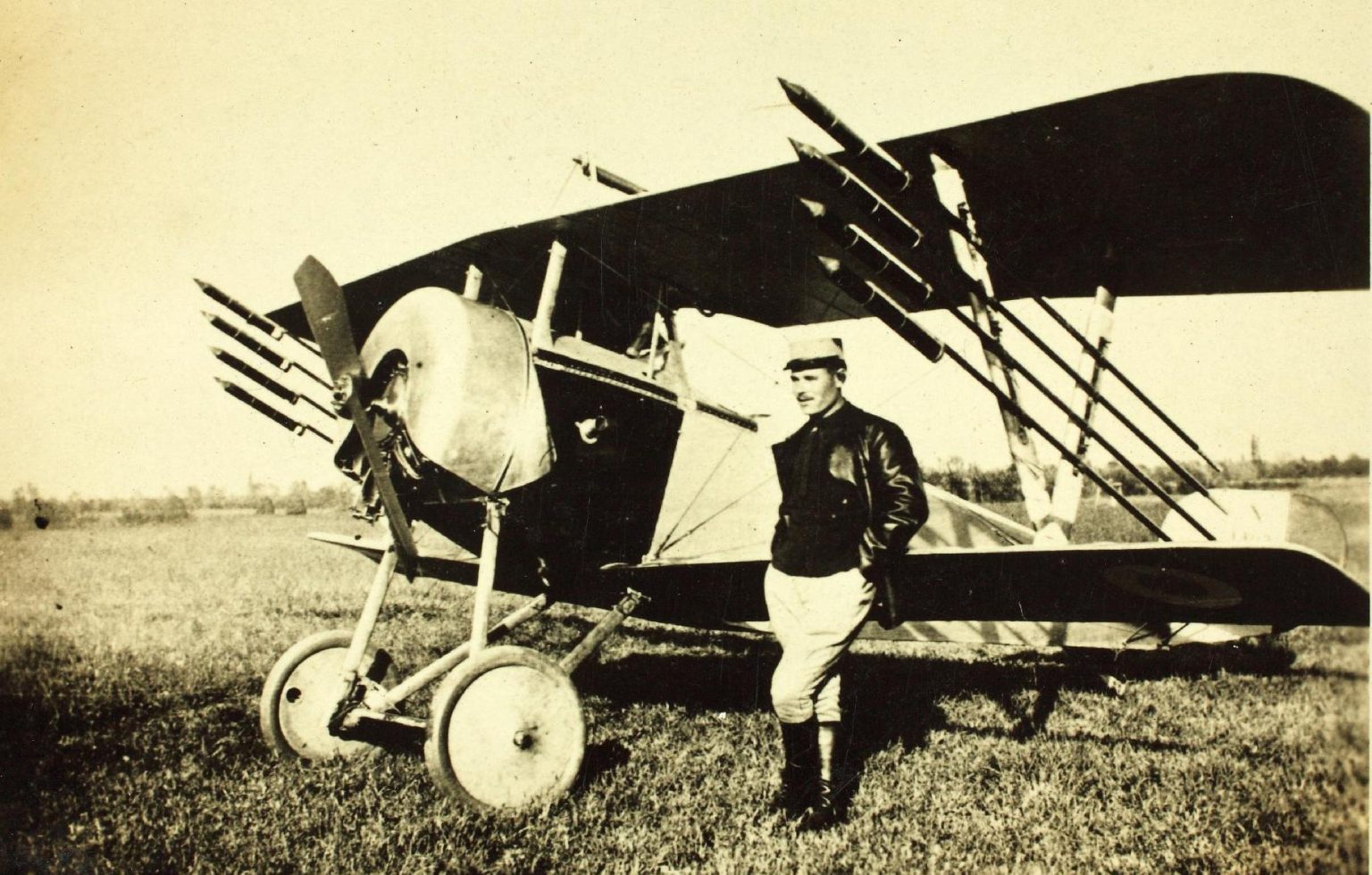
- Eight rockets, four a side, in launch tubes clipped to the V interplane struts and fired electrically in sequence from a single cockpit switch.
- Each was a cardboard tube holding 200 g of black powder, a conical wooden head with a triangular knife blade set across its apex, and a pine stick about 3 m long taped to the tube and running back into the launcher.
- Fired from a 45-degree dive at 100 to 150 m, along the length of the balloon and into the wind, aimed through the aircraft's existing gunsight. The rockets did not all light together, so the pilot had to hold the dive with the target in his sight until the last one had gone. Effective range about 115 m (125 yd), and the accuracy was frankly poor.
- What they achieved is out of all proportion to that description. On the morning of 22 May 1916 eight pilots trained by Yves Le Prieur himself — Nungesser, Guiguet and Chaput among them — destroyed six German Drachen balloons in a few minutes and panicked the Germans into hauling down the rest along 100 km of front, blinding the German artillery for the French counter-attack on Fort Douaumont.
- The correction that belongs here: that celebrated attack was flown on Nieuport 16s, not Nieuport 11s. The 11 carried the rockets too and is properly counted among the first types to use them in action, but the aircraft most closely associated with the Le Prieur rocket is its own slightly more powerful sister.
Other gun fits, by air arm
- Hotchkiss: many early French aircraft carried a Hotchkiss over-wing instead of a Lewis, simply because Lewis guns were in short supply.
- Fiat-Revelli: Italian Nieuport-Macchi 11.000s used the Fiat-Revelli Modello 1914 until Lewis guns became available in quantity.
- Synchronised Vickers: a few late aircraft were fitted with one once the Alkan-Hamy gear existed, but this properly belongs to the Nieuport 17 from mid-1916 rather than to the Bébé.
- German rearmament of captured machines: several Nieuport 11s taken intact in 1916 were repaired, fitted with a synchronised lMG 08 "Spandau" through the propeller, and flown at the front by German pilots — the sincerest possible verdict on the airframe.
- Idflieg went further and issued captured examples to German manufacturers with instructions to copy the layout, which is why the Euler D.I and the Siemens-Schuckert D.I are V-strut sesquiplanes with French shapes.
What the Bébé did not carry
- No second gun for effectively the whole of its front-line career, against the Fokker's one and the Albatros D.I's two from late 1916.
- No bombs, no wireless, no camera and no oxygen. It was a pure interceptor and escort, and it was replaced rather than adapted.
- No armour, no fireproofing and no parachute for the pilot — while the balloon observers the Bébé was sent to burn all had one.
- No brakes, no throttle and no self-starter, all entirely normal for a 1916 rotary-engined scout.
- No structural margin for a prolonged high-speed dive. That is the one absence on this list that killed people, and it killed considerably more of them in the later, heavier, more powerful Nieuports than it ever did in the Bébé.
Three typical loadouts
- Fighter patrol over Verdun, French escadrille de chasse, February and March 1916
- One over-wing Lewis with a handful of drums, two and a half hours of fuel, no bombs and no wireless — flown in a formation of six or more. The formation is the point. The Nieuports were concentrated into dedicated fighter squadrons and could operate in numbers, while the Fokkers still flew as singletons and pairs. That organisational change, more than any single figure in the table above, is what ended the Fokker Scourge.
- Balloon-busting sortie, Verdun sector, May 1916
- Eight Le Prieur rockets in tubes on the interplane struts, one over-wing gun, a long climb to get above the target, then a single committed 45-degree dive held all the way through the firing sequence and out low across the German lines. One pass, no second chance, and a fair prospect of ground fire on the way home. The rockets were also used against ground targets on occasion: on 29 June 1916 a roving Nieuport 16 found a large ammunition dump and blew it up, the first recorded air-to-ground rocket attack in history.
- Standing patrol over the Isonzo, Nieuport-Macchi 11.000, Italian Corpo Aeronautico Militare, 1916 to 1917
- Fiat-Revelli or Lewis over the wing, no rockets, escorting Caproni bombers and contesting Austro-Hungarian reconnaissance over the mountains. The Italian aircraft outlasted the French ones by a wide margin: the Macchi-built Bébé was still a standard Italian fighter into the summer of 1917 and 85a Squadriglia did not give up its last examples until 4 November 1918.
Sourcing caveat: the Nieuport 11 is worse documented than its importance deserves and the two main streams of figures disagree throughout. Davilla and Pommier, working from French records, give 162 km/h at 2,000 m, a 5,000 m ceiling, 2½ hours endurance, 320 kg empty and a length of 5.50 m. British-derived tables give 97 mph at sea level, a 14,765 ft ceiling, 2 hours endurance, 772 lb empty and 19 ft 0¾ in. Loaded weight is the one figure both agree on, at 480 kg or 1,058 lb exactly. This page has preferred the Davilla set because it is the only one that states an altitude for its speed. Production totals are worse: no French figure exists at all, Macchi output is given as 646 and as nearly 700, Dutch copies as five and as twenty, and the RNAS batch as eighteen and as twenty-one. Readers should treat any single-number claim about how many Bébés were built with suspicion, including the ones on this page.
Variants
The Bébé had almost no variants of its own, and fathered the entire V-strut family that followed it
There is no mark series here either. Gustave Delage designed one aeroplane, the factory built it, licensees copied it, and the improvements went into new type numbers rather than into new marks. What makes the variant list interesting is that almost everything on it is a descendant: the Nieuport 16, 17, 21, 23 and 24 are all the same idea with more engine and more wing, and the family stayed in service, latterly as trainers, into the 1920s.
The type's claim on history is narrow and solid. The Nieuport 11 reached the French front on 5 January 1916 and had ninety machines in service inside a month. It outclassed the Fokker Eindecker in speed, climb and manoeuvrability, and it was concentrated at Verdun in February and March 1916 in specialist fighter squadrons that could fly in formations larger than the singletons and pairs the Fokkers worked in. That combination — a better aeroplane and a better way of organising it — regained air superiority for the French and ended the Fokker Scourge. The British DH.2 and F.E.2b did the same job on their own front at the same time, and the honest apportionment is that all three mattered and the Nieuport probably mattered most, because it was the one that arrived first, in numbers, and could actually catch what it was chasing.
The sesquiplane layout is the design decision everything else hangs on, and it was a real trade rather than a free lunch. A lower wing of half the chord, carried on a single spar and braced by one V-strut a side, cut drag, improved the climb, made the aeroplane light and quick on the controls and gave the pilot a downward view that no conventional biplane could match — which matters enormously when your job is finding two-seaters below you. It also produced a wing that could twist. On the 80 hp Bébé the weakness was largely latent; Fitzsimons argues the aeroelastic flutter occurred only beyond speeds the type could reach, while Rickard calls the lower wing the aircraft's main weakness outright. What is not in dispute is what happened next: as the same layout was given 110, 120 and eventually 160 hp on the 16, 17, 24, 27 and finally the Nieuport 28, lower wings began to fail in dives and kill people, and the Germans reproduced the flaw faithfully when they copied the layout for the Albatros D.III.
The Italian chapter deserves more attention than it usually gets. Nieuport-Macchi at Varese built close to seven hundred Bébés under licence as the 11.000, six hundred and forty-six of which the Italian air arm accepted, and Italian-built aircraft stayed in first-line service long after French ones had gone to training units — standard equipment over the Isonzo into the summer of 1917 and still flying with 85a Squadriglia a week before the Armistice. That licence is also the beginning of a company: Macchi went from building French fighters under licence to the Schneider Trophy seaplanes and eventually to the MB-339 and the AMX, a line that runs unbroken from a 1916 sesquiplane to the jets in the same factory.
- Nieuport 11 C.1 (1915–16 / French total unrecorded)
- The production aircraft and the only French form. 80 hp Le Rhône 9C, one over-wing gun, no synchronisation gear. Also called the Nieuport Bébé or Nieuport Scout, though both names were applied loosely to any small Nieuport fighter.
- Nieuport-Macchi 11.000 (1916–18 / about 650 to 700)
- Italian licence production with detail modifications, often armed with the Fiat-Revelli Modello 1914 until Lewis guns were available. 646 accepted by the Corpo Aeronautico Militare; the last were withdrawn on 4 November 1918.
- Dux-built Nieuport 11 (1916–17 / unrecorded)
- Russian licence production at the Dux factory in Moscow for the Imperial Russian Air Service, which used the type extensively and kept it in service later than the French did.
- Dutch copies (1917–18 / 5 to 20)
- The Luchtvaartafdeling interned one Nieuport 11 that came down in the Netherlands and had copies built at Trompenburg. Sources give the number as five and as twenty.
- Nieuport 16 C.1 (1916 / unrecorded)
- A strengthened Nieuport 11 airframe with the 110 hp Le Rhône 9J, a headrest and a larger cowl aperture. Faster, less manoeuvrable, nose-heavy, and the aircraft most closely associated with the Le Prieur rocket. An interim type pending the Nieuport 17.
- Nieuport 17 C.1 (1916–17)
- The definitive V-strutter: larger wing area, the 16's balance problems cured, a strengthened lower wing and — at last — a synchronised Vickers on French aircraft via the Alkan-Hamy gear. British squadrons kept the Foster-mounted Lewis instead, and the S.E.5a inherited the idea.
- Nieuport 21 C.1 (1916–18)
- A Nieuport 17 airframe with the 80 hp Le Rhône of the Bébé put back in. Used widely as an advanced trainer and supplied to Russia and to the American services, which is how a great many pilots first met the family.
- German study copies (1916–17 / 95 plus a handful)
- Idflieg handed captured aircraft to German firms with instructions to copy them. The Euler D.I and the Siemens-Schuckert D.I were the result; the SSW D.I, 95 of which were built, was a copy of the Nieuport 17 rather than the 11, was obsolete by the time it was available and served mainly as an advanced trainer.
- Captured and rearmed aircraft (1916 / several)
- Repaired French machines fitted with a synchronised lMG 08 and flown operationally by German pilots. The type impressed its opponents enough that they preferred flying it to shooting at it.
- Trainers (1917 onwards)
- The Bébé's long second career. Pushed out of the front line by the 16 and 17 from March 1916, surviving airframes taught fighter pilots in France, Italy, Russia and Britain, and the V-strut Nieuports went on doing that job into the 1920s.
Survivors, stated precisely, because for a First World War type the distinction between an original airframe and a reproduction matters far more than the count. Exactly one original Nieuport 11 exists: the aeroplane at the Musée de l'Air et de l'Espace at Le Bourget, currently displayed as N556 in the personal markings of Commandant Charles de Tricornot de Rose — the officer who created the first dedicated French fighter squadrons and whose organisational idea the Bébé existed to carry out — and previously shown as N976. One aeroplane, out of a production run whose French total was never recorded and which certainly ran well into four figures once Macchi's six hundred and forty-six and the Russian Dux output are added. Everything else in the world that carries the name is a reproduction, and they are not all the same kind of reproduction, which is worth spelling out. Old Rhinebeck Aerodrome in New York flew a full-scale reproduction for years in Victor Chapman's colours behind a genuine 80 hp Le Rhône 9C, the correct engine, and it is under rebuild after a crash. The Vintage Aviator in New Zealand flies an American-built full-scale reproduction in the markings of the Italian ace Alvaro Leonardi. Two Canadian museums, in Saskatchewan and New Brunswick, hold flying seven-eighths-scale replicas, deliberately built undersize so as to fall inside Canadian amateur-built rules — correct in shape and wrong in every dimension, which is a real distinction and not a pedantic one. And the Bébé is among the most-copied shapes in homebuilt aviation, with kit and plans-built Nieuport 11s flying on modern flat-four engines all over North America. One original in a museum at Le Bourget. The rest is homage, and mostly good homage, but none of it is a 1916 aeroplane.
The Nieuport 11 through the war
Delage joins Nieuport
Gustave Delage takes charge of design at Nieuport and begins the sesquiplane scout line that will lead to the Bébé.
The Nieuport 11 “Bébé” takes shape
The tiny sesquiplane scout is designed and flown in 1915, entering French service around the turn of the year.
Breaking the Fokker Scourge over Verdun
The Bébé reaches the front in numbers and, with the Airco DH.2 and F.E.2b, helps end German air superiority — most visibly in the fighting over Verdun.
Adopted by Britain, Italy, Russia and Belgium
The Allies buy and licence-build the type: the RNAS and RFC fly it, Italy builds it as the Nieuport-Macchi, and Russia assembles it at Dux.
Le Prieur rockets and the balloon war
Nieuport 11s carry Le Prieur rockets on their wing struts to attack German observation balloons — one of the war’s first air-to-ground rocket weapons.
Superseded by its own descendants
More powerful Nieuports — the 16 and the 17 — and then the SPAD take over front-line duties as the Bébé is outclassed.
Second-line and training service
Surviving and licence-built airframes serve on as advanced trainers and in quieter sectors well after their front-line day has passed.
Rare originals and airworthy replicas
A handful of genuine Nieuport 11s survive in museums, and airworthy reproductions keep the Bébé flying at heritage airfields.
The Nieuport 11 in the words of those who flew it
Jean Navarre, the Sentinel of Verdun
France’s flamboyant early ace made his name on the Bébé over Verdun in 1916.
Read the full story
Fighting with a gun above the wing
The Bébé’s Lewis gun sat above the upper wing — deadly, but awkward to reload.
Read the full story
Francesco Baracca’s first victories
Italy’s greatest ace opened his account flying licence-built Nieuports.
Read the full story
Georges Guynemer learns his trade
Before the SPAD made him a legend, France’s beloved ace flew the little Nieuport.
Read the full story
The Escadrille Américaine
American volunteers flew Nieuports in French service before the U.S. entered the war.
Read the full story
Le Prieur rockets against the balloons
Nieuport 11s carried rockets on their struts to burn German observation balloons.
Read the full story
The wing that could not be trusted in a dive
The feature pilots loved — the narrow lower wing — was also its flaw.
Read the full story
Imitation across the trenches
The sesquiplane layout was so good the Germans copied it.
Read the full story
One of the aircraft that broke the Scourge
The Bébé was among the fighters that ended German air superiority in 1916.
Read the full story
Macchi and Dux
The Bébé was built far beyond France, in Italy and Russia.
Read the full story
A gentle second career
Forgiving handling gave the retired Bébé a long life as a trainer.
Read the full story
Rare originals, living replicas
Almost no genuine Bébés remain — but reproductions still fly.
Read the full story
The Nieuport 11 in pictures
The Nieuport 11 in the air
A quality showcase of an airworthy Nieuport 11 reproduction in flight, filmed by the Historical Aviation Film Unit (~67,000 views). It shows the Bébé’s light, agile handling and the sound of its Le Rhône rotary.
Where the Nieuport 11 flew
Designed and built in France, the Bébé fought on the Western Front and at Verdun, served with Britain’s RNAS, Italy, Russia and Belgium, was licence-built in Italy and Russia, and survives today in a few museums and airworthy replicas. Toggle the categories to explore.
The record the Nieuport 11 left behind
Victory tallies from the First World War are unreliable and were often shared or unconfirmed, so the Bébé’s exact combat record cannot be tabulated. What is clear is its strategic effect: alongside the Airco DH.2 and F.E.2b it helped end the Fokker Scourge and restore Allied air superiority in the first half of 1916.
Nieuport 11: your questions answered
Can I fly in a Nieuport 11?
What made the Nieuport 11 so effective in 1916?
Was the Nieuport 11’s lower wing really dangerous?
Which pilots flew the Nieuport 11?
Did the Nieuport 11 end the “Fokker Scourge”?
How many Nieuport 11s were built?
You can’t fly the Nieuport 11.
These, you can.
Some legends only live in museums. But MiGFlug still puts you in the cockpit of genuine military aircraft — from Cold War jet trainers to supersonic fighters.
 Fly the L-39 AlbatrosThe world’s most-flown jet trainer — aerobatics included
 Fly the F-104 Starfighter“The missile with a man in it”
 Fly the MiG-21The Cold War’s most-produced jet
 Fly the T-33 Shooting StarAmerica’s first jet trainer
 Fly the DH VampireA piece of early jet history
 Fly the S.211Agile Italian jet trainer
 Fly the MB-326The classic Aermacchi jet
 Fly the MiG-15The Soviet legend of the Korean War
Explore more of the collection
Every fact, checked
- Royal Air Force Museum — Nieuport Scouts and the Fokker ScourgeDelage’s sesquiplane line and the fight for air superiority in 1916
- Smithsonian National Air and Space Museum — Early Fighter AircraftWWI fighter development and the air war context
- Imperial War Museums — The Birth of Military AviationThe Fokker Scourge and the Allied fightback of 1916
- Musée de l’Air et de l’Espace, Le BourgetFrench national collection of Nieuport and WWI aircraft
- History of War — Nieuport 11Specifications, service history and the Bébé’s role over Verdun
- Museo dell’Aeronautica Gianni CaproniItalian collection holding a Nieuport-Macchi-built Ni.11
- The Vintage Aviator (New Zealand)Builder and operator of flying WWI Nieuport reproductions
- Key Aero — Nieuport 11 and the Nieuport scoutsThe type’s design, handling and modern replicas
- C. Shores, N. Franks & R. Guest — Above the TrenchesReference on Allied aces and their Nieuport victories
- J. M. Bruce — The Aeroplanes of the Royal Flying Corps (Military Wing)Detailed account of RFC Nieuport service and armament