
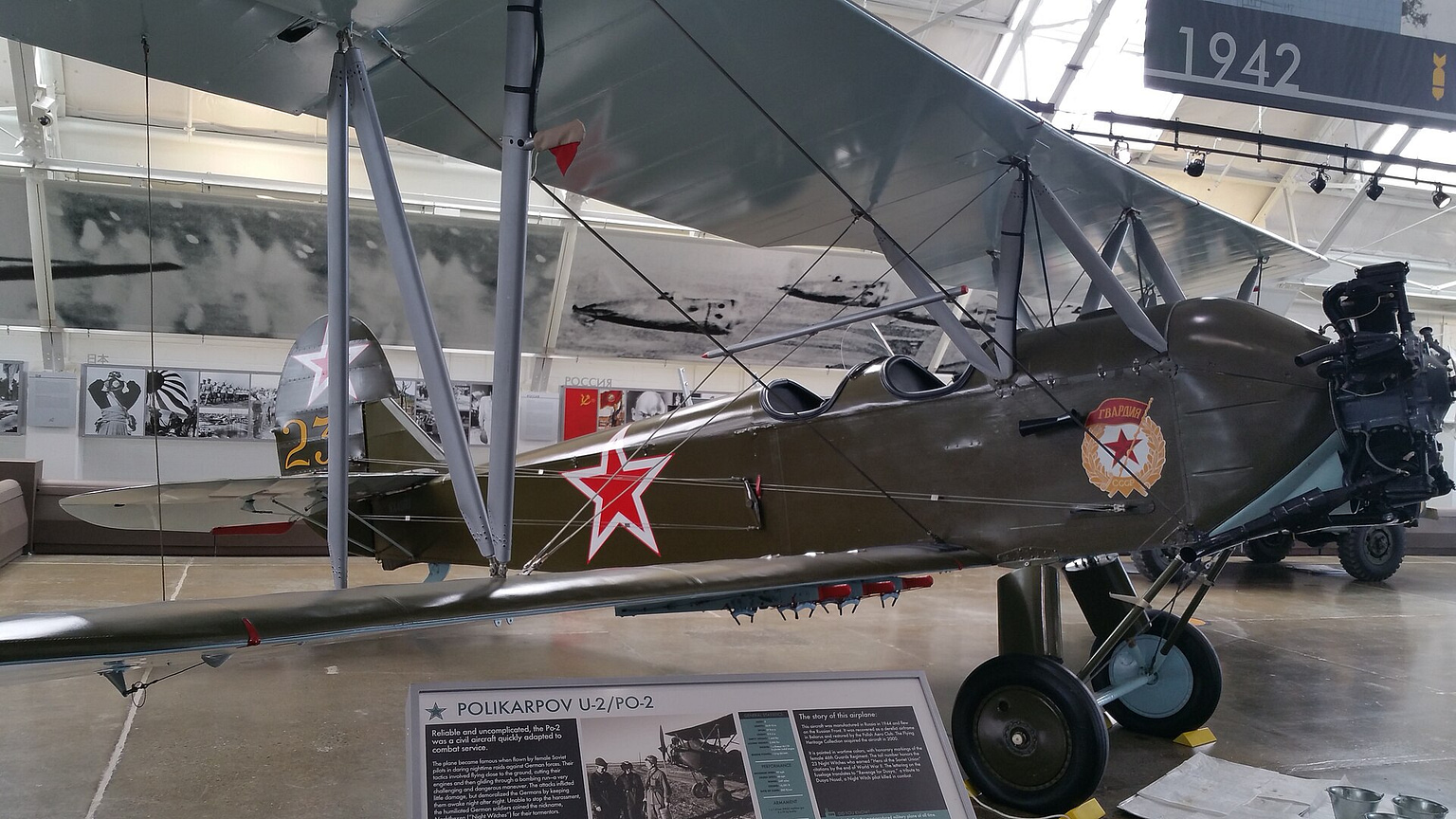
Polikarpov Po-2
“Kukuruznik”
A cheap wood-and-fabric trainer of 1928 that became one of the most-produced aircraft in history — and, flown by the all-female “Night Witches,” a night bomber so slow that fast fighters could barely catch it.
The little biplane that outlived almost everything
In 1927–1928 the Soviet designer Nikolai Polikarpov set out to build the simplest useful aeroplane he could: a primary trainer to replace the ageing British Avro 504 then teaching Soviet pilots to fly. The result, first designated the U-2, was a small single-engine biplane of wire-braced wood covered in doped fabric, powered by a modest five-cylinder Shvetsov M-11 radial. It was cheap, forgiving, almost impossible to spin unintentionally, and it could take off and land on rough grass. The refined production aircraft flew on 7 January 1928.
That humility was its genius. The same qualities that made it a good trainer made it a superb workhorse: it dusted and sprayed crops across the USSR in such numbers that it earned the affectionate nickname “Kukuruznik” — roughly “corn-duster.” It flew as an air ambulance, a liaison hack, an artillery spotter and a light transport. Built almost continuously from 1928 into the late 1950s — in the USSR and, under licence, in Poland as the CSS-13 — it became, by most counts, the most-produced biplane in history, with totals commonly cited between about 20,000 and 40,000.
Then came the war that made it famous. From 1941 the little biplane was pressed into service as a night harassment bomber, and one unit turned it into legend: the all-female 588th Night Bomber Aviation Regiment, later the 46th Guards. German troops called its crews the “Nachthexen” — the Night Witches. Flying at night, they would throttle back or idle the engine and glide toward their targets in near silence, releasing a couple of small bombs before opening up and slipping away. The biplane’s very slowness was its shield: a modern fighter that slowed enough to aim at it risked stalling out of the sky.
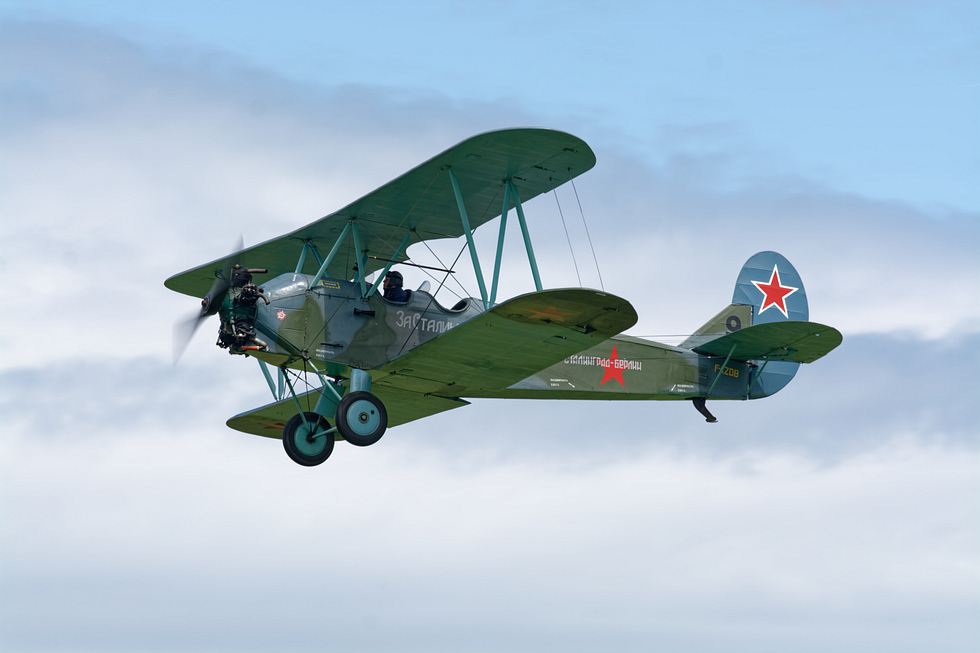
The Po-2 refused to retire. In the Korean War, North Korean examples flew low, slow night raids on United Nations airfields that the exhausted defenders nicknamed “Bedcheck Charlie.” Ironically, the jet age struggled to swat a 1920s biplane: interceptors built for supersonic combat could barely fly slowly enough to engage it. Long after its contemporaries were scrapped, the Kukuruznik was still puttering across fields and front lines — and a handful of restored examples fly to this day.
01The Polikarpov Po-2’s Night Witches: how a wood-and-fabric trainer became a feared night bomber
The idea of women’s combat aviation regiments came from Marina Raskova, a celebrated Soviet navigator who used her fame — and reported access to Stalin — to win approval on 8 October 1941. She raised three regiments and trained them at Engels, near Saratov. One of them, the 588th Night Bomber Regiment, flew the Po-2 and remained entirely female throughout the war. It flew its first combat missions in June 1942 and, redesignated the 46th Guards “Taman” Regiment in early 1943, went on to fly more than 24,000 combat sorties.
Crews often flew eight to eighteen short sorties a night, each lasting well under an hour, carrying only a light bomb load and frequently no parachutes because of weight and their low altitude. Raskova herself did not survive the war — she was killed on 4 January 1943 crash-landing a Pe-2 — and received the first state funeral of the war. About two dozen women of the regiment became Heroes of the Soviet Union, the most of any Soviet women’s unit. The name “Night Witches” and the glide-and-bomb tactic are historically documented; some individual per-night tallies are best treated as commonly repeated figures rather than exact records.
What makes it special
A biplane anyone could fly, build and fix
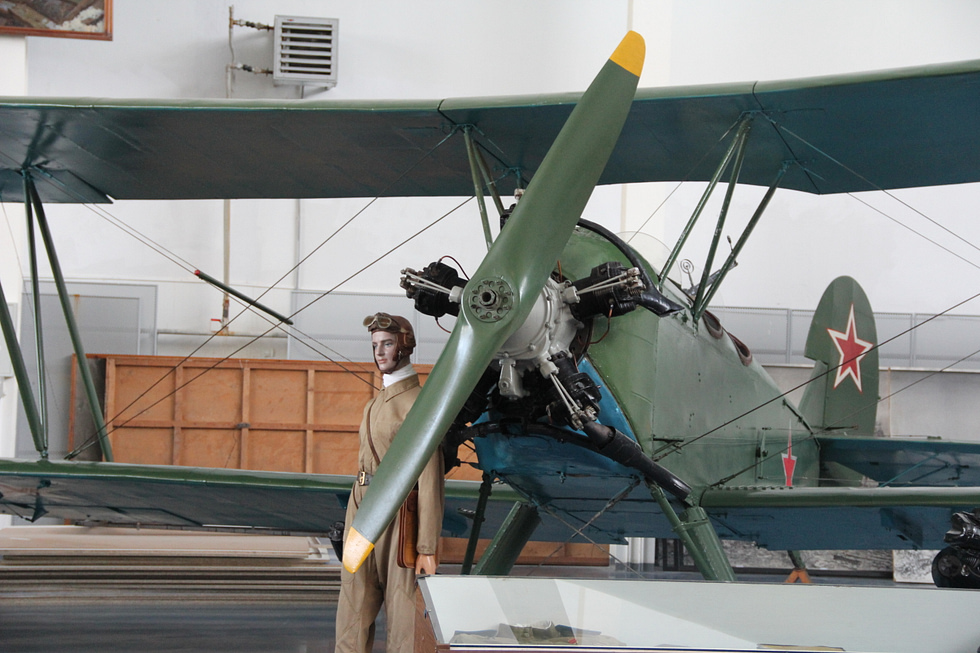
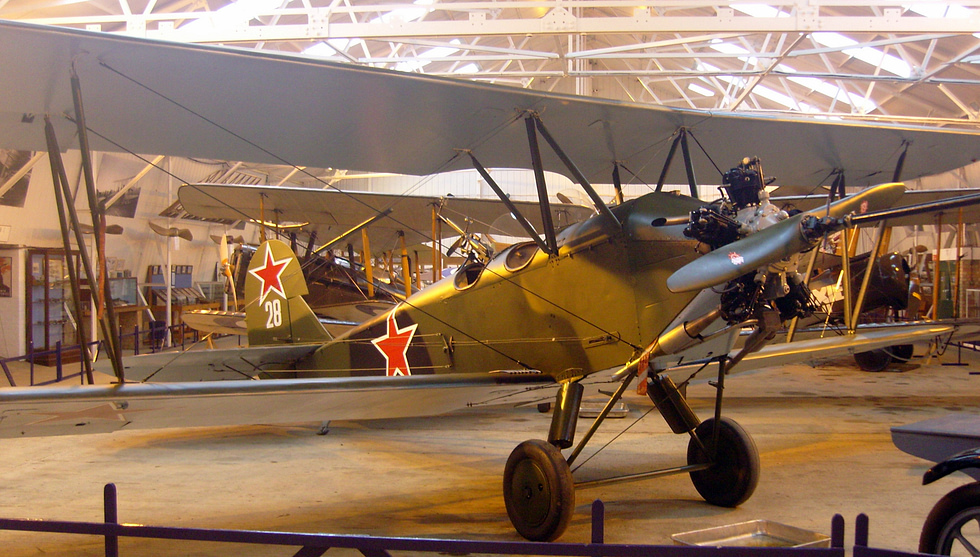
The Po-2 was deliberately simple: a wire-braced wood-and-fabric airframe a field mechanic could patch, and a five-cylinder air-cooled Shvetsov M-11 radial of roughly 100–125 hp with no liquid cooling to freeze or leak. It was docile and hard to spin, could operate from rough grass strips, and was cheap to build in vast numbers. Those humble traits made it an ideal trainer — and, later, a remarkably survivable frontline aircraft.
Too slow to catch
With a top speed of only about 150 km/h and a very low stall speed, the Po-2 was a nightmare target at night. Crews would idle or cut the engine and glide silently onto a target, then throttle up to escape. A fast fighter such as a Bf 109 that slowed enough to aim risked stalling itself. Its wood-and-fabric structure also gave a small radar and heat signature — a real advantage, though the popular idea that it was “invisible” overstates it.
The most-produced biplane in history
Estimates of total production range from about 20,000 to 40,000, commonly rounded to around 30,000 — more than any other biplane ever built. It was manufactured in the USSR from the late 1920s into the early 1950s and in Poland as the CSS-13 into the late 1950s, giving the design a production life of roughly three decades and a service life longer still.
02The Polikarpov Po-2 in combat: why fast fighters struggled to shoot it down
Intercepting a Po-2 at night was genuinely dangerous for the interceptor. Modern monoplane fighters had high stall speeds; to line up a firing pass on a biplane crawling along near 100–150 km/h, a fighter had to slow so much that it risked stalling and departing controlled flight, especially at low altitude in the dark. The Po-2 could also turn tightly and fly low among terrain where fast aircraft dared not follow. The frequently repeated claim that it flew “below a Messerschmitt’s stall speed” is a simplification, but it captures a real tactical problem that recurred from the Eastern Front in WWII to the jet-age skies over Korea.
03The Polikarpov Po-2’s production run: the most-built biplane ever
Exact totals are uncertain because production spanned decades, multiple factories and several designations (U-2, Po-2 and the Polish CSS-13). Figures in the literature range from roughly 20,000 to as many as 40,000, with about 30,000 the most commonly cited round number. Whatever the precise figure, aviation references consistently describe the Po-2 as the most-produced biplane in history and one of the most-produced aircraft of any kind. Polish licence production of the CSS-13 alone (around 560 aircraft, 1949–1956) extended the type’s manufacturing life into the late 1950s.
Full specifications
Airframe & Performance
- Mürettebat
- 2 (pilot + observer/gunner)
- Uzunluk
- ~8.17 m
- Kanat açıklığı
- ~11.40 m (upper wing)
- Yükseklik
- ~3.10 m
- Boş ağırlık
- ~770 kg
- Max takeoff weight
- ~1,350 kg
- Max speed
- ~150 km/h
- Seyir hızı
- ~110 km/h
- Servis tavanı
- ~3,000 m
- Menzil
- ~390–630 km
Propulsion, Armament & Production
- Motor
- 1 × Shvetsov M-11 5-cyl radial
- Power
- ~100–125 hp (by variant)
- Armament (bomber role)
- Up to ~300 kg light bombs; optional 1 × 7.62 mm ShKAS
- First flight
- 7 January 1928 (prototype 1927)
- Built
- ~20,000–40,000 (1928–1959)
- Licence variant
- Poland: CSS-13
- Unit cost
- No reliable public figure
- Cost per flight hour
- No reliable public figure
04The Polikarpov Po-2’s operating costs: why no reliable price exists
The Po-2 was a Soviet state product built across three decades, never sold on an open dollar market, so there is no meaningful flyaway unit price or cost-per-flight-hour figure in the public record. What is clear is the design philosophy: it was engineered to be as cheap and easy to build, maintain and repair as possible — wood, fabric and a simple air-cooled radial, assembled in the tens of thousands. Any precise modern cost you see attached to a Po-2 relates to restoring or operating a rare surviving warbird, not to the original mass-produced aircraft.
From training field to legend
Designed as a trainer
Nikolai Polikarpov designs the U-2 to replace the Avro 504; the refined production biplane first flies on 7 January 1928.
Mass production begins
Series production starts; the cheap, forgiving biplane becomes the standard Soviet primary trainer and civil workhorse.
The “Kukuruznik”
Built in huge numbers, it dusts crops, carries mail and casualties, and spots for artillery across the USSR.
Raskova’s regiments
On 8 October, Marina Raskova wins approval to form women’s aviation regiments; the future Night Witches begin training at Engels.
Night Witches in combat
The all-female 588th Night Bomber Regiment flies its first night harassment missions on the Southern Front.
Guards honours & a new name
The regiment becomes the 46th Guards “Taman” Regiment; the U-2 is renamed Po-2 in 1944 to honour Polikarpov.
Built in Poland
Poland produces the type under licence as the CSS-13, extending the design’s manufacturing life into the late 1950s.
“Bedcheck Charlie”
North Korean Po-2s fly night harassment raids on UN airfields; slow biplanes prove maddeningly hard for jets to intercept.
Into history
Gradually retired from first-line and training use across the Soviet bloc; a number survive today as flying warbirds.
Twelve stories of the Kukuruznik
A petition to Stalin
The Night Witches began with one woman lobbying the dictator himself.
Read the full story
Cut the engine, glide in
They attacked in near silence, engines idled or off.
Read the full story
Why “Night Witches”?
The name came from a sound in the dark.
Read the full story
Too slow to catch
Its greatest weapon was how slowly it flew.
Read the full story
Eighteen missions in one night
One of the Witches’ most famous names flew until dawn.
Read the full story
The corn-duster
Before it terrified armies, it dusted crops.
Read the full story
The most-built biplane ever
No biplane was ever made in greater numbers.
Read the full story
Bedcheck Charlie
A 1920s biplane haunted a jet-age war.
Read the full story
The biplane that “downed” a jet
The most famous Po-2 story is also the least certain.
Read the full story
Made in Poland: the CSS-13
The Po-2’s life stretched on behind the Iron Curtain.
Read the full story
The flying ambulance
It did not just drop bombs — it saved lives.
Read the full story
The honest little radial
Simplicity was the whole point.
Read the full story
The Po-2 in pictures
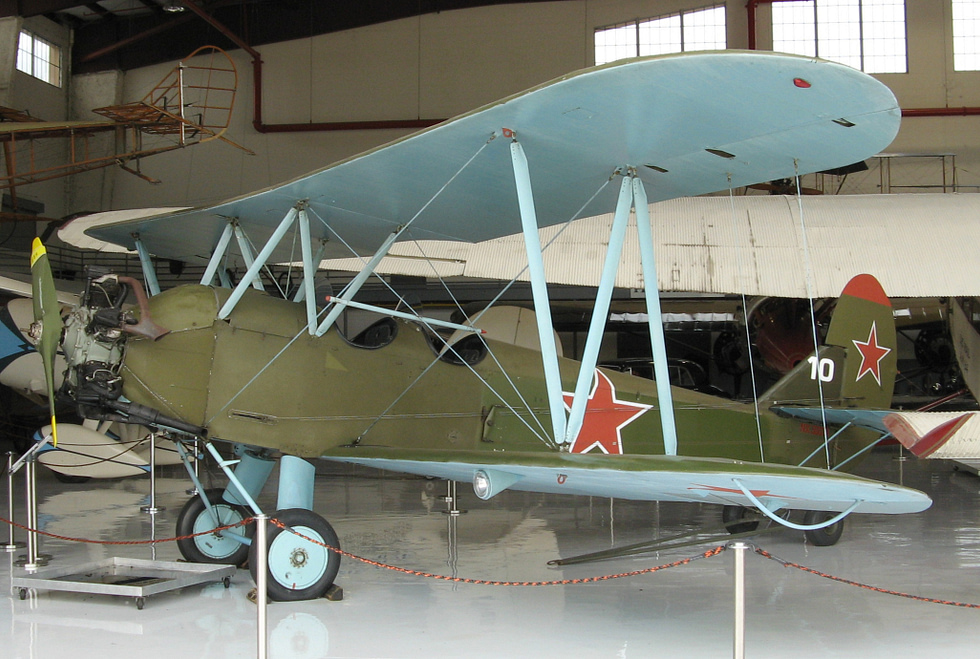
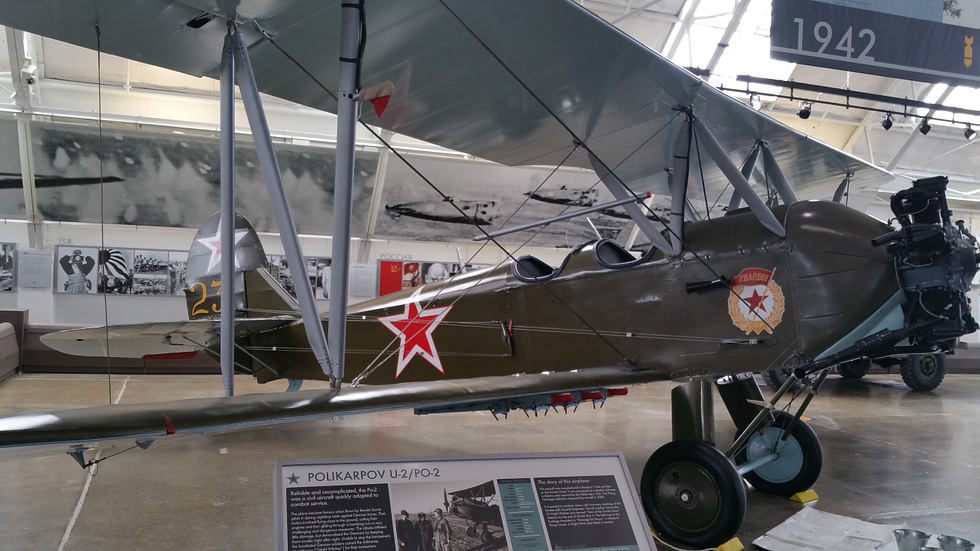
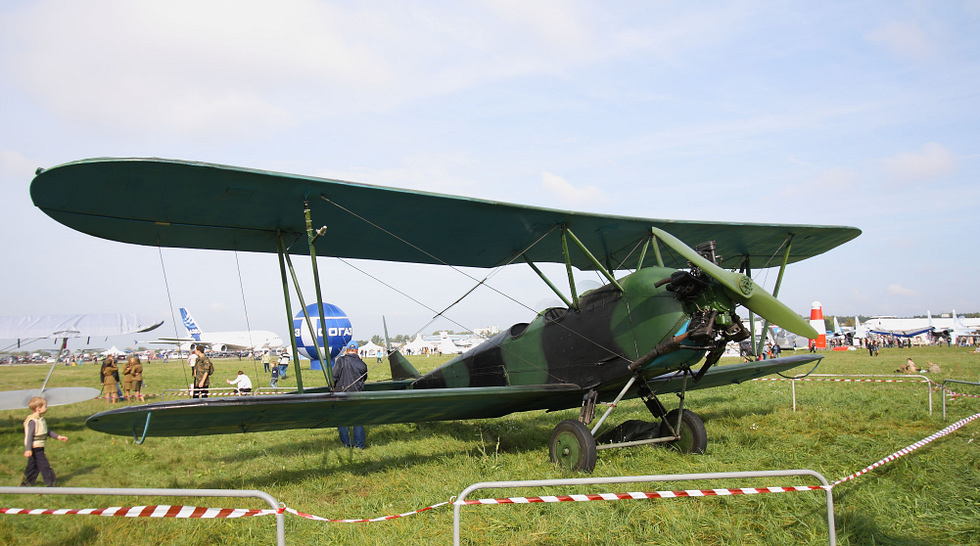
The Po-2 in motion
Video coming soon. A verified documentary feature on the Polikarpov Po-2 and the Night Witches will be added here.
Where the Po-2 flew
A harassment bomber, not a dogfighter
The Po-2 was never built to fight other aircraft. Its combat value lay in persistence and nuisance: gliding in at night to drop small bombs, spotting for artillery, resupplying partisans and evacuating the wounded. Its defining quality in combat was how hard it was to shoot down — it flew too slowly for fast fighters to engage safely, a problem German pilots faced in WWII and UN jet pilots faced again over Korea.
Compare the combat record of every military aircraft. Figures as of 2026.
Everything people ask about the Po-2
Can I fly in a Po-2?
How many Po-2s were built?
Why were the pilots called “Night Witches”?
How fast was the Po-2?
What engine did it use?
Did it really fly in the Korean War?
Did a Po-2 really shoot down a jet?
Is the Po-2 still flying?
You can’t fly the Po-2.
These, you can.
Some legends only live in museums — others are fuelled and waiting. MiGFlug has put civilians in real military jet cockpits since 2004.
 Fly the L-39 AlbatrosThe world’s most-flown jet trainer — aerobatics included
 Fly the F-104 Starfighter“The missile with a man in it”
 Fly the MiG-21The Cold War’s most-produced jet
 T-33 Shooting Star'ı uçurunAmerica’s first jet trainer
 Fly the DH VampireA piece of early jet history
 Fly the S.211Agile Italian jet trainer
 Fly the MB-326The classic Aermacchi jet
 Fly the MiG-15The Soviet legend of the Korean War
Continue the tour
Every fact, checked
- The National WWII Museum — The Night WitchesRaskova’s regiments, tactics, the Nachthexen name and the 24,000+ sortie figure.
- This Day in AviationDesign, first-flight date, construction and engine detail for the U-2 / Po-2.
- Military Aviation Museum“Most abundant biplane in history,” production years and specifications.
- The Aviation Geek ClubKorean-War “Bedcheck Charlie” night harassment raids and countermeasures.
- Key.Aero — The Night WitchesPopova, Ryabova, the glide-and-bomb tactic and per-night sortie counts.
- Military FactoryDimensions, weights and performance data for the Po-2.
- All-AeroProduction totals, variants and the Polish CSS-13 licence run.
- Military MattersThe disputed 1953 F-94 Starfire incident, hedged and contextualised.