
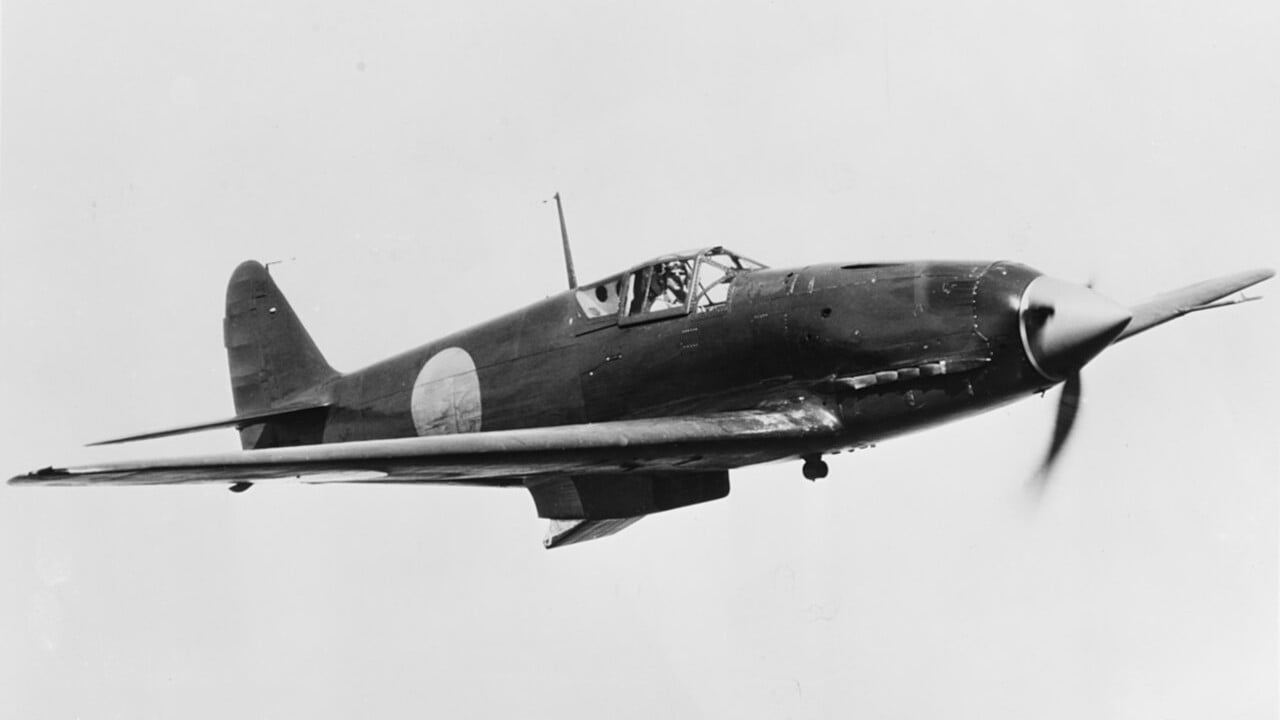
On 18 April 1942, as Jimmy Doolittle’s B-25s swept low over Japan, one of the American crews reported a fighter that should not have been there. It had a long, pointed nose, a liquid-cooled engine and the lines of a European thoroughbred. The pilot who saw it took it for a Messerschmitt Bf 109.
It was nothing of the sort. It was an early prototype of the Kawasaki Ki-61 Hien, the “flying swallow”, and it would become the only mass-produced Japanese fighter of the Second World War to fly with a liquid-cooled inline engine. Allied intelligence spent months guessing where it came from before settling on a codename that stuck: “Tony”.
Quick Facts
- Type: Single-seat, single-engine fighter, Imperial Japanese Army Air Force
- Official name: Army Type 3 Fighter Hien (“flying swallow”); Allied codename “Tony”
- First flight: December 1941
- Engine: Kawasaki Ha-40, a licence-built Daimler-Benz DB 601 liquid-cooled inverted V-12
- Distinction: The only mass-produced Japanese fighter of WWII with a liquid-cooled inline engine
- Top speed: About 580-590 km/h (360-366 mph) for the Ki-61-I Kai
- Built: Over 3,000; 275 engineless Ki-61-II airframes became Ki-100s
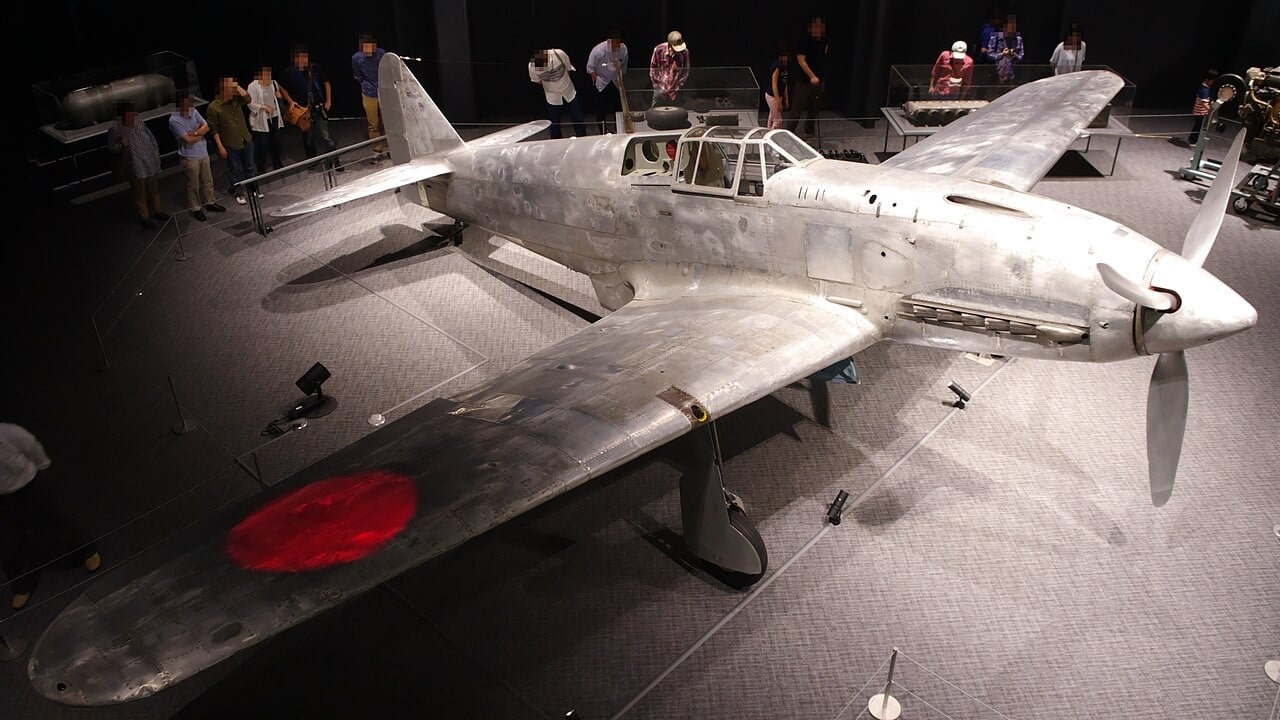
- Survivors: Very few, including number 6117 at Kakamigahara, Japan
A German heart in a Japanese airframe
Every other Japanese front-line fighter of the war used an air-cooled radial engine. Kawasaki was different. The company had a long tradition of building German liquid-cooled engines under licence, and in the late 1930s it bought the rights to the Daimler-Benz DB 601, the engine of the Bf 109E. In April 1940 a Kawasaki team came home from Germany with drawings and sample engines.
The Japanese version, the Ha-40, was completed in July 1941. It was slightly lighter than the German original and delivered just under 1,200 hp. Around it, designers Takeo Doi and Shin Owada drew two fighters: the heavy Ki-60 interceptor and the lighter, general-purpose Ki-61. The Ki-60 disappointed, and attention switched to its slimmer sibling.
The Ki-61 first flew in December 1941. It was everything Japanese army pilots were not used to: armour behind the seat, self-sealing fuel tanks, a strong structure and a high wing loading. Senior officers who loved the featherweight Nakajima Ki-43 Hayabusa were sceptical, so Kawasaki staged a fly-off against Japanese types, an imported Bf 109E and a captured Curtiss P-40E. The Ki-61 was the fastest aircraft in the trial and only the Ki-43 could out-turn it.
Why the Allies called it Tony
When the new fighter appeared over New Guinea, it confused everyone. Its droopy nose and sloping top line looked European, and the Bf 109 theory gave it the first codename “Mike”. As more sightings came in, Allied analysts decided it looked more like the Italian Macchi C.202, which used the same engine family. The name “Tony”, short for Antonio, reflected that Italian resemblance.
The airframe was in fact an entirely Japanese design. Only the engine was German, and that engine would become the aircraft’s greatest weakness.
Australian Military Aviation History on the Ki-61 “Tony”, the fighter Allied pilots first mistook for a Bf 109.
New Guinea: the engine that could not take the heat
The first Ki-61 units, the 68th and 78th Sentai, were sent to the South Pacific in 1943. The move alone was a disaster. Army pilots had little experience of long over-water flights, and on one ferry flight from Truk the 78th Sentai lost 18 of its 30 aircraft. Both units reached Rabaul under strength before they had fired a shot.
Then the jungle went to work. The Ha-40 needed precise manufacturing and good oil, fuel and maintenance. In tropical heat the fuel pumps were fickle, the engine overheated while idling on the ground, and it could not be overhauled in theatre. Unserviceable fighters sat on airfields around Wewak while Allied bombers worked them over.
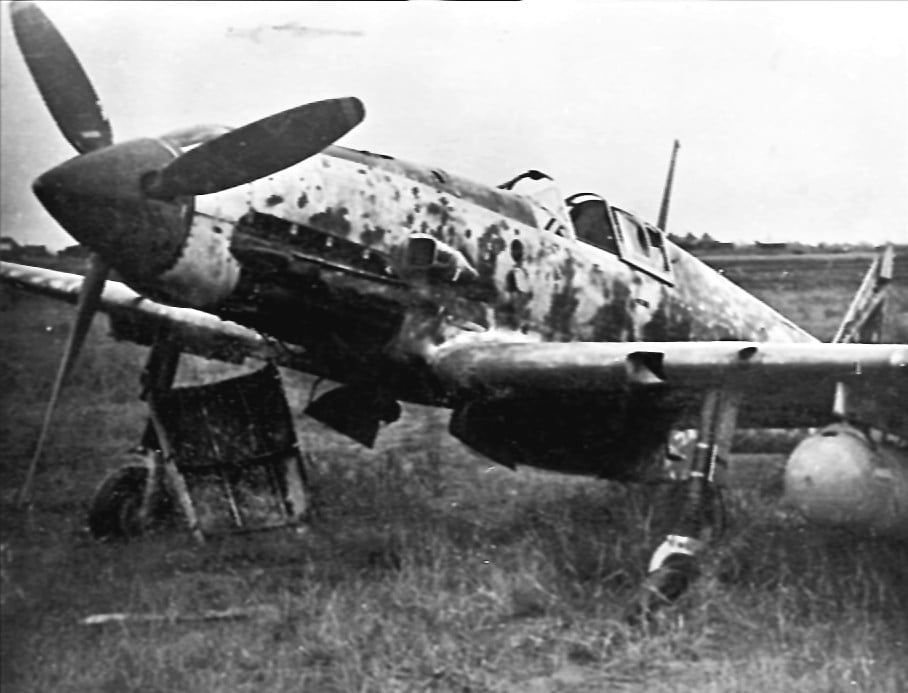
When a Hien did get into the air, it was a nasty surprise. It was better armoured and more robust than the Ki-43 or the navy’s fighters, and it could follow American pilots who were used to escaping Japanese fighters by diving away. That trick no longer worked. But the Japanese Army Air Force lost so many pilots and machines in New Guinea that the Ki-61’s debut ended in attrition rather than triumph.
Ramming the Superfortress
By late 1944 the Ki-61 was defending Japan itself against the B-29 Superfortress. It was a brutal mismatch. The early Ki-61-I could only just reach the bombers’ operating altitude, and only after its weight had been cut as far as possible.
Some units turned to ramming. In November 1944 the 10th Air Division made ramming flights a matter of policy, stripping guns and protective equipment from their fighters to claw a few more metres of altitude. The 244th Sentai at Chōfu, Tokyo’s most famous Hien unit, formed a special attack flight of volunteers led by First Lieutenant Toru Shinomiya.
On 3 December 1944, as B-29s from Saipan struck Tokyo, Shinomiya rammed one of them and still managed to land his Ki-61 with most of its left outer wing gone. The damaged fighter was put on display at the Matsuya department store in Ginza, and Shinomiya was among the first recipients of Japan’s new Bukosho gallantry award. The ramming pilots were not released from the duty. Shinomiya himself died in a special attack off Okinawa on 29 April 1945, flying a Ki-43.
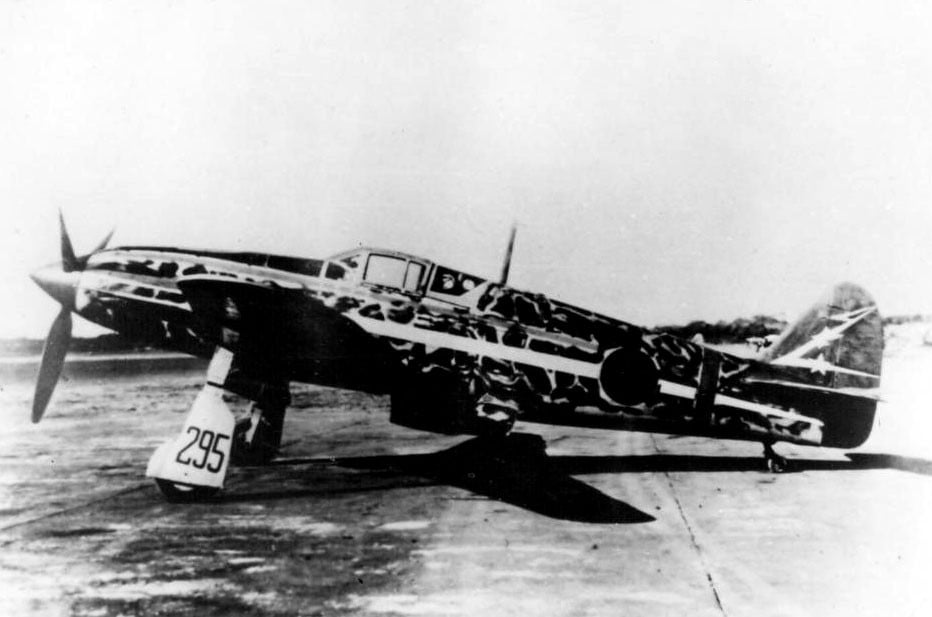
Not every success came from collisions. The 244th Sentai’s commander, Teruhiko Kobayashi, flew Hien number 295 and became one of the unit’s best-known pilots against the B-29s with conventional gunnery attacks.
The engine that ran out, and the fighter that replaced it
Kawasaki’s answer to the altitude problem was the Ki-61-II, powered by the 1,500 hp Ha-140, a Japanese equivalent of the more powerful DB 605. The improved Ki-61-II Kai could reach around 610 km/h (379 mph) and operate at the B-29’s cruising height. But the Ha-140 was even harder to build well than the Ha-40, and around half of the first batch of engines went back to the factory to be rebuilt.
Then, on 19 January 1945, B-29s destroyed the Akashi engine factory. Kawasaki was left with 275 Ki-61-II airframes and nothing to put in their noses. The emergency fix was to graft on a Mitsubishi Ha-112-II 14-cylinder radial, with a skin fairing riveted to the fuselage to smooth the airflow behind the wide cowling.
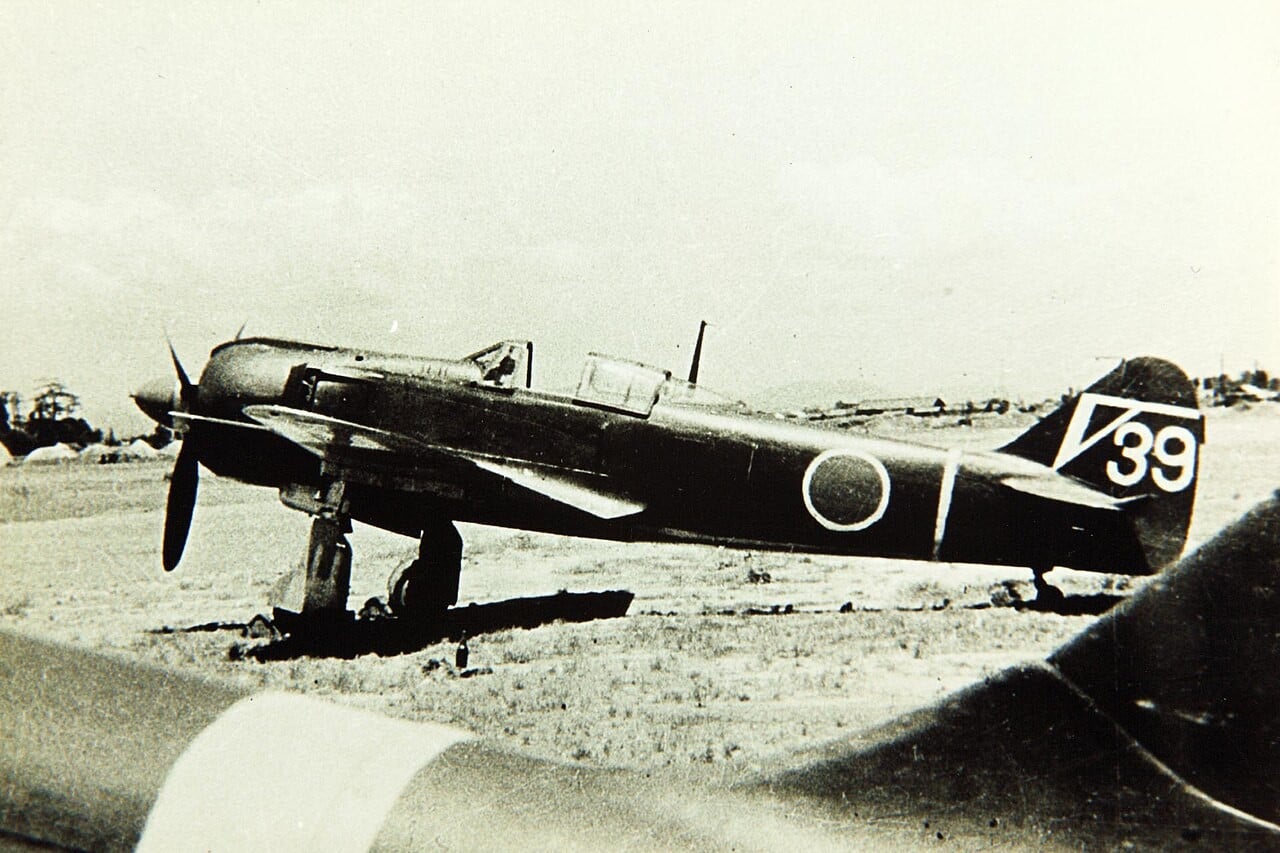
The result was the Kawasaki Ki-100. Without the radiator and plumbing of a liquid-cooled engine it was lighter and nimbler, and the radial was far more reliable. It was slightly slower than the Hien but more manoeuvrable, and it fought from March 1945 against B-29s, P-51 Mustangs and F6F Hellcats. It came far too late, and in too few numbers, to change anything.
What survives
Kawasaki built over 3,000 Ki-61s in all, yet very few remain. The best known is Ki-61-II Kai number 6117, which was restored by Kawasaki Heavy Industries in 2015 and 2016 and now sits, in bare metal, at the Kakamigahara Air and Space Museum near the factory where it was built. In the United States, the Military Aviation Museum in Virginia Beach owns Ki-61-Ib number 640, which force-landed in kunai grass in New Guinea during the war and lay there until 1975.
The Hien is a reminder that a good airframe is only as good as the engine and industry behind it. Kawasaki designed a fighter that could dive with the Americans and hit hard. Japan simply could not build, feed and maintain the German heart it depended on. When that heart finally stopped beating, a radial engine and a riveted fairing turned it into one of the best fighters Japan ever flew.
Sources: Military Aviation Museum (Virginia Beach), Royal Air Force Museum collections, HistoryOfWar.org, Kamikaze Images (Bill Gordon, citing Takaki and Sakaida, B-29 Hunters of the JAAF, Osprey), René Francillon, Japanese Aircraft of the Pacific War (Putnam)
Header photo: U.S. Navy photo / Wikimedia Commons, public domain
0 Comments