
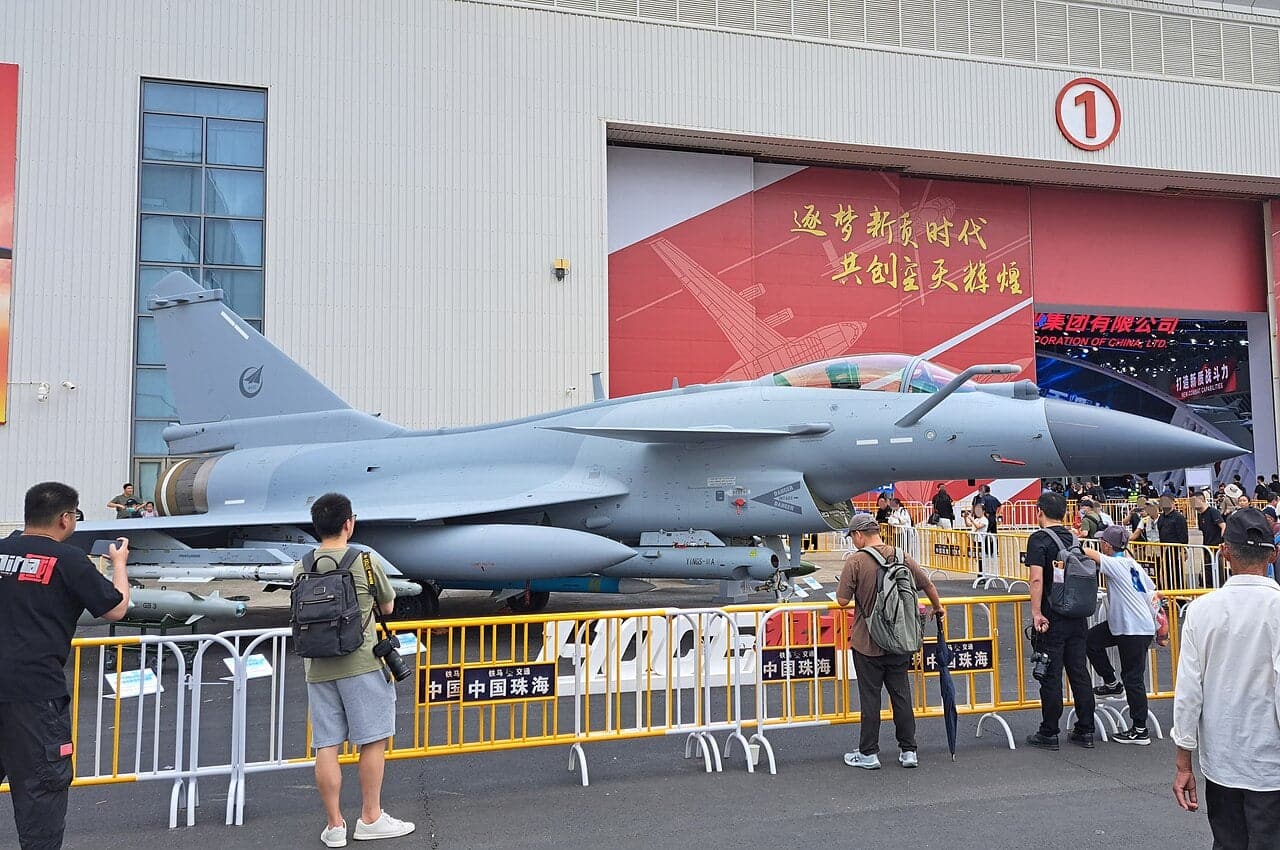
On Tuesday afternoon in Dhaka, a government adviser stood up at the Secretariat and confirmed that a committee had finished drafting the agreement. Bangladesh intends to buy the Chengdu J-10.
Twenty aircraft. A headline figure of $2.302 billion. And a stated rationale that says a great deal about how one Chinese fighter has changed the export conversation across Asia.
If the deal is signed, Bangladesh becomes only the second confirmed export customer for the J-10C, after Pakistan. For a design that spent two decades finding no foreign buyers at all, that is a substantial shift.
Kurzinfo
| Flugzeug | Chengdu J-10CE, the export version of the PLAAF’s J-10C |
| Menge | 20 aircraft in the final proposal (earlier reports suggested up to 24) |
| Total package | $2.302 billion, or roughly Tk28,314 crore |
| Unit price | $62.7 million base; close to $115 million each once support is included |
| Verkäufer | China National Aero-Technology Import & Export Corporation (CATIC) |
| Route | Government-to-government direct procurement |
| Expected signature | During the 2026-27 Bangladeshi financial year |
| Payment | Lump-sum allocations spread over 10 years to FY2035-36 |
| Typ | Single-engine, single-seat multirole fighter with canard delta layout |
The number behind the number
The sticker price is not the price. That is true of every fighter procurement, and Bangladesh’s paperwork lays out the gap with unusual clarity.
Each J-10CE costs $62.7 million as a bare airframe in the final proposal, up from the $60 million estimated when the process began in 2025. But the Armed Forces Division report puts $888 million against training, operational essentials, technical and logistical support and freight, and another $158 million against insurance, VAT and construction work. There is even a line worth $2.28 million for 800-litre and 1,700-litre external fuel tanks.
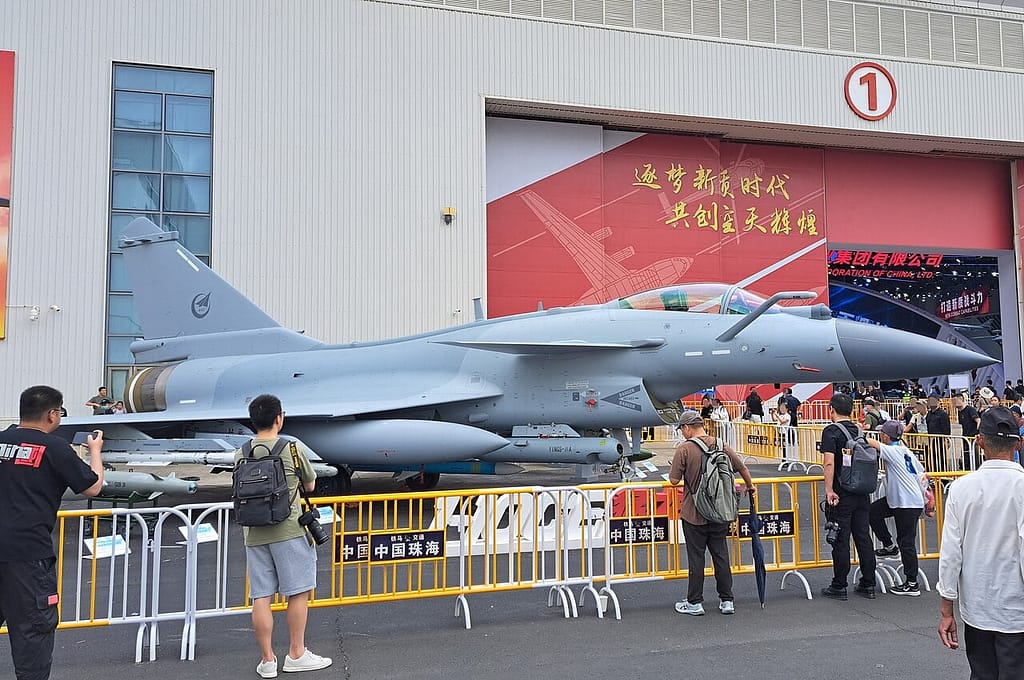
Roll it together and the effective cost per aircraft approaches $115 million. That is what a modern combat aircraft actually costs a country that does not already operate the type: you are not buying twenty jets, you are buying an entire capability from scratch.
Ten of the twenty will sit inside the Bangladesh Air Force’s Table of Organisation and Equipment. The other ten will not, an arrangement that usually signals attrition reserves and a training pool rather than a second front-line squadron.
Why Dhaka says it wants this aircraft
Here the story becomes more delicate, because the reason given is a combat claim.
The adviser went further, telling reporters that it is now established that an Indian Rafale was shot down by a Chinese-made J-10 during the India-Pakistan fighting. That is his characterisation, and it should be read as such.
Pakistan has claimed J-10 kills against Indian aircraft. India has not confirmed the loss of any Rafale to a J-10, and no independent verification has settled the question publicly. Treat the shootdown as contested. What is not contested is that the claim itself is now doing serious commercial work for Chengdu.

This is the part worth watching. For most of its life the J-10 was a capable aircraft nobody wanted to buy, passed over repeatedly in favour of Western and Russian types. One disputed engagement has done more for its export prospects than twenty years of airshow appearances.
What Bangladesh flies now, and what changes
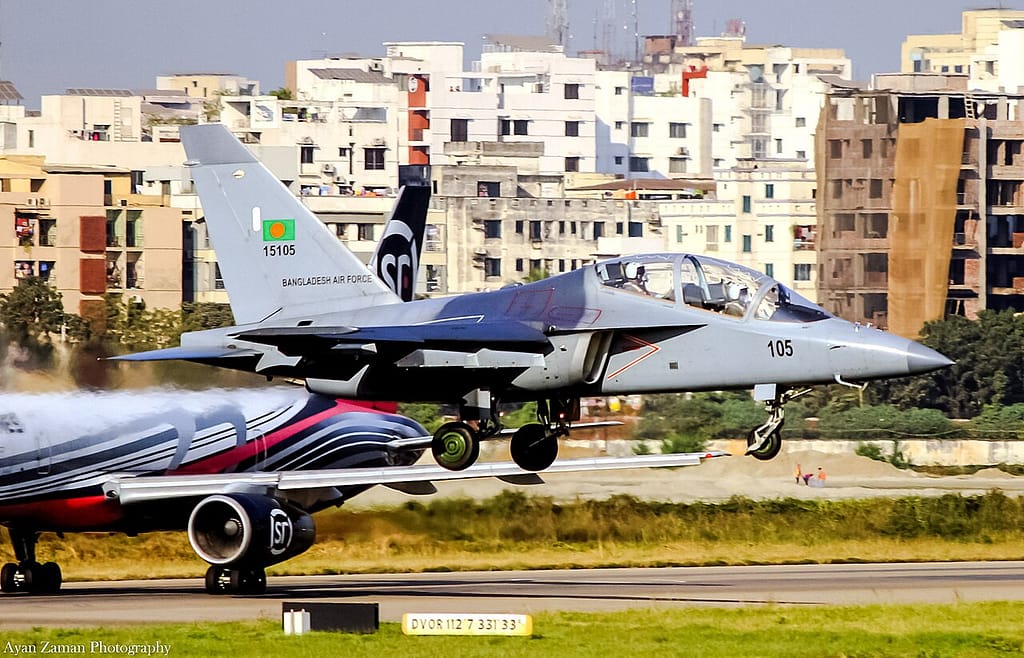
The Bangladesh Air Force is not a front-line combat power. Its fast-jet capability rests on ageing Chinese types and a small fleet of Yak-130 lead-in trainers, which are useful for producing pilots and marginal for producing air defence.
Twenty J-10CEs would be the largest single capability jump in the service’s history: modern AESA radar, beyond-visual-range missiles, and an aircraft in the same broad class as those flown by its neighbours. In the Bay of Bengal, where India operates a far larger and more capable air arm, that does not create parity. It creates a cost of entry that did not previously exist.
Bangladeshi television coverage of the announcement is above.
Signed is not the same as delivered
The process has been running since 2025, when the interim government led by Muhammad Yunus opened discussions during a visit to China in March. An eleven-member inter-ministerial committee chaired by the Air Force chief was formed that April. The Armed Forces Division wrote to the Ministry of Finance on 4 August seeking approval for the increased cost.
None of that is a contract. Bangladesh has been reported as wanting between twenty and twenty-four aircraft at various points, and neither Dhaka nor Beijing has publicly confirmed the final figure. A ten-year payment schedule stretching to 2036 is also a long time for a government’s priorities to hold steady.
But the direction is clear enough. China has spent decades trying to sell fighters to countries that kept choosing somebody else. It now has a second confirmed customer forming for the J-10, and a sales pitch built on a battlefield claim that its competitors cannot easily rebut.
Sources: The Business Standard (25 August 2026), TWZ (26 August 2026), Bangladesh Armed Forces Division proposal as reported, Aerotime, Global Times.

0 Kommentare