
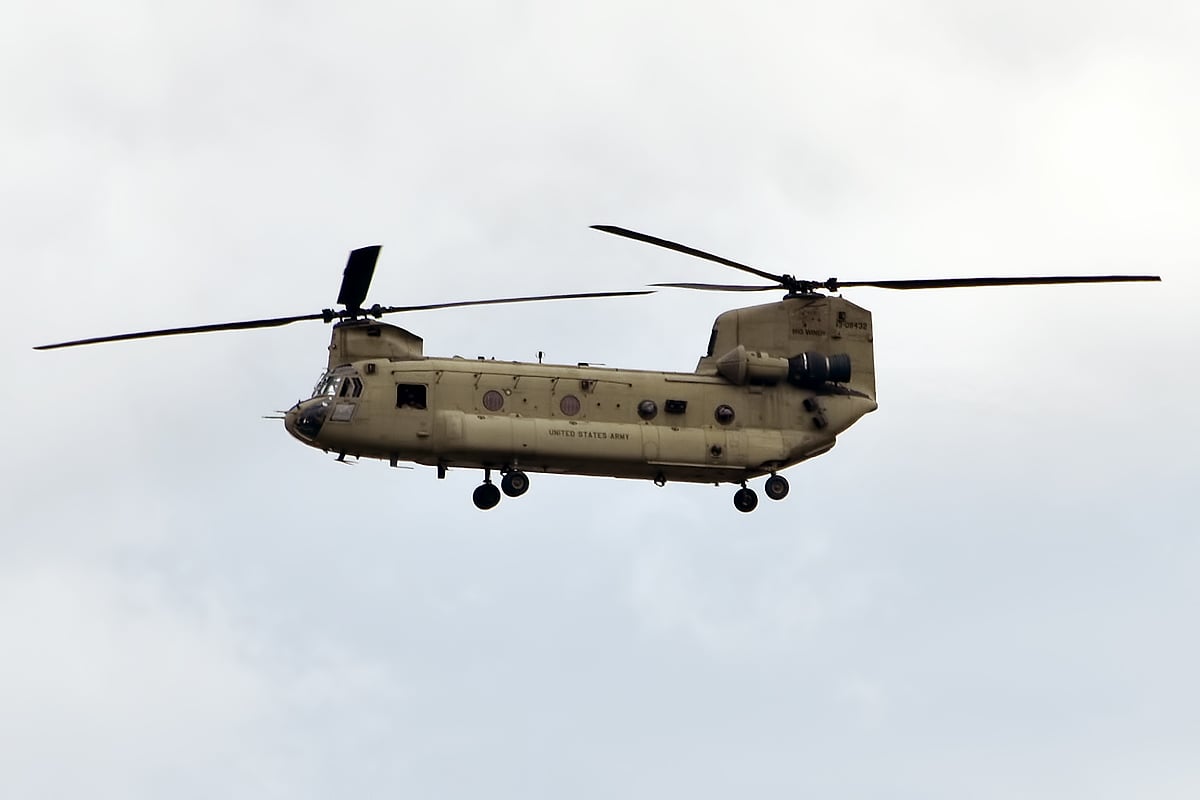
Among all the fifth-generation sales theatre at El Alamein this week, the most consequential thing on the ramp is a helicopter that first flew in 1961.
Boeing has handed the Egyptian Air Force the first five of twelve CH-47F Chinooks, with the milestone marked during the 8 to 10 September show. The deal is worth roughly $426 million, was signed in January 2023, and replaces Egypt’s ageing CH-47D fleet with the F model.
No stealth, no thrust vectoring, no export-variant designation ending in E. Just the aircraft that armies keep buying because nothing else does the job.
Kurzinfo
| What was delivered | First 5 of 12 Boeing CH-47F Chinooks |
| Kunde | Egyptian Air Force |
| Vertragswert | Approximately $426 million, foreign military sale |
| Vertrag unterzeichnet | 3 January 2023, awarded through the US Army |
| Ersetzt | Egypt’s existing CH-47D fleet |
| Marked at | El Alamein International Airshow, 8–10 September 2026 |
| Konfiguration | Tandem rotor, twin engine, rear ramp, heavy lift |
| First flight of type | 1961. Still in production. |
Why the F model matters to Egypt
The jump from D to F is not cosmetic. The CH-47F introduced a machined monolithic airframe that cuts vibration and maintenance hours, a digital cockpit, and a Common Aviation Architecture System that lets the aircraft absorb software upgrades rather than requiring new hardware every decade.
For an air force operating across Sinai, the Western Desert and a long Mediterranean and Red Sea coastline, the relevant number is what a Chinook can pick up when the air is thin and hot. Tandem rotors are the reason it can. With two counter-rotating rotors cancelling each other’s torque, there is no tail rotor consuming power, so almost all of the engine output goes into lift.
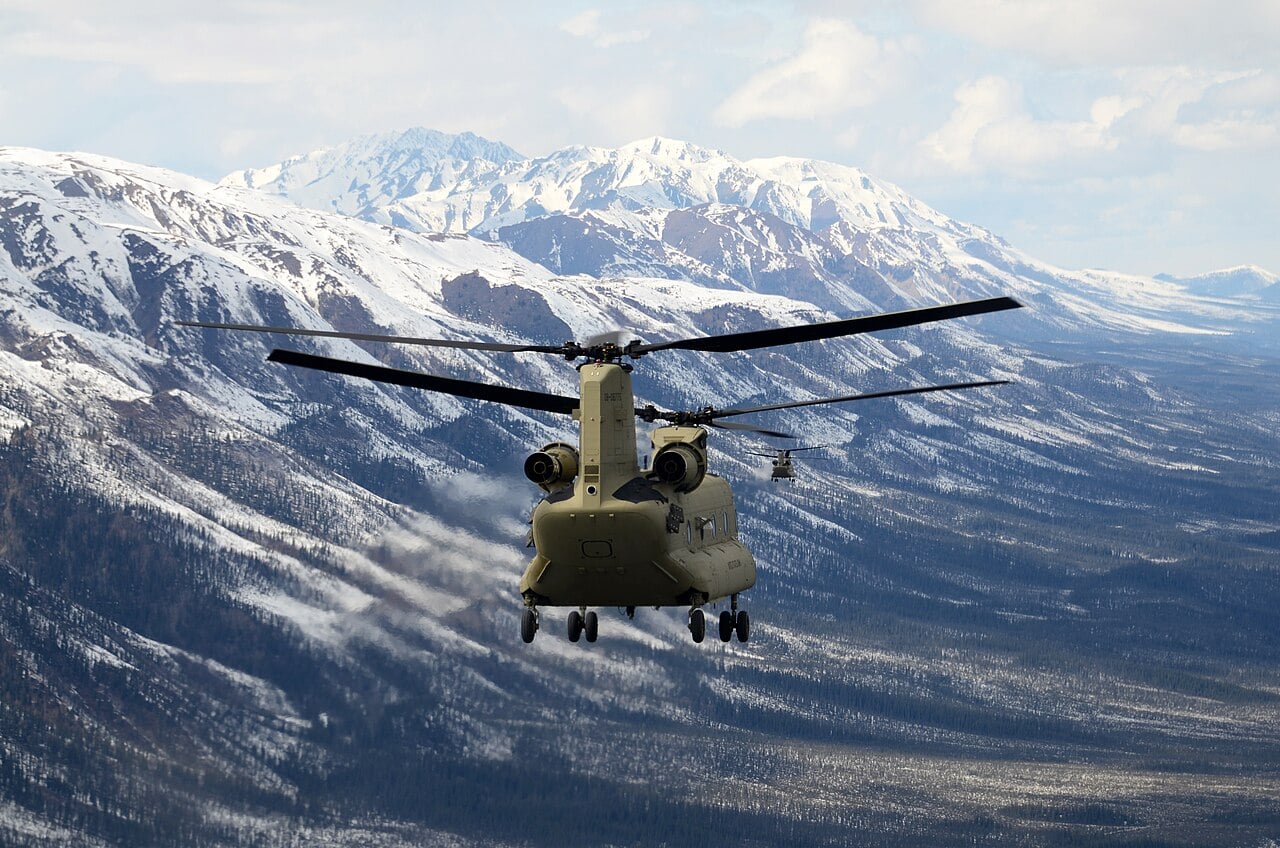
That is also why the Chinook has outlasted almost everything designed to replace it. The type entered service in the early 1960s and is still rolling off the Philadelphia line more than six decades later, with Block II adding around 1,100 kilograms of additional lift capability.
An American sale in a very contested room
The timing is the interesting part. Egypt has spent decades refusing to buy from one bloc, and this week it is being courted simultaneously by Russia, which is flying the Su-57E at the same show, and by China, which has sent fighters, tankers, radar aircraft and helicopters of its own.
Against that backdrop, a rotorcraft handover looks modest. It is not. Helicopter fleets create thirty-year dependencies: spares, depot-level maintenance, training pipelines, avionics upgrades. A fighter can sit in a shelter. A transport helicopter fleet has to be fed continuously, and whoever feeds it keeps a relationship.
Boeing is also a silver sponsor of the show, and the wider American presence includes a US pavilion with more than 25 companies and a static line of F-15E, F-16s, A-10s Und C-130s. The Chinooks are the part of that display that came with a signature already on it.
Boeing’s own overview of the CH-47F Block II and where the Chinook line goes next.
Seven more airframes are still to come. Egypt now joins roughly twenty other nations flying a helicopter older than most of the air forces operating it, for the unglamorous reason that after 65 years, nobody has built a better way to move a heavy load to a bad place.
Häufig gestellte Fragen
How many CH-47F Chinooks has Egypt received?
How much did Egypt pay for its CH-47F Chinooks?
What is the difference between the CH-47D and the CH-47F?
Why does the Chinook have two rotors instead of a tail rotor?
How old is the CH-47 Chinook design?
Who else is selling military aircraft to Egypt?
Sources: FlightGlobal; Boeing media release, 3 January 2023; Ahram Online; U.S. Air Forces Central.

0 Kommentare