
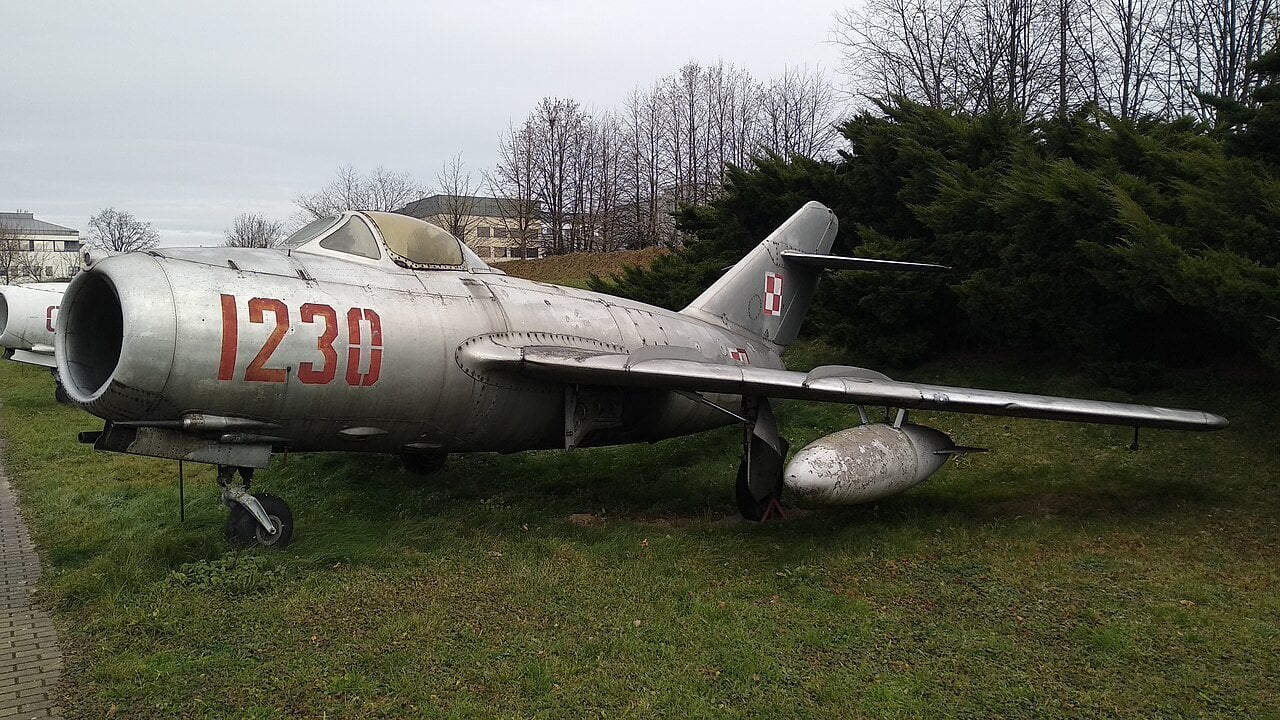
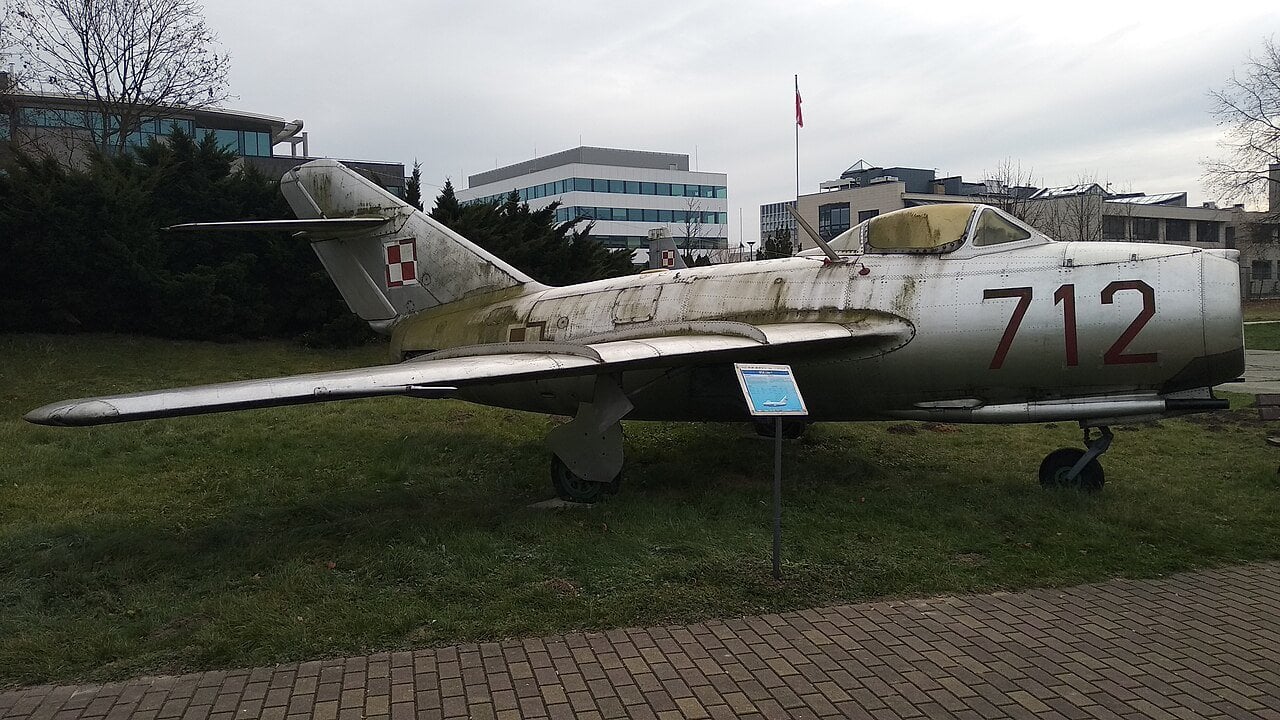
On the morning of 5 March 1953, four Polish MiG-15 fighters were flying west along the Baltic coast when one of them simply fell out of the sky. Over Kołobrzeg, his wingman watched him roll into a dive, punch off his drop tanks and vanish northwards, low over the grey water. Nobody in the formation knew it yet, but the jet was heading for Denmark.
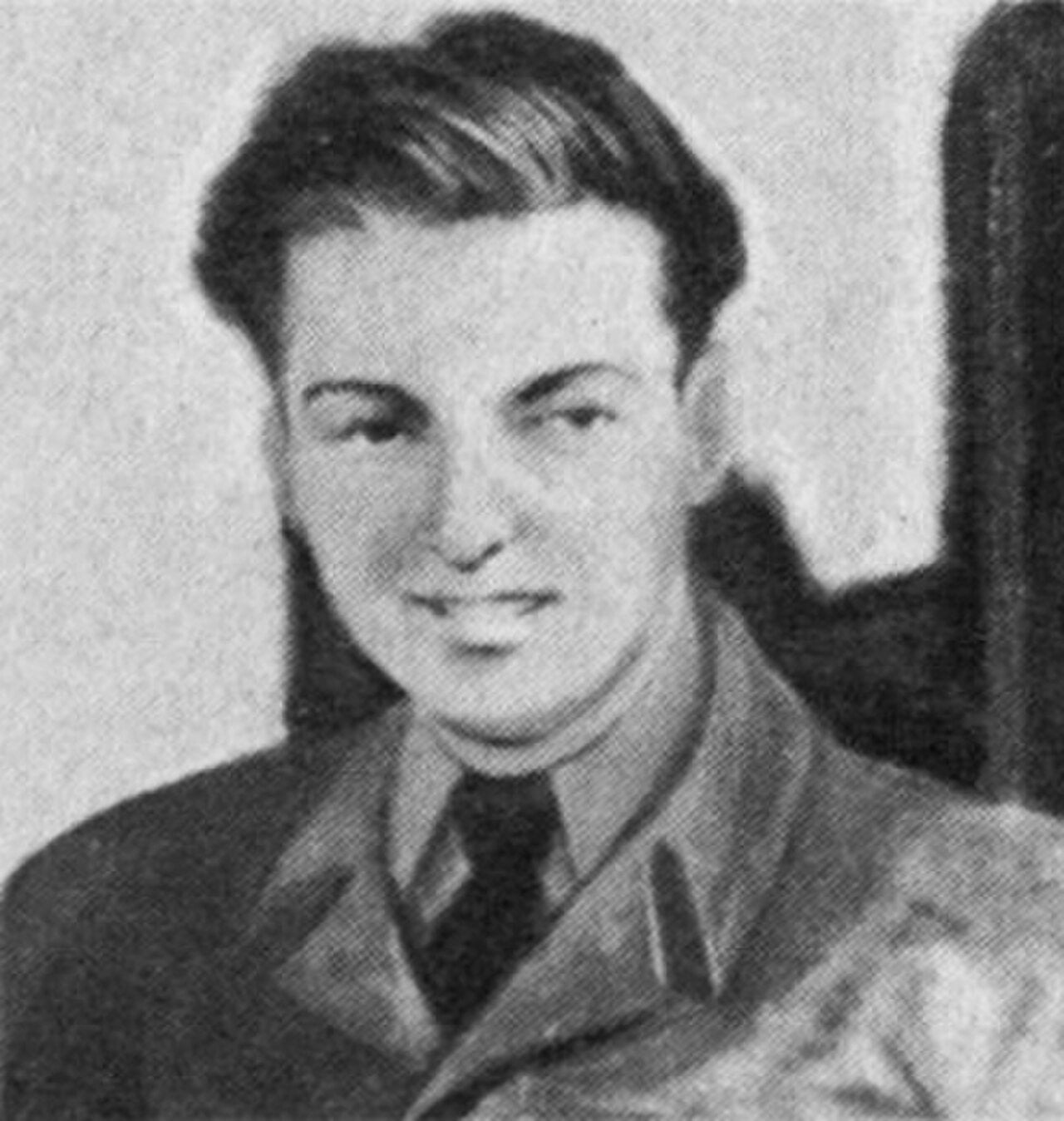
The pilot was Second Lieutenant Franciszek Jarecki, 21 years old. Minutes later he was circling Bornholm, a small Danish island in the middle of the Baltic, looking for an American air base that did not exist. By lunchtime the West had something it had never had before: a MiG-15 in working order, sitting on a grass field in NATO territory.
It happened, by pure coincidence, on the day Joseph Stalin died. And it would not be the last time a Polish MiG came down on Bornholm.
Kurzinfo
- Pilot: 2nd Lt. Franciszek Jarecki, Polish Air Force
- Datum: 5 March 1953, the day Stalin died
- Flugzeug: MiG-15bis, No. 346
- From: Słupsk, northern Poland
- To: Rønne, Bornholm, Denmark
- Aircraft returned: To Poland by ship after Western specialists examined it
- Second defector: 2nd Lt. Zdzisław Jaźwiński, MiG-15bis, 20 May 1953
- Third MiG to Bornholm: Lt. Zygmunt Gościniak, wheels-up at Rønne, 25 September 1956
- Later life: U.S. citizen, valve manufacturer in Pennsylvania; died 2010
A Fighter the West Had Never Touched
By early 1953 the MiG-15 had been the most unwelcome surprise of the Korean War for more than two years. Swept-winged, fast-climbing and heavily armed, it had driven American B-29s out of daylight skies over North Korea and was fighting the F-86 Sabre on roughly equal terms. What the West did not have was a flyable airframe to take apart at leisure.
Behind the Iron Curtain, the same fighter was now equipping the Polnische Luftwaffe, often under Soviet commanding officers. Franciszek Jarecki, born in 1931 near Kraków and deported with his family by the Soviets in 1945, had graduated from the air force school at Dęblin and was posted to Słupsk, close to the Baltic coast, to fly the new jets.
Escape was not an abstract risk. In 1952, a Dęblin instructor named Edward Pytko had tried to flee to West Germany in a Yak-9. Soviet aircraft stopped him over Czechoslovakia, he was handed back to Poland, tried for high treason and executed. Everybody in the Polish Air Force knew how that story ended.
Ten Minutes of Circling
According to Ingenium, the Canada Aviation and Space Museum's history channel, Jarecki quietly pocketed a map of the Baltic during a briefing on 4 March, the day the Polish pilots were told Stalin was gravely ill. The next morning he took off with three other MiG-15s on a routine flight towards East Germany. Over Kołobrzeg, at about 5,500 metres, he broke away.
He jettisoned his external tanks for speed and dived north to around 450 metres, possibly lower, to stay beneath Soviet radar. Alert fighters at his base were scrambled to stop him. The whole flight, Ingenium says, lasted well under half an hour.
Then came the anticlimax. Jarecki had expected to find a large American base on Bornholm. Instead he found a small airfield at Rønne that matched an old map, with nothing military on it. He circled the island for ten to fifteen minutes, watching his fuel, before committing to land. He touched down, taxied to a clump of trees and tried to hide the jet.
British Pathé newsreel from 1953 on the Polish MiG pilot.
The first person he met was a local woman. In broken German, he asked her whether he was in Soviet territory. She told him he was in Denmark. Private pilots, the police and the commander of the local Danish army unit arrived soon after, and Jarecki told them what he had come for: he was defecting. He spent his first night in the West in a Rønne police cell.
Seven Tons of Iron Under Guard
Copenhagen moved quickly. Armed Danish troops threw a cordon around the MiG and the press was sent away. Warsaw demanded the aircraft back the same day. The Danes informed their American and British allies first, and a British air attaché, Wing Commander Francis Russel Jeffs, was among the first Western officers to examine the jet, according to Ingenium.
Jarecki's aircraft, a MiG-15bis numbered 346, was the first airworthy MiG-15 the West could study up close. Wikipedia records that specialists from the United States, called in by the Danish authorities, went over it thoroughly. Then, under international rules, Denmark partly dismantled the fighter and shipped it back to Poland weeks later. Polish and Soviet technicians reportedly found deposits on some parts that suggested moulds had been taken for copies.
The pilot was a different matter. Denmark let Jarecki go west. He spoke to his homeland over Radio Free Europe from Munich, and in London in April 1953 General Władysław Anders, leader of the Polish government in exile, awarded him the Cross of Merit. In the United States he briefed intelligence officers on Soviet aircraft and air tactics, and President Dwight D. Eisenhower shook his hand.
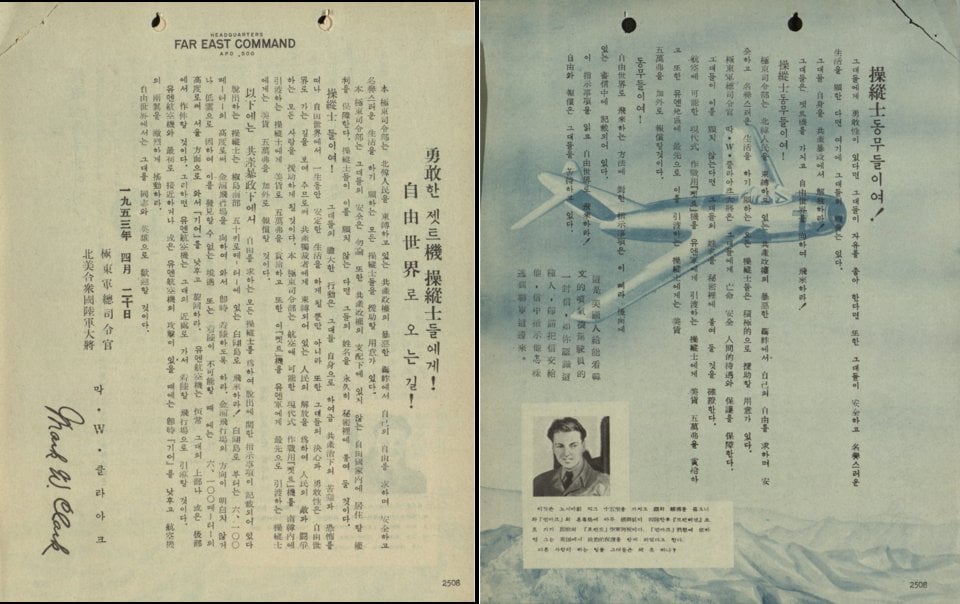
Jarecki's face soon travelled even further. In April 1953, the U.S. Army's leaflet unit in Tokyo printed his photograph and story on leaflets dropped over Korea as part of Operation Moolah, offering Communist pilots a reward for delivering a jet. Wikipedia says Jarecki himself received 50,000 dollars as the first man to hand a MiG-15 to the Americans; Ingenium describes that payment as unconfirmed.
The Friend Who Followed
One of the Polish pilots paying close attention was Zdzisław Jaźwiński, 22, who had been in the same year as Jarecki at the officer school in Radom. A Warsaw boy who had run after the insurgents during the 1944 Uprising, he flew MiG-15bis fighters with the 41st Fighter Regiment at Malbork, under Soviet commanders who, he later said, did not speak a word of Polish and did not trust their pilots at all.
On 20 May 1953, according to the Polish History Museum's portal dzieje.pl, he took off at 7:10 on a training interception with another second lieutenant, Roman Lachcik, and told him over the radio to go ahead, he would catch up. He never did.
Pursuit fighters were launched at 7:40, but by then Jaźwiński was over the sea. Like Jarecki, he expected to find an American airfield on Bornholm. Like Jarecki, he found nothing of the sort, and with his fuel running out he had no option but to put the jet down where he could.
Dzieje.pl says he chose a field near the Almegård barracks at Rønne. The MiG hit a stone, tore off a wing, spun round and stopped with its nose in a wall. Jaźwiński climbed out barely alive. This time the Danes, alarmed at a second Polish jet in eleven weeks, jailed him before sending him to Copenhagen, where British and American diplomats offered him asylum. He chose America, because it would let him keep flying.
The Price at Home
Both men paid for their freedom with their families. Ingenium reports that the Polish authorities jailed Jarecki's mother, his only close relative, from 1953 to 1956 and refused her requests to see him. Jaźwiński's parents were arrested and sentenced to two years in a labour camp, and three officers of his regiment were imprisoned, two of them for 12 years, accused of treason and of planning their own escapes. He never saw his parents again, and did not return to Poland until 1997.
The defections did not stop either. On 25 September 1956, Lieutenant Zygmunt Gościniak landed a third Polish MiG-15bis at Rønne, this time without lowering his landing gear. That same year four Dęblin cadets escaped across Czechoslovakia to Austria in two Yak-18 trainers, and in November 1957 another Polish pilot crash-landed a licence-built Lim-2 in Sweden.
British Pathé footage of the escaped Polish flyer arriving in the United States in 1953.
Jarecki built a quiet American life. He studied at Alliance College in Pennsylvania, earned a private pilot licence, and in 1969 founded a valve-making company. Wikipedia records that he owned a factory in Fairview, Pennsylvania, and a horse-racing track, Commodore Downs. Someone fired at his car in 1954, Ingenium reports, but he was unhurt. The flight suit he wore on 5 March 1953 is now at the Smithsonian's National Air and Space Museum.
Jaźwiński became Jerry Jazwinski, worked as a consultant to the U.S. Air Force from 1955 to 1959 and then spent 22 years as an airline pilot, steering well clear of Warsaw Pact countries. Jarecki died in Pennsylvania on 24 October 2010, aged 79.
Bornholm, meanwhile, keeps an odd distinction. For a few years in the 1950s, this sleepy Danish island was the closest thing the Baltic had to a back door in the Iron Curtain, and the young men who found it came through at 180 kilometres an hour.
Sources: Wikipedia (Franciszek Jarecki, List of Cold War pilot defections), Ingenium / Canada Aviation and Space Museum, dzieje.pl (Polish History Museum), U.S. National Archives (8239th Army Unit leaflet), British Pathé
0 Comments