
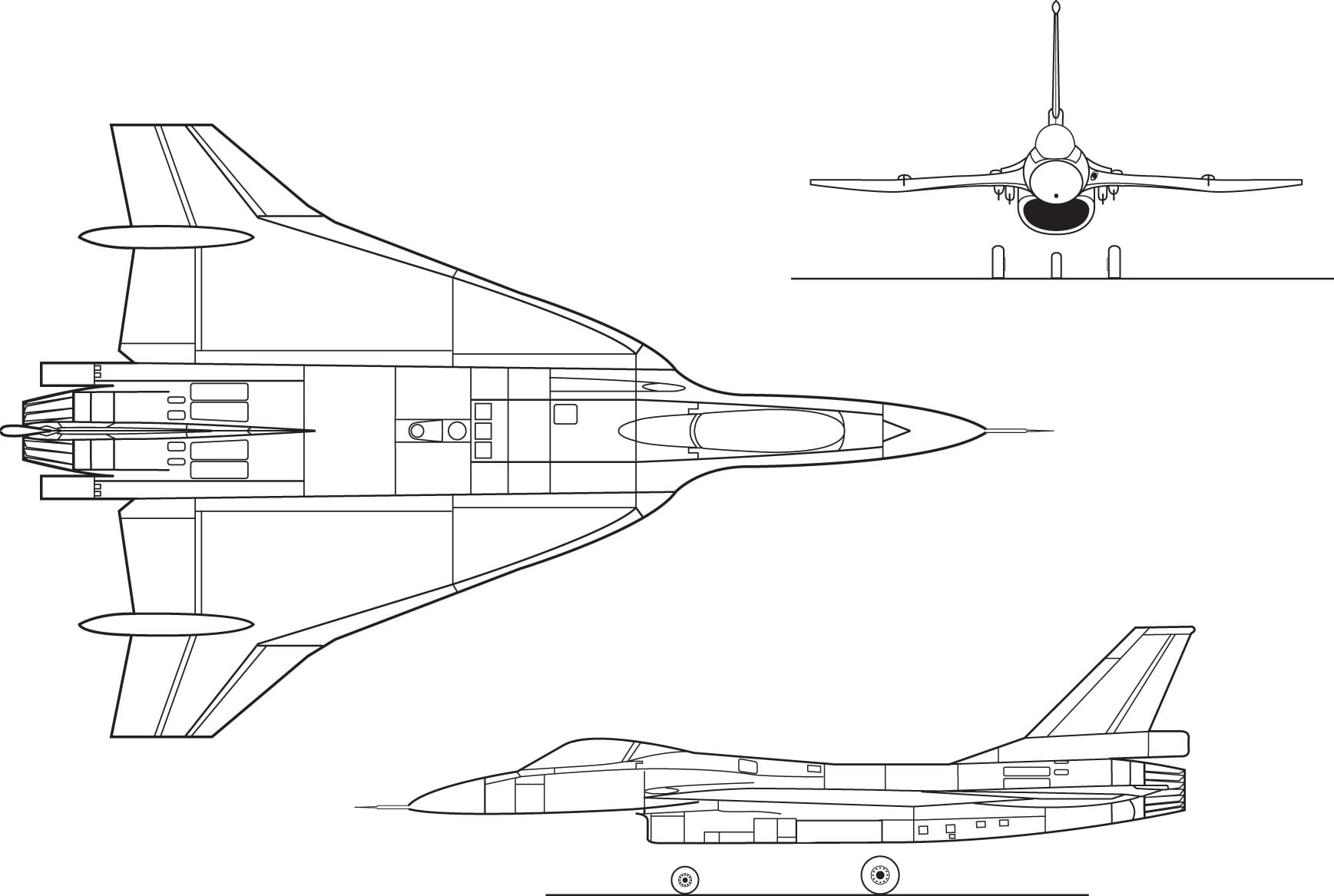
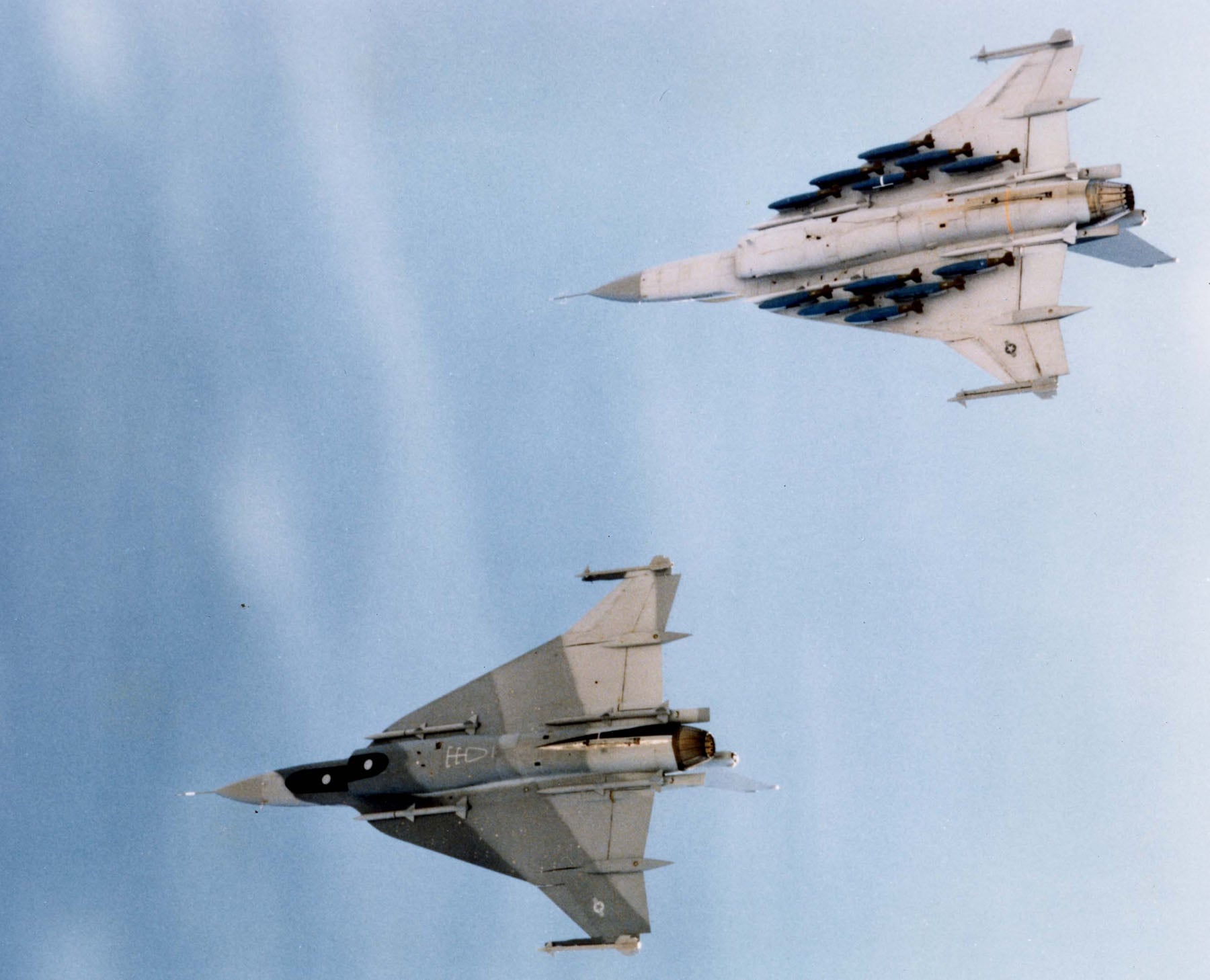
Take an F-16 Fighting Falcon, throw away its wing, and bolt on a vast cranked-arrow delta that nearly doubles its area. Stretch the fuselage, cram in 65 percent more fuel, and hang bombs from twenty-seven stations. What you get flies farther, carries more and cuts through the sound barrier more sweetly than the jet it came from. What you get is the F-16XL — and the U.S. Air Force said no.
Only two were ever built. They lost the biggest fighter contract of the 1980s, then found a strange second life as some of NASA's most useful research aircraft. The XL is the great "what if" of the Viper family.
Datos rápidos
- Tipo: General Dynamics F-16XL, cranked-arrow delta derivative of the F-16
- Primer vuelo: July 3, 1982
- Construido: two (one single-seat, one two-seat)
- Ala: roughly double the area; 65% more internal fuel
- Payload/range: about double the bombs, 40% more reach
- Veredicto: lost the 1984 Dual Role Fighter contest to the F-15E; went to NASA in 1988
A wing like a stingray
The XL's signature is that enormous "cranked-arrow" wing — a delta whose leading edge kinks partway out, sharply swept inboard and less so outboard. The shape let the jet slip through supersonic flight with low drag while keeping decent low-speed manners, and it created a huge area for fuel and weapons. General Dynamics stretched the fuselage by around four feet to match.
The numbers were startling. The XL could haul roughly twice the bomb load of a standard F-16 and fly about 40 percent farther, all while handling better at high speed. On paper it was exactly the long-range strike fighter the Air Force wanted.
How did the Air Force say no to this?
Beaten by two engines
In 1981 the XL entered the Air Force's Enhanced Tactical Fighter contest — a fly-off to pick a new deep-strike jet. Its rival was McDonnell Douglas's F-15E Strike Eagle, a two-seat bomber version of the big Eagle. On February 24, 1984, the Air Force chose the F-15E.
The reasons were sober rather than damning. The Eagle had two engines to the XL's one — better survivability on a long mission over hostile ground. It carried less developmental risk, slotted straight into an existing F-15 production line, and left more room to grow. The XL was arguably the more elegant aircraft; the F-15E was the safer bet.
The Blackbird's wingman
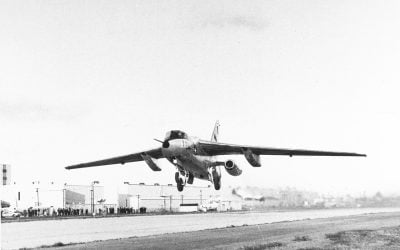
Losing the contract could have been the end. Instead, in 1988 both XLs went to NASA, which spent the 1990s using them to chase problems no production fighter could. They studied laminar flow across that giant wing, tested advanced flight controls, and probed the shape of the sonic boom itself.
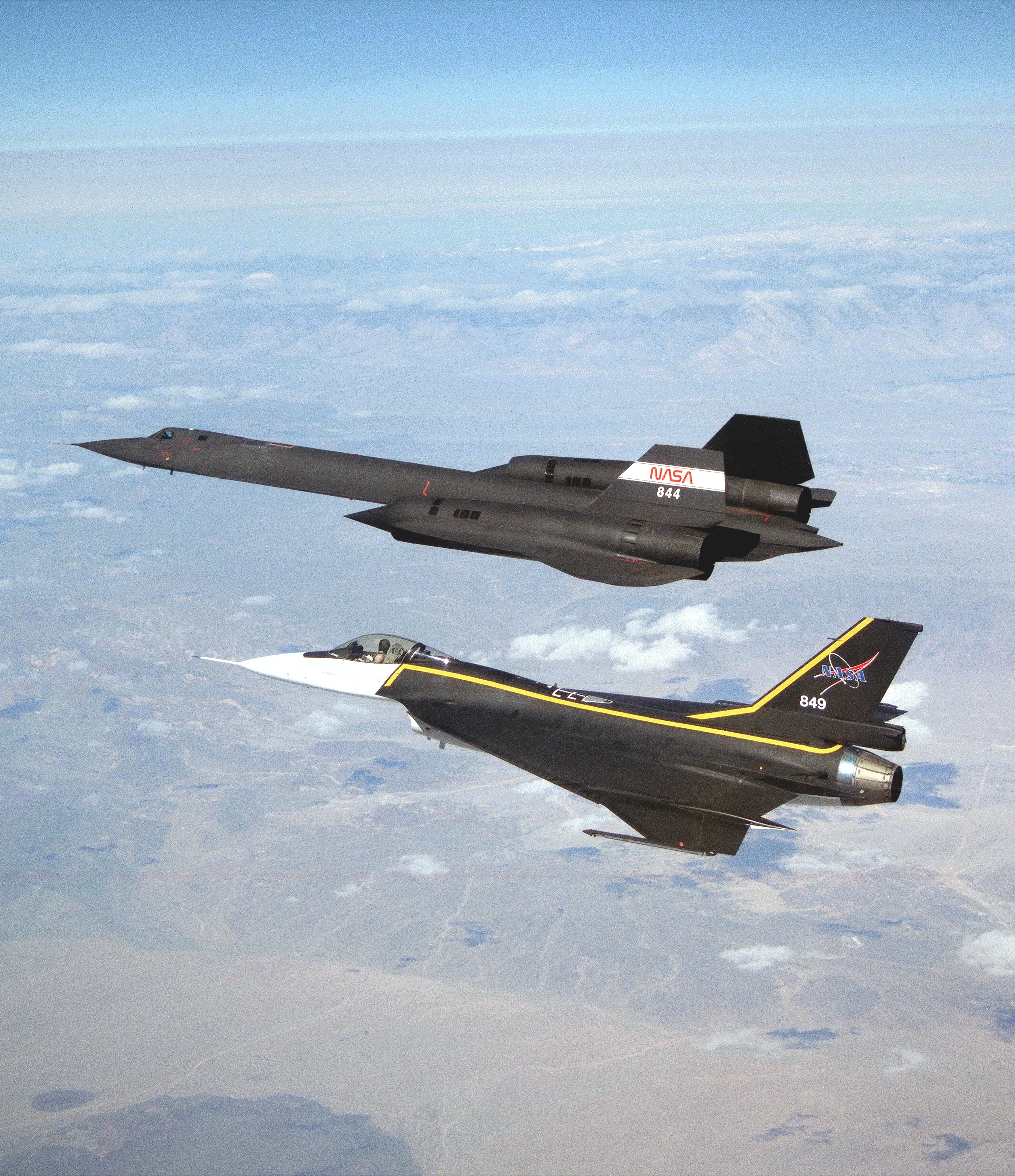
The most spectacular experiment paired an XL with an SR-71 Blackbird. The Viper derivative tucked in astonishingly close beneath the Blackbird as it cruised supersonic, sampling the shock waves rolling off the faster jet to help NASA understand how sonic booms form — research that feeds directly into today's quiet-supersonic work.
The F-16XL in its own words and images.
Neither XL flies today, but both survive. They are proof that a "loser" can still be one of the most interesting aircraft of its generation — a Fighting Falcon that grew a stingray's wing, out-ranged and out-lifted the original, and then went to work for science instead of war.
Supersizing the Falcon: the story of the cranked-arrow XL.
Sources: Wikipedia (General Dynamics F-16XL); NASA Armstrong/Dryden; F-16.net; The National Interest.
0 Comments