
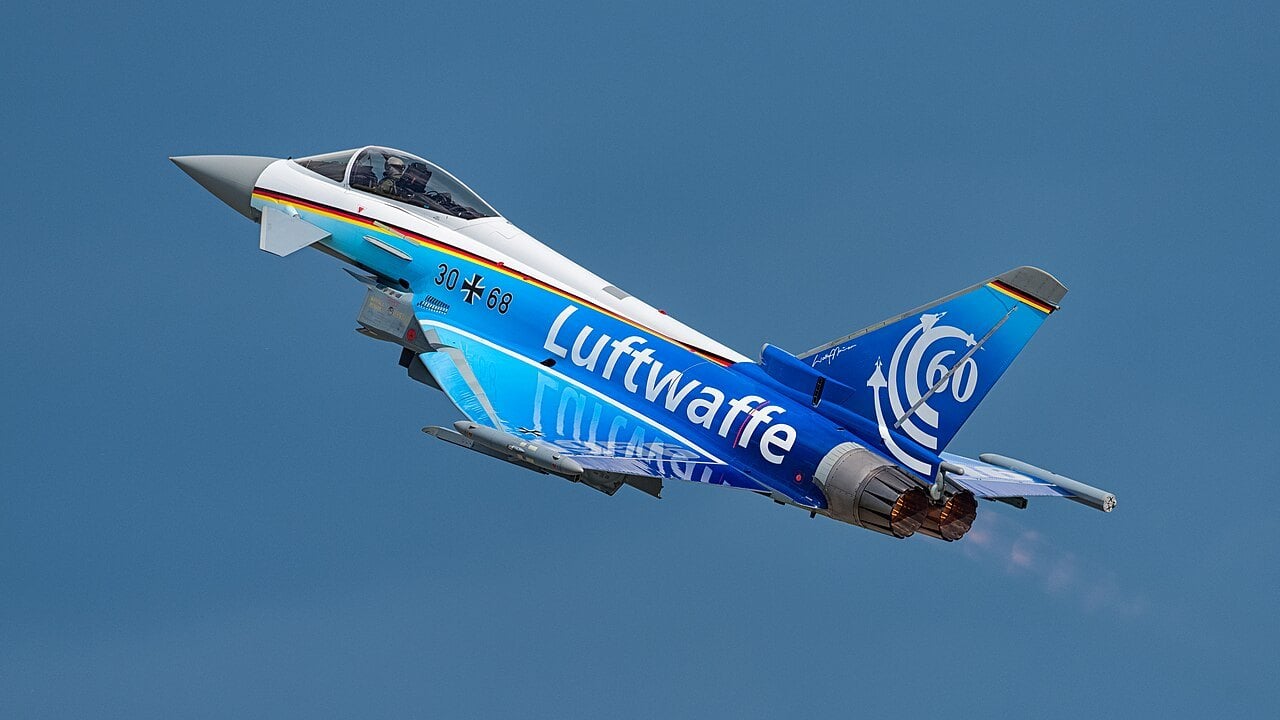
The people who build Germany’s fighters have run out of patience. On Monday 23 November 2026, at a works meeting inside Airbus Defence and Space’s plant at Manching in Bavaria, the employee works council called on the Federal Chancellery to give the green light, immediately, for the next German combat aircraft.
Their timetable is blunt. For the Bundeswehr to field the new system before 2040, the council says, a prototype has to make its first flight as early as 2032. And the most talked-about shortcut, joining the British-Italian-Japanese Global Combat Air Programme, they reject outright as “doomed to failure”.
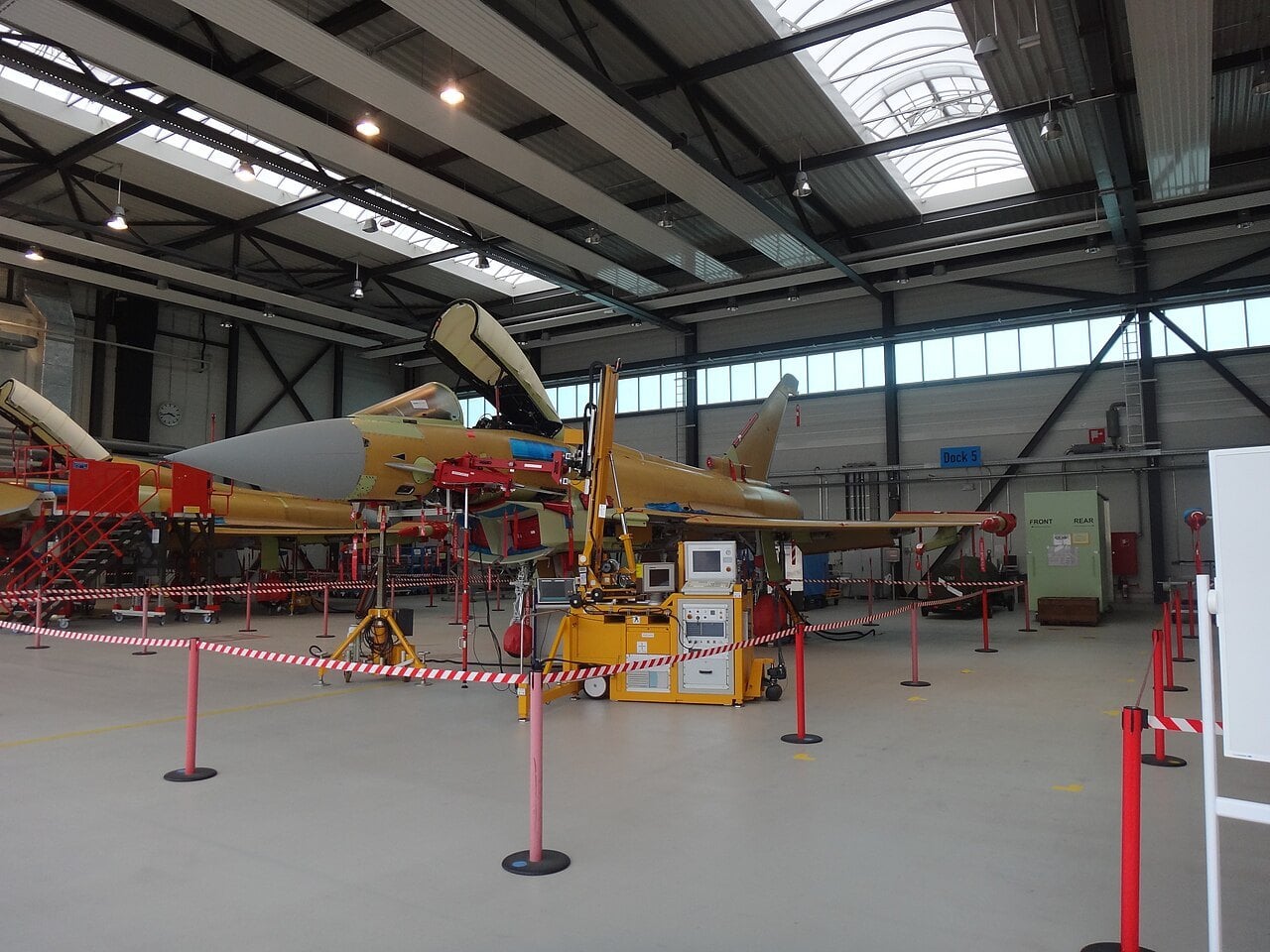
It is an unusual intervention. Works councils normally argue about shifts and pay, not fighter strategy. But Manching is where Germany assembles its Eurofighter Typhoon, and its workforce knows that without a successor programme the production line has a horizon.
Datos rápidos
- OMS: Works council of Airbus Defence and Space, Manching (Bavaria)
- Cuando: Statement issued Monday 23 November 2026 at a works meeting
- Demand: Immediate green light from the Federal Chancellery for a German next-generation fighter
- Cronología: Prototype first flight by 2032, so the Bundeswehr can field the system before 2040
- GCAP: Joining the UK-Italy-Japan programme rejected as “doomed to failure”
- Fondo: FCAS with France and Spain collapsed in mid-2026; Berlin wants a decision by end of March 2027
- Manching workload: 58 more Eurofighters on order (Quadriga I and II), securing production until 2034, per FlightGlobal
A demand for a national programme
According to the statement, reported by the local outlet Pfaffenhofen Today and by FlightGlobal, the Manching works council wants a swift national contract rather than another multinational negotiation. That agreement should stay open to expansion, so that other countries and manufacturers could join later if needed.
The council insists the schedule is achievable. In FlightGlobal’s translation, it says the 2032 timeline “is technically feasible – provided the government acts immediately.” Its chairman, Thomas Pretzl, framed the case as a lesson learned from the last attempt.
The warning that follows is the sharpest line in the document. If the Chancellery keeps hesitating, the council argues, Germany will buy more American F-35, and that “would spell the end for German military aviation.” Politicians must act now, it adds, or another German industry will die.
Why the FCAS collapse still hurts
The anger has a history. Germany, France and Spain spent years on the Future Combat Air System, whose centrepiece was a New Generation Fighter. That effort broke down in mid-2026 after protracted industrial wrangling between Dassault Aviation and Airbus Defence and Space, as Afterburner reported in Europe’s €100 Billion Fighter Just Died.
Paris has since moved on. FlightGlobal notes that France is exploring a domestic replacement through an emerging Avion de Combat du Futur requirement, and the DGA has already placed the first contracts for the Rafale F5. Berlin, by contrast, is currently not part of any sixth-generation fighter programme at all.
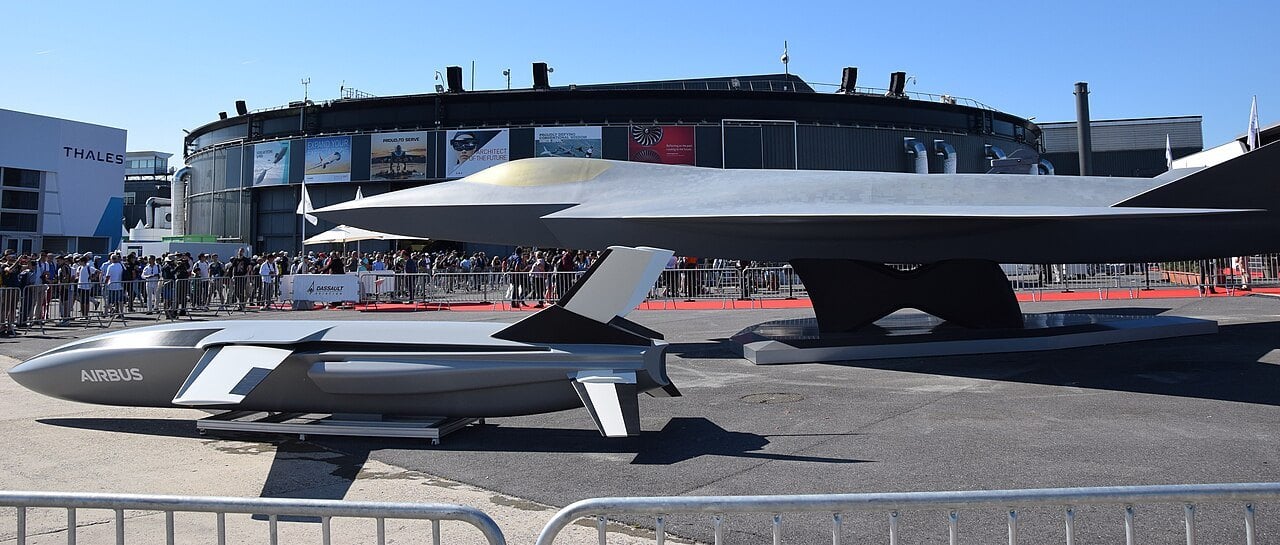
The obvious alternative sits across the Channel. In October, Afterburner reported that Berlin had begun exploring GCAP, the programme Britain, Italy and Japan are running with a 2035 service-entry target. FlightGlobal reports that recent comments by British Prime Minister Andy Burnham after a meeting with Chancellor Friedrich Merz suggested Germany could be invited in.
A decision already on the clock
That door has never looked fully open. On 14 November, the Financial Times reported that Italy had suggested only observer status for Germany, which Rome publicly denied meant blocking Berlin. And Defence Minister Boris Pistorius has said he wants a fundamental decision on Germany’s next combat aircraft by the end of March 2027, choosing between GCAP and a new Airbus-led path with other European partners.
Airbus Defence and Space’s own film about its Manching site, home of German Eurofighter final assembly.
The works council has made its preference clear, and it has political backing. Local member of the Bundestag Christian Moser (CSU) told Pfaffenhofen Today that after the failure of FCAS with France, Germany needs a German consortium to develop the sixth-generation fighter, and that the country must not become dependent on others for key technologies.
Moser also wants the Eurofighter developed further until the new jet flies, arguing that this keeps Manching’s skills alive and gives the German Air Force modern technology in the meantime.
What keeps Manching busy until then
For now, the plant is not short of work. According to FlightGlobal, Germany has 58 additional Eurofighters on order through the Quadriga I and II programmes, enough to secure manufacturing at Manching until 2034. The first Quadriga jet flew in July 2026.
At the same time, Germany has taken delivery of the first of 35 F-35As, which are being bought to replace part of the Luftwaffe’s Tornado de Panavia IDS fleet and are supporting pilot and maintainer training in the United States. That is exactly the kind of purchase the works council fears will be repeated if Berlin keeps waiting.
BR24 looks behind the gates at Manching, where Eurofighter orders have brought a jobs boom (in German).
The arithmetic behind the statement is simple. A first flight in 2032 means design work has to start almost at once, and a programme that does not exist cannot keep a workforce together after 2034. Manching’s engineers have said their piece. The answer now has to come from Berlin, and on Pistorius’s own timetable it is due within four months.
Sources: Airbus Manching works council statement via Pfaffenhofen Today, FlightGlobal, Financial Times, Funke Media Group/dpa

0 Comments