
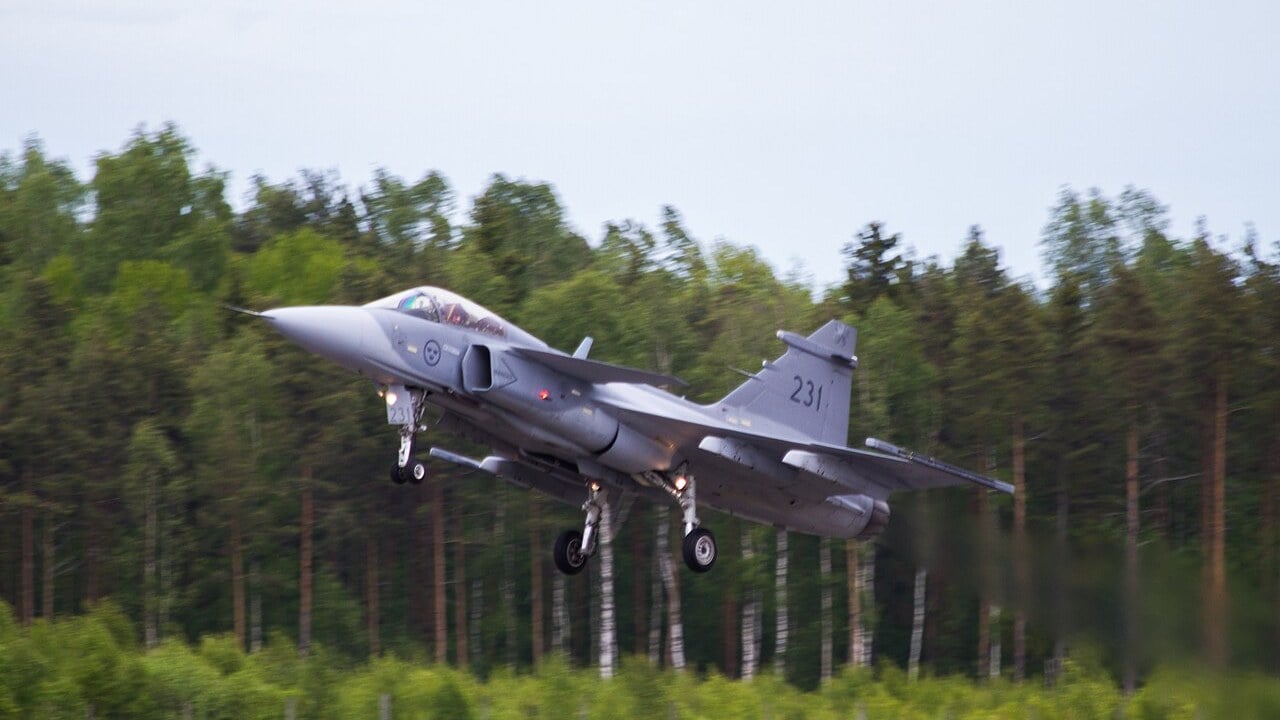
At 06:36 on the morning of Friday 20 November 2026, according to Polish government spokesman Adam Szłapka, a Russian cruise missile came down in a field beside a forest near the village of Nowy Lipowiec in eastern Poland. Sirens had sounded in the village a few minutes earlier. Somewhere overhead, two Swedish JAS 39 Gripens had been trying to find it.
Poland’s Deputy Prime Minister and Defence Minister Władysław Kosiniak-Kamysz later confirmed that the object at Nowy Lipowiec was a Kh-101, one of three Russian objects that entered Polish airspace during a massive overnight attack on Ukraine. No one in Poland was injured, and no damage to critical infrastructure was reported.
Datos rápidos
- Fecha: Friday 20 November 2026, early morning
- Objects: Three Russian objects entered Polish airspace, according to the Polish Defence Ministry
- Impact sites: Nowy Lipowiec (Kh-101), Rudnik nad Sanem (likely a missile), Mołodycz (probably a jet-powered drone)
- Time over Poland: About three minutes for the Kh-101, according to Kosiniak-Kamysz
- Luchadores: Two Polish F-16s and two Swedish JAS 39 Gripens, with a Dutch tanker and a Polish Saab early warning aircraft
- Engagement: Swedish pilots tried to intercept; no weapons used, target could not be identified in the weather
- Damnificados: No injuries in Poland reported
Three objects, three impact sites
At a press conference on Friday, Kosiniak-Kamysz named the three sites. At Nowy Lipowiec, in Biłgoraj County, he said the object was a Kh-101 missile. At Rudnik nad Sanem it was also likely a missile, and at Mołodycz most probably a jet-powered drone. Both of those sites lie in Podkarpackie Voivodeship. Police, the Military Gendarmerie and Military Counterintelligence secured all three, and the Lublin District Prosecutor’s Office opened an investigation.
According to the minister, the Kh-101 spent around three minutes over Polish territory. Operational Command spokesman Lieutenant Colonel Jacek Goryszewski had told broadcaster TVN24 that a possible airspace violation occurred shortly after 06:30 local time. Lieutenant General Ireneusz Nowak, commander of the Operational Command of the Polish Armed Forces, said 11 objects had posed a potential threat to Polish airspace overnight, with three confirmed incursions.
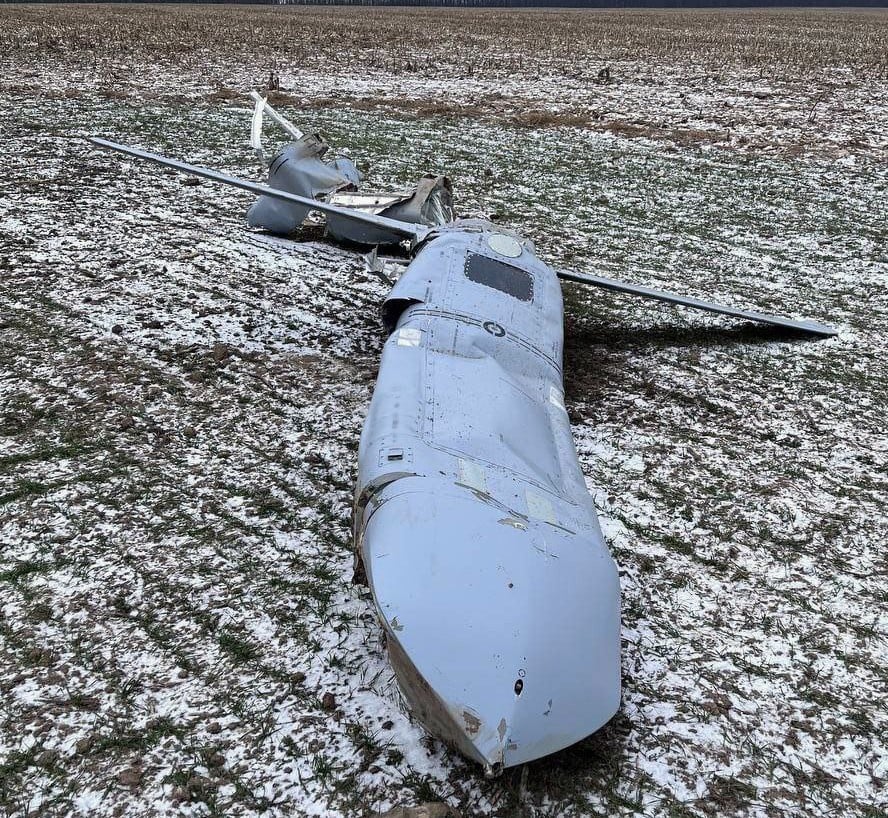
The air-launched Kh-101 is carried by Russia’s Tu-95MS y Tu-160 strategic bombers. It was not the first to reach Biłgoraj County: on 30 July 2026, a Kh-101 hit a field near Tarnawa-Kolonia after a Polish F-16 was scrambled.
Gripens cleared to fire, but blind
The air defence response combined two Fuerza Aérea Polaca F-16s and two Swedish Air Force Gripens, supported by a Dutch tanker and a Polish Saab airborne early warning aircraft. Patriot batteries around Rzeszów-Jasionka and Świdnik were activated, Kosiniak-Kamysz said, along with the Poprad and Pilica+ ground-based systems.
Nowak told reporters that his command had issued a so-called condition-based order, under which the fighter pilots could decide for themselves to shoot the objects down. The Swedish pilots, he said, attempted to intercept what was most probably the Kh-101. One of them reported that extremely difficult weather in the area had made a visual or optoelectronic identification of the target impossible.
The episode lands less than two months after Poland revised its air defence procedures to let pilots engage some threats without visual identification when other conditions for positive identification are met. Polish military officials have previously told AeroTime that the new rules also apply to allied aircraft defending Polish airspace.
What Sweden says
The Swedish Armed Forces said its Gripens flew an air defence mission over Poland for several hours during the night, tracking several targets in Polish airspace in very difficult weather and visibility. The operation required air-to-air refuelling in darkness and turning the jets around at a forward air base in Poland.
Deputy Chief of the Swedish Air Force Niclas Magnusson said the pilots had shown Swedish resolve and allied cohesion, taking off quickly alongside their Polish allies to defend the shared airspace. The Gripens fly under NATO command, directed by the Combined Air Operations Centre at Uedem in Germany. During the two-month deployment they are based mainly in Sweden but can also operate from the forward base in Poland.
Airports shut, a tower evacuated
Rzeszów-Jasionka and Lublin airports suspended operations to give military aircraft freedom of action, the Polish Air Navigation Services Agency said. Infrastructure Minister Dariusz Klimczak said the control tower at Rzeszów-Jasionka was evacuated for the first time, with nine people moved to a temporary shelter. Both airports briefly reopened, then closed again at 09:26 local time as another wave of Russian strikes came in, before resuming operations.
Polish military assessments put the night’s Russian salvo at 72 Kh-101 and 26 Kalibr cruise missiles plus 503 drones, according to Nowak. The Ukrainian Air Force reported lower figures for the cruise missiles and drones.
Kosiniak-Kamysz called the incursions another Russian provocation and pointed to their timing: the same day, a Coalition of the Willing exercise was under way at Nowa Dęba, not far from the impact sites. He said he would ask NATO Secretary General Mark Rutte for more forces for Operation Eastern Sentry. Rutte, after speaking with Prime Minister Donald Tusk, called the violations grave and said NATO jets had been scrambled in response.
For the Gripen pilots, the night ended without a shot fired. The rules allowed it, the target was there, but the weather won.
Sources: Polish Ministry of National Defence, Operational Command of the Polish Armed Forces, Swedish Armed Forces (Försvarsmakten), AeroTime, Interia, Rzeczpospolita, Nordic Defence Sector
Header photo: AleGranholm / Wikimedia Commons, CC BY 2.0

0 Comments