
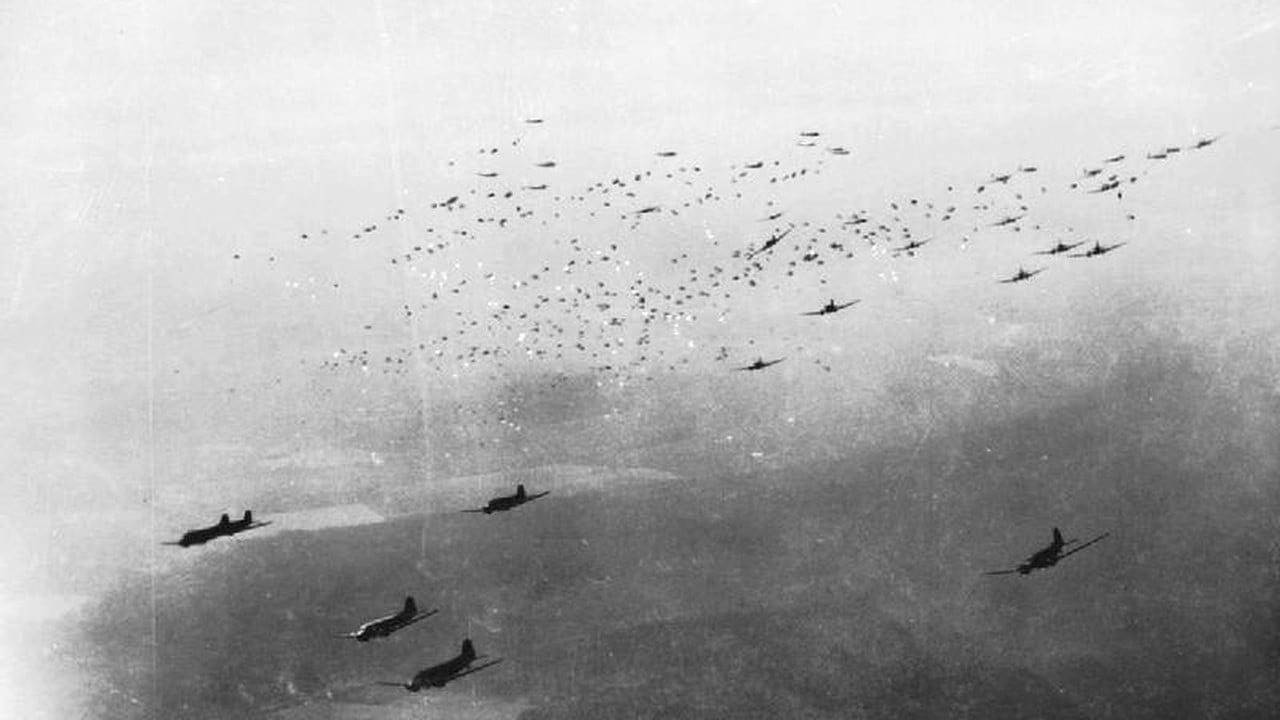
Shortly before 10 o’clock on the morning of 24 March 1945, American infantry fighting on the east bank of the Rhine near Wesel heard a sound coming from the west. According to the US Army’s official history, the deep, throbbing hum of aircraft engines went on for two hours and thirty-two minutes.
Overhead was the air train of Operation Varsity: 1,696 transport aircraft and 1,348 gliders carrying 21,680 paratroopers and glidermen, with 889 fighters as escort and another 2,153 fighters covering the area and ranging across Germany. From two separate hills, General Dwight Eisenhower and Prime Minister Winston Churchill watched it arrive.
Varsity is generally described as the largest airborne operation ever carried out in one place on a single day. It was also built on an idea that turned airborne doctrine on its head: this time the paratroopers would land after the ground assault, not before it.
Datos rápidos
- Fecha: 24 March 1945
- Part of: Operation Plunder, 21st Army Group’s crossing of the northern Rhine
- Divisions: British 6th and US 17th Airborne, under US XVIII Airborne Corps (Ridgway)
- Air train: 1,696 transports and 1,348 gliders carrying 21,680 paratroopers and glidermen (US Army official history)
- Aeronave: C-47 Skytrain, C-46 Commando, C-54; Waco CG-4A, Horsa and Hamilcar gliders
- Key idea: A single lift, landing about 13 hours after the river assault began, close to the front
- Prisoners: About 3,500 claimed by the two divisions
- Registro: Generally described as the largest airborne operation in one place on a single day
The lesson of Arnhem
By March 1945 the Allied armies had reached the Rhine. Field Marshal Bernard Montgomery’s 21st Army Group planned Operation Plunder, a massive assault crossing at Rees, Wesel and south of the Lippe, and Montgomery wanted an airborne component to support it. That component was Varsity.
The planners had Market Garden fresh in their minds. Six months earlier, the British 1st Airborne Division had been dropped far beyond reach of the ground forces at Arnhem, spread over several lifts, and largely destroyed. Varsity reversed almost every one of those choices.
The airborne troops would drop only a short distance behind the German front, close enough for ground forces to link up within hours. Both divisions would arrive in a single lift rather than being fed in over several days. And instead of opening the battle, they would come in after the river assault had already begun. Plunder’s first crossings started at 9 pm on 23 March; the first paratroopers landed around 13 hours later.
Two divisions, one lift
Varsity was first planned with three airborne divisions, but there were not enough transport aircraft or airfields for that, so the US 13th Airborne Division was dropped from the plan. The two that remained came under Major General Matthew Ridgway’s US XVIII Airborne Corps: the veteran British 6th Airborne Division, which had fought in Normandy, and the US 17th Airborne Division, which had fought in the Ardennes but had never made a combat jump.
The 17th Airborne’s 9,387 men flew from airfields around Paris in 836 C-47 Skytrains, 72 C-46 Commandos and more than 900 Waco CG-4A gliders. The 7,220 men of the British 6th Airborne came from England in C-47 Dakotas and C-54s, with 420 Horsa and Hamilcar gliders. The two streams met over Brussels and turned for the Rhine.
Military Aviation History looks at how Operation Varsity was planned after Market Garden, and whether it was necessary at all.
For half an hour before the transports arrived, Allied medium bombers and fighter-bombers hammered German anti-aircraft batteries around the drop and landing zones, while British artillery fired on flak positions across the river. Ridgway himself did not fly in. Expecting a quick link-up, he and his corps staff waited on the west bank of the Rhine.
Into the haze
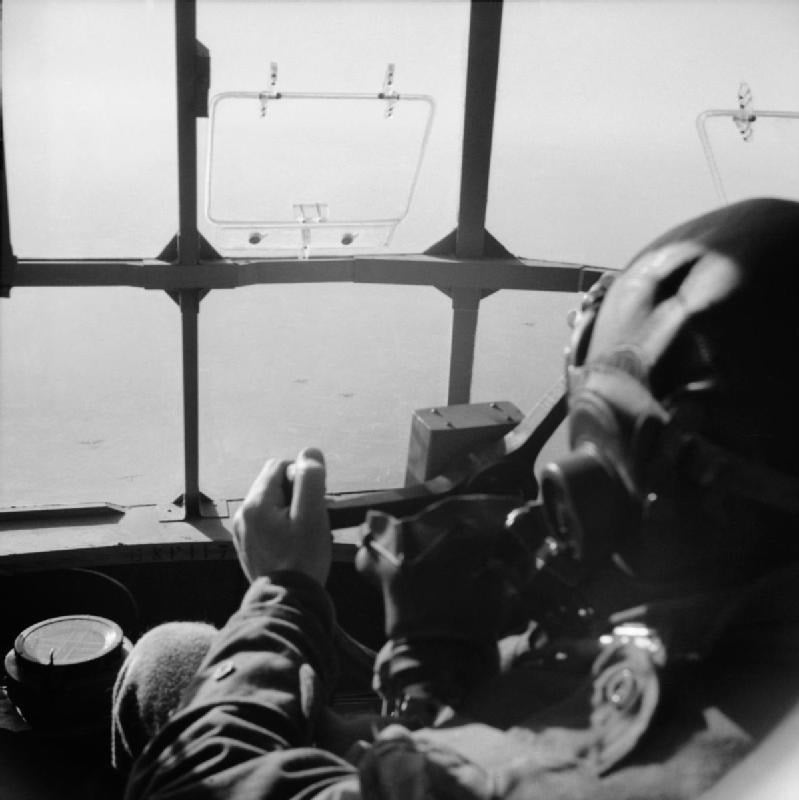
The sky was clear, but ground haze, thickened by drifting smoke from the screen laid along the Rhine, hid the ground. The first transports were over the target at 09:53, slightly early, carrying a battalion of the 507th Parachute Infantry. They missed their drop zone and put the men down near the village of Diersfordt instead. The regiment’s commander, Colonel Edson Raff, gathered his men, overran a battery of German artillery on the way and went on to his objective.
The 513th Parachute Infantry had a harder time. Its transports flew through intense anti-aircraft fire and dropped the regiment more than a mile from its zones, inside the British sector near Hamminkeln. The paratroopers fought their way back south, knocking out tanks and two batteries of 88 mm guns on the way.

The 513th had flown in C-46s, and the Commando paid for it. Unlike the C-47s, many of which had been fitted with self-sealing fuel tanks, the C-46s had none, and leaking fuel could pool in the wing roots and catch fire. Accounts of the losses differ, but somewhere around 19 to 22 of the 72 C-46s were shot down. Ridgway is said to have forbidden the type’s further use for paratroop drops.
Gliders in daylight
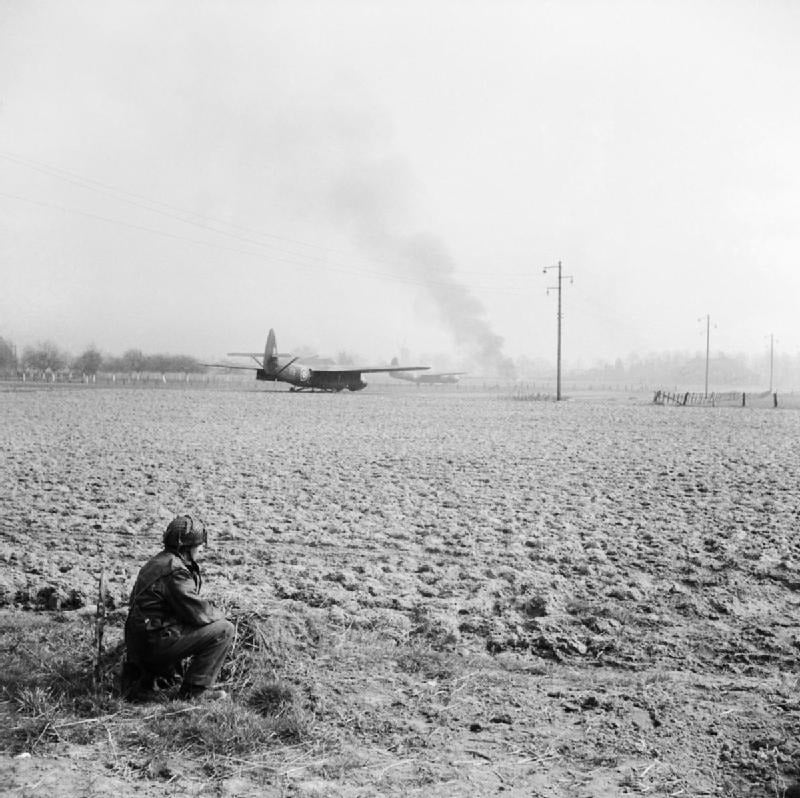
Gliders were the most exposed element of all. They released slowly, descended slowly and landed in full daylight in fields still covered by German guns, some of which were firing over open sights. At least 90 percent of the American gliders reached the correct landing zones, according to the official history, and the 194th Glider Infantry was at its objectives on the Issel River and canal within two hours.
The British 6th Airlanding Brigade came down in the same haze and smoke around Hamminkeln. Some glider pilots lost their bearings and landed in the wrong fields or crashed, but most got down, and the brigade took the town and its bridges over the Issel. By 13:00 Hamminkeln was in British hands.
A success, and a question
All the airborne troops were on the ground by 12:30, along with 695 vehicles and 113 artillery pieces. Within hours both divisions had taken every objective set for the first day, and link-up with British ground troops was firm by nightfall. The 17th Airborne claimed 2,000 prisoners and the 6th Airborne another 1,500. The German 84th Infantry Division, which had taken the brunt of the landings, effectively ceased to function.
The cost was real. On the first day alone, the 17th Airborne Division lost 159 men killed, 522 wounded and 840 missing, though about 600 of the missing later returned. The US official history counts more than 50 gliders and 44 transport aircraft destroyed, and 332 damaged.
Archival US film of the First Allied Airborne Army preparing, taking off and landing gliders and paratroopers near Wesel in March 1945.
That is why historians still argue about it. The US Army’s own historian, Charles MacDonald, concluded that the airborne objectives were ones ground troops alone could probably have taken with fewer casualties, and noted that bridge-building at Wesel did not start until the next morning. Others credit Varsity with drawing German attention away from the river crossings and helping the bridgehead break out quickly.
What nobody disputes is that it was the last large-scale Allied airborne operation of the war. Six weeks later the war in Europe was over, and the largest single-day airborne operation in history became the high-water mark of the glider and the mass parachute drop.
A 1945 United News newsreel showing British gliders leaving England and American airborne troops landing in Germany.
Sources: Charles B. MacDonald, The Last Offensive (US Army Center of Military History), US Air Force 23rd Wing Public Affairs (Moody AFB), Imperial War Museums photo archive, Military Aviation History
Header photo: US Army Signal Corps / IWM via Wikimedia Commons, public domain

0 Comments