
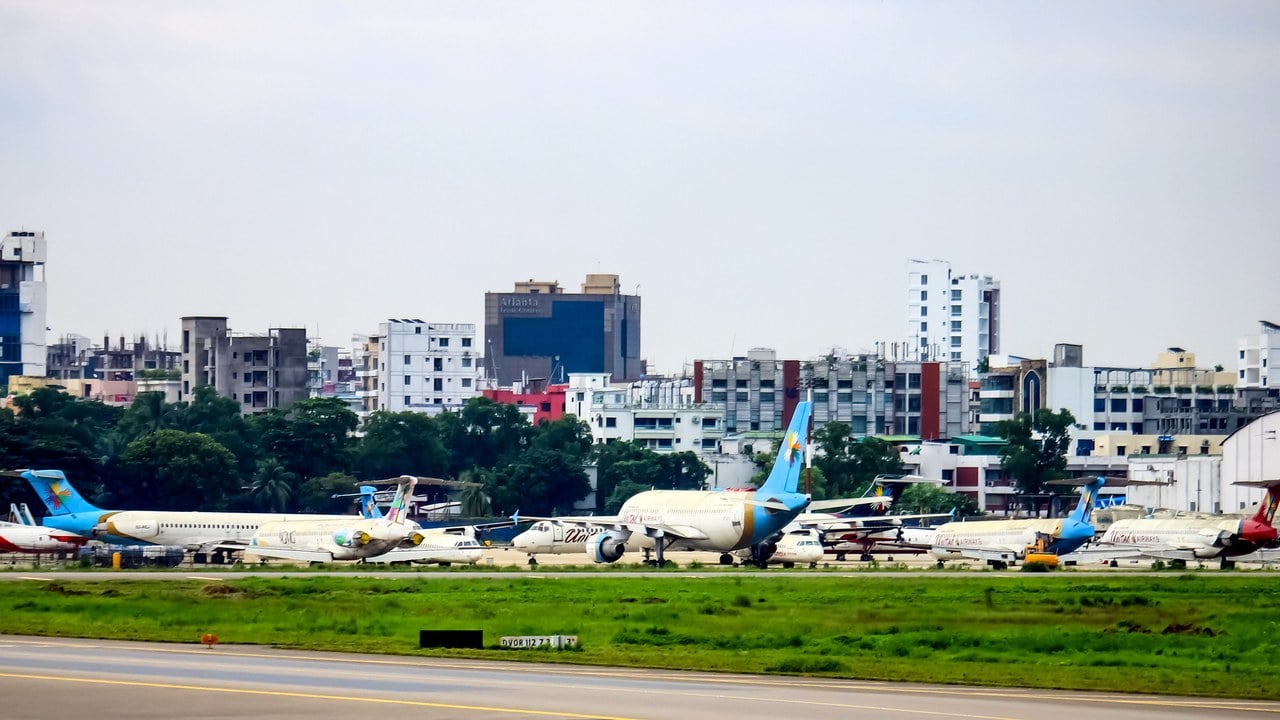
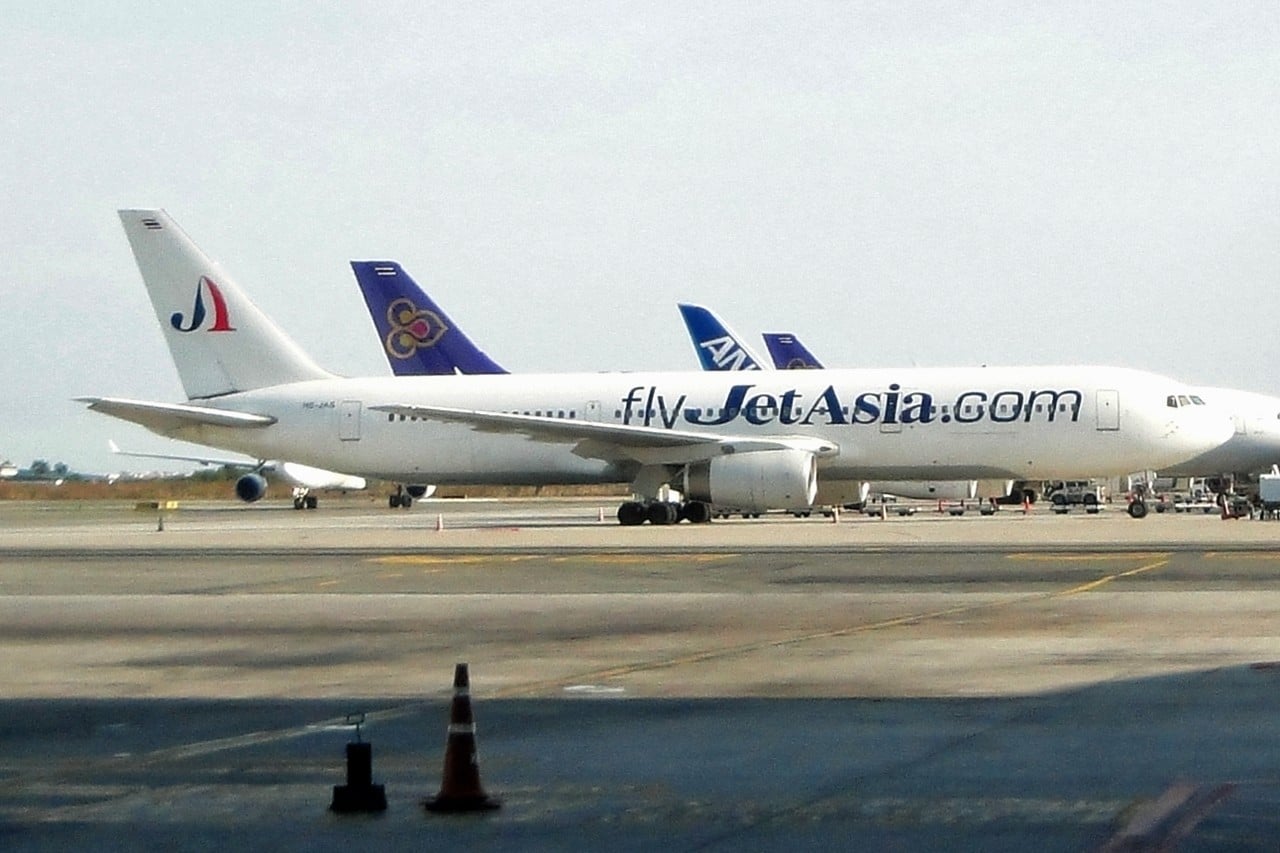
On 29 August 2017, a Boeing 767-300ER registered HS-JAS was parked at Sialkot International Airport in Pakistan. Its operator, the Thai charter airline Jet Asia Airways, ran into financial trouble and stopped flying. Nobody came back for the aeroplane.
For nine years it sat there while the parking bill grew. By 2023 the unpaid fees were reported to exceed the value of the jet itself. In November 2026 the airport finally auctioned it under a court order, and ch-aviation reported that a bid of more than $400,000 from an unidentified company in the United Arab Emirates had been accepted, with payment and removal still subject to formalities.
Which raises the question nobody asks until it happens to their airport: what do you actually do with an airliner that its owner has walked away from? You cannot tow it to the pound. You cannot simply sell it, because it is not yours. And every day it stands there, it costs someone money.
Informations clés
- The problem: An aircraft left at an airport whose owner stops paying, disappears or walks away
- Not the same as: Storage (owner pays) or lessor repossession (owner wants it back)
- UK rule: Civil Aviation Act 1982, s.88: detain for unpaid charges, sell with court leave if unpaid after 56 days
- Sialkot, Pakistan: Boeing 767 HS-JAS parked 2017; bid over $400,000 accepted at a November 2026 auction, subject to formalities
- El Paso, Texas: 1966 Boeing 727 sold in January 2025 for about $10,000
- Spain: 95 abandoned aircraft owing €6.8 million in airport charges by 2023, per government figures
- Malawi: Il-76 3X-GFR abandoned for 17 years; owner never traced
Abandoned is a legal status, not a look
Plenty of aircraft look abandoned and are nothing of the sort. Airliners in desert storage, like the four thousand military aircraft at the Davis-Monthan boneyard, are parked deliberately, by an owner who pays for the space and knows exactly where they are. A leased jet that an airline stops paying for is a different case again: the lessor wants it back and has its own toolkit, which Afterburner covered in how the Cape Town Convention gets jets back.
A genuinely abandoned aircraft is the third case, and the awkward one. The owner has gone bust, died, vanished, or decided the aeroplane is worth less than the bill. Nobody is asking for it back. The only creditor in the picture is the party it is physically sitting on: the airport.
The two Iraqi Airways Boeing 747s at Tozeur, parked since January 1991 while unpaid parking charges piled up, show how long that limbo can last. This month their owner finally put them up for sale. Most of the time, nobody comes back at all.
The airport’s weapon: the aeroplane itself
An airport’s strongest card is that it already holds the collateral. In the United Kingdom the power is written into Section 88 of the Civil Aviation Act 1982. If airport charges go unpaid, the aerodrome authority may detain the aircraft they were incurred on, or any other aircraft operated by the person in default, and keep it pending payment.
The safeguards are as interesting as the power. The airport cannot sell without the leave of a court, it must notify everyone whose interests may be affected, and it must get the best price that can reasonably be obtained. The proceeds then go out in a fixed order: customs duty and VAT first, then the airport’s own costs of detaining and selling the aircraft, then the airport charges the court found due, then any unpaid air navigation charges. Anything left over goes to whoever held an interest in the aircraft, with holders of a registered Cape Town international interest given priority.
There is a sting in the tail for buyers. As law firm CMS points out in its note on detention rights, unpaid airport charges attach to the aircraft rather than to its owner, so a jet can be detained for charges run up by a previous operator. Buy an aeroplane with debts on it and you may be the one who settles them.
El Paso: a Con Air 727 for the price of a used car
In the United States there is no single federal procedure; airports use state and local abandoned-property law. El Paso International Airport in Texas shows how long that can take. A 1966 Boeing 727 stood there from the early 2000s, owned by a private charter company called Blue Falcon Corp. It had once flown for the US Marshals Service’s prisoner transport system, the operation nicknamed “Con Air”.
The company’s president, David Paul Tokoph, died in August 2015 after the vintage Navy aircraft he was flying crashed near Las Cruces. The parking payments stopped, and in 2021 the city began legal proceedings to take possession of the 727 as abandoned property. Airport director Tony Nevarez told El Paso Matters that crews had kept checking it for leaks and keeping its tyres inflated, but admitted: “It starts to become unsightly.”
In January 2025 the city listed the gutted jet “in derelict condition” on the government surplus site GovDeals. After 56 bids it sold for about $10,000 including taxes and fees, and the winner beat the next bidder by $20. The proceeds went back to the airport.
El Paso Matters follows the two brothers who bought the airport’s abandoned Boeing and are still working out what to do with it.
Forgotten by its own owner
Sometimes the owner is not missing at all, just absent-minded. At Kolkata, a Boeing 737-200 registered VT-EHH was grounded in 2012. It had been delivered to Indian Airlines in 1982, flown for Alliance Air and later converted into a freighter carrying India Post titles. Air India inherited it through its 2007 merger with Indian Airlines and then, according to Aerospace Global News, lost track of it through an administrative error.
The same outlet reports that Air India paid accumulated parking and handling charges reported at around 10 million rupees before selling the jet in 2025, and it was one of 14 abandoned aircraft Kolkata airport cleared from its premises over five years.
When nobody answers the letter
The hardest cases are the ones where no owner can be found at all. At Kamuzu International Airport in Malawi, an Ilyushin Il-76 cargo aircraft registered 3X-GFR has stood for 17 years, according to Malawi24. Its pilot reportedly left on another flight, and efforts to trace the owner failed. Unpaid parking is put at about K78 million, roughly $45,000. A sale invitation in February 2026 was withdrawn over procurement errors, and the airport operator is now revaluing the aircraft before trying again.
Europe has the same problem in bulk. In Spain, Aena’s Son Bonet aerodrome on Mallorca is preparing to sell aircraft left there for over a decade, including a 1981 Antonov An-2 abandoned since 2008, The Olive Press reported on 16 November 2026. Under Spanish practice a plane’s status must be published three times in the Official State Gazette before it can be declared abandoned. Government figures cited by the paper put the national total at 95 abandoned aircraft owing €6.8 million in airport charges by 2023.
Portugal’s airport operator ANA formally gave the owner of a Boeing 727-100 parked at Faro since 2007 60 days to remove it, or see it declared abandoned and taken over by the state. Aerospace Global News reported that the aircraft belongs to the Congolese politician Jean-Pierre Bemba, and that unpaid fees had reportedly reached around €1 million.
Who ends up paying
The honest answer is that the bill is rarely paid in full. An airport that sells an abandoned airliner is selling a deteriorating object to a small market of scrap dealers, parts traders, collectors and the occasional dreamer who wants to turn a jet into a bar. The Sialkot 767 attracted a bid of just a third of its original $1.2 million reserve. The El Paso 727 fetched less than a decent used car.
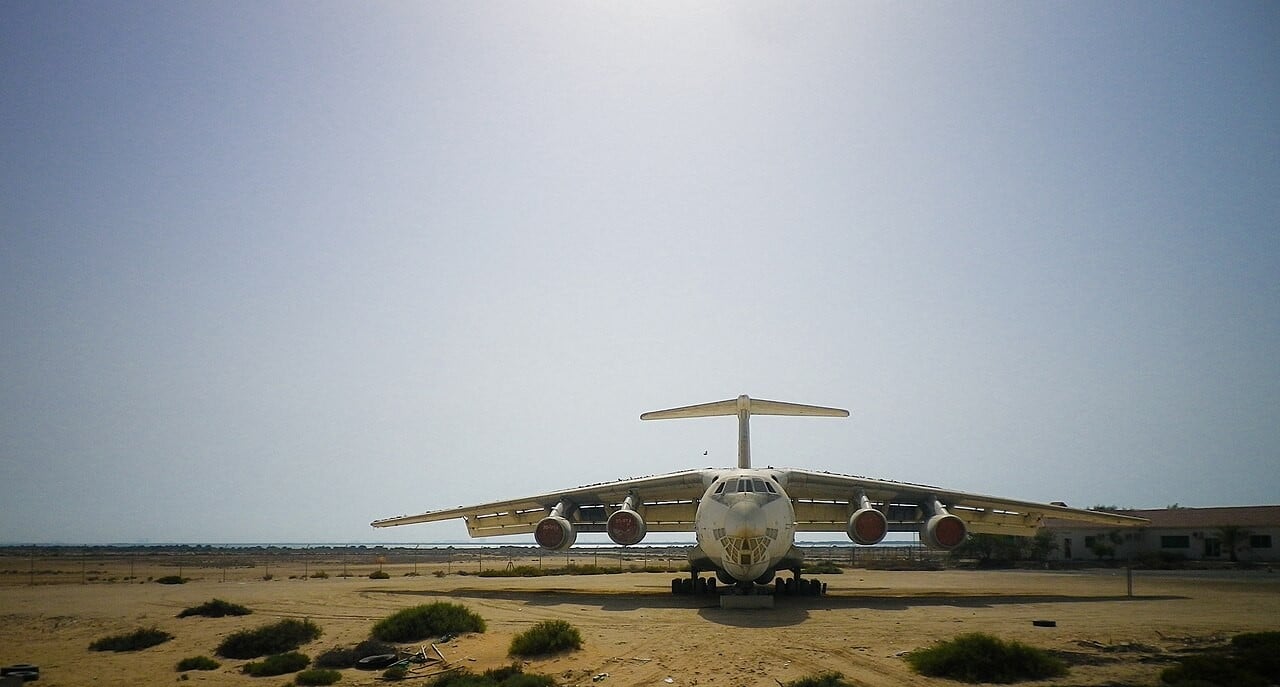
Sometimes the end comes from somewhere else entirely. The Il-76 that stood at Umm al-Quwain in the UAE from 2000, once operated by companies linked to the arms dealer Viktor Bout, was cut up in May 2022 because a $675 million property development needed the space.
So the real cost of an abandoned aeroplane is not the number on the final invoice. It is the years of apron it occupies, the lawyers, the gazette notices and the patience. Leaving a car at the airport is expensive. Leaving a 767 there can take nine years and a judge to undo.
Sources: UK Civil Aviation Act 1982 (legislation.gov.uk), CMS, ch-aviation, blue News/AFP, Minute Mirror, El Paso Matters, Aerospace Global News, Malawi24, The Olive Press, Associated Press
Header photo: Md Shaifuzzaman Ayon / Wikimedia Commons, CC BY-SA 4.0



0 Comments