
Antonov An-2
The Giant Biplane
The huge single-engined biplane built in the Soviet Union, Poland and China for more than half a century: crop-sprayer, airliner, paratroop carrier, bomber, infiltrator and, in 2020, an unmanned decoy.
The An-2: how a biplane outlived the jet age
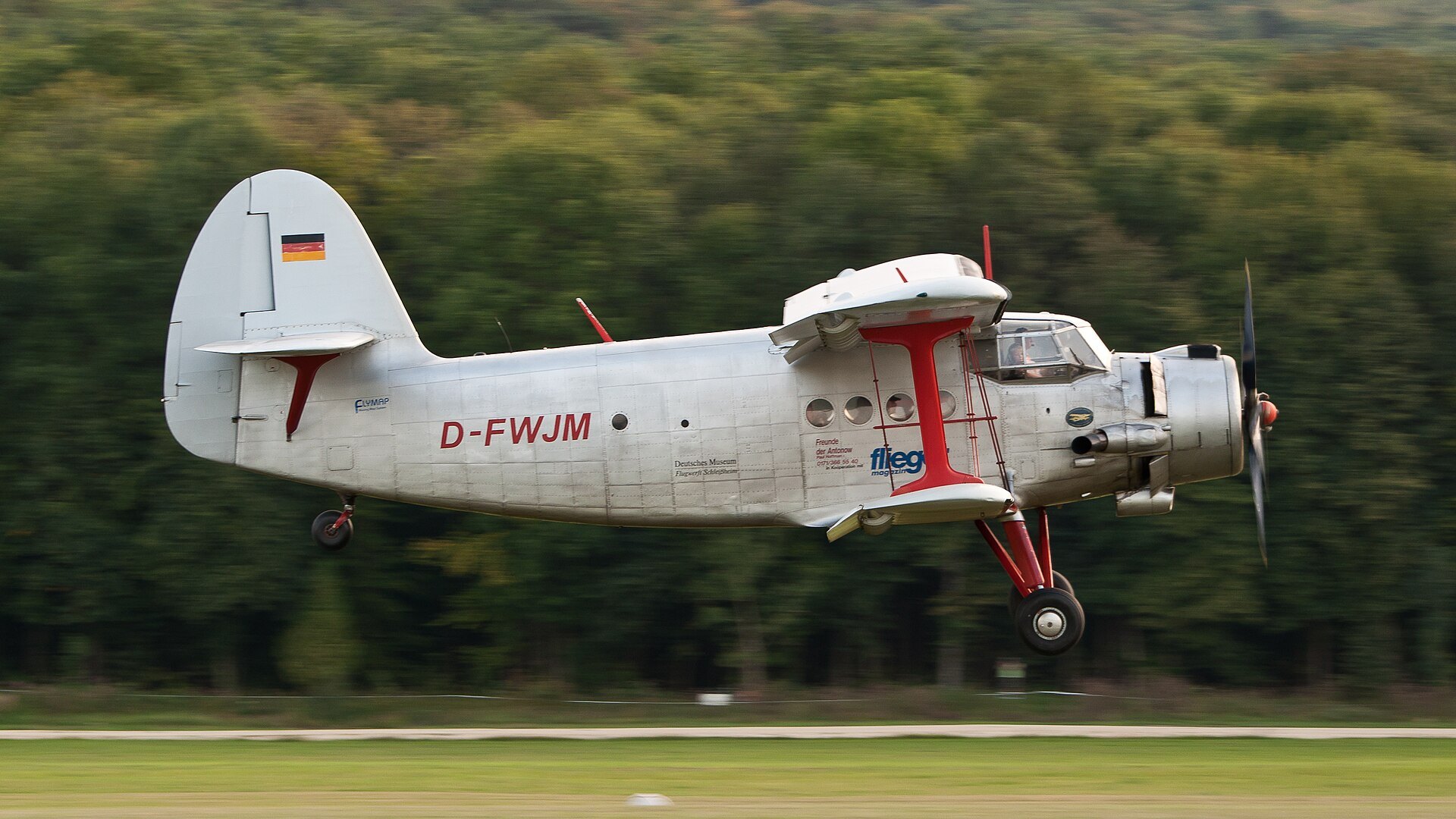
On 31 August 1947, at Novosibirsk’s Yeltsovka airfield, a biplane rolled out that looked as if it belonged to the 1920s. It had fabric-covered wings spanning more than 18 m, a nine-cylinder radial engine of 1,000 hp, a fixed tailwheel undercarriage and a cabin big enough for a dozen people or more than a tonne of fertiliser. It was the first aircraft of the new design bureau led by Oleg Antonov, built to a requirement for an agricultural and utility aircraft that could work from any field in the Soviet Union. The An-2, nicknamed Annushka, would stay in production for more than half a century, a record for any aircraft of its time.
Its secret was the biplane layout. Two big wings with automatic leading-edge slats give the An-2 enormous lift at low speed: it stalls at around 50 km/h and can take off and land in a few hundred metres of grass, snow or dirt. The Shvetsov ASh-62IR radial is simple and powerful, and the airframe is tough enough to be maintained by farm mechanics. Production began in Kyiv, then moved in 1960 to WSK PZL-Mielec in Poland, which built the overwhelming majority, roughly 12,000 by most counts. In China, the Nanchang factory began licence production as the Y-5 in 1957, later followed by Shijiazhuang. Including all countries, the total is generally given as more than 18,000.
The An-2 sprayed crops across the Eastern Bloc, carried passengers and mail to remote villages, dropped parachutists, fought forest fires and flew ambulance missions. It also went to war. North Vietnamese An-2s attacked a US radar site in Laos in 1968, Croatian crop-sprayers dropped improvised bombs in 1991, and North Korea trained special forces to infiltrate in them, counting on a slow, low-flying biplane to slip under radar. In 2020, Azerbaijan turned old An-2s into unmanned decoys to draw Armenian air defence fire. Thousands still fly, from Siberian lakes to Western airshows and parachute drop zones, and few aircraft have shown such a talent for staying useful in roles its designers never imagined.
01The An-2’s three factories: Kyiv, Mielec and Nanchang
Soviet production of the An-2 started in Kyiv and was later supplemented at Dolgoprudny near Moscow, with about 5,000 built in the USSR by the early 1960s. Under COMECON’s division of labour, the Soviet Union then handed the type to Poland. WSK PZL-Mielec began production in 1960 and turned out An-2s in vast numbers, most of them for the Soviet Union, where Aeroflot used them for agricultural work, short-haul passenger services and as air ambulances. Polish versions included the An-2T transport, the An-2TD paratroop aircraft, the An-2R crop-sprayer and the An-2M. Production in Mielec continued, at a dwindling rate, into the early 2000s, with figures of around 12,000 commonly given and some counts higher.
China obtained a licence in 1956. The first Chinese-built aircraft, the Y-5, flew from Nanchang on 7 December 1957, and the factory built 727 of all versions between 1958 and 1968 before production moved to Shijiazhuang, which delivered a further 221 by 1986, according to GlobalSecurity, and later developed the modernised Y-5B. China calls the Y-5 its first domestically produced transport and the one built in the largest numbers over the longest period.
02The An-2 at war: from Lima Site 85 to Nagorno-Karabakh
The An-2 was never designed as a warplane, but its ability to fly low and slow from rough strips made it useful to armies with limited resources. On 12 January 1968, during the Vietnam War, a formation of North Vietnamese An-2s headed for Lima Site 85, a secret US radar site on a mountain in Laos. Two continued to the target and attacked with mortar shells dropped through the floor and wing-mounted rockets. Both were brought down: one by ground fire, the other after an Air America helicopter crew, pilot Ted Moore and flight mechanic Glenn Woods, chased it and Woods fired on it with an AK-47.
In 1991, at the start of the war in Croatia, the new Croatian air arm converted agricultural An-2s to drop improvised bombs, and one was shot down by a surface-to-air missile. North Korea has long kept a large fleet for infiltrating special forces at low level. In the 2020 Nagorno-Karabakh war, Azerbaijan used old An-2s converted to fly unmanned as decoys, flying them over Armenian positions to make air defence systems reveal themselves to drones; Armenian forces claimed to have destroyed 11.
What makes the An-2 special
The An-2’s wings and slats
With a top wing of about 18.2 m and a lower wing of about 14.2 m, the An-2 has a huge wing area for its weight. Automatic leading-edge slats on the upper wing deploy at around 64 km/h, delaying the stall, and slotted flaps on both wings add more lift. The result is a stall speed of about 50 km/h and a remarkable ability to fly under control at speeds where most aircraft would have stopped flying. Into a strong headwind, its ground speed on approach can fall to a walking pace.
The An-2’s ASh-62 radial
The Shvetsov ASh-62IR is a nine-cylinder air-cooled radial of 1,000 hp derived from the Wright Cyclone, licensed by the Soviet Union in the 1930s. It drives a large four-bladed propeller and was chosen for simplicity and power rather than economy: it burns plenty of high-octane fuel, which became a problem as avgas grew scarce and expensive. That is why turboprop conversions such as the An-3 and the An-2-100 were developed, though neither replaced the radial on a large scale, and the radial’s clatter remains the An-2’s signature sound.
The An-2’s rugged cabin
Behind a two-seat cockpit sits a cabin about 4 m long, with a large door on the left side. It can take around 12 passengers on folding seats, a dozen paratroopers, stretchers, or more than a tonne of cargo. Agricultural versions carry a hopper for chemicals or fertiliser, and float and ski versions extended the type’s reach to lakes, rivers and polar ice. Everything is simple, accessible and repairable in the field, which was the original Soviet requirement and the main reason for its long life.
03The An-2’s variants: crop-sprayers, floatplanes and turboprops
- An-2T: general transport version.
- An-2P: passenger version with improved cabin.
- An-2TD: paratroop version.
- An-2S: air ambulance.
- An-2R: agricultural version with chemical hopper and spray gear, built in huge numbers in Poland.
- An-2V: floatplane with twin floats.
- An-2L: firefighting version.
- An-2M: improved agricultural version with sealed cockpit and larger tail.
- An-2ZA: high-altitude meteorological research version.
- An-3: turboprop conversion with a TVD-20 engine.
- An-2-100: modernised version with a Motor Sich MS-14 turboprop.
- Y-5, Y-5B, Y-5K: Chinese versions, including an agricultural model and VIP and passenger models.
Including military and civil conversions, the An-2 family has been used in more than 40 distinct roles, from geological survey and search and rescue to parachute training and medical evacuation. Polish and Chinese factories added their own variants and conversions for customers in Asia, Africa and Latin America, and many aircraft changed role several times over working lives that often exceeded forty years.
Antonov An-2 specifications
Specifications
- Crew
- 2
- Capacity
- about 12 passengers or over 1,000 kg of cargo
- Length
- 12.40 m (40 ft 8 in)
- Wingspan
- 18.18 m (59 ft 8 in) upper; 14.24 m (46 ft 9 in) lower
- Empty weight
- 3,300 kg (7,275 lb)
- Max take-off weight
- 5,500 kg (12,125 lb)
- Powerplant
- 1 × Shvetsov ASh-62IR 9-cylinder radial, 750 kW (1,000 hp)
- Maximum speed
- 258 km/h (160 mph)
- Cruise speed
- 190 km/h (118 mph)
- Stall speed
- about 50 km/h (31 mph)
- Range
- 845 km (525 mi)
- Service ceiling
- 4,500 m (14,800 ft)
Costs & production
- Unit cost
- No reliable new-build price; second-hand An-2s have long sold for prices comparable to a light four-seat aircraft
- Cost per flight hour
- No official figure. A hedged estimate of roughly USD 800 to 1,500 per hour is driven mainly by the ASh-62’s high consumption of scarce avgas, plus maintenance, based on private and club operator experience
- Production
- More than 18,000 in total: about 5,000 in the USSR, about 12,000 at PZL-Mielec and almost 1,000 Y-5s in China
- Programme
- Production from 1947 into the 2000s, one of the longest runs of any aircraft
04The An-2’s operating costs: cheap to buy, thirsty to fly
The An-2 is cheap to acquire: thousands of former Aeroflot and military airframes were released after 1991, and an airworthy example has often cost less than a modest light aircraft. The expense comes in fuel. The ASh-62IR is a large radial designed for high-octane aviation gasoline, and burns a great deal of it by modern standards. As avgas grew scarce and expensive in many countries, operators faced rising costs, and that drove efforts to re-engine the type with turboprops such as the TVD-20 on the An-3 and the MS-14 on the An-2-100.
Maintenance is simple but labour-intensive, since the fabric-covered wings need periodic recovering and the radial needs regular attention. For private owners in the West, the An-2 sits in the same cost bracket as other large vintage radial-engined aircraft. No operator publishes an hourly rate, so the range given above is an estimate rather than a published figure.
The An-2 from 1947 to the drone war
First flight
The prototype flew on 31 August 1947 at Novosibirsk.
Mass production
Kyiv built the type in large numbers for Aeroflot and the Soviet Air Forces, about 5,000 by the early 1960s.
China’s Y-5
The first Chinese-built Y-5 flew from Nanchang on 7 December 1957.
Poland takes over
WSK PZL-Mielec began production; Poland soon became the main source.
Lima Site 85
On 12 January 1968 North Vietnamese An-2s attacked a US radar site in Laos; two were brought down.
Shijiazhuang
Chinese production moved from Nanchang to Shijiazhuang, which continued building Y-5s until 1986 and later the Y-5B.
An-3 turboprop
Antonov developed the An-3 turboprop conversion with a TVD-20 engine, first flown around 1980 and built only in small numbers.
Croatian bombers
Croatian crop-sprayers dropped improvised bombs in the war of independence; one was shot down.
Polish line winds down
Production at Mielec ended around the turn of the century after roughly 12,000 aircraft.
An-2-100
Antonov flew the An-2-100 with a Motor Sich MS-14 turboprop.
Unmanned decoys
Azerbaijan used unmanned An-2s as decoys against Armenian air defences in the Nagorno-Karabakh war.
Stories & eyewitnesses: the An-2 in fields and wars
The An-2 at Lima Site 85: an AK-47 against a biplane
A helicopter crew, a rifle and a biplane over Laos.
Read the full story
The An-2 in Croatia, 1991
Crop-sprayers become bombers.
Read the full story
The An-2 in Nagorno-Karabakh, 2020
Old biplanes flown without pilots to bait air defences.
Read the full story
The An-2 and North Korea’s special forces
A slow biplane as an infiltration aircraft.
Read the full story
The An-2 and Aeroflot’s village routes
The bus of the Soviet countryside.
Read the full story
The An-2 on the collective farms
Spraying the fields of half a continent.
Read the full story
The An-2 as a warbird
The giant biplane at Western airshows.
Read the full story
The An-2’s production record
A run measured in half-centuries.
Read the full story
The An-2 in pictures
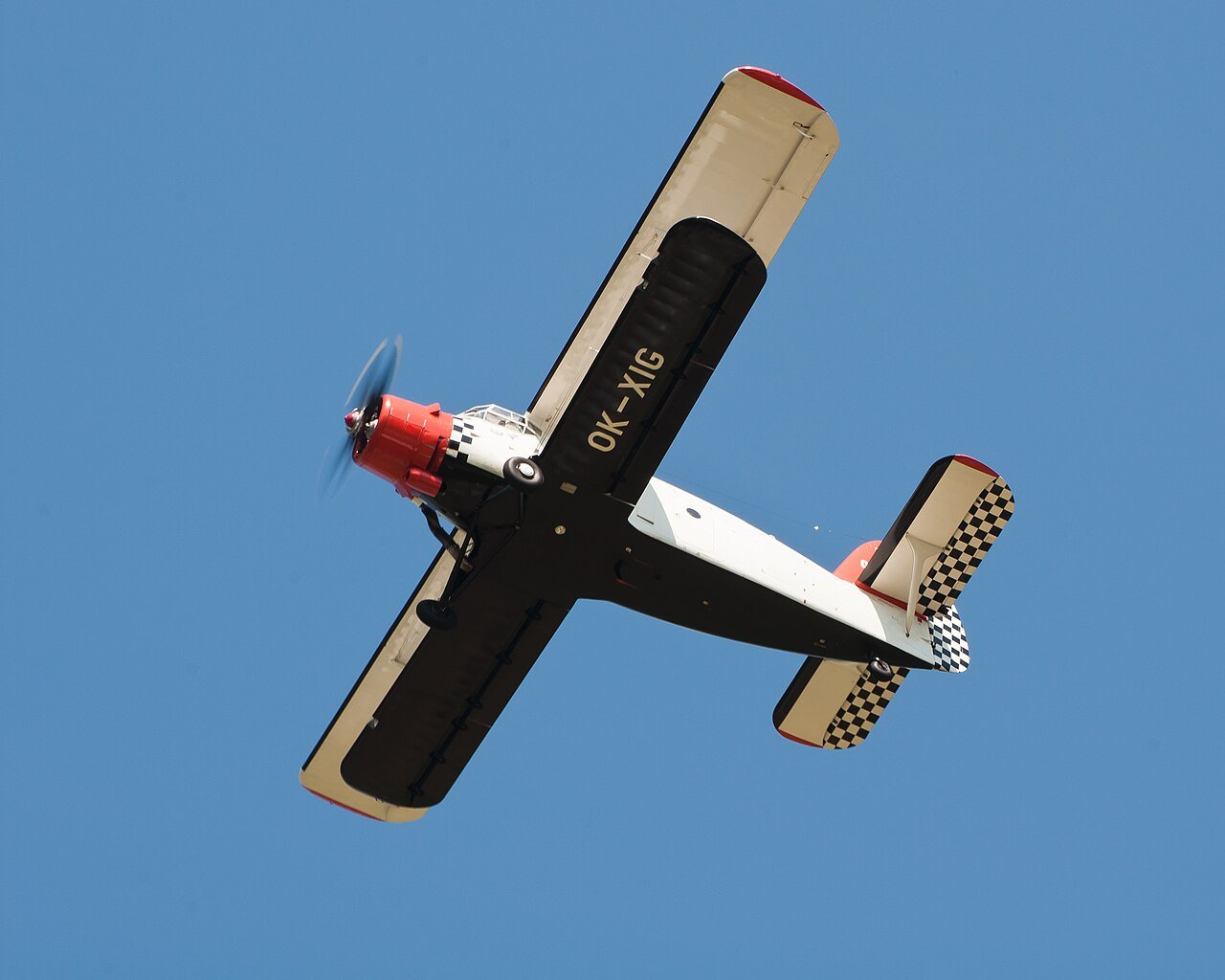
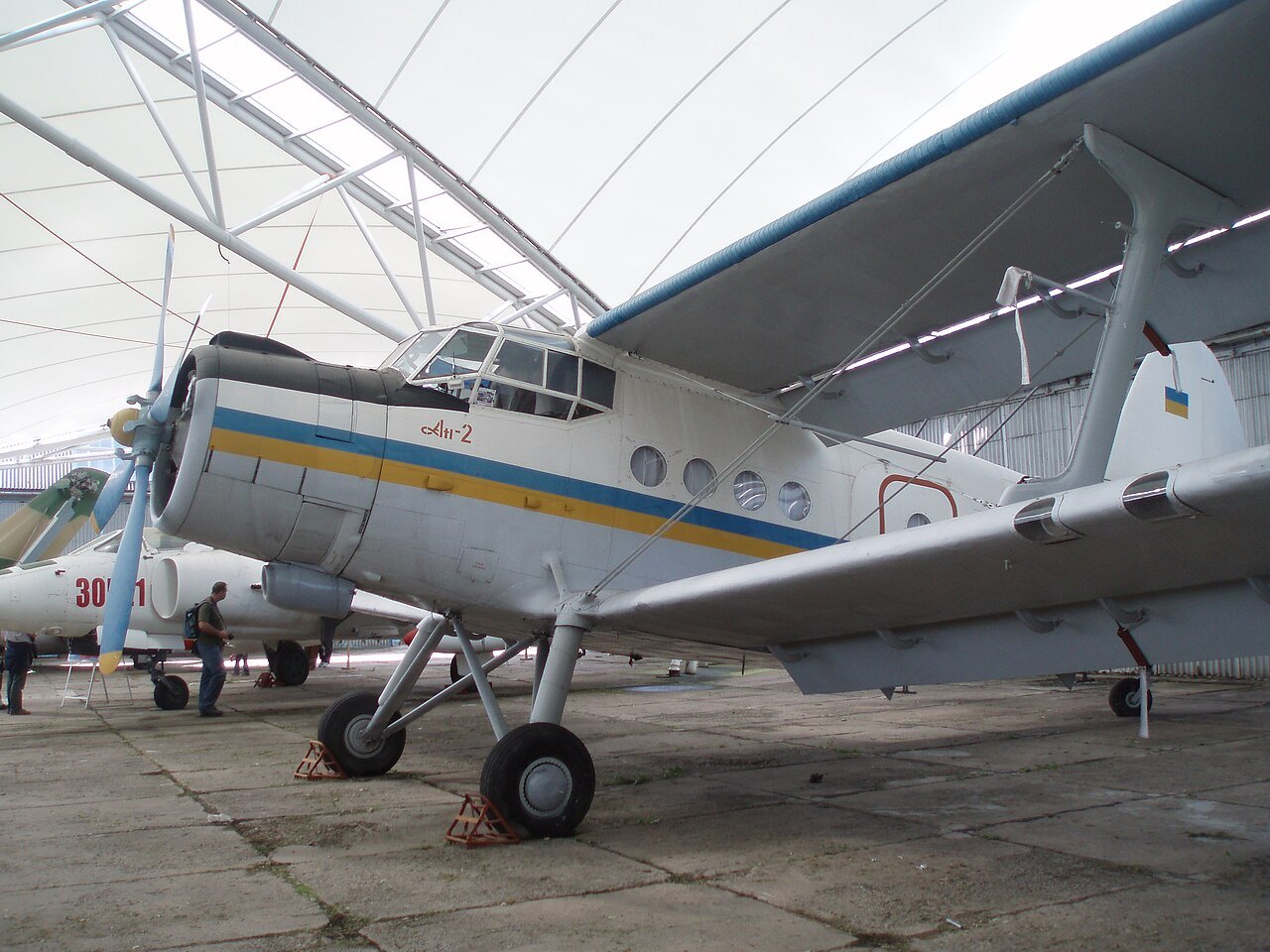
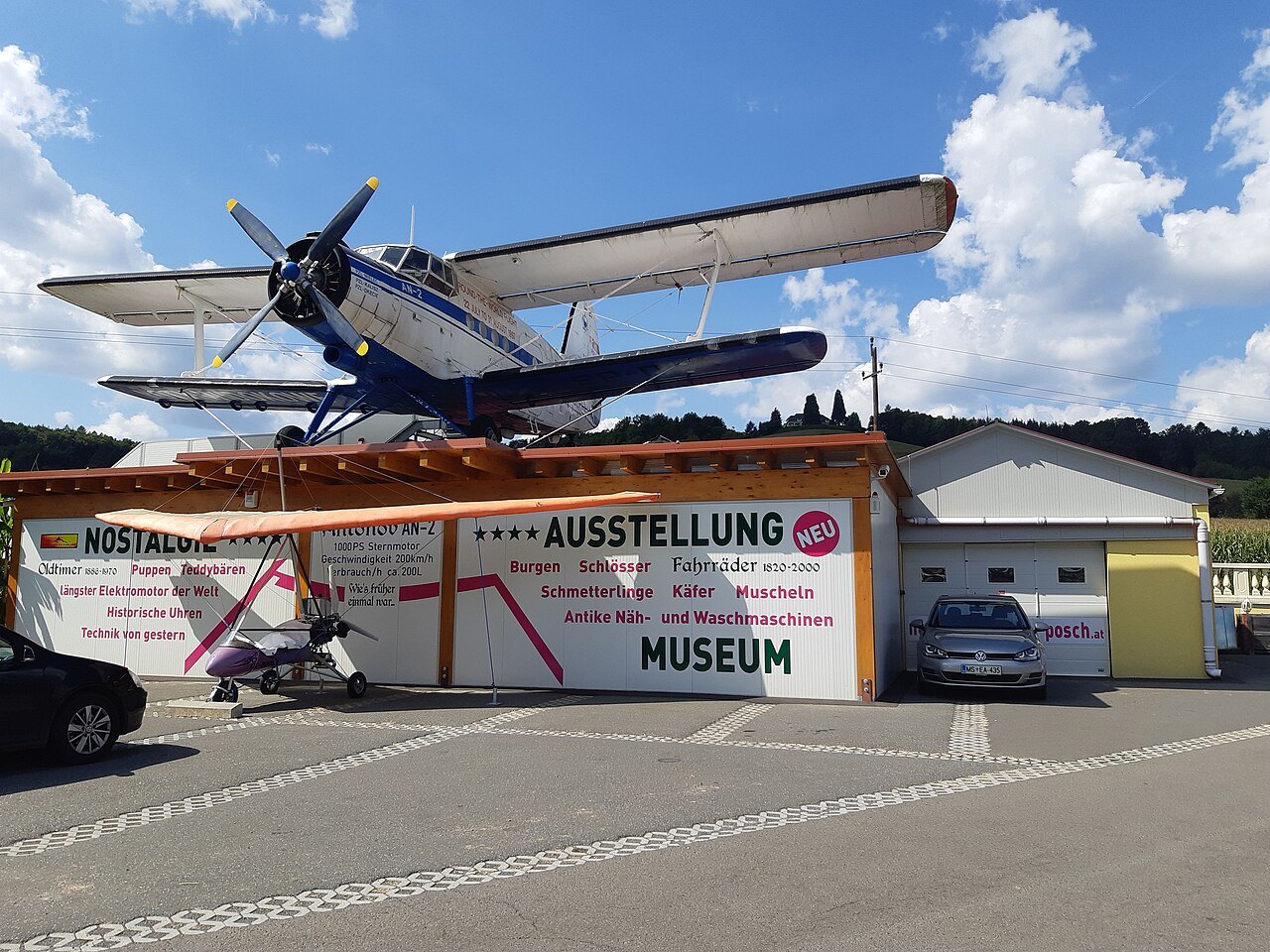
Where the An-2 flies and flew
The An-2’s record
The An-2 is a utility aircraft first, and most of its record is in crop-spraying, ambulance flights and village routes. It has also flown in a surprising number of wars: Vietnam and Laos, Croatia, North Korea’s special forces plans and the 2020 Nagorno-Karabakh war, where it was used as an unmanned decoy.
See how training and combat types compare in the military aircraft statistics database. Figures are approximate.
Everything people ask about the An-2
Can I fly in an Antonov An-2?
What is the NATO reporting name of the An-2?
Why was the An-2 built as a biplane?
How many An-2s were built?
How slowly can an An-2 fly?
What is the Nanchang Y-5?
Is the An-2 still flying?
You can’t fly the An-2.
These, you can.
Most of this museum you can only look at. These genuine military jets you can fly yourself with MiGFlug — with aerobatics and time on the controls.
 Fly the L-39 AlbatrosThe world’s most-flown jet trainer — aerobatics included
 Fly the F-104 Starfighter“The missile with a man in it”
 Fly the MiG-21The Cold War’s most-produced jet
 Fly the T-33 Shooting StarAmerica’s first jet trainer
 Fly the DH VampireA piece of early jet history
 Fly the S.211Agile Italian jet trainer
 Fly the MB-326The classic Aermacchi jet
 Fly the MiG-15The Soviet legend of the Korean War
Continue the tour
Every fact, checked
- AN-2 ColtGlobalSecurity: production record, roles, ambulance flights, Antonov on the design
- Y-5 ColtGlobalSecurity: Chinese licence, first flight, Nanchang and Shijiazhuang production totals
- Antonov CompanyManufacturer; An-2 history and An-2-100 modernisation
- PZL MielecPolish manufacturer that built most An-2s
- Polish Aviation Museum, KrakówPolish aviation collection, including Mielec-built types
- Yefim Gordon and Dmitriy Komissarov, Antonov An-2: Annushka, Maid of All Work (Midland, 2004)Book: development, production, variants and operators
- Timothy N. Castle, One Day Too Long: Top Secret Site 85 and the Bombing of North Vietnam (Columbia University Press, 1999)Book: history of Lima Site 85 including the January 1968 An-2 attack