
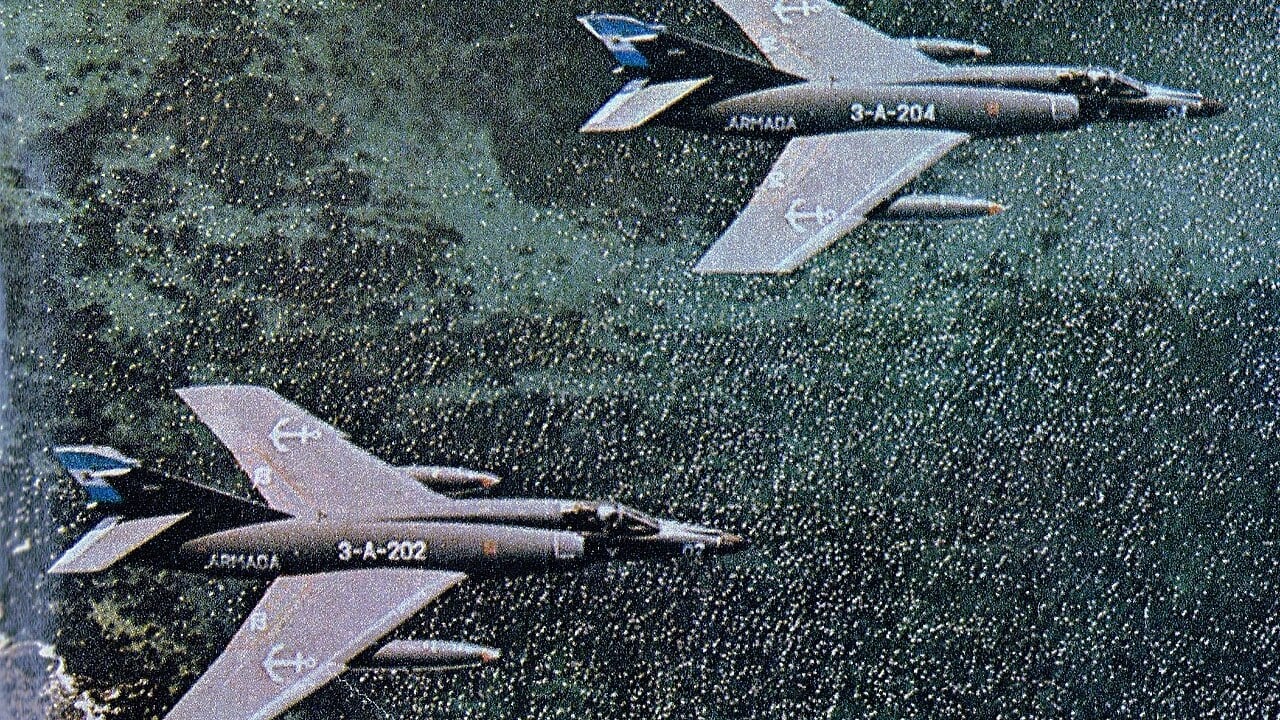
Picture it: two four-engine transports dropping out of the Patagonian night onto an Argentine runway, roughly 2,000 feet apart. Their ramps come down while the propellers are still turning, and dozens of SAS soldiers pour out to find and destroy a handful of French-built strike jets, their missiles and the men who fly them.
That was Operation Mikado, Britain’s plan in May 1982 to take the Falklands War to the Argentine mainland. It was meant to end the Exocet threat to the Royal Navy in a single night at the Río Grande naval air base in Tierra del Fuego. Many of the men assigned to it gave it another name: Operation Certain Death.
It never happened. What did happen was its reconnaissance prelude, Operation Plum Duff, which ended with a Royal Navy Sea King burnt out on a beach in neutral Chile and one of the strangest diplomatic headlines of the war.
Informazioni rapide
- Operazione: Mikado (planned raid) and Plum Duff (reconnaissance)
- Data: May 1982, Falklands War
- Bersaglio: Río Grande naval air base, Tierra del Fuego, Argentina
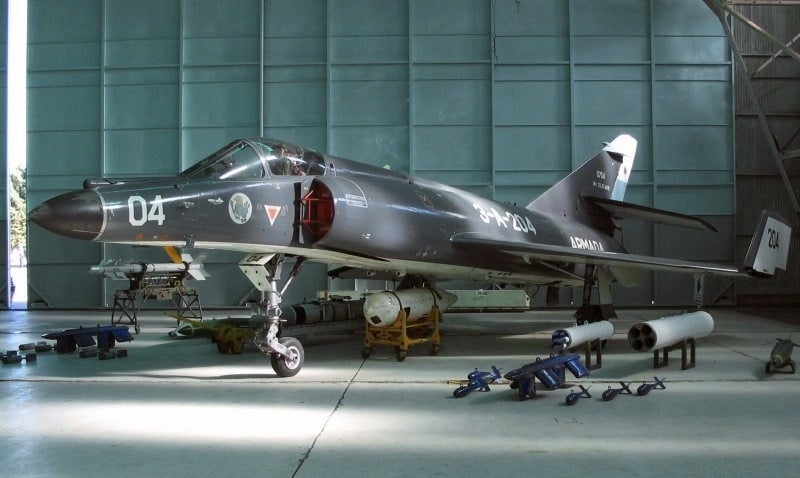
- Objective: Destroy the Argentine Navy’s Super Étendards and remaining AM39 Exocet missiles
- Piano: About 55 SAS (B Squadron) landed by two RAF C-130 Hercules; accounts of numbers vary
- Planner: Brigadier Peter de la Billière, Director SAS
- Plum Duff: Sea King HC.4 of 846 NAS, launched from HMS Invincible on the night of 17/18 May; destroyed by its crew near Punta Arenas, Chile
- Risultato: Mikado cancelled; never launched
Five jets, five missiles
The target was small but deadly. Argentina had ordered 14 Super Étendard strike fighters from France, but by the time of the war only five aircraft and five air-launched AM39 Exocet anti-ship missiles had arrived. They flew with the Argentine Navy’s 2nd Naval Squadron from Río Grande, and four of the jets were operational.
On 4 May 1982, two Super Étendards guided by a P-2 Neptune patrol aircraft each launched an Exocet at the British task force. One hit the destroyer HMS Sheffield, which later sank. Two of Argentina’s five missiles were gone, but three remained, and the British carriers Hermes E Invincible were exactly the kind of target they were built for.
Losing a carrier could have lost the war. The answer that came out of SAS headquarters was audacious even by the regiment’s standards: if you cannot stop the archers in the air, kill them on the ground.
An Entebbe in Tierra del Fuego
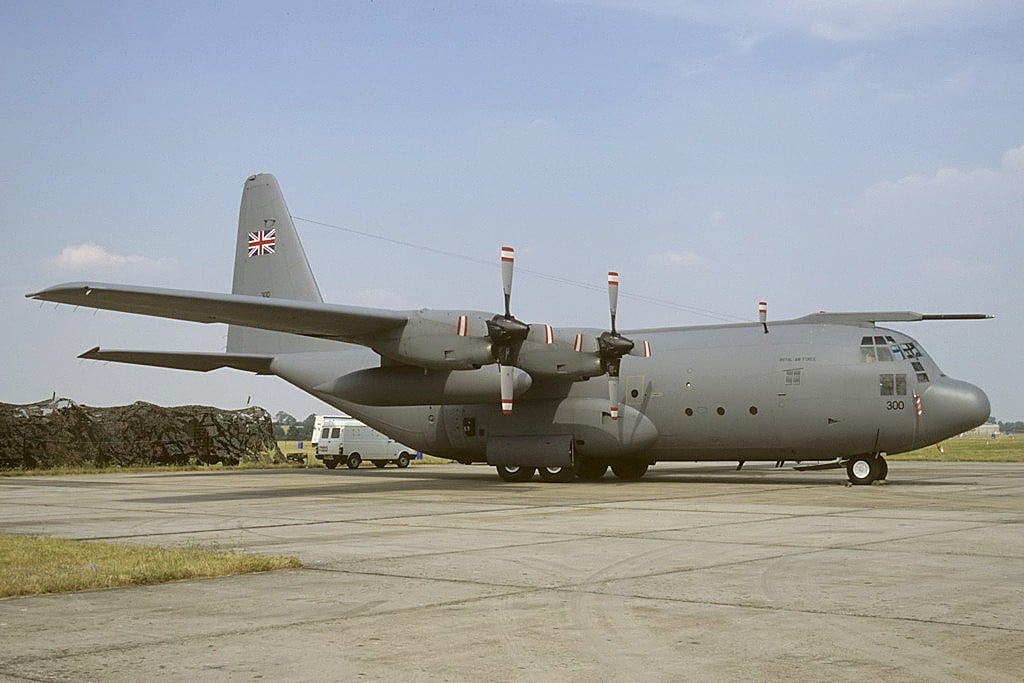
Brigadier Peter de la Billière, Director of the SAS, was in charge of the planning. The model was the Israeli raid on Entebbe in 1976. According to the plan as summarised on Wikipedia, two C-130 Hercules would land about 55 men of the SAS’s B Squadron directly on the Río Grande runway. The Hercules would keep their engines running while the troopers destroyed the Super Étendards and the Exocets, and killed the pilots in their quarters.
If the transports survived, they would fly on to the Chilean air base at Punta Arenas. If not, the survivors would grab whatever vehicles they could find and make for the Chilean border, about 80 kilometres (50 miles) to the west. Accounts of the exact force size differ, but every version agrees the odds were grim.
Just getting there was a problem. The Royal Air Force Hercules crews of No. 47 Squadron faced a round trip from Ascension Island that former pilot Harry Burgoyne put at 13 hours, which meant air-to-air refuelling, something the RAF’s Hercules fleet had to be adapted for in a hurry. The only tankers available were jets, far faster than a turboprop transport.
B Squadron’s Ian “Chalky” White described the workaround to Forces News: the tanker flew ahead of the Hercules and eased into a shallow dive, letting the slower transport build up enough speed to make contact while fuel was passed.
BFBS Forces News on the Falklands SAS mission known as “Op Certain Death”, with former 47 Squadron Hercules pilot Harry Burgoyne.
Plum Duff: the Sea King that ended up in Chile
Nobody in Britain knew how Río Grande was defended, where the jets were parked or where the missiles were stored. So the raid needed eyes on the target first. Operation Plum Duff would put a small SAS patrol ashore in Tierra del Fuego to march to the base and set up an observation post.
On the night of 17/18 May, HMS Invincible dashed west towards the Argentine coast. At 00:15 a stripped-down Sea King HC.4 of 846 Naval Air Squadron took off with a three-man crew and an eight-man SAS team. The target was so far away that it was a one-way flight: after the drop, the crew were to fly on to Chile and dispose of the helicopter.
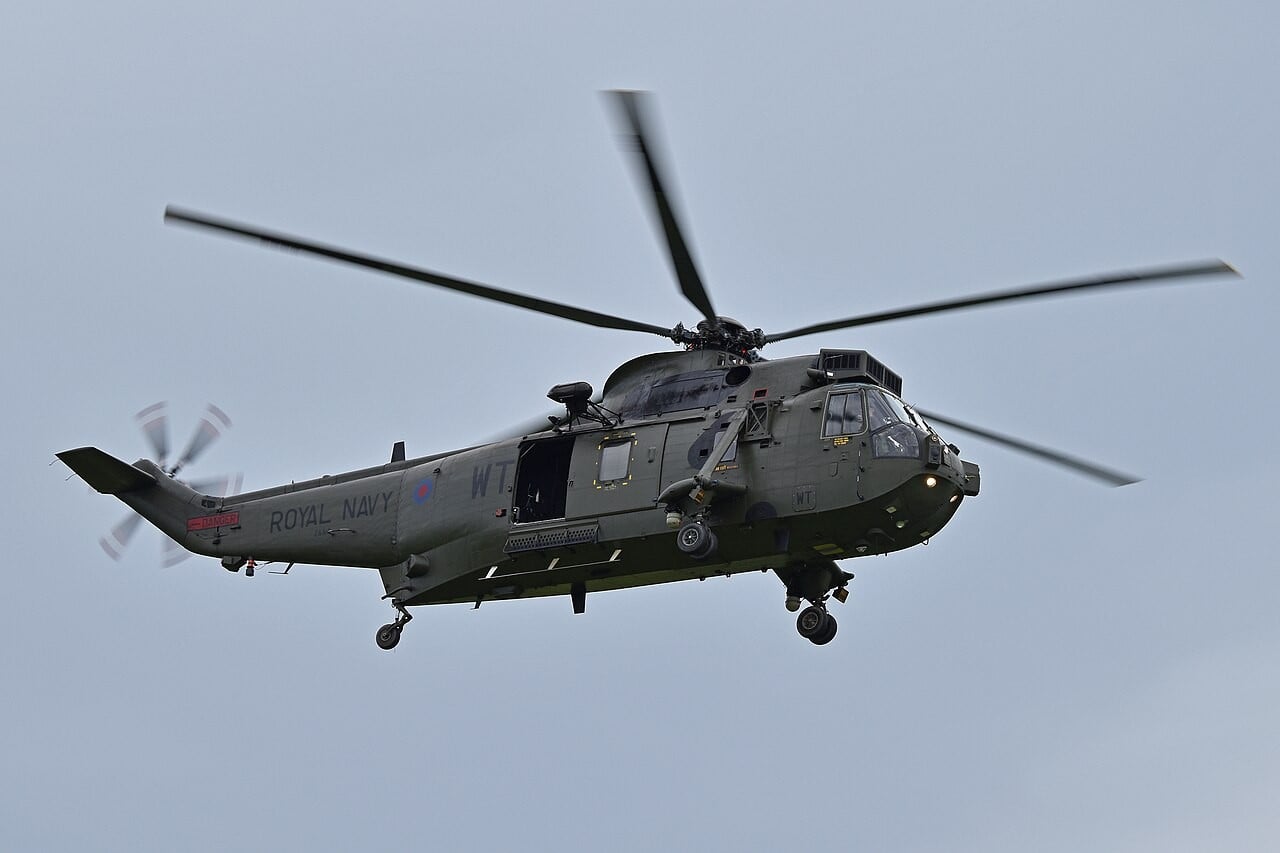
Almost nothing went to plan. The Sea King had to detour around a flaring offshore gas rig, adding about twenty minutes. Near the coast, fog closed in. Wikipedia’s account says the pilot was forced to land some 12 miles short of the planned drop-off point, that he and the patrol commander disagreed about their exact position, and that the SAS commander believed they had been spotted and asked to be taken to the Chilean border instead.
The pilot, Lieutenant Richard Hutchings of the Royal Marines, later remembered it differently. He told the Whitehaven News in 2007 that he had found the drop point, only for the patrol to get back on board.
Either way, the patrol was eventually put down on the Chilean side, near the south coast of Bahía Inútil, and the Sea King flew on towards Punta Arenas. The crew tried to scuttle it in the water, but it would not sink. In the end they set it on fire on a beach and went into hiding. They lay low for days before the Chilean authorities picked them up and handed them over to British officials; accounts of how long they hid range from three days to more than a week.
Mark Felton Productions tells the story of Operation Plum Duff and the planned SAS raid on Río Grande.
The burnt-out helicopter made headlines, and politically it was an embarrassment. The Ministry of Defence suggested at the time that the crew had lost their way. The SAS patrol never got eyes on Río Grande, and the reconnaissance mission was eventually aborted.
Why Mikado was cancelled
Without intelligence from the ground, Mikado was a raid into the unknown, and the Sea King in Chile had arguably blown any element of surprise. British intelligence also learned that Argentine radar coverage of the area was far better than first thought. Burgoyne told Forces News he was “absolutely astonished” when word came back that the raid should still go ahead.
Inside the SAS, hostility to the plan was serious. According to Wikipedia, one sergeant resigned shortly before the team was due to fly to Ascension, and B Squadron’s commander was relieved and replaced by the regiment’s second-in-command. In the end, Mikado was quietly abandoned, to the relief of the men who would have flown it.
They were right to be worried. Argentine accounts say Río Grande was ringed by Marine infantry, armoured cars, anti-aircraft guns and a TPS-43 radar, with more than 1,200 men crammed onto the base by late May. Argentine marine commanders later said they expected a special-forces attack but never imagined a Hercules landing straight on the runway. The British government later acknowledged that the operation would very likely have failed.
The missiles that got away
The Super Étendards kept flying. On 25 May, two of them fired two more Exocets at the task force, and both hit the container ship Atlantic Conveyor. Fire destroyed three Chinooks, six Wessex and a Lynx aboard her, and she later sank under tow. On 30 May, two Super Étendards with A-4 Skyhawk escorts used Argentina’s last air-launched Exocet in an attack aimed at HMS Invincible. Argentina claimed a hit; Britain says the carrier was not damaged.
Argentina’s Télam news agency on how Río Grande lived through the alarms of 1982 (in Spanish).
In Río Grande itself, the raid that never came is remembered differently. Argentina’s state news agency Télam, marking the 40th anniversary in 2022, recalled the nights when the town’s air-raid alarms sounded in expectation of an enemy attack on Argentine soil.
Operation Mikado stands as one of the great what-ifs of the Falklands War: a raid so bold it might have changed the war overnight, and so dangerous that almost nobody who was meant to fly it expected to come home. The most daring thing Britain did at Río Grande, in the end, was decide not to go.
Sources: Wikipedia (Operation Mikado; Dassault-Breguet Super Étendard), Forces News (BFBS), Whitehaven News, Naval-History.net, Télam
0 Comments