
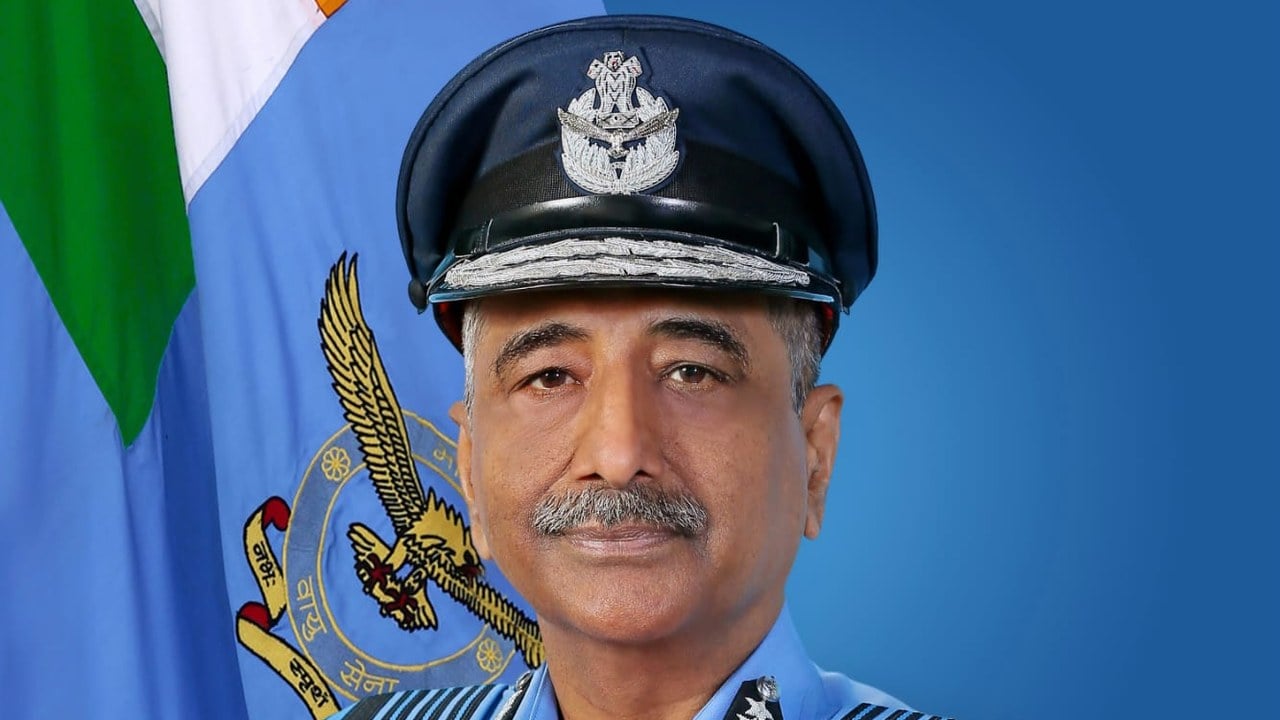
Before he said a word about fighters, Ashutosh Dixit did something no briefing note asked of him. On the morning of Sunday 1 November 2026, the new head of the Aeronautica militare indiana laid a wreath at the National War Memorial in New Delhi, then turned to his mother, Nirmala Dixit, and his mother-in-law, Kamla Pandey, saluted them and touched their feet.
Later that day, at a Guard of Honour at Air Force Station New Delhi, IAF chief Ashutosh Dixit gave his first address as Chief of the Air Staff. He boiled his agenda down to a single word, VAYU, the Hindi word for air, and made one promise stand out: to rebuild a fighter force that has fallen well below the strength the government says it needs.
Informazioni rapide
- Chi: Air Chief Marshal Ashutosh Dixit, 29th Chief of the Air Staff, Indian Air Force
- Took charge: Saturday 31 October 2026, succeeding Air Chief Marshal Amar Preet Singh
- First address: Sunday 1 November 2026, Guard of Honour at Air Force Station New Delhi
- Agenda: VAYU: Vigilance and Readiness, Aatmanirbharta, Yukti (ingenuity), Unity of effort
- Foremost task: Restoring combat strength towards the sanctioned level
- Top programmes: Tejas Mk1A and Mk2, AMCA, Indian sensors and weapons
- Sfondo: Commissioned 6 December 1986; experimental test pilot; previously Vice Chief of the Air Staff
From announcement to command
When Afterburner reported his appointment as the next Indian Air Force chief on 7 October, Dixit was still Vice Chief of the Air Staff. He formally took over as the 29th Chief of the Air Staff on Saturday 31 October, the day Air Chief Marshal Amar Preet Singh retired after more than four decades in uniform.
Singh did not leave quietly. In his final press conference in early October he warned that India needs 36 to 40 new fighters a year just to stop its numbers falling. Dixit thanked him on Sunday for handing over “a force in a high state of readiness” and praised the service’s performance under his leadership during Operation Sindoor.
V and A: readiness and home-built jets
“Our priorities shall be summed up in one word: VAYU,” Dixit told the parade. The V, in his words, stands for Vigilance and Readiness. “Every squadron, every radar, every air defence unit, along with each and every air warrior, must be ready to respond at a moment’s notice,” he said, as reported by ANI and the Hindustan Times. (ANI’s summary on X, and some reports, render the first pillar as “Vigilance, Victory and Readiness”.)
In the same breath he named his first job: “Restoring our combat strength towards the sanctioned level will also be my foremost task.” The Tribune reports that the service is operating just 29 fighter squadrons against a sanctioned strength of 42.
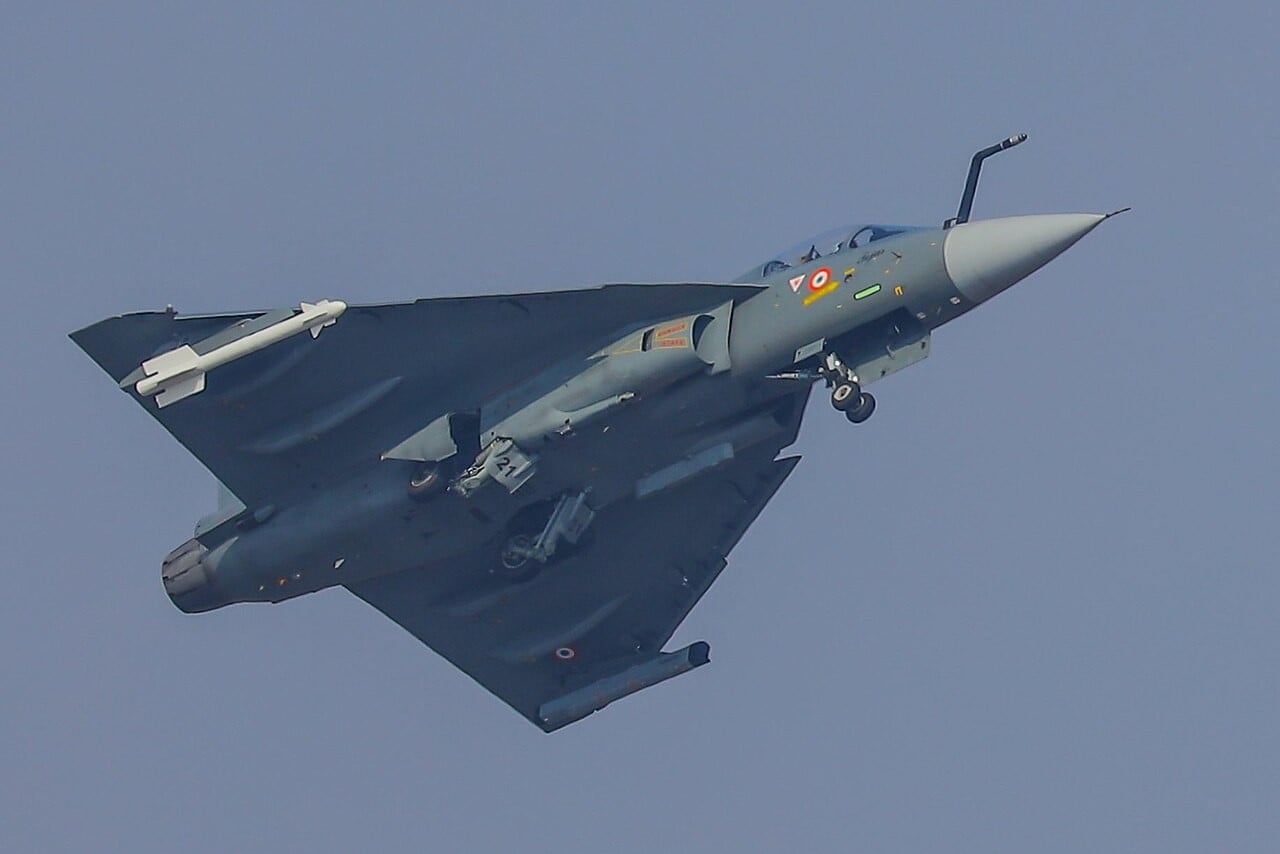
The A is for Aatmanirbharta, self-reliance, and here he was specific. “The Tejas Mk1A and II, the AMCA, Indian sensors and Indian weapons are our highest priority,” he said. The HAL Tejas Mk1A is the jet meant to fill the gap fastest: India has ordered 180 of them in two contracts, of 83 and 97 aircraft, but deliveries have been held back, largely by engine supply.
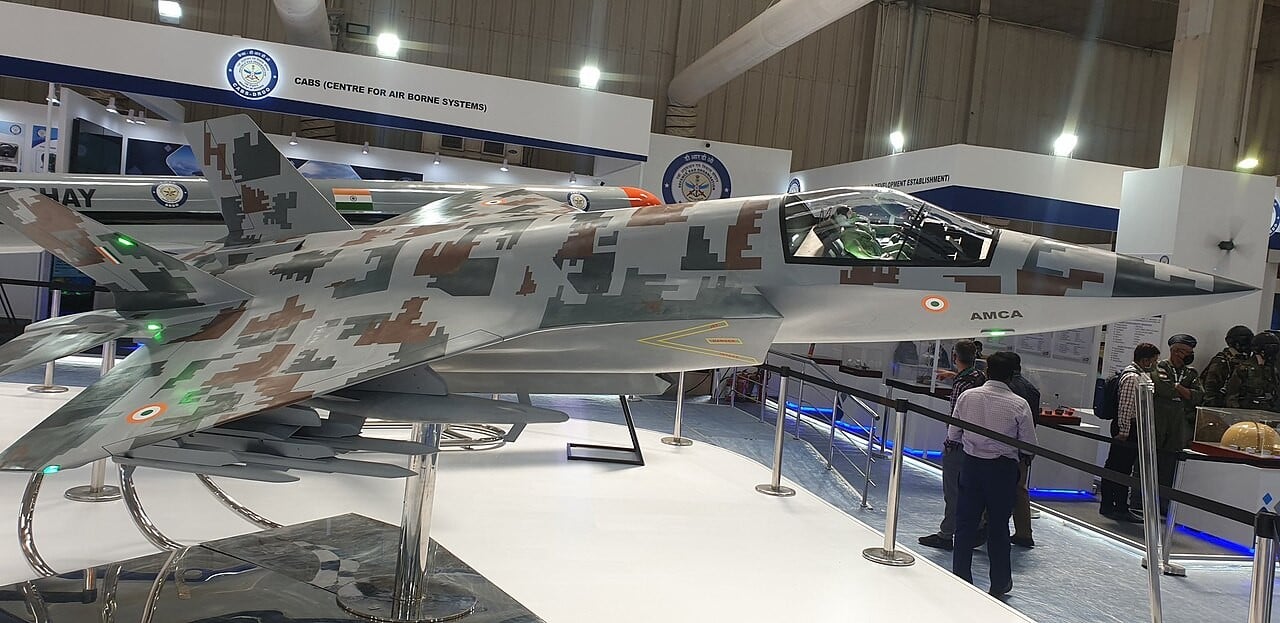
The AMCA, India’s twin-engined stealth fighter, is further off still. It is a programme Dixit knows from the inside: during his time as Deputy Chief of the Air Staff from May 2023, the Tejas Mk1A, the Tejas Mk2 and the AMCA all moved forward.
Y and U: ingenuity and jointness
Y stands for Yukti, which Dixit translated as “our ingenuity”. He listed what he means by it: networked, AI-enabled command and control, layered counter-drone defence, responsive maintenance, force protection, resilience, and the use of near-space as an operational domain. All of these, he said, will be “constantly monitored and progressed”.
U is for Unity of effort. Tying it to the government’s JAI vision of Jointness, Aatmanirbharta and Innovation, he promised that the air force would “plan and fight as one” with the Army, the Navy and national agencies. “Air power delivers most when it is integrated from the very first plan,” he added.
ANI’s report on Air Chief Marshal Ashutosh Dixit’s first address, in which he called restoring combat strength to the sanctioned level his top priority.
He framed all four letters against a changing battlefield, with drones, long-range precision weapons, space, cyber, AI and the electromagnetic spectrum reshaping what an air force has to do. He also promised personal attention to the training, safety, welfare and dignity of air warriors, Agniveervayu recruits, civilians, veterans and their families.
A test pilot at the top
Dixit, who turns 60 in December, was commissioned into the fighter stream on 6 December 1986. He is an experimental test pilot and qualified flying instructor with more than 3,500 flying hours, according to the Hindustan Times, on types including the Mirage 2000, IL Giaguaro, MiG variants and the Tejas. He re-equipped No. 9 Squadron with Mirage 2000s as its commanding officer and flew in Operation Safed Sagar during the 1999 Kargil war.
That background shapes how his agenda reads. A pilot who has tested aircraft knows that programmes do not slip in a speech; they slip on the factory floor and the flight line. VAYU sets out what the Indian Air Force wants. Over the coming years Dixit will be judged on whether the Tejas Mk1As actually arrive, in numbers, and whether the squadron count finally stops falling.
Sources: ANI, Hindustan Times, The Tribune, RNA Media, Organiser, Devdiscourse (ANI), Wikipedia (Ashutosh Dixit; HAL Tejas)
0 Comments