
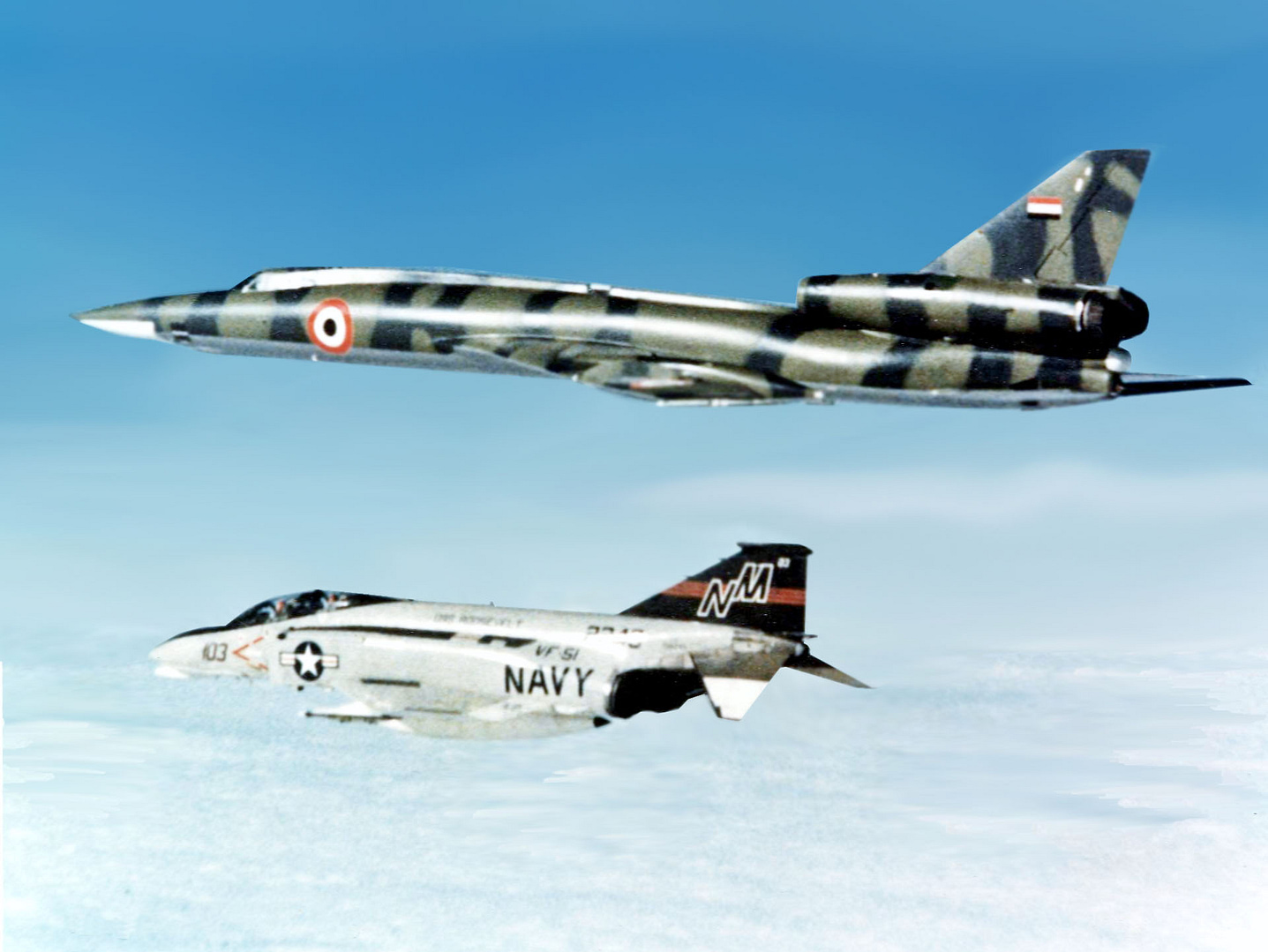
Tupolev Tu-22
“Blinder”
The Soviet Union’s first supersonic bomber — sleek, fast and feared by its own crews, with two engines stacked at the base of the tail and a reputation for danger that outlived its service.
The USSR’s first supersonic bomber
By the mid-1950s the Soviet Union’s long-range bomber force rested on the subsonic Tu-16 Badger, an aircraft increasingly exposed to a new generation of jet interceptors and surface-to-air missiles. Tupolev’s answer was the “105” project — a slim, supersonic bomber that first flew as the prototype “Samolyot 105” on 21 June 1958. It became the Tu-22, and NATO named it Blinder: the first Soviet bomber able to dash beyond the speed of sound.
The path there was not smooth. The first prototype was crippled by transonic drag and could barely exceed Mach 1. Engineers reshaped the fuselage using area ruling — the pinched, “coke-bottle” waist that eases airflow where wing meets body — producing the “105A” in 1959. Only then did genuine supersonic performance arrive, and the area-ruled aircraft became the production standard, built at Kazan’s Plant No. 22. The type entered service in 1962.
Yet the Tu-22 was as troubled as it was fast. Its thin, high-speed wing gave it a fearsome landing speed — commonly cited around 300 km/h — and poor visibility over its long, pointed nose made approaches dangerous. Early aircraft carried downward-firing ejection seats that offered little chance of survival in a low-altitude emergency, exactly when the aircraft was most vulnerable. The three crew sat in separate compartments, unable to see one another. Sources describe an aircraft that was unforgiving to fly and prone to accidents; crews reportedly nicknamed it “Shilo” (the awl), though the origin of that name is disputed.
Distinct versions gave the Blinder several careers. The Tu-22B was a free-fall bomber; the Tu-22R flew reconnaissance and the Tu-22P served as an electronic-warfare platform. The most significant was the Tu-22K, built around the large Kh-22 (NATO AS-4 “Kitchen”) standoff missile, carried semi-recessed under the belly because it was too big to fit inside.
In Soviet service the type’s combat use was limited, but exported Blinders saw action. Libyan aircraft were used against Tanzania and over Chad, with mixed and often negligible results and several losses; Iraq flew its small fleet on long-range raids during the Iran–Iraq War. The Soviet and later Russian fleets were withdrawn through the 1990s, and Ukraine, which inherited a handful after 1991, scrapped them.
01The Tupolev Tu-22 Blinder versus the Tu-22M Backfire: two very different bombers, one name
A persistent source of confusion: the Tu-22 Blinder and the later Tu-22M Backfire are not the same aircraft. The original Tu-22, described on this page, is a slim, fixed-wing bomber with two engines mounted at the base of the tail fin, first flown in 1958. The Tu-22M is a larger, heavier swing-wing (variable-geometry) bomber that first flew a decade later — a genuinely different design that kept the “Tu-22” label largely for Soviet budgetary and political reasons.
The distinction matters because much of the “Tu-22” combat history circulating online — particularly the heavy bombing over Afghanistan in the 1980s — actually belongs to the Tu-22M Backfire, not the Blinder. The Backfire is covered in its own exhibit; everything here refers to the original 1950s aircraft.
What makes it distinctive
Supersonic dash and an area-ruled body
The Tu-22 was the first Soviet bomber built to fly supersonically. Its thin, sharply swept wing و area-ruled “coke-bottle” fuselage — the fix applied after the first prototype could barely pass Mach 1 — allowed a dash of roughly Mach 1.4. It was a real step beyond the subsonic Tu-16, even if in service the gain proved smaller than the Soviet air force had hoped.
Two engines at the base of the tail
The Blinder’s most recognisable feature is its two large turbojets, mounted side by side high on the rear fuselage, against the root of the vertical fin. The layout kept the intakes short and the fuselage clean for supersonic flight, but sources note it carried a structural weight penalty and made engine access awkward, the units sitting high off the ground. Early Dobrynin engines gave way to the definitive RD-7M2.
The Tu-22K and its Kh-22 missile
ال Tu-22K was built around the large Kh-22 (NATO AS-4 “Kitchen”), a liquid-fuel, high-supersonic standoff missile intended to strike ships and land targets from hundreds of kilometres away. The weapon was so large it was carried semi-recessed under the belly rather than fully internally, paired with a dedicated targeting radar. It was the Blinder’s most serious weapon.
02The Tu-22 Blinder’s tail-mounted engines: why Tupolev put the jets on the fin
Placing the two engines at the base of the tail, rather than in the wing roots or buried in the fuselage, kept the wing and centre fuselage aerodynamically clean and avoided long, complex intake ducting — useful for a supersonic aircraft. The cost was real: the arrangement is generally described as adding structural weight, and the high-mounted engines were harder to inspect and service than podded or wing-root installations. It is the single feature that most sets the Blinder’s silhouette apart from almost every other bomber of its era.
03The Tu-22 Blinder’s reputation: high landing speeds, downward ejection and a heavy accident toll
Few Cold-War aircraft were as feared by their own crews. The thin supersonic wing produced a very high approach speed, and forward visibility over the long nose was poor, making landing the most dangerous phase of flight. Early Tu-22s ejected their crews downward — survivable at altitude, but frequently fatal during the low-level emergencies that most often occurred on takeoff and landing. The three crew occupied separate compartments and could not see whether the others had already ejected. Accounts describe a demanding, unforgiving machine with a poor peacetime safety record; some sources tally dozens of airframes lost in accidents, though the precise figures vary between references and should be treated as indicative.
Full specifications
Figures are broadly for the Tu-22K missile carrier. Soviet-era data was secret and later reconstructions disagree, so contested values (weight, range, speed) are hedged and given as ranges where sources differ.
Airframe & Performance
- طاقم
- 3 (pilot, navigator, systems operator) in separate compartments
- طول
- ~41.6 m (~42.6 m with refuelling probe)
- طول الجناحين
- ~23.5 m
- ارتفاع
- ~10.1 m
- Max takeoff weight
- ~92,000 kg (sources give ~85,000–94,000 by variant)
- Max speed
- ~Mach 1.4 (~1,510 km/h) at altitude
- سقف الخدمة
- ~13,300 m
- يتراوح
- ~4,900 km (up to ~7,000 km air-refuelled) — widely varying estimates
Propulsion, Armament & Cost
- Engines
- 2 × Dobrynin RD-7M2 turbojets
- Thrust (each)
- ~161 kN (~16,500 kgf) with afterburner
- التسليح
- 1 × Kh-22 missile (Tu-22K) or up to ~12,000 kg bombs; 1 × 23 mm tail cannon
- First flight
- Prototype “105” 21 Jun 1958 · area-ruled “105A” 1959
- Entered service
- 1962
- Built
- ~300–311 at Kazan (Plant No. 22), to 1969
- Unit cost
- Not publicly disclosed (Soviet-era state secret)
- Cost per flight hour
- No reliable public figure exists
04The Tupolev Tu-22 Blinder’s costs: why there is no reliable price tag
Unlike Western aircraft, the Tu-22 has no meaningful published unit cost or cost-per-flight-hour figure. Soviet military procurement was funded through a centrally planned economy in which prices were not set by a market and programme costs were treated as state secrets. Any dollar figure attached to the Blinder today would be a modern estimate or a currency conversion of little real meaning. What the sources agree on is that the aircraft was expensive to operate in human and material terms: a demanding airframe, a poor accident record, and short intercontinental reach that made it a costly step for a capability the Soviet air force ultimately judged disappointing. We list the cost as undisclosed rather than invent a number.
From the “105” project to retirement
The “105” project begins
Tupolev’s OKB starts work on a supersonic bomber to succeed the vulnerable subsonic Tu-16 Badger.
Prototype first flight
The prototype “Samolyot 105” flies on 21 June 1958 — but transonic drag keeps it from cleanly exceeding Mach 1.
The area-ruled “105A”
A “coke-bottle” fuselage redesign produces the 105A, which achieves genuine supersonic speed and becomes the production standard at Kazan.
Public debut and the name “Blinder”
The Tu-22 is shown at the Tushino display in July 1961; NATO assigns the reporting name Blinder.
Enters service
The Tu-22 enters operational service with Soviet Long-Range Aviation as the USSR’s first supersonic bomber.
The Tu-22K and Kh-22
The missile-armed Tu-22K, carrying the large Kh-22 standoff missile, reaches service and is shown publicly at Domodedovo in 1967.
Exports to Iraq and Libya
Around a dozen aircraft each are delivered to Iraq (early 1970s) and Libya (late 1970s onward), the type’s only export customers.
Combat abroad
Libyan Blinders strike targets around Tanzania and over Chad; Iraqi Tu-22s fly long-range raids during the Iran–Iraq War.
Withdrawal
Soviet and Russian Tu-22s are retired through the 1990s; Ukraine inherits a handful after 1991 and scraps them.
Twelve Tu-22 Blinder stories
The prototype that could not go supersonic
The USSR’s first supersonic bomber initially could barely break the sound barrier.
Read the full story
Engines on the tail
Why did the Tu-22 carry its two jets stacked at the base of the fin?
Read the full story
Shilo, the awl
Crews had a nickname for the needle-nosed bomber, and its origin is disputed.
Read the full story
The high-speed landing
The thing crews feared most was not combat but the approach.
Read the full story
The Kh-22 in the belly
The Tu-22K was built around a missile too big to hide inside it.
Read the full story
The bomber that hit an island
In 1979 a Libyan Tu-22 tried to bomb a Tanzanian fuel depot and missed the town entirely.
Read the full story
Low pass over N’Djamena
Libya’s supersonic bombers appeared over Chad in the 1980s, and began getting shot down.
Read the full story
The War of the Cities
Iraq’s dozen Tu-22s flew some of the longest-range raids of the Iran–Iraq War.
Read the full story
Ejecting downward
Early Tu-22 crews escaped by firing straight toward the ground.
Read the full story
The quiet Blinders
Many Tu-22s never carried a bomb — they carried cameras and jammers.
Read the full story
The airshow that worried the West
The Blinder made its point on a parade line before it ever dropped a bomb in anger.
Read the full story
Not the Backfire
Two very different bombers wear the “Tu-22” name — do not mix them up.
Read the full story
The Blinder in pictures
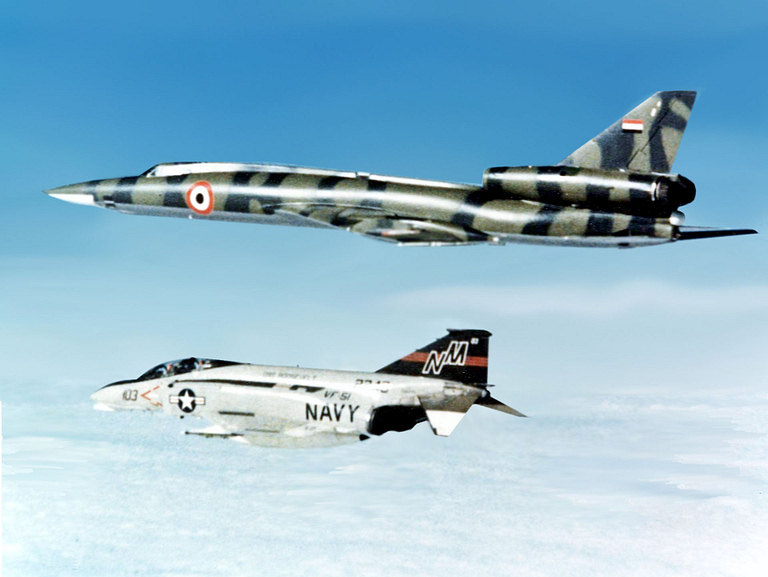
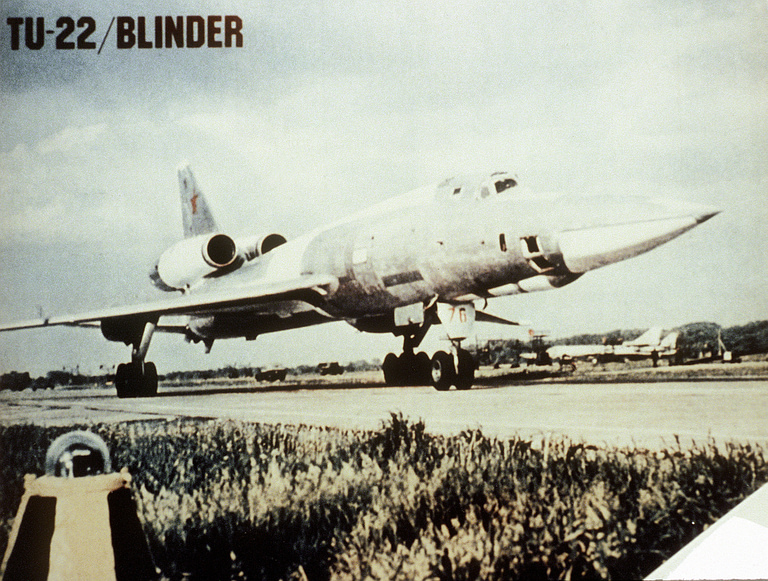
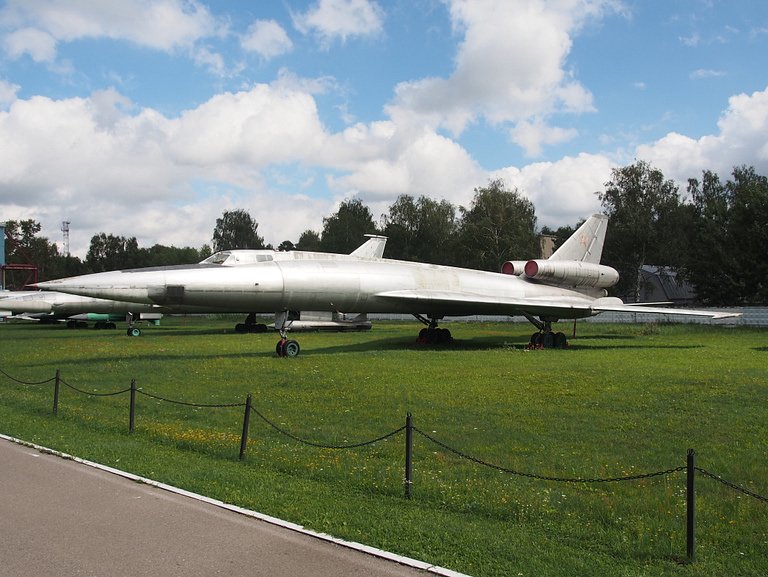
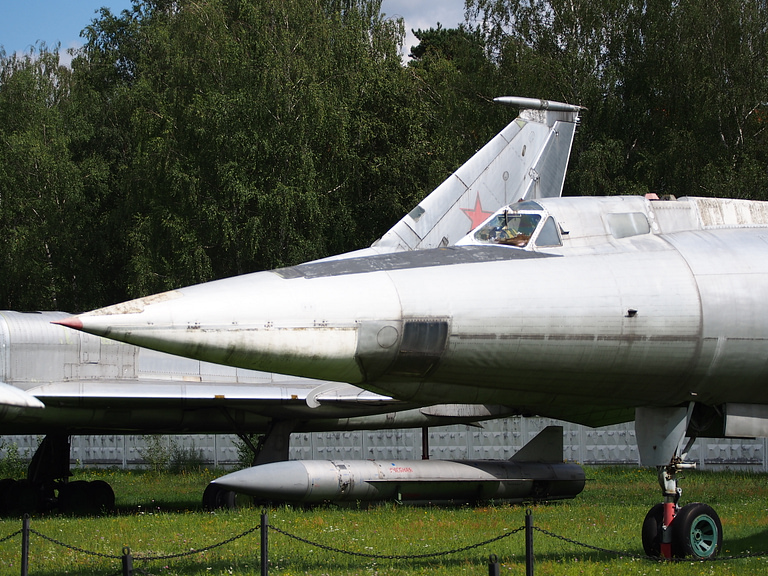

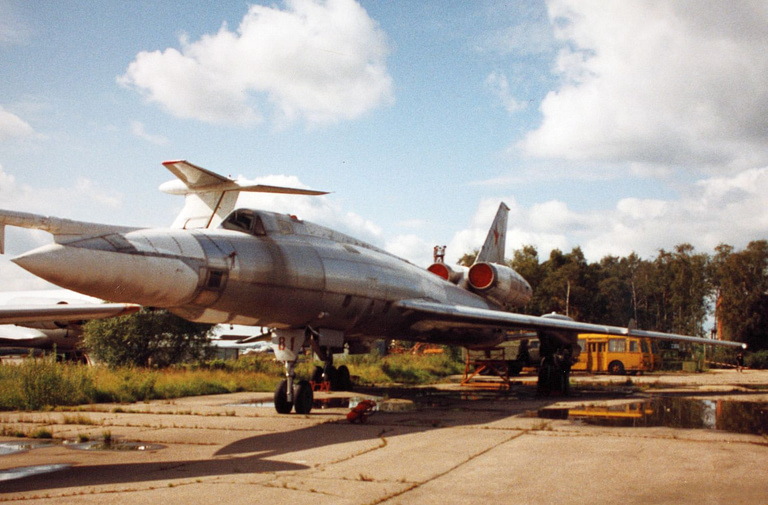
The Tu-22 Blinder in motion
A curated video feature for the Tu-22 Blinder is coming soon. In the meantime, explore the photo gallery above and the operations map below.
Where the Tu-22 flew
The record that defines it
The Tu-22 was a bomber, not a fighter, and holds no aerial victories. In Soviet service its combat use was limited, and the type is remembered as much for its accident record as for its missions. The Blinder’s only significant action came in the hands of its two export customers: Libyan aircraft were used against Tanzania in 1979 and over Chad in the 1980s, with often negligible military results and several losses, while Iraq flew long-range raids on Iranian cities during the Iran–Iraq War. Both campaigns caused civilian harm and cost airframes, and neither is remembered as a military success. Presented here as historical record, without endorsement.
Compare the combat record of every military aircraft. Figures as of July 2026.
Everything people ask about the Tu-22 Blinder
Can I fly in a Tu-22?
Is the Tu-22 the same as the Tu-22M “Backfire”?
How fast was the Tu-22?
Why are the engines mounted on the tail?
What missile did the Tu-22K carry?
Why did the Tu-22 have such a bad reputation?
You can’t fly the Tu-22.
These, you can.
Some legends only live in museums — others are fuelled and waiting. MiGFlug has put civilians in real military jet cockpits since 2004.
 Fly the L-39 AlbatrosThe world’s most-flown jet trainer — aerobatics included
 Fly the F-104 Starfighter“The missile with a man in it”
 Fly the MiG-21The Cold War’s most-produced jet
 حلّق بطائرة تي-33 شوتينغ ستارAmerica’s first jet trainer
 Fly the DH VampireA piece of early jet history
 Fly the S.211Agile Italian jet trainer
 Fly the MB-326The classic Aermacchi jet
 Fly the MiG-15The Soviet legend of the Korean War
Continue the tour
Every fact, checked
- GlobalSecurity.org — Tu-22 BlinderDevelopment, Kazan production, service dates and the tail-mounted engine layout.
- GlobalSecurity.org — Tu-22 variantsVariant-by-variant breakdown of the Tu-22B, K, R, P and U models.
- Federation of American Scientists — Tu-22 BlinderFirst flight, prototypes, specifications and assessment as a Tu-16 successor.
- Defense Express — the first Soviet supersonic bomberAccident record, the “Shilo” nickname, downward ejection and cockpit ergonomics.
- MilitaryFactory — Tupolev Tu-22 (Blinder)Dimensions, RD-7M2 thrust, top speed, production total and public debut.
- AirVectors (Greg Goebel) — Tu-22 Blinder & Tu-22M BackfireDetailed development and service narrative, and the Blinder-versus-Backfire distinction.
- GlobalMilitary.net — Tu-22 BlinderLibyan use over Chad, Iraqi deliveries and war losses, and Ukrainian retirement.
- MilAvia — Tu-22 specificationsConsolidated specification tables for cross-checking the hedged figures above.