
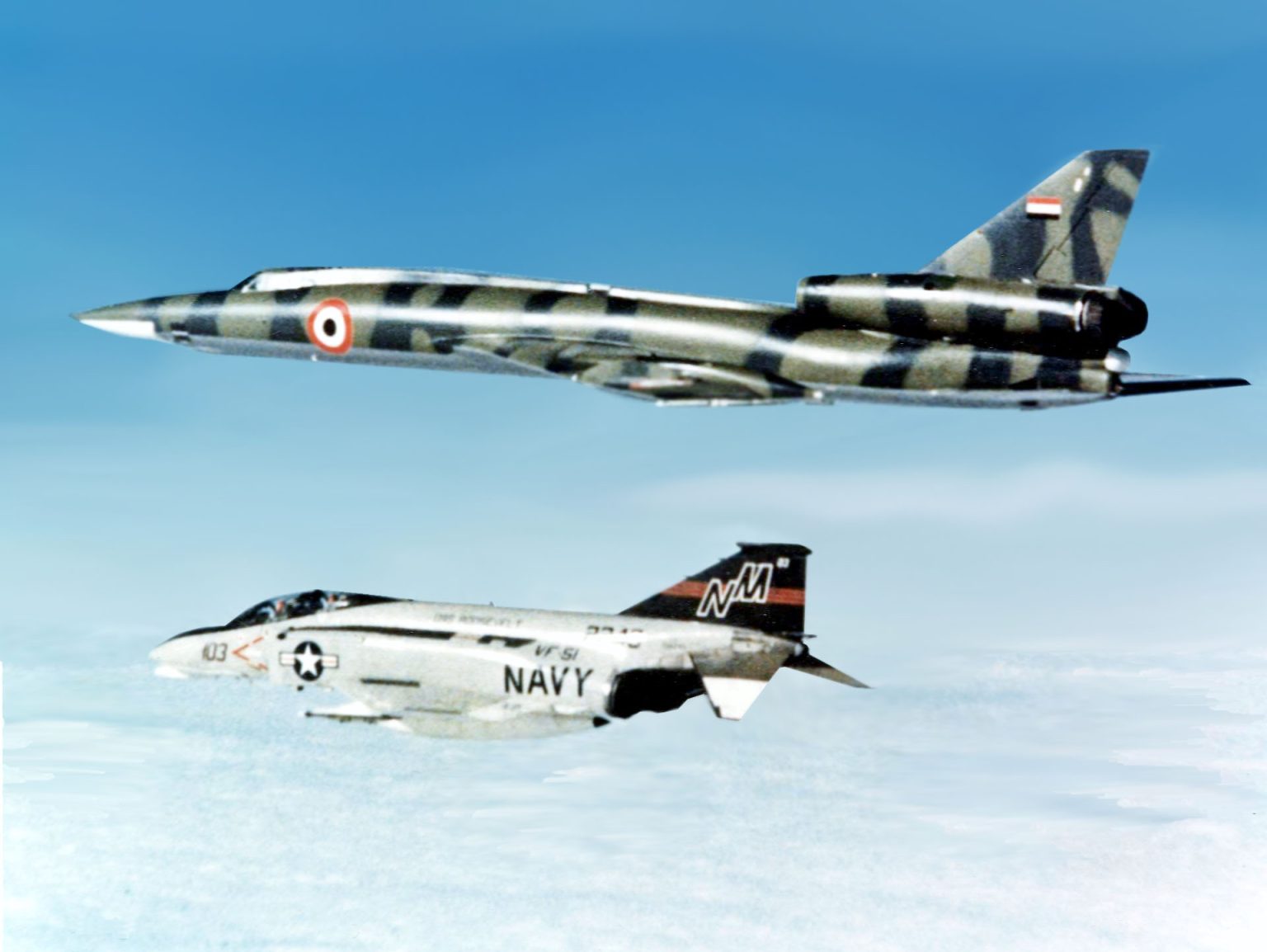
Tupolev Tu-22
“Blinder”
The Soviet Union’s first supersonic bomber — sleek, fast and feared by its own crews, with two engines stacked at the base of the tail and a reputation for danger that outlived its service.
The USSR’s first supersonic bomber
By the mid-1950s the Soviet Union’s long-range bomber force rested on the subsonic Tu-16 Badger, an aircraft increasingly exposed to a new generation of jet interceptors and surface-to-air missiles. Tupolev’s answer was the “105” project — a slim, supersonic bomber that first flew as the prototype “Samolyot 105” on 21 June 1958. It became the Tu-22, and NATO named it Blinder: the first Soviet bomber able to dash beyond the speed of sound.
The path there was not smooth. The first prototype was crippled by transonic drag and could barely exceed Mach 1. Engineers reshaped the fuselage using area ruling — the pinched, “coke-bottle” waist that eases airflow where wing meets body — producing the “105A” in 1959. Only then did genuine supersonic performance arrive, and the area-ruled aircraft became the production standard, built at Kazan’s Plant No. 22. The type entered service in 1962.
Yet the Tu-22 was as troubled as it was fast. Its thin, high-speed wing gave it a fearsome landing speed — commonly cited around 300 km/h — and poor visibility over its long, pointed nose made approaches dangerous. Early aircraft carried downward-firing ejection seats that offered little chance of survival in a low-altitude emergency, exactly when the aircraft was most vulnerable. The three crew sat in separate compartments, unable to see one another. Sources describe an aircraft that was unforgiving to fly and prone to accidents; crews reportedly nicknamed it “Shilo” (the awl), though the origin of that name is disputed.
Distinct versions gave the Blinder several careers. The Tu-22B was a free-fall bomber; the Tu-22R flew reconnaissance and the Tu-22P served as an electronic-warfare platform. The most significant was the Tu-22K, built around the large Kh-22 (NATO AS-4 “Kitchen”) standoff missile, carried semi-recessed under the belly because it was too big to fit inside.
In Soviet service the type’s combat use was limited, but exported Blinders saw action. Libyan aircraft were used against Tanzania and over Chad, with mixed and often negligible results and several losses; Iraq flew its small fleet on long-range raids during the Iran–Iraq War. The Soviet and later Russian fleets were withdrawn through the 1990s, and Ukraine, which inherited a handful after 1991, scrapped them.
01The Tupolev Tu-22 Blinder versus the Tu-22M Backfire: two very different bombers, one name
A persistent source of confusion: the Tu-22 Blinder and the later Tu-22M Backfire are not the same aircraft. The original Tu-22, described on this page, is a slim, fixed-wing bomber with two engines mounted at the base of the tail fin, first flown in 1958. The Tu-22M is a larger, heavier swing-wing (variable-geometry) bomber that first flew a decade later — a genuinely different design that kept the “Tu-22” label largely for Soviet budgetary and political reasons.
The distinction matters because much of the “Tu-22” combat history circulating online — particularly the heavy bombing over Afghanistan in the 1980s — actually belongs to the Tu-22M Backfire, not the Blinder. The Backfire is covered in its own exhibit; everything here refers to the original 1950s aircraft.
What makes it distinctive
Supersonic dash and an area-ruled body
The Tu-22 was the first Soviet bomber built to fly supersonically. Its thin, sharply swept wing and area-ruled “coke-bottle” fuselage — the fix applied after the first prototype could barely pass Mach 1 — allowed a dash of roughly Mach 1.4. It was a real step beyond the subsonic Tu-16, even if in service the gain proved smaller than the Soviet air force had hoped.
Two engines at the base of the tail
The Blinder’s most recognisable feature is its two large turbojets, mounted side by side high on the rear fuselage, against the root of the vertical fin. The layout kept the intakes short and the fuselage clean for supersonic flight, but sources note it carried a structural weight penalty and made engine access awkward, the units sitting high off the ground. Early Dobrynin engines gave way to the definitive RD-7M2.
The Tu-22K and its Kh-22 missile
The Tu-22K was built around the large Kh-22 (NATO AS-4 “Kitchen”), a liquid-fuel, high-supersonic standoff missile intended to strike ships and land targets from hundreds of kilometres away. The weapon was so large it was carried semi-recessed under the belly rather than fully internally, paired with a dedicated targeting radar. It was the Blinder’s most serious weapon.
02The Tu-22 Blinder’s tail-mounted engines: why Tupolev put the jets on the fin
Placing the two engines at the base of the tail, rather than in the wing roots or buried in the fuselage, kept the wing and centre fuselage aerodynamically clean and avoided long, complex intake ducting — useful for a supersonic aircraft. The cost was real: the arrangement is generally described as adding structural weight, and the high-mounted engines were harder to inspect and service than podded or wing-root installations. It is the single feature that most sets the Blinder’s silhouette apart from almost every other bomber of its era.
03The Tu-22 Blinder’s reputation: high landing speeds, downward ejection and a heavy accident toll
Few Cold-War aircraft were as feared by their own crews. The thin supersonic wing produced a very high approach speed, and forward visibility over the long nose was poor, making landing the most dangerous phase of flight. Early Tu-22s ejected their crews downward — survivable at altitude, but frequently fatal during the low-level emergencies that most often occurred on takeoff and landing. The three crew occupied separate compartments and could not see whether the others had already ejected. Accounts describe a demanding, unforgiving machine with a poor peacetime safety record; some sources tally dozens of airframes lost in accidents, though the precise figures vary between references and should be treated as indicative.
Full specifications
Figures are broadly for the Tu-22K missile carrier. Soviet-era data was secret and later reconstructions disagree, so contested values (weight, range, speed) are hedged and given as ranges where sources differ.
Baseline note: the figures below describe the Tu-22KD, the missile-carrying Blinder-B with the RD-7M2 engines and an in-flight refuelling probe — the definitive combat version of the type. Deltas for the Tu-22R reconnaissance aircraft, the Tu-22P electronic-warfare aircraft and the Tu-22U trainer are in grey. Read this first: this is not the Tu-22M. The swing-wing Tu-22M Backfire is a completely different aeroplane with a different wing, a different fuselage, different engines, different intakes and a different crew arrangement; it was given the Tu-22 number for budgetary and political reasons, so that it could be presented as a modification of an existing type rather than a new bomber. It has its own page. Everything below concerns the original 1958 Blinder. One further caution: published dimensions for the Tu-22 differ. The figures here follow Burdin and Dawes, whose monograph is the standard work and gives 42.6 m length, 23.65 m span and 151.25 m² of wing; the widely reprinted alternatives of 41.6 m, 23.17 m and 162 m² appear to trace back to a single earlier reference book.
Dimensions & weights
- Crew
- 3 — pilot, navigator and weapons operator. There is no co-pilot. The cockpit was narrowed to save drag by deleting the second pilot, which is also how the crew was cut from Tu-16 numbers. The pilot sits offset slightly to the left, the navigator below and ahead of him inside the fuselage with windows looking down and aft, and the operator behind, facing backwards. It is the only heavy Soviet production aircraft ever flown by a single pilot
- Length
- 42.6 m (139 ft 9 in)
- Wingspan
- 23.65 m (77 ft 7 in)
- Height
- 10.04 m (32 ft 11 in)
- Wing area
- 151.25 m² (1,628 sq ft), aspect ratio 3.7, thickness/chord 6 per cent constant along the span
- Wing sweep
- 52° at quarter chord, about 55° at the leading edge — chosen for low transonic drag and paid for at both ends of every flight. The main undercarriage retracts into pods on the wing trailing edge, a Tupolev signature, specifically so the wing itself could be made thin
- Normal take-off weight
- 92,000 kg (202,800 lb) — 85,000 kg (187,400 lb) for the Tu-22R, which could go to 91,000 kg (200,600 lb) at maximum
- Normal landing weight
- 56,500 kg (124,600 lb) clean, 60,000 kg (132,300 lb) returning with an unfired Kh-22; maximum 65,000 kg (143,300 lb)
- Internal fuel
- ~42,900 kg (94,600 lb) without the missile, ~37,050 kg (81,700 lb) with it, in 32 unprotected soft rubber cells. Maximum tankage is about 54,700 litres (12,030 imp gal / 14,450 US gal). Roughly 28 tonnes could be dumped in fifteen minutes to get the landing weight down
- Weapon load
- 3,000 kg (6,600 lb) normal, ~9,000 kg (19,800 lb) maximum in the fuselage bay; 5,700 kg (12,600 lb) as one Kh-22 semi-recessed. Some Western references quote 12,000 kg; Burdin gives 9,000
- Runway
- First-class airfields only — the Tu-22 needed a paved runway of at least 3,000 m (9,850 ft). This alone halved the number of places it could be based, and it is a direct consequence of the wing
- Number built
- 311 production aircraft at Kazan plant No. 22, 1959–1969, plus two flying prototypes — 15 Tu-22B bombers, about 127 reconnaissance aircraft, 76 missile carriers, 47 electronic-warfare aircraft and 46 trainers. The Tu-16 it was meant to replace was built in far greater numbers and outlasted it
Performance
- Maximum speed
- 1,610 km/h (1,000 mph, 869 kn) clean, Mach 1.5 at altitude; 1,550 km/h (963 mph) carrying a Kh-22. Early-production aircraft were limited to Mach 1.4 in service because of aileron reversal, and the Tu-22R with the older VD-7M engines managed 1,410 km/h (876 mph)
- Cruise speed
- 950–1,000 km/h (590–620 mph) subsonic, 1,200–1,300 km/h (745–810 mph) in supersonic cruise — the RD-7 family had two reheat settings, cruise and maximum, precisely so the aircraft could hold a supersonic cruise rather than only dash
- Range
- 4,400 km (2,735 mi, 2,375 nmi) subsonic and only 1,560 km (970 mi) if flown supersonically. 6,150 km (3,820 mi) with one in-flight refuelling. The Tu-22R, lighter and with more fuel, reached 5,650 km subsonic and 7,150 km refuelled
- Combat radius
- ~2,500–2,700 km (1,550–1,680 mi) for the missile carrier — less than the Tu-16 it was supposed to replace, which is the whole indictment of the aeroplane in one line
- Service ceiling
- 13,300 m (43,600 ft) — 13,500 m (44,300 ft) for the Tu-22R
- Rate of climb
- 12.7 m/s (2,500 ft/min)
- Touchdown speed
- 320–330 km/h (199–205 mph, 173–178 kn) at a landing weight around 60 tonnes — about 100 km/h faster than the bombers the crews came from. The aircraft was longitudinally soft at low speed, had a pronounced tendency to pitch up and strike its tail on landing until stability augmentation was fitted, and the pilot could not see the runway in a crosswind from the left because of a high instrument panel coaming on the right. New pilots were forbidden to fly it in a crosswind above a fresh breeze. This is the single defining fact about the Tu-22
- Take-off assistance
- 2 or 4 × SPRD-63 jettisonable solid rocket bottles under the wing, 30–56 kN (6,800–12,700 lbf) each for 13–19 seconds. With four fitted, the take-off run at 90 tonnes falls to 1,600 m (5,250 ft), about 40 per cent shorter
- Landing run
- Shortened by two cruciform brake parachutes in a ventral container, streamed at or below 350 km/h (217 mph)
- Load factor limit
- +2 g. A supersonic bomber with the manoeuvre envelope of an airliner. Wing loading is 608 kg/m² and thrust-to-weight 0.36 at normal take-off weight
- Accident record
- About 70 aircraft lost — roughly one in five of the 311 built. Russian accounts differ on the period: some give around 70 written off in accidents by 1975 alone, others about 70 across 1958 to 1992. Either way it is a dismal figure, and the causes are the ones listed above rather than enemy action. There were documented occasions on which crews refused to fly the type after a fatal crash
Propulsion & systems
- Engine
- 2 × Dobrynin (later Kolesov) RD-7M2 afterburning turbojets — earlier aircraft, up to 1965, had the VD-7M. All of them smoked heavily, which for a bomber meant being visible long before being detected
- Thrust
- 107.9 kN (24,250 lbf) dry and 161.8 kN (36,380 lbf) with reheat, each — the VD-7M gave 103.0 kN (23,150 lbf) and 156.9 kN (35,270 lbf)
- Engine installation
- Two nacelles on top of the rear fuselage, one either side of the fin root. The position was chosen to cure a transonic pitch-up found in wind tunnel work and to clean up the wing, and aerodynamically it worked. On the ground it was miserable: the engines sit several metres up, above and behind everything, so every access panel, every hot-section inspection and every engine change meant purpose-built gantries and work in the open. Preparing a Tu-22 for a sortie took a ground crew of five about eight hours, with a further three and a half hours of pre-flight, and the aircrew strapped in 30 to 54 minutes before take-off
- Air refuelling
- Probe-and-drogue. 176 aircraft were built or converted with the probe, which is what the D suffix means — from dalniy, long-range. Some probes were removed and others sealed under later arms-limitation agreements
- Fuel and cooling
- The first Soviet aircraft with single-point pressure refuelling. Cabin air was bled hot off the compressors and cooled by a total-loss evaporator running on an ethanol and distilled-water mixture — up to 460 litres of it, more than the MiG-25. This produced the aircraft’s best-known nicknames and a persistent command problem with theft and drinking
- Nav-attack system
- Rubin-1A ground-mapping radar, OPB-15A gyro-stabilised optical bombsight with three-times magnification, an NBA navigation-bombing computer and the AP-7MTs autopilot — capable of aiming on an offset reference up to 25 km from the target, and of aimed torpedo dropping and mine laying
- Missile guidance radar
- Leninets PN (NATO Down Beat) on the Tu-22K, feeding the TsNVU-B-1B central computer and the missile’s own set. The antenna was so large that the nose radome had to be made wider than the fuselage, giving the missile carrier its distinctive cheeks
- Tail gun fire control
- PRS-3 Argon-2 gun-laying radar with a TP-1A television sight, replaced by the PRS-4 from airframe 4503 — detection of a fighter-sized target astern at 6,500 m (7,400 m with the PRS-4) and automatic tracking from 3,000 m (5,300 m). The operator had no rear vision at all, so the radar was not a luxury
- Electronic warfare
- SPO-3 Sirena and later SPO-10 radar warning receivers, an APP-22 Avtomat-3 chaff dispenser fitted in the bomb bay, KDS-16GM dispensers in the undercarriage pods and ASO-2I flare blocks — late-production aircraft deleted the tail turret entirely in favour of fixed SPS-100 Rezeda-A, SPS-5 Fasol or SPS-151/152/153 Siren jammers
- Ejection seats
- Three K-22 seats, all firing downwards. Minimum safe altitude about 230–245 m in level flight and 340 m in a power-off glide, which rules them out for the take-off and landing phases where most accidents happen. To board, the seats were wound down on rails to ground level, the crew climbed in, and the seats were cranked back up into the fuselage. Curiously, Soviet statistics show ejection survivability on the Tu-22 was better than on the Tu-16 — but the Tu-16’s record was itself poor
- First flight and service entry
- Prototype 105 on 21 June 1958, the area-ruled 105A on 7 September 1959, first production Tu-22B on 22 September 1960, public debut at Tushino on 9 July 1961. In service from 1962; the Tu-22K entered service only in December 1968, six years later, because the missile system took that long to work
04The Tupolev Tu-22 Blinder’s costs: why there is no reliable price tag
Unlike Western aircraft, the Tu-22 has no meaningful published unit cost or cost-per-flight-hour figure. Soviet military procurement was funded through a centrally planned economy in which prices were not set by a market and programme costs were treated as state secrets. Any dollar figure attached to the Blinder today would be a modern estimate or a currency conversion of little real meaning. What the sources agree on is that the aircraft was expensive to operate in human and material terms: a demanding airframe, a poor accident record, and short intercontinental reach that made it a costly step for a capability the Soviet air force ultimately judged disappointing. We list the cost as undisclosed rather than invent a number.
Armament & payload
One tail gun, one very large missile, and a bomb bay full of old iron
For an aircraft that consumed a decade of Soviet effort, the Tu-22’s armament is startlingly thin. There is one defensive gun in the tail. There is one air-to-surface missile, carried singly, semi-recessed, and so heavy that it noticeably changed the aeroplane’s handling and performance. Everything else is free-fall ordnance of a kind the Tu-16 had been dropping since 1954.
The Kh-22 is the reason the Tu-22K existed at all. It is a 5.8-tonne liquid-fuelled cruise missile burning Tonka-250 and inhibited red fuming nitric acid, with a one-tonne conventional warhead or a thermonuclear one, cruising at up to Mach 4.6 and climbing to 22 km before diving on a ship. It was too heavy for the Tu-16 and the Tu-95 was too slow to deliver it, so the Tu-22 was rebuilt around it. Loaded, it was also a standing hazard on the ground: nitric acid and a hypergolic fuel, sitting under a bomber, is not a comfortable combination.
The Iraqi air force found the one thing the aircraft was genuinely good at, and it was not missiles. Iraqi crews used the enormous FAB-9000 free-fall bomb with supersonic toss-bombing at stand-off range, and they used it so heavily that Soviet stocks ran short and Iraq began manufacturing its own copy, the Nassir-9. Fits varied sharply by mark and operator: the Tu-22R and Tu-22P carried no missile at all, the export Tu-22A supplied to Iraq and Libya was a stripped bomber, and Russian sources state flatly that Iraqi aircraft were never equipped to launch the Kh-22 despite some Western claims to the contrary.
Gun
- 1 × 23 mm Rikhter R-23 (izdeliye 261P) in a DK-20 remotely controlled tail barbette, up to 2,800 rounds per minute, 500 rounds carried. A gas-operated revolver cannon with a very short, fat cartridge — the same weapon later mounted on the Salyut-3 space station, the only gun ever fired in orbit.
- Radar-directed. The operator faces aft with no rear vision whatever, so laying is done by the PRS-3 Argon-2 gun-laying radar, backed by a TP-1A television sight usable between 2,000 and 400 m. Later aircraft had the PRS-4 and the modified DK-21 mount.
- In practice it was almost useless against aircraft. Hitting a manoeuvring fighter from a remote barbette proved so difficult that crews increasingly loaded PIKS and PRL decoy and chaff shells and simply fired them in the attacker’s direction — a jammer with a rifled barrel.
- Late-production aircraft dispensed with the turret altogether and put fixed jamming transmitters in the space it had occupied. The Soviet air force had drawn the same conclusion.
- No forward-firing gun of any kind was ever fitted.
Air-to-air
- None. The Tu-22 had no air-to-air capability. The tail cannon is purely defensive and, as above, not very defensive either.
- The aircraft had no air-to-air missiles, no fighter radar and no gunsight for forward engagement. It was never intended to fight anything.
- Its survival plan was speed and, later, electronic warfare. Neither worked well enough: Iranian F-4s and F-14s shot down Iraqi Tu-22s, and French Hawk and captured Kub batteries shot down Libyan ones over Chad.
- The Tu-22P’s escort jamming was the only genuine defensive answer the type ever had, which is why a squadron of them was normally attached to each Tu-22 regiment.
Air-to-surface guided
- 1 × Kh-22 (AS-4 Kitchen) on the Tu-22K and Tu-22KD, carried semi-recessed in a modified weapons bay on a swinging trapeze. 5,820 kg, 11.65 m long, 0.92 m in diameter, liquid-fuelled, Mach 4.6, with a 1,000 kg conventional warhead or a thermonuclear one in the 350 kt to 1 Mt class.
- Kh-22PG (izdeliye 88) — active radar homing for point targets. The carrier’s PN radar found the target and handed it to the missile’s own seeker before release.
- Kh-22PSI (izdeliye 102) — inertial and Doppler guidance against area targets, flying on launch coordinates, bearing and range with no emitting seeker to give it away. This is the nuclear-tipped version.
- Kh-22MP (izdeliye 103) — anti-radiation, homing on pulsed and Doppler radars. Carried by the small number of Tu-22KP and Tu-22KPD aircraft fitted with the Kurs-N targeting set.
- Range is quoted anywhere between about 300 and 600 km depending on the version and the launch profile. One missile per aircraft. There was never a second.
Bombs
- FAB-9000 — a single 9,000 kg (19,800 lb) general-purpose bomb, the largest thing the Tu-22 could carry. Iraq used it more than anyone, delivered by supersonic toss at stand-off range, and eventually built its own copies as the Nassir-9.
- Conventional loads — 1 × FAB-5000, 2 × FAB-3000, 3 × FAB-1500, 12 × FAB-500, 18 × FAB-500 with the chaff pallet fitted, or 24 × FAB-250 and the OFAB, ZAB incendiary, KhAB chemical, FOTAB photoflash and SAB flare natures in the same racks.
- Cluster — up to 16 × RBK-250-275AO dispensers.
- Nuclear — one free-fall weapon of the 7U-31 or 246N type, the Tu-22B and Tu-22R’s primary reason for existing before the missile carrier arrived.
- Aiming was optical through the OPB-15A or by radar through the Rubin-1A, from level flight, at 1960s accuracy. Only 15 dedicated Tu-22B bombers were ever built; most bombing in service was done by reconnaissance aircraft that had retained the capability.
Rockets
- None carried. The Tu-22 had no unguided rocket armament of any kind.
- There are no wing pylons, no rocket rails and no provision for them. Everything the aircraft carried, it carried in or immediately under the fuselage bay.
- The only rockets attached to a Tu-22 were the four SPRD-63 solid boosters used to get it off the runway, which are propulsion rather than armament.
- This is a heavy bomber in the strict sense: one bay, one load, one pass.
Pods & other stores
- Reconnaissance pallets in the Tu-22R’s bay — camera arrays for day and night work, and from the 1970s an underfuselage pallet carrying the M-202 Shompol side-looking airborne radar plus an infrared line scanner.
- Kub ELINT installation on the Tu-22RK and RDK, and the upgraded Tu-22RDM of the early 1980s with its equipment in a detachable container.
- Jammer containers P-4, P-6 and P-7, interchangeable, in the Tu-22P’s bay. One squadron of Tu-22Ps was normally attached to each Tu-22 regiment for stand-off escort jamming.
- APP-22 Avtomat-3 chaff dispenser mounted in the bomb bay as an alternative to bombs, plus KDS-16GM dispensers in the undercarriage pods and ASO-2I flare blocks.
- Torpedoes and naval mines — the OPB-15A bombsight was designed for aimed torpedo dropping and mine laying, and 62 of the 127 reconnaissance aircraft went to Soviet Naval Aviation.
Three typical loadouts
- Anti-ship strike (Tu-22KD, Soviet Naval Aviation)
- One Kh-22PG semi-recessed, full internal fuel less the 5,850 kg the missile displaces, a Tu-22PD jammer in company. Transit subsonic, accelerate for the run-in, hand the target over to the missile’s seeker and turn away. Combat radius about 2,500 km.
- City attack (Iraqi Tu-22B, War of the Cities, 1985–88)
- One FAB-9000 or a stick of FAB-500s, supersonic toss delivery from stand-off range to stay out of Iranian anti-aircraft fire. Crude, indiscriminate and, in the hands of skilled crews, unnervingly accurate.
- Escort jamming (Tu-22PD, Afghanistan, 1988)
- Jammer containers in the bay, no weapons, tail turret often replaced by fixed transmitters. Flown along the Pakistani border to screen Tu-22M3 bombers from Pakistani F-16s during the Soviet withdrawal — the only combat use the Soviet air force ever made of the type, and it was as a support aircraft.
Sourcing caveat: Western literature on the Tu-22 was wrong about it for thirty years, largely because the West never kept up with the numbered service modifications that continued into the 1980s. The most reliable account in English is Burdin and Dawes, who worked from Soviet material and from crews; Russian-language sources give the fullest technical detail. Weapon loads above follow Burdin and the Russian technical description. Where a figure is disputed — maximum bomb load of 9,000 or 12,000 kg, Kh-22 range of 300 or 600 km, accident totals of about 70 by 1975 or about 70 by 1992 — both readings are given rather than one being silently preferred.
Variants
A bomber that survived by becoming a reconnaissance aircraft, a jammer and a missile carrier
Only 15 pure bombers were built. That number tells the story. By the time the Tu-22B reached squadrons it was clear the aeroplane was inferior to the Tu-16 in combat radius, weapon load and serviceability, and Khrushchev’s enthusiasm for ballistic missiles had put the whole manned bomber programme in jeopardy. Tupolev saved the line by proposing a long-range reconnaissance version that could be converted back to bombing in the field, and that is what most Tu-22s actually were.
The Soviet air force did eventually take the aircraft seriously. In the 1970s it decided to bring the whole fleet to a common standard based on a Tu-22R with RD-7M2 engines, flaperons, flexible undercarriage mountings and the fully modified flight control system — internally izdeliye A, with AR for reconnaissance and AP for the jammers. Regiments practised low-level penetration at 100–150 m and worked out escort-jamming tactics. By the middle 1980s it was, at last, a reasonably normal aeroplane to operate. It had taken twenty years.
The suffix D, from dalniy, marks an aircraft with the in-flight refuelling probe, and it appears on almost every subtype.
- Samolyot 105 and 105A (1958–59, 2 flown)
- The prototypes. The 105 flew on 21 June 1958 and immediately showed it had neither the speed nor the range promised. The 105A was rebuilt to the area rule after TsAGI read intelligence reports about it, flew on 7 September 1959, and crashed three months later on its seventh test flight, killing two of the crew.
- Tu-22B Blinder-A (1960–62, 15 built)
- The free-fall bomber the whole programme was for. Fifteen were built and most ended up on training and test duties. Twelve have since been scrapped; three survive in Russian museums.
- Tu-22A (export, 24 aircraft)
- The export bomber — ten to Iraq and fourteen to Libya in the 1970s, sometimes documented as Tu-22B. Several were reconnaissance airframes with the cameras and sensor packs stripped out, so in most respects they were closer to the R than to the early B. An Egyptian request was refused because of Soviet displeasure over the Yom Kippur War.
- Tu-22R, RD, RK, RDK, RDM Blinder-C (1962–80s, ~127 built)
- The variant that saved the programme, and the most numerous. Cameras or an APP-22 jammer pallet in the bay, full bombing capability retained, and a refuelling probe on the RD that was later fitted to most of the fleet. The RK and RDK added the Kub electronic intelligence system in the 1970s; the RDM of the early 1980s was a rebuild with M-202 Shompol side-looking radar and an infrared line scanner in a detachable container. Sixty-two went to Soviet Naval Aviation.
- Tu-22K and KD Blinder-B (1965–69, 76 built)
- The missile carrier and the baseline described above. One Kh-22 semi-recessed, the PN Down Beat radar in a widened nose, the TsNVU-B-1B computer. Built from 1965 but not in service until December 1968, and notoriously difficult to bring into squadron use. Flown by both Long-Range Aviation and Naval Aviation.
- Tu-22KP and KPD (from about 1968, small number converted)
- Tu-22Ks fitted with the Kurs-N signals-intelligence set to detect and classify enemy radars, and cleared for the Kh-22MP anti-radiation missile. The type’s only defence-suppression variant.
- Tu-22P and PD Blinder-E (1960s–1990s, 47 built)
- Electronic intelligence aircraft, most later converted to stand-off escort jammers with interchangeable P-4, P-6 and P-7 containers in the bay. One squadron per Tu-22 regiment. The Tu-22PD flew the type’s only Soviet combat missions, screening Tu-22M3s over Afghanistan in 1988 and also flying post-strike photographic reconnaissance.
- Tu-22U and UD Blinder-D (1962–69, 46 built)
- The trainer, with a raised second cockpit behind and above the first for the instructor. No tail gun and not combat capable. Its existence is itself a comment on the aeroplane: Long-Range Aviation had to build a two-seater because ordinary conversion training on a single-pilot supersonic bomber was not survivable. The KTS-22 ground simulator that supplemented it could not simulate take-off or landing, which were precisely the phases that killed people.
- Tu-22M Backfire (1969–93, 497 built — a different aircraft)
- Cross-reference only. The variable-sweep Tu-22M shares the designation and almost nothing else: different wing, fuselage, intakes, engines and crew layout. Tupolev presented it as a modification of the Tu-22 to get it funded as an upgrade rather than a new bomber. It has its own page, and confusing the two is the commonest error made about either aircraft.
Retirement chronology, since nothing survives in service. Soviet production ended in 1969 with a single aircraft of the 64th series. At the dissolution of the Soviet Union 154 Tu-22s remained on strength. Russian Long-Range Aviation flew the type until 1994, and in August 1994 the last aircraft of two regiments left Belarus and flew to the disposal base at Engels for scrapping, still with airframe life remaining; a further ten sat in reserve for a time. Ukraine inherited both air force and naval aviation aircraft and retired the last of them in 1998, one Tu-22KD surviving at the Poltava Museum of Long-Range and Strategic Aviation. Iraq received sixteen aircraft — ten bombers, four missile carriers and two trainers — and lost seven during the Iran–Iraq war, with several more badly damaged; Russian accounts put the end-of-war strength at eight airframes of which only five were serviceable. The survivors were destroyed by coalition air attack in 1991. Libya flew its last Blinder sortie on 7 September 1992 and the fleet was unserviceable for want of spares by the early 2000s, replaced by Su-24s; seven airframes remained visible at Al Jufra air base. The Tu-22 killed around seventy of its own and never once dropped a bomb in anger for the country that built it.
From the “105” project to retirement
The “105” project begins
Tupolev’s OKB starts work on a supersonic bomber to succeed the vulnerable subsonic Tu-16 Badger.
Prototype first flight
The prototype “Samolyot 105” flies on 21 June 1958 — but transonic drag keeps it from cleanly exceeding Mach 1.
The area-ruled “105A”
A “coke-bottle” fuselage redesign produces the 105A, which achieves genuine supersonic speed and becomes the production standard at Kazan.
Public debut and the name “Blinder”
The Tu-22 is shown at the Tushino display in July 1961; NATO assigns the reporting name Blinder.
Enters service
The Tu-22 enters operational service with Soviet Long-Range Aviation as the USSR’s first supersonic bomber.
The Tu-22K and Kh-22
The missile-armed Tu-22K, carrying the large Kh-22 standoff missile, reaches service and is shown publicly at Domodedovo in 1967.
Exports to Iraq and Libya
Around a dozen aircraft each are delivered to Iraq (early 1970s) and Libya (late 1970s onward), the type’s only export customers.
Combat abroad
Libyan Blinders strike targets around Tanzania and over Chad; Iraqi Tu-22s fly long-range raids during the Iran–Iraq War.
Withdrawal
Soviet and Russian Tu-22s are retired through the 1990s; Ukraine inherits a handful after 1991 and scraps them.
Twelve Tu-22 Blinder stories
The prototype that could not go supersonic
The USSR’s first supersonic bomber initially could barely break the sound barrier.
Read the full story
Engines on the tail
Why did the Tu-22 carry its two jets stacked at the base of the fin?
Read the full story
Shilo, the awl
Crews had a nickname for the needle-nosed bomber, and its origin is disputed.
Read the full story
The high-speed landing
The thing crews feared most was not combat but the approach.
Read the full story
The Kh-22 in the belly
The Tu-22K was built around a missile too big to hide inside it.
Read the full story
The bomber that hit an island
In 1979 a Libyan Tu-22 tried to bomb a Tanzanian fuel depot and missed the town entirely.
Read the full story
Low pass over N’Djamena
Libya’s supersonic bombers appeared over Chad in the 1980s, and began getting shot down.
Read the full story
The War of the Cities
Iraq’s dozen Tu-22s flew some of the longest-range raids of the Iran–Iraq War.
Read the full story
Ejecting downward
Early Tu-22 crews escaped by firing straight toward the ground.
Read the full story
The quiet Blinders
Many Tu-22s never carried a bomb — they carried cameras and jammers.
Read the full story
The airshow that worried the West
The Blinder made its point on a parade line before it ever dropped a bomb in anger.
Read the full story
Not the Backfire
Two very different bombers wear the “Tu-22” name — do not mix them up.
Read the full story
The Blinder in pictures
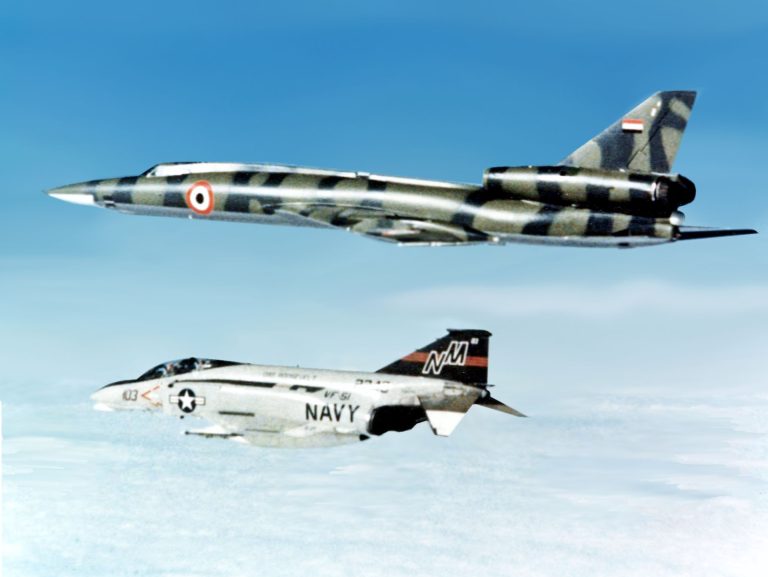
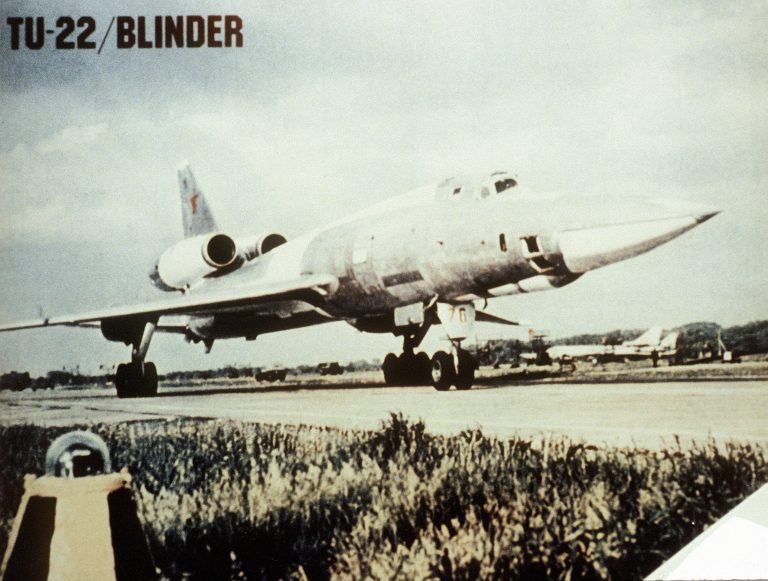
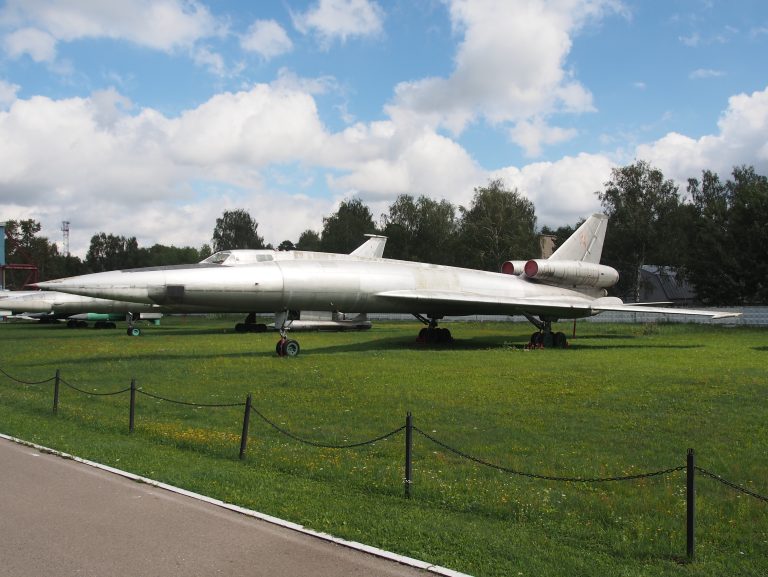
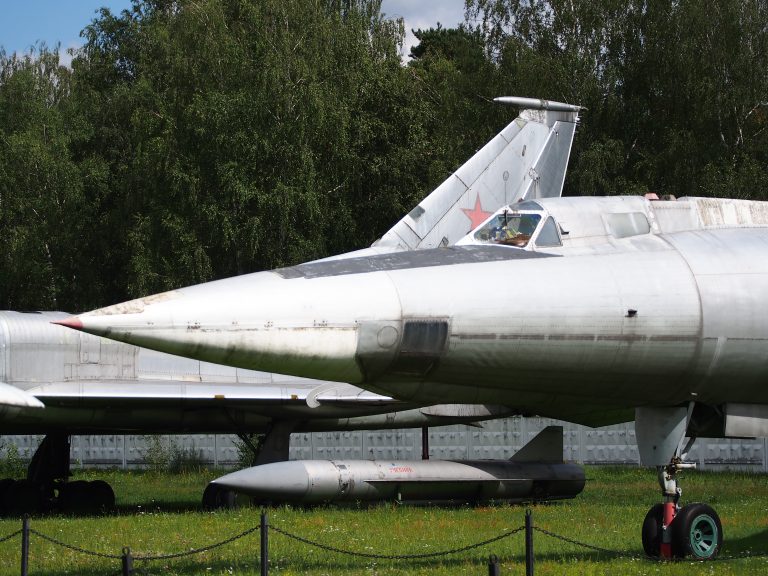
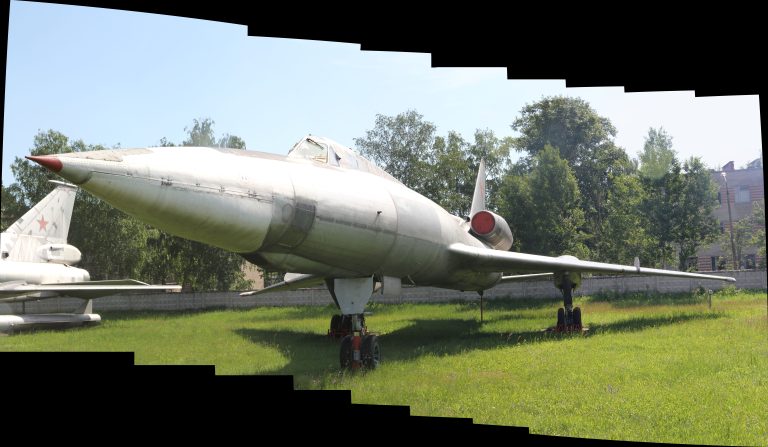
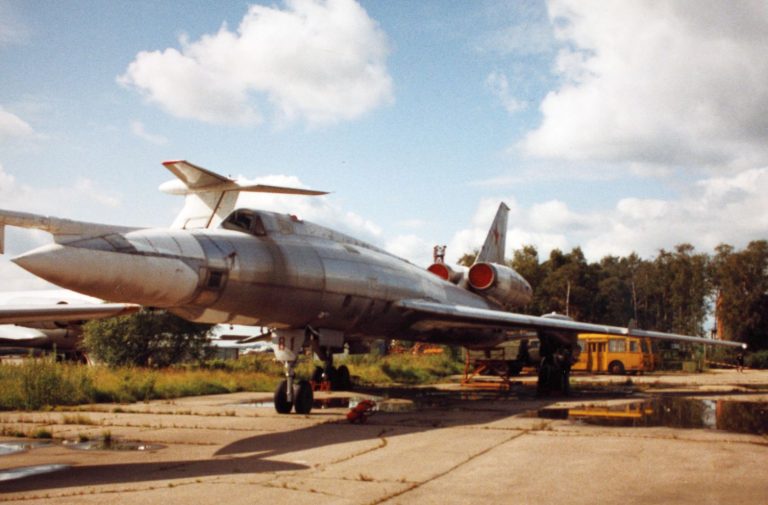
The Tu-22 Blinder in motion
A curated video feature for the Tu-22 Blinder is coming soon. In the meantime, explore the photo gallery above and the operations map below.
Where the Tu-22 flew
The record that defines it
The Tu-22 was a bomber, not a fighter, and holds no aerial victories. In Soviet service its combat use was limited, and the type is remembered as much for its accident record as for its missions. The Blinder’s only significant action came in the hands of its two export customers: Libyan aircraft were used against Tanzania in 1979 and over Chad in the 1980s, with often negligible military results and several losses, while Iraq flew long-range raids on Iranian cities during the Iran–Iraq War. Both campaigns caused civilian harm and cost airframes, and neither is remembered as a military success. Presented here as historical record, without endorsement.
Compare the combat record of every military aircraft. Figures as of July 2026.
Everything people ask about the Tu-22 Blinder
Can I fly in a Tu-22?
Is the Tu-22 the same as the Tu-22M “Backfire”?
How fast was the Tu-22?
Why are the engines mounted on the tail?
What missile did the Tu-22K carry?
Why did the Tu-22 have such a bad reputation?
You can’t fly the Tu-22.
These, you can.
Some legends only live in museums — others are fuelled and waiting. MiGFlug has put civilians in real military jet cockpits since 2004.
 Fly the L-39 AlbatrosThe world’s most-flown jet trainer — aerobatics included
 Fly the F-104 Starfighter“The missile with a man in it”
 Fly the MiG-21The Cold War’s most-produced jet
 Fly the T-33 Shooting StarAmerica’s first jet trainer
 Fly the DH VampireA piece of early jet history
 Fly the S.211Agile Italian jet trainer
 Fly the MB-326The classic Aermacchi jet
 Fly the MiG-15The Soviet legend of the Korean War
Continue the tour
Every fact, checked
- GlobalSecurity.org — Tu-22 BlinderDevelopment, Kazan production, service dates and the tail-mounted engine layout.
- GlobalSecurity.org — Tu-22 variantsVariant-by-variant breakdown of the Tu-22B, K, R, P and U models.
- Federation of American Scientists — Tu-22 BlinderFirst flight, prototypes, specifications and assessment as a Tu-16 successor.
- Defense Express — the first Soviet supersonic bomberAccident record, the “Shilo” nickname, downward ejection and cockpit ergonomics.
- MilitaryFactory — Tupolev Tu-22 (Blinder)Dimensions, RD-7M2 thrust, top speed, production total and public debut.
- AirVectors (Greg Goebel) — Tu-22 Blinder & Tu-22M BackfireDetailed development and service narrative, and the Blinder-versus-Backfire distinction.
- GlobalMilitary.net — Tu-22 BlinderLibyan use over Chad, Iraqi deliveries and war losses, and Ukrainian retirement.
- MilAvia — Tu-22 specificationsConsolidated specification tables for cross-checking the hedged figures above.