
AIDC F-CK-1 Ching-Kuo
Taiwan’s Indigenous Defence Fighter — the home-grown multirole jet the island built when it could not buy modern fighters abroad, and still a pillar of its air defence today alongside the F-16 and Mirage 2000.
הסיפור
The AIDC F-CK-1 Ching-Kuo: the fighter Taiwan had to build itself
The AIDC F-CK-1 Ching-Kuo is a fighter born of necessity. In the 1980s Taiwan found itself unable to buy the modern combat aircraft it needed from abroad, its usual supplier constrained by diplomacy. Rather than go without, the island set out to design and build its own advanced fighter — and, with substantial quiet help from American industry, it succeeded. The result, the Indigenous Defence Fighter, or IDF, gave Taiwan a home-grown fourth-generation multirole jet and remains, decades later, one of the three pillars of its air defence.
The political backdrop is inseparable from the aircraft. In 1979 the United States switched its formal diplomatic recognition from the Republic of China on Taiwan to the People’s Republic of China on the mainland, and a subsequent joint communiqué in 1982 committed Washington to gradually reducing its arms sales to Taiwan. With advanced Western fighters such as the F-16 effectively off the table at the time, Taiwan’s government concluded that it would have to develop a modern fighter of its own. The programme that followed was a matter of national self-reliance as much as of engineering.
The urgency was real. Taiwan’s fighter fleet in the early 1980s leaned heavily on ageing types such as the F-104 Starfighter and the F-5, aircraft increasingly outmatched by the modernising forces across the strait. Without a way to buy their replacements, the island faced a widening capability gap in the one domain — the airspace over and around the Taiwan Strait — where it could least afford to fall behind. The Indigenous Defence Fighter was conceived as the answer to that gap.
“The fighter Taiwan built when it could not buy one — an indigenous jet with a great deal of quiet American help.”— the Ching-Kuo’s place in history, in a sentence
The work was led by AIDC, the Aerospace Industrial Development Corporation, Taiwan’s state aerospace company. But the IDF was never a purely solo effort. Although a full sale of complete fighters was politically impossible, American companies were permitted to provide extensive technical assistance, and they did. General Dynamics — makers of the F-16 — advised on the airframe and aerodynamics; the engine grew from a collaboration with the American firm Garrett; and the radar drew on Westinghouse technology. The Ching-Kuo is best understood as an indigenous design shaped and enabled by deep American input, which is exactly why it looks, to many eyes, like a cousin of the F-16 and the Northrop F-20.
To manage such an ambitious undertaking, the programme was divided into four coordinated sub-projects, each with its own codename: one for the airframe, one for the engine, one for the avionics and radar, and one for the weapons. This structure let Taiwan and its American partners develop the aircraft’s major systems in parallel, and it produced not just a fighter but an entire supporting ecosystem of engines, sensors and missiles — a remarkable achievement for a first indigenous combat aircraft.
For AIDC and Taiwan’s wider industry, the programme was a crash course in advanced aerospace. Building a modern fighter demanded mastery of composite structures, digital flight controls, radar integration and much else the island had never before attempted. The IDF effort forced the creation of an entire domestic aerospace capability more or less from scratch — skills, tools and facilities that would outlast the aircraft itself and underpin Taiwan’s later aviation projects.
The aircraft that emerged was a compact, twin-engined multirole fighter. Power came from two ITEC TFE1042 turbofans — also known by the military designation F125 — a small but capable engine developed jointly by AIDC and Garrett. Its nose housed the GD-53 “Golden Dragon” pulse-Doppler radar, derived from American technology, giving the fighter a genuine beyond-visual-range capability. And crucially, Taiwan developed its own weapons to go with it: the Tien Chien, or “Sky Sword”, family of air-to-air missiles — the short-range, infrared-guided Sky Sword I and the radar-guided, longer-ranged Sky Sword II — alongside a built-in cannon.
In the air the Ching-Kuo is a modern, fly-by-wire fighter — agile and responsive, if not as powerful as the heavyweight twin-engined fighters of larger air forces. Its relatively small size and light weight make it quick to get airborne and nimble in close combat, qualities well suited to the rapid-scramble interception role at the heart of Taiwan’s defensive posture, where reaction time can matter as much as raw range or payload.
The fighter was named Ching-Kuo in honour of Chiang Ching-kuo, the President of the Republic of China who had launched the programme and who died in 1988, the year before the aircraft first flew. The prototype took to the air in 1989, and after a development effort that included the loss of a prototype, the Ching-Kuo entered service with the Republic of China Air Force in the mid-1990s. Around 130 were built, equipping front-line fighter wings tasked with defending Taiwanese airspace.
The first flight, in 1989, was a moment of considerable national pride — visible proof that Taiwan could design and build a modern fighter, and a public statement of resolve at a tense point in its history. That symbolism mattered almost as much as the hardware itself. An indigenous fighter said something about the island’s determination and technical capability that no imported aircraft, however capable, ever quite could.
Its arrival changed Taiwan’s strategic calculus. Ironically, the very success of the IDF programme — demonstrating that Taiwan could and would build its own fighters — is often credited with helping to loosen the constraints on foreign sales. In the early 1990s the United States approved the sale of F-16s to Taiwan, and France sold it Mirage 2000s. The island suddenly had three modern fighter types instead of none, and the planned production run of the home-grown Ching-Kuo was cut back accordingly. The IDF had, in a sense, succeeded twice over: as an aircraft, and as a lever.
Rather than being sidelined by its foreign fleetmates, the Ching-Kuo settled in alongside them as part of a layered defence. Taiwan operated the F-16, the Mirage 2000 and the IDF together, each with its strengths, giving the air force flexibility and resilience — no single supplier or type could be a single point of failure. The indigenous fighter, fully under Taiwan’s own control for maintenance, upgrades and weapons integration, offered a security of supply that imported aircraft never could.
None of this is to overstate the aircraft. The Ching-Kuo is a light fighter with modestly powered engines and limited range and payload compared with heavier types, reflecting both the constraints under which it was built and its primary role as a short-notice interceptor defending nearby airspace rather than a long-range strike platform. Taiwan understood these trade-offs. The IDF was designed to do a specific job over a specific patch of sky, under wholly national control — not to out-match the largest fighters in every measure.
That control paid off in the aircraft’s later life. From the late 2000s Taiwan carried out a mid-life upgrade, producing the improved F-CK-1C and F-CK-1D variants. The upgrade brought better avionics, more capable mission systems, additional weapons capacity and other refinements, keeping the design relevant well into the twenty-first century. Being able to modernise its own fighter on its own timetable, without needing anyone else’s permission, was precisely the kind of independence the whole programme had been created to secure.
The expertise built up around the Ching-Kuo did not stop with the fighter. The design, engine and systems knowledge accumulated through the IDF programme fed directly into Taiwan’s later indigenous aircraft, most notably an advanced jet trainer that draws heavily on Ching-Kuo heritage. In that sense the fighter’s greatest legacy may be not the roughly 130 airframes themselves but the enduring national capability to design, build and sustain combat aircraft — exactly the strategic independence the programme was created to secure.
Today the Ching-Kuo remains in front-line service, a core part of the Republic of China Air Force’s fighter force in an era of heightened tension across the Taiwan Strait. It flies regular air-defence and interception missions, and it continues to serve alongside Taiwan’s F-16s and Mirage 2000s. For an aircraft conceived because a small, diplomatically isolated island could not buy the fighters it needed, the Ching-Kuo has more than justified itself — a testament to what determined self-reliance, and a great deal of quiet international cooperation, can achieve.
01Political origins: the arms constraints and self-reliance+
The Ching-Kuo exists because of diplomacy. After the United States switched formal recognition from Taipei to Beijing in 1979, and a 1982 joint communiqué committed Washington to gradually reducing arms sales to Taiwan, the island found it could no longer readily buy the advanced Western fighters it wanted — the F-16, at that point, was not available to it.
Faced with an ageing fighter fleet and no easy way to replace it, Taiwan’s leadership decided to build a modern fighter domestically. The IDF programme was therefore as much a political and strategic project as a technical one: an assertion that Taiwan could provide for its own defence even when cut off from its usual sources of advanced weaponry.
02American technical assistance behind an “indigenous” fighter+
Although complete fighters could not be sold, American firms were allowed to provide extensive technical help, and this assistance was central to the IDF’s success. General Dynamics, the maker of the F-16, advised on the airframe and aerodynamics; the American company Garrett partnered on the engine; and the radar drew on Westinghouse technology and know-how.
This is the key to understanding the aircraft. “Indigenous” is accurate in that Taiwan designed, integrated and built the fighter and owns it outright — but it did so with deep American input that let it leapfrog the long, expensive learning curve of first-generation fighter development. The Ching-Kuo is a genuine product of Taiwanese industry, enabled by a discreet transatlantic partnership.
03Why it looks like an F-16 or F-20+
Many observers notice that the Ching-Kuo bears a family resemblance to the General Dynamics F-16 and the Northrop F-20 Tigershark. This is no coincidence: General Dynamics’ involvement in the airframe design, and the wider American assistance, naturally drew on contemporary US fighter thinking.
The result is an aircraft that blends familiar elements — a blended wing-body, leading-edge root extensions and a bubble canopy reminiscent of the F-16 — with its own distinctive features, notably its two engines rather than the F-16’s one, and its own nose and intake arrangement. It is its own aircraft, but its lineage in 1980s American fighter design is plain to see, and entirely by design.
04The four sub-programmes: airframe, engine, avionics, weapons+
Developing a fighter and all its systems from a standing start is enormously complex, so the IDF effort was organised into four coordinated sub-projects, each with its own codename — one for the airframe, one for the engine, one for the avionics and radar, and one for the weapons. Each could progress in parallel, drawing on the relevant American partners.
This structure was a large part of why the programme worked. Rather than a single monolithic project, it was a set of linked efforts that together delivered not just an airframe but a complete weapon system: engine, radar and indigenous missiles all developed alongside the aircraft. Few first attempts at a national fighter have produced so complete an ecosystem.
05The ITEC TFE1042 (F125) twin turbofans+
The Ching-Kuo is powered by two ITEC TFE1042-70 afterburning turbofans, carrying the military designation F125. The engine was developed by ITEC, a joint venture between AIDC and the American firm Garrett, growing out of an existing small turbofan design uprated and fitted with an afterburner for fighter use.
Two engines was a deliberate choice for an island air force whose fighters would often fly over water: the redundancy of a twin-engined layout offers a margin of safety if one engine fails. The F125 is modest in thrust compared with the engines of larger fighters, which makes the Ching-Kuo a relatively light, compact aircraft — but it is well matched to the interceptor and air-defence role for which the fighter was primarily designed.
06The GD-53 “Golden Dragon” radar+
At the heart of the Ching-Kuo’s combat capability is the GD-53 “Golden Dragon” radar, a multimode pulse-Doppler set derived from American radar technology of the era. It gave the fighter the ability to detect and engage targets at beyond-visual range, look down against low-flying targets, and support both air-to-air and air-to-ground modes.
A capable radar was essential to the whole point of the aircraft: intercepting incoming threats before they reached Taiwanese airspace. Paired with the indigenous Sky Sword II radar-guided missile, the Golden Dragon radar gave the Ching-Kuo a genuine beyond-visual-range punch — a modern combat capability that Taiwan now controlled entirely for itself.
07Tien Chien (Sky Sword) I and II missiles+
One of the IDF programme’s most important achievements was that Taiwan developed its own air-to-air missiles to arm the fighter. The Tien Chien, or “Sky Sword”, family came in two main types: the Sky Sword I, a short-range, infrared-homing dogfight missile broadly comparable in concept to the Sidewinder, and the Sky Sword II, a longer-ranged, radar-guided missile for beyond-visual-range engagements.
This mattered enormously for self-reliance. A fighter is only as good as the weapons it can carry, and by fielding its own missiles Taiwan ensured that its indigenous fighter would not be left toothless if supplies of foreign weapons were cut off. Together with a built-in cannon, the Sky Sword missiles gave the Ching-Kuo a complete, home-controlled air-combat armament.
08Named for President Chiang Ching-kuo+
The fighter’s name honours Chiang Ching-kuo, President of the Republic of China, who had championed the indigenous fighter programme as part of his drive to strengthen Taiwan’s self-defence. He died in January 1988, the year before the aircraft first flew, and the fighter was named in his memory — hence “Ching-Kuo”.
The name underlines how closely the aircraft was tied to Taiwan’s national identity and its determination to stand on its own. This was not merely a piece of military hardware but a symbol of the island’s resolve to provide for its own security, carrying the name of the leader who had set that course.
09First flight in 1989 and service entry+
The first Ching-Kuo prototype flew in 1989. The flight-test programme was demanding and not without cost — a prototype was lost during development — but the aircraft was steadily proven and refined. It entered service with the Republic of China Air Force in the mid-1990s, with the type reaching operational units and forming dedicated fighter wings.
For Taiwan, getting the aircraft from a blank sheet to an operational fighter in roughly a decade, while simultaneously developing its engine, radar and missiles, was a formidable industrial accomplishment. The Ching-Kuo gave the island a modern fighter under its own control at exactly the moment it most needed one.
10ROCAF service, numbers and the F-16 effect+
Around 130 Ching-Kuos were built. That the number was not higher is itself part of the story: the IDF programme is widely credited with helping to change the diplomatic weather, and in the early 1990s the United States approved the sale of F-16s to Taiwan while France supplied Mirage 2000s. With modern imported fighters suddenly available, the planned IDF production run was trimmed.
Far from making the Ching-Kuo redundant, this gave Taiwan a diverse, three-type fighter force. The IDF took its place as the fully home-controlled element of that force, equipping front-line wings and sharing the air-defence burden with its foreign-built fleetmates. Its numbers were modest, but its strategic value — as a fighter no foreign government could switch off — was considerable.
11The F-CK-1C/D mid-life upgrade+
From the late 2000s, Taiwan carried out a mid-life upgrade of its Ching-Kuo fleet, producing the improved F-CK-1C (single-seat) and F-CK-1D (two-seat) variants. The upgrade brought more capable avionics and mission computers, enhanced weapons capacity, additional fuel and other refinements, substantially improving the aircraft’s effectiveness.
The upgrade demonstrated the enduring value of owning the design. Taiwan could plan, fund and execute the modernisation on its own schedule and to its own requirements, integrating new weapons and systems without needing another country’s approval. For a nation whose whole reason for building the fighter was independence of supply, the ability to upgrade it freely was the programme’s promise fulfilled.
12Role in Taiwan’s layered air defence+
The Ching-Kuo is one of three fighter types that form the backbone of the Republic of China Air Force, flying alongside the F-16 and the Mirage 2000. Each type has its own strengths, and operating all three gives Taiwan flexibility and resilience — a diversity that means no single supplier, spare-parts pipeline or technical problem can ground the whole fighter force at once.
Within this mix, the IDF handles a core share of air-defence and interception duties, scrambling to meet incursions and standing ready to defend the island’s airspace. As the fully indigenous element, it also serves as the foundation on which Taiwan continues to build its own aerospace expertise, informing later domestic projects such as advanced trainers.
13The cross-strait context, factually+
The Ching-Kuo cannot be understood apart from the long-running political dispute across the Taiwan Strait. The People’s Republic of China regards Taiwan as part of its territory, while Taiwan has governed itself since 1949; the resulting tension has shaped the island’s defence policy for decades. It was this environment — and the diplomatic isolation that came with it — that made an indigenous fighter necessary in the first place.
We describe this context factually and take no position on the underlying dispute. What is relevant to the aircraft is straightforward: heightened tension across the strait keeps Taiwan’s air-defence needs acute, and the Ching-Kuo, as a home-built fighter beyond the reach of any foreign supplier’s veto, occupies a particular place in the island’s calculations. It remains an active front-line type in a sensitive strategic setting.
Design & Engineering
How the Ching-Kuo was built: an indigenous fighter with international roots
Taiwan designed, integrated and built the IDF itself, but did so with deep American technical help — producing a compact twin-engined multirole fighter with its own radar and its own missiles.
Compact twin-jet
A light, blended wing-body multirole fighter powered by two ITEC F125 turbofans — twin-engine redundancy suited to an island air force flying over water.
Home-controlled sensors & arms
The GD-53 Golden Dragon radar and the indigenous Tien Chien (Sky Sword) I and II missiles gave Taiwan a complete air-combat system it owned outright.
Indigenous, with US input
Designed and built by AIDC with technical help from General Dynamics, Garrett and Westinghouse — hence its family resemblance to the F-16 and F-20.
מפרט טכני
AIDC F-CK-1 Ching-Kuo specifications: dimensions, performance and cost
| סוּג | Single-seat (and two-seat) multirole fighter |
| צוות | 1 (F-CK-1A/C) or 2 (F-CK-1B/D) |
| מֶשֶׁך | ~14.2 m (46 ft 7 in) — approx. |
| מוּטַת כְּנָפַים | ~9.0 m (29 ft 6 in) — approx. |
| גוֹבַה | ~4.7 m (15 ft 5 in) — approx. |
| משקל ריק | ~6,500 kg (~14,300 lb) — approx. |
| Max takeoff weight | ~12,250 kg (~27,000 lb) — approx. |
| Engines | 2 × ITEC TFE1042-70 (F125) afterburning turbofans |
| Max speed | ~Mach 1.8 (~1,275 mph / ~2,050 km/h) — approx. |
| רדיוס לחימה | ~1,000 km — approx., varies by mission |
| תקרת השירות | ~16,800 m (~55,000 ft) — approx. |
| Radar | GD-53 “Golden Dragon” pulse-Doppler |
| הְתחַמְשׁוּת | 1 × 20mm cannon; Tien Chien (Sky Sword) I & II air-to-air missiles; bombs & other stores |
| First flight | 1989 (prototype) |
| Introduced | mid-1990s (ROCAF) |
| Number built | ~130 (plus F-CK-1C/D upgrades) |
| Operators | Taiwan (Republic of China Air Force) — only operator |
| Unit / programme cost | not reliably comparable in public sources |
| Cost per flight hour | not reliably recorded |
14The Ching-Kuo’s variants, from F-CK-1A to F-CK-1D+
The Ching-Kuo family is straightforward. The original production versions were the single-seat F-CK-1A and the two-seat F-CK-1B, the latter used for conversion training and some operational roles while retaining combat capability. The mid-life upgrade then produced the improved F-CK-1C (single-seat) and F-CK-1D (two-seat) variants.
There are no export sub-types, because the aircraft has never been exported, and no wildly divergent specialised versions — the family is a clean progression from the initial A/B fighters to the upgraded C/D standard. This tidy lineage reflects a type built by, and only for, a single air force with a very specific and consistent mission.
15The AIDC F-CK-1’s cost: what the records show+
Reliable, directly comparable cost figures for the Ching-Kuo are not readily available in public sources. It was developed and procured within Taiwan’s national defence programme, and the way such costs are reported does not translate cleanly into the kind of per-unit price often quoted for aircraft sold on the international market. The mid-life upgrade programme was a further, separately funded investment.
Rather than repeat a misleading figure, we list the cost fields here with caution. What can reasonably be said is that developing an entire fighter — airframe, engine, radar and missiles — from a low industrial base was a major national investment, and that the resulting security of supply and indigenous capability were as much the point as the cost per aircraft.
16The Ching-Kuo among indigenous fighters+
The Ching-Kuo belongs to a small club of fighters designed by nations seeking independence from foreign suppliers, and it is instructive to compare it with peers such as India’s HAL Tejas. Like the Tejas, the IDF was a first-generation national fighter developed under constraints, drawing on foreign technical help while aiming for domestic control of the finished product.
Where the Ching-Kuo stands out is in how quickly it reached service and how complete its supporting ecosystem was, with an indigenous engine collaboration, radar and missiles all fielded together. It was not the most powerful fighter of its generation, but as a demonstration that a diplomatically isolated island could build and sustain a modern combat aircraft, it succeeded emphatically.
17Seeing the Ching-Kuo today+
Because the Ching-Kuo remains an active front-line fighter, the place to see it is in Taiwan, where it serves with the Republic of China Air Force. It appears at Taiwanese air-force open days and displays, and preserved or display examples can be found at sites associated with the ROCAF and Taiwan’s aerospace industry.
As a still-serving type flown only by Taiwan, the Ching-Kuo is not scattered across museums worldwide the way retired Cold War types are. It is very much a living aircraft, and encountering one means encountering the working Taiwanese air force — a reminder that this is not a historical curiosity but a fighter still standing guard.
Timeline
The AIDC F-CK-1 Ching-Kuo through the years
The United States switches formal recognition from Taipei to Beijing, beginning the constraints on arms sales that would drive the IDF programme.
A US–PRC joint communiqué commits Washington to gradually reducing arms sales to Taiwan, pushing the island toward self-reliance.
Taiwan launches the Indigenous Defence Fighter programme under AIDC, split into four sub-projects with American technical assistance.
President Chiang Ching-kuo, who launched the programme, dies; the fighter is named in his memory.
The first Ching-Kuo prototype takes to the air, beginning the flight-test programme.
With the IDF proving Taiwan’s resolve, the US approves F-16 sales and France supplies Mirage 2000s; planned IDF numbers are trimmed.
The Ching-Kuo enters service with the Republic of China Air Force, equipping front-line fighter wings.
Around 130 aircraft are built, completing the initial production run of single- and two-seat fighters.
Taiwan upgrades the fleet to the improved F-CK-1C/D standard, with better avionics, systems and weapons capacity.
The Ching-Kuo remains in front-line ROCAF service alongside the F-16 and Mirage 2000 amid heightened cross-strait tension.
Stories & Eyewitnesses
The AIDC F-CK-1 Ching-Kuo in stories: the moments that defined it
The fighter Taiwan built when it could not buy one, with quiet American help, its own radar and missiles, and a lasting place in the island’s layered air defence — the Ching-Kuo’s history told through the moments that stuck.
Necessity
Built, not bought
Taiwan couldn’t buy modern fighters abroad.
After the US shifted recognition to Beijing and agreed to curb arms sales, Taiwan could not readily buy fighters like the F-16 — so it built its own.
The IDF was a project of national self-reliance as much as engineering.
Quiet Help
American input
Indigenous, but with deep US assistance.
Full fighter sales were blocked, but General Dynamics, Garrett and Westinghouse were allowed to provide extensive technical help.
Taiwan designed and owns the aircraft — enabled by a discreet transatlantic partnership.
Resemblance
An F-16 cousin
Why it looks like an F-16 or F-20.
With General Dynamics advising on the airframe, the Ching-Kuo drew on contemporary US fighter thinking — hence its F-16/F-20 family look.
But it has two engines, and its own nose and intakes: its own aircraft.
Four Projects
A complete system
Airframe, engine, avionics, weapons.
The programme was split into four sub-projects, developing the airframe, engine, radar and missiles in parallel.
It produced not just a fighter but a whole home-grown weapon system.
Twin Turbofans
The F125 engine
Two ITEC/Garrett turbofans.
Power comes from two ITEC TFE1042 (F125) turbofans, developed with the American firm Garrett.
Twin engines gave welcome redundancy for a fighter flying over water.
Golden Dragon
Its own radar
The GD-53 pulse-Doppler radar.
The GD-53 “Golden Dragon” radar, derived from US technology, gave the fighter a genuine beyond-visual-range capability.
Essential for intercepting threats before they reached Taiwanese airspace.
Sky Sword
Home-built missiles
Tien Chien I and II.
Taiwan built its own missiles: the infrared Sky Sword I and the radar-guided Sky Sword II, plus a cannon.
A fighter with home-controlled weapons could not be left toothless by an embargo.
The Name
For a president
Named after Chiang Ching-kuo.
The fighter honours President Chiang Ching-kuo, who launched the programme and died in 1988, the year before it flew.
A symbol of Taiwan’s resolve to provide for its own defence.
1989
First flight
From blank sheet to the air.
The prototype flew in 1989; despite the loss of one aircraft in testing, the type was proven and entered service in the mid-1990s.
A formidable industrial feat for a first indigenous fighter.
The Lever
It changed the weather
The IDF helped unlock the F-16 sale.
By proving Taiwan would build its own fighters, the IDF is credited with helping loosen the constraints — the US soon approved F-16s, France sold Mirage 2000s.
Planned IDF numbers were trimmed as a result — the programme succeeded twice over.
Upgraded
The C/D standard
A mid-life upgrade on Taiwan’s terms.
From the late 2000s the fleet was upgraded to F-CK-1C/D standard — better avionics, systems and weapons.
Modernising its own fighter, on its own schedule, was the whole point of owning it.
Three Types
Layered defence
Flying with the F-16 and Mirage 2000.
The Ching-Kuo serves alongside the F-16 and Mirage 2000, giving Taiwan a diverse, resilient fighter force.
As the home-built element, it is the fighter no foreign government can switch off.
On Guard
Still serving
A front-line fighter today.
The Ching-Kuo remains in active ROCAF service, flying air-defence and interception missions amid heightened cross-strait tension.
Not a museum piece, but a fighter still standing guard.
Photo Gallery
The AIDC F-CK-1 Ching-Kuo in photographs
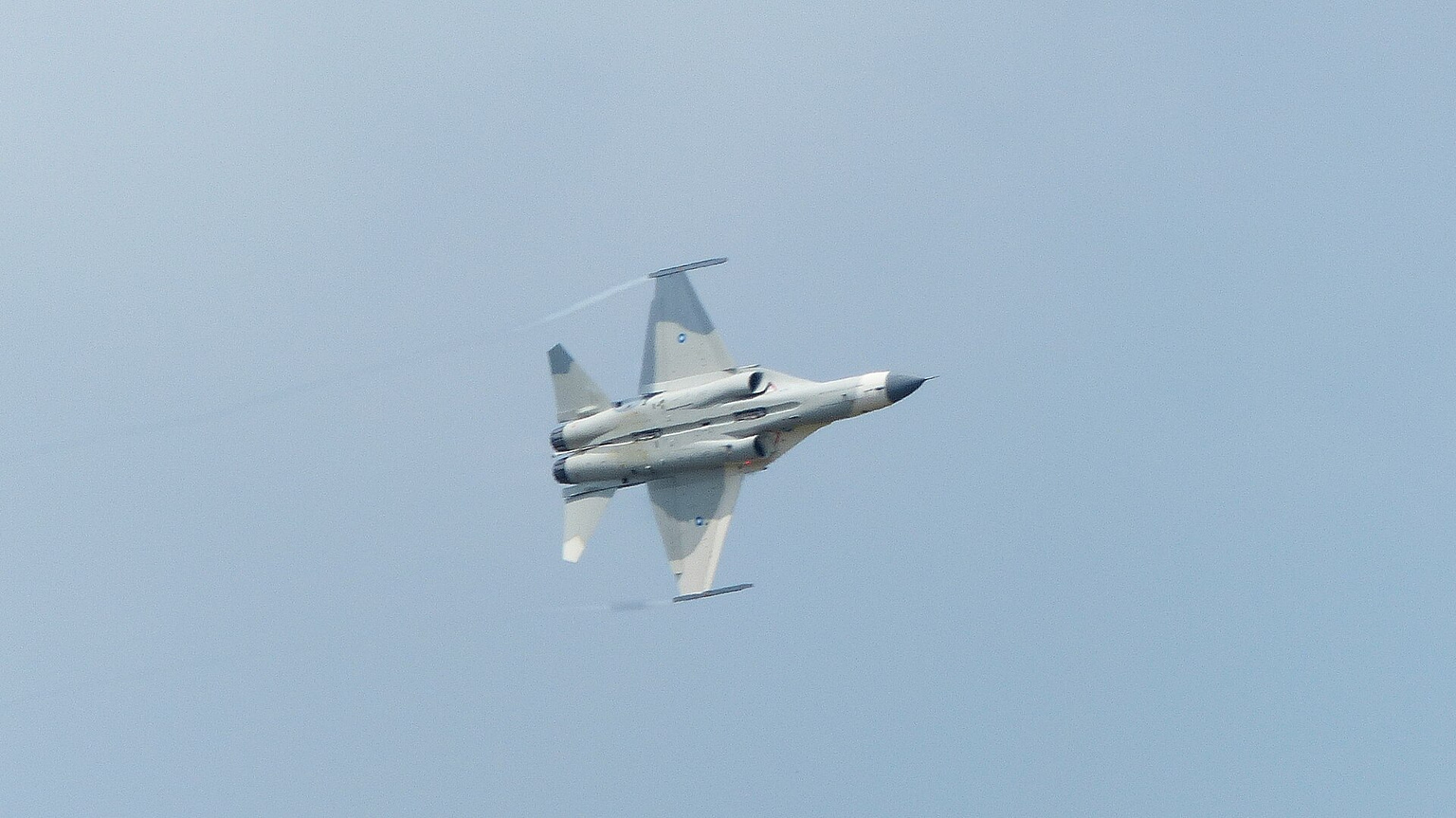
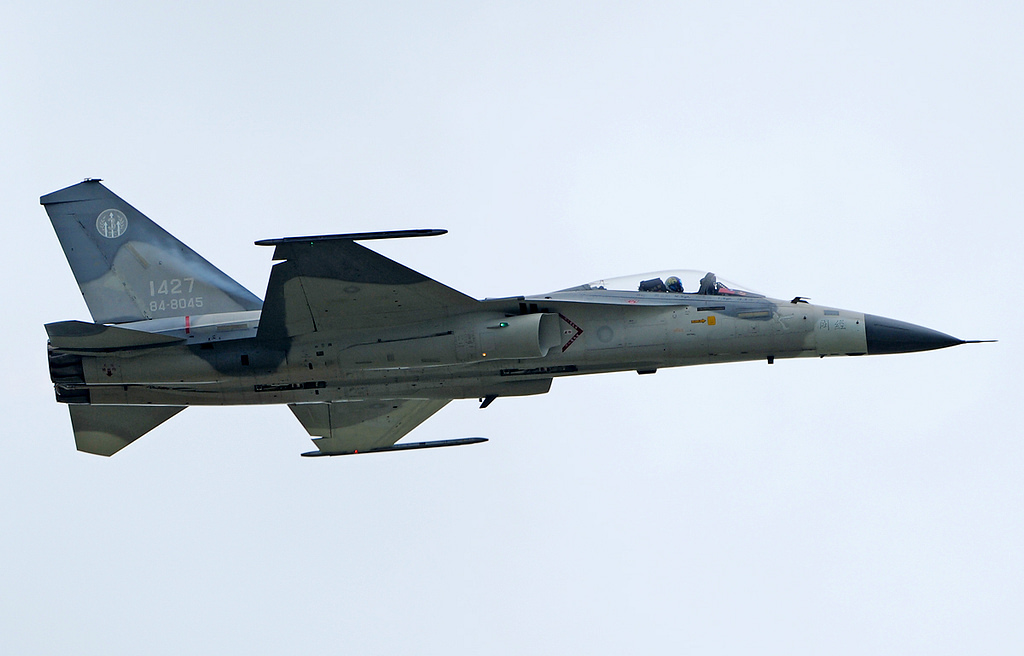
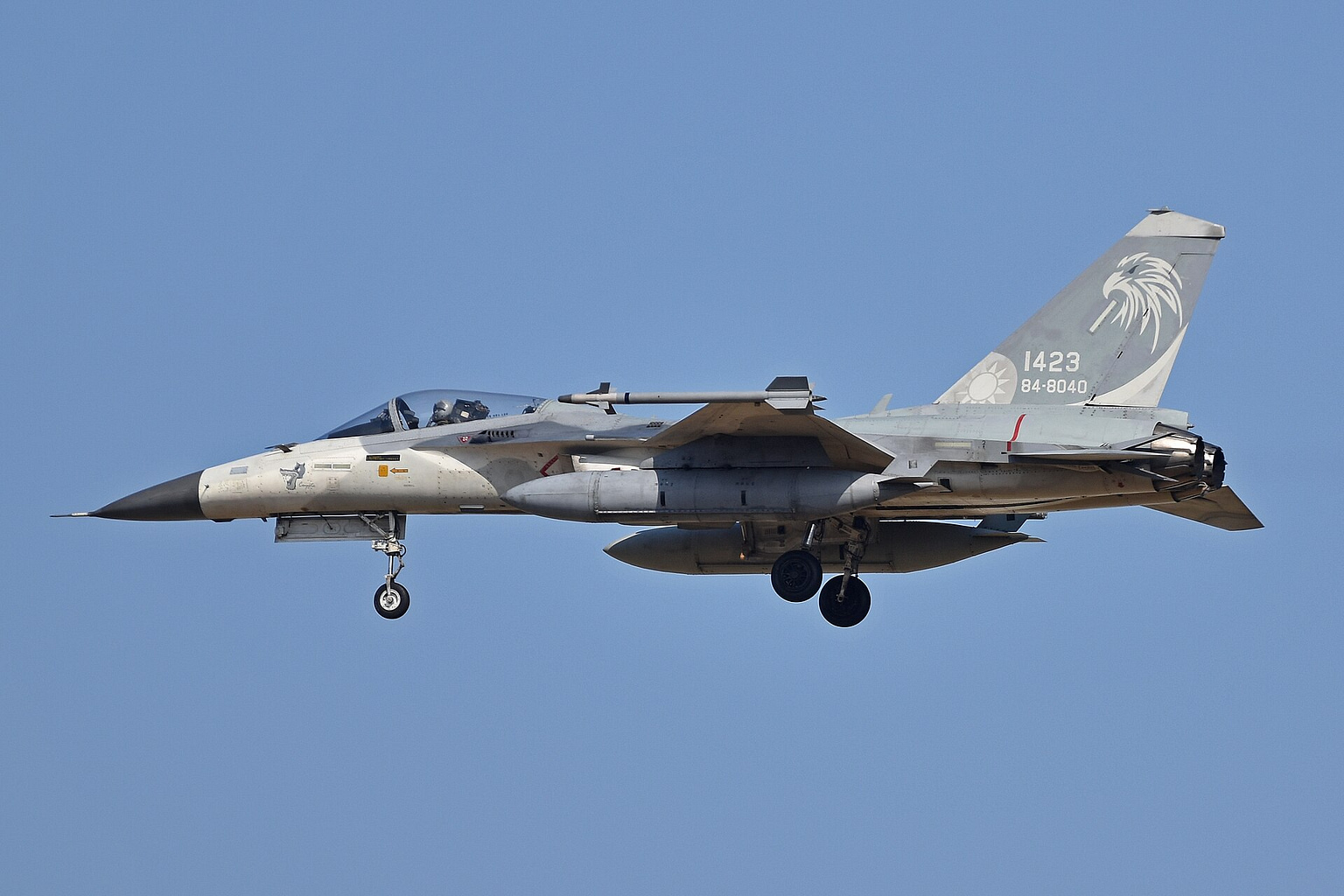
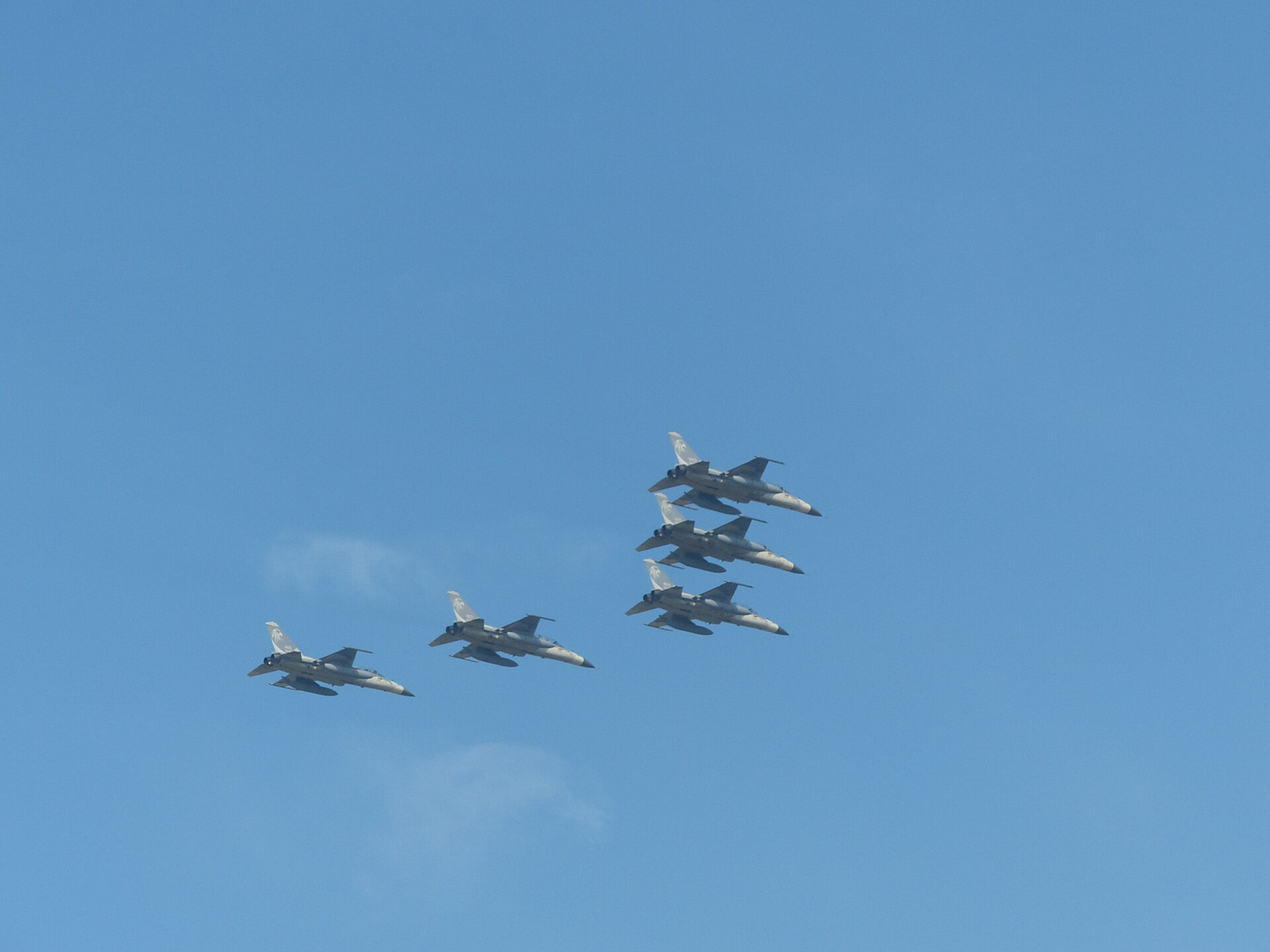
Photographs of the Ching-Kuo in Republic of China Air Force service, each credited to its source and licence. Click any photo to enlarge.
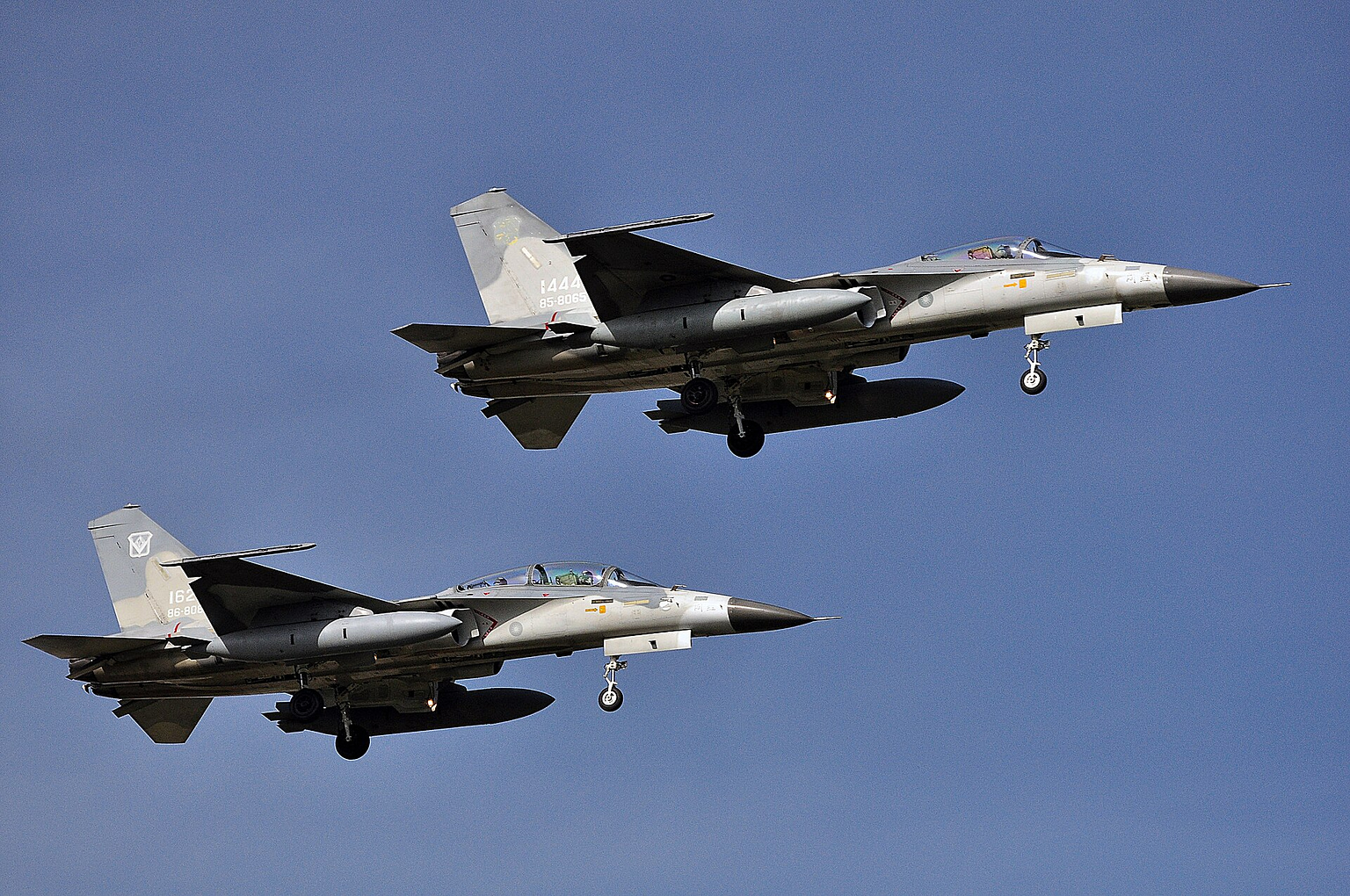
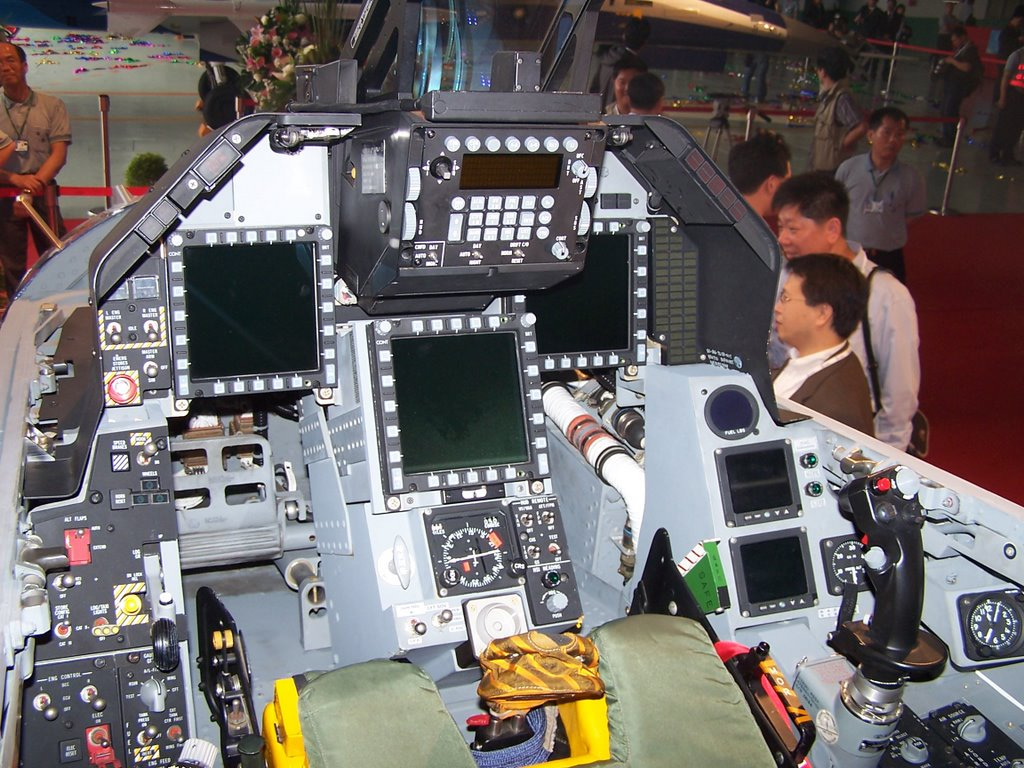
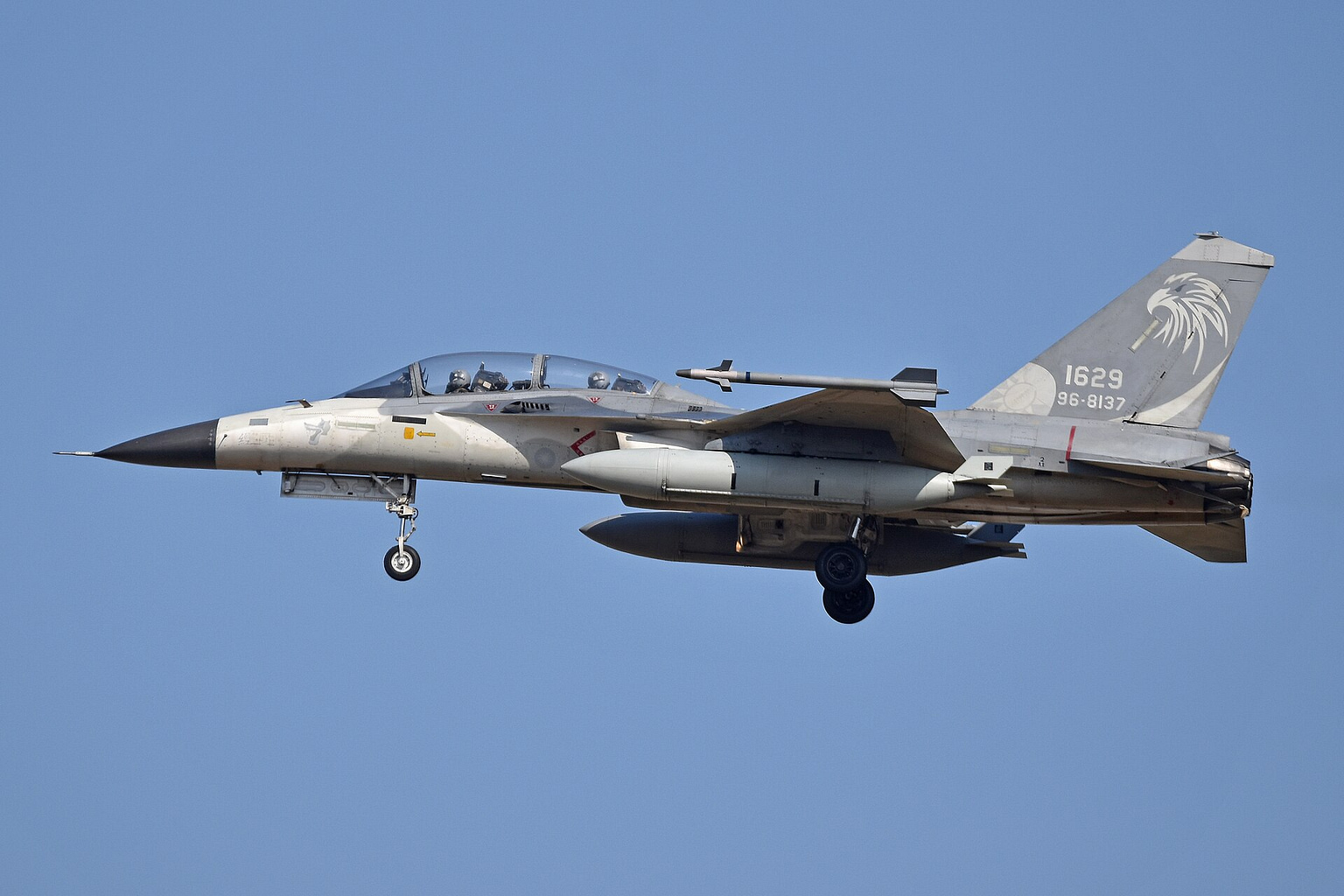
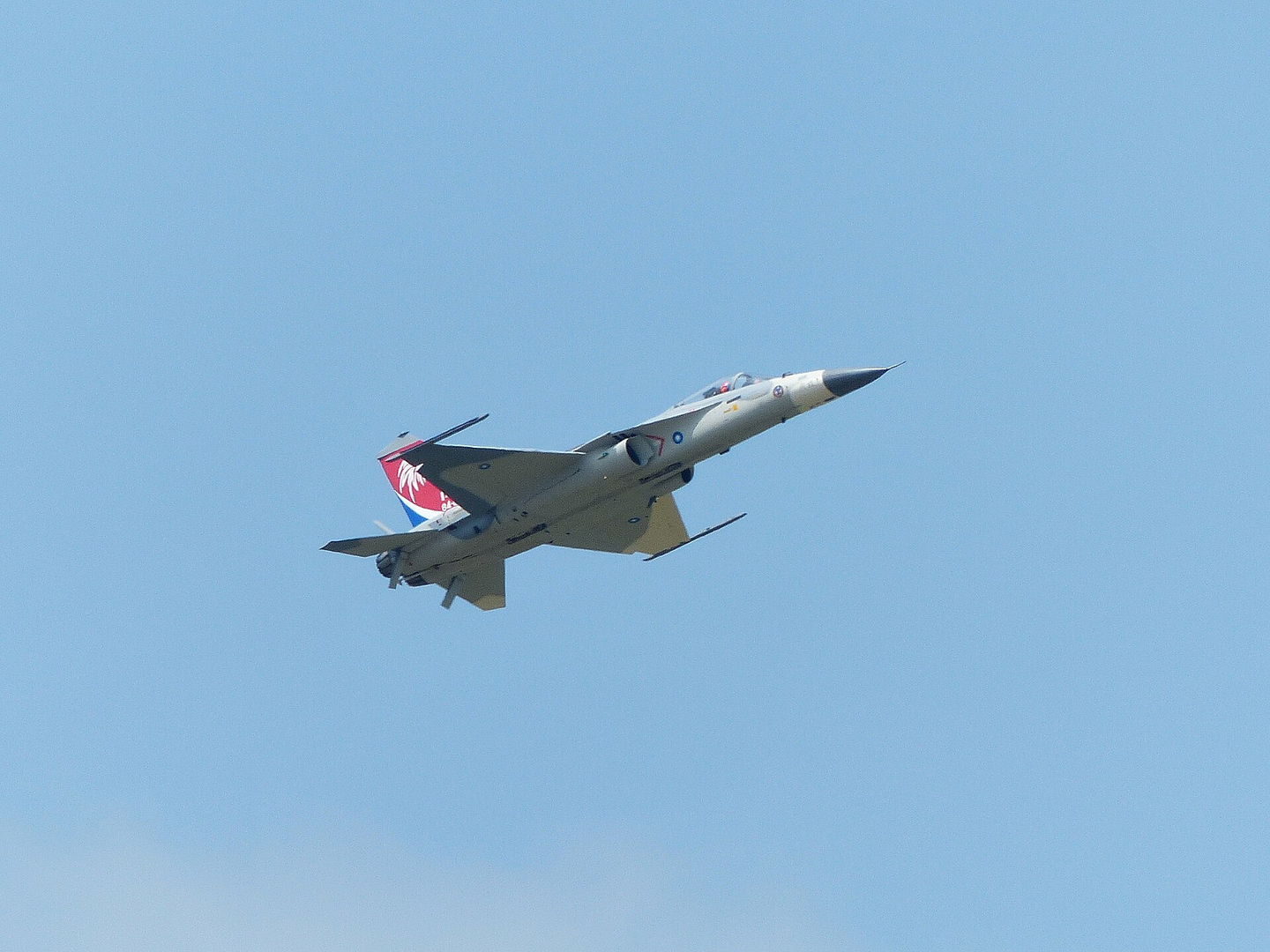
On Film
The AIDC F-CK-1 Ching-Kuo on video: Taiwan’s indigenous fighter
A look at the AIDC F-CK-1 Ching-Kuo — the story of Taiwan’s Indigenous Defence Fighter, its design and its role in the island’s air defence.
“AIDC F-CK-1 Ching-Kuo | Can the Indigenous Defense Fighter” by Weapon Detective (approx. 95,000 views at time of writing; running time ~15 minutes) — a documentary on Taiwan’s indigenous fighter, its origins and its capability.
Operations Overview
Where the AIDC F-CK-1 Ching-Kuo flies: an operator map
Designed, built and flown by Taiwan alone. The Ching-Kuo has never been exported — every aircraft serves the Republic of China Air Force — so this is a single-nation map. Hover or tap for detail.
Categories: Design, Manufacture & ROCAF Service (Taiwan) · In Service & Preserved (Taiwan). The Ching-Kuo is flown only by Taiwan’s Republic of China Air Force, so both categories fall on a single country.
Service Record
The Ching-Kuo’s record: self-reliance in the air
The Ching-Kuo’s significance lies in what it represents — a diplomatically isolated island building, fielding and upgrading its own modern fighter, complete with radar and missiles.
Questions & Answers
AIDC F-CK-1 Ching-Kuo: your questions answered
Can I fly in an AIDC F-CK-1 Ching-Kuo?
No — there is no bookable Ching-Kuo flight experience, and MiGFlug does not offer one. It is an active front-line fighter of the Republic of China Air Force, not an aircraft available for civilian rides. If what you actually want is the real thing — strapping into a genuine military jet and flying it — you very much can do that today in other types. MiGFlug arranges flights in real fighter jets and warbirds around the world. Start here: migflug.com/flights-prices.
Why is the AIDC F-CK-1 Ching-Kuo historically important?
The Ching-Kuo is significant as Taiwan’s Indigenous Defence Fighter — a modern fourth-generation fighter the island designed and built itself in the 1980s and 90s, when diplomatic constraints kept it from buying advanced fighters abroad. It demonstrated that a diplomatically isolated Taiwan could field, arm and upgrade its own combat aircraft, and it remains a core part of the island’s air defence today.
Why did Taiwan build its own fighter?
After the United States switched formal recognition to the People’s Republic of China in 1979 and a 1982 communiqué committed Washington to gradually reducing arms sales to Taiwan, the island could not readily buy advanced Western fighters such as the F-16. Rather than let its air force fall behind, Taiwan launched the Indigenous Defence Fighter programme to build a modern fighter domestically — a matter of national self-reliance.
Was the Ching-Kuo really “indigenous”?
Yes and no, and both parts matter. Taiwan designed, integrated, built and owns the aircraft, which is why it is called indigenous. But it did so with extensive American technical assistance: General Dynamics advised on the airframe, the engine grew from a partnership with Garrett, and the radar drew on Westinghouse technology. So the Ching-Kuo is a genuine Taiwanese aircraft, developed with deep — if discreet — American help.
Why does the Ching-Kuo look like an F-16?
Because of its origins. General Dynamics, which built the F-16, advised on the Ching-Kuo’s airframe, and the wider American assistance drew on contemporary US fighter design. The result has a family resemblance to the F-16 and the Northrop F-20 Tigershark — a blended wing-body and bubble canopy — though the Ching-Kuo has two engines rather than one and its own nose, intakes and systems.
What weapons does the Ching-Kuo carry?
Its signature armament is indigenous: the Tien Chien, or “Sky Sword”, family of air-to-air missiles — the short-range, infrared-guided Sky Sword I and the radar-guided, beyond-visual-range Sky Sword II — together with a built-in 20mm cannon. It can also carry bombs and other stores. Fielding its own missiles was central to the programme’s goal of self-reliance, ensuring the fighter could not be disarmed by a foreign embargo.
Is the Ching-Kuo still in service?
Yes. The Ching-Kuo remains a front-line fighter of the Republic of China Air Force, flying alongside Taiwan’s F-16s and Mirage 2000s. A mid-life upgrade in the late 2000s produced the improved F-CK-1C/D variants, keeping the type relevant, and it continues to fly air-defence and interception missions amid heightened tension across the Taiwan Strait.
Was the AIDC F-CK-1 Ching-Kuo a good aircraft?
Judged against the largest and most powerful fighters of its generation, the Ching-Kuo is a relatively light, modestly powered aircraft. But judged against what it was meant to do — give a diplomatically isolated island a modern, home-controlled air-defence fighter it could build, arm and upgrade itself — it has been a clear success. Decades of continuous front-line service, and an in-house mid-life upgrade, speak for themselves.
Fly For Real
You can’t fly the Ching-Kuo — but these, you can
No F-CK-1 is a bookable ride today. The urge behind it — to strap into a real military aircraft and actually fly — is very much still bookable. MiGFlug puts you in genuine fighters and warbirds around the world.
Fighter Jet Flights
Take the controls of a real ex-military jet with an experienced pilot.
Fighter jet experiences
From warbirds to supersonic jets — a range of real flights worldwide.
All flights are operated by MiGFlug’s vetted partners with professional pilots. Browse every option and current pricing at migflug.com/flights-prices. MiGFlug does not operate AIDC F-CK-1 Ching-Kuo flights — no bookable example exists.
Related Aircraft
If the AIDC F-CK-1 Ching-Kuo interests you, explore these
Sources & Further Reading
Where this AIDC F-CK-1 Ching-Kuo history comes from
Note on figures: dimensions, performance and production numbers for the Ching-Kuo vary between sources and by variant, and are hedged here as approximate. Cost fields are listed as not reliably comparable because transparent public figures are not consistently available. The cross-strait political context is described factually and neutrally, without taking any position on the underlying dispute; the aircraft is presented as an active defence asset of Taiwan. The Ching-Kuo remains in front-line service and has never been exported.