
Lockheed P-2 Neptune
The US Navy’s Cold War submarine-hunter — land-based, immensely long-ranged, and famous for flying on “two turning and two burning”: two piston engines plus two jets.
הסיפור
The Lockheed P-2 Neptune: the land-based sub-hunter of the early Cold War
For a quarter of a century, if a Western navy needed to find a submarine from the land, the odds were good that the aircraft doing the finding was a Lockheed Neptune. Long, purposeful and packed with sensors, the Neptune was the backbone of land-based maritime patrol and anti-submarine warfare through the early Cold War — flown not only by the US Navy but by a long list of allied air arms around the world. It was fast for a patrol aircraft, it could stay aloft for the better part of a day, and in its later form it had an engine arrangement so distinctive it gave the aircraft its catchphrase: two turning, two burning.
Unlike the great flying boats it helped replace, the Neptune was designed from the outset as a land-based patrol bomber. Lockheed began work during the Second World War, and the prototype first flew in May 1945, just too late to see combat in that conflict. But it arrived at exactly the right moment for the next one. As the Cold War hardened and the Soviet submarine fleet grew into the principal threat to Western sea power, the US Navy needed a long-range aircraft that could patrol the oceans, detect submarines and sink them — and the Neptune was built to do precisely that.
“Two turning, two burning — two big radials for the long cruise, two jets for the dash and the heavy takeoff.”— the Neptune’s signature powerplant, in a phrase
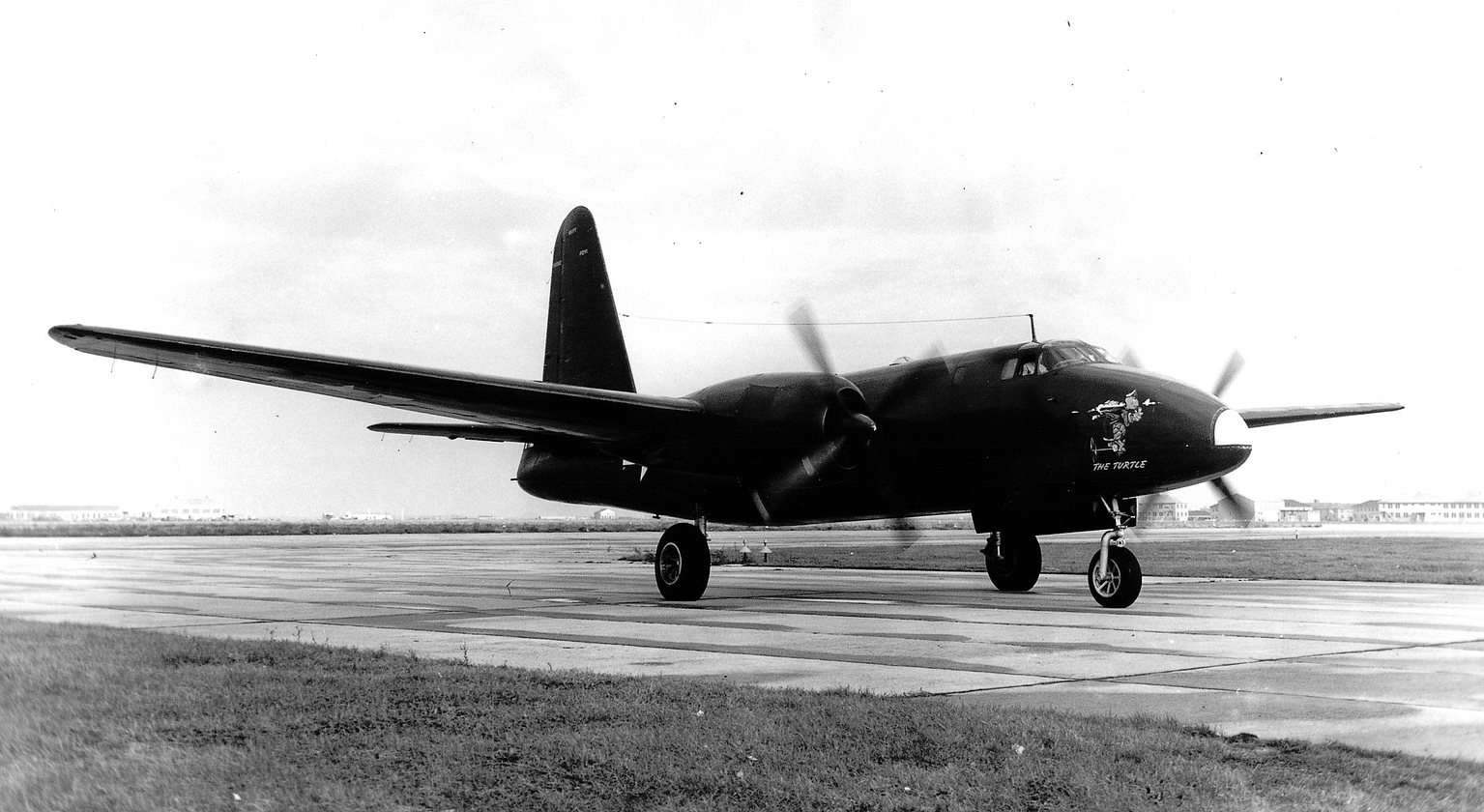
It announced itself with a spectacular feat. In late 1946 a specially prepared Neptune named the “Truculent Turtle” flew non-stop and unrefuelled from Perth, in Western Australia, to Columbus, Ohio — a distance of well over 18,000 kilometres, in around fifty-five hours. It was a world distance record that would stand for years, and it stamped the new aircraft’s defining quality onto the record books: range. That ability to fly enormous distances and then loiter for hours in a patrol area was the whole point of a maritime patrol aircraft, and the Neptune had it in abundance.
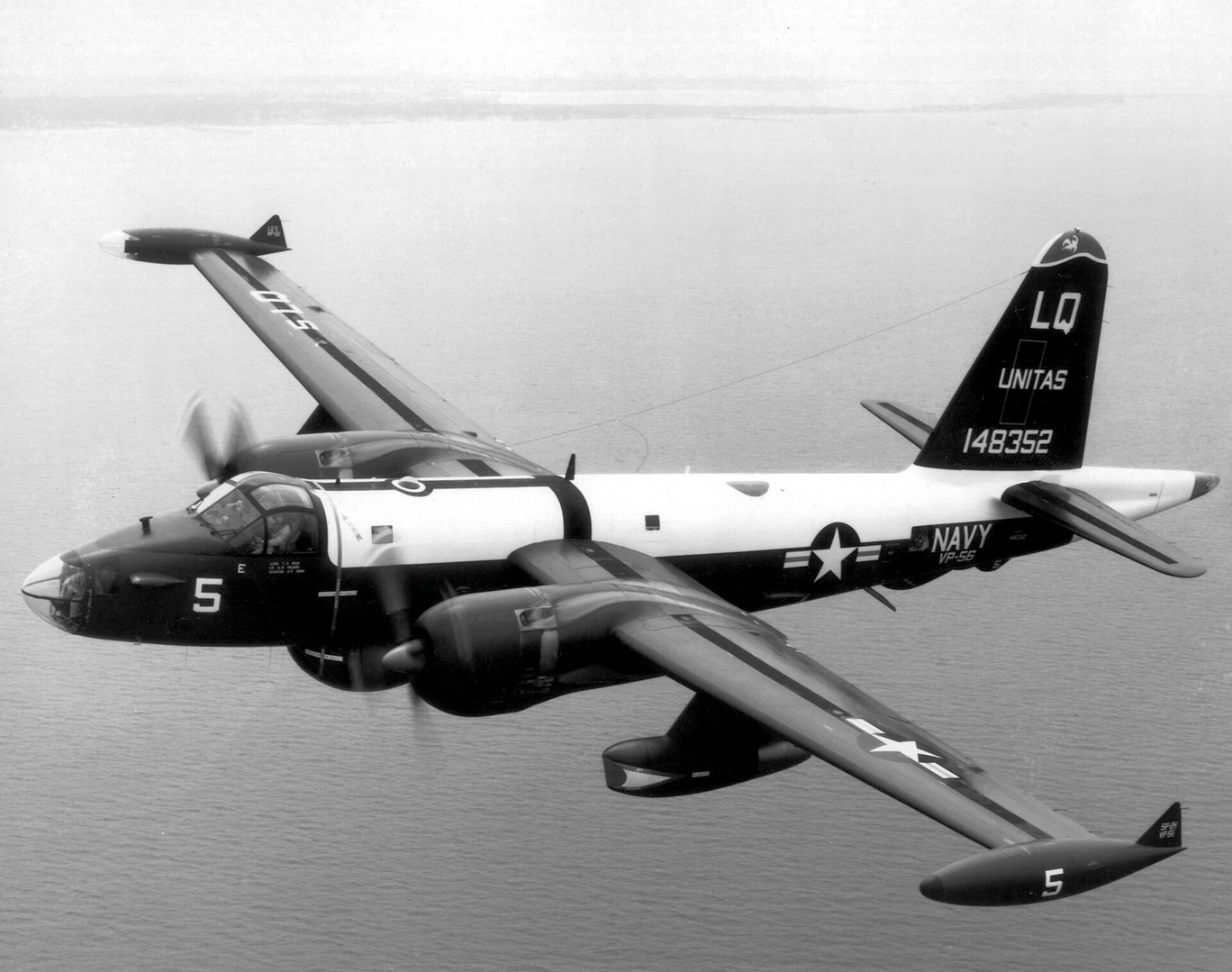
Over its career the Neptune evolved through a long series of marks, and the most famous change was to its engines. The early aircraft flew on two big Wright R-3350 radial engines. Later versions kept those radials but added two Westinghouse turbojets in pods under the wings — not for cruising, but to give extra thrust for a heavy takeoff and a burst of dash speed over a target. A Neptune could cruise economically for hours on its two piston engines, then light the jets when it needed to move. Crews summed the layout up as “two turning, two burning”, and the piston-and-jet Neptune became one of the most recognisable patrol aircraft of the age.
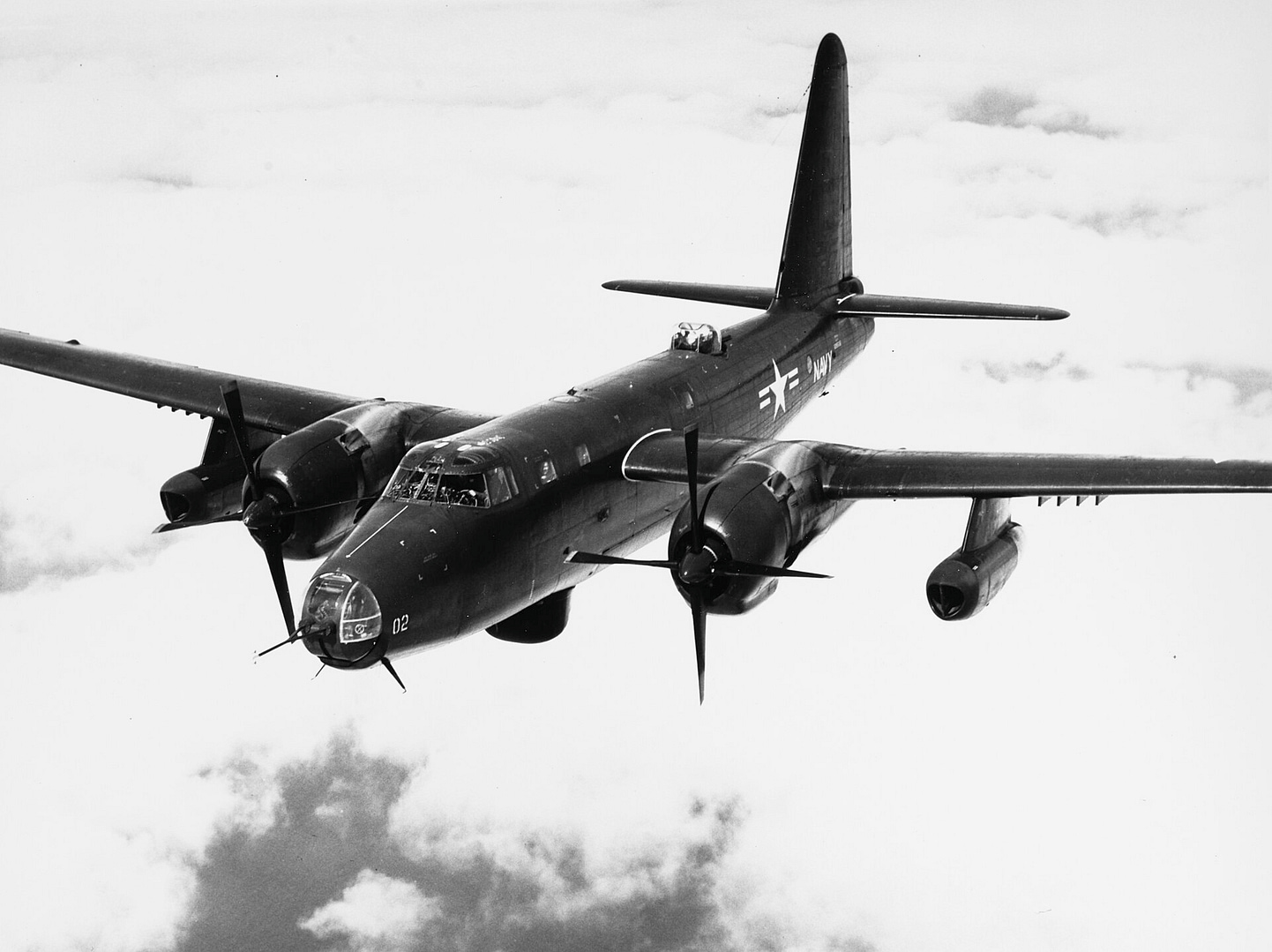
What made it a submarine-hunter, though, was its sensors and weapons. The Neptune carried search radar to find surfaced submarines and ships; a magnetic anomaly detector, or MAD, in a long tail “stinger” that could sense the disturbance a submerged steel hull makes in the Earth’s magnetic field; sonobuoys dropped into the sea to listen for submarines underwater; and, on some versions, a powerful searchlight to illuminate a target at night. To attack, it carried depth charges, homing torpedoes, mines, rockets and bombs in a capacious bomb bay and under the wings. A Neptune crew could search a vast area of ocean, localise a contact and prosecute an attack, all from one aircraft.
The Neptune went to war in Korea and patrolled the world’s oceans throughout the tense decades that followed, watching for Soviet submarines from bases around the globe. It found other work, too: electronic reconnaissance versions gathered intelligence, and during the Vietnam War specially modified Neptunes dropped the electronic sensors of the “Igloo White” system along the Ho Chi Minh Trail, while others served as heavily armed night gunships. It was a genuinely versatile machine that kept finding new roles.
The Neptune was also one of the great aviation exports of its era. Beyond the US Navy it served Australia, Argentina, Brazil, Canada, France, Japan, the Netherlands and Britain, among others, and Japan went further, licence-developing its own turboprop-powered version, the Kawasaki P-2J, for its Maritime Self-Defense Force. In American service it was gradually replaced from the 1960s by the turboprop Lockheed P-3 Orion — a bigger, more capable aircraft that carried the same land-based patrol mission forward — but the Neptune soldiered on with other nations for many more years. And it had a remarkable third life: retired military Neptunes were converted into aerial firefighting air tankers, dropping retardant on wildfires across the American West into the twenty-first century. Around 1,180 were built, several survive in museums — including the record-setting Truculent Turtle — and the Neptune is remembered as the aircraft that carried the West’s land-based anti-submarine watch through the most dangerous years of the Cold War.
01The Neptune’s origins: a purpose-built land-based patrol bomber+
Lockheed began designing the Neptune during the Second World War as a dedicated land-based maritime patrol and anti-submarine aircraft — a category distinct from the flying boats and converted bombers that had done much of that work earlier in the war. The design emphasised long range, a big internal weapons bay, good crew facilities for long patrols, and easy maintenance.
The prototype first flew in May 1945, too late for wartime service, but the timing proved ideal for the Cold War that followed. Designed from a clean sheet for the patrol mission rather than adapted from a bomber, the Neptune was efficient and effective in the role, and it entered US Navy service in 1947 as the standard land-based patrol aircraft — a position it would hold for many years.
02The “Truculent Turtle” 1946 record flight+
The Neptune made its name almost immediately with a record-breaking endurance flight. In late September and early October 1946, a specially prepared P2V-1 named the “Truculent Turtle” took off from Perth in Western Australia and flew non-stop and without refuelling to Columbus, Ohio, in the United States — a distance of over 18,000 kilometres, covered in roughly fifty-five hours.
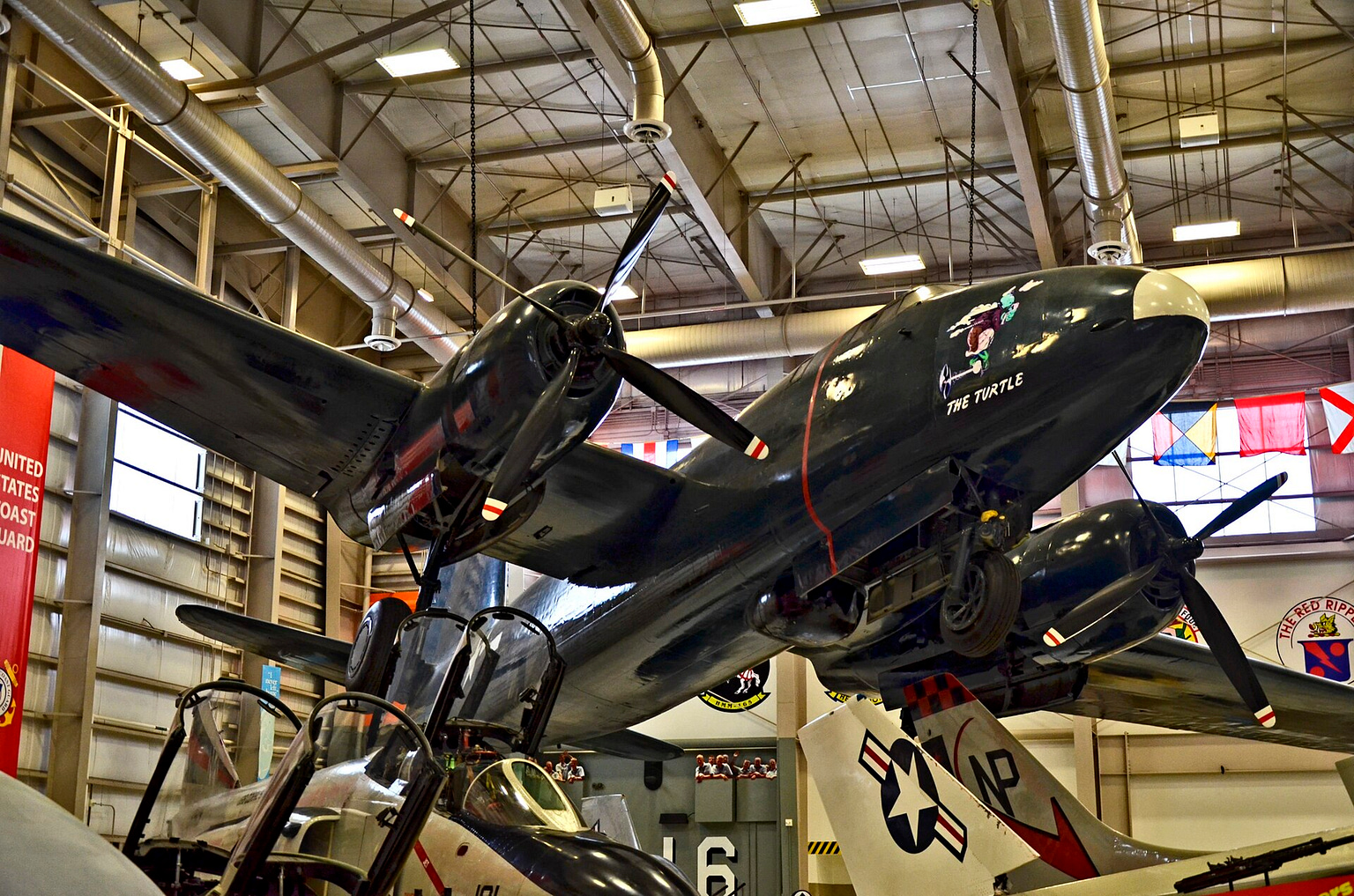
It set a world distance record that stood for many years, a dramatic demonstration of the new aircraft’s extraordinary range. For a maritime patrol aircraft, range and endurance were the whole game, and the Truculent Turtle proved beyond doubt that the Neptune had them. The record aircraft itself survives and is preserved at the National Naval Aviation Museum — a tangible link to one of the great long-distance flights of the propeller era.
03“Two turning, two burning”: the piston-plus-jet layout+
The Neptune’s most distinctive feature was the powerplant of its later marks. The aircraft was designed around two large Wright R-3350 radial piston engines, which gave it the fuel efficiency needed for very long patrols. But as the aircraft grew heavier with equipment and weapons, more power was wanted for takeoff and for a fast dash to a target — so Lockheed added two Westinghouse turbojets in pods under the wings.
The result was a hybrid: on a normal patrol the Neptune cruised economically on its two piston engines, shutting the thirsty jets down; when it needed extra thrust — for a heavy takeoff, a rapid climb or a quick run in to attack — the crew lit the jets. Airmen summed it up as “two turning, two burning”, and the combination of whirling propellers and screaming jet pods made the piston-plus-jet Neptune one of the most recognisable aircraft of its era.
04ASW sensors: MAD boom, sonobuoys, radar and searchlight+
Finding a submarine in the vastness of the ocean is one of the hardest problems in warfare, and the Neptune carried a whole suite of sensors to do it. Search radar detected submarines and ships on the surface. A magnetic anomaly detector (MAD), housed in the long tail “stinger” that gives the Neptune its distinctive profile, could sense the tiny distortion a submerged steel submarine causes in the Earth’s magnetic field as the aircraft passed low overhead.
Most important for tracking a submerged boat were sonobuoys — expendable listening devices dropped into the sea that radioed back the sounds they heard, letting the crew localise a submarine underwater. Some versions also carried a powerful searchlight to illuminate a surfaced target at night for attack. Together these sensors let a single Neptune search, detect, localise and attack — the full anti-submarine sequence in one aircraft.
05US Navy Cold War patrol and the Korean War+
The Neptune entered service just as the Cold War was beginning, and it became the US Navy’s standard land-based patrol aircraft through the 1950s and into the 1960s. From bases around the world it flew the long, patient patrols of the Cold War at sea — watching for the growing Soviet submarine fleet, tracking shipping, and standing ready to hunt and attack if war came.
It also saw combat. During the Korean War, Neptunes flew maritime patrol, reconnaissance and mining missions, and the type was involved in some of the tense reconnaissance operations of the early Cold War, when patrol aircraft probing the edges of Soviet and Chinese airspace were sometimes attacked. For the US Navy the Neptune was the everyday workhorse of the ocean watch for the better part of two decades.
06Vietnam: Igloo White and the Neptune gunships+
The Neptune found unexpected new roles in the Vietnam War. Specially modified aircraft, the OP-2E, were used to drop the air-delivered electronic sensors of the “Igloo White” system along the Ho Chi Minh Trail — seismic and acoustic sensors that detected trucks and troops moving through the jungle and relayed the data to be acted on. It was dangerous, low-level work over heavily defended territory.
Other Neptunes were converted into heavily armed gunships, the AP-2H, carrying guns, sensors and ordnance for night interdiction against the same supply routes. These were far from the aircraft’s designed maritime-patrol role, but they show how adaptable the big, capable airframe was — and how the Neptune kept finding work well beyond hunting submarines at sea.
07The Wright R-3350 and the Neptune’s long reach+
At the heart of the Neptune were two Wright R-3350 radial engines — the same powerful, complex eighteen-cylinder family that powered the B-29 Superfortress and the Lockheed Constellation. In its turbo-compound form the R-3350 recovered energy from the exhaust to boost power and efficiency, giving the Neptune the fuel economy it needed for very long-range patrol.
Range and endurance were the Neptune’s defining strengths, as the Truculent Turtle flight had shown. A patrol aircraft’s value lies in how far out it can reach and how long it can stay there, and the R-3350-powered Neptune could cover enormous areas of ocean. The later addition of jet pods did not change that basic economy — the jets were for bursts of power, while the efficient radials still did the long, patient work of the patrol.
08Replacement by the Lockheed P-3 Orion+
By the late 1950s the US Navy wanted a more capable land-based patrol aircraft, with more room for the ever-growing suite of anti-submarine sensors and processing equipment, more endurance, and the smoothness and reliability of turboprop power. Lockheed’s answer was the P-3 Orion, developed from its Electra airliner, which began replacing the Neptune in US Navy squadrons from the early 1960s.
The Orion was bigger, longer-ranged and more advanced, and it went on to serve for decades as one of the most successful maritime patrol aircraft ever built. But the Neptune was not simply discarded: it continued in US Navy reserve and specialised roles for years, and it soldiered on with many foreign air arms long after the Orion had taken over the front-line American mission. The two Lockheed patrol aircraft are directly linked — the Orion carried forward the land-based patrol tradition the Neptune had established.
09The Kawasaki P-2J: Japan’s home-grown Neptune+
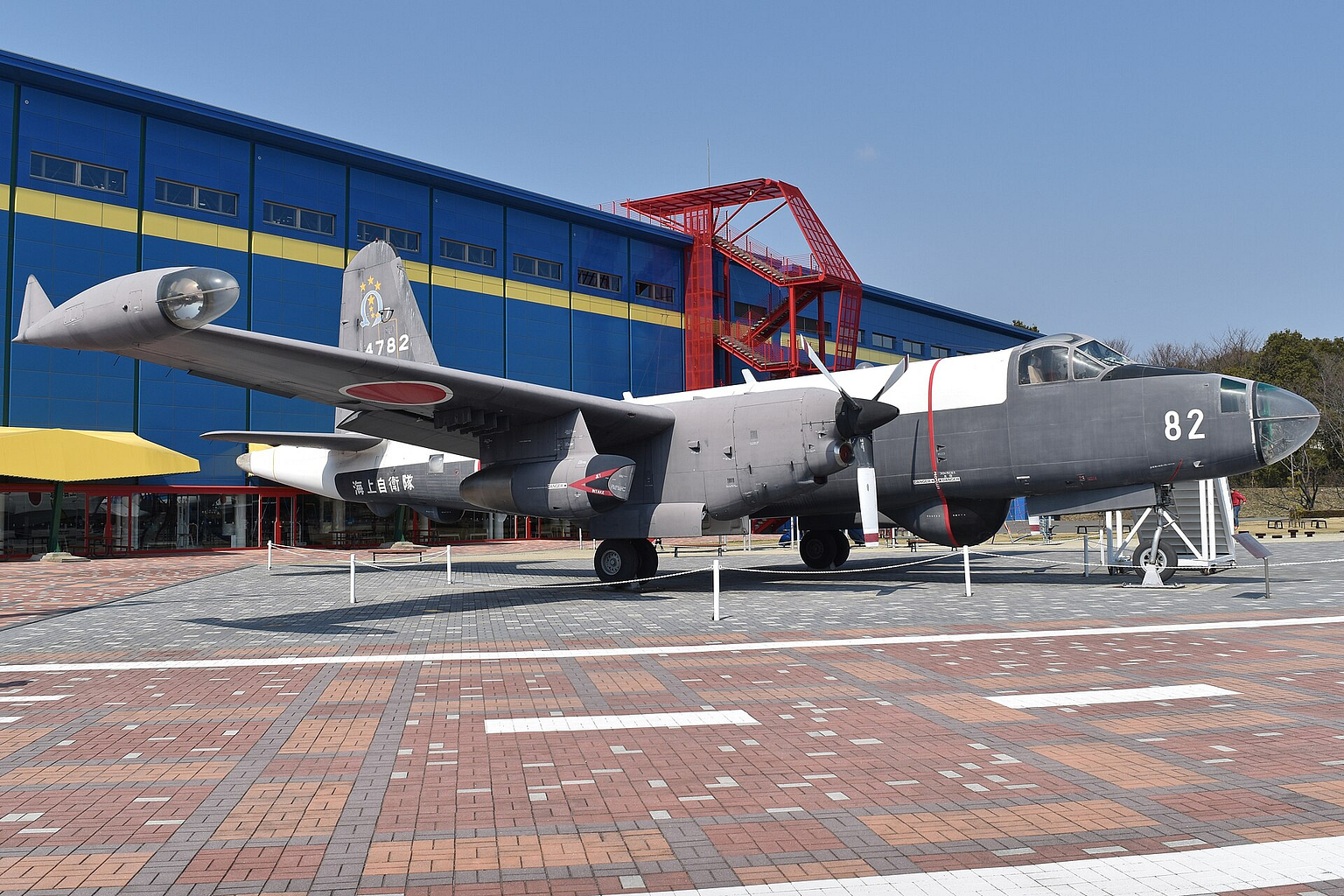
Japan took the Neptune furthest of any foreign operator. The Japan Maritime Self-Defense Force operated American-built Neptunes, and then Kawasaki developed a substantially modified version under licence: the P-2J. It replaced the Neptune’s piston engines with turboprops (and updated jet pods), stretched the fuselage, and fitted more modern equipment, tailoring the design to Japanese requirements.
The P-2J was built in Japan in useful numbers and served the JMSDF as a maritime patrol and anti-submarine aircraft for many years. It is a notable example of a licensed design being genuinely developed rather than merely copied — a distinctly Japanese evolution of the Neptune that kept the basic concept in front-line service well into the later Cold War, before it too was replaced by the P-3.
Design & Engineering
How the Neptune was built: range, sensors and a hybrid powerplant
The Neptune was engineered as a land-based patrol aircraft first and foremost — built around long range, a big weapons bay, a full anti-submarine sensor fit, and, later, a distinctive piston-plus-jet powerplant.
Built for range
A clean, efficient land-based airframe designed around the Wright R-3350 radials for very long endurance — the quality the record-setting Truculent Turtle flight put beyond doubt.
Two turning, two burning
Two piston engines for the economical cruise, plus two underwing turbojets on later marks for takeoff thrust and dash speed — the Neptune’s signature hybrid layout.
A full ASW sensor suite
Search radar, a tail MAD “stinger”, sonobuoys and (on some marks) a searchlight, with depth charges, torpedoes, mines and rockets to attack — search-to-strike in one aircraft.
מפרט טכני
Lockheed P-2 Neptune specifications: dimensions, performance and cost
| סוּג | Land-based maritime patrol / anti-submarine aircraft |
| צוות | ~7–9 |
| מֶשֶׁך | ~27.9 m (91 ft 8 in) — P2V-7, approx. |
| מוּטַת כְּנָפַים | ~31.7 m (103 ft 10 in) — approx. |
| גוֹבַה | ~8.9 m (29 ft 4 in) — approx. |
| משקל ריק | ~22,650 kg (~49,900 lb) — approx. |
| Max takeoff weight | ~36,200 kg (~79,800 lb) — approx. |
| Engines | 2 × Wright R-3350 radial + 2 × Westinghouse J34 turbojet (late marks) |
| Power | ~3,500 hp per radial; ~3,400 lbf per jet |
| Armament / sensors | MAD, sonobuoys, radar, searchlight; depth charges, torpedoes, mines, rockets, bombs |
| Max speed | ~586 km/h (~364 mph) — est. |
| לָנוּעַ | ~5,900 km (~3,700 mi) — est. |
| תקרת השירות | ~6,700 m (~22,000 ft) — est. |
| Record flight | ~18,000+ km unrefuelled (Truculent Turtle, 1946) |
| First flight | 17 May 1945 |
| Introduced | 1947 (US Navy) |
| Retired | 1970s–80s (US Navy); later abroad |
| Number built | ~1,180 (plus Kawasaki P-2J in Japan) |
| Main variants | P2V-1 to P2V-7 (P-2E to P-2H from 1962); SP-2H, OP-2E, AP-2H; Kawasaki P-2J |
| Unit cost | not reliably recorded (Cold War procurement) |
| Cost per flight hour | not reliably recorded |
| Programme cost | not reliably recorded |
| Fleet flight hours | not reliably recorded |
10Variants and the 1962 redesignation (P2V to P-2)+
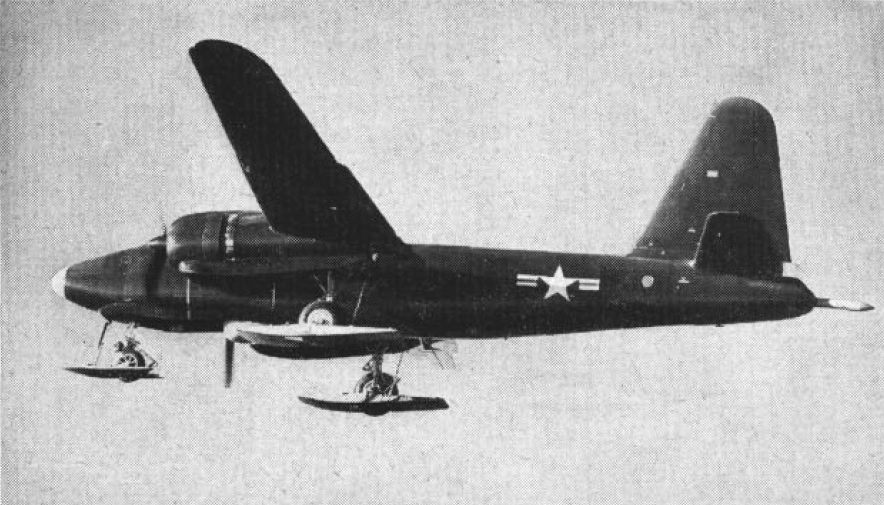
The Neptune was produced in a long line of variants, from the P2V-1 of 1947 through to the definitive P2V-7. Along the way it gained the underwing jet pods, more powerful radials, updated radar and sensors, and a steadily heavier anti-submarine fit. Specialised versions included electronic-reconnaissance aircraft, the Vietnam-era OP-2E sensor-droppers and AP-2H gunships, and ski- and float-equipped machines for polar work.
In 1962 the United States rationalised its aircraft designation system, and the Neptune’s Navy designations changed: the P2V-5 became the P-2E, the P2V-7 became the P-2H, and so on. This is why the same aircraft is referred to both as, say, the P2V-7 and the P-2H depending on the date of the source. The airframe did not change — only the label — but it can cause confusion when reading about the type.
11The Neptune’s operating costs: what the records show+
As with most Cold War military aircraft, there is no single reliable, transparent public figure for the Neptune’s unit cost, cost per flight hour or total programme cost. It was procured over many years, in many variants, for many customers, through government contracts and military-assistance programmes rather than at a transparent list price, and consistent lifetime figures are not available. Any single figure quoted for it should be treated with caution.
In general terms, a large four-engine (two piston, two jet) patrol aircraft with a big crew and an elaborate sensor fit was an expensive and demanding aircraft to buy and operate — but far cheaper than the fleet of ships that would otherwise be needed to cover the same ocean areas, which is exactly why so many navies invested in land-based patrol aircraft. We list the cost fields as “not reliably recorded” rather than invent numbers.
12The many export operators of the Neptune+
The Neptune was one of the most widely exported patrol aircraft of its era. Beyond the US Navy it served the maritime and air arms of Australia, Argentina, Brazil, Canada, France, Japan and the Netherlands, and Britain’s RAF Coastal Command flew leased Neptunes for a few years in the 1950s as an interim aircraft. Several other nations operated it as well.
These aircraft did the same essential job all over the world — patrolling coasts and sea lanes, hunting submarines and gathering intelligence — and often kept flying long after the US Navy had moved on to the P-3. Argentina’s Neptunes, for instance, were used for maritime reconnaissance during the 1982 Falklands conflict, near the very end of the type’s front-line career, before being retired. The breadth of the Neptune’s service is a measure of how well it filled a role that every maritime nation needed filled.
13The fire-bomber afterlife and surviving Neptunes+
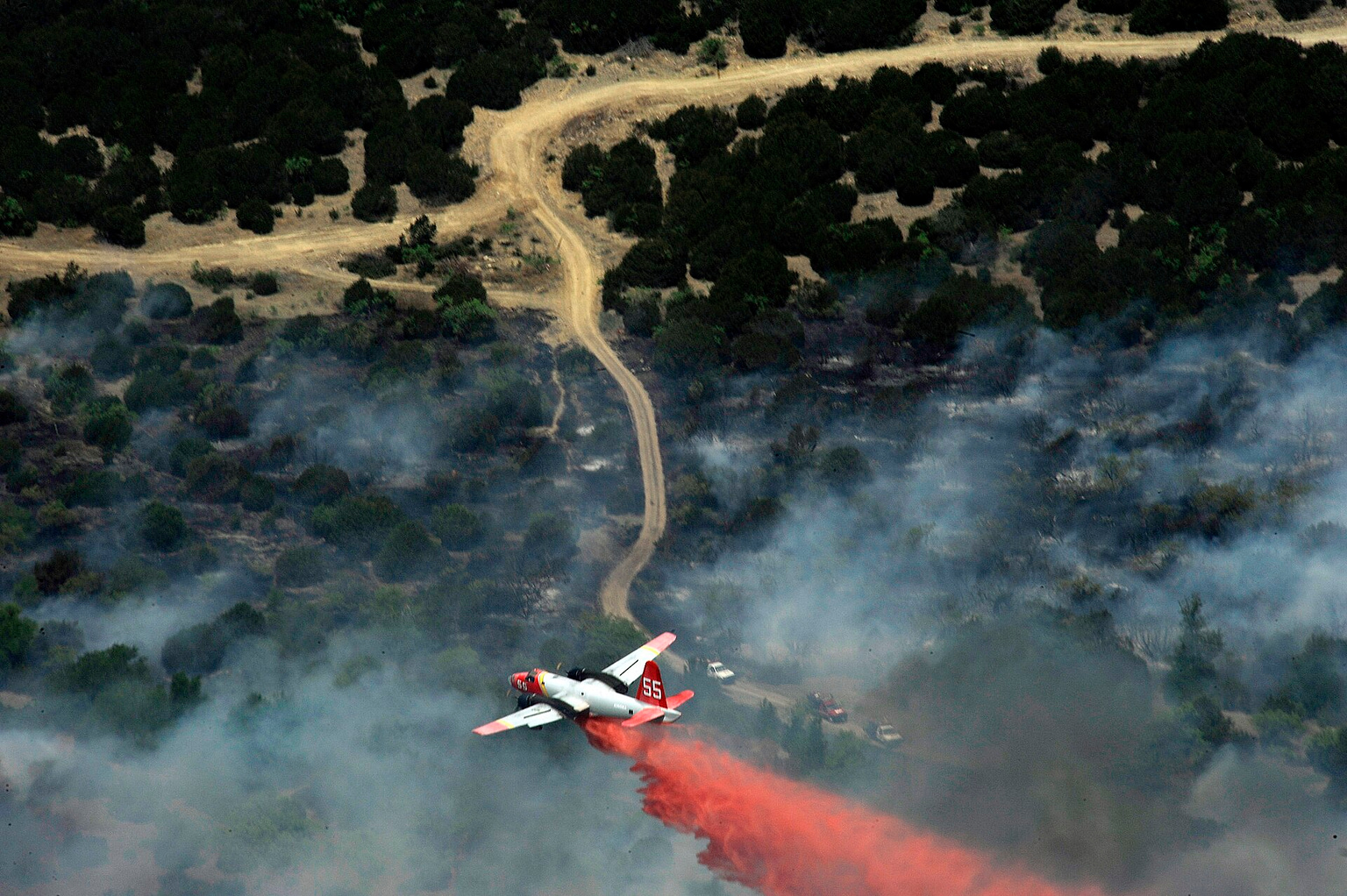
The Neptune had a long and productive third life after military service. Retired aircraft, with their strong airframes, long endurance and big load-carrying ability, made excellent aerial firefighting air tankers, and converted Neptunes flew for decades dropping fire retardant on wildfires across the western United States, continuing into the twenty-first century before finally being replaced by more modern tankers.
Thanks to that long working life and reasonable production numbers, a good number of Neptunes survive. Museum examples are preserved around the world, including the record-setting Truculent Turtle at the National Naval Aviation Museum in Pensacola, and a few remained flyable in the firefighting fleet until relatively recently. For an aircraft first flown in 1945, the Neptune’s span of active service — military patrol, reconnaissance, and firefighting — stretching into the 2010s is a remarkable testament to a sound design.
Timeline
The Lockheed P-2 Neptune through the years
The Lockheed XP2V Neptune prototype flies on 17 May 1945, a purpose-built land-based maritime patrol bomber — too late for the war, but ideal for what came next.
A P2V-1 flies non-stop and unrefuelled from Perth, Australia to Columbus, Ohio — over 18,000 km in about 55 hours — setting a world distance record.
The Neptune becomes the US Navy’s standard land-based maritime patrol and anti-submarine aircraft.
Neptunes fly maritime patrol, reconnaissance and mining missions in the Korean War and the tense early-Cold-War operations around it.
Later marks add underwing turbojets — “two turning, two burning” — and the Neptune is exported widely to allied air arms around the world.
Under the unified US designation system the Neptune’s labels change — the P2V-7 becomes the P-2H, and so on — though the aircraft itself is unchanged.
The turboprop P-3 Orion begins replacing the Neptune in US Navy squadrons, while modified Neptunes fly Igloo White sensor and gunship missions over Vietnam.
Kawasaki builds a turboprop-powered, stretched development of the Neptune, the P-2J, for the Japan Maritime Self-Defense Force.
Neptunes soldier on with many foreign operators after US front-line retirement; Argentina uses them for reconnaissance in the 1982 Falklands conflict.
Ex-military Neptunes serve for decades as aerial firefighting air tankers over the American West, flying on into the twenty-first century.
Stories & Eyewitnesses
The Lockheed P-2 Neptune in stories: the moments that defined it
A record-breaking marathon, a hybrid powerplant, a tail full of sensors, a Cold War ocean watch, secret wars over the jungle and a long afterlife fighting fires — the Neptune’s history told through the moments that stuck.
Clean-Sheet Patroller
Designed for the job
The Neptune was built from scratch as a land-based patrol aircraft.
Unlike the flying boats and converted bombers before it, the Neptune was designed from a clean sheet as a dedicated land-based maritime patrol and anti-submarine aircraft, with long range, a big weapons bay and a full sensor fit.
First flown in May 1945, it arrived just in time to become the West’s standard land-based sub-hunter for the Cold War.
The Truculent Turtle
Perth to Ohio, non-stop
A Neptune set a world distance record in 1946.
In late 1946 the P2V-1 “Truculent Turtle” flew non-stop and unrefuelled from Perth, Australia to Columbus, Ohio — over 18,000 km in about 55 hours — a world distance record that stood for years.
It stamped the Neptune’s defining quality, range, into the record books, and the aircraft itself survives at the National Naval Aviation Museum.
Two Turning, Two Burning
Pistons plus jets
Later Neptunes flew on two radials and two jets.
The Neptune’s later marks kept their two big Wright radial engines but added two underwing turbojets — economical piston power for the long cruise, jet thrust for heavy takeoffs and fast dashes.
Crews called it “two turning, two burning”, and the whirling-props-and-jet-pods look became the Neptune’s trademark.
The MAD Stinger
Sensing a steel hull
The tail boom held a magnetic anomaly detector.
The long “stinger” tail that gives the Neptune its profile housed a magnetic anomaly detector — a sensor that could detect the faint disturbance a submerged steel submarine makes in the Earth’s magnetic field as the aircraft flew low overhead.
Combined with radar and sonobuoys, it helped the crew find and pin down submarines hiding beneath the surface.
The Big Searchlight
Lighting up the night
Some Neptunes carried a powerful searchlight to attack at night.
To press home an attack on a surfaced submarine in darkness, some Neptunes carried a very powerful searchlight, mounted on the wing or nose, to suddenly illuminate the target in the final moments of the run.
It was a dramatic tool for a dramatic moment — catching a submarine on the surface at night and lighting it up for the kill.
Cold War Ocean Watch
Hunting the Soviet fleet
For two decades the Neptune patrolled the world’s oceans.
From bases around the globe, US Navy Neptunes flew the long, patient patrols of the Cold War at sea, watching for the growing Soviet submarine fleet and standing ready to hunt it if war came.
It was the everyday workhorse of the ocean watch through the 1950s and into the 1960s — unglamorous, vital and constant.
Korea
Into combat
Neptunes flew patrol, recon and mining missions in Korea.
The Neptune saw combat in the Korean War, flying maritime patrol, reconnaissance and mining missions, and it was involved in some of the dangerous reconnaissance operations of the early Cold War when patrol aircraft probing hostile coasts were sometimes attacked.
It was the first shooting war for a design that would spend its life on the tense edges of the Cold War.
Igloo White
Seeding the trail
Modified Neptunes dropped electronic sensors over the Ho Chi Minh Trail.
In the Vietnam War, specially equipped OP-2E Neptunes dropped the air-delivered seismic and acoustic sensors of the “Igloo White” system along the Ho Chi Minh Trail, detecting trucks and troops moving through the jungle.
It was dangerous, low-level work over heavily defended ground — a long way from hunting submarines at sea.
Neptune Gunships
The armed AP-2H
Some Neptunes became heavily armed night gunships in Vietnam.
Other Vietnam-era Neptunes were converted into the AP-2H, a heavily armed gunship carrying guns, sensors and ordnance for night interdiction against the same supply routes the sensor aircraft watched.
These armed Neptunes show just how adaptable the big, capable airframe was, taking on roles far from its maritime origins.
Japan’s P-2J
A home-grown evolution
Kawasaki developed a turboprop Neptune for Japan.
Japan took the Neptune furthest, with Kawasaki developing the P-2J under licence — a stretched, turboprop-powered version tailored to the Maritime Self-Defense Force, genuinely developed rather than merely copied.
The P-2J kept the Neptune concept in Japanese front-line service for many years, well into the later Cold War.
The Global Neptune
Flown around the world
Many nations flew the Neptune long after the US Navy.
Australia, Argentina, Brazil, Canada, France, Japan, the Netherlands and Britain all operated the Neptune, and several kept it flying long after the US Navy had moved on to the P-3.
Argentina’s Neptunes even flew reconnaissance in the 1982 Falklands conflict, near the very end of the type’s front-line life.
Fire Bomber
A second career over the flames
Retired Neptunes became aerial firefighting air tankers.
With their strong airframes, endurance and load-carrying ability, retired Neptunes made excellent air tankers, and converted aircraft dropped fire retardant on wildfires across the American West for decades, flying into the twenty-first century.
It was a remarkable third life for a design first flown in 1945.
The Survivors
Preserved, including the Turtle
Several Neptunes survive, among them the record-setting Truculent Turtle.
Thanks to long service and reasonable numbers, a good many Neptunes survive in museums around the world, including the record-breaking Truculent Turtle at the National Naval Aviation Museum in Pensacola.
A few remained flyable in the firefighting fleet until relatively recently — among the last of a long-lived design still in the air.
Photo Gallery
The Lockheed P-2 Neptune in photographs
US Navy, Japanese and museum photographs of the Neptune and its variants, each credited to its source and licence. Click any photo to enlarge.
On Film
The Lockheed P-2 Neptune on video: a documentary history
A documentary on the Neptune — its origins, its hybrid piston-and-jet engines, its Cold War anti-submarine mission and its long, varied career.
“P-2 Neptune: Cold War Sub Hunter with Insane Hybrid Engines” by JE Documentary (approx. 16,000 views at time of writing; running time ~28 minutes). A dedicated documentary on the type’s design, engines and service.
Operations Overview
Where the Lockheed P-2 Neptune flew: an operator map
Designed and built in the United States and flown by the US Navy and a long list of allied air arms around the world. Toggle the categories; hover or tap a country for detail. Figures are approximate and hedged.
Categories: Design & Manufacture (United States) · NATO / Allied Operators (United Kingdom, Netherlands, France, Canada) · Other Export Operators (Australia, Japan, Argentina, Brazil) · Surviving Airframe (several survive, including the Truculent Turtle in the USA). Operator list is approximate and hedged.
Service Record
The Neptune’s record: the West’s land-based sub-hunter
The Neptune’s contribution was measured in decades of ocean patrol, a record-setting flight and an extraordinary range of roles.
Questions & Answers
Lockheed P-2 Neptune: your questions answered
Can I fly in a Lockheed P-2 Neptune?
No — there is no bookable Neptune flight experience, and MiGFlug does not offer one. Several Neptunes survive in museums, and a small number remained airworthy in the aerial-firefighting fleet until relatively recently, but these are rare, specialised aircraft rather than ride platforms. If what you actually want is the real thing — strapping into a genuine military aircraft and flying it — you very much can do that today in other types. MiGFlug arranges flights in real fighter jets and warbirds around the world. Start here: migflug.com/flights-prices.
What does “two turning, two burning” mean?
It describes the Neptune’s later powerplant: two piston engines (“turning” propellers) plus two turbojets (“burning” fuel). The aircraft cruised economically on its two Wright radial engines for the long patrol, then lit its two underwing Westinghouse jets when it needed extra thrust for a heavy takeoff or a fast dash to a target. The distinctive combination of propellers and jet pods is the Neptune’s signature.
What was the “Truculent Turtle” flight?
In late 1946 a specially prepared P2V-1 Neptune named the “Truculent Turtle” flew non-stop and without refuelling from Perth, in Western Australia, to Columbus, Ohio — a distance of over 18,000 km, in around 55 hours. It set a world distance record that stood for many years and showcased the Neptune’s enormous range. The actual aircraft is preserved at the National Naval Aviation Museum in Pensacola.
What did the Neptune do, and how did it hunt submarines?
The Neptune was a land-based maritime patrol and anti-submarine aircraft. It carried search radar to find surfaced submarines and ships, a magnetic anomaly detector (MAD) in its tail boom to sense submerged steel hulls, sonobuoys to listen for submarines underwater, and (on some marks) a searchlight for night attacks — plus depth charges, torpedoes, mines and rockets to attack. One aircraft could search, localise and strike, over enormous areas of ocean.
What replaced the Neptune?
In US Navy service the Neptune was replaced from the early 1960s by the Lockheed P-3 Orion, a larger, longer-ranged, turboprop-powered aircraft developed from the Electra airliner. The Orion carried the same land-based patrol mission forward and became one of the most successful maritime patrol aircraft ever built. The Neptune, however, continued to serve many foreign air forces long after the Orion took over the American mission.
Who operated the Neptune, and what was the Kawasaki P-2J?
Besides the US Navy, the Neptune was flown by Australia, Argentina, Brazil, Canada, France, Japan, the Netherlands and Britain (RAF Coastal Command, leased in the 1950s), among others. Japan went furthest: Kawasaki licence-developed the P-2J, a stretched, turboprop-powered version tailored to the Japan Maritime Self-Defense Force, which kept the Neptune concept in Japanese service for many years.
How many Neptunes were built, and do any survive?
Around 1,180 were built by Lockheed, plus the separate run of Kawasaki P-2Js in Japan (figures vary between sources). Thanks to long service and a post-military firefighting career, a good number survive — museum examples around the world, including the record-setting Truculent Turtle at Pensacola, and a few that remained airworthy as fire tankers until recently.
Was the Lockheed P-2 Neptune a good aircraft?
Yes — it was an excellent maritime patrol aircraft for its era and enormously successful. It had outstanding range, a full anti-submarine sensor and weapons fit, and enough adaptability to take on reconnaissance, sensor-dropping, gunship and even firefighting roles. It served the US Navy and many allies for decades and set a world distance record. Its eventual replacement by the P-3 reflected the march of technology, not any failing of the Neptune itself.
Fly For Real
You can’t fly the P-2 Neptune — but these, you can
No Neptune is a bookable ride today. The urge behind it — to strap into a real military aircraft and actually fly — is very much still bookable. MiGFlug puts you in genuine fighters and warbirds around the world.
Fighter Jet Flights
Take the controls of a real ex-military jet with an experienced pilot.
Warbird experiences
Fly in a genuine piston-engined warbird from the Neptune’s era.
All flights are operated by MiGFlug’s vetted partners with professional pilots. Browse every option and current pricing at migflug.com/flights-prices. MiGFlug does not operate Lockheed P-2 Neptune flights — no bookable example exists.
Related Aircraft
If the Lockheed P-2 Neptune interests you, explore these
Sources & Further Reading
Where this Lockheed P-2 Neptune history comes from
Note on figures: dimensions, performance and production numbers for the Neptune vary between sources and by variant, and are hedged here as approximate. Cost fields are listed as not reliably recorded because trustworthy Cold War procurement cost data is not consistently available. Several Neptunes survive in museums, including the record-setting Truculent Turtle; a small number remained airworthy as fire tankers until relatively recently.