
Combat record
F-4 Phantom II — Combat Record
3rd-generation jet · United States · First flight 1958 · Combat-proven: air-to-air
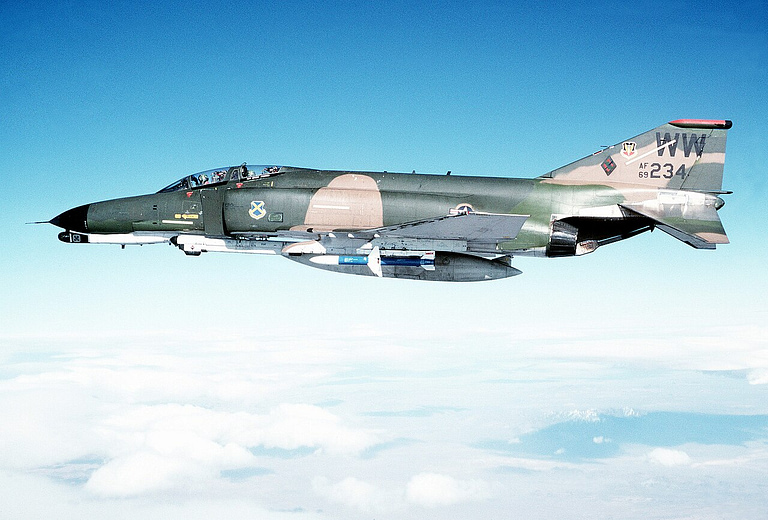
The story behind the numbers
Brute force made iconic: the Phantom was the free world’s fighter for two decades, and its 150-odd victories span Vietnam, the Middle East and the Indo-Pakistani wars. Over North Vietnam it learned the hard way that missiles missed and gunless fighters got embarrassed by MiG-17s — lessons that produced Topgun, the gun pod, and eventually the internal cannon of the F-4E.
Israeli Phantoms fought the hardest air war of the type’s life against Egyptian and Syrian MiG-21s; Iranian F-4s later fought Iraq for eight years. All five American aces of Vietnam — two pilots, three back-seaters — scored on Phantoms. Its 150:42 ledger, honestly counted with its early stumbles, is the record of the aircraft that defined an era.
Campaign by campaign
| Years | Campaign | Operator | Victories | A2A losses | What happened |
|---|---|---|---|---|---|
| 1965–73 | Vietnam War | אַרצוֹת הַבְּרִית | 150 | 42 | 150.5 MiG kills for 42 Phantoms lost in air combat; ~719 lost to all causes, mostly ground fire. |
| 1969–82 | Arab–Israeli wars | Israel | 116 | 0 | Israeli F-4E ‘Kurnass’ scored 116.5 aerial victories; most losses were to SAMs, not aircraft. |
| 1980–88 | Iran–Iraq War | Iran | 0 | 0 | Iranian Phantoms claimed dozens more kills; totals disputed and excluded from the headline. |
Go deeper