
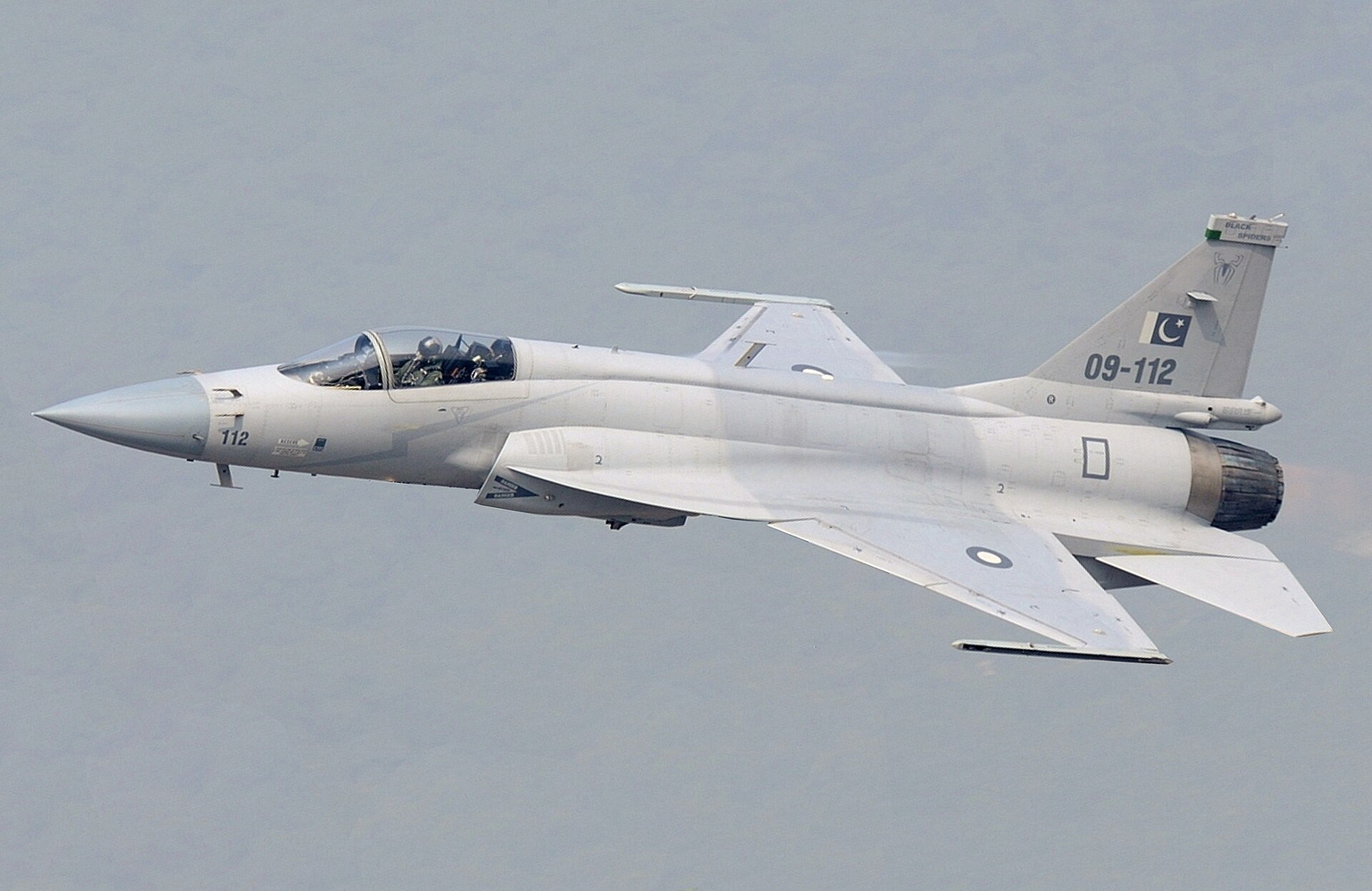
PAC / CAC JF-17 Thunder
“Xiaolong / Fierce Dragon”
A lightweight, low-cost 4th-generation multirole fighter built jointly by Pakistan and China — the jet that gave Pakistan a modern warplane it could build at home, free of Western embargoes, and that China turned into an export success from Myanmar to Azerbaijan.
The fighter Pakistan built to be free of embargoes
In 1990 the United States froze delivery of F-16s that Pakistan had already paid for, part of the sanctions that followed its nuclear programme. Islamabad was left with an ageing fleet of Mirages and Chinese F-7s and no reliable Western supplier. The lesson its air planners drew was blunt: Pakistan needed a modern fighter it could build and support at home, sourced from a partner that would not switch it off. That partner was China.
The two countries formally launched a joint fighter programme in 1999, building on an earlier Chinese design study — the “Super-7,” itself a deep redevelopment of the MiG-21 lineage — which matured into the Chengdu FC-1 Xiaolong. Chengdu Aircraft Corporation (CAC) led much of the design; the Pakistan Aeronautical Complex (PAC) at Kamra became the co-developer and co-production line. The aircraft first flew in 2003, entered Pakistani service in 2007, and Pakistan now assembles it domestically.
The JF-17 was never meant to out-fly an F-22 or a Rafale. It was meant to be cheap, numerous and good enough — a single-engine multirole fighter costing a small fraction of a Western jet, able to carry modern beyond-visual-range missiles, fly ground-attack and air-defence missions, and be maintained without anyone’s permission. That formula — and the latest Block III with its AESA radar and long-range PL-15 missiles — is exactly why a growing list of budget-conscious air forces are now buying it.
01How the JF-17 Thunder grew out of the Super-7 and Pakistan’s F-16 embargo
The JF-17’s family tree runs back through the Chengdu Super-7, a 1980s project to modernise the MiG-21/F-7 with Western avionics — a plan that collapsed when Western cooperation with China ended after 1989. China kept the airframe concept alive as the FC-1; Pakistan, embargoed on its F-16s from 1990, needed exactly such an aircraft and signed on as a partner in the late 1990s. The result is a genuinely new design that only distantly echoes its MiG-21 ancestry.
Cost-sharing was central. By pooling money and industry, Pakistan got a home-built fighter and a production line at Kamra, while China got a launch customer and a low-cost export product to offer nations that could not afford — or were denied — Western jets. Both aims have since been realised.
What makes the JF-17 Thunder special
Affordable multirole — and built at home
The JF-17’s whole point is capability per dollar. A flyaway cost commonly quoted at around US$25–32 million buys a single-engine fighter that can fly air defence, strike, anti-ship and reconnaissance. Just as important, Pakistan co-produces it at Kamra, so it can build, upgrade and support the fleet without relying on any Western supplier — the independence the F-16 embargo taught it to value.
Block III: AESA radar and the PL-15
The latest Block III is a real generational jump. It adds an AESA radar (the KLJ-7A class), a helmet-mounted sight, a holographic wide-angle HUD, a three-axis fly-by-wire system and, above all, compatibility with the long-range PL-15 beyond-visual-range missile. On paper this gives a low-cost jet a sensor-and-missile reach that only far more expensive fighters used to offer.
One RD-93 turbofan and a DSI intake
Power comes from a single Klimov RD-93 afterburning turbofan — a MiG-29-derived engine of roughly 84 kN in reheat — later marks using the uprated RD-93MA. From the fourth prototype the JF-17 adopted a diverterless supersonic inlet (DSI), a shaped bump that manages airflow without heavy moving parts, saving weight and cost. A Chinese WS-13 engine has long been studied to reduce reliance on Russian supply.
02The JF-17 Thunder’s engine problem: one Russian turbofan, and the search to replace it
The JF-17 flies on a single Klimov RD-93, a variant of the RD-33 that powers the MiG-29. Relying on a Russian engine for a jointly Chinese-Pakistani aircraft has always been a strategic vulnerability — export deliveries need Russian sign-off, and geopolitics can complicate supply. For that reason China has long developed the WS-13 (Taishan) as a home-grown replacement, with the goal of making the whole aircraft independent of Russian components. Progress has been reported for years, but the RD-93/RD-93MA has remained the operational engine across the fleet.
03From mechanical radar to AESA: how the JF-17 Thunder Block III closed the gap
Early JF-17s (Block I and II) carried a conventional mechanically-scanned radar (the KLJ-7 family) and short-to-medium-range missiles — capable, but a clear generation behind top-tier fighters. The Block III, in serial production from around 2020, changed the calculus by fitting an active electronically scanned array (AESA) radar plus the PL-15 long-range missile, a helmet-mounted display and modern electronic-warfare systems. Pakistan and China present this as giving a budget airframe much of the situational awareness and reach of far costlier jets; how it performs against a top-line adversary in practice remains largely untested in any independently verified way.
Full JF-17 Thunder specifications
Airframe & Performance
- צוות
- 1 (two-seat JF-17B trainer seats 2)
- מֶשֶׁך
- ~14.0 m
- מוּטַת כְּנָפַים
- ~9.45 m (with wingtip missiles)
- גוֹבַה
- ~4.8 m
- משקל ריק
- ~6,500 kg
- Max takeoff weight
- ~12,700–13,500 kg (sources vary)
- Max speed
- Mach 1.6 (~1,900 km/h)
- תקרת השירות
- ~16,700 m (~55,000 ft)
- רדיוס לחימה
- ~1,200–1,350 km
- g limits
- +8 / −3 g
Propulsion, Sensors & Armament
- מָנוֹעַ
- 1 × Klimov RD-93 / RD-93MA turbofan
- Thrust
- ~84–93 kN with afterburner
- Radar
- KLJ-7 (Block I/II) · KLJ-7A AESA (Block III)
- Gun
- 1 × 23 mm GSh-23-2 (30 mm GSh-30-2 optional)
- נקודות קשיחות
- 7 · up to ~3,600 kg external load
- Air-to-air missiles
- PL-5, PL-12/SD-10, PL-15 (Block III)
- Other weapons
- C-802A anti-ship, guided & unguided bombs
- First flight
- 25 August 2003
- Unit cost
- ~US$25–32 million (estimate)
04The JF-17 Thunder’s cost: why “cheap” is the whole point
Exact prices vary with block, buyer and what is bundled in, but the JF-17 is consistently reported in the US$25–32 million range per aircraft — roughly a third to a half of a new Western multirole jet, and far below a Rafale or an F-35. That affordability, plus low operating costs and domestic Pakistani production, is the aircraft’s central selling point. Published cost and performance figures come largely from the manufacturers and operators and should be read as indicative rather than independently audited.
From embargo workaround to export success
The F-16 embargo
US sanctions freeze Pakistan’s paid-for F-16s, driving the search for a fighter it can build at home with a non-Western partner.
Joint programme launched
Pakistan and China formally agree to co-develop a lightweight fighter, building on Chengdu’s FC-1 / Super-7 studies.
First flight
The first prototype flies on 25 August 2003, powered by the Russian Klimov RD-93 turbofan.
Enters Pakistani service
Block I aircraft join the Pakistan Air Force, replacing older Mirage and F-7 fighters; formal induction follows in 2010.
Block II production
An improved Block II adds an air-to-air refuelling probe, better avionics and data-link, extending range and flexibility.
Combat debut
Pakistan uses the JF-17 in precision strikes against militants and reports downing an Iranian reconnaissance drone.
Block III and AESA
Serial production of the Block III begins, adding an AESA radar, helmet-mounted sight and the long-range PL-15 missile.
Exports and a contested war
Azerbaijan signs a multi-billion-dollar Block III deal, while the JF-17 features in the heavily disputed May 2025 India–Pakistan air clashes.
Twelve JF-17 Thunder stories
The embargo that built a fighter
The 1990 US freeze on Pakistan’s F-16s set the whole programme in motion.
Read the full story
Super-7 to Xiaolong
A shelved 1980s Chinese-Western project was reborn as the FC-1 and then the JF-17.
Read the full story
A fighter line at Kamra
Pakistan does not just fly the JF-17 — it builds it.
Read the full story
The single-engine gamble
One RD-93 turbofan keeps the JF-17 cheap — and tied to Russian supply.
Read the full story
A budget jet gets an AESA
The Block III added an AESA radar and the PL-15 — capability once reserved for costlier fighters.
Read the full story
First shots in anger
The JF-17’s combat debut came against militants, not other fighters.
Read the full story
The Balakot aftermath
Pakistan says JF-17s flew in the February 2019 clashes; the details remain disputed.
Read the full story
A heavily contested air war
In May 2025 both India and Pakistan made sweeping, largely unverified claims.
Read the full story
Nigeria opens Africa
In 2021 Nigeria became the JF-17’s first African operator.
Read the full story
Myanmar’s troubled fleet
Myanmar’s JF-17s showed both the appeal and the risks of a budget jet.
Read the full story
Azerbaijan’s big bet
A multi-billion-dollar order made Azerbaijan the largest JF-17 export buyer.
Read the full story
China’s “budget F-16”
The JF-17 is often cast as a cut-price alternative to the fighters others can’t buy.
Read the full story
The JF-17 Thunder in pictures
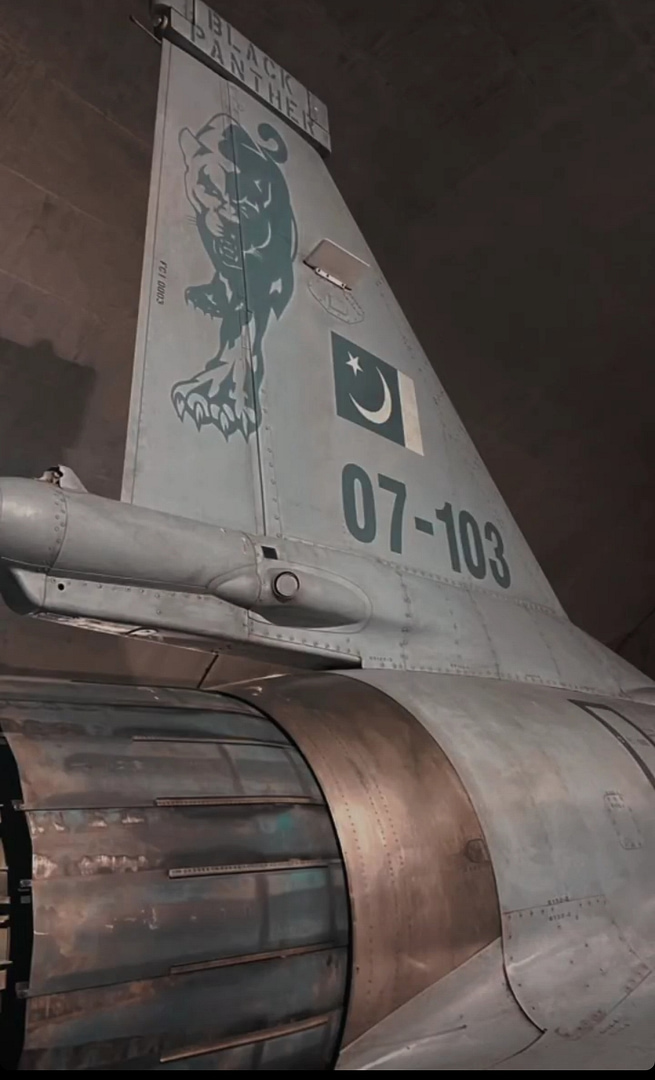
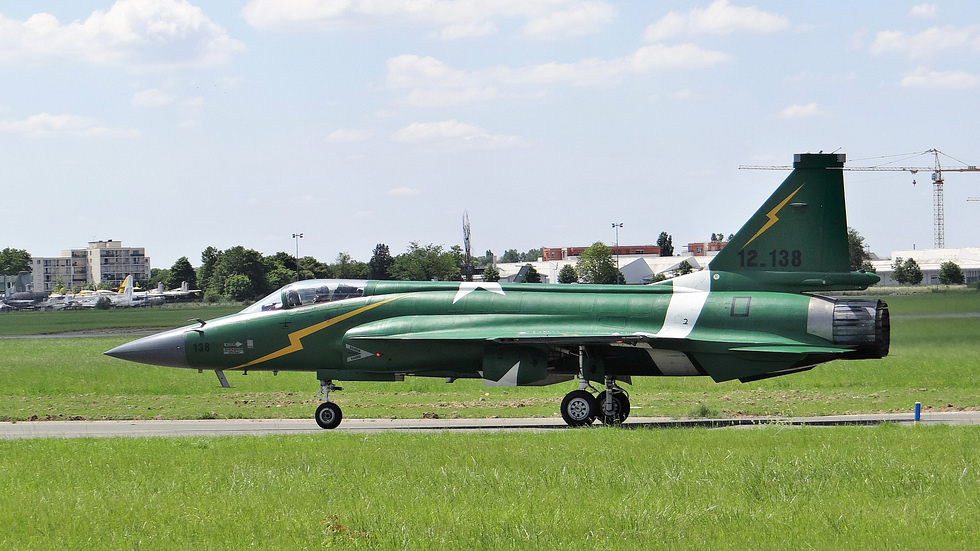
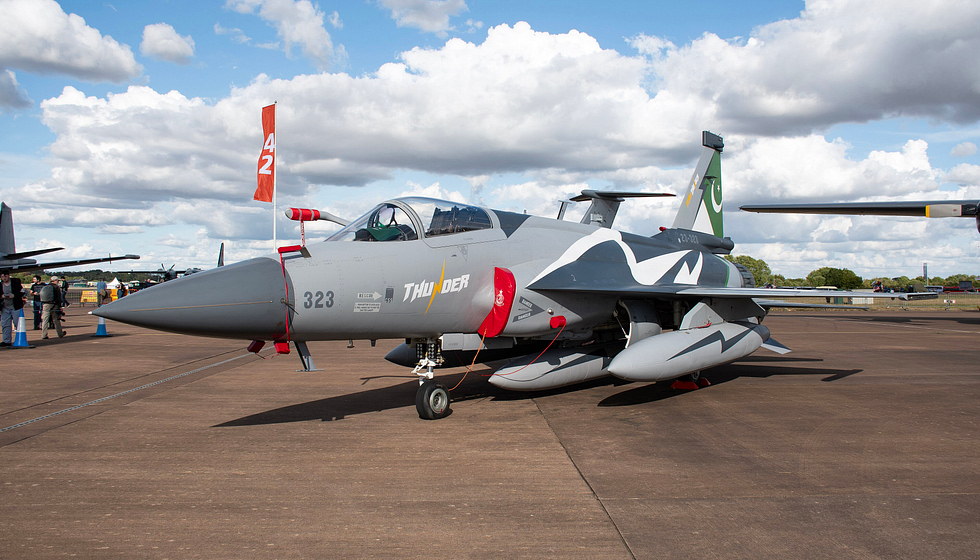
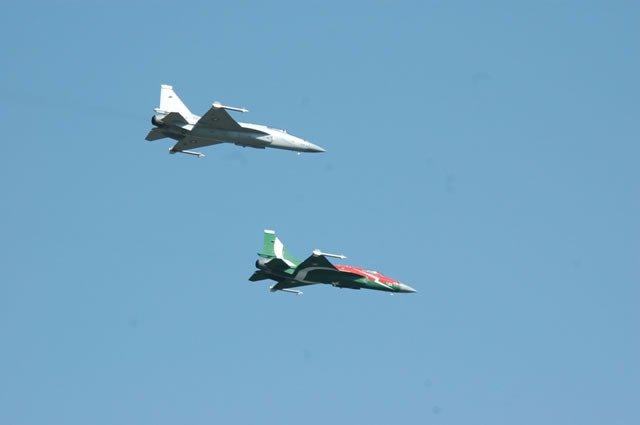
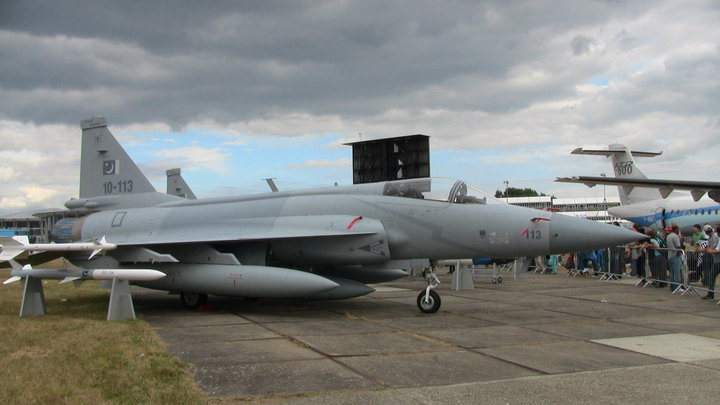
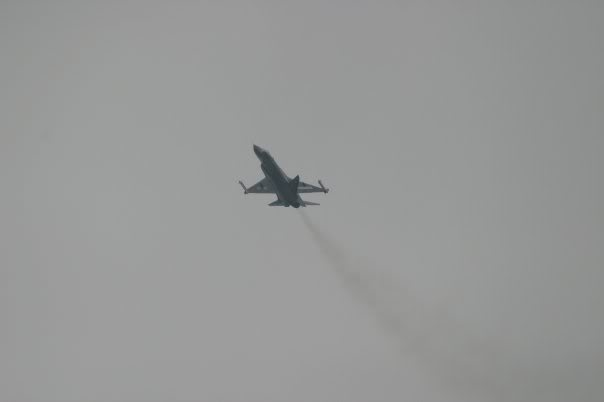
The JF-17 Thunder in motion
A dedicated JF-17 Thunder video feature is coming soon. In the meantime, explore the aircraft through the photo gallery above and the story cards, or compare it with its rivals in the related-aircraft section below.
The JF-17 Thunder in motion
History Nerd — one of the most-watched JF-17 Thunder films on YouTube.
Where the JF-17 Thunder flies
The JF-17 Thunder’s contested record
The JF-17’s combat history is genuinely hard to pin down, and we treat it that way. Its clearest, least-disputed use has been in Pakistan’s internal strikes against militants and a claimed 2017 drone shootdown. Its air-to-air record sits inside the bitterly contested 2019 and 2025 clashes with India, where both governments have made sweeping claims, independent verification is scarce, and no JF-17 kill or loss can be treated as firmly established.
For context on how contested such figures are, compare the combat record of every military aircraft. All 2019 and 2025 claims should be read as disputed. Figures as of July 2026.
Everything people ask about the JF-17 Thunder
Can I fly in a JF-17?
Who makes the JF-17 Thunder?
How much does a JF-17 cost?
What is the JF-17 Block III?
Did the JF-17 shoot down Indian jets in 2019 or 2025?
What engine does the JF-17 use?
Who operates the JF-17 Thunder?
Is the JF-17 still in production?
You can’t fly the JF-17.
These, you can.
Some legends only live in museums — others are fuelled and waiting. MiGFlug has put civilians in real military jet cockpits since 2004.
 Fly the L-39 AlbatrosThe world’s most-flown jet trainer — aerobatics included
 Fly the F-104 Starfighter“The missile with a man in it”
 Fly the MiG-21The Cold War’s most-produced jet
 טסו על ה-T-33 Shooting StarAmerica’s first jet trainer
 Fly the DH VampireA piece of early jet history
 Fly the S.211Agile Italian jet trainer
 Fly the MB-326The classic Aermacchi jet
 Fly the MiG-15The Soviet legend of the Korean War
Continue the tour
Every fact, checked
- Pakistan Aeronautical Complex — JF-17 ThunderThe manufacturer’s own programme and specification pages (operator source, read critically).
- Quwa Defence News & AnalysisDetailed profiles of the JF-17, its blocks, avionics and the Block III standard.
- 19FortyFiveAnalysis of the JF-17 as a low-cost fighter, its engine and export role.
- Aerospace Global NewsCoverage of the disputed 2025 India–Pakistan fighter-loss claims and Operation Sindoor.
- Al JazeeraOn the JF-17 export drive to Azerbaijan, Nigeria, Myanmar and prospective buyers.
- Military FactoryReference specifications, dimensions and armament data for the JF-17.
- The AviationistReporting on the 2025 air battle, the PL-15 missile and contested Rafale claims.
- GlobalSecurity.orgBackground on the FC-1/JF-17 development, the DSI intake and Block III.