
Avro Canada CF-105
“Arrow”
Canada’s Mach-2 interceptor was one of the most advanced aircraft on Earth when it flew — and then, on a single afternoon in 1959, the government cancelled it and ordered every airframe cut to scrap. It became a national wound that has never fully healed.
The interceptor that was too good to survive
In the early 1950s the fear that shaped Canadian defence planning was simple: waves of Soviet jet bombers flying the polar route over the Arctic toward North America. To meet them, the Royal Canadian Air Force wanted an interceptor that could scramble, climb high and fast, and destroy the bombers far out over the ice. Avro Canada, in Malton, Ontario, answered with the CF-105 Arrow — a large twin-engine delta designed from the start for sustained Mach-2 flight.
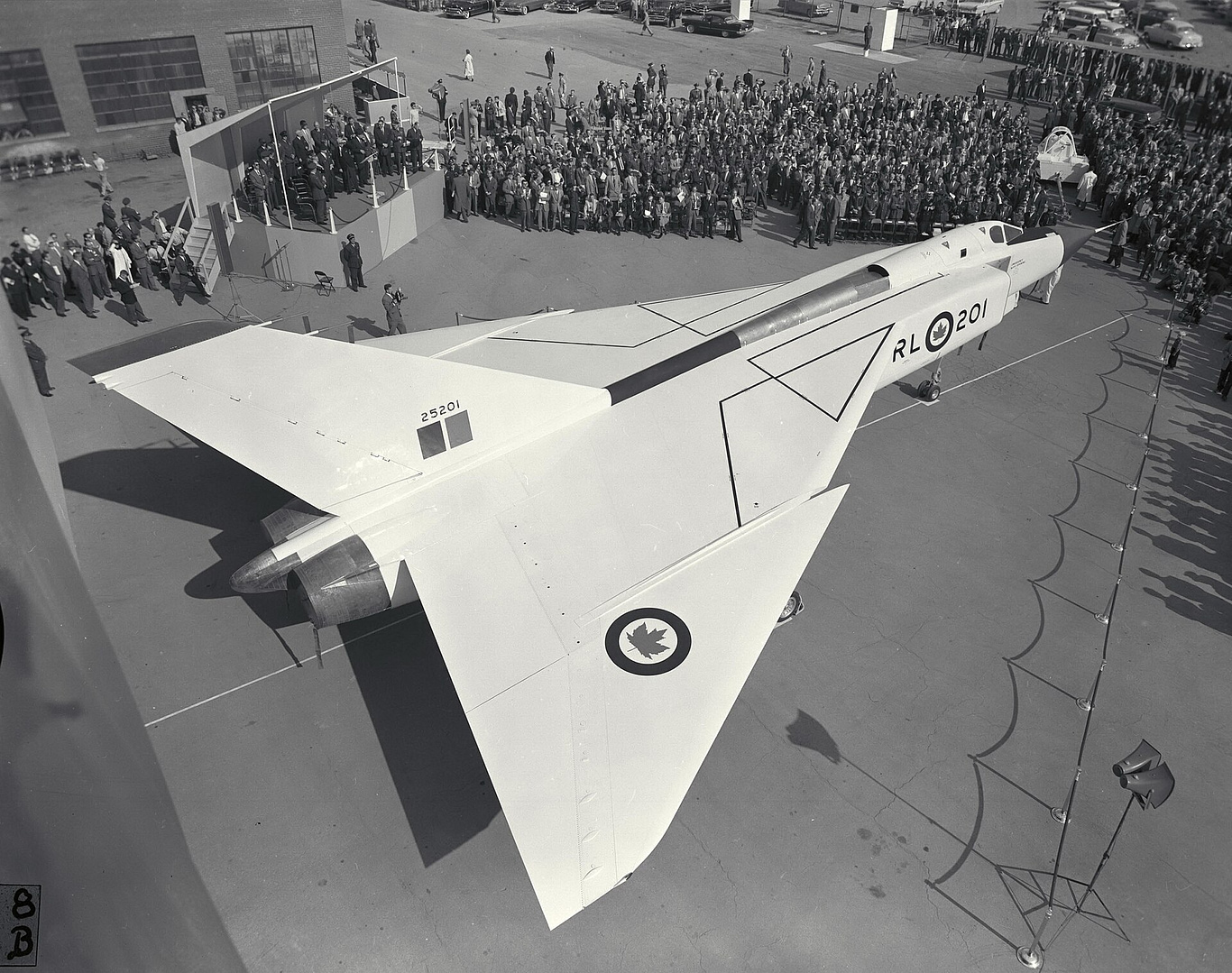
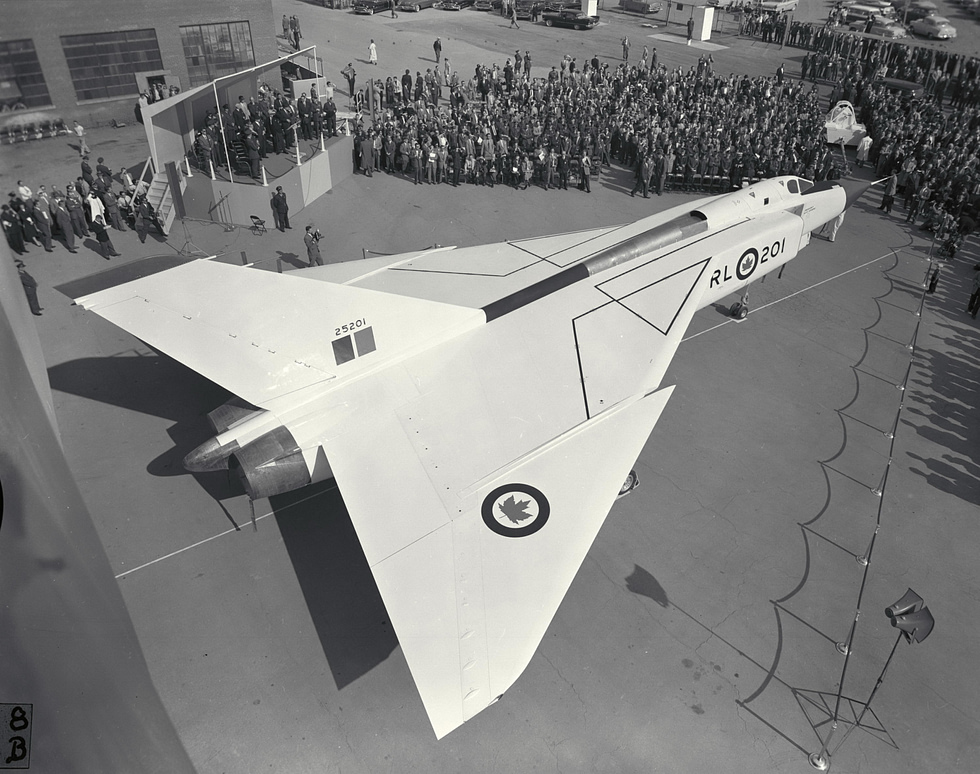
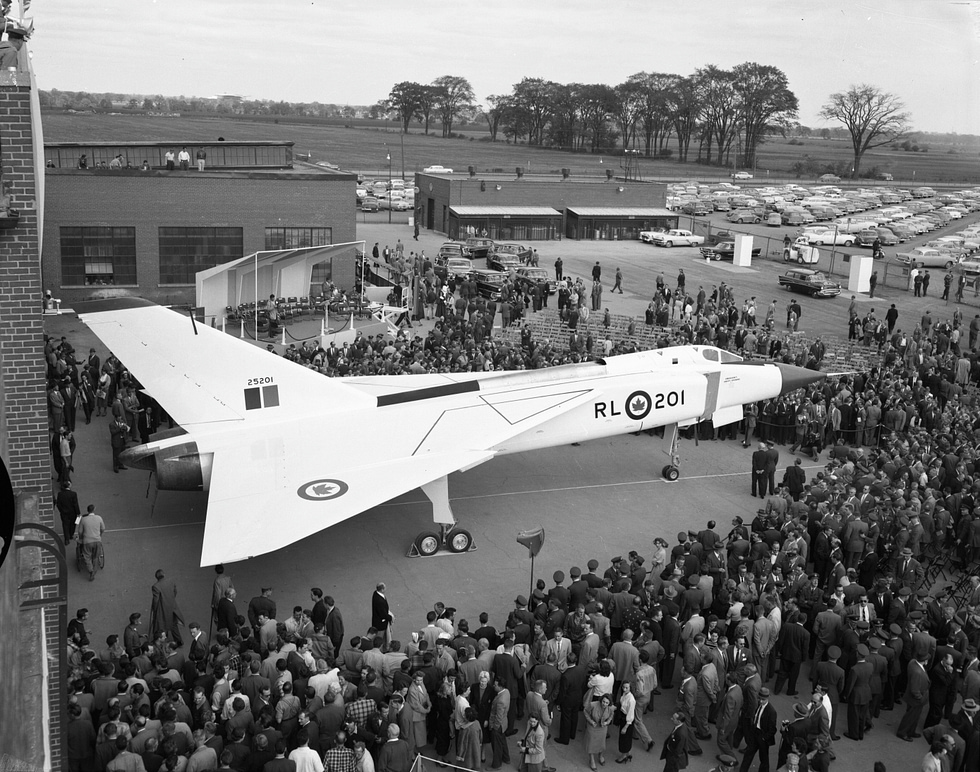
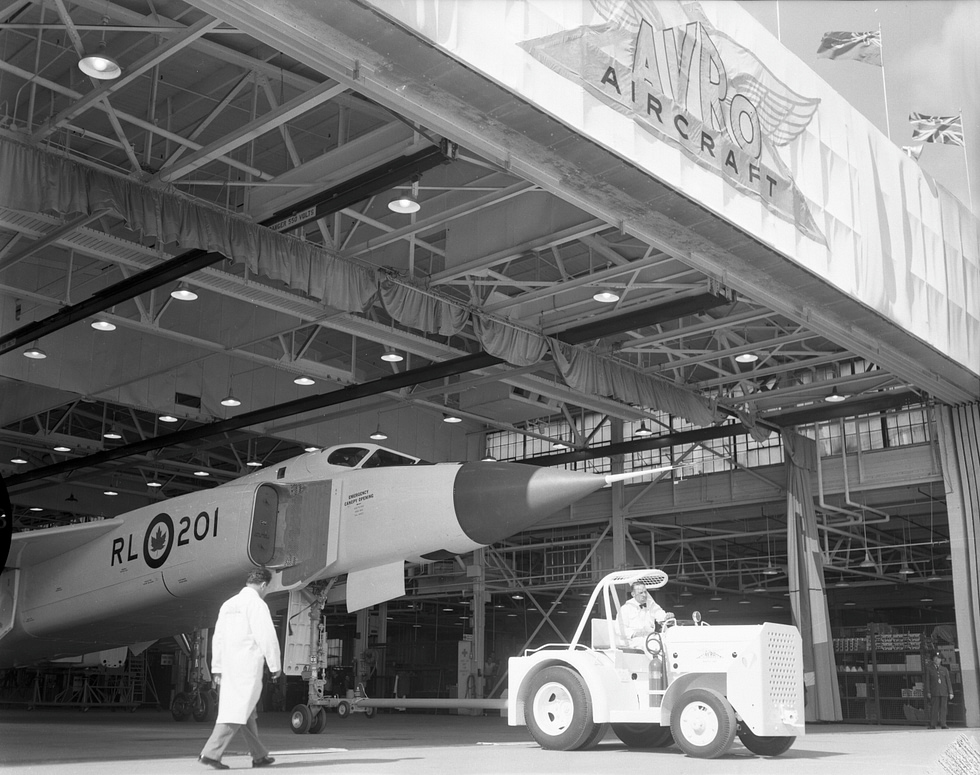
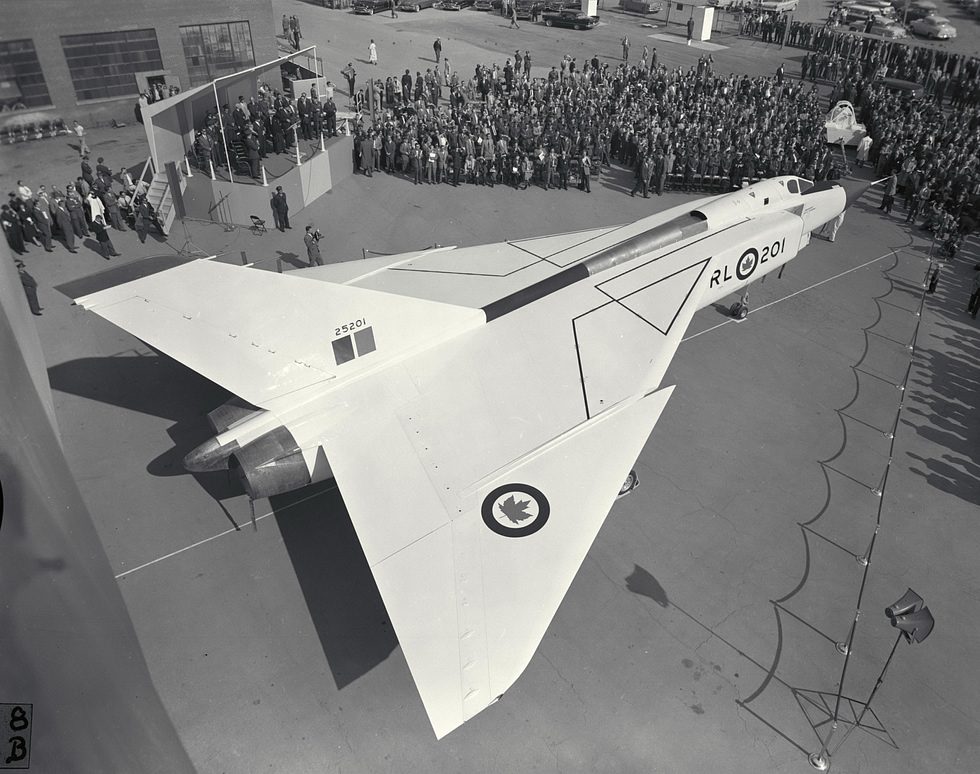
What Avro built was startlingly advanced. The Arrow had a thin high-mounted delta wing, an internal weapons bay, and control systems that pointed toward the future — including early fly-by-wire elements rare for the era. The first prototype, RL-201, rolled out to a crowd on 4 October 1957 and first flew on 25 March 1958 with test pilot Janusz Žurakowski at the controls. Even on interim Pratt & Whitney J75 engines it reached close to Mach 2; the purpose-built Orenda Iroquois engine promised more.
Then it ended. On 20 February 1959 — remembered in Canada as “Black Friday” — the Diefenbaker government cancelled the entire programme. Rising costs, a shift toward missiles, and a small home market were all cited. Weeks later came an order that still stuns: the five flying aircraft, the nearly complete airframes, the production jigs and the tooling were all to be cut up and destroyed. Roughly 14,000 Avro workers were dismissed that afternoon; tens of thousands more jobs vanished down the supply chain.
01Black Friday: how the Avro Arrow was cancelled and destroyed in a matter of weeks
The cancellation on 20 February 1959 was abrupt and total. Prime Minister John Diefenbaker announced in the House of Commons that the Arrow and its Iroquois engine were finished, and Avro dismissed its workforce the same afternoon. The official reasons were cost and strategy: the programme was expensive, the RCAF was the only customer, and defence thinking was moving toward the Bomarc surface-to-air missile and the belief that the manned bomber threat was fading.
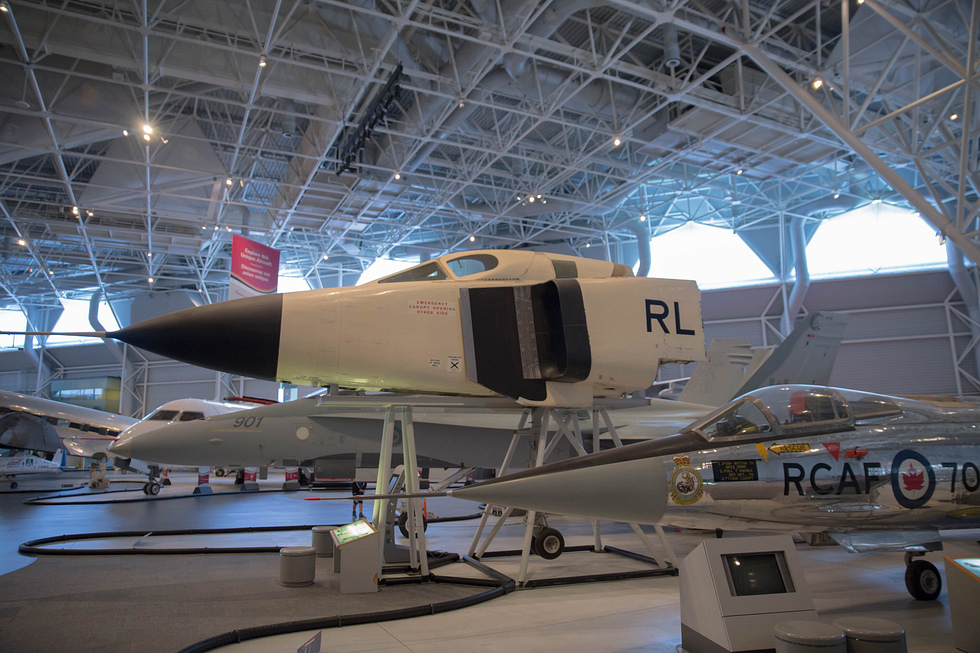
What turned a cancellation into a national trauma was what followed. In the weeks after, orders came to physically destroy everything — the flying prototypes, the airframes on the line, the jigs, drawings and tooling. Crews torched the aircraft apart and sold the metal for scrap. No complete Arrow was preserved. The most-repeated explanation is that the destruction was meant to prevent classified technology from leaking, though the thoroughness of it has fed suspicion and myth ever since. All that survives today are fragments — most notably the nose section of the unfinished Mk 2 aircraft RL-206, now at the Canada Aviation and Space Museum in Ottawa.
What made the Arrow special
A big delta built for Mach 2
The Arrow’s thin, high-mounted delta wing and area-ruled fuselage were shaped for sustained supersonic flight, not tight turning. It carried its missiles in an internal bay to keep the airframe clean. In testing the aircraft reached about Mach 1.98 on interim engines and handled well at high speed — and the design was expected to push past Mach 2 once the more powerful Iroquois engines were fitted.
Fly-by-wire ahead of its time
The Arrow used an advanced automatic flight-control system with electronic (fly-by-wire) signalling to its hydraulic controls — a concept that would not become common in fighters for another two decades. Combined with an ambitious integrated fire-control and weapons system, it was one of the most technologically forward interceptors of the 1950s, though the parallel avionics programme proved troubled and costly.
The Orenda Iroquois engine
Avro’s sister company Orenda developed the PS-13 Iroquois, a large afterburning turbojet built largely from titanium and among the most powerful engines of its day. It was meant to give the Mk 2 Arrow true Mach-2-plus performance. The Iroquois was cancelled alongside the aircraft — a home-grown engine that never reached the service that was designed around it.
02The Avro Arrow’s fly-by-wire and fire-control ambitions
The Arrow was designed to fight as a system, not just as an airframe. Its flight controls were signalled electronically to the hydraulic actuators — an early form of fly-by-wire with mechanical backup — and it was to be paired with the American RCA-Victor Astra fire-control system and Sparrow missiles. That avionics-and-weapons package was one of the biggest drivers of cost and delay. When the government looked at the total programme bill, the electronics were a large part of what made the Arrow look unaffordable, and the Astra/Sparrow combination had already been dropped in favour of a simpler system before the end came.
03The Iroquois engine: Canada’s world-class turbojet that died with the Arrow
The Orenda Iroquois was an extraordinary achievement for a country of Canada’s size — a large, titanium-rich afterburning turbojet in the same power class as the best American engines of the late 1950s. It was flight-tested slung under the fuselage of a modified B-47 bomber. The Mk 1 Arrows flew on interim Pratt & Whitney J75 engines while the Iroquois matured; the Mk 2, with Iroquois power, was expected to be genuinely faster. Both engine and aircraft were cancelled together on 20 February 1959, and the completed Iroquois engines were scrapped.
Avro Arrow Mk 1 — full specifications
Airframe & Performance
- クルー
- 2 (pilot & navigator/AI operator)
- 長さ
- 23.71 m (77 ft 10 in)
- 翼幅
- 15.24 m (50 ft)
- 身長
- 6.48 m (21 ft 3 in)
- 空虚重量
- ~22,200 kg
- Max takeoff weight
- ~31,100 kg (68,600 lb)
- Max speed (achieved)
- Mach 1.98 (~2,100 km/h)
- Max speed (Mk 2 projected)
- Mach 2+
- サービス天井
- ~15,000–16,000 m (~50,000+ ft)
- First flight
- 25 March 1958
Propulsion & Systems
- Engines (Mk 1)
- 2 × Pratt & Whitney J75 turbojets
- Engines (Mk 2, planned)
- 2 × Orenda Iroquois PS-13
- Thrust (each, reheat)
- ~100+ kN with afterburner
- Armament (planned)
- AAMs in internal weapons bay
- Fire control (planned)
- RCA Astra / later simplified system
- Aircraft flown
- 5 (RL-201 to RL-205)
- Total ordered/built
- ~37 airframes (most incomplete)
- Programme cancelled
- 20 February 1959
- Unit cost
- No firm figure — see below
04What did the Avro Arrow cost — and why is there no clean price?
There is no reliable single flyaway price for the Arrow, because it never reached series production and its cost was a moving target. The programme — aircraft plus the Iroquois engine and the troubled Astra/Sparrow weapons system — ran to roughly a billion late-1950s dollars, and projected per-aircraft costs climbed steeply as the export market failed to appear and the RCAF remained the only customer. The Diefenbaker government pointed to those rising costs, and to a strategic bet on the Bomarc missile, as the core justification for cancellation. Any precise dollar-per-Arrow figure you see should be read as an estimate shaped by which costs are counted.
From Arctic shield to national myth
The requirement
The RCAF issues a specification for a supersonic all-weather interceptor to stop Soviet bombers over the Canadian Arctic.
Rollout
The first Arrow, RL-201, is unveiled to a crowd at Malton on 4 October — the same day the USSR launches Sputnik.
First flight
On 25 March test pilot Janusz Žurakowski takes RL-201 into the air; the type soon approaches Mach 2 on interim engines.
Black Friday
On 20 February the Diefenbaker government cancels the Arrow and the Iroquois engine; Avro dismisses ~14,000 workers that day.
The destruction order
Weeks later, all five flying aircraft, the airframes on the line, the jigs and tooling are ordered cut up and sold for scrap.
Engineers to NASA
Dozens of Avro engineers are recruited by the newborn US space programme; the first 25 report to NASA Langley on 9 April.
The Arrow returns as legend
The CBC miniseries The Arrow, starring Dan Aykroyd, cements the aircraft’s place in Canadian popular memory.
Recovered from the lake
Searchers raise a delta test vehicle from Lake Ontario, part of the free-flight model programme that helped shape the Arrow.
Twelve stories of the Avro Arrow
A shield over the Pole
The Arrow was born from the fear of Soviet bombers crossing the Arctic toward North America.
Read the full story
Unveiled the day of Sputnik
RL-201 was shown to the public on 4 October 1957 — hours before the USSR launched Sputnik.
Read the full story
Žurakowski takes it up
On 25 March 1958 chief test pilot Janusz Žurakowski flew the Arrow for the first time.
Read the full story
The afternoon it all ended
On 20 February 1959 the government cancelled the Arrow — and Avro fired ~14,000 people that day.
Read the full story
Everything cut to scrap
No complete Arrow survives — the aircraft, jigs and drawings were deliberately destroyed.
Read the full story
The engineers who reached the Moon
Dozens of Avro’s best engineers were hired by NASA and helped put astronauts on the Moon.
Read the full story
A world-class engine, scrapped
The Orenda Iroquois was one of the finest engines of its era — and it never entered service.
Read the full story
Fired into Lake Ontario
Instrumented free-flight models of the Arrow were rocketed out over Lake Ontario for aerodynamic testing.
Read the full story
“The Arrow lives”
A durable legend holds that one Arrow secretly escaped the torches. There is no evidence it did.
Read the full story
Aykroyd and the miniseries
The 1997 CBC miniseries The Arrow turned the aircraft into a lasting piece of Canadian identity.
Read the full story
The interceptor that never served
The Arrow never entered squadron service or fired a shot — its record is entirely one of promise.
Read the full story
Canada buys the Starfighter instead
Having cancelled the Arrow, Canada equipped the RCAF with the licence-built CF-104 Starfighter.
Read the full story
The Arrow in pictures
The Arrow on film
Video coming soon. We are preparing a curated video feature on the Avro Arrow — its rollout, its brief flying career and the story of Black Friday. In the meantime, the photo gallery above and the twelve stories capture the aircraft and its afterlife.
Where the Arrow belonged
A record written only in what-ifs
The Avro Arrow has no combat record at all. Only five aircraft ever flew, every one of them a test machine, and the type was cancelled before a single Arrow reached an operational RCAF squadron. There are no kills, no losses in action, no missions — just flight-test data and the performance the design was projected to reach. Its entire reputation rests on promise rather than proof, which is precisely what makes it a national legend.
For aircraft that did see action, compare the combat record of every military aircraft. Figures as of July 2026.
Everything people ask about the Avro Arrow
Can I fly in an Avro Arrow?
Why was the Avro Arrow cancelled?
Why were all the aircraft destroyed?
Did an Avro Arrow secretly survive?
How fast was the Avro Arrow?
Is it true Avro engineers went to NASA?
Can I see an Avro Arrow today?
You can’t fly the Arrow.
These, you can.
Some legends only live in museums — others are fuelled and waiting. MiGFlug has put civilians in real military jet cockpits since 2004.
 Fly the L-39 AlbatrosThe world’s most-flown jet trainer — aerobatics included
 Fly the F-104 Starfighter“The missile with a man in it”
 Fly the MiG-21The Cold War’s most-produced jet
 T-33シューティングスターを操縦しようAmerica’s first jet trainer
 Fly the DH VampireA piece of early jet history
 Fly the S.211Agile Italian jet trainer
 Fly the MB-326The classic Aermacchi jet
 Fly the MiG-15The Soviet legend of the Korean War
Continue the tour
Every fact, checked
- Royal Canadian Air Force — CF-105 ArrowOfficial RCAF aircraft page: specifications, crew and the February 1959 termination.
- Ingenium / Canada Aviation and Space MuseumThe free-flight models fired over Lake Ontario and the 2018 recovery.
- CBC NewsRecovery of an Arrow-programme test vehicle from Lake Ontario.
- CNN TravelOverview of the Arrow’s development, cancellation and enduring myth.
- The War Zone (TWZ)The Arrow as a Cold War legend, the technology and the conspiracy lore.
- 19FortyFiveBlack Friday, the destruction order and the Avro engineers who joined NASA.
- Canada Aviation and Space Museum — collectionThe surviving RL-206 nose section and Iroquois engine in the national collection.