
Xian H-6
“The Chinese Badger”
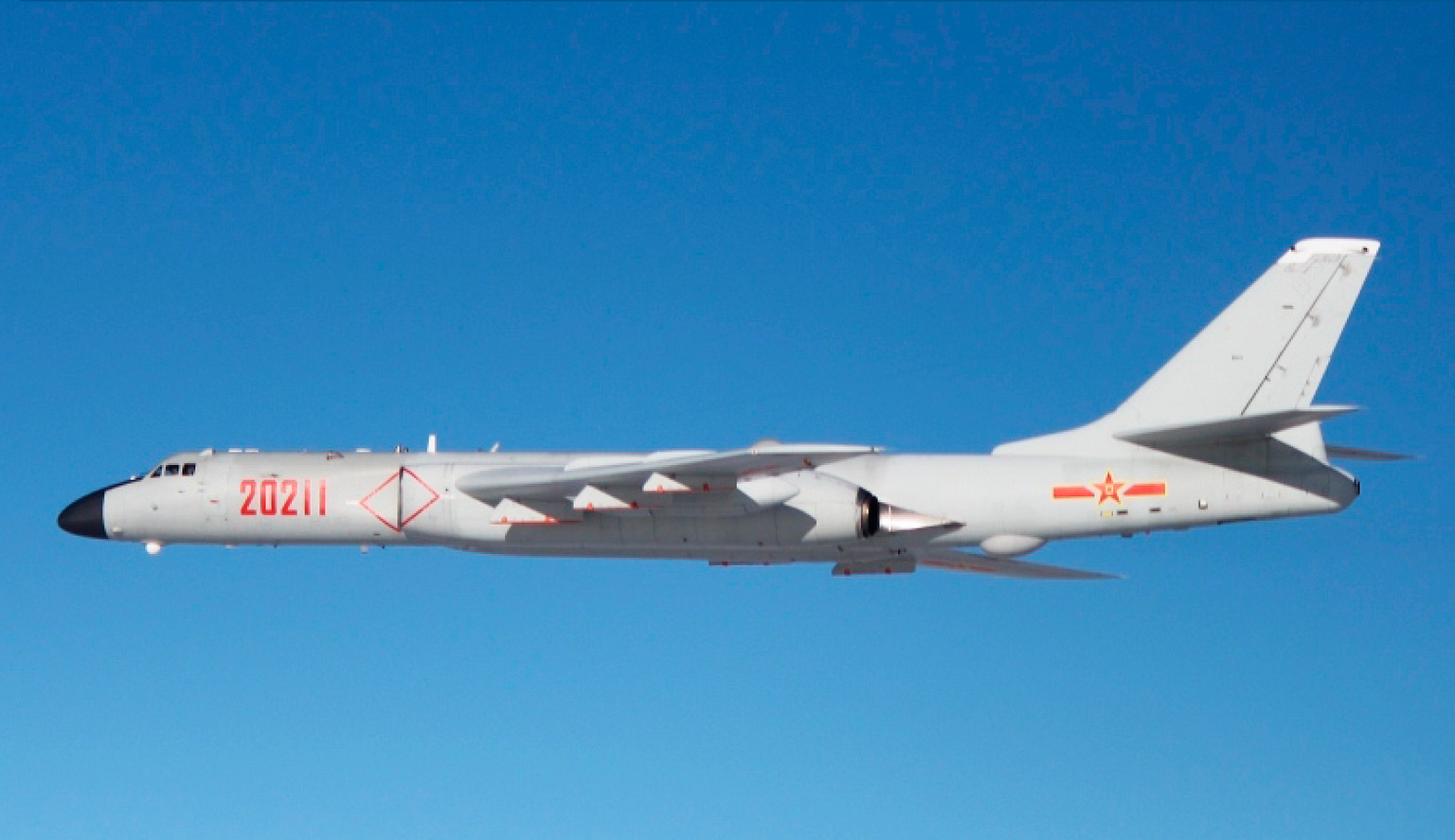
A 1950s Soviet Tupolev Tu-16 design, licence-built in China and kept in front-line service for more than sixty years — rebuilt in its modern H-6K and H-6N forms into a long-range cruise-missile carrier that now forms a core of China’s air-based strike and deterrent forces.
A Soviet bomber that China never stopped rebuilding
The Xian H-6 began life as someone else’s aircraft. In September 1957 the Soviet Union agreed to licence China production of its Tupolev Tu-16 “Badger,” a twin-jet medium bomber then only a few years old. Kits, components and technical data were shipped from the Tupolev plant at Kazan, and the first Chinese-assembled aircraft — built largely from Soviet parts — flew in 1959. Then the Sino-Soviet split cut off support, and Chinese industry had to finish the job substantially alone. The first fully Chinese-built H-6 is generally dated to its maiden flight on 24 December 1968, produced by what became the Xian Aircraft Industrial Corporation.
For decades the H-6 was what its Tu-16 origins suggested: a subsonic, glazed-nose free-fall bomber of 1950s pedigree, increasingly outdated as air defences improved. It also carried a heavy symbolic role — an H-6 dropped China’s first air-delivered nuclear weapon in 1965. What is unusual is not the design’s age but that China, rather than retiring it, kept rebuilding it. Successive variants swapped out engines, avionics and weapons until the airframe was doing a job its Soviet designers never imagined.
The clearest break came with the H-6K, first flown in 2007. It deleted the old glazed navigator’s nose for a solid radome, added a glass cockpit, fitted more efficient turbofan engines and hung six underwing pylons for long-range cruise missiles. The later H-6N added an aerial-refuelling probe and a recess for a large air-launched missile, roles associated with China’s emerging air-based deterrent. The H-6 is not stealthy and cannot survive over modern defences; instead it launches standoff weapons from a distance. Widely described as a “missile truck,” it remains in front-line PLAAF and PLA Navy service while a stealthy successor, the H-20, is reported to be in development.
01The Xian H-6’s Tu-16 lineage: how a Soviet Badger became a Chinese institution
The H-6 is a licence-built development of the Tupolev Tu-16, not an independent Chinese design — a distinction worth keeping clear. The 1957 agreement gave China Soviet-made aircraft, component kits and manufacturing data; early airframes were assembled at Harbin before production moved to Xian in the early 1960s. When Soviet technical help was withdrawn after the Sino-Soviet split, Chinese engineers had to reverse-engineer and re-document parts of the aircraft to complete a wholly domestic example, which is why the “first flight” is quoted two ways: a Soviet-parts assembly in 1959 and a fully Chinese-built aircraft in 1968.
Exact production totals and dates vary between sources and should be read as estimates. What is not in dispute is longevity: where the Soviet Union retired its Tu-16s decades ago, China kept the basic airframe in production and service, upgrading it repeatedly rather than replacing it. The modern H-6K and H-6N share that lineage but are, in avionics, engines and weapons, very different aircraft from the 1950s bomber they descend from.
What makes it special
From glazed-nose bomber to solid-nose missile carrier
The most visible change in the modern H-6K is the nose. The old Tu-16-style glazed navigator’s station was deleted in favour of a solid nose housing a large radar, and the cockpit was rebuilt with multi-function displays in place of analogue dials. Crew size fell to about four. It is the clearest sign that the H-6 stopped being a free-fall bomber and became a sensor-and-missile platform.
New turbofans that transformed its reach
Early H-6s used two WP-8 turbojets, a Chinese copy of the Soviet engines in the Tu-16. The H-6K is generally reported to use two more efficient D-30KP-2 turbofans (imported from Russia, with a domestic WS-18 said to be in development). The extra thrust and fuel economy are commonly credited with pushing the H-6K’s combat radius to roughly 3,500 km — figures that vary by source and should be treated as estimates.
A “missile truck,” not a penetrator
The H-6 is subsonic and non-stealthy; it could not survive over a modern integrated air defence. The modern design leans into that. Six underwing pylons carry long-range land-attack cruise missiles (such as the KD-20/CJ-10 family) or anti-ship missiles, letting the aircraft strike from standoff range without entering defended airspace — the logic behind its “missile truck” nickname.
02The Xian H-6N: aerial refuelling and an air-launched missile role
の H-6N, publicly revealed around 2019, is the most specialised variant. It adds an aerial-refuelling probe — unusual for the type — which extends its range and is widely read as supporting a longer-reach strike or deterrent mission. Its fuselage was reworked with a centreline recess reported to carry a large air-launched ballistic missile, and analysts have linked it to what may be a hypersonic or manoeuvring weapon. Much about the missile remains officially unconfirmed, so these descriptions rest on satellite imagery, photographs and analyst assessment rather than disclosed data.
If those assessments are correct, the H-6N would give China an air-launched leg to complement its land- and sea-based long-range forces — part of what US and other assessments describe as a developing air-based component of China’s deterrent. The word “developing” matters: the capability is real enough to track but still maturing, and precise numbers, ranges and readiness are not publicly established.
03The Xian H-6’s weapons: cruise missiles, anti-ship strike and standoff range
The point of the modernised H-6 is its weapons load. Land-attack variants carry cruise missiles of the KD-20/CJ-10 family — commonly cited at six per aircraft, sometimes a seventh on a centreline station — giving a subsonic bomber a way to hit targets many hundreds of kilometres away. Naval variants such as the H-6G and H-6J, flown by the PLA Navy, specialise in anti-ship strike with weapons including the supersonic YJ-12. The common thread is standoff: the aircraft is a launch platform, valued for how far its missiles reach rather than for speed, stealth or the ability to fight its way to a target.
Full specifications
Figures are broadly for the modern H-6K and mix official, estimated and analyst-assessed data. Many values are disputed between sources and are hedged accordingly.
Airframe & Performance
- クルー
- ~4 (H-6K) · up to 6 on earlier variants
- 長さ
- ~34.8 m
- 翼幅
- ~33 m
- 身長
- ~10.4 m
- Max takeoff weight
- ~76,000 kg (base H-6); higher figures cited for the H-6K
- Max speed
- ~1,050 km/h (subsonic, about Mach 0.85)
- 巡航速度
- ~770 km/h
- サービス天井
- ~12,000–13,000 m
- Combat radius (H-6K)
- ~3,500 km (estimate; extended by cruise missiles)
Propulsion, Armament & Cost
- Engines (early)
- 2 × Xian WP-8 turbojet
- Engines (H-6K)
- 2 × Soloviev D-30KP-2 turbofan (WS-18 in development)
- Radar
- Large nose radar (H-6K); type not fully disclosed
- Main weapon
- 6–7 KD-20/CJ-10 land-attack cruise missiles
- Anti-ship
- YJ-12 and other missiles (naval H-6G/H-6J)
- Special role
- H-6N: aerial refuelling + air-launched missile
- First flight (domestic)
- 24 December 1968 · H-6K in 2007
- Unit cost
- No reliable public figure
- Cost per flight hour
- No reliable public figure
04The Xian H-6’s operating costs: why no reliable price exists
The H-6 is a Chinese state military product, never sold on an open market, so there is no credible public flyaway unit price or cost-per-flight-hour figure for the type — and certainly none for the modern H-6K or H-6N. Any specific dollar number attached to the aircraft should be treated as speculation rather than a sourced figure.
What can be said with more confidence is the economic logic behind the programme: repeatedly upgrading a long-established airframe is generally far cheaper than developing an all-new bomber, which is part of why China kept improving the H-6 while a clean-sheet stealth successor, the H-20, was reportedly under development.
From Soviet licence to modern missile carrier
The licence
The Soviet Union agrees to licence Tu-16 “Badger” production to China, supplying aircraft, kits and technical data.
First Chinese assembly
The first Tu-16 assembled in China — largely from Soviet-supplied parts — makes its maiden flight.
Nuclear delivery
An H-6 drops China’s first air-delivered nuclear weapon, a role that shapes the type’s early strategic identity.
Fully Chinese-built
The first wholly Chinese-produced H-6 flies on 24 December, after Soviet technical support had been withdrawn.
Export and combat
Iraq receives H-6D bombers and uses their anti-ship missiles against shipping during the Iran–Iraq “Tanker War.”
The H-6K
The heavily modernised H-6K flies — solid nose, glass cockpit, new turbofans and six cruise-missile pylons.
The H-6N
The H-6N appears with an aerial-refuelling probe and a recess for a large air-launched missile, tied to a longer-range deterrent role.
Front-line, still
H-6K and H-6N aircraft fly long-range patrols and standoff-strike training while a stealthy successor, the H-20, is reported in development.
Twelve H-6 stories
A bomber on licence from Moscow
The H-6 started as a Soviet Tu-16 built under a 1957 agreement.
Read the full story
Finishing the job alone
The Sino-Soviet split forced China to complete the bomber without Soviet help.
Read the full story
The bomb dropped from a Badger
An H-6 delivered China’s first air-dropped nuclear weapon in 1965.
Read the full story
The nose that changed everything
The H-6K deleted the glazed bomber nose for a solid radar-carrying one.
Read the full story
New turbofans, new range
More efficient engines are credited with a big jump in the H-6K’s reach.
Read the full story
Why they call it a missile truck
The modern H-6 is a launch platform, not a jet meant to reach the target.
Read the full story
The probe on the H-6N
The specialised H-6N added aerial refuelling, unusual for the type.
Read the full story
An air-launched weapon — details uncertain
The H-6N is linked to a large air-launched missile that remains largely unconfirmed.
Read the full story
The Badgers by the Nile
Egypt operated Tu-16/H-6 bombers before retiring them around 2000.
Read the full story
H-6D in the Tanker War
Iraq used Chinese H-6D bombers and their missiles against shipping in the 1980s.
Read the full story
The naval H-6
PLA Navy H-6 variants specialise in long-range anti-ship strike.
Read the full story
An ageing airframe that will not retire
Analysts disagree on how much life is left in a 1950s design.
Read the full story
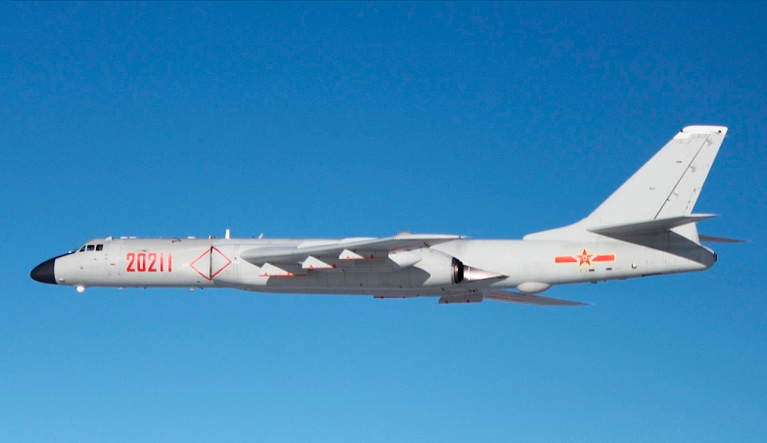
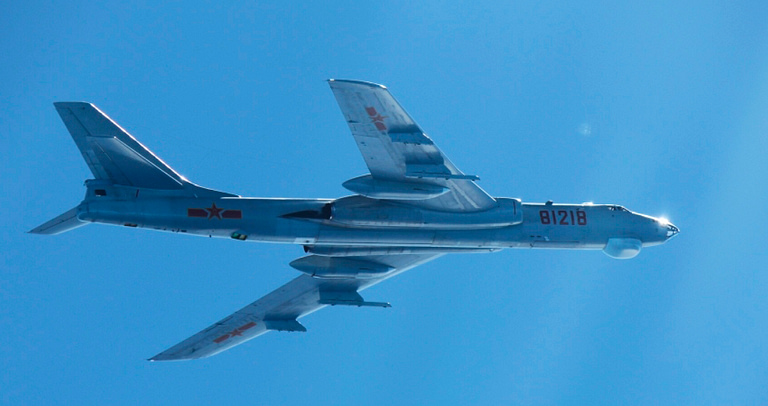
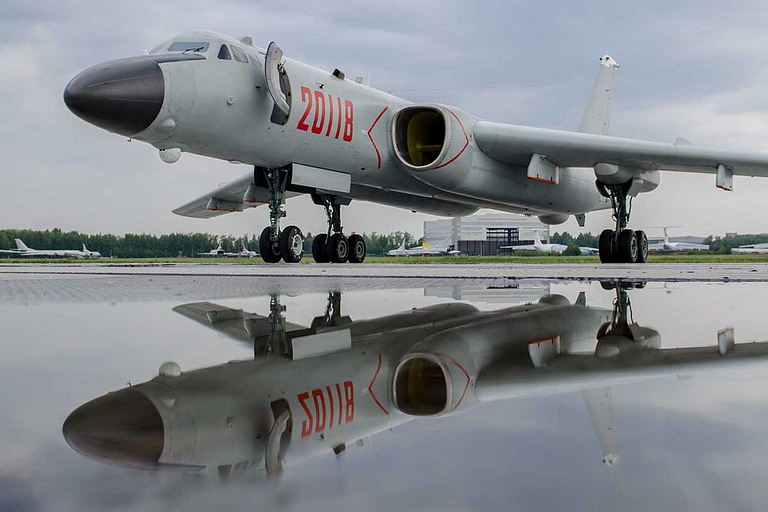
The H-6 in pictures
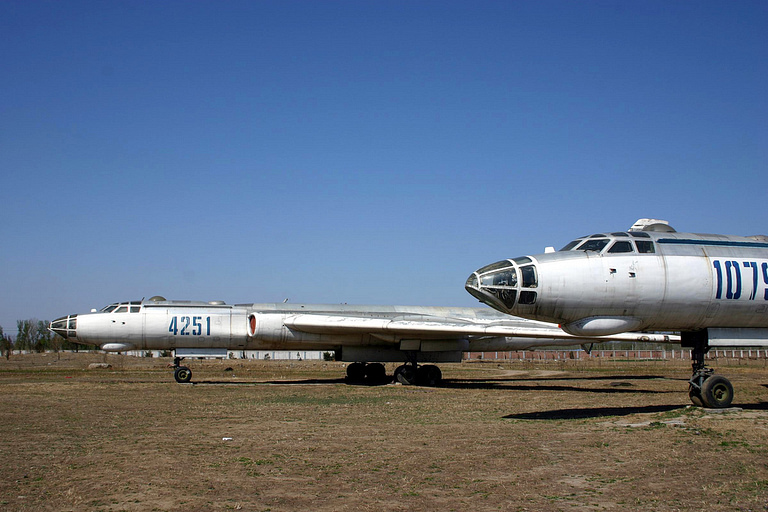
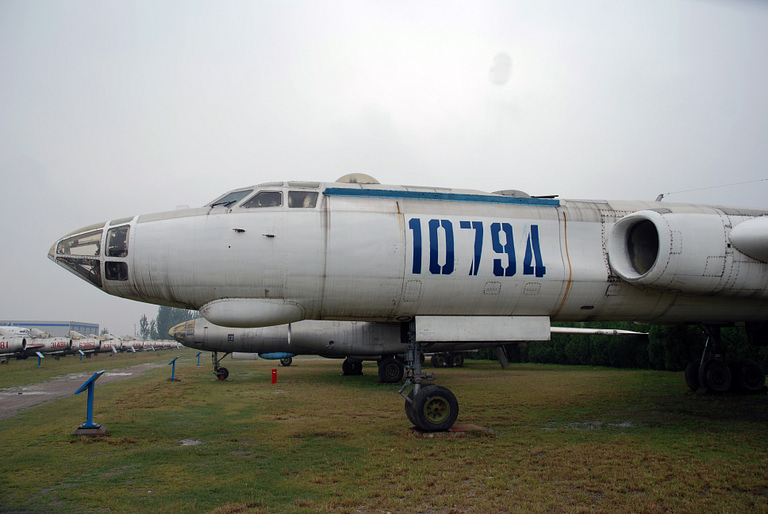
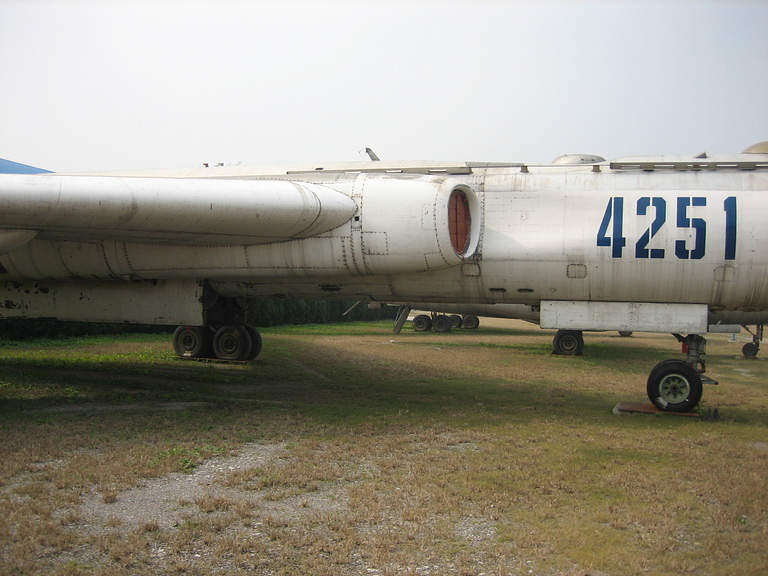
The H-6 in motion
A curated video feature for the Xian H-6 is coming soon. In the meantime, explore the photo gallery above and the operator map below.
Where the H-6 flies
The record that defines it
The H-6’s Chinese service has been one of deterrence and long-range patrol rather than air-to-air combat: it has no significant record of shooting down or being shot down by other aircraft. Its most active combat use abroad was in Iraqi hands, where H-6D bombers launched anti-ship missiles during the Iran–Iraq Tanker War of the late 1980s. In Chinese service the aircraft’s significance is measured in reach — long-range flights around Taiwan and into the western Pacific, and its role as a launcher for standoff and, on the H-6N, air-launched missiles.
Compare the combat record of every military aircraft. Figures as of July 2026.
Everything people ask about the H-6
Can I fly in an H-6?
Is the H-6 the same as the Soviet Tu-16?
How old is the H-6 design?
What is the H-6K?
Can the H-6N carry a ballistic or hypersonic missile?
Is the H-6 a stealth bomber?
Is the H-6 still in service?
You can’t fly the H-6.
These, you can.
Some legends only live in museums — others are fuelled and waiting. MiGFlug has put civilians in real military jet cockpits since 2004.
 Fly the L-39 AlbatrosThe world’s most-flown jet trainer — aerobatics included
 Fly the F-104 Starfighter“The missile with a man in it”
 Fly the MiG-21The Cold War’s most-produced jet
 T-33シューティングスターを操縦しようAmerica’s first jet trainer
 Fly the DH VampireA piece of early jet history
 Fly the S.211Agile Italian jet trainer
 Fly the MB-326The classic Aermacchi jet
 Fly the MiG-15The Soviet legend of the Korean War
Continue the tour
Every fact, checked
- GlobalSecurity.org — H-6 developmentLicence history, the 1959 and 1968 first-flight dates and the move to Xian.
- GlobalSecurity.org — H-6K air-striking platformThe H-6K modernisation, engines and cruise-missile role.
- The Aviationist — H-6N air-launched missileImagery and analysis of the H-6N and its air-launched ballistic missile.
- The War Zone — H-6N mystery missileEarly reporting on the possible hypersonic air-launched weapon.
- FlightGlobal — H-6N ballistic missileAnalysis of the H-6N carrier role and refuelling probe.
- The National Interest — the H-6 “missile truck”The doctrine behind using a subsonic bomber as a standoff launcher.
- Military Factory — Xian H-6Specification baseline, variants and production overview.
- US DoD — China Military Power ReportOfficial assessment of the H-6N and China’s developing air-based deterrent.