
Xian H-6
“The Chinese Badger”
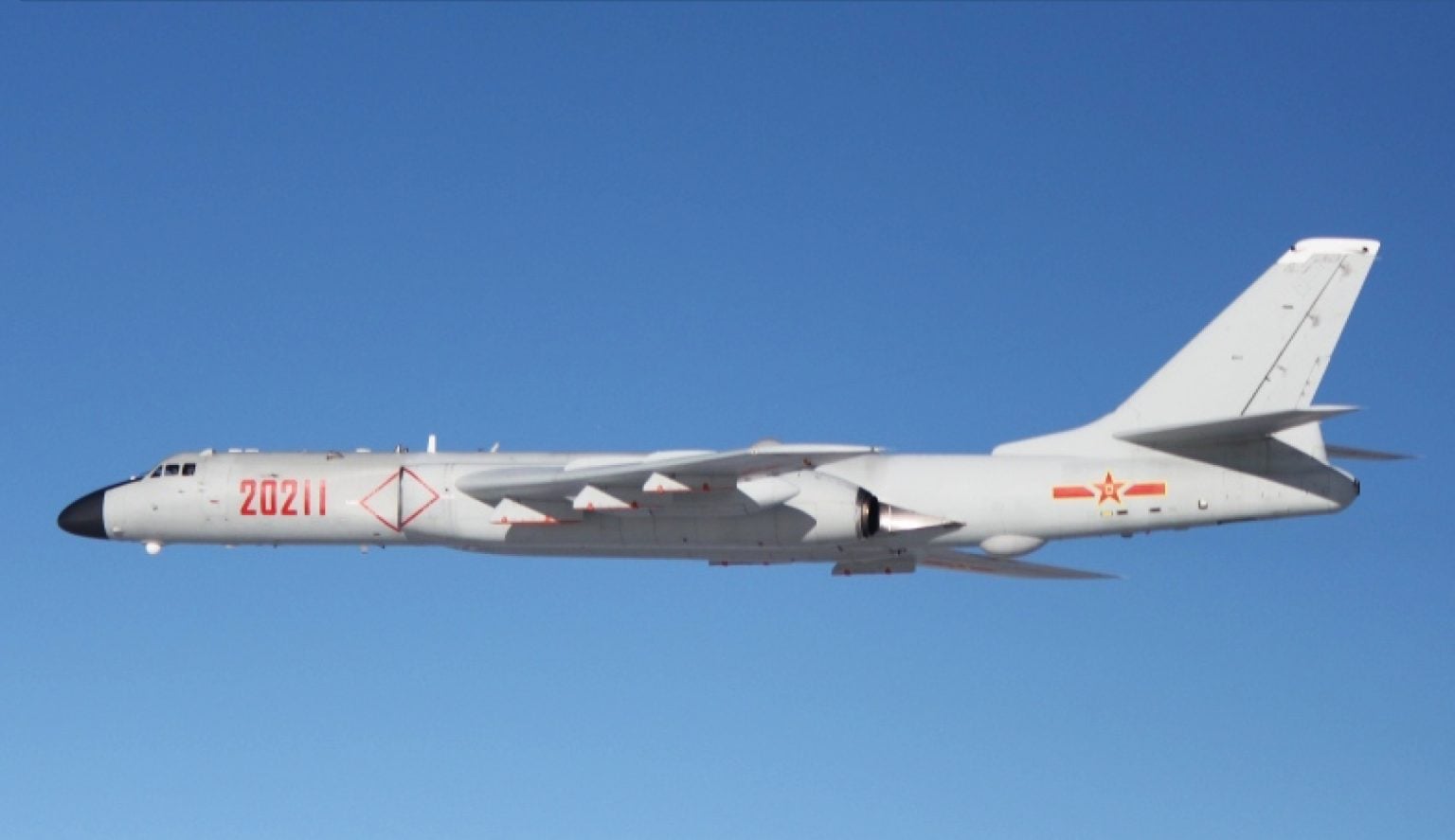
A 1950s Soviet Tupolev Tu-16 design, licence-built in China and kept in front-line service for more than sixty years — rebuilt in its modern H-6K and H-6N forms into a long-range cruise-missile carrier that now forms a core of China’s air-based strike and deterrent forces.
A Soviet bomber that China never stopped rebuilding
The Xian H-6 began life as someone else’s aircraft. In September 1957 the Soviet Union agreed to licence China production of its Tupolev Tu-16 “Badger,” a twin-jet medium bomber then only a few years old. Kits, components and technical data were shipped from the Tupolev plant at Kazan, and the first Chinese-assembled aircraft — built largely from Soviet parts — flew in 1959. Then the Sino-Soviet split cut off support, and Chinese industry had to finish the job substantially alone. The first fully Chinese-built H-6 is generally dated to its maiden flight on 24 December 1968, produced by what became the Xian Aircraft Industrial Corporation.
For decades the H-6 was what its Tu-16 origins suggested: a subsonic, glazed-nose free-fall bomber of 1950s pedigree, increasingly outdated as air defences improved. It also carried a heavy symbolic role — an H-6 dropped China’s first air-delivered nuclear weapon in 1965. What is unusual is not the design’s age but that China, rather than retiring it, kept rebuilding it. Successive variants swapped out engines, avionics and weapons until the airframe was doing a job its Soviet designers never imagined.
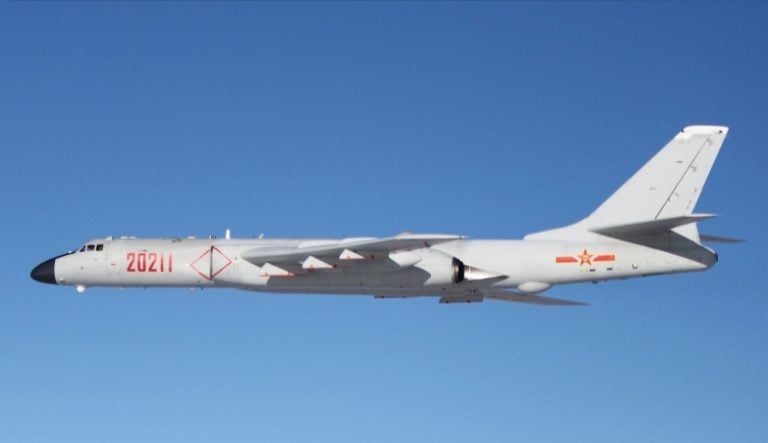
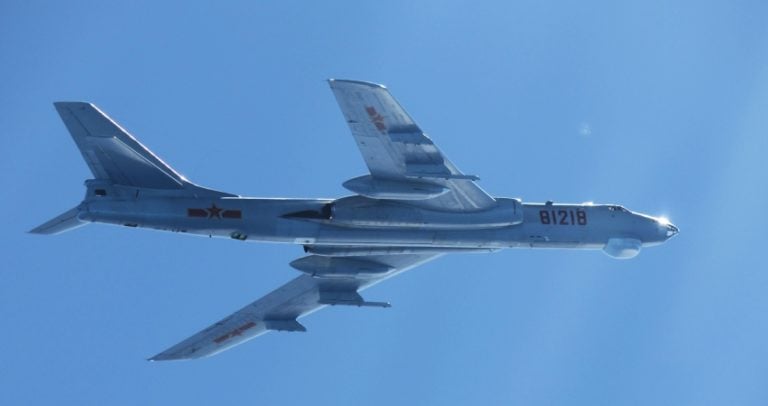
The clearest break came with the H-6K, first flown in 2007. It deleted the old glazed navigator’s nose for a solid radome, added a glass cockpit, fitted more efficient turbofan engines and hung six underwing pylons for long-range cruise missiles. The later H-6N added an aerial-refuelling probe and a recess for a large air-launched missile, roles associated with China’s emerging air-based deterrent. The H-6 is not stealthy and cannot survive over modern defences; instead it launches standoff weapons from a distance. Widely described as a “missile truck,” it remains in front-line PLAAF and PLA Navy service while a stealthy successor, the H-20, is reported to be in development.
01The Xian H-6’s Tu-16 lineage: how a Soviet Badger became a Chinese institution
The H-6 is a licence-built development of the Tupolev Tu-16, not an independent Chinese design — a distinction worth keeping clear. The 1957 agreement gave China Soviet-made aircraft, component kits and manufacturing data; early airframes were assembled at Harbin before production moved to Xian in the early 1960s. When Soviet technical help was withdrawn after the Sino-Soviet split, Chinese engineers had to reverse-engineer and re-document parts of the aircraft to complete a wholly domestic example, which is why the “first flight” is quoted two ways: a Soviet-parts assembly in 1959 and a fully Chinese-built aircraft in 1968.
Exact production totals and dates vary between sources and should be read as estimates. What is not in dispute is longevity: where the Soviet Union retired its Tu-16s decades ago, China kept the basic airframe in production and service, upgrading it repeatedly rather than replacing it. The modern H-6K and H-6N share that lineage but are, in avionics, engines and weapons, very different aircraft from the 1950s bomber they descend from.
What makes it special
From glazed-nose bomber to solid-nose missile carrier
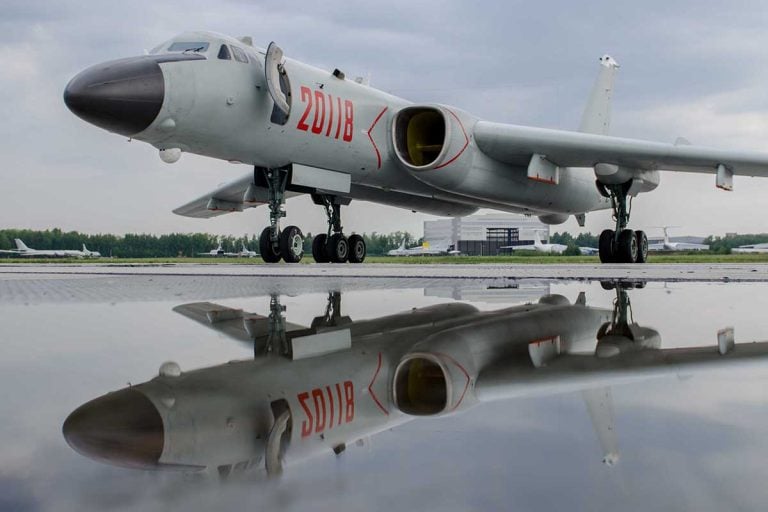
The most visible change in the modern H-6K is the nose. The old Tu-16-style glazed navigator’s station was deleted in favour of a solid nose housing a large radar, and the cockpit was rebuilt with multi-function displays in place of analogue dials. Crew size fell to about four. It is the clearest sign that the H-6 stopped being a free-fall bomber and became a sensor-and-missile platform.
New turbofans that transformed its reach
Early H-6s used two WP-8 turbojets, a Chinese copy of the Soviet engines in the Tu-16. The H-6K is generally reported to use two more efficient D-30KP-2 turbofans (imported from Russia, with a domestic WS-18 said to be in development). The extra thrust and fuel economy are commonly credited with pushing the H-6K’s combat radius to roughly 3,500 km — figures that vary by source and should be treated as estimates.
A “missile truck,” not a penetrator
The H-6 is subsonic and non-stealthy; it could not survive over a modern integrated air defence. The modern design leans into that. Six underwing pylons carry long-range land-attack cruise missiles (such as the KD-20/CJ-10 family) or anti-ship missiles, letting the aircraft strike from standoff range without entering defended airspace — the logic behind its “missile truck” nickname.
02The Xian H-6N: aerial refuelling and an air-launched missile role
The H-6N, publicly revealed around 2019, is the most specialised variant. It adds an aerial-refuelling probe — unusual for the type — which extends its range and is widely read as supporting a longer-reach strike or deterrent mission. Its fuselage was reworked with a centreline recess reported to carry a large air-launched ballistic missile, and analysts have linked it to what may be a hypersonic or manoeuvring weapon. Much about the missile remains officially unconfirmed, so these descriptions rest on satellite imagery, photographs and analyst assessment rather than disclosed data.
If those assessments are correct, the H-6N would give China an air-launched leg to complement its land- and sea-based long-range forces — part of what US and other assessments describe as a developing air-based component of China’s deterrent. The word “developing” matters: the capability is real enough to track but still maturing, and precise numbers, ranges and readiness are not publicly established.
03The Xian H-6’s weapons: cruise missiles, anti-ship strike and standoff range
The point of the modernised H-6 is its weapons load. Land-attack variants carry cruise missiles of the KD-20/CJ-10 family — commonly cited at six per aircraft, sometimes a seventh on a centreline station — giving a subsonic bomber a way to hit targets many hundreds of kilometres away. Naval variants such as the H-6G and H-6J, flown by the PLA Navy, specialise in anti-ship strike with weapons including the supersonic YJ-12. The common thread is standoff: the aircraft is a launch platform, valued for how far its missiles reach rather than for speed, stealth or the ability to fight its way to a target.
Full specifications
Figures are broadly for the modern H-6K and mix official, estimated and analyst-assessed data. Many values are disputed between sources and are hedged accordingly.
Baseline note: the figures below describe the H-6K as the People’s Liberation Army Air Force flies it today — the mark with two Soloviev D-30KP-2 turbofans, enlarged wing-root intakes, a solid composite nose radome where the glazed bomb-aimer’s station used to be, no tail gun and six underwing pylons. That is the version in which this airframe matters, and the one against which American, Japanese and Taiwanese planning is actually written. Deltas for the first-generation H-6A and the H-6H cruise-missile carrier, the naval H-6J, the H-6N ballistic-missile carrier and the H-6U and H-6DU tankers are given in grey. Five cautions apply before any number below is quoted. First, the H-6K is not a Tu-16 and the two should not be read across. The wing, the fuselage cross-section, the tail and the undercarriage are still Tupolev’s of 1952, which is why the dimensional rows are almost identical to the Tu-16’s; the engines, the nose, the structure, the systems, the crew station and the entire reason for the aircraft’s existence are not. Second, China publishes no official performance data for any H-6 mark. Every figure in circulation is a Western or Chinese-enthusiast estimate, and the confident tables on the internet are copies of one another. Third, and following from that, a great many published H-6K weights are simply Tu-16 numbers carried across: the 37,200 kg empty weight below is the Tu-16’s to the kilogram, which for an aircraft with different engines, a different nose and a partly composite structure is not credible as anything but a placeholder. It is printed here because it is what the sources say, flagged for what it is. Fourth, NATO still files the type as Badger, but the Chinese suffix letters are Chinese and do not map onto NATO’s: H-6K, H-6J and H-6N are not Badger variants in any NATO sense, and no Western reporting name has ever been issued for them. Fifth, currency. The figures here reflect open sources as consulted on 3 September 2026; the most recent operational event described anywhere on this page is the eleventh joint Russian-Chinese strategic air patrol of 27 June 2026.
Dimensions & weights
- Crew
- 4 on the H-6K — two pilots side by side on ejection seats, and two systems officers behind them working the radar, the navigation suite and the weapons. That is two fewer than the Tu-16 and three fewer than the H-6A, and the deletion is the whole argument of the aeroplane: no bomb-aimer in a glass nose, no dorsal or ventral gunner, no tail gunner in his own pressure cabin. The H-6J and H-6N carry the same four; the H-6A carried six, and seven appears where a separate gunner is counted
- Length
- 34.80 m (114 ft 2 in) — unchanged from the Tu-16 despite the entirely new nose, because the composite radome occupies roughly the volume the glazed station and its pitot boom did. The H-6N adds a fixed in-flight refuelling probe above the radome, the only H-6 mark to carry one, which pushes the overall figure out by something under a metre depending on how the probe is measured
- Wingspan
- 33.00 m (108 ft 3 in) — a 1952 wing on a 2026 weapon system, and the single most limiting thing about the aircraft. It is a subsonic swept wing sized for a 79-tonne bomber, now asked to lift 95 tonnes; the aspect ratio and the section belong to the era of the B-47, and no amount of new engine changes that
- Height
- 10.36 m (34 ft 0 in) to the top of the fin
- Wing area
- 165 m² (1,776 sq ft) — sources give 164.65 m² for the Tu-16 and round to 165 for the H-6; the wing was never redesigned, so the difference is arithmetic rather than metal. Some late-build aircraft carry small wingtip extensions, which is the only visible planform change in seventy years
- Wing sweep
- 35° at quarter chord — the TsAGI figure of the early 1950s, sharper inboard of the undercarriage fairings. It is the reason the H-6 cruises at Mach 0.75 and cannot usefully go faster, and the reason it can carry six large external stores without the drag becoming absurd: a thick, generous, unfashionable wing is a good place to hang missiles
- Empty weight
- 37,200 kg (82,010 lb) as published — and see the baseline note above, because that is the Tu-16 figure verbatim. The D-30KP-2 is a heavier engine than the RD-3M it replaced, the reinforced centre section and six pylons add structure, and the deleted turrets, gunners and ammunition take a good deal out again. The honest position is that no reliable empty weight for the H-6K exists in open sources
- Maximum take-off weight
- 95,000 kg (209,440 lb) for the H-6K, against 79,000 kg (174,165 lb) for the Tu-16 and the early H-6. That sixteen-tonne increase is the most consequential number on this page: it is what the extra 2 × 2,500 kgf of thrust and the far lower fuel consumption bought, and it is where the H-6K’s range and its six-missile load both come from
- Internal fuel
- ~33,000–40,000 kg (~72,750–88,180 lb) in wing and fuselage cells — a wide band because nobody outside China knows. The Tu-16 carried about 36,000 kg; the H-6K is reported to have gained capacity in the former forward equipment bays, and the H-6H, H-6M and H-6G deleted the bomb bay entirely, which frees volume that some sources assume became fuel and others do not. Treat any single figure quoted with confidence as invented
- Weapon load
- ~12,000 kg (~26,455 lb) maximum on the H-6K, against 9,000 kg on the earlier marks. Almost none of it is carried internally any more in practice: the bomb bay is retained on the H-6K and can take free-fall stores, but the operational load lives on the six wing pylons, where each CJ-20-class cruise missile weighs something near two tonnes and each YJ-12 rather more
- Hardpoints
- 6 underwing on the H-6K and H-6J, plus the retained internal bay. The H-6M and H-6D have four, the H-6H two, and the H-6N has six wing stations plus a single large semi-recessed centreline station cut into the belly where the bomb bay was — the fuselage recess that gives that mark its unmistakable profile and its reason for existing
- Wing loading
- 576 kg/m² (118 lb/sq ft) at the quoted 95,000 kg maximum. The figure of 460 kg/m² (94 lb/sq ft) printed in most tables is arithmetically a weight of about 76,000 kg and therefore describes a normal rather than a maximum load; it is reproduced everywhere without that qualification. Either way this is a heavily worked 1952 wing, and the consequences are a long take-off run, indifferent turn performance, a hard ride at low level and a structure being loaded well beyond what its designers assumed
Performance
- Maximum speed
- 1,050 km/h (652 mph, 567 kn) — about Mach 0.86 at altitude, the same figure the Tu-16 achieved in 1954 and quite fast enough, because the H-6K has no scenario in which speed saves it. With six missiles on the pylons the practical maximum is well below this; the aeroplane is drag-limited long before it is thrust-limited
- Cruising speed
- 768 km/h (477 mph, 415 kn) at Mach 0.75 — the long-range cruise, and the number that governs everything. A round trip to a launch point 3,000 km out is roughly eight hours at that speed, which is why the joint patrols with Russian Tu-95s are quoted at five to six hours for what look on a map like short legs
- Service ceiling
- 12,800 m (42,000 ft) — up from about 12,300 m for the Tu-16, the turbofans holding thrust better at height. Cruise-missile launch is generally assessed to happen between 8,000 and 11,000 m, high enough for the missile to have a good glide out and low enough that the aircraft is not sitting in a contrail for an hour
- Range
- 6,000 km (3,730 miles, 3,240 nmi) maximum — the most-quoted figure, and one that plainly refers to a lightly loaded ferry condition rather than to a mission. The Tu-16’s equivalent was about 7,200 km on a lighter airframe with dirtier engines, which shows how much of the H-6K’s gain has been spent on weapons hanging in the airflow rather than on distance
- Combat radius
- ~3,500 km (~2,175 miles, ~1,890 nmi) with a useful load, the figure Chinese sources give for the H-6K and Western analysts generally accept as an outer bound. Against roughly 2,000 km for the Tu-16, that is the difference between a theatre bomber and an aircraft that can reach the second island chain from the mainland without leaving Chinese-controlled airspace for most of the flight
- Radius plus weapon reach
- ~5,500 km (~3,420 miles, ~2,970 nmi) — the number that actually matters, being the combat radius plus the roughly 2,000 km credited to the CJ-20 class of air-launched cruise missile. Guam lies about 3,000 km from the Chinese coast and Andersen Air Force Base is comfortably inside that circle, which is the entire point of the H-6K and the reason the PLAAF released a video in September 2020 depicting exactly that attack
- Refuelled radius
- beyond 6,000 km for the H-6N, the only mark with a refuelling probe. Fed by the Y-20U tankers that flew alongside H-6Ns at the 3 September 2025 parade, and carrying a ballistic missile credited with several thousand kilometres of its own, the H-6N is the aircraft that turns a medium bomber airframe into something with genuinely intercontinental implications. The H-6K, H-6J and every other mark cannot refuel in flight at all
- Endurance
- about 8 hours unrefuelled on internal fuel at economical cruise, and longer at reduced weight. The documented joint patrol with Russian Tu-95MS aircraft on 27 June 2026 ran to roughly six hours; the July 2024 Alaska sortie was quoted by the Russian ministry of defence at over five. Crew fatigue on a four-man flight deck without relief is a real operational limit that no specification sheet records
- Take-off run
- about 2,000 m (6,560 ft) at high weight — extrapolated from Tu-16 data at 1,900 m and adjusted for the higher weight and higher thrust, because no H-6K figure is published. Either way this is a big-runway aeroplane tied to a small number of long, well-surveyed bases at Anqing, Luhe, Shaodong, Leiyang, Lintong, Wugong and Neixiang, all of which are on somebody’s target list
- Rate of climb
- not published — no credible open figure exists for any H-6 mark. The Tu-16 managed about 19 m/s initially at normal weight; the H-6K has roughly a quarter more thrust and rather more weight, so a broadly similar initial figure with markedly better performance at height is the reasonable inference. Anyone quoting a precise number is quoting the Tu-16’s
- Load factor
- +2.0 g operational limit — a bomber structure, unchanged in concept from 1952, now carrying six external stores well outboard on the wing. Crews are not manoeuvring this aircraft; the flight profile is straight, level and predictable, which is survivable only because the weapons are released hundreds of kilometres from anything that could shoot back
- Thrust-to-weight ratio
- 0.25 at the quoted 95,000 kg maximum, from 2 × 12,000 kgf. The 0.24 printed in most tables is again the Tu-16’s number — 2 × 9,500 kgf against 79,000 kg gives 0.24 exactly — and implies a take-off weight of about 100,000 kg if applied to the H-6K, which nobody claims. The honest reading is that the re-engining held the power-to-weight ratio roughly constant while adding sixteen tonnes: it bought load and range, not agility
Propulsion & systems
- Engines
- 2 × Soloviev D-30KP-2 turbofans, 12,000 kgf (117.7 kN, 26,455 lbf) each — the Aviadvigatel engine of the Ilyushin Il-76MD, bought from Russia in successive batches from the late 2000s and installed in an airframe designed around a 1950s turbojet. It is a two-shaft bypass engine with a bypass ratio of about 2.4, and it is the reason there is an H-6K at all. Russian trade reporting describes Chinese contracts running into several hundred units through the 2010s; the totals are not independently verifiable, and the same engines also serve China’s Il-76 fleet and the earliest Y-20 transports
- Earlier engines
- 2 × Xian WP-8 turbojets, 9,500 kgf (93.2 kN, 20,950 lbf) each on the H-6A through H-6M — the Chinese licence-built Mikulin RD-3M-500, single-shaft, unaugmented and enormously thirsty at roughly 1.0 kg/kgf·h in cruise. Getting this engine into production in the 1960s, with Soviet technical assistance withdrawn in 1960 and the Cultural Revolution wrecking the drawings and the workforce, was a harder achievement than anything done to the airframe since
- Intake and installation
- Enlarged wing-root intakes, engines buried in the roots — the most obvious external difference between an H-6K and everything before it, because the D-30KP-2 swallows far more air than a WP-8 and the original root intakes had to be cut back and deepened to feed it. The thrust lines still splay outboard so the efflux clears the tailplane, exactly as Tupolev arranged it, and the aircraft remains flyable on one engine
- Fuel consumption
- about 0.7 kg/kgf·h in cruise for the D-30KP-2 against about 1.0 for the WP-8 — a thirty per cent reduction, and the single mechanical fact that explains the H-6K. A 1950s medium bomber with 1970s turbofans is a different aeroplane operationally even if it is the same aeroplane structurally. It is also the reason China tolerated a dependence on Russian engines for its most visible strategic asset for the better part of two decades
- Domestic engine programme
- WS-18 and WS-18A — the Chinese reverse-engineered derivative of the D-30KP-2, reported to have begun development around 2007 and to have entered flight testing about 2015. Its status in 2026 is not clear from open sources; the point of it is not performance but supply, because an air force whose bomber fleet depends on a Russian engine line has a strategic vulnerability it can do something about
- Nose radar
- Large dielectric radome in place of the glazed nose — believed to house a pulse-Doppler surface-search and targeting set, with integrated navigation and terrain-following functions. The specific set has never been identified in open sources and its performance is unknown. This is the H-6K’s defining change: the aircraft stopped looking at the ground through a bomb-aimer’s eyes and started looking at ships and coastlines through a radar large enough to hand a missile a target
- Cockpit and avionics
- Glass cockpit, multi-function displays, ejection seats — digital navigation with satellite and inertial reference, a data link for retargeting, and a flight deck with far fewer transparencies than the Tu-16’s greenhouse. The forward crew have upward ejection seats rather than the Tu-16’s downward-firing arrangement, which was useless below a few hundred metres and killed a great many Soviet crews
- Electro-optical sensor
- Turret under the forward fuselage — a stabilised electro-optical and infrared ball of the kind now fitted to almost every combat aircraft, used for target identification and for the man-in-the-loop terminal steering the KD-63 needs. Its presence says something about the mission: an aircraft that only launched fire-and-forget missiles at coordinates would not need one
- Defensive systems
- No gun; electronic countermeasures in the tail cone — the twin 23 mm tail mounting and its gunner were deleted on the H-6K and the space given over to jammers, warning receivers and dispensers. This is the honest admission at the heart of the design: a subsonic non-manoeuvring aircraft cannot defend itself against a modern fighter, so it does not try. Survival depends on launching from outside the threat envelope, on escorting J-11 and J-16 fighters, and on nobody being there
- Refuelling equipment
- Probe on the H-6N; hose-drum pods on the H-6U and H-6DU — the tanker marks carry a refuelling pod under each wing and serve the J-8D, J-10 and J-11 fleets, offloading a modest quantity because the H-6 was never a large aircraft by tanker standards. The H-6U is the PLAAF conversion with a metal nose cone, the H-6DU the naval conversion retaining the glazed nose. Both are being displaced by the far more capable Y-20U
- Structure
- All-metal stressed skin with composite panels and a strengthened centre section — the airframe was reinforced for the higher weights and the six-pylon load, and composites appear in the radome and secondary structure. The pressurised forward cabin remains; the separate tail gunner’s cabin has gone. Underneath it all, the primary structure is a 1952 design being flown to weights it was not drawn for, which is the quiet engineering story of the H-6K and the reason a genuinely new bomber keeps being promised
04The Xian H-6’s operating costs: why no reliable price exists
The H-6 is a Chinese state military product, never sold on an open market, so there is no credible public flyaway unit price or cost-per-flight-hour figure for the type — and certainly none for the modern H-6K or H-6N. Any specific dollar number attached to the aircraft should be treated as speculation rather than a sourced figure.
What can be said with more confidence is the economic logic behind the programme: repeatedly upgrading a long-established airframe is generally far cheaper than developing an all-new bomber, which is part of why China kept improving the H-6 while a clean-sheet stealth successor, the H-20, was reportedly under development.
Armament & payload
The H-6K carries no gun and rarely drops a bomb — its weapon is what hangs under the wing
The H-6K has no gun, carries no air-to-air missile and in practice drops no bombs. It is a launch platform: six wing pylons, a large radar, a data link and four people whose job is to fly a predictable track to a release point and turn round. That is not a diminished bomber, it is a different weapon — the payload is the missile, the missile does the flying that matters, and the aircraft is the cheapest way China has of getting two tonnes of cruise missile a thousand miles out to sea. The consequence is that the H-6’s striking power has multiplied several times over since 1990 without a single change to its wing, because every advance has been in what hangs beneath it. A regiment of eighteen H-6Ks with full pylons puts something over a hundred supersonic anti-ship missiles into the air in one launch window, which is a genuinely serious problem for anyone operating a carrier group inside the first island chain. Weapon fits below vary enormously by mark and by unit, and almost every load quoted for the H-6 in English derives from photographs of parades, air shows and intercepts rather than from any published document; the H-6G, H-6H and H-6M in particular have no internal bay at all and are limited to two or four wing stores.
Gun
- H-6K, H-6J, H-6N: none. The tail turret, its gunner and his pressurised cabin were deleted and the space filled with electronic countermeasures equipment. No modern H-6 mark carries a gun of any kind
- H-6A and early marks: six or seven 23 mm cannon — Chinese-built copies of the Nudelman-Rikhter NR-23, paired in a remote dorsal barbette, a remote ventral barbette and a manned tail mounting, with a seventh sometimes fixed in the nose
- Gun-laying was by a tail radar and optical blisters, an arrangement inherited through the Tu-16 from the Tu-4 and ultimately from the B-29, and designed against interceptors armed with cannon
- The deletion was correct. Against an F-15J or a Taiwanese F-16V a tail gun is decoration, and the weight, drag and two crew it cost were better spent on jammers
- The H-6U and H-6DU tankers had their fire-control systems removed to make them dedicated tankers; the earlier HY-6 and HY-6D retained theirs and could in principle still carry missiles
Air-to-air
- None, on any mark, ever. No H-6 has been photographed or credibly reported carrying an air-to-air missile, and there is no self-defence missile in the Chinese inventory intended for a bomber
- Self-defence is entirely a matter of not being reached: launch ranges of 180 to 2,000 km depending on weapon, and escorts. The joint patrols and the Taiwan-encirclement sorties are flown with J-11 and J-16 fighters in company for exactly this reason
- The December 2025 and June 2026 joint patrols with Russian aircraft each included six or more Chinese J-16s alongside two H-6s, a ratio that tells you plainly how the PLAAF assesses the bomber’s own survivability
- Against fighters the H-6 has electronic countermeasures, chaff and flares, and the standard bomber consolation of being a long way from the fight when the missiles come off
Air-to-surface guided
- CJ-10K / CJ-20 / KD-20 land-attack cruise missile — the H-6K’s primary weapon and the reason for its six pylons. Turbofan-powered, subsonic, inertial and satellite navigation with terrain-contour matching and probable scene-matching terminal guidance, a 500 kg class warhead and a range credited at 1,500 km for the CJ-10K and beyond 2,000 km for the CJ-20. The naming is a mess: CJ-10 is the ground-launched family, CJ-10K, CJ-20 and KD-20 all appear for the air-launched member, and Western sources originally called the whole family DH-10. Carriage is usually quoted as six on the H-6K, though four is also widely printed
- YJ-12 supersonic anti-ship missile — ramjet-powered, Mach 2.5 or better, sea-skimming with a terminal manoeuvre, credited by United States assessments with about 500 km range in its air-launched form. Six on an H-6K or H-6J. This is the weapon that makes the type dangerous to warships: a defending ship has been assessed as having something like forty-five seconds between detection and impact
- YJ-83K anti-ship missile — the air-launched member of the ubiquitous YJ-83 family, subsonic at about Mach 0.9 with a 165 kg semi-armour-piercing warhead and roughly 180 km range, 230 km for the imaging-infrared YJ-83KH. Smaller and shorter-legged than the YJ-12, and correspondingly cheaper and more plentiful; the maritime marks carry both
- KD-63 / YJ-63 land-attack missile — turbojet-powered with an electro-optical seeker and a data link allowing a crew member to steer it onto the aim point in the final seconds. Two on an H-6H or H-6M. It is the weapon that requires the electro-optical turret and the man in the back, and it is the H-6 fleet’s precision option against fixed structures
- Anti-ship ballistic missiles — an air-launched weapon of the CM-401 family was carried by an H-6K at Zhuhai in 2022, and four rounds of an air-launched YJ-21 are credited to the H-6K by several assessments. These are quasi-ballistic weapons with terminal manoeuvre, intended against ships, and their carriage on a subsonic 1950s airframe is one of the odder juxtapositions in modern aviation
- JL-1 air-launched ballistic missile, H-6N only — carried semi-recessed in the belly, publicly revealed at the parade of 3 September 2025 as Jinglei-1 and previously known in Western reporting as CH-AS-X-13. It is a two-stage air-launched derivative of the DF-21, lightened with composites, offered with a manoeuvring re-entry vehicle or a hypersonic glide vehicle, nuclear-capable, and credited by Chinese state media with 8,000 km range. That last figure should be treated with great caution: it is far beyond what a DF-21-derived missile plausibly achieves and may describe aircraft and missile reach combined
- Historic: C-601 on the H-6D from the early 1980s — an air-launched Silkworm, huge, liquid-fuelled and crude — later C-101 and C-301 supersonic weapons, and YJ-8 on late conversions
Bombs
- Up to 12,000 kg of free-fall stores in the retained internal bay of the H-6K, against 9,000 kg on the earlier marks. In practice the bay is rarely the mission: free-fall bombing from a subsonic aircraft at medium altitude is a use for this airframe only where nobody is shooting
- Nuclear free-fall weapons — the H-6A dropped live devices in nine of China’s atmospheric tests at Lop Nur, beginning with the air-drop of 14 May 1965. It had a heat-insulated, air-conditioned bay and dedicated instrumentation. The free-fall nuclear role has long since lapsed; the JL-1 on the H-6N replaced it
- LS-6 and similar satellite-guided glide bombs — the standard Chinese precision family, carried on the wing pylons and giving the H-6K a stand-off of tens rather than hundreds of kilometres. A niche capability for a type built around cruise missiles
- A very large thermobaric bomb — announced by Norinco in January 2019, roughly five to six metres long and about ten tonnes, filling the H-6K bay by itself. Chinese reporting described it against hardened structures and for clearing helicopter landing zones. Whether it is in service is unknown
- Naval mines — the maritime marks retain a mining role, and it is the one free-fall mission that still makes complete sense for a large subsonic aircraft over water at night
Rockets
- None. No H-6 mark has ever carried unguided rocket pods, and there is no reason it should: the aircraft has never been a battlefield attack platform and cannot survive anywhere close enough to use them
- This card is kept because the template keeps it, and the honest entry is a blank one. The Tu-16 never carried rockets either; the H-6 inherited that absence along with everything else
- The nearest thing is the rocket motor of the JL-1 itself, and the solid boosters of the anti-ship ballistic weapons — rockets that are the payload rather than the armament
Pods & other stores
- Aerial refuelling pods — one under each wing on the H-6U and H-6DU tankers, hose-and-drogue, serving J-8D, J-10 and J-11 fighters. Around fifteen tankers remain, and they are the reason the PLAAF had any air-refuelling capability at all before the Y-20U arrived
- Electronic warfare and jamming fits — the HD-6 with a solid nose and a ventral canoe fairing, and the H-6G, whose job is to pass targeting data to ground-launched cruise missile units rather than to carry weapons itself
- WZ-8 reconnaissance drone — a rocket-powered, high-speed, recoverable reconnaissance vehicle carried under the wing of a modified H-6M and released at altitude, reported operational from 2023. The H-6 as mother ship is a genuinely new role for a seventy-year-old design
- LJ-1 drones — shown in Chinese media from October 2022 in a swarm concept, the aircraft acting as a launcher for decoys and jammers rather than a shooter
- Electro-optical targeting turret under the forward fuselage of the H-6K and H-6J, for identification and for steering the KD-63
- Proposed satellite launcher — a mock-up shown at Zhuhai in 2006 of an H-6 carrying a small solid-propellant launch vehicle for 50 kg payloads, released at 10,000 m. It went nowhere, but it shows how the PLAAF had already begun thinking of the aircraft as a first stage
Three typical loadouts
- Maritime strike, H-6J, naval bomber regiment, South China Sea
- Six YJ-12 on the wing pylons, full internal fuel, launch from between 8,000 and 11,000 m at 300 to 400 km from the target group. Targeting handed over from a KJ-500 airborne early warning aircraft, a Y-8 electronic intelligence machine or a maritime surveillance satellite — and this is the weak joint in the chain, because a missile with 500 km of range is only as good as the picture that tells it where to fly. A regiment of eighteen aircraft launching together saturates a defended group; a pair of aircraft launching on a stale track achieves nothing. Chinese television broadcast footage of exactly this fit in the summer of 2021 while HMS Queen Elizabeth was in the South China Sea, which is what the capability is mostly for.
- Land-attack stand-off, H-6K, Eastern Theater Command, Taiwan contingency
- Six CJ-20-class cruise missiles, escorted by J-16s, launching from over the mainland or the Taiwan Strait against airfields, command posts, radar sites and port infrastructure. The aircraft never crosses the coast; the missiles fly the last 1,500 km alone at low level. This is the mission the H-6K exists for, and the one the routine incursions into Taiwan’s air defence identification zone by the 10th Air Division’s 28th Regiment are rehearsing. The same load flown out through the Bashi Channel and released east of Taiwan puts Guam inside the envelope, which is the reasoning behind the PLAAF’s September 2020 video depicting a strike on a Pacific island base unmistakably resembling Andersen.
- Nuclear alert, H-6N, 106th Air Brigade, Neixiang, Henan
- One JL-1 air-launched ballistic missile carried in the fuselage recess, refuelling probe fitted, a Y-20U tanker on the same plan. As of 2025 the H-6N is assessed by the Federation of American Scientists as the only Chinese military aircraft assigned nuclear weapons, with roughly twenty aircraft and up to twenty missiles — a small force, and China’s entire air leg. The parade of 3 September 2025 was the first time China had ever publicly displayed an air-delivered nuclear weapon, and the formation of H-6Ns flying with Y-20U tankers over Beijing was the point being made: the triad is complete, and this 1950s airframe is one third of it.
Sourcing caveat: China publishes nothing about H-6 weapon loads. Everything above is assembled from photographs of parades, air shows and foreign intercepts, from United States Department of Defense and Defense Intelligence Agency reporting, from the Federation of American Scientists and the Center for Strategic and International Studies, and from Chinese state media, which is a source about intent rather than about fact. Missile designations are particularly unreliable: the same weapon appears as CJ-10K, CJ-20 and KD-20 in reputable places, YJ-63 and KD-63 are the same missile, and the JL-1 was known for seven years only by the American reporting name CH-AS-X-13. Ranges quoted for Chinese missiles are estimates by foreign analysts and, where they come from Chinese state media, are advertising. Where sources conflict the more conservative figure has been printed.
Variants
The H-6 divides at the year 2000: a patched Tu-16 before it, a Chinese aircraft after
The H-6 story divides cleanly in two, and the hinge is the year 2000. Everything before it is a licence-built Tu-16 being progressively patched: a nuclear bomber, a reconnaissance aircraft, a maritime striker with Silkworms under the wings, a tanker, and a series of cruise-missile carriers with the bomb bay plated over. Everything after it is a different aeroplane wearing the same skin.
The H-6K, first flown on 5 January 2007 and in service from October 2009, is the point at which China stopped maintaining a Soviet bomber and started building a Chinese one. Russian turbofans, enlarged intakes, a composite radome over a large radar, a glass cockpit, two fewer crew, no guns, six pylons, sixteen more tonnes of maximum weight and a combat radius that grew by three-quarters. It is the most thorough rebuild any 1950s combat aircraft has received anywhere, and it produced not a better bomber but a different category of thing — a missile truck, in the phrase everyone reaches for, and the phrase is right.
What follows is the production line as best it can be reconstructed. Chinese designations are not always sequential, several letters were reused, the H-6B and H-6E are barely documented, and the tanker family appears in Western sources under at least four spellings. The dates are firmer than the quantities.
- H-6 and H-6A (1959–1960s)
- The licence-built Tu-16. First Chinese-assembled aircraft flown 27 September 1959 from Soviet knocked-down kits; the first fully Chinese-built example flew on 24 December 1968, the nine-year gap being the measure of what the Sino-Soviet split and the Cultural Revolution cost. The H-6A was the nuclear bomber, with a heat-insulated and air-conditioned bay, and it dropped live weapons in nine of China’s atmospheric tests from 14 May 1965. Around a dozen legacy airframes survive in second-line and training use.
- H-6B, H-6C, H-6E, H-6F (1960s–1990s)
- The middle generation, and the least documented. The H-6B was a reconnaissance conversion; the H-6C, initially H-6III, a conventional bomber with better countermeasures; the H-6E a nuclear bomber of the 1980s with a further countermeasures update; the H-6F the designation given to H-6A and H-6C airframes upgraded in the 1990s with inertial navigation, Doppler radar and satellite navigation receivers. None of them changed the aeroplane; all of them kept it flying.
- H-6D and B-6D (early 1980s; 4 exported)
- The first maritime striker, initially H-6IV: a larger under-nose radome and two C-601 anti-ship missiles, one under each wing, later upgraded to two C-301 or four C-101. Four were sold to Iraq in 1987 as the B-6D with fifty C-601s. They hit the Iranian freighter Entekhab on 5 February 1988 and fourteen further tankers and bulk carriers in the tanker war; one was shot down by an Iranian F-14 and the remaining three were destroyed on the ground at Al-Taqaddum by American bombing in 1991. It remains the only combat use of the type by anyone.
- H-6G and HD-6 (1990s; ~27 in service)
- Support aircraft rather than bombers. The H-6G has no bomb bay and no defensive armament and exists to provide targeting and command support to ground-launched cruise missile units; the HD-6 is a dedicated electronic warfare conversion with a solid nose and a ventral canoe fairing. Both are naval-associated, both are being replaced by the H-6J, and both illustrate how far the airframe had drifted from bombing before the H-6K arrived.
- H-6H and H-6M (1990s and from ~2006; ~40 in service)
- The first true cruise-missile carriers. The H-6H carries two land-attack missiles on wing pylons with the bomb bay deleted; the H-6M has four pylons and a terrain-following system, and its production is believed to have resumed around 2006 alongside the H-6K. The H-6M has since taken on the mother-ship role, carrying and releasing the rocket-powered WZ-8 reconnaissance drone from 2023. Between them they were the proof of concept: the H-6 works better as a launcher than as a bomber.
- H-6K (first flight 5 January 2007, in service October 2009; ~110 in service)
- The rebuild. Two D-30KP-2 turbofans in enlarged wing-root intakes, a composite nose radome housing a large radar in place of the glazed navigator’s station, a glass cockpit, four crew instead of six, no tail gun, a reinforced structure with composite panels, six underwing pylons and a maximum weight up from 79 to 95 tonnes. Combat radius roughly 3,500 km. Known in China as Zhanshen, God of War. About fifteen were in service in 2015; there are something over a hundred now, and the line is still open.
- H-6J (revealed 2018; ~18 in service)
- The naval H-6K, built to replace the H-6G in the maritime strike role and armed with the YJ-12. Same engines, same six pylons, same radome, with a maritime search radar and naval mission systems. It is the mark that matters most to anyone operating warships in the South China Sea or the Philippine Sea, because it pairs the H-6K’s reach with the most capable anti-ship missile in the Chinese air-launched inventory.
- H-6N (publicly revealed 1 October 2019; ~12–20 in service)
- The strategic mark, and the strangest-looking. The bomb bay is replaced by a shallow recess cut into the belly to take a single large air-launched ballistic missile semi-conformally, and a fixed refuelling probe sits above the nose — the only H-6 with one. Three flew over Tiananmen on 1 October 2019; the JL-1 missile they carry was displayed publicly for the first time on 3 September 2025. One was lost on 30 September 2021 near Huanglong, Shaanxi, during aerial refuelling, killing all three aboard. It is China’s entire airborne nuclear force.
- HY-6U (H-6U) and HY-6DU (H-6DU) (1990s onward; ~15 in service)
- The tankers, and the least glamorous but for twenty years the most strategically important conversion. A refuelling pod under each wing, the fire-control system and search radar deleted to make them dedicated tankers. The H-6U is the air force conversion with a metal nose cone, the H-6DU the naval one converted from H-6Ds and keeping the glazed nose. They gave China its first practical air-refuelling capability; the Y-20U is now taking it over, and these will be the first of the family to go.
- H-6I (first flight 1978, cancelled 1980; 1 built)
- The road not taken, and a fascinating one. Four Rolls-Royce Spey Mk 512 turbofans — two in the wing roots replacing the turbojets and two more on underwing pylons — bought as spares for the CAAC’s Tridents and pressed into a lengthened airframe. Ferry range rose to 8,100 km and combat radius past 5,000 km with a nuclear load. Certified in 1979 and cancelled in 1980. China solved the same problem thirty years later by the same means, with Russian engines instead of British ones.
Closing caveat: total H-6 production has never been published. Something over two hundred aircraft were built between 1959 and the early 1990s, when the line went quiet; production resumed around 2006 and the new-build H-6K, H-6J and H-6N marks now account for well over half the fleet, which makes this one of very few 1950s combat aircraft still coming off a line in 2026. The type is not immortal. The H-20, a subsonic flying-wing stealth bomber first acknowledged by General Ma Xiaotian in 2016, has been imminent for a decade and has yet to appear; when it does, the H-6N’s nuclear role is the first thing it takes. Until then a design drawn in Moscow at the start of the 1950s, first flown in April 1952, licence-built in Harbin from 1959 and rebuilt in Xi’an in 2007 remains the striking arm of the world’s second air force. For the parent aircraft and its Soviet service, see the Tupolev Tu-16 Badger page in this encyclopedia — but read the two pages as accounts of different aeroplanes that happen to share a wing.
Operators today
China is the only H-6 operator, so the chart below splits the one fleet by mark
China is the only operator of the H-6 and has been since Egypt retired its handful in 2000 and the last three Iraqi B-6Ds were destroyed on the ground in 1991. A chart of operators would therefore be one bar, which tells you nothing. What follows instead is the Chinese fleet broken down by mark, because that is the distinction that carries information: it shows a force of roughly 230 airframes in which the modern turbofan-powered marks now outnumber the legacy ones, and in which the single largest block is the H-6K.
One structural point before the numbers. The H-6 has always been split between the air force and naval aviation, the navy taking the maritime-strike and support marks — H-6D, H-6G, H-6J, H-6DU — and the air force the bombers and cruise-missile carriers. That division blurred in 2023, when the PLA Naval Air Force transferred its bomber regiments, along with fighter and radar units, to the PLA Air Force. Reference works have not caught up consistently, and it is no longer safe to say which service flies a given H-6J. The marks below are therefore given by type rather than by service, which is both more honest and more useful.
These are estimates. The per-mark figures come from IISS The Military Balance 2025 as reproduced in open compilations and were the most recent corroborated breakdown available on 3 September 2026; they total roughly 234 airframes, against about 231 assessed in November 2020, which suggests new production has been roughly offsetting withdrawals. They sit awkwardly beside a widely cited figure of about 120 H-6s in active PLAAF service as of April 2025 — that lower number almost certainly counts only the modern H-6K and H-6N marks in front-line air force units, and excludes the naval, tanker, support and legacy aircraft counted here. Both cannot be right as totals and the difference is one of definition rather than of fact. The H-6N row is the softest: twelve or more appear in inventory tables, while the Federation of American Scientists assessed in 2025 that roughly twenty aircraft are assigned up to twenty nuclear missiles with the 106th Air Brigade at Neixiang. Many airframes counted on paper anywhere in this chart are stored, in deep overhaul or used for training. Sources: IISS The Military Balance and FlightGlobal World Air Forces, cross-checked against United States Department of Defense reporting and the Federation of American Scientists; entries that could not be corroborated are omitted, and no export operator exists.
From Soviet licence to modern missile carrier
The licence
The Soviet Union agrees to licence Tu-16 “Badger” production to China, supplying aircraft, kits and technical data.
First Chinese assembly
The first Tu-16 assembled in China — largely from Soviet-supplied parts — makes its maiden flight.
Nuclear delivery
An H-6 drops China’s first air-delivered nuclear weapon, a role that shapes the type’s early strategic identity.
Fully Chinese-built
The first wholly Chinese-produced H-6 flies on 24 December, after Soviet technical support had been withdrawn.
Export and combat
Iraq receives H-6D bombers and uses their anti-ship missiles against shipping during the Iran–Iraq “Tanker War.”
The H-6K
The heavily modernised H-6K flies — solid nose, glass cockpit, new turbofans and six cruise-missile pylons.
The H-6N
The H-6N appears with an aerial-refuelling probe and a recess for a large air-launched missile, tied to a longer-range deterrent role.
Front-line, still
H-6K and H-6N aircraft fly long-range patrols and standoff-strike training while a stealthy successor, the H-20, is reported in development.
Twelve H-6 stories
A bomber on licence from Moscow
The H-6 started as a Soviet Tu-16 built under a 1957 agreement.
Read the full story
Finishing the job alone
The Sino-Soviet split forced China to complete the bomber without Soviet help.
Read the full story
The bomb dropped from a Badger
An H-6 delivered China’s first air-dropped nuclear weapon in 1965.
Read the full story
The nose that changed everything
The H-6K deleted the glazed bomber nose for a solid radar-carrying one.
Read the full story
New turbofans, new range
More efficient engines are credited with a big jump in the H-6K’s reach.
Read the full story
Why they call it a missile truck
The modern H-6 is a launch platform, not a jet meant to reach the target.
Read the full story
The probe on the H-6N
The specialised H-6N added aerial refuelling, unusual for the type.
Read the full story
An air-launched weapon — details uncertain
The H-6N is linked to a large air-launched missile that remains largely unconfirmed.
Read the full story
The Badgers by the Nile
Egypt operated Tu-16/H-6 bombers before retiring them around 2000.
Read the full story
H-6D in the Tanker War
Iraq used Chinese H-6D bombers and their missiles against shipping in the 1980s.
Read the full story
The naval H-6
PLA Navy H-6 variants specialise in long-range anti-ship strike.
Read the full story
An ageing airframe that will not retire
Analysts disagree on how much life is left in a 1950s design.
Read the full story
The H-6 in pictures
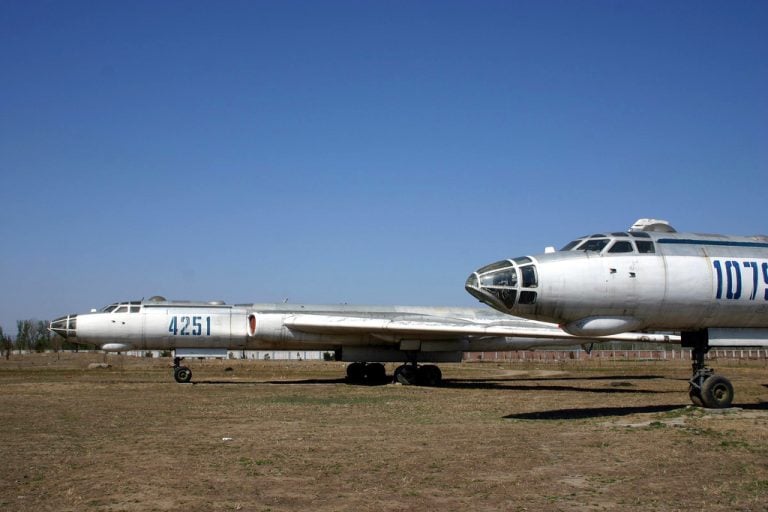
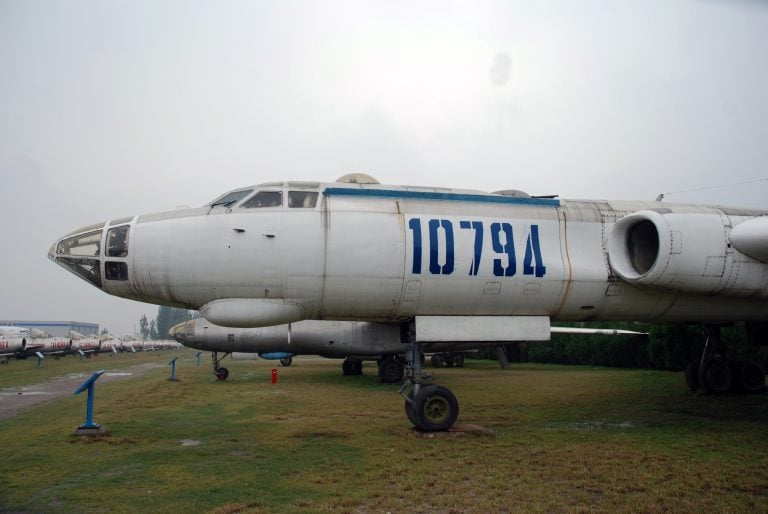
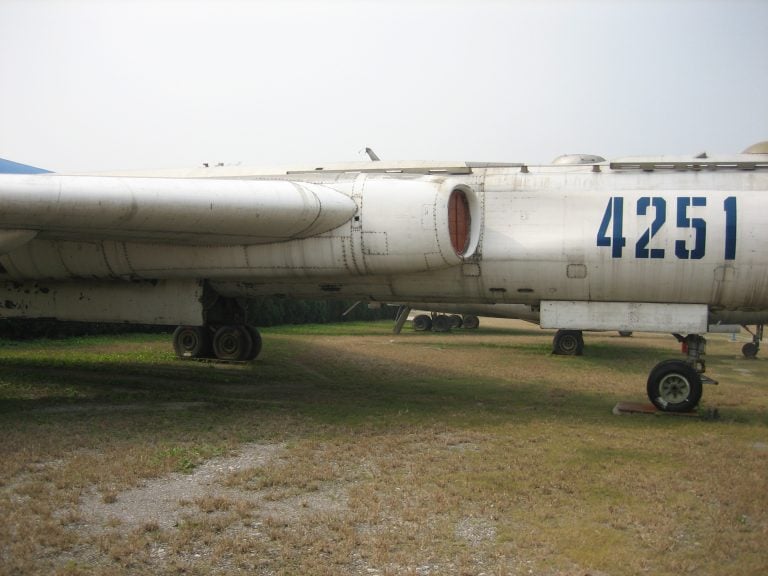
The H-6 in motion
A curated video feature for the Xian H-6 is coming soon. In the meantime, explore the photo gallery above and the operator map below.
Where the H-6 flies
The record that defines it
The H-6’s Chinese service has been one of deterrence and long-range patrol rather than air-to-air combat: it has no significant record of shooting down or being shot down by other aircraft. Its most active combat use abroad was in Iraqi hands, where H-6D bombers launched anti-ship missiles during the Iran–Iraq Tanker War of the late 1980s. In Chinese service the aircraft’s significance is measured in reach — long-range flights around Taiwan and into the western Pacific, and its role as a launcher for standoff and, on the H-6N, air-launched missiles.
Compare the combat record of every military aircraft. Figures as of July 2026.
Everything people ask about the H-6
Can I fly in an H-6?
Is the H-6 the same as the Soviet Tu-16?
How old is the H-6 design?
What is the H-6K?
Can the H-6N carry a ballistic or hypersonic missile?
Is the H-6 a stealth bomber?
Is the H-6 still in service?
You can’t fly the H-6.
These, you can.
Some legends only live in museums — others are fuelled and waiting. MiGFlug has put civilians in real military jet cockpits since 2004.
 Fly the L-39 AlbatrosThe world’s most-flown jet trainer — aerobatics included
 Fly the F-104 Starfighter“The missile with a man in it”
 Fly the MiG-21The Cold War’s most-produced jet
 Fly the T-33 Shooting StarAmerica’s first jet trainer
 Fly the DH VampireA piece of early jet history
 Fly the S.211Agile Italian jet trainer
 Fly the MB-326The classic Aermacchi jet
 Fly the MiG-15The Soviet legend of the Korean War
Continue the tour
Every fact, checked
- GlobalSecurity.org — H-6 developmentLicence history, the 1959 and 1968 first-flight dates and the move to Xian.
- GlobalSecurity.org — H-6K air-striking platformThe H-6K modernisation, engines and cruise-missile role.
- The Aviationist — H-6N air-launched missileImagery and analysis of the H-6N and its air-launched ballistic missile.
- The War Zone — H-6N mystery missileEarly reporting on the possible hypersonic air-launched weapon.
- FlightGlobal — H-6N ballistic missileAnalysis of the H-6N carrier role and refuelling probe.
- The National Interest — the H-6 “missile truck”The doctrine behind using a subsonic bomber as a standoff launcher.
- Military Factory — Xian H-6Specification baseline, variants and production overview.
- US DoD — China Military Power ReportOfficial assessment of the H-6N and China’s developing air-based deterrent.