

Armstrong Whitworth Whitley
The slab-sided night bomber that flew nose-down into the dark — it dropped Britain’s first bombs and leaflets on Germany, made the first RAF raid on Italy, hunted U-boats and carried the paratroops of Bruneval. Not one complete example survives.
When Britain went to war in September 1939, the Royal Air Force’s heavy-bombing effort rested on three angular twin-engine aircraft: the Vickers Wellington, the Handley Page Hampden and the Armstrong Whitworth Whitley. Of the three, the Whitley was the oldest in concept, the slowest, and the least glamorous — a big, deep-chested machine that flew through level cruise with its nose noticeably down, as if forever descending toward its target. Yet it was the Whitley that carried out some of the war’s genuine firsts, and it is the Whitley that has vanished most completely: not one intact example exists anywhere in the world.
The A.W.38 Whitley was designed at Coventry by John Lloyd, Armstrong Whitworth’s chief designer, to Air Ministry Specification B.3/34. It first flew on 17 March 1936 and entered squadron service in 1937 — one of the first genuinely modern, stressed-skin monoplane heavy bombers to reach the RAF. The early marks were powered by Armstrong Siddeley Tiger radial engines; from the Mk IV onward the aircraft was re-engined with the Rolls-Royce Merlin, and it was the Merlin X-powered Mk V — longer, with revised fins and more fuel — that became the definitive bomber version and the most numerous.
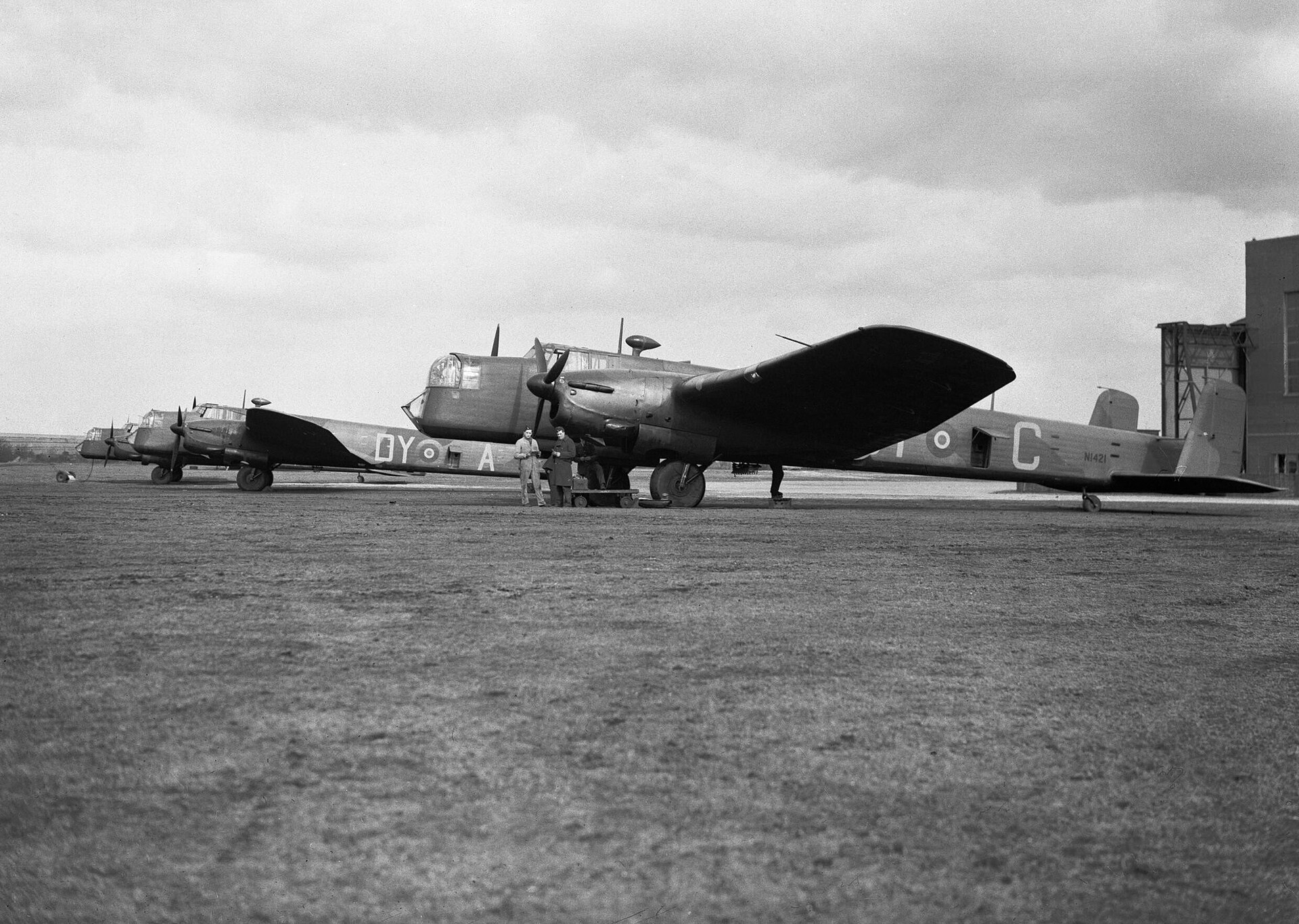
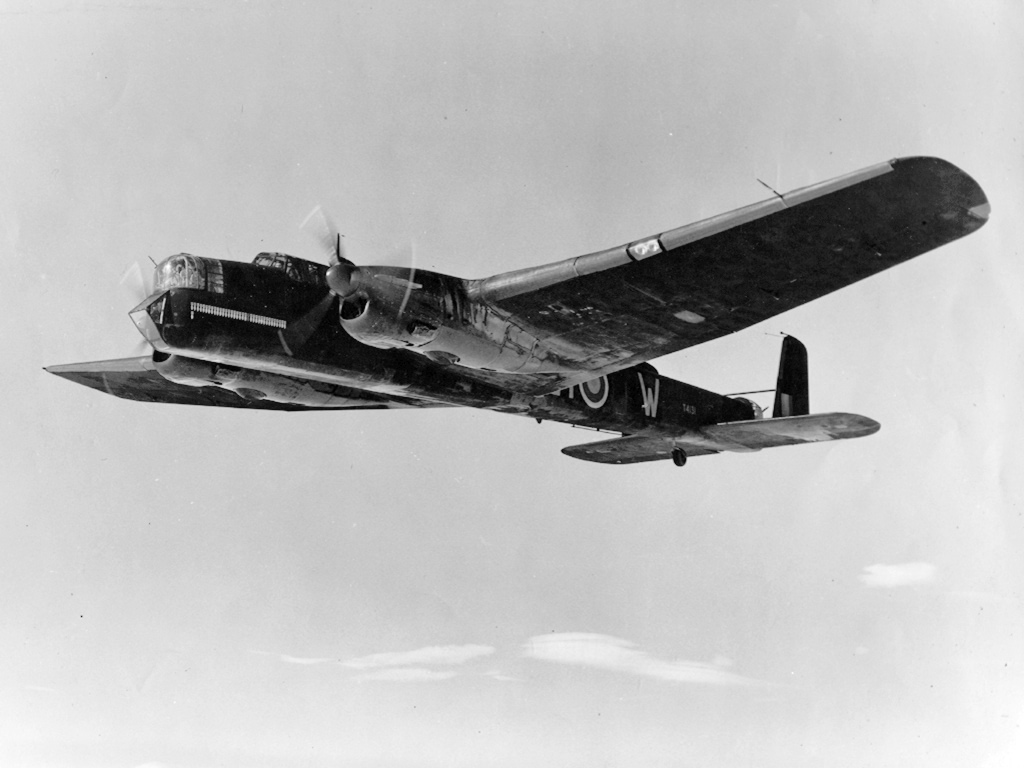
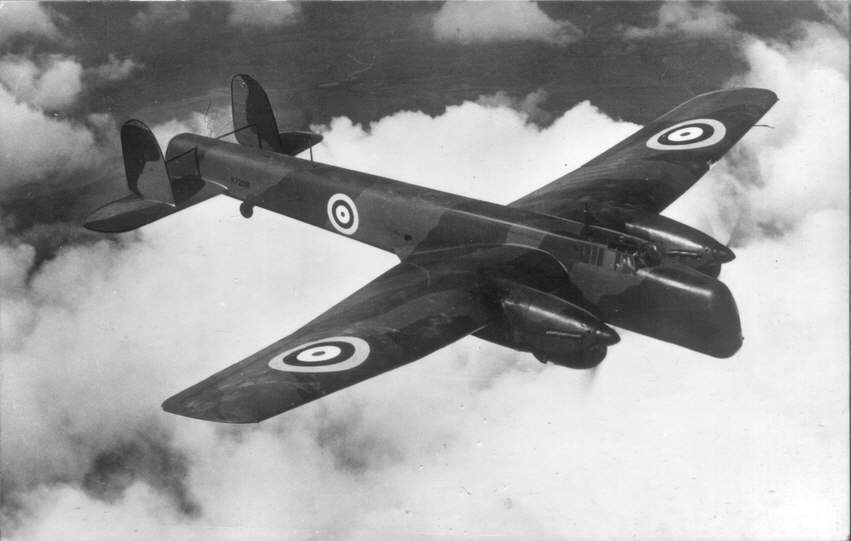
A bomber that looked as if it were diving even while flying straight and level — the price of a wing built to lift a heavy load off short 1930s grass airfields.
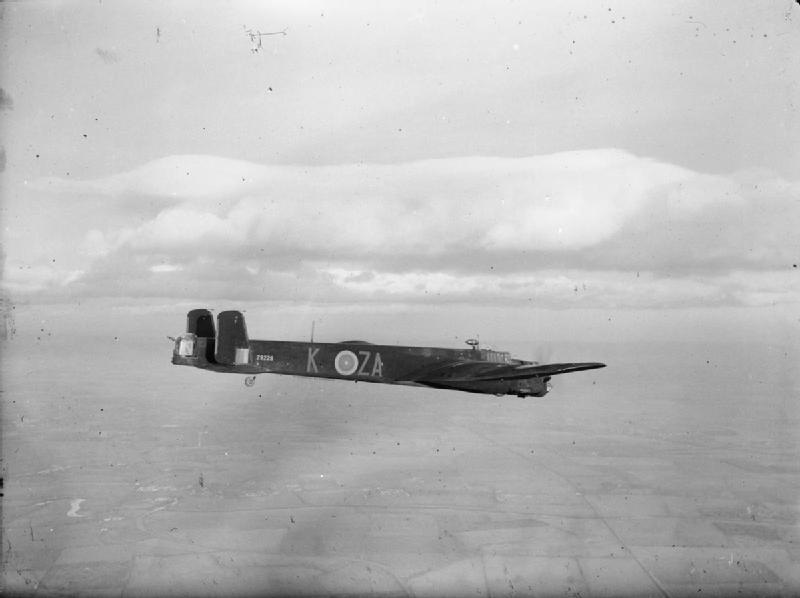
That famous nose-down attitude was not a fault but a design choice. Lloyd set the wing at an unusually high angle of incidence so the aircraft could get airborne and land at sensible speeds from the short grass fields of the mid-1930s. The penalty was that in cruise the fuselage sat markedly nose-low, giving the Whitley its unmistakable, slightly mournful silhouette. Crews and spotters recognised it instantly.
The Whitley’s virtues were range, load and structural strength rather than speed or agility. It was slow, and — like the Wellington and Hampden — too weakly armed to survive over Germany in daylight against modern fighters. The RAF learned that lesson quickly and hard, and the Whitley became overwhelmingly a night bomber. On the very first night of the war, Whitleys of Nos. 51 and 58 Squadrons flew deep into German airspace — not with bombs but with propaganda leaflets, the so-called “Nickel” raids. Within months the type was dropping the real thing: Whitleys were among the first RAF aircraft to bomb German soil, and in June 1940 they flew the RAF’s first bombing raid on Italy.
As newer, four-engine heavies arrived, the Whitley slid out of the front line. But it found a remarkable second life: patrolling the Atlantic approaches for Coastal Command, towing gliders and training the airborne forces, and flying the shadowy Special Duties sorties that dropped agents and supplies into occupied Europe — including the paratroops of the celebrated Bruneval raid in February 1942. By the time it left front-line bombing that same year it was frankly obsolescent, but it had already earned a place in the RAF’s early-war story that few remember and fewer can still see.
It is worth pausing on how much of that story was genuinely pioneering. In September 1939 nobody in the RAF really knew how to run a sustained night-bombing campaign against a modern enemy: how to navigate to a blacked-out target hundreds of miles away, how to survive flak and night-fighters, how to bring a heavy aircraft home in cloud and darkness. Whitley crews were among the first to try, and they learned in the hardest possible school. The failures of accuracy that later analysis exposed were not the failures of individuals but of an entire immature system — and the corrections, when they came, were built on exactly this early, costly experience.
The aircraft’s adaptability is the other half of the story. Because John Lloyd had drawn a big, strong, roomy airframe rather than a fast, delicate one, the Whitley could be pushed into role after role as the war revealed new needs. A bomber became a submarine-hunter; a submarine-hunter’s sisters became glider tugs; glider tugs shared ramps with the black-painted Special Duties aircraft that carried agents into the dark. Not many designs could stretch that far, and the Whitley’s willingness to do so kept it usefully employed long after it should have been museum-bound — which makes it all the more striking that no museum can show a complete one today.
01The Armstrong Whitworth Whitley in one paragraph: what it was and why it mattered
The Whitley was a twin-engine, five-crew RAF heavy night bomber of the late 1930s, designed by John Lloyd at Armstrong Whitworth. It was one of the three twin-engine “heavies” (with the Wellington and Hampden) that carried Bomber Command’s offensive at the start of the Second World War. Slow and lightly defended, it became a dedicated night bomber, then a Coastal Command maritime-patrol aircraft, glider tug, paratroop trainer and Special Duties transport. It was withdrawn from front-line bombing in 1942 and gone from most roles by 1945. Roughly 1,814 were built (sources vary), and no complete airframe survives today.
02Why the Whitley is a “forgotten” bomber: overshadowed then, invisible now
Two things pushed the Whitley into obscurity. First, it was overtaken technically: the four-engine Short Stirling, Handley Page Halifax and Avro Lancaster made the twin-engine heavies look small and slow within a couple of years, and the glory of the strategic bombing campaign attached to those later aircraft. Second — and unusually — the Whitley left almost nothing physical behind. Where a handful of Wellingtons, Halifaxes and Lancasters were preserved or rebuilt, every Whitley was ultimately scrapped, lost or left in the sea and hills where it crashed. With no airworthy example, no complete museum airframe and comparatively little surviving cine film, the type simply faded from public memory even as its early-war record stayed on the books.
03Where the Whitley sits among the RAF’s early-war twins: Whitley vs Wellington vs Hampden
The three shared a job but not a shape. The Wellington, with Barnes Wallis’s geodetic structure, proved the most survivable and by far the most numerous, soldiering on to 1945 in many roles. The Hampden was the fastest and most nimble of the three but cramped and awkwardly defended. The Whitley was the heavy-lifter: the slowest, but with useful range and load, and structurally robust — which is exactly why it migrated so successfully into maritime patrol, glider-towing and clandestine work once it was outclassed as a bomber. All three were obsolescent as front-line bombers by 1942; the Wellington outlived the other two in front-line use.
The Whitley was a product of the RAF’s mid-1930s rearmament, when the Air Ministry was racing to replace fabric-covered biplane bombers with modern stressed-skin monoplanes before a war everyone could see coming. It emerged from a specific requirement, from the drawing office of one determined designer, and from a Coventry factory that would itself become a Blitz target. These deep-dives trace where the aircraft came from.
04Specification B.3/34 and the race to modernise RAF Bomber Command
The Whitley answered Air Ministry Specification B.3/34 for a modern twin-engine “heavy” night bomber. In the early 1930s the RAF’s bomber force still rested on slow biplanes, and the Ministry knew it was falling behind the pace of monoplane development in Germany and elsewhere. B.3/34 called for a big, all-metal, stressed-skin monoplane able to carry a worthwhile bomb load over long range at night. Armstrong Whitworth’s response was so promising that the Air Ministry ordered it straight off the drawing board, before the prototype had even flown — a measure of how urgently modern bombers were wanted. The Whitley, Wellington and Hampden all trace back to this same push to re-equip Bomber Command in time, and all three were in front-line service when war came in 1939.
05John Lloyd, Armstrong Whitworth’s chief designer, and the decisions that shaped the Whitley
The Whitley was the work of John Lloyd, Armstrong Whitworth’s chief designer, and it bears the marks of his priorities: structural strength, generous internal volume and honest handling over outright speed. It was Lloyd who set the wing at the high angle of incidence that gave the aircraft its famous nose-down cruise — a deliberate trade to get a heavy bomber safely off short grass airfields. The thick, strong wing and deep fuselage he drew were not elegant, but they were adaptable, which is why the same basic airframe could later carry radar, tow gliders and drop agents. Lloyd’s Whitley was a designer’s compromise made visible: not fast, not pretty, but capable, rugged and useful across a remarkable range of jobs.
06From prototype to squadron: flight testing and early service, 1936–1937
The prototype Whitley first flew on 17 March 1936 on the power of Armstrong Siddeley Tiger radial engines. Testing led to detail changes — to the fins, the turrets and eventually the engines — and the type entered RAF service in 1937, with No. 10 Squadron among the first to re-equip. As one of the RAF’s first genuinely modern monoplane heavy bombers, the early Whitley gave crews and ground staff their first taste of retractable undercarriages, powered turrets, variable-pitch propellers and the demands of a big, complex aircraft. The move from Tiger radials to Rolls-Royce Merlins over the next few years transformed the type’s reliability and performance and produced the definitive Mk V.
07Built in Coventry under the bombs: Armstrong Whitworth and the wartime production line
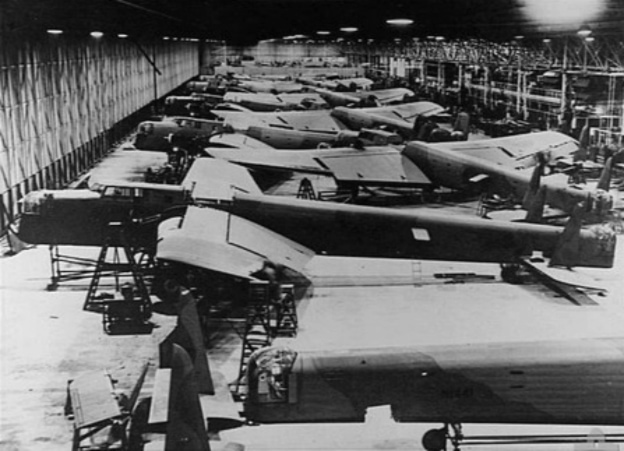
The Whitley was built by Armstrong Whitworth Aircraft at Baginton, near Coventry — a city that would be devastated in the German air raids of 1940–41. Production ran through the most dangerous years of the war, with the workforce assembling bombers in the shadow of the very campaign their aircraft were part of. Roughly 1,814 Whitleys were completed (the exact figure varies between sources), the great majority of them Merlin-powered Mk Vs, before the line gave way to more modern types. The story of the Whitley is therefore also a story of British industrial mobilisation — of a Midlands factory turning out heavy bombers even as its own city burned.
08The name and the designation: what “A.W.38 Whitley” actually means
Formally the aircraft was the Armstrong Whitworth A.W.38 — the 38th design type from the Coventry firm of Sir W. G. Armstrong Whitworth. In RAF service, following the convention of naming bombers after British towns, it became simply the Whitley (after the Whitley district of Coventry, close to where it was built). The pattern echoes its stablemates: the Vickers “Wellington” and Handley Page “Hampden” were named the same way. Behind the plain municipal name sat one of the RAF’s most quietly consequential early-war aircraft — a machine whose designation is now recognised by few outside the circle of aviation historians, even though the deeds attached to it shaped the opening of Britain’s air war.
The high-incidence wing and the nose-down cruise
John Lloyd set the Whitley’s thick cantilever wing at a high angle of incidence so it could lift a heavy bomb load off short 1930s grass strips at a modest ground angle. The side effect: in level cruise the whole fuselage sat visibly nose-down. It looked odd, but it flew honestly — a stable, forgiving platform that let tired crews hold a heading through long nights over Europe. Spotters could name a Whitley at a glance from that downward-tilted stance alone, and the quirk has followed the aircraft into every history written since.
Slab-sided stressed-skin structure built to take punishment
The Whitley was an all-metal, stressed-skin monoplane with a deep, square-section fuselage — roomy enough to carry bombs internally in the wings and fuselage, and later to carry agents, supplies and a glider-towing hook. That deep, strong structure is why the airframe adapted so readily from bombing to maritime patrol and Special Duties work — there was room inside for radar operators, supply containers, glider gear and paratroops, and the airframe was strong enough to take the loads and the punishment each new job imposed.
From Tiger radials to Rolls-Royce Merlins
Early Whitleys (Mk I–III) used Armstrong Siddeley Tiger radial engines. From the Mk IV the aircraft was re-engined with the Rolls-Royce Merlin, and the Merlin X-powered Mk V — with a longer nose, revised fins and extra fuel — became the definitive bomber. The Merlin transformed the type’s reliability and performance and defined the version most people picture — longer in the nose and tail, with straight-edged fins, and enough fuel to reach targets deep in Germany and even, over the Alps, in northern Italy.
09The Armstrong Whitworth Whitley’s engines by mark: Tiger radials versus Merlin
Marks I through III used Armstrong Siddeley Tiger air-cooled radials (roughly 795–920 hp depending on sub-type). The Mk IV introduced Rolls-Royce Merlin engines, and the definitive Mk V used the Merlin X of about 1,145 hp (854 kW) each; the Coastal Command Mk VII maritime-patrol variant, fitted with ASV radar and extra fuel, also used the Merlin. In short: if you picture a Whitley bomber it is almost certainly a Merlin-powered Mk V. Exact horsepower figures vary between sources and sub-marks, so treat single numbers as approximate.
10Defensive armament and why daylight was deadly for the Whitley
The Mk V carried a power-operated nose turret with a single .303 in Browning and a four-gun .303 in tail turret — rifle-calibre guns that were badly outmatched by cannon-armed German fighters. Like the Wellington and Hampden, the Whitley was too slow and too lightly defended to survive daylight raids over defended targets, which is why Bomber Command drove it into the dark. The rear turret’s four guns gave it more sting astern than the Hampden, but the type’s survival still depended on night, cloud and altitude rather than firepower.
11How one airframe became a bomber, a sub-hunter, a glider tug and a spy taxi
The Whitley’s size, range and strength made it unusually adaptable. As a bomber it carried up to around 3,175 kg (7,000 lb) internally. Re-roled for Coastal Command it gained ASV radar and long-range tanks for anti-submarine patrol. As a glider tug it towed Hotspur and Horsa gliders and trained Britain’s new airborne forces. And in Special Duties hands it dropped SOE agents, supplies and paratroops into occupied Europe. Few contemporaries stretched across so many jobs.
12The wing, undercarriage and bomb stowage: engineering the Whitley’s load-carrying
Much of the Whitley’s character came from its wing. Thick, strong and set high on the fuselage at that famous angle of incidence, it not only lifted heavy loads off short strips but also housed bomb cells in addition to the fuselage bay, spreading the load. A retractable undercarriage — still a relatively modern feature in the mid-1930s — cleaned up the airframe in cruise, while the deep, square fuselage gave the internal volume that later made the type so easy to adapt for radar operators, glider gear, supply containers and paratroops. It was engineering optimised for carrying things a long way rather than for speed, and it showed in every line of the aircraft.
Very few aircraft of the Second World War changed jobs as completely as the Whitley. It began the war as one of Bomber Command’s front-line heavies and ended it as an almost anonymous work-horse behind the scenes — but the roles it passed through in between shaped RAF night bombing, Coastal Command’s U-boat war, Britain’s airborne forces and the clandestine air support of the resistance. Each of the deep-dives below opens up one of those careers.
13The Whitley as a night bomber: pioneering RAF Bomber Command’s dark offensive
When war broke out the RAF quickly discovered that unescorted day bombing against a modern air-defence system was suicidal. The Whitley — slow, and defended only by rifle-calibre machine guns — was among the first types moved almost entirely to night work, and its crews became pioneers of an art nobody had really practised: finding and hitting targets in the dark, in unheated aircraft, with the crude navigation aids of 1939–41. Whitleys attacked German industrial and communications targets, the invasion barges massing in the Channel ports in 1940, and Italian cities across the Alps. Losses were heavy and accuracy was often poor — the hard lessons of these early raids, paid for in Whitleys and their crews, fed directly into the navigation, marking and tactics that later made the four-engine heavies effective. The Whitley flew its last Bomber Command operation on the night of 29/30 April 1942 and was withdrawn from the front-line bombing role, obsolescent but historically important.
14The Whitley over the Atlantic: Coastal Command, ASV radar and the U-boat war
The same qualities that made the Whitley a mediocre bomber — a big, strong, long-legged airframe — made it a useful maritime-patrol aircraft. Re-equipped as the General Reconnaissance Mk VII with ASV (Air-to-Surface-Vessel) radar and extra fuel tanks, Whitleys flew long, cold, monotonous patrols over the Western Approaches and the Bay of Biscay, hunting the U-boats that were strangling Britain’s supply lines. On 30 November 1941 a Whitley of No. 502 Squadron shared in the destruction of U-206 in the Bay of Biscay — an early demonstration that a radar-equipped aircraft could find and kill a submarine. Coastal Command Whitleys helped close the mid-ocean gap until purpose-built and longer-ranged types such as the Liberator and Sunderland took over.
15The Whitley and Britain’s airborne forces: glider tug and paratroop trainer
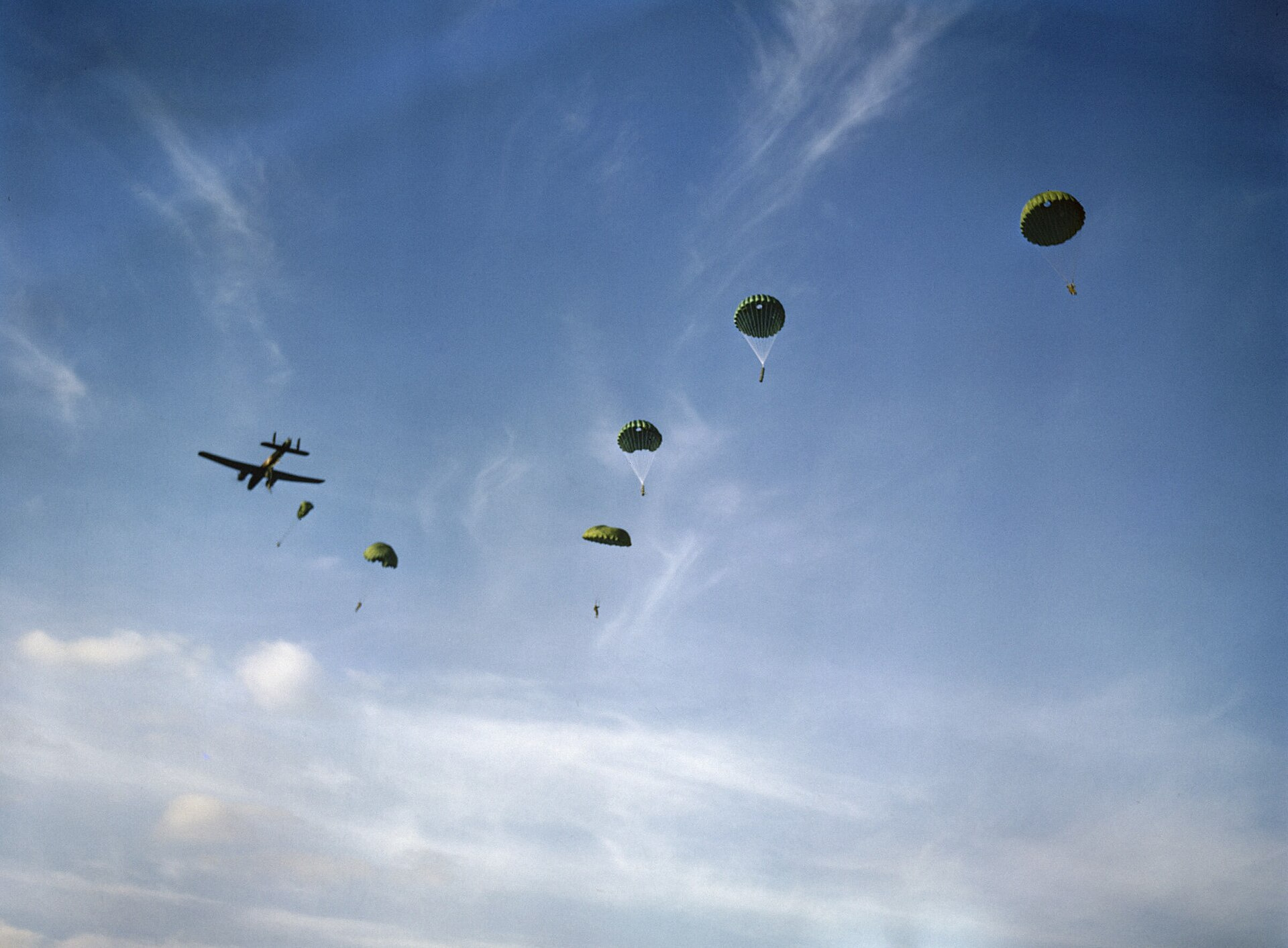
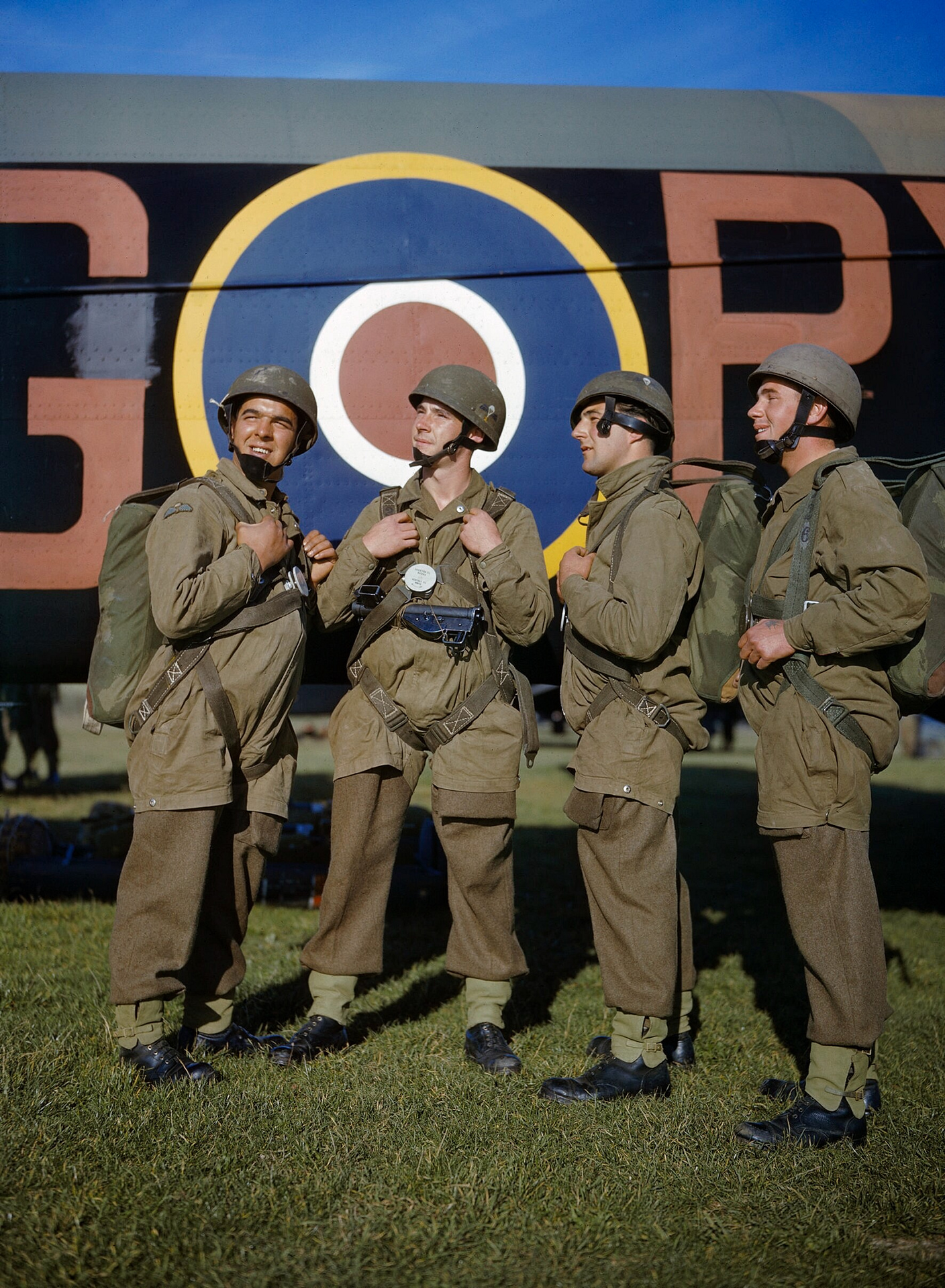
As it left bombing, the Whitley found a vital new job building the airborne army from scratch. At Ringway and other airfields it dropped tens of thousands of trainee paratroops — jumping through a hole cut in the fuselage floor — and towed the early Hotspur training gliders and the larger assault Horsa. Much of the doctrine, technique and hard-won experience that later underpinned the airborne operations of Sicily, D-Day and Arnhem was first developed behind a Whitley’s tow-rope or under its jump hatch. It was unglamorous work, but the Whitley was, in a real sense, the aircraft on which Britain’s parachute regiments learned to fly to war.
16The Whitley and the secret war: SOE, Special Duties and dropping agents into occupied Europe
The Whitley’s range, roominess and steady handling suited it to the loneliest flying of the war. The Special Duties squadrons used Whitleys to parachute SOE agents, radio sets, weapons and supplies into occupied France, Belgium, the Netherlands and beyond, flying single aircraft at low level on moonlit nights to pinpoint reception committees on the ground. This clandestine work — later expanded with Halifaxes and Lysanders — was among the RAF’s most secret and most demanding, and the Whitley was one of its earliest tools. The same capability underpinned the type’s most famous single action, the Bruneval raid.
17The Bruneval raid in detail: how twelve Whitleys delivered Operation Biting
By late 1941 British scientists urgently wanted to examine a German Würzburg radar. A set stood on the cliffs at Bruneval on the French coast, and the decision was taken to seize its key parts by airborne assault. On the night of 27/28 February 1942, twelve Whitleys of No. 51 Squadron carried C Company of the 2nd Parachute Battalion, under Major John Frost, across the Channel and dropped them near the site. The paratroops overran the position, a radar technician dismantled the crucial components under fire, and the force was evacuated from the beach by the Royal Navy. Operation Biting was a model combined-operations success — and it was the humble, nose-down Whitley that put the men on the ground.
Behind the specifications was a demanding, uncomfortable aircraft flown by five men through some of the hardest conditions of the early war. What was it actually like to take a Whitley into the dark over Germany? These deep-dives look at the flying, the crew, the navigation and the cold.
18What the Whitley was like to fly: stable, heavy and honest
Pilots generally found the Whitley a steady, forgiving aircraft to fly straight and level — which mattered enormously on long night sorties when fatigue was as dangerous as the enemy. It was heavy on the controls and no aerobat, and its performance was modest: it climbed slowly, cruised slowly and was a handful when loaded and low on power on one engine. But its stability made it a good instrument-flying platform, and its rugged structure could absorb punishment. The famous nose-down attitude, disconcerting to watch from the ground, was simply normal to the men flying it. In short, the Whitley asked for patience and stamina rather than skill and dash — the right virtues for a night bomber.
19The five-man Whitley crew: who sat where and did what
A typical Whitley bomber crew numbered five: two pilots up front (one often doubling as captain), an observer who navigated and aimed the bombs, a wireless operator managing radio and signals, and a tail gunner isolated in the rear turret. Early in the war roles were less specialised than they later became — the “observer” carried much of the navigation and bombing burden that would later be split among a dedicated navigator, bomb-aimer and flight engineer. It was a small team crammed into a cold, cramped, noisy fuselage for many hours at a time, each utterly dependent on the others, and each with almost no way out if the aircraft was hit.
20Finding the target in the dark: navigation in the early night war
In 1939–41 RAF night navigation was rudimentary. There were no electronic navigation aids of the kind that came later; crews relied on dead reckoning, a map, a watch, the stars when visible and the observer’s skill. Cloud, blackout, wind and simple exhaustion meant that finding a specific target in Germany at night was extraordinarily hard, and post-war analysis showed early-war bombing was often wildly inaccurate. Whitley crews were among those who discovered this the hard way, and their experience — and losses — drove the later development of radio navigation aids, target marking and the Pathfinder concept that eventually made night bombing effective.
21Cold, endurance and danger: the physical ordeal of a Whitley sortie
A long Whitley sortie was a test of endurance as much as courage. The unheated or barely heated fuselage grew brutally cold at altitude; frostbite was a real risk, oxygen was needed high up, and the noise and vibration of two engines wore crews down over many hours. Gunners in particular endured hours of freezing immobility in cramped turrets. Add the ever-present dangers — flak, night-fighters, icing, mechanical failure and the sheer difficulty of getting a heavy aircraft home on a dark night — and each operation demanded a great deal from men who were often very young. The Whitley’s crews helped establish, at high cost, what RAF night operations would ask of everyone who followed.
22Losses and the human cost: what early-war night operations demanded
The early night-bombing campaign was expensive in aircraft and men, and the Whitley squadrons paid their share. Between enemy action, appalling weather, icing, mechanical failure and the sheer difficulty of night navigation, aircraft and crews were lost steadily — on operations over Germany and Italy, on Coastal Command patrols over the sea, and in the training accidents that scattered Whitley wrecks across the hills of Britain. Crews were often very young, and a tour of operations offered no guarantee of survival. It is part of why the type’s disappearance feels so complete: many Whitleys did not retire to a scrapyard at all but came down in the sea or the mountains, taking their crews with them. The aircraft’s record of firsts was written at a real and heavy human cost.
23The squadrons and airfields: where the Whitley served
The Whitley equipped a series of Bomber Command squadrons — among them Nos. 10, 51, 58, 77, 78 and 102 — flying mainly from airfields across Yorkshire and the north of England, such as Dishforth, Linton-on-Ouse, Driffield and Topcliffe. As it moved out of bombing, Whitleys served with Coastal Command squadrons (such as No. 502) on the western coasts, with airborne-forces and glider units around Ringway and Netheravon, and with the Special Duties squadrons flying from southern bases. Operational Training Units used large numbers of tired Whitleys to teach new crews — work that was itself dangerous and accounted for many of the type’s losses and crash sites.
| Manufacturer | Armstrong Whitworth Aircraft, Baginton, Coventry |
|---|---|
| Designer | John Lloyd |
| タイプ | Five-crew twin-engine heavy night bomber |
| First flight | 17 March 1936 |
| Introduced | 1937 |
| Withdrawn (front-line bombing) | 1942 other roles to 1945 |
| Number built | ~1,814 estimate — sources vary |
| クルー | 5 (2 pilots, observer/navigator-bomb aimer, wireless operator, tail gunner) |
| 長さ | 21.49 m (70 ft 6 in) |
| 翼幅 | 25.60 m (84 ft 0 in) |
| 身長 | 4.57 m (15 ft 0 in) |
| 空虚重量 | ~8,768 kg (19,330 lb) Mk V; varies |
| 最大離陸重量 | ~15,196 kg (33,500 lb) Mk V |
| 翼領域 | ~105.6 m² (1,137 sq ft) estimate |
| National origin | イギリス |
| Primary operator | Royal Air Force (Bomber Command, Coastal Command, airborne & Special Duties) |
| Powerplant | 2× Rolls-Royce Merlin X, ~1,145 hp (854 kW) each early marks: Armstrong Siddeley Tiger radials |
|---|---|
| 最高速度 | ~357–370 km/h (222–230 mph) at altitude; varies by source |
| Cruising speed | ~298 km/h (185 mph) estimate |
| 範囲 | ~2,400 km (1,500 mi) with full bomb load; up to ~3,700 km (2,300 mi) ferry load-dependent estimate |
| サービス天井 | ~7,900 m (26,000 ft) operational ceiling often much lower |
| Bomb load | up to ~3,175 kg (7,000 lb) internal |
| Defensive armament | 1× .303 in nose turret + 4× .303 in tail turret Mk V |
| 上昇率 | ~3.5 m/s (~700 ft/min) estimate; loaded |
| Special-duties fit | ASV air-to-surface radar & long-range tanks (Coastal Command Mk VII); glider tow-hook & para-hatch (airborne role) |
| Programme cost | Not reliably recorded (WWII) |
| Unit cost | Not reliably recorded (WWII) |
| Cost per flight hour | Not applicable — no surviving/airworthy example |
24Armstrong Whitworth Whitley variants: from Tiger-engined Mk I to the Merlin Mk V and Coastal Command Mk VII
Mk I–III — early production with Armstrong Siddeley Tiger radial engines and manually operated turrets. Mk IV — first with Rolls-Royce Merlin engines and a power-operated four-gun tail turret. Mk V — the definitive bomber: Merlin X engines, lengthened nose and rear fuselage, revised straight-edged fins and increased fuel; by far the most numerous. Mk VII — Coastal Command long-range maritime-patrol version with ASV air-to-surface radar (visible aerials) and extra fuel for anti-submarine work. Many airframes also served as glider tugs, paratroop trainers and Special Duties transports.
25The Armstrong Whitworth Whitley’s operating costs: why there is no cost-per-hour figure
The Whitley was a wartime type built and operated under conditions where individual unit prices and hourly running costs were neither standardised nor publicly reported the way modern aircraft costs are, so any single “unit cost” figure would be a guess — we mark it not reliably recorded. More importantly, there is no cost-per-flight-hour because there is no flyable Whitley: the type is extinct in airworthy form, with only recovered sections and relics remaining. Unlike the warbirds in the MiGFlug fleet, you cannot charter, restore-to-fly or book time on a Whitley at any price. For aircraft you genuinely can fly, see migflug.com/flights-prices.
26How many Whitleys were built — and why the number is fuzzy
The most commonly cited production total is around 1,814 aircraft, but figures differ between references depending on how prototypes, conversions and cancelled contracts are counted. We flag it as an estimate. What is clear is that the Mk V dominated production and that the type was built in useful numbers through 1940–1943 at Armstrong Whitworth’s Coventry-area works before four-engine heavies took over the bombing role.
The Whitley’s reputation is a paradox: a long list of genuine firsts attached to an aircraft almost nobody remembers and nobody can go and see. These deep-dives set out the record honestly — what the Whitley really did first, how it stacks up against its stablemates, and the uncomfortable fact that not one complete example survives.
27The Whitley’s “firsts”, examined honestly: leaflets, Germany and Italy
Popular accounts sometimes over-claim on the Whitley’s behalf, so it is worth being precise. Whitleys genuinely flew the RAF’s first leaflet (“Nickel”) sorties over Germany on the opening night of the war, 3/4 September 1939. They were among the first RAF aircraft to bomb a German land target — the Hörnum seaplane-base raid on the island of Sylt, 19/20 March 1940 — though the phrase “first to bomb Germany” is loose and belongs jointly to the early-war bomber force. Most clear-cut of all, Whitleys of Nos. 77 and 102 Squadrons flew the RAF’s first bombing raid on Italy, hitting Turin and Genoa on 11/12 June 1940. We deliberately hedge the Germany claim and stand firmly behind the leaflet and Italy firsts, which are well documented.
28Whitley, Wellington and Hampden compared: the three early-war twins side by side
The three aircraft that carried Bomber Command into the war divided the work between them. The Vickers Wellington, with its resilient geodetic structure, was the most numerous and survivable and outlasted the others in front-line service. The Handley Page Hampden was the quickest and most agile but cramped and poorly defended. The Armstrong Whitworth Whitley was the heavy-hauler: slowest of the three, but strong, roomy and long-legged. That combination is exactly why the Whitley, once outclassed as a bomber, slipped so naturally into maritime patrol, glider-towing and clandestine work — jobs its nimbler stablemates were less suited to. All three were obsolescent as bombers by 1942; the Whitley simply found more second careers than most.
29Beyond bombing: the Whitley’s wider war of mining, leaflets and Scandinavian raids
The Whitley’s operational record runs wider than the headline firsts. Its squadrons flew “gardening” sorties — laying mines in enemy coastal waters — and continued the leaflet campaign long after the first night of the war, scattering propaganda over Germany and occupied territory. Whitleys ranged over German-occupied Norway on long, cold northern sorties, and struck targets across the Low Countries and France as the occupation spread. Much of this work was routine, unglamorous and largely unrecorded in popular memory, but it was exactly the kind of persistent, wearing pressure that Bomber Command applied across the early war — and the Whitley, with its useful range and load, was well suited to carrying it out night after night before newer types arrived.
30No complete Whitley survives: the relics, wrecks and recoveries that remain
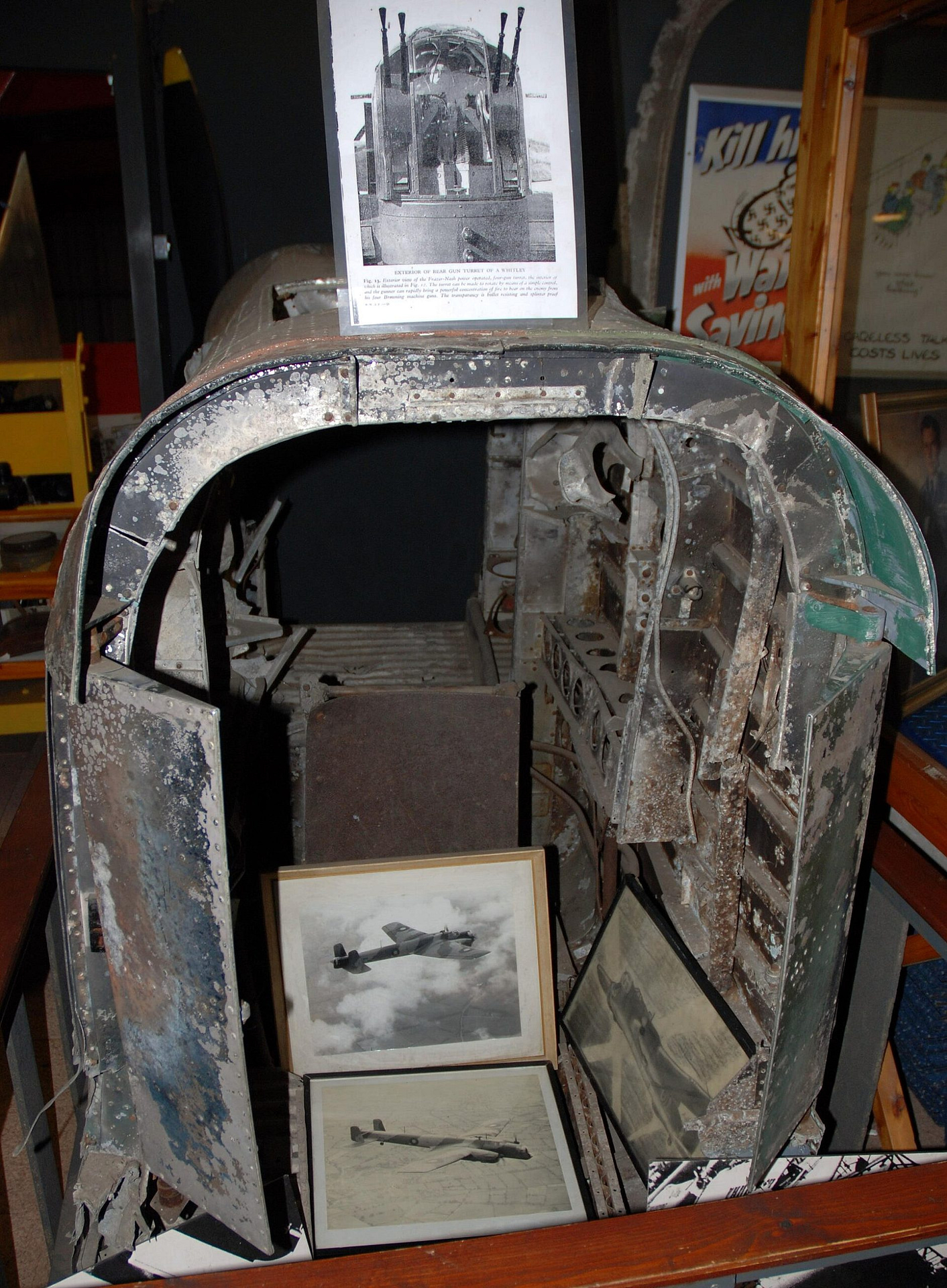
This is the Whitley’s saddest distinction. Where the Wellington, Halifax and Lancaster are each represented by at least one preserved or rebuilt airframe, not one complete Whitley exists anywhere in the world. Every example was ultimately scrapped after the war or lost in service. What survives are fragments and relics — a substantial rear-fuselage section at the Midland Air Museum at Coventry, recovered components at other collections, and pieces salvaged over the years from crash sites in the hills and lochs of Britain where Whitleys came down during training and operations. Enthusiast groups have recovered and conserved parts, but a whole Whitley is something no museum can show. The type is one of the RAF’s great “no complete survivor” aircraft.
31Whitleys over the Channel ports: the Whitley in the summer and autumn of 1940
During the invasion crisis of 1940 the Whitley squadrons were thrown into the effort to break up the German preparations for Operation Sea Lion. Night after night they attacked the concentrations of invasion barges in the Channel ports and struck at targets in occupied France and Germany, part of the wider Bomber Command contribution that ran alongside Fighter Command’s more famous daylight battle. It was gruelling, dangerous work in an aircraft already near the edge of obsolescence, and it is a part of the Whitley’s record that tends to be overshadowed by the Spitfires and Hurricanes of the same summer — but the type was very much in the fight during Britain’s most dangerous months.
32Why the Whitley is forgotten — and why it deserves to be remembered
The Whitley faded from memory for understandable reasons: it was quickly overtaken by glamorous four-engine heavies, it served mostly at night and behind the scenes, and it left almost nothing physical behind. Yet its record is out of all proportion to its fame. It opened the RAF’s bombing war, made the first raid on Italy, helped kill U-boats, trained the airborne forces and carried the Bruneval paratroops — and it did all of it while flying, unmistakably, with its nose pointed at the ground. Remembering the Whitley is a small act of historical fairness to the crews who pioneered RAF night operations in the war’s hardest early years.
“Britain’s Forgotten WW2 Heavy Bomber | Armstrong Whitworth Whitley” — a feature-length history from the aviation-documentary channel Rex’s Hangar (~607,000 views at time of writing). A detailed, well-sourced run through the Whitley’s design, marks and wartime service.
The Whitley was an almost exclusively Royal Air Force type: designed and built in Britain, flown by RAF Bomber Command, Coastal Command and the airborne/Special Duties forces, and largely spent over Germany, Italy and occupied Europe. It had no significant export operators. Toggle the categories to explore its origin, wartime roles, the Commonwealth aircrew who flew it, and where its few relics survive.
Can I fly in an Armstrong Whitworth Whitley?
Why did the Armstrong Whitworth Whitley fly nose-down?
What was the Armstrong Whitworth Whitley’s role in the Second World War?
Did the Whitley really drop the first bombs and leaflets on Germany?
What engines did the Armstrong Whitworth Whitley use?
How fast was the Armstrong Whitworth Whitley?
What was the Whitley’s part in the Bruneval raid?
How many Armstrong Whitworth Whitleys were built?
Are there any surviving Armstrong Whitworth Whitleys?
Who designed and built the Armstrong Whitworth Whitley?
Was the Whitley used by Coastal Command against U-boats?
How many crew did the Armstrong Whitworth Whitley carry?
Why is the Whitley called a “forgotten” bomber?
What replaced the Armstrong Whitworth Whitley?
Did the Whitley tow gliders and train paratroops?
What is the Armstrong Whitworth Whitley’s official designation?
When did the Armstrong Whitworth Whitley enter and leave service?
How heavy a bomb load could the Whitley carry?
Did Commonwealth or foreign air forces operate the Whitley?
No complete Whitley survives, so no one can put you in one. But MiGFlug does put civilians into real ex-military jets and warbirds — here is a selection you can actually book.