

Boeing P-26 Peashooter
Stubby, sunburst-yellow and startlingly modern for 1932, the Boeing P-26 was the U.S. Army Air Corps’ first all-metal monoplane fighter — yet it still had an open cockpit, fixed landing gear and wire-braced wings. A true bridge between the biplane age and the fighters of World War II.
Boeing P-26 Peashooter by the numbers
The essential figures on the Boeing P-26 Peashooter
The story
The Boeing P-26 Peashooter: America’s first monoplane fighter, caught between two ages
In the early 1930s the fighter was still, almost everywhere, a fabric-covered biplane. Then Boeing rolled out something that looked like it had arrived from a different decade: a squat, all-metal monoplane with a bright metal cowling, painted wings and a purposeful stance. The Boeing P-26 — universally nicknamed the “Peashooter” — became the first all-metal monoplane fighter to enter service with the United States Army Air Corps, and it is widely described as the first American monoplane fighter to reach front-line squadrons.
The prototype, Boeing’s private-venture Model 248 (the Army called it the XP-936), first flew on 20 March 1932. It was a genuine leap. Where the biplane fighters it replaced were wood, wire and fabric, the Peashooter was a stressed-skin metal aeroplane, and it was fast: around 234 mph (377 km/h), quicker than almost anything then in Army service. For a few years in the mid-1930s it was the sharp end of American air power.
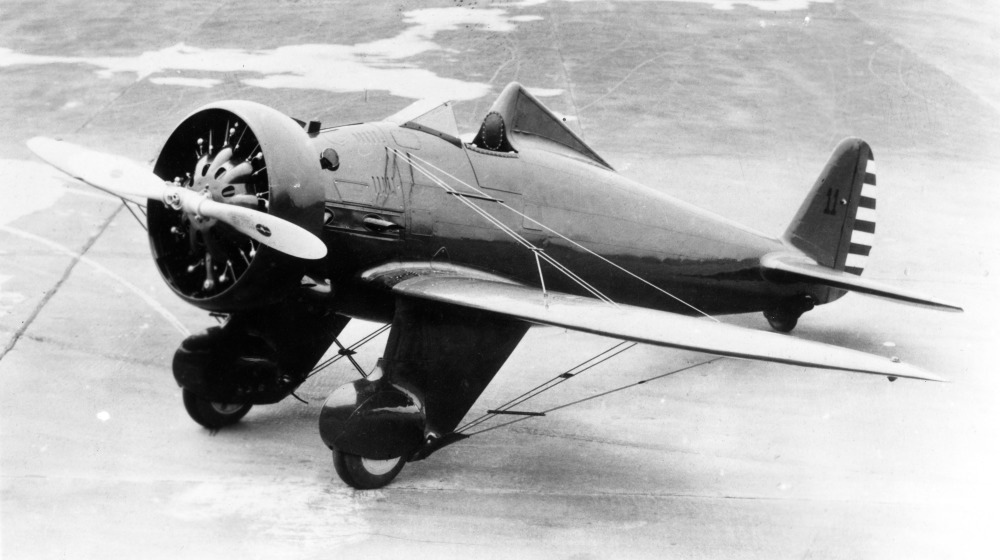
And yet the P-26 is fascinating precisely because it did not commit fully to the future. To hold down cost and risk, Boeing kept an open cockpit, kept fixed landing gear in neat trousered fairings rather than folding it away, and — most tellingly — braced its low wing with external flying and landing wires, the last U.S. Army fighter designed that way. It is a monoplane wearing a biplane’s belt and braces, a transitional machine standing with one foot in each era.
That in-between character had consequences. The little Boeing landed fast — dangerously so by the standards of the day — and after a spate of landing accidents the Army had wing flaps added to bring the approach speed down, making the P-26 one of the first American fighters fitted with flaps. After a fatal accident in which a pilot was killed when his aircraft overturned, the headrest fairing was raised into a taller turn-over structure to protect the pilot in a nose-over. Honest engineering fixes for an honest set of teething problems.
The Peashooter’s moment at the top was brief. Aviation was moving fast, and within a few years the very features Boeing had hedged on — retractable gear, enclosed cockpits, cantilever wings, flaps as standard — became the price of admission. By the late 1930s the P-26 was being replaced in Army squadrons by the Seversky P-35 and Curtiss P-36, and by the outbreak of World War II it was thoroughly obsolete as a fighter.
What makes its story remarkable is what happened next. Sold and handed on to other air forces, the outdated little Boeing found itself thrown into real wars against far more modern enemies. Chinese Peashooters fought Japanese aircraft from 1937; Philippine P-26s went into battle against the Japanese onslaught of December 1941; and in Central America, Guatemala flew hers into the 1950s, making it one of the very last operators of an open-cockpit fighter anywhere. It is a David-and-Goliath coda that the sleek fighters which replaced the Peashooter never had to face.
Roughly 150 were built. Two originals survive today — one in the Smithsonian, and one, astonishingly, still flying — keeping alive the memory of the chunky little Boeing that carried American fighter aviation across the gap between the biplane and the Mustang.
01Why the Boeing P-26 is called the “Peashooter”+
The nickname is affectionate and its exact origin is uncertain. The most commonly repeated explanation is that the pilot’s tubular telescopic gunsight, poking up ahead of the windscreen, reminded crews of a child’s peashooter blowpipe. Another version links it to the blast tubes around the machine-gun barrels.
Whatever the source, the name stuck so completely that “Peashooter” is now almost inseparable from “P-26”. It suits the aeroplane: small, stubby and a little pugnacious, with a personality out of proportion to its size. We flag the etymology as disputed rather than assert a single certain answer.
02The Boeing P-26 as a transitional design: monoplane body, biplane habits+
The single most important thing to understand about the P-26 is that it is a transitional aircraft. It broke with the past by being an all-metal, stressed-skin, low-wing monoplane — a real advance. But it clung to the past in three visible ways: the cockpit was open, the main undercarriage was fixed (faired into streamlined “trousers” rather than retracted), and the thin wing was held up by external bracing wires running to the fuselage and a small pylon.
Boeing made those choices deliberately, to keep the aircraft cheap, light and low-risk at a time when retractable gear and cantilever wings were still new and unproven. The result flew well and looked modern from a distance, but it was already a compromise the moment it entered service.
Seen this way, the Peashooter is the clearest single illustration of how fast fighter design moved in the 1930s. Everything it hedged on — enclosed cockpit, retractable gear, unbraced wing, flaps — became standard within a handful of years, which is exactly why it aged so quickly.
Design & engineering
How the Boeing P-26 Peashooter was built — modern metal, old-fashioned bracing
Boeing’s engineers built a genuinely advanced metal airframe, then deliberately held back on three features — retractable gear, an enclosed cockpit and a cantilever wing — to keep cost and risk low. That mix defines the aircraft.
All-metal, but wire-braced
The P-26 was a stressed-skin, all-metal low-wing monoplane — a real break from the fabric biplanes it replaced. But its thin wing was still held up by external flying and landing wires, the last such arrangement on a U.S. Army fighter. Modern skin, old-fashioned rigging.
Pratt & Whitney Wasp power
A single Pratt & Whitney R-1340 Wasp air-cooled radial of roughly 500–600 hp (the P-26A used the 600 hp R-1340-27) drove a metal propeller. It gave the little fighter a top speed around 234 mph (377 km/h) — brisk for the early 1930s.
Open cockpit, fixed gear
The pilot sat in the open behind a small windscreen, with the main wheels fixed down inside streamlined “trousers.” A tall headrest fairing — raised after an early turn-over accident — doubled as a roll-over structure. Two machine guns completed a simple, light package.
03The Boeing P-26’s wing, flaps and the high landing speed problem+
The Peashooter’s thin, highly loaded wing gave it good speed but an uncomfortably high landing speed for the era — higher than the biplanes pilots were used to, and enough to cause a run of landing accidents. The Army’s answer was to fit split flaps to steepen and slow the approach.
That retrofit is historically interesting: it made the P-26 one of the first American fighters to carry landing flaps, a feature that would soon be universal. It is a neat example of a transitional aircraft acquiring a modern feature not by grand design but as a practical fix for a real safety problem.
The external bracing wires that supported that wing are the aircraft’s other signature. They mark the P-26 as the last U.S. Army fighter with externally braced wings — the very next generation of American fighters would carry the load internally in a clean cantilever structure.
04Inside the Boeing P-26’s cockpit: the raised headrest and the pilot’s view+
The single pilot sat high and in the open, a layout already becoming dated as enclosed canopies appeared elsewhere. Forward view over the big radial and the tapering nose was reasonable, and the open cockpit gave the wind-in-the-wires feel of the biplane era the aircraft had only just left behind.
The tall fairing behind the pilot’s head was more than styling. After an early accident in which a P-26 overturned on landing and killed its pilot, the headrest structure was raised and strengthened to act as a turn-over pylon, protecting the pilot if the aircraft nosed over — a real risk with fixed gear on rough fields.
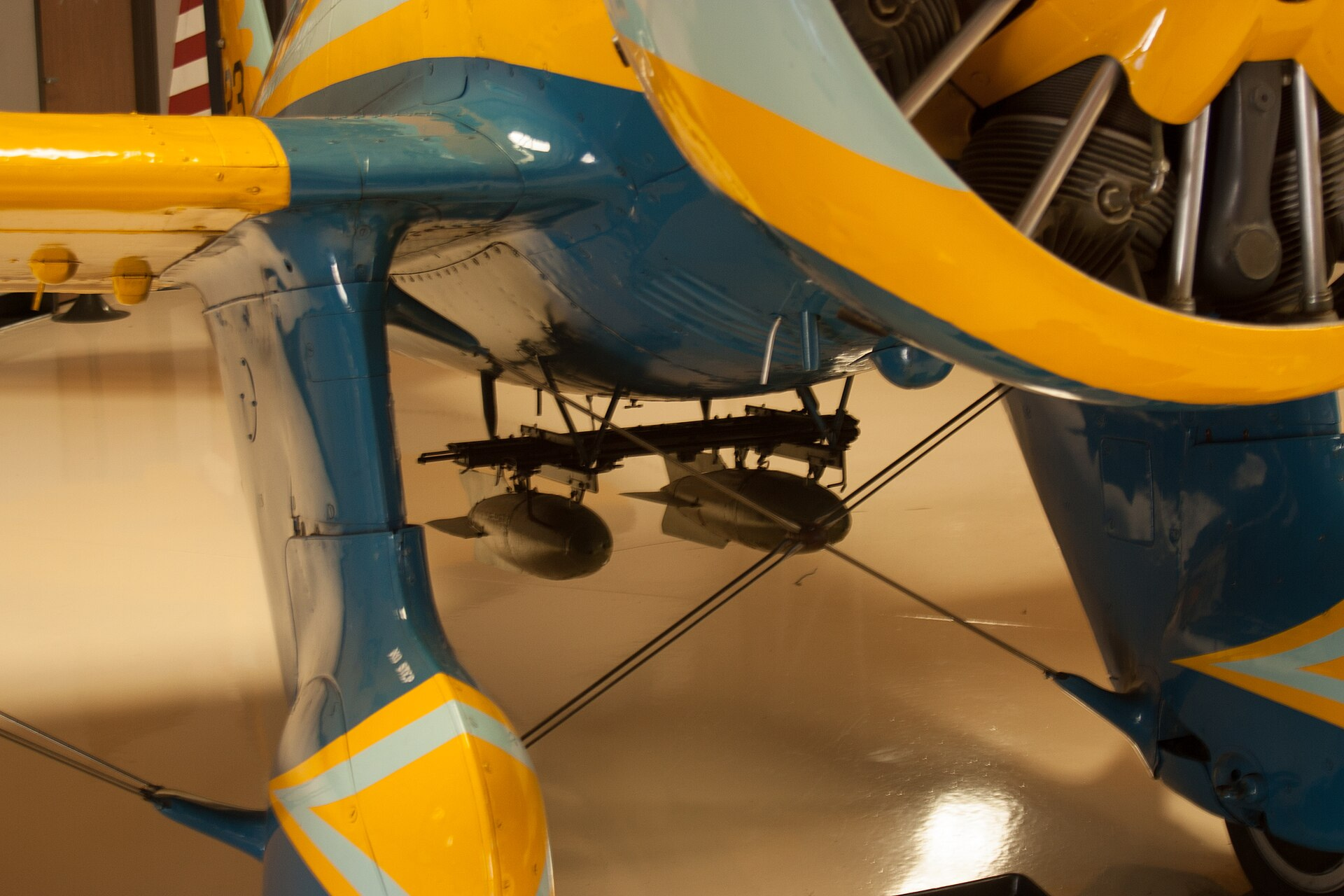
Armament was light by later standards: two forward-firing machine guns — either a pair of .30-calibre guns, or one .30 and one heavier .50 — with the option of a small load of light bombs under the wings for ground attack.
Full specifications
Boeing P-26A Peashooter specifications
Figures below are for the main production P-26A, drawn from the National Air and Space Museum, the National Museum of the U.S. Air Force and standard references. Early prototypes and export Model 281s differed in detail; where sources disagree, that is noted.
| クルー | 1 (pilot) |
|---|---|
| 長さ | 23 ft 7 in (7.19 m) |
| 翼幅 | 28 ft (8.52 m) |
| 身長 | ~10 ft (3.04 m) |
| 空虚重量 | ~2,196 lb (996 kg) |
| Gross weight | ~3,360 lb (1,524 kg) varies by load |
| First flight | 20 March 1932 (Model 248 / XP-936) |
| Number built | ~150 total — ~139 for the U.S. Army (Models 248/266) plus ~12 export (Model 281) figures vary |
| エンジン | 1× Pratt & Whitney R-1340-27 Wasp air-cooled radial, ~600 hp (early aircraft ~500 hp) |
|---|---|
| 最高速度 | ~234 mph (377 km/h) at altitude |
| Cruising speed | ~199 mph (320 km/h) approx |
| 範囲 | ~360 miles (580 km) combat; up to ~635 mi (1,020 km) ferry |
| サービス天井 | ~27,400 ft (8,350 m) |
| 上昇率 | ~2,360 ft/min sources vary |
| 武装 | 2× forward-firing machine guns (two .30-cal, or one .30 and one .50); light bombs optional |
05The Boeing P-26 variants: Models 248, 266 and the export 281+
The family is small but worth untangling. The Model 248 was the trio of Army-funded prototypes (designated XP-936, then P-26) first flown in 1932. The main production version for the U.S. Army was the Model 266, bought as the P-26A — about 111 aircraft — followed by small numbers of the P-26B そして P-26C, which introduced a fuel-injected engine and minor changes (a couple of dozen between them, some converted from one mark to another).
For export Boeing offered the Model 281, essentially a P-26 for foreign customers. Around a dozen were built: roughly eleven for China and a single example for Spain. The Philippine and Guatemalan aircraft, by contrast, were ex-U.S. Army machines handed on rather than new-build 281s.
Total production is usually given as about 150 — roughly 139 for the U.S. Army plus the export 281s — though exact counts differ slightly between sources, which is why this page hedges the figure rather than asserting a single number.
06The Boeing P-26’s cost: what a Peashooter was worth in the 1930s+
Reliable unit-cost figures for the P-26 are hard to pin down. It was a Depression-era military purchase, and the prices that appear in various accounts are inconsistent and difficult to compare with modern list prices. The honest answer is that the Peashooter’s cost is not reliably recorded.
What can be said qualitatively is that it was a relatively small, simple, single-engine fighter — cheaper than the twin-engine bombers of its day, and cheap enough that the Army could buy it in useful numbers and later pass examples on to allied nations. There is no meaningful modern “cost per flight hour” for the type, because effectively only one airworthy example exists and it is a museum aircraft, not a commercial operation.
Cost & ownership data
What the Boeing P-26 Peashooter cost — then and now
A standard cost snapshot for the comparison tool. Interwar prices are poorly documented and are hedged; present-day operating figures do not exist as a market, because only one Peashooter flies and it is a museum aircraft.
| Unit cost (1930s) | Not reliably recorded (1930s) flagged — Depression-era figures inconsistent |
|---|---|
| Cost per flight hour (today) | Not applicable — no commercial operation; a single museum-owned airworthy example |
| Approx. value today | Effectively priceless as a survivor — only two originals exist and neither is for sale |
| Production | ~150 built 1932–1936 (Models 248/266/281) |
| Operating status | Retired from military service by the mid-1940s; one airworthy survivor today |
Interwar unit costs for the P-26 are inconsistently documented and are not presented here as a figure. The most reliable statement is qualitative: the Peashooter was a small, comparatively inexpensive single-seat fighter — cheap enough to buy in numbers and to pass on to friendly air forces once it was outclassed at home.
How it compares
The Boeing P-26 Peashooter against its contemporaries
A rough side-by-side with the fighters that surrounded the P-26 in time — the biplanes it replaced and the modern monoplanes that swept it aside. Figures are representative and vary by variant.
| 航空機 | Top speed | Layout | 武装 | 注記 |
|---|---|---|---|---|
| Boeing P-26 Peashooter | ~234 mph (377 km/h) | Open cockpit, fixed gear, braced monoplane | 2 MG | First all-metal U.S. monoplane fighter; transitional |
| Curtiss P-36 Hawk | ~313 mph (500 km/h) | Enclosed, retractable-gear monoplane | 1–4 MG | The modern fighter that replaced the P-26 in U.S. service |
| Gloster Gladiator | ~257 mph (414 km/h) | Enclosed-cockpit biplane | 4 MG | Britain’s last biplane fighter — a contemporary from the other direction |
| Fiat CR.42 Falco | ~267 mph (430 km/h) | Open-cockpit biplane | 2 MG | A late-1930s biplane still in front-line combat in WWII |
| Polikarpov I-16 | ~280+ mph (450+ km/h) | Retractable-gear monoplane | 2–4 MG | The Soviet monoplane that pushed the concept further, faster |
Comparative figures are indicative only, drawn from museum and reference sources; each type spanned several variants with different engines and equipment. The point of the table is the leap in layout — the P-26’s open cockpit and fixed gear against the enclosed, retractable-gear fighters that followed within a few years.
Family tree
The Boeing P-26 marks at a glance
The prototypes
Three Army-funded prototypes (XP-936), first flown March 1932. They proved the all-metal monoplane fighter concept for the U.S. Army.
The main version
Model 266, the definitive production Peashooter — about 111 built with the 600 hp R-1340-27 Wasp. The version most survivors and replicas represent.
Fuel injection
A small batch with a fuel-injected R-1340-33 engine and flaps as built. Only a couple were new-build; some P-26Cs were later brought up to a similar standard.
Detail changes
About two dozen aircraft with minor equipment and fuel-system changes, several later converted toward P-26B configuration.
The export Peashooter
The foreign-sale version — around a dozen built, roughly eleven for China and one for Spain. Mechanically close to the P-26A.
Philippine & Guatemalan aircraft
The Philippines and Guatemala flew ex-U.S. Army P-26s passed on as the type was retired at home — and fought or flew them long after.
Timeline
The Boeing P-26 Peashooter: a timeline
Stories & eyewitnesses
Boeing P-26 Peashooter stories: firsts, fixes and last stands
America’s first monoplane fighter
The P-26 was the U.S. Army Air Corps’ first all-metal monoplane fighter to enter service.
続きを読む
When it reached squadrons in 1934, every other American fighter was a fabric-covered biplane. The Peashooter’s stressed-metal skin and cantilever-look monoplane wing made it look like the future — even if, under the paint, it kept a few habits of the past.
Why “Peashooter”?
The nickname is affectionate and its exact origin is disputed.
続きを読む
The usual story is that the tubular telescopic gunsight ahead of the windscreen looked like a child’s peashooter; another points to the blast tubes around the gun barrels. Either way it fit the small, stubby, pugnacious little Boeing perfectly.
The sunburst wings
1930s Peashooters wore some of the most colourful markings in fighter history.
続きを読む
Bright squadron colours, chrome-yellow wings and vivid tail stripes made the pre-war Army P-26 unmistakable. It is one of the reasons the aircraft is so beloved by warbird enthusiasts and modellers today.
An open cockpit in the metal age
The pilot flew exposed to the wind, behind a small windscreen.
続きを読む
Enclosed canopies were arriving on other designs, but Boeing kept the P-26 open to save weight and complexity. It gave the aircraft a biplane-era feel that was already dating fast when it entered service.
Wire-braced wings
The P-26 was the last U.S. Army fighter with externally braced wings.
続きを読む
Its thin low wing was held up by flying and landing wires running to the fuselage and a small pylon — a monoplane wearing a biplane’s bracing. The next generation of American fighters would carry the load internally in a clean cantilever wing.
Flaps for a fast landing
The Peashooter landed dangerously fast — so the Army added flaps.
続きを読む
After a run of landing accidents, split flaps were fitted to slow the approach, making the P-26 one of the first U.S. fighters with landing flaps. A modern feature acquired as a safety fix rather than by grand design.
The raised turn-over pylon
The tall fairing behind the pilot’s head was a life-saver.
続きを読む
After a fatal accident in which a P-26 overturned on landing, the headrest structure was raised and strengthened into a roll-over pylon to protect the pilot if the fixed-gear aircraft nosed over on a rough field.
Peashooters against Japan
Chinese P-26s fought the Japanese from the summer of 1937.
続きを読む
Chinese Nationalist Model 281s clashed with Japanese aircraft over Nanjing and the coast from 15 August 1937 — among the very first air combats between all-metal monoplane fighters. Chinese pilots claimed victories in the little Boeings against a modernising enemy.
Villamor’s outnumbered squadron
Philippine P-26s went to war against overwhelming odds in December 1941.
続きを読む
The 6th Pursuit Squadron of the Philippine Army Air Corps, led by Capt. Jesus Villamor, threw its obsolete Peashooters against Japanese raids over Luzon. Villamor was decorated for the effort, and the P-26s were credited with downing Japanese aircraft — a genuine David-and-Goliath stand (specific claims vary).
The last operator
Guatemala kept the Peashooter flying into the 1950s.
続きを読む
Ex-U.S. Army P-26s reached Guatemala in 1942–43 and served for years afterward — among the last open-cockpit fighters in service anywhere in the world — before North American P-51 Mustangs finally replaced them.
A single 281
One export Peashooter reached the Spanish Civil War.
続きを読む
A lone Model 281 served briefly on the Republican side in 1936. It is a footnote, but a telling one: the little Boeing turned up in nearly every corner of the pre-war and wartime fighter story.
The one that survived
One original P-26 still takes to the air.
続きを読む
The Planes of Fame Air Museum in Chino, California restored a P-26A (serial 33-123) to flight in 2006 — the world’s only airworthy Peashooter. A second original is preserved at the Smithsonian. To see and hear a flying P-26 today is to meet the 1930s face to face.
Guarding Panama
P-26s helped defend the Panama Canal Zone.
続きを読む
As the type was pushed out of front-line squadrons at home, U.S. Army P-26 detachments stood guard over strategic outposts including Hawaii and the Panama Canal Zone in the later 1930s — unglamorous but important duty for an ageing fighter.
The all-metal step
The P-26 helped end the age of wood and fabric fighters.
続きを読む
Its stressed-metal construction was tougher and more durable than the fabric biplanes it replaced, part of a wider Boeing push — Monomail, B-9, P-26 — that carried all-metal construction across the whole spectrum of aircraft in the early 1930s.
Monoplane, biplane habits
The Peashooter took the wing forward but kept the old cockpit and gear.
続きを読む
By putting metal monoplane wings on an aircraft that still had an open cockpit, fixed gear and bracing wires, Boeing produced a design exactly half-way between the biplane and the modern fighter — which is what makes it so instructive today.
A tube like a peashooter
The likely source of the famous nickname sat right in front of the pilot.
続きを読む
The tubular telescopic gunsight projecting ahead of the windscreen is the feature most often credited with giving the P-26 its enduring nickname — a small detail that named an entire aeroplane.
Photo gallery
Boeing P-26 Peashooter in photographs
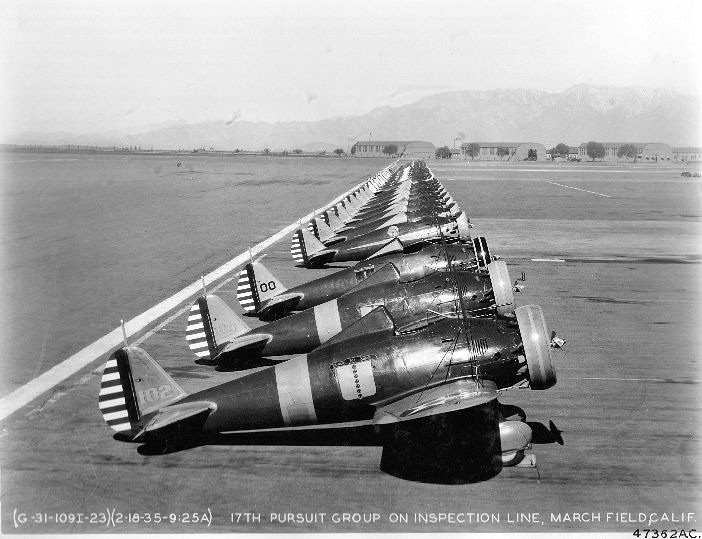
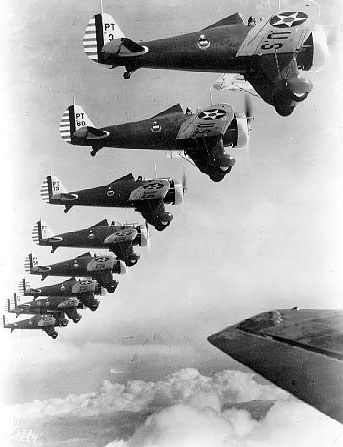
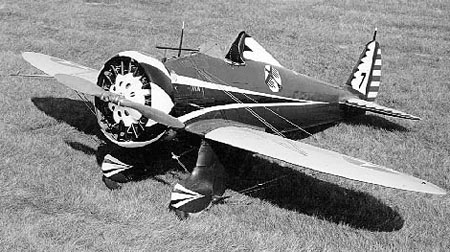
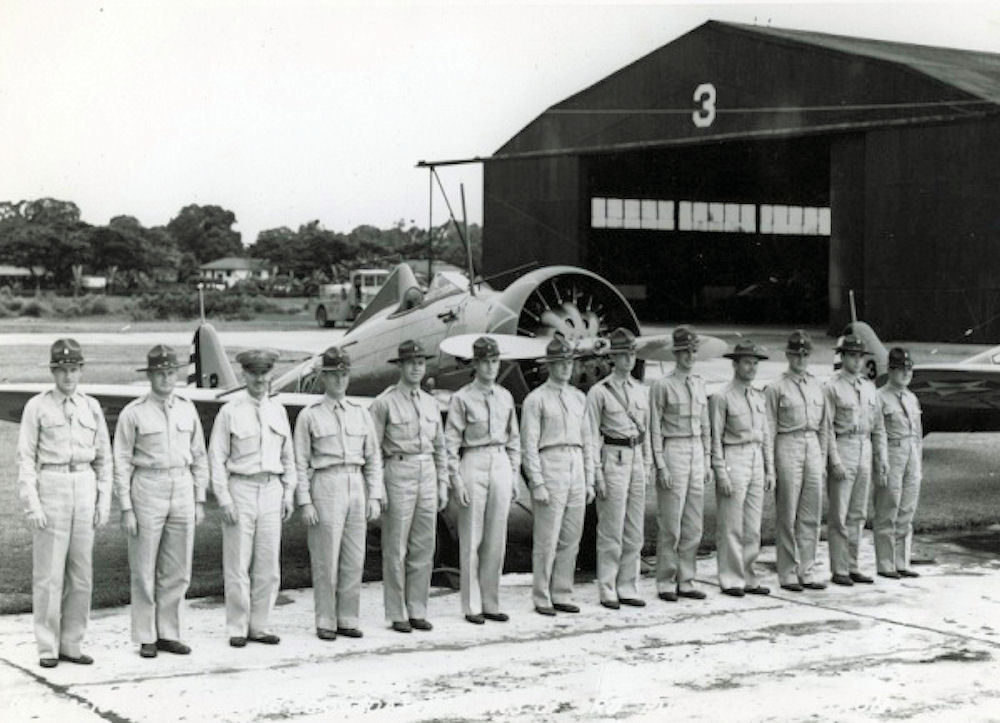
Images are public-domain U.S. Army/Air Force and San Diego Air & Space Museum archive photographs, plus two Creative Commons (CC BY-SA 2.0) photographs of preserved aircraft by Greg Goebel and Dustin May, all sourced via Wikimedia Commons. Credits appear in each caption.
Watch
The Boeing P-26 Peashooter on film: the world’s only flying example
Rather than a modern re-cut, we chose footage from the museum that owns and flies the last airworthy Peashooter on Earth.
“P-26A Pea Shooter in flight at Planes of Fame — world’s only flying P-26A”, from the official Planes of Fame Air Museum channel (roughly 34,700 views at the time of writing). Planes of Fame owns and operates the sole airworthy P-26A (serial 33-123), restored to flight in 2006 — making this genuine footage of the only Peashooter still flying anywhere in the world.
Operations map
Where the Boeing P-26 Peashooter flew and fought
An American aircraft that ended up fighting in Asia and flying in Central America. Toggle the categories to explore where the Peashooter was designed and built, where the U.S. Army flew it, which foreign air forces operated it, and where the last airframes survive.
Combat
The Boeing P-26 at war: an obsolete fighter thrown into modern battles
Here is the paradox at the heart of the Peashooter’s story. At home, in the United States, the P-26 barely fired a shot in anger — it was a peacetime fighter, retired from front-line squadrons before America entered World War II. But the aircraft the U.S. Army handed on to friends abroad went into some of the hardest fighting of the age, against enemies flying far more modern machines.
The first shots came in China. From August 1937, Chinese Nationalist Model 281s fought Japanese aircraft over Nanjing and the coast, in what were among the earliest dogfights between all-metal monoplane fighters anywhere in the world. Then, in December 1941, Philippine P-26s of the 6th Pursuit Squadron went up against the Japanese onslaught over Luzon — obsolete open-cockpit fighters flung against bombers and modern escorts, and, remarkably, credited with kills.
Later still, in Central America, Guatemala kept its Peashooters flying into the 1950s, long after every major air force had scrapped the type. It is a combat and service record utterly at odds with the aircraft’s brief, unremarkable career in U.S. hands — and it is why the little Boeing is remembered with such affection.
07The Boeing P-26 in China: the first monoplane-fighter dogfights+
China was the first nation to take the Peashooter into combat. Around eleven export Model 281s were delivered in 1936, and from 15 August 1937 — at the start of the full-scale war with Japan — Chinese Nationalist Air Force P-26s were in action against Japanese raiders over Nanjing and the Chinese coast.
These clashes are historically significant beyond their scale: they were among the first air combats fought between all-metal monoplane fighters, a preview of the kind of air war that would dominate the following decade. Chinese pilots claimed victories in the little Boeings, though as with all such early actions the exact tallies are contested and should be treated with caution.
By 1938 the surviving Chinese Peashooters were being overtaken by newer types and by attrition, but their early stand marks the P-26 as a genuine combat aircraft, not merely a peacetime curiosity.
08The Philippine P-26s and Jesus Villamor, December 1941+
The Peashooter’s most celebrated stand came in the Philippines. The 6th Pursuit Squadron of the Philippine Army Air Corps flew about a dozen ageing P-26s when Japan attacked in December 1941. Led by Capt. Jesus Villamor, the squadron went up against Japanese bombers and their escorts over Luzon — a hopeless mismatch on paper.
Yet the Filipino pilots fought hard, and the Peashooters were credited with shooting down Japanese aircraft — a striking result for obsolete open-cockpit fighters against a modern air force. Villamor was decorated for leading these interceptions. As with most desperate actions of that chaotic month, the precise number and type of Japanese aircraft downed varies between accounts, so we present the claims with appropriate caution.
With no way to replace losses, the surviving P-26s were deliberately burned on the ground on 24 December 1941 to keep them out of Japanese hands — a poignant end for the Philippines’ first fighters, and one of the last combat chapters of the Boeing Peashooter.
09Guatemala: how the Peashooter became one of the last open-cockpit fighters flying+
The final chapter belongs to Central America. Guatemala received a handful of ex-U.S. Army P-26s in 1942–43 — around seven aircraft — and, unlike everyone else, simply kept flying them. Well into the 1950s the Guatemalan air arm still operated Peashooters, making it the type’s last military operator and among the last air forces anywhere to fly an open-cockpit, fixed-gear fighter.
The aircraft were eventually replaced by more modern types, including North American P-51 Mustangs. But the sheer longevity of the Guatemalan P-26s — two decades after the design first flew — is one of the most charming details in the whole story, and a reminder of how useful a simple, rugged fighter could remain far from the front lines of the great powers.
It is also why one of the surviving airframes has a Guatemalan connection: the aircraft that ended up flying again at Planes of Fame passed through Guatemalan service, tying the Peashooter’s beginning and its survival together.
The Peashooter in numbers
The Boeing P-26 Peashooter’s record at a glance
Questions & answers
Boeing P-26 Peashooter: your questions answered
Can I fly in a Boeing P-26 Peashooter?
No. The Boeing P-26 is a single-seat fighter, and there is no way to book a flight in one. Only two original Peashooters survive: one static exhibit at the Smithsonian, and a single airworthy P-26A owned by the Planes of Fame Air Museum in California, which appears at occasional airshows. It is a one-of-a-kind museum aircraft, not a passenger ride, and it has only one seat in any case.
If you want to actually fly in a genuine military aircraft, MiGFlug arranges flights in real fighter jets and warbirds — from the L-39 Albatros to a MiG-29 at the edge of space. See migflug.com/flights-prices. MiGFlug does not offer P-26 flights.
Why is the Boeing P-26 called the “Peashooter”?
The nickname is affectionate and its exact origin is disputed. The most common explanation is that the pilot’s tubular telescopic gunsight, projecting ahead of the windscreen, resembled a child’s peashooter blowpipe. Another account links the name to the blast tubes around the machine-gun barrels. The name became so widely used that it is now inseparable from the P-26.
Was the Boeing P-26 really America’s first monoplane fighter?
It was the first all-metal monoplane fighter to enter service with the U.S. Army Air Corps, and it is widely described as the first American monoplane fighter to reach front-line squadrons, from 1934. Earlier monoplane fighter designs had been tried, but the P-26 was the first to be adopted in numbers and flown operationally by U.S. pursuit squadrons, which is why it holds that milestone.
What made the Boeing P-26 a “transitional” aircraft?
The P-26 mixed the new and the old. It was modern in being an all-metal, stressed-skin, low-wing monoplane. But it was old-fashioned in keeping an open cockpit, fixed (non-retractable) landing gear and externally wire-braced wings — it was in fact the last U.S. Army fighter designed with braced wings. That combination places it exactly on the boundary between the biplane era and the modern fighters of World War II.
How fast was the Boeing P-26, and how did it compare?
The P-26A had a top speed of about 234 mph (377 km/h) and a service ceiling around 27,400 ft. That was fast for 1932–34 and quicker than the biplanes it replaced. But fighter performance was climbing rapidly, and within a few years enclosed, retractable-gear monoplanes such as the Curtiss P-36 (around 313 mph) and Messerschmitt Bf 109 left the Peashooter well behind. By World War II it was thoroughly obsolete as a fighter.
Did the Boeing P-26 ever see combat?
Yes, though almost none of it in American hands. Chinese Model 281 Peashooters fought Japanese aircraft from August 1937, in some of the first combats between all-metal monoplane fighters. Philippine P-26s of the 6th Pursuit Squadron fought the Japanese over Luzon in December 1941 under Capt. Jesus Villamor and were credited with downing enemy aircraft. A single Model 281 also saw brief action in the Spanish Civil War. Exact claims from these actions vary between sources.
Which country was the last to fly the Boeing P-26?
Guatemala. It received ex-U.S. Army P-26s in 1942–43 and kept them in service into the 1950s — among the last air forces anywhere to operate an open-cockpit, fixed-gear fighter — before replacing them with more modern types including the North American P-51 Mustang.
How many Boeing P-26s were built, and how many survive?
About 150 in total were built between 1932 and 1936, across the Model 248 prototypes, the production Model 266 (P-26A/B/C) for the U.S. Army and the export Model 281. Roughly 139 went to the U.S. Army plus about a dozen export aircraft, though exact figures vary between sources. Today only two originals survive: one at the Smithsonian National Air and Space Museum and one airworthy example at Planes of Fame in California. Several accurate reproductions also exist.
What engine and armament did the Boeing P-26 have?
The P-26 was powered by a single Pratt & Whitney R-1340 Wasp air-cooled radial engine of roughly 500–600 hp (the P-26A used the 600 hp R-1340-27). It was armed with two forward-firing machine guns — either two .30-calibre guns or one .30 and one heavier .50-calibre gun — and could carry a small load of light bombs for ground attack.
Did the Boeing P-26 have retractable landing gear?
No. The P-26’s main wheels were fixed down throughout its life, enclosed in streamlined “trousers” to reduce drag rather than folding away. Retractable undercarriage was one of the modern features Boeing deliberately left out to keep the aircraft simple and cheap — and one of the main reasons it was overtaken so quickly by the enclosed, retractable-gear fighters that followed.
Why did the Boeing P-26 have wire-braced wings?
To save weight, cost and engineering risk. In 1932 a thin, externally braced wing was lighter and simpler to build than a fully cantilever one, and Boeing chose that route for its cheap, quick pursuit fighter. The result made the P-26 the last U.S. Army fighter designed with externally braced wings — a very visible link back to the biplane era, even on an all-metal monoplane.
Where can I see a Boeing P-26 Peashooter fly?
The only airworthy P-26 in the world is the P-26A owned by the Planes of Fame Air Museum in Chino, California, restored to flight in 2006. It appears at occasional airshows, so the museum’s events are the place to watch for a flying Peashooter. A second original is on static display at the Smithsonian National Air and Space Museum, and faithful reproductions can be seen at other museums including the National Museum of the U.S. Air Force.
What is the difference between the Boeing P-26 and the Curtiss P-36?
They are a generation apart despite entering service only a few years apart. The P-26 (1934) is an open-cockpit, fixed-gear, wire-braced transitional monoplane with a top speed around 234 mph. The Curtiss P-36 Hawk (later 1930s) is a fully modern fighter — enclosed cockpit, retractable gear, cantilever wing — around 80 mph faster. The P-36 replaced the P-26 in U.S. service and shows exactly how far fighter design leapt in half a decade.
Honesty & legacy
The Boeing P-26 Peashooter: how good was it, really?
The Peashooter is easy to romanticise. It deserves an honest reckoning — a genuine milestone that was also, very quickly, out of date.
10Was the Boeing P-26 a good fighter? An honest assessment+
For a moment in the mid-1930s, yes. The P-26 was faster than the biplanes it replaced, agile, strong and a real technological step forward as the U.S. Army’s first all-metal monoplane fighter. Pilots liked its performance and its solid metal construction.
But its virtues had a short shelf life. The open cockpit, fixed gear and braced wing were compromises even when new, and the pace of fighter development in the 1930s was brutal. Within a few years the Peashooter was slower, less protected and less capable than the enclosed, retractable-gear monoplanes entering service worldwide. By the time it saw its hardest combat, in 1941–42, it was hopelessly outclassed — which is exactly what makes the stand of its Chinese and Philippine pilots so remarkable.
So the fair verdict is twofold: a genuinely important, well-liked aircraft that pointed the way forward, and, almost immediately, an obsolete one. Both things are true, and the honest history holds them together.
11Boeing P-26 vs the biplanes it replaced+
Against the fabric biplanes of the early 1930s — the Boeing P-12 and Curtiss P-6 Hawk it succeeded — the P-26 was a clear advance. Its metal monoplane wing and clean cowling gave it a useful speed advantage, and its all-metal structure was tougher and more durable than wood and fabric.
The trade-offs were in handling and landing: the biplanes were slower but landed more gently, while the higher-loaded Peashooter came in fast and demanded the flaps that were later fitted. It was the classic monoplane-versus-biplane bargain of the era — more speed for less forgiving low-speed behaviour.
12Boeing P-26 vs Curtiss P-36 Hawk: the fighter that made it obsolete+
The clearest measure of how fast the P-26 aged is the aircraft that replaced it. The Curtiss P-36 Hawk, entering U.S. service only a few years later, was everything the Peashooter was not: an enclosed cockpit, a retractable undercarriage and a clean cantilever wing, with a top speed around 313 mph — some 80 mph faster.
In barely half a decade American fighter design had moved from the P-26’s braced, open-cockpit compromise to the modern layout that would define World War II fighters. The Peashooter and the P-36 are best understood as bookends of that leap — which is why they make such a natural pairing in the museum.
13The surviving Boeing P-26s: where to see a Peashooter today+
Only two original P-26s survive. One is preserved by the Smithsonian National Air and Space Museum in the United States. The other, a P-26A carrying serial 33-123 and a history that runs through U.S. and Guatemalan service, was restored to airworthy condition by the Planes of Fame Air Museum in Chino, California in 2006 — the only flying Peashooter in the world, and an occasional airshow performer.
Beyond the two originals, several museums display accurate reproductions in period markings, including the National Museum of the U.S. Air Force. Between the genuine survivors and the replicas, the distinctive shape of the little Boeing is not hard to find — but to see one actually fly, Planes of Fame is the place.
14Why the Boeing P-26 Peashooter still matters+
The Peashooter matters because it marks a hinge in history. It is the exact point where the American fighter stopped being a biplane and started becoming the modern aeroplane — and, uniquely, it shows the transition mid-stride, with its monoplane wing still held up by biplane-era wires and its pilot still sitting in the open air.
It matters, too, for the courage of the men who flew it when it was already obsolete — the Chinese and Filipino pilots who took an outdated fighter into battle against a modern enemy. And it matters as a survivor: in the shape and sound of the one that still flies, the 1930s are briefly, vividly alive.
Small, stubby and a little pugnacious, the P-26 has a personality that outlasted its usefulness by decades. That is why it is remembered so fondly — and why it earns its place in the museum.
Development
How the Boeing P-26 came to be: a private gamble on the monoplane
The Peashooter grew out of a moment of transition in aircraft design and in the aircraft industry itself. In the late 1920s and early 1930s, all-metal, stressed-skin construction and the low-wing monoplane were maturing fast, and Boeing — already building metal fighters like the P-12 biplane — wanted to be first to bring the new ideas together in a pursuit aircraft for the Army.
Rather than wait for a formal requirement, Boeing developed the Model 248 as a private venture, with the U.S. Army supplying engines and instruments and agreeing to test the prototypes. It was a calculated bet: build the aeroplane, prove it, and win the order. The gamble paid off, and the design entered production as the P-26A — but the same instinct to limit risk is why Boeing stopped short of retractable gear and an enclosed cockpit.
The result was a design that was bold in some respects and cautious in others, produced quickly and cheaply at a time when the Army had little money to spend. That context — Depression-era budgets, a fast-moving technology and a manufacturer hedging its bets — explains almost everything about the finished aircraft.
15The Boeing Model 248: the private venture behind the P-26+
Boeing built three Model 248 prototypes in 1931–32 as a company venture, with the Army providing engines and some equipment under the designation XP-936. The first flew on 20 March 1932. The prototypes validated the all-metal monoplane pursuit concept and led directly to the production contract.
Building on spec was a real risk for Boeing, but it let the company move faster than a formal competition would have allowed and gave it a head start in the emerging monoplane-fighter field. The approach mirrored the way several classic aircraft of the era began — as manufacturer gambles rather than answers to a written requirement.
The production version, the Model 266, differed only in detail from the prototypes, which is why the P-26 reached squadrons so quickly.
16The all-metal revolution and why Boeing hedged its bets+
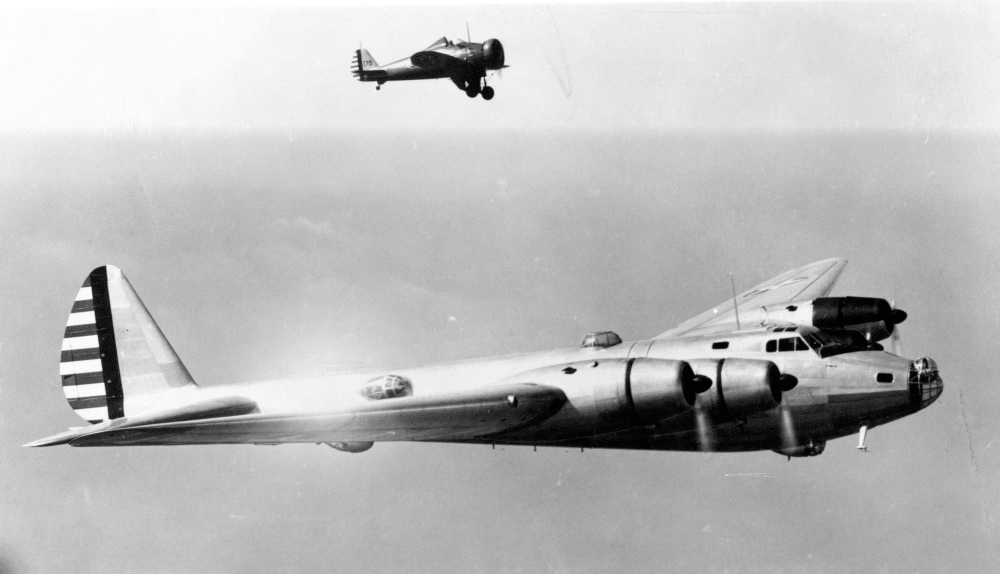
The early 1930s were the years when metal monoplanes displaced fabric biplanes across military and civil aviation. Boeing was at the centre of it, building the all-metal Monomail and the B-9 bomber alongside the P-26. The Peashooter applied that same stressed-skin metal construction to a fighter.
But retractable undercarriages and enclosed cockpits were still new, and each added weight, cost and mechanical risk. For a cheap, quick pursuit aircraft the Army could afford in numbers, Boeing chose to keep the gear fixed and the cockpit open. It was a defensible engineering judgement in 1932 — and one that dated the aircraft within a few short years as those features became reliable and standard.
The wire bracing was part of the same logic: a braced thin wing was lighter and simpler than a fully cantilever one, at the cost of drag and of looking old-fashioned almost immediately.
17The Pratt & Whitney R-1340 Wasp: the engine at the heart of the Peashooter+
The P-26 was built around the Pratt & Whitney R-1340 Wasp, a nine-cylinder air-cooled radial that was one of the most important American aero-engines of its generation. In the P-26A it delivered about 600 hp, driving a metal propeller and giving the little fighter its lively performance.
The Wasp was rugged, reliable and widely used — it also powered trainers and transports for decades — which made the P-26 straightforward to maintain and operate, an asset that helped the aircraft soldier on in overseas and foreign service long after it was obsolete as a front-line fighter.
Later marks experimented with a fuel-injected version of the Wasp (in the P-26B), but the basic engine remained the same trusted radial throughout the type’s life.
Markings & units
The Boeing P-26 in service: pursuit squadrons and the sunburst age
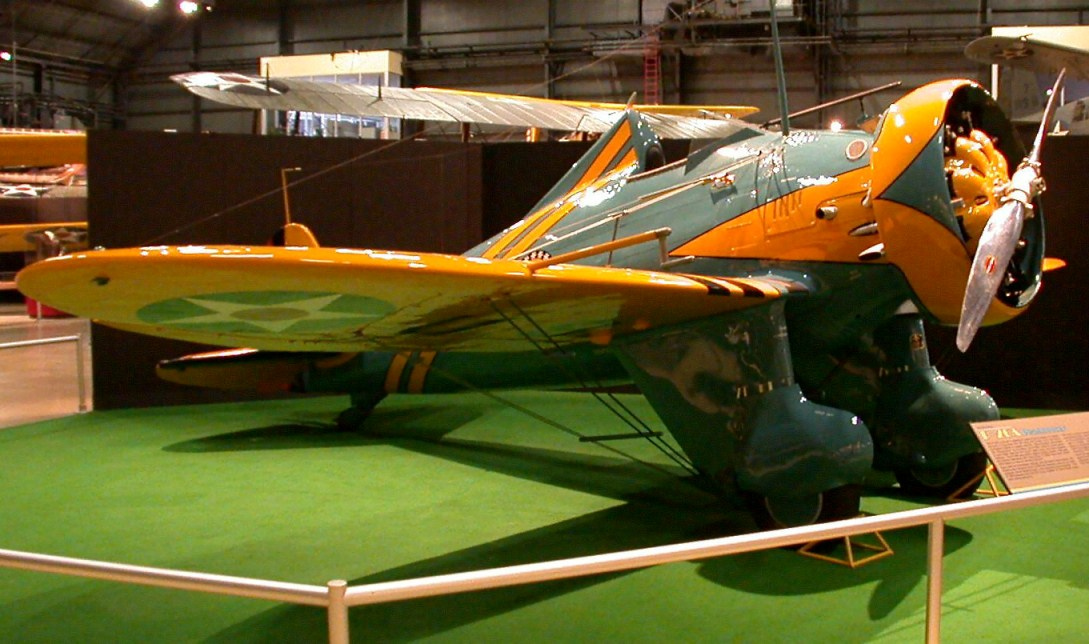
The P-26 belongs to the most visually spectacular period in U.S. military aviation. Before the drab olive of World War II, Army pursuit aircraft wore bright, individual squadron colours, chrome-yellow wings and vivid tail markings. The Peashooter, small and clean, carried them beautifully, and pre-war photographs of P-26 units are among the most striking in aviation history.
The type equipped a substantial slice of the pursuit force in the mid-1930s, serving with squadrons in the continental United States and, importantly, with the garrisons defending overseas outposts — Hawaii and the Panama Canal Zone above all. It was in those overseas roles, and in the hands of the air forces it was later passed to, that the aircraft would still be found when war came.
18The sunburst markings: why the P-26 is a modeller’s favourite+
The pre-war U.S. Army allowed strikingly colourful markings, and the P-26 wore them at their most flamboyant: bright yellow wings, blue fuselages, and squadron insignia and rudder stripes in vivid combinations. Each pursuit squadron had its own scheme, so a line of P-26s could be a riot of colour.
That, combined with the aircraft’s compact, characterful shape, has made the Peashooter a perennial favourite among scale modellers and warbird enthusiasts. It represents a lost age of aviation — the last years before camouflage and war turned military aircraft grey and green.
19The Boeing P-26 in Hawaii and the Panama Canal Zone+
As newer fighters pushed the P-26 out of stateside front-line squadrons, many aircraft were sent to defend America’s strategic overseas outposts. P-26 units served in Hawaii and the Panama Canal Zone in the later 1930s, guarding the fleet base at Pearl Harbor and the vital canal.
By December 1941 the Peashooter was largely gone from these front lines, replaced by the P-36 and P-40, but the type’s presence in the Pacific and Central America is part of why it ended up, through hand-me-down transfers, in the air forces that would actually fight the Japanese in 1941–42.
20Reproductions and replicas: keeping the Peashooter’s shape alive+
With only two originals surviving, several museums and builders have produced accurate P-26 reproductions to represent the type. The National Museum of the U.S. Air Force displays one in the markings of a 1930s pursuit group commander, and other faithful replicas exist in the United States and the Philippines.
More recently, enthusiasts have begun building flyable reproductions from scratch, aiming to put more Peashooter shapes back in the air. These reproductions are not original aircraft, and this page keeps the distinction clear — but they play a real part in keeping the P-26 visible and remembered.
Flying & fighting
What it was like to fly and fight the Boeing P-26 Peashooter
To a pilot stepping out of a biplane in 1934, the P-26 felt fast and modern — and a little demanding. It was quicker than anything most Army pursuit pilots had flown, responsive and solid, with the reassuring feel of all-metal construction. But it also asked for respect, above all in the one phase every pilot has to get right: the landing.
The Peashooter’s highly loaded wing meant it came over the fence faster than the biplanes it replaced, and with fixed gear and a tall, blind-forward nose it was unforgiving of a clumsy arrival. The split flaps fitted after early accidents helped, steepening and slowing the approach, but the P-26 remained a fighter that rewarded a careful, well-flown circuit.
In the air it was a pleasant, nimble machine for its day. In combat, years later and against modern enemies, its limitations were cruelly exposed — it was slower, more lightly armed and far more vulnerable than the aircraft it faced. That its pilots achieved anything at all in 1941–42 says a great deal about them, and about the sturdy little Boeing they flew.
21Handling the Boeing P-26: fast, nimble and unforgiving on landing+
Pilots generally enjoyed flying the P-26. It was quick, manoeuvrable and honest in the air, a clear step up in performance from the biplanes of the early 1930s and a genuinely modern-feeling fighter for its brief prime.
The catch was low-speed handling. The same efficient, highly loaded wing that gave good speed also produced a high landing speed, and the aircraft could bite an inattentive pilot on the approach or the ground roll. The retrofitted flaps and the raised turn-over structure were both responses to this. Flown with care, the Peashooter was a fine mount; flown carelessly, it could be dangerous — a very 1930s combination.
22The Boeing P-26’s guns and gunsight: two machine guns and a peashooter tube+
The P-26’s armament was light even by 1930s standards: two forward-firing machine guns synchronised to fire through the propeller. The usual fit was a pair of .30-calibre guns, though some aircraft carried one .30 and one heavier .50-calibre weapon for more punch. A modest load of light bombs could be carried under the wings for ground attack.
The pilot aimed through a simple telescopic gunsight, the tube of which projected ahead of the windscreen — the feature most often credited with inspiring the “Peashooter” nickname. Against the biplanes of the early 1930s this armament was adequate; against the multi-gun monoplanes of World War II it was hopelessly outmatched, one more reason the type was outclassed by 1941.
23How to identify a Boeing P-26 Peashooter+
The P-26 is one of the easier interwar fighters to recognise. Look for a very short, stubby fuselage; a low monoplane wing braced to the fuselage and a small pylon by external wires; a large radial engine in a polished cowling; an open cockpit with a tall headrest fairing behind the pilot; and fixed main wheels enclosed in streamlined “trousers.”
In period photographs the vivid pre-war Army markings — yellow wings, coloured fuselage bands and striped rudders — are another giveaway. The combination of a modern metal monoplane wing with old-fashioned bracing wires and fixed spatted gear is unique enough that, once seen, a Peashooter is hard to mistake for anything else.
Lineage
The Boeing P-26 in the American pursuit line: from P-12 to P-36
The Peashooter makes most sense as a single link in a fast-moving chain. Ahead of it came Boeing’s own P-12, a classic all-metal biplane fighter of the early 1930s. The P-26 took that metal construction and put it on a monoplane wing — a real step forward — while keeping the open cockpit and fixed gear of its biplane forebears.
Behind it came the fighters that made it obsolete: the Seversky P-35 and, above all, the Curtiss P-36 Hawk, with their enclosed cockpits, retractable gear and cantilever wings, leading on to the P-40 and the fighters of World War II. In the space of only a few years the American pursuit aircraft was transformed, and the P-26 sits precisely at the turning point.
That is the Peashooter’s real historical value. It is not the fastest or the deadliest fighter in the museum — far from it — but it is one of the most instructive, because it shows the exact moment the modern fighter was being born.
24Boeing P-12 to P-26: from metal biplane to metal monoplane+
Boeing’s P-12 (and its Navy cousin the F4B) was among the best fighter biplanes of the early 1930s: all-metal in structure, agile and well-liked. The P-26 was the logical next step — the same manufacturer applying the same metal construction to the newer monoplane layout.
Keeping the open cockpit and fixed gear made the transition from the P-12 gentle for pilots and cheap for the Army, but it also meant the P-26 inherited some of the biplane era’s limitations. The Peashooter is best seen as a metal biplane’s ideas rebuilt around a monoplane wing — half a step, not a full one.
25What the “P-26” designation means+
In the U.S. Army system of the time, “P” stood for “Pursuit” — the term used for fighter aircraft before the “F” (Fighter) designation replaced it after World War II. The P-26 was the twenty-sixth type in that pursuit sequence, which also included the P-12 before it and the P-35, P-36 and P-40 after.
Boeing’s own model numbers — 248 for the prototypes, 266 for the production Army aircraft, 281 for the export version — run in parallel to the Army designation, which is why the same aircraft appears under several numbers in different sources. On this page “P-26” and “Peashooter” are used as the umbrella terms, with the Boeing model numbers noted where they matter.
Myth vs fact
The Boeing P-26 Peashooter: setting the record straight
“It was a modern WWII fighter”
Fact: the P-26 was already obsolete by 1939. With an open cockpit, fixed gear and braced wings, it was a transitional 1932 design, outclassed by every modern monoplane fighter of the war.
“It had a retractable undercarriage”
Fact: the P-26’s main wheels were fixed down inside streamlined trousers. It never had retractable gear — that was one of the features Boeing deliberately left out.
“It never saw combat”
Fact: Chinese and Philippine P-26s fought the Japanese in 1937 and 1941–42, and were credited with kills — obsolete fighters flown with real courage against a modern enemy.
Survivors
Where to see a Boeing P-26 Peashooter today
Planes of Fame, California
A P-26A (serial 33-123) restored to flight in 2006 — the world’s only airworthy Peashooter, and an occasional airshow performer.
Smithsonian NASM
An original P-26A preserved by the Smithsonian National Air and Space Museum in the United States.
NMUSAF, Ohio
The National Museum of the U.S. Air Force displays a faithful P-26 reproduction in 1930s pursuit-group markings.
Philippines
A P-26 replica in Philippine Army Air Corps colours honours the 6th Pursuit Squadron and Capt. Jesus Villamor.
Guatemalan link
The airworthy survivor passed through Guatemalan service — the country that flew the type longest — tying its story together.
Flying reproductions
Enthusiast builders are constructing flyable P-26 reproductions, aiming to return more Peashooter shapes to the sky.
Record & memory
The Boeing P-26 Peashooter: safety record and lasting memory
26The Boeing P-26’s accident record and the fixes it prompted+
Like many pioneering designs, the P-26 had a mixed safety record, and a number of aircraft were lost in accidents during its Army career — several of them tied to the type’s high landing speed and fixed-gear layout. Rather than hide this, the story is instructive: it is exactly why the aircraft was modified in service.
The split flaps fitted after early landing accidents, and the raised turn-over structure added after a fatal nose-over, were direct engineering responses to real losses. They made the Peashooter safer and, in the process, gave it features — landing flaps and a roll-over pylon — that would become standard on later fighters. The P-26’s teething troubles were the growing pains of the whole monoplane-fighter idea.
27The Boeing P-26 in popular memory and the museum world+
Few interwar fighters are as beloved as the Peashooter, and its fame far outstrips its combat record. The vivid pre-war markings, the characterful stubby shape and the sheer improbability of an open-cockpit fighter fighting into the 1940s have made it a favourite of enthusiasts, modellers and airshow crowds.
The survival of a single airworthy example at Planes of Fame has kept the type genuinely alive rather than merely remembered, and its appearances — including a memorable trip to fly in England in 2014 — are events for warbird followers. The P-26 endures not because it was a great fighter, but because it is a great story: the little Boeing that stood exactly on the line between two eras of flight.
You can’t fly a Boeing P-26 Peashooter — but these cockpits are open
The Peashooter is a single-seat museum piece, with just one example still flying. But MiGFlug puts you in the cockpit of genuine military jets — from the L-39 Albatros to a MiG-29 at the edge of space. Real aircraft, real fighter pilots, real afterburner.
Fighter Jet Flights
Take the controls of a real ex-military jet with an experienced fighter pilot.
L-39 アルバトロス
The classic jet trainer — aerobatics and low-level fun, in several countries.
Related aircraft
Explore more of the museum
 Curtiss P-36 HawkThe modern, enclosed, retractable-gear monoplane that replaced the P-26 in U.S. service — the leap the Peashooter pointed toward.
 Gloster GladiatorBritain’s last biplane fighter — the other side of the same 1930s transition, meeting the monoplane age from the biplane direction.
 Fiat CR.42 FalcoA late-1930s open-cockpit biplane still fighting in World War II — like the Peashooter, an obsolete design flung into a modern war.
Sources & further reading
Where this Boeing P-26 Peashooter profile comes from
Where figures are contested — total built, unit cost, exact speed, and the precise number and type of Japanese aircraft claimed by Chinese and Philippine P-26s — this page states the most authoritative value and notes the uncertainty rather than asserting a single disputed number. The Boeing P-26 was a genuine milestone (the U.S. Army’s first all-metal monoplane fighter) and, almost immediately, a transitional design overtaken by enclosed, retractable-gear fighters.