
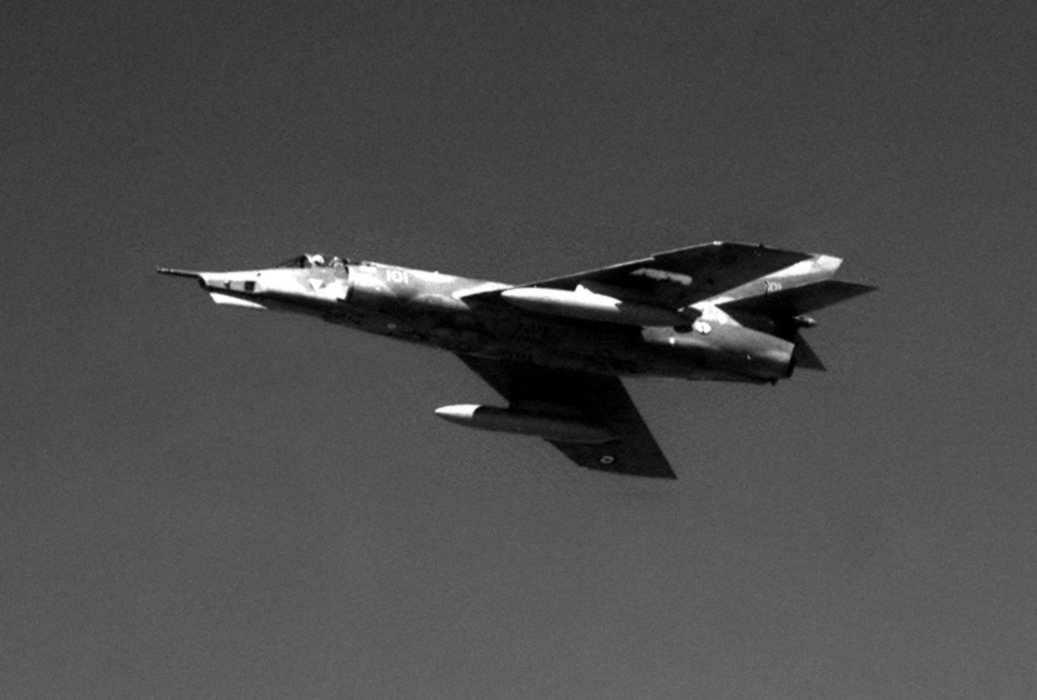
Dassault Étendard IV
France’s first carrier-borne jet strike fighter — a subsonic Aéronavale workhorse that flew from the decks of Clemenceau そして Foch for nearly four decades, and drew the blueprint for the more famous Super Étendard that followed.
France’s first jet to fly from the sea
The Étendard IV began life as a loser. In the early 1950s NATO issued the NBMR-1 requirement for a cheap, rugged light strike fighter, and Dassault entered a family of small jets — the twin-engined Étendard II and the single-engined Étendard VI. Both were beaten in the competition by the Italian Fiat G.91. But Dassault believed in the airframe, and pressed on with a larger, more powerful private-venture derivative it funded itself: the Étendard IV, which first flew on 24 July 1956.
What saved the design was the sea. The French Navy (Aéronavale) was building two new aircraft carriers, Clemenceau そして Foch, and needed a home-grown jet to fly from them. Dassault navalised the Étendard IV into the Étendard IVM (“M” for Marine) — adding an arrester hook, catapult attachment points, folding wingtips and long-stroke landing gear. This navalised prototype first flew on 21 May 1958 in the hands of test pilot Jean-Marie Saget. It became the first jet fighter designed from the outset for French carrier operations.
The Étendard IV was never meant to be a world-beater on paper. A single non-afterburning SNECMA Atar 08B turbojet of about 43 kN gave it a top speed of only around Mach 1 — subsonic in level flight, and just supersonic in a shallow dive. What it offered instead was exactly what a small navy needed: a simple, tough, reliable strike aircraft that two carriers could operate day and night. Between December 1961 and May 1965 the Aéronavale took delivery of 69 strike-configured IVM そして 21 reconnaissance IVP aircraft, entering squadron service from 1962.
Its career was long and, mercifully, largely uneventful in combat — the type never fought a major air war, but it gave France two decades of carrier strike capability and, crucially, taught the Aéronavale how to run a modern jet air group at sea. The Étendard IVP reconnaissance version, fitted with cameras and an in-flight refuelling probe, proved so useful that it outlived the strike aircraft by almost a decade, flying on until 27 July 2000. And the whole programme became the foundation for its far more famous successor — the Super Étendard, the jet that would sink ships in the Falklands and carry France’s naval nuclear deterrent for a generation.
01The Étendard IV’s origins: how a losing NATO contender became France’s first carrier jet
NATO’s 1953 NBMR-1 competition sought a lightweight tactical strike fighter that could operate from rough forward strips. Dassault developed two contenders in the Étendard family — the twin-engine Étendard II and the single-engine Étendard VI — but both were rejected in favour of the Fiat G.91. Rather than abandon the work, Dassault scaled the design up around a more powerful engine and funded a private-venture prototype, the Étendard IV-01, which flew in July 1956.
The French Navy, then commissioning the carriers Clemenceau and Foch, saw in it the indigenous carrier jet it wanted. A December 1956 order funded a semi-navalised prototype, and a 1957 order followed for pre-production Étendard IVM machines — “M” for Marine. What had failed as a NATO land-based fighter succeeded, in navalised form, as the first jet designed specifically to fly from French carriers.
What makes it special
A private venture, navalised for the fleet
Turning a rejected land fighter into a carrier aircraft meant serious surgery: a yoke-style arrester hook, catapult cable-attachment hooks under the wing leading edges, folding wingtips to fit the deck lifts, an extensible nosewheel and long-stroke landing gear to soak up hard deck landings. The result was the first jet designed from the start for French carrier operations — the aircraft that taught the Aéronavale to run a jet air group at sea.
One Atar, and the Mach-1 ceiling
The Étendard IV flew on a single non-afterburning SNECMA Atar 08B turbojet of about 43 kN (4,400 kgf). That made it subsonic in level flight and only just supersonic in a dive — roughly Mach 1. It was never the fastest jet of its era, but a single simple engine made it cheap to run, easy to maintain and dependable on a pitching flight deck, which mattered far more to a two-carrier navy.
The IVP: cameras, a probe and a 38-year career
The reconnaissance Étendard IVP swapped the nose radar and cannon bay for three film cameras, added a fixed in-flight refuelling probe and could carry a buddy-buddy tanker pod to top up other aircraft. That versatility made it indispensable: the IVP flew on until 2000, nearly a decade after the strike IVM had retired.
02The Étendard IV’s blown flaps: the boundary-layer control experiment
Landing a jet on a carrier means flying as slowly as possible on the approach, and Dassault experimented with clever aerodynamics to help. One pre-production airframe was configured for boundary-layer control — “flap blowing” — in which high-pressure air bled from the engine was blown over the top surface of the flaps to keep the airflow attached and the flaps effective at very low approach speeds. This experimental variant (sometimes designated IVB) used a Rolls-Royce Avon engine to supply the extra bleed air. The blown-flap system was not adopted for the production Étendard IV, but the same low-speed thinking underpinned the design that did enter service.
03The Étendard IV and the Super Étendard: the “90% common” that wasn’t
By the late 1960s the Étendard IVM was looking dated, and Dassault proposed an updated version to keep costs down — pitching it as roughly 90% common with the existing aircraft. In reality the new jet needed a more powerful Atar 8K-50 engine, a modern nav-attack system with the Agave radar, and a substantially reworked structure; engineers later quipped it was closer to “90% different.” The result, the Super Étendard, first flew in 1974 and entered service in 1978, going on to fame in the Falklands and as France’s carrier-borne nuclear-strike aircraft. The Étendard IV was its direct ancestor — a separate exhibit in this museum.
Full specifications
Airframe & Performance (Étendard IVM)
- クルー
- 1
- 長さ
- 14.35 m
- 翼幅
- 9.60 m
- 身長
- 3.79 m
- 空虚重量
- ~5,900 kg
- Max takeoff weight
- ~10,200 kg
- Max speed
- ~1,100 km/h · about Mach 1 at low level (up to ~Mach 1.3 at altitude)
- サービス天井
- ~15,500 m
- Range (ferry)
- ~3,300 km
- Carrier gear
- Arrester hook, catapult, folding wingtips
Propulsion, Armament & Production
- エンジン
- 1 × SNECMA Atar 08B turbojet
- Thrust
- ~43 kN (4,400 kgf), no afterburner
- Guns
- 2 × 30 mm DEFA 552 cannon (150 rpg)
- External load
- ~2,000 kg on 4 hardpoints (bombs, rockets, tanks)
- Variants
- IVM (strike) · IVP (reconnaissance/tanker)
- First flight
- 21 May 1958 (IVM prototype)
- Built
- ~90 — 69 IVM + 21 IVP (1961–1965)
- Unit cost
- No reliable public figure
- Cost per flight hour
- No reliable public figure
04The Étendard IV’s operating costs: why the numbers are elusive
The Étendard IV was a French state naval programme, built in modest numbers for a single customer and never sold on an open market, so no reliable flyaway unit price or cost-per-flight-hour figure exists in the public record. Its economic appeal was structural rather than headline: a single, simple, non-afterburning engine and a rugged airframe made it comparatively cheap to operate and maintain from a carrier deck — exactly the trait a two-carrier navy valued. Any precise monetary cost attached to the type today should be treated as an estimate.
From NATO reject to four decades at sea
The NATO competition
NATO’s NBMR-1 light-strike-fighter contest opens; Dassault’s Étendard II and VI contenders will lose out to the Fiat G.91.
A private venture flies
Dassault funds a larger derivative; the Étendard IV-01 prototype first flies on 24 July 1956, and the French Navy takes an interest.
Navalised prototype
The carrier-configured Étendard IVM first flies on 21 May 1958, piloted by Jean-Marie Saget — France’s first purpose-designed carrier jet.
Eyes for the fleet
The reconnaissance Étendard IVP, with a camera nose and a refuelling probe, makes its first flight on 19 November 1960.
Into service
The Aéronavale embarks the Étendard IVM aboard the new carrier Clemenceau — the first jet designed from the start for French carrier operations.
The fleet delivered
Between December 1961 and May 1965 the Navy receives 69 strike IVM and 21 reconnaissance IVP aircraft, flying from both Clemenceau and Foch.
The Super Étendard arrives
The developed Super Étendard enters service, taking over the strike role and carrying France’s naval strike mission for decades to come.
The strike jets retire
The last Étendard IVM bow out, ending with the carrier-qualification school Escadrille 59S at Hyères.
The last Étendard
The reconnaissance IVP flies on until 27 July 2000 — nearly 38 years after the type first went to sea.
From the programme: twelve Étendard IV stories
A NATO reject finds a future
The Étendard family lost the NBMR-1 light-fighter contest — but Dassault kept going on its own money.
Read the full story
Dassault backs itself
With no government contract, Dassault paid to build and fly the Étendard IV-01 prototype in 1956.
Read the full story
Teaching a jet to land at sea
Arrester hook, catapult hooks, folding wingtips and long-stroke gear turned a land fighter into a carrier aircraft.
Read the full story
Saget takes the IVM up
Test pilot Jean-Marie Saget flew the navalised prototype on its maiden flight at Melun-Villaroche.
Read the full story
One Atar, and Mach 1
A single non-afterburning SNECMA Atar 08B kept the Étendard IV honest at just about the speed of sound.
Read the full story
The blown-flap experiment
One airframe used engine bleed air over the flaps to fly slower on the approach.
Read the full story
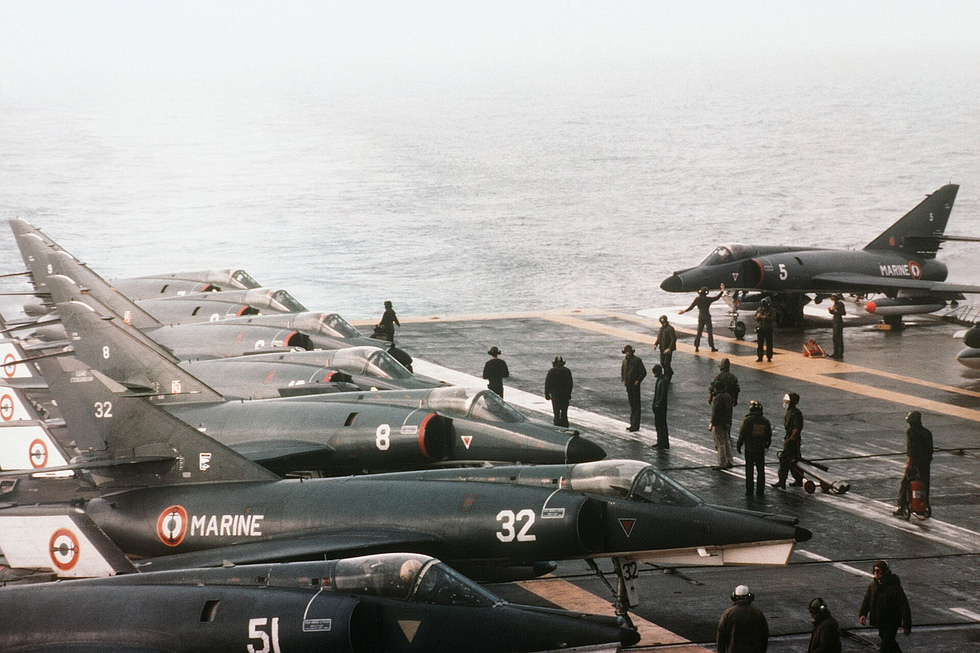
Life aboard Clemenceau and Foch
The Étendard IV gave France two decades of carrier strike from its two flagships.
Read the full story
The eyes of the fleet
The IVP traded guns and radar for cameras, becoming the carrier group’s reconnaissance workhorse.
Read the full story
Étendards feeding Étendards
A fixed probe and a tanker pod let the IVP refuel other aircraft in the air.
Read the full story
The “90% common” successor
Dassault sold the Super Étendard as a cheap update — it turned out to be almost a new aircraft.
Read the full story
The carrier school at Hyères
In its final years the Étendard IVM taught new pilots the art of the arrested landing.
Read the full story
Thirty-eight years at sea
The reconnaissance IVP outlived the strike jet by nearly a decade, retiring in 2000.
Read the full story
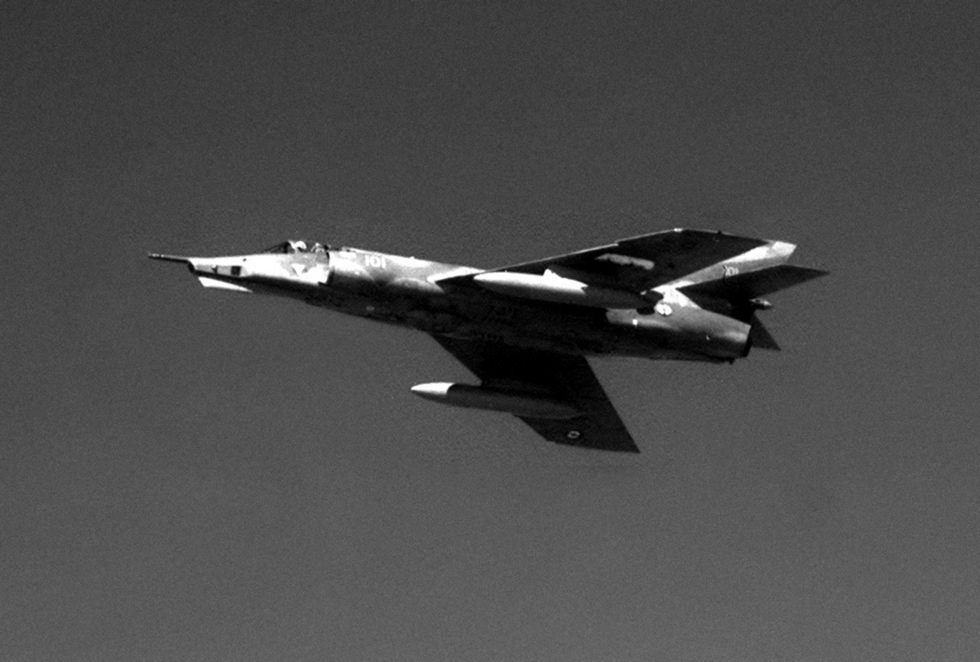
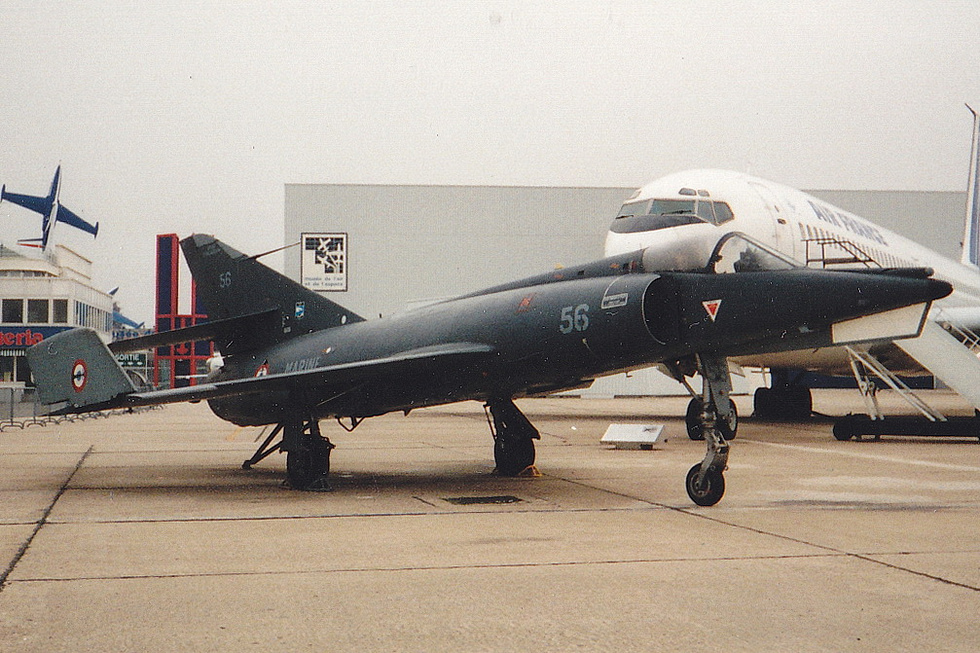
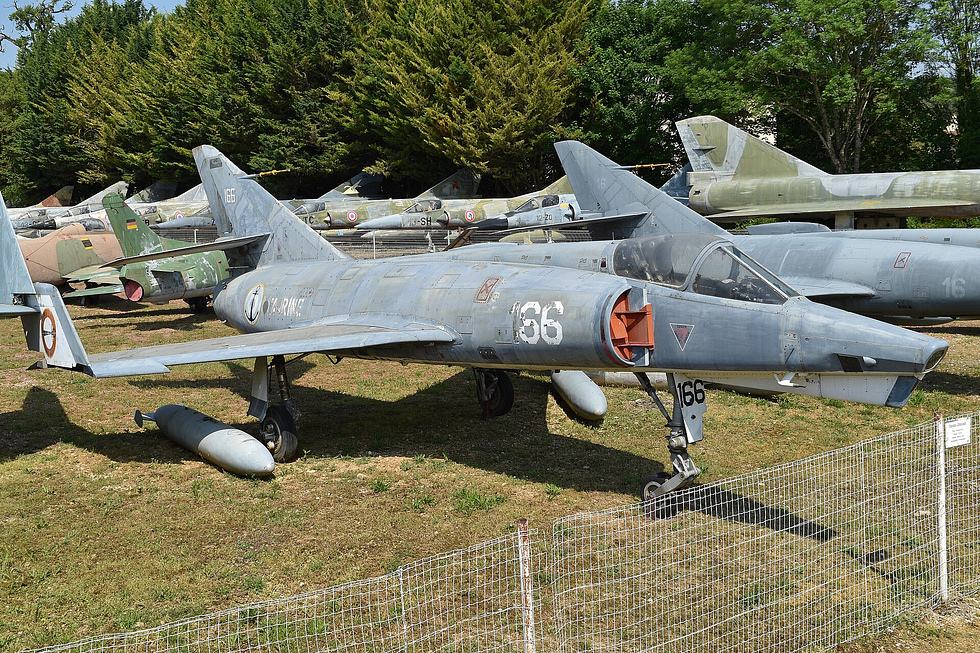
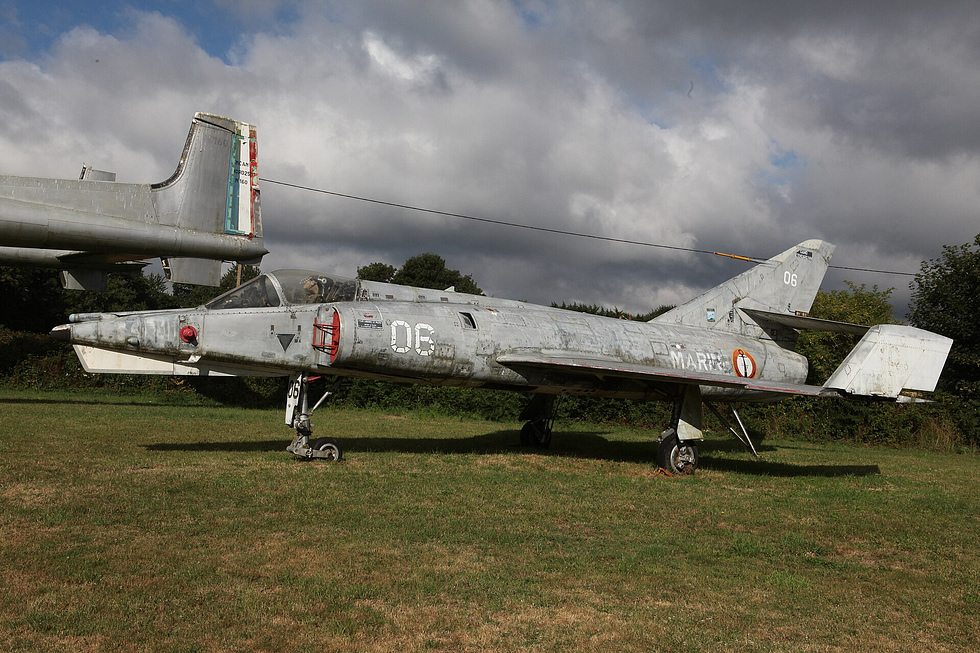
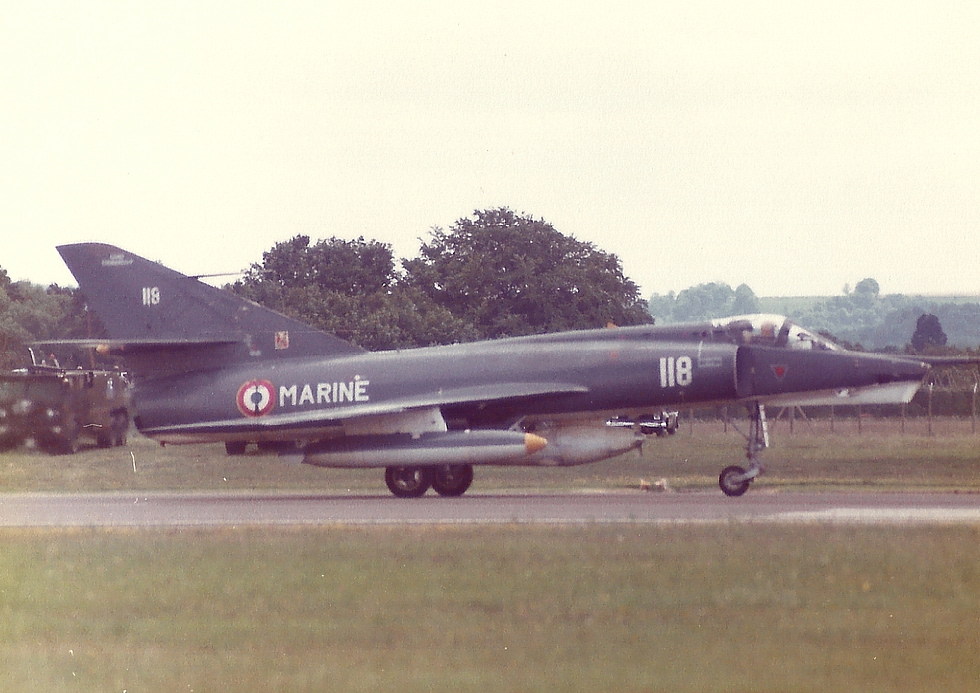
The Étendard IV in pictures
Where the Étendard IV served
The record that defines it
The Étendard IV was never blooded in a major air war — its value was measured in endurance, not kills. For nearly four decades it gave the French Navy an organic carrier strike and reconnaissance capability, and it taught the Aéronavale how to operate jets at sea. Its record is one of quiet, sustained service from the decks of two carriers.
Compare the combat record of every military aircraft. Figures as of July 2026.
Everything people ask about the Étendard IV
Can I fly in an Étendard IV?
What was the Dassault Étendard IV?
What is the difference between the Étendard IV and the Super Étendard?
How fast was the Étendard IV?
Which aircraft carriers did it fly from?
Why did the reconnaissance IVP serve so long?
Who else operated the Étendard IV?
You can’t fly the Étendard IV.
These, you can.
Some legends only live in museums — others are fuelled and waiting. MiGFlug has put civilians in real military jet cockpits since 2004.
 Fly the L-39 AlbatrosThe world’s most-flown jet trainer — aerobatics included
 Fly the F-104 Starfighter“The missile with a man in it”
 Fly the MiG-21The Cold War’s most-produced jet
 T-33シューティングスターを操縦しようAmerica’s first jet trainer
 Fly the DH VampireA piece of early jet history
 Fly the S.211Agile Italian jet trainer
 Fly the MB-326The classic Aermacchi jet
 Fly the MiG-15The Soviet legend of the Korean War
Continue the tour
Every fact, checked
- Dassault Aviation — EtendardManufacturer history: first-flight dates, deliveries (69 IVM + 21 IVP), and the IVP’s retirement in July 2000.
- AirVectors (Greg Goebel) — Dassault Étendard & Super ÉtendardOrigins as a private venture, navalisation details, boundary-layer control and the “90% common” Super Étendard.
- Military Factory — Dassault Etendard IVDimensions, weights, engine and thrust, armament (2 × 30 mm DEFA) and production figures.
- Ailes Anciennes Toulouse — Dassault Étendard IVMPreservation notes and service history of the strike variant in French service.
- Naval Encyclopedia — Clemenceau-class carriersThe carriers Clemenceau and Foch and the air groups the Étendard IV flew within.
- Pima Air & Space Museum — Dassault Etendard IVMMuseum reference for a preserved Étendard IVM airframe and its background.
- Master194 — Étendard IVM history & walkaroundDetailed airframe walkaround, variant breakdown and service background.