
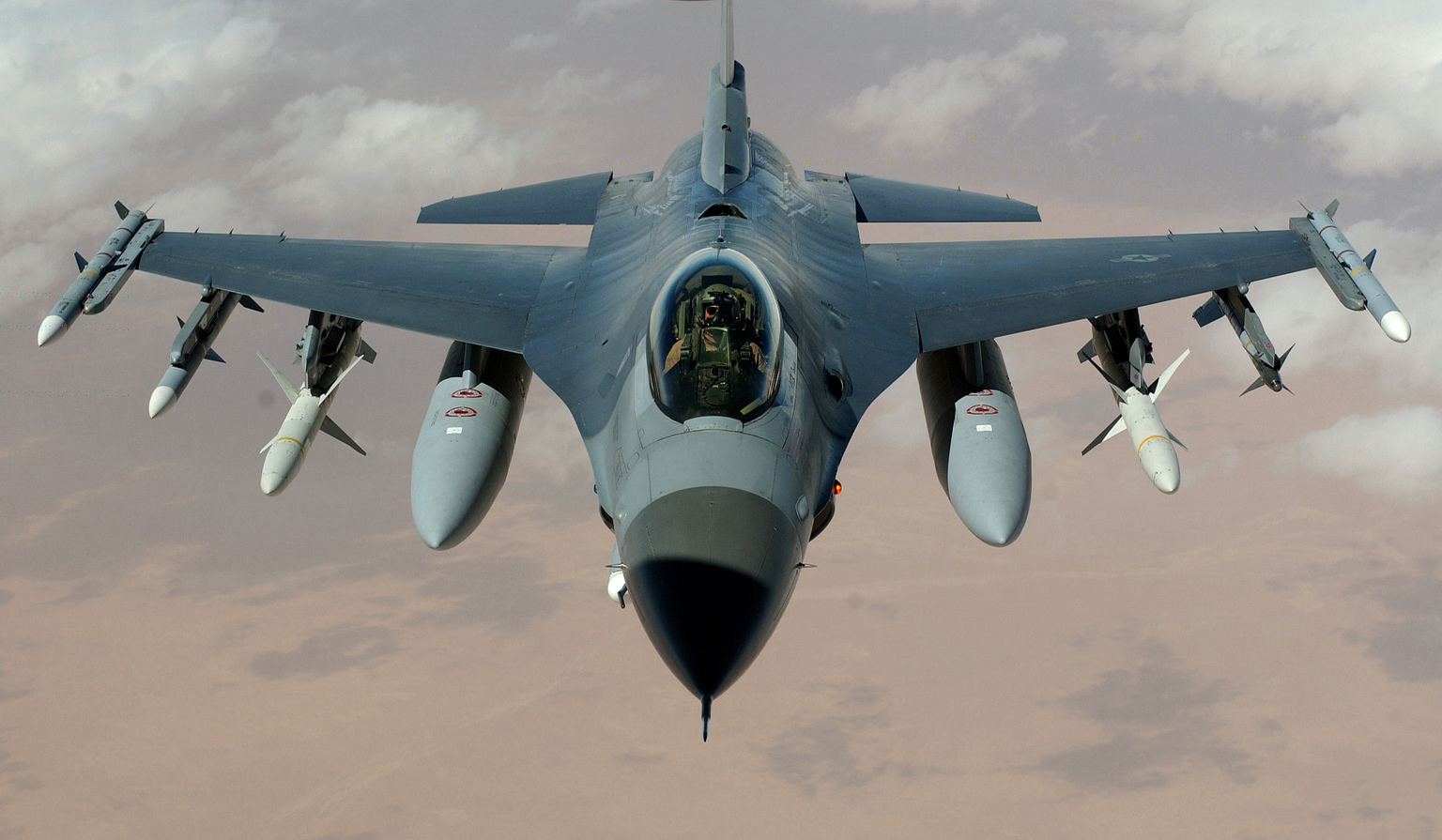
General Dynamics F-16
“Fighting Falcon”
The fighter that made high technology affordable — the world’s first production fly-by-wire combat jet, built in greater numbers than any other Western fighter of its generation and still the most numerous fixed-wing fighter in service today.
The F-16 that made high technology affordable
The F-16 grew out of the U.S. Air Force’s Lightweight Fighter program, launched in 1972 to test a heretical idea: that a small, cheap, brutally agile dogfighter could beat ever-heavier, ever-costlier interceptors. The General Dynamics YF-16 beat the Northrop YF-17 in a 1975 fly-off on cost, range and turn performance, and the production F-16A entered service in 1978 as the world’s first production fly-by-wire combat aircraft.
Its genius was deliberate instability. Engineers gave the F-16 relaxed static stability so it would turn harder than any self-righting design could, then tamed it with a flight-control computer making hundreds of corrections a second. To let pilots survive the resulting 9-g turns they built a frameless bubble canopy, reclined the seat 30 degrees, and replaced the centre stick with a force-sensing sidestick by the pilot’s right hand.
Through steady block upgrades — A/B to C/D to today’s Block 70/72 “Viper” with AESA radar — one airframe grew from a lightweight day-fighter into a precision bomber, SEAD hunter and nuclear-strike platform. With about 4,604 built, the F-16 is the most-produced Western fighter of its generation and, in 2026, still the most numerous fighter in the world.
01The F-16’s numbers: how a lightweight day-fighter became the West’s best-selling jet
について 4,604 F-16s have been built since 1976 — more than any other Western fighter of its generation. It was manufactured in the United States and under licence in Europe and Asia, becoming the backbone of some 25 air forces. New-build Block 70/72 jets are still rolling off the Greenville, South Carolina line in 2026, half a century after the prototype first flew.
That scale is the whole story. A fighter cheap enough to build by the thousand and flexible enough to bomb, dogfight, hunt radars and stand nuclear alert could be sold to almost anyone — which is exactly why the F-16 spread across every inhabited continent and outlasted rivals that cost far more.
What makes the F-16 special
Relaxed stability + fly-by-wire
The F-16 was deliberately designed to be aerodynamically unstable, trading the self-righting tendency of conventional aircraft for razor-sharp agility. This is only controllable because a fly-by-wire computer makes hundreds of corrections per second — there are no mechanical cables to the control surfaces. The F-16 was the first production combat aircraft built this way, a template every modern fighter now follows.
Bubble canopy, reclined seat, sidestick
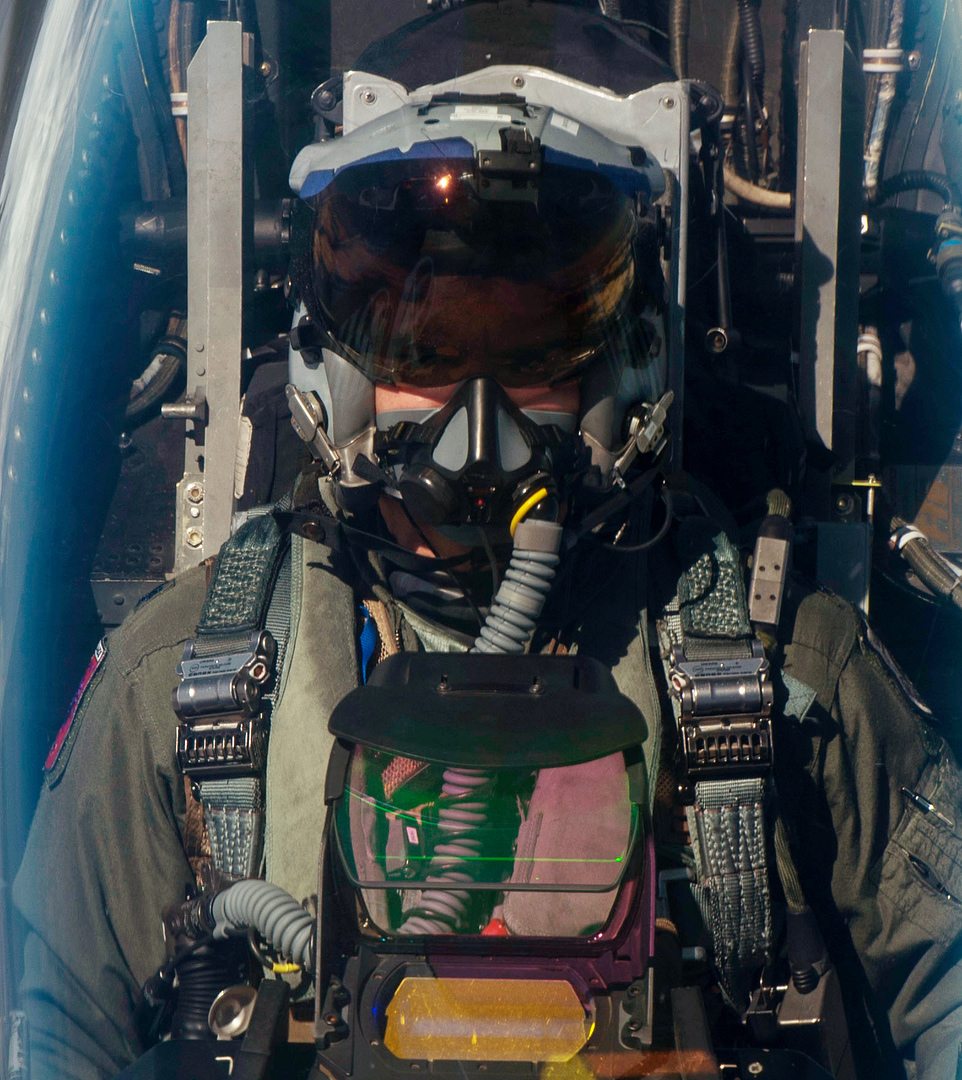
The one-piece bubble canopy gives an almost unobstructed 360-degree view — a decisive edge in a dogfight. The seat reclines 30 degrees to help the pilot resist blackout under high-g loading, and a force-sensing sidestick on the right console (barely moving) replaces the central stick, keeping control precise when the pilot is crushed into the seat at 9 g.
Single engine, blended body
A single afterburning turbofan — the GE F110 または Pratt & Whitney F100 — keeps the jet light, simple and cheap to run. The fuselage and wing meet in a blended wing-body fairing with forebody strakes that generate extra lift at high angle of attack, plus a belly intake that keeps feeding air even with the nose pointed steeply up.
02The F-16’s electric jet: why relaxed stability rewrote the rulebook
Conventional aircraft are built to be stable — nudge them and they return to level flight. That self-righting tendency also fights the pilot in a hard turn. The F-16’s designers threw it away: they moved the centre of gravity aft so the jet is naturally unstable and wants to pitch up, then handed control to a computer that constantly restrains it. The pilot no longer moves the surfaces directly; he tells the computer what he wants and it obeys. The pay-off is a turn rate no stable design can match — and every fly-by-wire fighter since has followed the F-16’s lead.
03The F-16’s cockpit: built to keep a pilot conscious at 9 g
Sustained 9-g turns push blood out of the brain and grey a pilot out. The F-16 team fought that with ergonomics: a frameless bubble canopy for visibility, a seat reclined 30 degrees so the heart sits closer to the head, and a sidestick on the right console that senses force rather than travel — so a pilot pinned by g-forces can still fly precisely with tiny hand movements. Together they made the cockpit a genuine leap in both survivability and situational awareness.
Full F-16 specifications
Airframe & Performance
- クルー
- 1 (F-16C); 2 (F-16D)
- 長さ
- ~15.0 m (49 ft 5 in)
- 翼幅
- ~9.8 m (~10 m over tip missiles)
- 身長
- ~4.9 m (16 ft)
- 空虚重量
- ~9.2 t (20,300 lb)
- Max takeoff weight
- ~19 t combat / up to ~21.8 t
- Max speed
- Mach 2 · ~2,120 km/h
- サービス天井
- Above 15 km (50,000+ ft)
Propulsion & Systems
- エンジン
- 1 × GE F110 or P&W F100 turbofan
- Thrust
- ~29,000 lbf with afterburner
- Cannon
- 1 × 20 mm M61A1 Vulcan (~511 rds)
- Air-to-air
- AIM-120 AMRAAM, AIM-9 Sidewinder
- Air-to-ground
- JDAM, Paveway, Maverick, HARM — 9 hardpoints
- First flight
- 2 February 1974 (YF-16)
- Built
- ~4,604
- Unit cost
- ~$18–27 M (legacy C/D); Block 70 higher
- Cost per flight hour
- ~$22,000–27,000 (USAF F-16C, 2020s)
04The F-16’s cost: the affordable fighter that changed the maths
Affordability was the whole point of the Lightweight Fighter program. Legacy F-16C/D airframes were commonly cited in the region of US $18–27 million — a fraction of the heavyweight interceptors of the day — which is precisely what let some 25 nations buy and sustain fleets of them. New-build Block 70/72 jets, with AESA radar and modern avionics, cost substantially more, but still undercut fifth-generation fighters by a wide margin. Exact per-flight-hour figures vary by operator and are not consistently published; treat any single number as an estimate.
Fifty years of the F-16
Lightweight Fighter program
The USAF launches the LWF program; General Dynamics (YF-16) and Northrop (YF-17) build competing prototypes.
First flight
The YF-16 makes an unplanned hop on 20 January during a taxi test, then its official first flight on 2 February.
Wins the fly-off
The YF-16 beats the YF-17 on cost, range and turn performance and is selected for production.
Enters USAF service
The F-16A joins the 388th Tactical Fighter Wing — the world’s first production fly-by-wire fighter.
Osirak
Israeli F-16s destroy Iraq’s Osirak nuclear reactor in Operation Opera — the first strike on a reactor.
Bekaa Valley
Israeli F-16s claim a large share of the kills in the lopsided air battles over Lebanon.
Gulf War
~249 U.S. F-16s fly more than 13,000 sorties — the most of any coalition aircraft type.
NATO’s first kill
Over Bosnia a USAF F-16 scores the first air-to-air kill in NATO’s history — and the first AMRAAM kill.
The Viper endures
The F-16V / Block 70/72 standard arrives with APG-83 AESA radar and new avionics, keeping the line in production.
Vipers over Ukraine
Ukraine receives its first F-16s, donated by the Netherlands, Denmark, Norway and Belgium.
From the flight line: twelve F-16 stories
Sixty seconds over Osirak
Israel’s F-16s ended Iraq’s bomb program in a minute.
Read the full story
The first fly-by-wire dogfighter
No cables, just computers.
Read the full story
Why it’s really called “Viper”
The official name never stuck.
Read the full story
Vipers over Ukraine
A Cold War lightweight joins a 21st-century war.
Read the full story
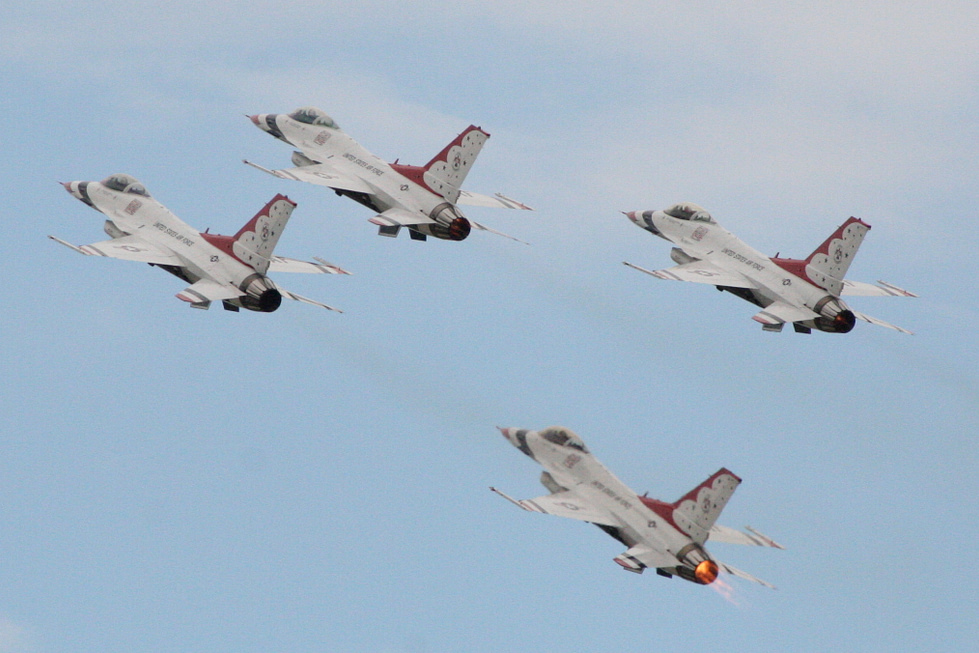
The Thunderbirds’ mount
America’s aerial ambassadors fly the Viper.
Read the full story
The best-selling Western fighter
About 4,604 built and still counting.
Read the full story
NATO’s first-ever kill
An AMRAAM opens the account.
Read the full story
Built to fight at 9 g
A reclined seat and a sidestick you barely move.
Read the full story
The accidental first flight
It flew before it was supposed to.
Read the full story
The mafia’s masterpiece
Cheap, light and lethal by design.
Read the full story
The Bekaa turkey shoot
Dozens of kills, few losses.
Read the full story
Fifth-gen radar in a fourth-gen jet
The Block 70/72 Viper.
Read the full story
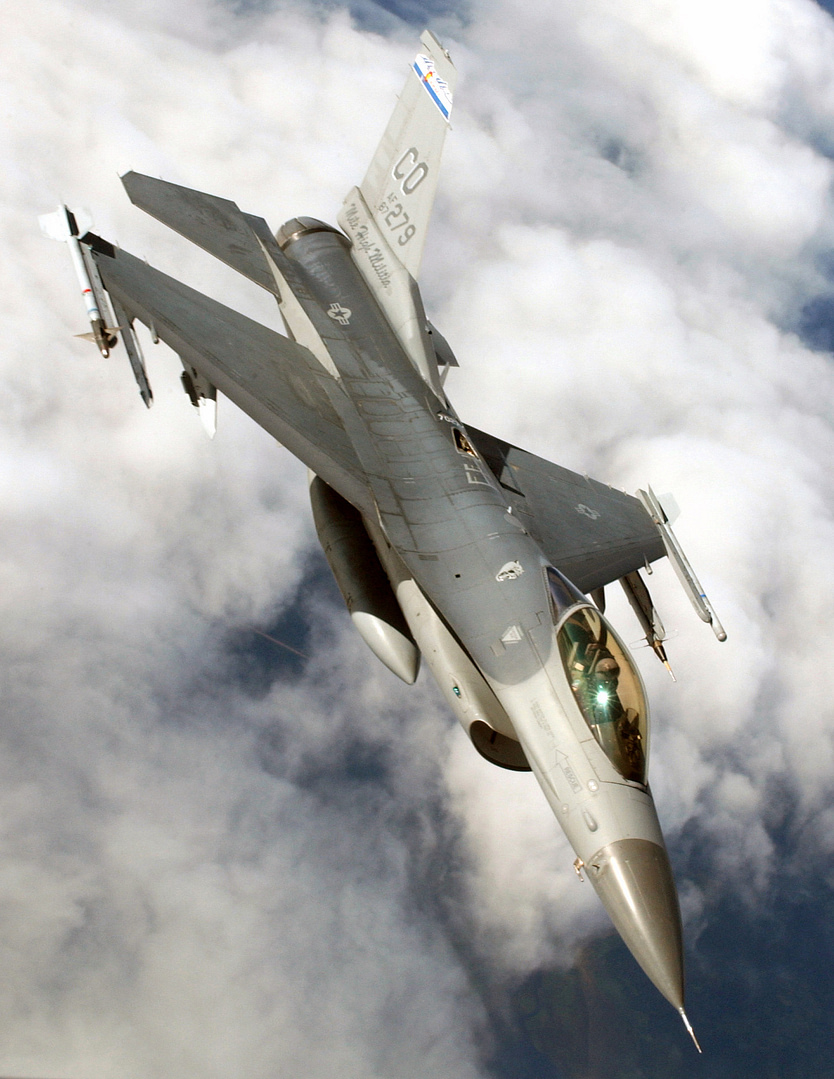
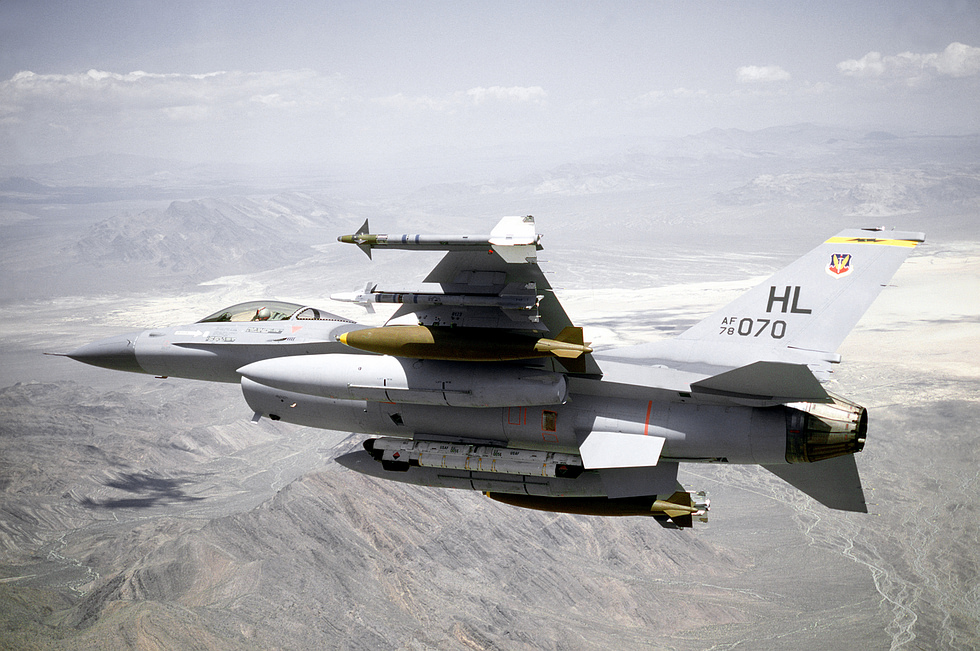
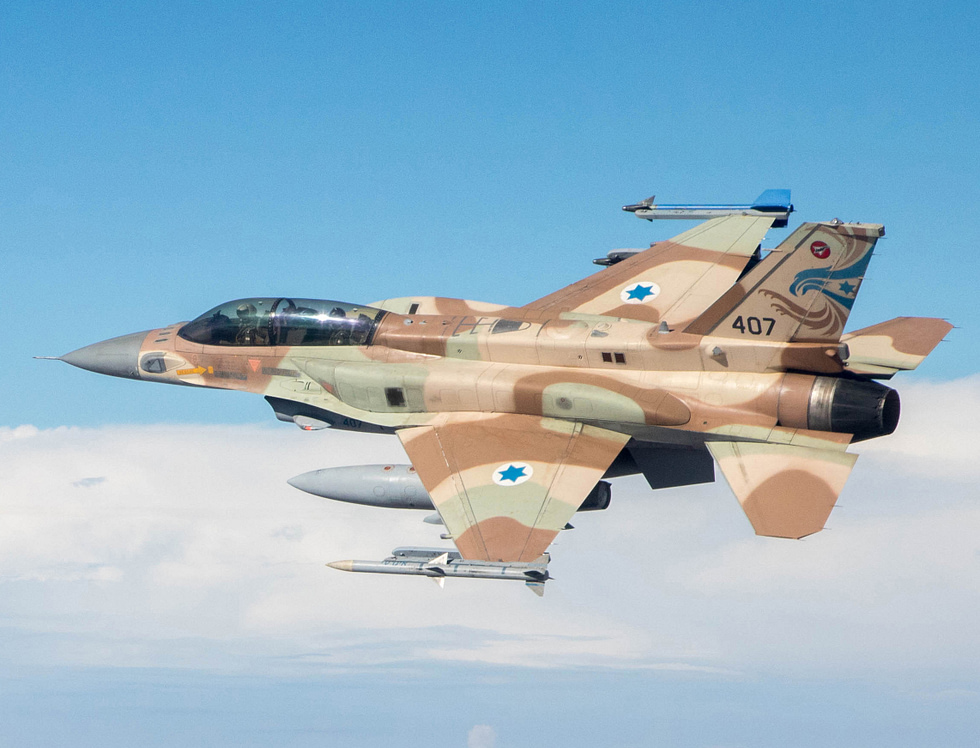
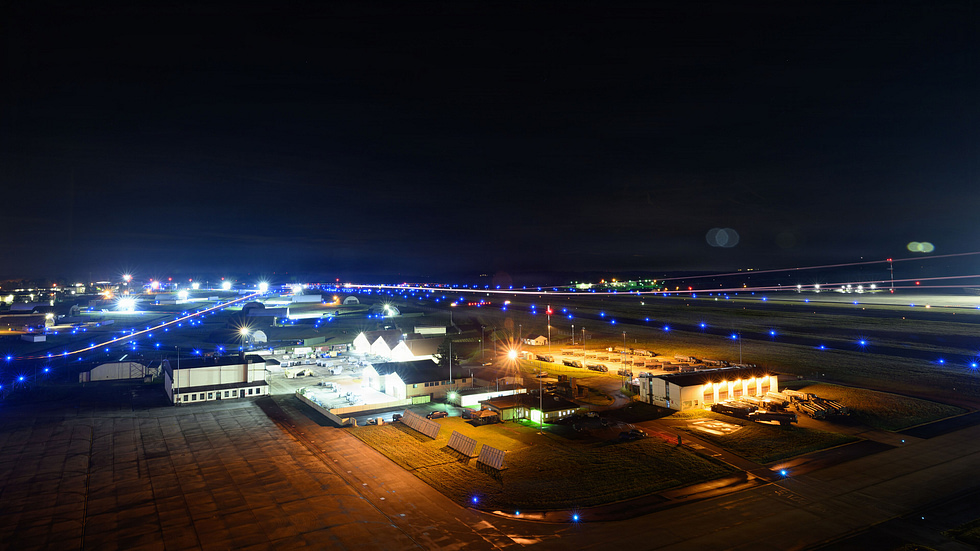
The F-16 in pictures
The F-16 in motion
An official F-16 Viper feature video is being selected for this exhibit.
The F-16 Fighting Falcon in motion
Real Engineering — one of the most-watched F-16 Fighting Falcon films on YouTube.
Where the F-16 flies
The F-16: one of the most combat-tested fighters ever
The F-16 has fought across the Middle East, the Balkans and South Asia, from the 1981 Osirak raid to NATO’s first air-to-air kill and the 2019 India–Pakistan clash. As ever with air-combat records, published kill tallies are contested — cite them as claims, not settled scores.
Compare the combat record of every military aircraft. Figures as of July 2026.
Everything people ask about the F-16
Can I fly in an F-16?
How fast is the F-16?
Is the F-16 still in service?
Does it really have fly-by-wire?
How does the F-16 compare to the MiG-29?
Is it flying in Ukraine?
How many F-16s were built?
What does “Viper” mean?
You can’t fly the F-16.
These, you can.
Some legends only live in museums — others are fuelled and waiting. MiGFlug has put civilians in real military jet cockpits since 2004.
 Fly the L-39 AlbatrosThe world’s most-flown jet trainer — aerobatics included
 Fly the F-104 Starfighter“The missile with a man in it”
 Fly the MiG-21The Cold War’s most-produced jet
 T-33シューティングスターを操縦しようAmerica’s first jet trainer
 Fly the DH VampireA piece of early jet history
 Fly the S.211Agile Italian jet trainer
 Fly the MB-326The classic Aermacchi jet
 Fly the MiG-15The Soviet legend of the Korean War
Continue the tour
Every fact, checked
- GlobalSecurity.org — F-16 SpecificationsDimensions, weights, engines, armament and production figures.
- Lockheed Martin — F-16 product pageBlock 70/72 capabilities, APG-83 AESA radar, 12,000-hour airframe and current production.
- F-16.net — YF-16: The Birth of a FighterLightweight Fighter program, YF-16 vs YF-17 and prototype history.
- F-16.net — The “Electric Jet”Fly-by-wire and relaxed static stability development.
- Aerotime — The F-16’s impromptu maiden flightFirst-flight story and dates.
- Air & Space Forces Magazine — The Viper RevolutionDesign philosophy, cockpit and sidestick, and legacy.
- Simple Flying — How the F-16 Got Its NicknameOrigin of the “Viper” nickname.
- Aerotime — Netherlands completes F-16 transfer to UkraineThe 2024 Ukraine deliveries.