

Lockheed P-3 Orion
America’s tireless submarine hunter: four Allison turboprops, a crew of eleven, and the endurance to loiter over an ocean for the better part of a day — one of the most successful maritime patrol aircraft ever flown.
ストーリー
The Lockheed P-3 Orion: the Cold War’s tireless submarine hunter
When the United States Navy needed an aircraft that could find, track and, if necessary, sink a submarine hundreds of miles out to sea, it did something unusual: it took a civilian airliner and turned it into one of the deadliest and longest-serving patrol aircraft in history. The result, the Lockheed P-3 Orion, first flew in 1959, entered fleet service in 1962, and — more than six decades later — is still on patrol with air arms around the world. Few combat aircraft of any kind can claim a career that long, and fewer still have been built in such numbers or exported so widely.
The lineage is unusual and worth knowing. The Orion is a shortened, heavily militarised development of the Lockheed L-188 Electra airliner — the only large turboprop airliner the United States ever built in quantity. It kept the Electra’s wing, tail and the same four Allison T56 turboprops that also power the C-130 Hercules, but Lockheed removed a fuselage plug ahead of the wing, cut a weapons bay into the belly, fitted underwing hardpoints, and grafted a long magnetic-anomaly-detector “stinger” onto the tail. The airframe kept the airliner’s reliability and cabin room while gaining everything it needed to hunt submarines far from land.
“The Orion could shut down two of its four engines and loiter for hours — a patrol aircraft with airline endurance and a warship’s sensors.”
That endurance is the Orion’s signature. On a long sortie the crew would routinely feather one or two of the four turboprops to save fuel, cruising low over the water for twelve to sixteen hours while acoustic operators listened to fields of sonobuoys and the tactical crew built a picture of what lay beneath the surface. Where a fast jet measured its patrols in single-figure hours, the Orion measured its own in most of a day, and it could do so thousands of kilometres from the nearest runway.
Its quarry, for most of its career, was the Soviet submarine fleet. Through the Cold War the Orion was NATO’s workhorse for the hunt — sowing sonobuoys, trailing its tail-mounted magnetic anomaly detector, and carrying homing torpedoes and depth charges for the attack it hoped it would never have to make. Watching the chokepoints that Soviet boats had to cross, from the North Atlantic to the seas around Japan, was maritime patrol’s central Cold War task, and the Orion was built for it.
But the Orion turned out to be far more versatile than a pure sub-hunter. Over its long life it has flown overland reconnaissance and signals intelligence, search and rescue, anti-surface warfare with Harpoon and Maverick missiles, drug-interdiction patrols, disaster relief, scientific research and — in recent conflicts — armed overland surveillance and strike. The big, patient, sensor-rich airframe proved adaptable to jobs its designers never imagined.
It is worth pausing on just how widely the Orion spread. Around 750 were built — roughly 650 by Lockheed in California and more than a hundred licence-built in Japan by Kawasaki Heavy Industries — and the type served with the United States and some twenty other nations, from Norway and the Netherlands to Australia, Japan, South Korea, Chile and Brazil. Canada flies a distinctive derivative, the CP-140 Aurora, marrying the Orion airframe to a different mission system entirely.
For all its success, the Orion is now in its twilight with its original operator: the US Navy has largely replaced it with the jet-powered Boeing P-8 Poseidon, and Australia, New Zealand and Norway have followed suit. Yet many nations still fly upgraded P-3s, NOAA still sends its WP-3D “Hurricane Hunters” into storms, and the type’s reputation as a patient, reliable ocean sentinel is secure. This is the story of how an airliner became the free world’s submarine hunter.
Go deeper
01The Lockheed P-3 Orion’s lineage: from airliner to submarine hunter
The Orion is best understood as a military conversion of a commercial airliner. In the mid-1950s Lockheed was building the L-188 Electra, a fast four-turboprop airliner intended to compete with the coming jets on short and medium routes. When the US Navy issued a 1957 requirement for a replacement for its piston-engined P-2 Neptune, Lockheed offered a militarised Electra rather than a clean-sheet design — a decision that saved years of development and a great deal of money, and one that shaped everything about the aircraft that followed.The British equivalent, developed in parallel for the same Cold War mission, was the Avro Shackleton
— but where the Shackleton was a piston-engined descendant of a wartime bomber, the Orion started from a modern turboprop airliner. Lockheed removed a 2.24 m (7 ft) fuselage section forward of the wing to improve handling, cut a weapons bay into the belly, strengthened the structure for low-level work and added the tail “stinger” that houses the magnetic anomaly detector. The result looked like the Electra from a distance but was a very different aircraft up close.
The aerodynamic prototype, a modified third Electra airframe designated YP3V-1 and later YP-3A, first flew on 25 November 1959. Production aircraft reached the fleet as the P-3A in August 1962. The airliner origins gave the Orion a spacious pressurised cabin for its large crew and their consoles — a genuine and lasting advantage on sorties that routinely lasted most of a day, and one no purpose-built bomber conversion could match.
The family resemblance to the Electra is still visible in the wing planform and tail, and the two types shared enough that maintenance and training benefited from the commonality. It is one of aviation’s more successful examples of turning a civil design to military ends — a lineage the Orion shares, in spirit, with its own eventual replacement, the airliner-derived Boeing P-8 Poseidon.
02Why the Lockheed P-3 Orion uses turboprops, not jets
Each of the Orion’s four Allison T56-A-14 turboprops delivers around 4,600 shaft horsepower — the same engine family that powers the C-130 Hercules, the E-2 Hawkeye and the C-2 Greyhound. For a maritime patrol aircraft, turboprops were exactly the right choice: they are far more fuel-efficient than jets at the low speeds and low altitudes where submarine hunting actually happens, and they turn large propellers that bite well in dense sea-level air.
The payoff is endurance. A jet burns fuel voraciously down low; a turboprop sips it. The Orion could stay airborne for twelve to sixteen hours, and by shutting down one or even two engines in the loiter — a technique known as “loiter on two” or “loiter on three” — it stretched its time on station further still, keeping just enough power to hold station while the sensor crew worked. It is a trick a pure jet simply cannot match.
The trade-off is speed. The Orion’s maximum speed is around 750 km/h (405 knots), and it cruises and patrols much slower than that. For decades that was an entirely acceptable price for endurance, because the mission was to be present and patient, not to dash. Only when long-range jets became efficient enough — in the Boeing P-8 Poseidon, a 737 derivative that trades some low-level loiter for altitude, speed and sensor reach — did the Navy judge a jet worth the extra fuel.
That same efficiency is why so many turboprop patrol aircraft outlived their jet contemporaries, and why the Orion remained in front-line service for more than sixty years. The T56 turboprop, first run in the early 1950s, proved one of the most durable and successful engine choices in the history of military aviation.
03Hunting submarines: sonobuoys, the MAD boom and the Lockheed P-3 Orion’s tools of the trade
The Orion’s core job was anti-submarine warfare, and it carried an arsenal of sensors to do it. Rows of tubes in the rear fuselage launch sonobuoys — small, expendable, parachute-retarded sonar buoys that hit the water, deploy a hydrophone to a set depth, and radio what they hear back to the aircraft. Operators aboard the Orion process the returns, distinguishing the faint acoustic signature of a submarine from the noise of the sea, and build a track of where the target is going.
The most distinctive feature is the long “stinger” tail boom, which houses a magnetic anomaly detector, or MAD. A large steel submarine subtly distorts the Earth’s magnetic field, and a sensitive magnetometer, carried well aft to keep it away from the aircraft’s own metal and electrical noise, can detect that distortion as the Orion passes low overhead. MAD has a short range — it is a confirmation and pinpointing tool, used once sonobuoys have already localised a contact, not a search sensor.
The tactics were painstaking. An Orion would lay a barrier or a field of sonobuoys, analyse the returns, narrow the search, confirm the contact with radar and MAD, and — in war — attack with homing torpedoes (the Mk 46, later the Mk 50 and Mk 54), depth charges or mines released from its internal bay and its underwing hardpoints. A single patient aircraft could hold a submarine at risk over a wide area for hours, which is exactly what deterrence at sea required.
Later variants added anti-surface teeth: the AGM-84 Harpoon anti-ship missile, the AGM-65 Maverick and the AGM-84E SLAM stand-off land-attack missile turned the sub-hunter into a capable maritime strike aircraft. Successive P-3C “Update” standards folded in digital processing, electro-optical and infrared sensors and data links, keeping a 1960s airframe genuinely relevant into the twenty-first century.
04The EP-3E Aries II and WP-3D: the Lockheed P-3 Orion’s stranger jobs
Not every Orion hunts submarines. The EP-3E Aries II is a signals-intelligence version, stripped of its ASW gear and packed instead with electronic listening equipment to gather intelligence on radar and communications emitters. These aircraft flew — and their P-8-based successors still fly — long, patient orbits off potentially hostile coasts. It was an EP-3E that collided with a Chinese J-8 fighter and made an emergency landing on Hainan Island in April 2001, sparking a tense eleven-day diplomatic crisis.
Then there is the WP-3D Orion, two of which are flown by the US National Oceanic and Atmospheric Administration (NOAA) as “Hurricane Hunters.” These aircraft deliberately fly into tropical cyclones — through the eyewall and into the eye — to gather the data that feeds forecasts, trusting the airframe’s airliner-derived toughness to survive punishment that would ground most aircraft. Named “Kermit” and “Miss Piggy,” they have flown research missions for decades.
The reason the Orion spawned so many special variants is simple: it is a big, reliable, long-endurance airframe with room inside for people and equipment. That made it an ideal platform for reconnaissance, intelligence, weather research, test and evaluation, customs and drug-interdiction work, and much else besides — roles far beyond the original brief, and often continued long after the ASW versions had begun to retire.
Flying the specialised Orions demanded its own skills — whether threading a hurricane’s eyewall, holding a precise intelligence orbit for hours, or working a low-level search grid at night — but they all rest on the same patient, dependable aircraft. It is the airframe’s adaptability, as much as its sensors, that explains its extraordinary longevity.
Design & Engineering
How the Lockheed P-3 Orion was built to loiter and to hunt
Everything about the Orion was shaped by two demands that pull against each other: stay airborne for a very long time, far from land, and carry the sensors and weapons needed to find and sink a submarine. Lockheed’s answer was to marry airliner genes to naval requirements in a single airframe — efficient turboprops and a roomy fuselage from the Electra, a weapons bay, hardpoints and a sensor suite from the world of anti-submarine warfare. The three cards below show how that compromise was made.
Four Allison T56 turboprops
Four Allison T56-A-14 turboprops of around 4,600 shp each give the Orion its efficiency and endurance. The same engine family powers the C-130 and E-2. Crews routinely shut down one or two engines in the loiter to extend time on station — an option a jet does not have, and the single biggest reason the Orion could patrol for the better part of a day.
Electra airliner DNA, militarised
A shortened L-188 Electra fuselage, wing and tail form the basis of the aircraft. Lockheed removed a fuselage plug, cut a ventral weapons bay, strengthened the structure for sustained low-level flight and fitted ten underwing hardpoints — while keeping the airliner’s roomy, pressurised cabin for the large mission crew and their consoles.
Sonobuoys, radar and the MAD stinger
Search radar in the nose and belly, dozens of sonobuoy launch tubes in the rear fuselage, and a magnetic anomaly detector in the long tail boom give the Orion its senses. Later P-3C “Update” standards added digital data processing, an acoustic processor, FLIR and electro-optical sensors, electronic support measures and data links — a continuous modernisation that kept the type current for decades.
05Japan’s Kawasaki-built Orions: the Lockheed P-3’s biggest export story
The Orion’s single largest foreign operator is Japan. Rather than simply buy American aircraft off the shelf, the Japan Maritime Self-Defense Force arranged for licence production at home: Kawasaki Heavy Industries built around a hundred P-3C Orions in Japan from the late 1970s, one of the largest licence-build programmes of any Western patrol aircraft and a major industrial undertaking in its own right.
That fleet made Japan one of the most heavily equipped anti-submarine nations on earth — a direct reflection of the strategic importance of the crowded, contested seas around the Japanese archipelago and the submarine forces operating in them. The experience Kawasaki gained building and supporting the Orion fed directly into its later indigenous successor, the jet-powered Kawasaki P-1, giving Japan a rare sovereign capability in maritime patrol aircraft.
Japan’s Orions still fly today alongside the newer P-1, and the Kawasaki programme is a large part of why total P-3 production reached roughly 750 airframes rather than the 650 or so Lockheed built in the United States. It is a reminder that the Orion was never a purely American aircraft — it became a shared system, built under licence, exported widely and upgraded locally across the free world.
It is also a reminder of how the Cold War industrial partnerships worked: the United States supplied the design, allied nations built and adapted it, and the result was a common, interoperable patrol capability spanning NATO, the Pacific and beyond. Few aircraft embodied that model as completely as the Orion.
06The Lockheed P-3 Orion’s operating costs: what a maritime patrol hour costs
Hard per-hour cost figures for the Orion are not consistently published and vary widely by operator, variant, era and how the accounting is done, so any single number should be treated as approximate. Unit fly-away cost for a P-3C in the 1980s is commonly cited in the region of US$36 million, but figures differ substantially between sources, and decades of upgrades make lifetime cost harder still to pin down. A reliable single cost-per-flight-hour figure is simply not on the public record.
The more meaningful “cost” of the Orion was always strategic rather than financial. A single aircraft could keep a submarine suppressed, or a wide maritime area under watch, for most of a day — work that would otherwise demand a small fleet of surface ships and far more people. That efficiency, more than any price tag, explains its sixty-year career, its spread to some twenty nations, and the willingness of so many air arms to keep upgrading rather than replacing it.
07Lockheed P-3 Orion survivors: where you can see one today
Because so many Orions were built and the type is only now being retired by its major operators, surviving examples are plentiful and steadily growing in number. Preserved and displayed aircraft can be found at the National Naval Aviation Museum in Pensacola, the Pima Air & Space Museum in Arizona, and numerous naval-aviation collections in the United States, Australia, Japan and Europe, with more arriving as fleets transition to the P-8.
Are any P-3s still flying? Yes — and this is what sets the Orion apart from a pure warbird. It remains an operational military aircraft with several air arms, and NOAA still flies its WP-3D hurricane hunters on research missions. That makes “can I see one fly?” a different question from most museum types: airworthy Orions are government-operated, not privately owned, so there is no civilian P-3 you can charter or book a ride in.
As more nations transition to the Boeing P-8 Poseidon, retired Orions are steadily reaching museums, gate guardians and long-term storage in the desert. The type’s sheer ubiquity means it will be a fixture of aviation collections for decades to come, and a familiar shape to anyone who has spent time near a naval air station on either side of the Atlantic or Pacific.
Whether or not a P-3 ever appears on civil registers in numbers, its place in museums — and in the memories of the tens of thousands of aircrew who flew long patrols in it — is assured. It is remembered less for drama than for reliability: the aircraft that was simply always there, watching the sea.
08The Allison T56 turboprop: the engine behind the Lockheed P-3 Orion
The Allison — later Rolls-Royce — T56 is one of the most successful military turboprops ever built, powering the C-130 Hercules, the E-2 Hawkeye, the C-2 Greyhound and the P-3 Orion across more than seven decades of service. In the Orion, four T56-A-14 engines of roughly 4,600 shp each turn four-blade constant-speed propellers, and the type’s reliability and worldwide support network were a major reason so many nations found the Orion easy to adopt.
What made the installation ideal for patrol work was efficiency at low level and low speed — exactly the regime where submarine hunting happens — combined with the durability that let crews plan sorties lasting most of a day, far from land, over hostile seas and in poor weather. An engine that could be trusted for sixteen unbroken hours was as important to the Orion’s success as any sensor it carried.
The trade-off, as with any turboprop, is a modest top speed; but for an aircraft whose job is to stay on station rather than dash to it, that was a price well worth paying. It is why the T56 outlasted many jet engines of its generation, and why derivatives of it are still in production and service today.
09Variants of the Lockheed P-3 Orion: P-3A, P-3B, P-3C and the special models
The Orion evolved through several major versions across six decades. The core progression ran through three main marks — each more capable than the last — with a family of specialised conversions and export derivatives branching off along the way.P-3A (from 1962) was the first production version, with early analogue anti-submarine electronics and the basic sensor fit.P-3B added more powerful engines and, in later aircraft, expanded weapons and sensor options; it was widely exported.P-3C, from 1969, was the definitive anti-submarine version, built around the digital A-NEW data-processing system and progressively transformed through the Update I, II, II.5, III and IV standards over the following decades.
のEP-3E Aries II is the signals-intelligence variant, stripped of ASW equipment and packed instead with electronic surveillance systems for reconnaissance.
のWP-3D Orion serves NOAA as a weather-research “Hurricane Hunter,” and the family also includes Australia’s AP-3C, Canada’s CP-140 Aurora, Brazil’s modernised P-3AM and Japan’s Kawasaki-built fleet — a lineage of adaptation that kept the basic design useful far longer than anyone expected.
10Accidents, losses and the human cost of the Lockheed P-3 Orion
Long-endurance patrol flying — often at low level over water, at night and in poor weather — is demanding and not without risk. Over six decades of intensive worldwide operations a number of Orions have been lost to accidents, weather and controlled flight into terrain or sea, as well as, in a few cases, to combat and ground attack. The aircraft’s safety record is respectable for the punishing regime it worked in, but it is not spotless.
Among the most consequential incidents was the April 2001 collision between a US Navy EP-3E and a Chinese J-8 fighter near Hainan Island; the crippled Orion made an emergency landing on Hainan and its 24 crew were detained for eleven days while the aircraft was examined. In 2011 several Pakistani Navy P-3Cs were destroyed on the ground in a militant assault on PNS Mehran, a reminder that patrol aircraft are vulnerable in their hangars as well as in the air.
The quieter cost was borne by the crews who flew thousands of hours of patient, uneventful patrols. The overwhelming majority of Orion sorties found nothing at all — which was precisely the point. Presence and deterrence, sortie after sortie, year after year, is unglamorous work, and the men and women who did it rarely made headlines. That was the measure of the aircraft’s success, not its failures.
11Lockheed P-3 Orion vs Avro Shackleton vs Boeing P-8: the maritime-patrol family tree
The Orion belonged to the first generation of purpose-built Cold War maritime patrol aircraft. Its British contemporary, the Avro Shackleton, was a piston-engined descendant of the Lancaster bomber — older technology doing a broadly similar job at the same time, and retired years before the Orion. Other nations fielded their own designs, but none matched the Orion’s combination of numbers, endurance and export success.
Where the Shackleton was loud, slow and rooted in wartime design, the Orion was a modern turboprop with far better systems, greater endurance and a much larger sensor and weapons fit, and it was built and exported in vastly greater numbers. In turn, the Orion is now being replaced by the jet-powered Boeing P-8 Poseidon, a Boeing 737 derivative that flies higher and faster but trades away some of the low-and-slow loiter that defined the Orion’s style of patrol.
What the Orion offered that its rivals did not was the whole package at once: long endurance, a large and continuously upgraded sensor suite, genuine strike capability, worldwide export and licence production, and a service life stretching past sixty years. It is a record few military aircraft of any type — patrol, fighter or bomber — can match.
Full Specifications
Lockheed P-3C Orion specifications
Representative figures for the P-3C Orion, the definitive and most-produced anti-submarine version. Values vary by variant, weapons and fuel load, upgrade standard and source, and should be treated as approximate rather than exact — the Orion was modernised continuously across six decades, and no two operators flew quite the same aircraft.
Dimensions & performance
| クルー | ~11 |
| 長さ | 35.6 m (116 ft 10 in) |
| 翼幅 | 30.4 m (99 ft 8 in) |
| Max speed | ~750 km/h (405 kn / 466 mph) |
| Typical patrol speed | ~610 km/h (330 kn) on-station |
| 範囲 | ~8,900 km (4,800 nmi) ferry |
| Endurance | ~16 hours (loiter on 2 engines) |
| サービス天井 | ~8,600 m (28,300 ft) |
| Max takeoff weight | ~64,400 kg (142,000 lb) |
Powerplant, payload & cost
| Engines | 4× Allison T56-A-14 turboprop |
| Power | ~4,600 shp (3,430 kW) each |
| Propellers | 4-blade constant-speed (per engine) |
| Guns | None (defensive); sensors instead |
| Warload | ~9,000 kg (20,000 lb): torpedoes, depth charges, mines, Harpoon, Maverick |
| Sensors | Search radar, sonobuoys, MAD tail boom, FLIR (later Updates) |
| Number built | ~750 (all variants; figures vary) |
| Unit cost | ~US$36 million (P-3C, 1980s; approximate) |
| Cost per flight hour | Not reliably recorded (varies by operator) |
Variants at a glance
| Variant | Role & changes | 注記 |
| P-3A | First production ASW version; early electronics | In service 1962; ~157 built |
| P-3B | Uprated engines; later Bullpup capability | From 1965; widely exported |
| P-3C | Definitive ASW version; A-NEW digital system; Update I–IV | From 1969; most-built variant |
| EP-3E Aries II | Signals-intelligence conversion; ASW gear removed | US Navy reconnaissance |
| WP-3D Orion | NOAA weather research; “Hurricane Hunter” | Two aircraft; still flying |
| CP-140 Aurora | Canadian derivative with S-3 Viking mission system | 18 built; upgraded to ~2030s |
Production and variant figures vary between sources; the totals above are widely cited approximations across all marks and licence-built aircraft.
12Flying the Lockheed P-3 Orion: what the aircrew experienced
The Orion was, by the standards of a combat aircraft, comfortable — a direct legacy of its airliner origins. It had a roomy pressurised cabin, bunks and a galley, because sorties lasting twelve to sixteen hours demanded that the crew be able to eat, rest and stay sharp in rotation. Aircrew who moved to it from smaller types often remarked on the sheer space, and on how much that space mattered on a marathon flight.
In the air it cruised and patrolled low and slow, often just a few hundred feet above the waves while working a sonobuoy field. Shutting down engines in the loiter changed the aircraft’s handling, trim and soundscape, and managing that transition smoothly — and restarting quickly if a contact firmed up — was part of the craft that separated an experienced Orion crew from a green one.
Above all it was a team aircraft. Two pilots and a flight engineer sat up front, but the mission was fought in the cabin, at the consoles of the tactical coordinator, the navigator/communicator and the acoustic and non-acoustic sensor operators. It was their picture of the sea, not the view from the cockpit, that decided whether a patrol succeeded — and the whole crew rose or fell together.
13The Lockheed P-3 Orion’s radar and sensors: how it finds a submarine
A maritime patrol aircraft is really a flying sensor platform, and the Orion carried a full and constantly upgraded suite. Search radar detects surface contacts, snorkels and periscopes; sonobuoys listen acoustically beneath the surface, both passively and actively; electronic support measures pick up an adversary’s radar and radio emissions; and the tail MAD boom senses the magnetic signature of a submerged hull at close range.
Radar alone cannot find a fully submerged submarine, so the Orion combined its sensors in sequence: radar and visual search to cue an area, acoustic sonobuoys to detect and localise, electronic support measures to classify, and MAD to pinpoint for the attack run. The P-3C’s digital A-NEW system tied these strands together and presented them to the tactical crew, a genuine leap over the analogue P-3A and P-3B.
Successive P-3C Update standards added ever more capable processors, electro-optical and infrared turrets, improved acoustic processing, overland surveillance radar and satellite data links, keeping a 1960s airframe tactically relevant into the twenty-first century and allowing it to move fluently between the maritime and overland roles that later conflicts demanded.
14The Lockheed P-3 Orion in memory: a quietly indispensable aircraft
Few aircraft have been as quietly indispensable as the Orion. It never had the glamour of a fighter or the profile of a bomber, but for sixty years it was the aircraft that watched the oceans — patient, reliable and almost always unseen by the public it protected. Its work was, by design, invisible: a submarine deterred or tracked leaves no headline behind it.
That legacy is carried today by the crews who flew it, by the many preserved examples entering museums worldwide, and by the nations that still operate upgraded Orions long after the type’s original designers expected it to retire. It is also carried by its successors, which inherited not just its mission but the whole concept of the long-endurance, sensor-rich ocean patrol aircraft.
The Orion occupies an unusual place in aviation history: an airliner that became a weapon, an aircraft outlived by very few of its contemporaries, and a genuine global success story built in numbers and exported to a degree that most warplanes never approach. It earned its place not through drama but through the unglamorous virtues of endurance, reliability and adaptability.
15The GIUK gap and the Pacific: why the Lockheed P-3 Orion mattered strategically
To understand the Orion you have to understand the Cold War geography of anti-submarine warfare. Soviet submarines heading for the open Atlantic from their northern bases had to pass through the Greenland–Iceland–United Kingdom, or GIUK, gap — a natural chokepoint that NATO watched obsessively. In the Pacific, the crowded seas around Japan and the approaches to the open ocean were just as critical.
The Orion was NATO’s principal airborne tool for watching these chokepoints, flying from Iceland, Britain, Sicily, Japan, the Philippines and elsewhere to detect and track submarines before they could reach open water and disappear. Backed by seabed hydrophone arrays and surface ships, patrol aircraft were a central piece of Western maritime strategy for decades, and the Orion was the aircraft most nations relied on to do it.
This is why an aircraft optimised for endurance and sensors, rather than speed, was so valuable: the job was to be present, patient and everywhere the submarines had to go. The chokepoint could not be watched by a fast jet that ran out of fuel in an hour; it needed an aircraft that could sit over it, listening, for most of a day — and the Orion could.
16The Lockheed P-3 Orion’s crew of eleven: who does what on a patrol
Where a fighter is flown by one person, the Orion typically carries a crew of around eleven. Up front are two pilots and a flight engineer; in the cabin are a tactical coordinator who runs the mission, a navigator/communicator, sensor operators for the acoustic and non-acoustic systems, an electronic-warfare operator on some fits, and an in-flight technician to keep the equipment running. It is closer to a small ship’s company than a cockpit.
On patrol the crew rotated through duties, monitored sonobuoys and radar for hours on end, and — on the rare occasions a contact firmed up — worked together at speed to localise and prosecute it. The mission was fought at the consoles in the back as much as in the cockpit, and a good tactical coordinator was worth as much to a successful patrol as a good pilot.
That shared endurance forged the strong crew culture the Orion is remembered for: long, demanding, mostly uneventful flights in which teamwork, discipline and patience mattered far more than individual heroics. Squadrons built around the aircraft developed a distinct identity, and many veterans recall the Orion community as one of the closest in naval aviation.
17The end of an era: the Lockheed P-3 Orion gives way to the P-8 Poseidon
After six decades of service, the Orion is being retired by its major operators in favour of the jet-powered Boeing P-8 Poseidon, a militarised Boeing 737. The US Navy retired its last front-line P-3Cs in the early 2020s, keeping only a handful of special-mission aircraft, and Australia (2019), New Zealand (2023) and Norway (2023) have all moved to the P-8.
The symbolism is striking: a turboprop rooted in a 1950s airliner handing over to a jet rooted in a 1960s one. The P-8 flies higher and faster, carries modern sensors and works with unmanned systems, but it patrols differently — from altitude, with fewer of the low-and-slow hours that defined the Orion. Whether that is a gain or a loss is still debated by the crews who flew both.
Its retirement closes a chapter that began in the earliest years of the Cold War, when the Soviet submarine fleet first put to sea in numbers. Yet the ending is a slow one: many nations will keep upgraded Orions flying for years yet, and the aircraft’s influence on how maritime patrol is done will outlast the airframes themselves.
18The Lockheed P-3 Orion’s weapons: torpedoes, depth charges and Harpoon
As an anti-submarine and anti-shipping aircraft, the Orion carries its ordnance in an internal bomb bay and on up to ten underwing hardpoints — in total on the order of 9,000 kg (20,000 lb). Against submarines it uses homing torpedoes (the Mk 46, and later the Mk 50 and Mk 54), depth charges and naval mines, weapons designed to be dropped accurately after sonobuoys and MAD have fixed the target.
Against surface ships and, in later conflicts, land targets, upgraded Orions carry the AGM-84 Harpoon anti-ship missile, the AGM-65 Maverick and the AGM-84E SLAM stand-off missile — giving the sub-hunter a genuine strike capability well beyond its original brief. In the Gulf and later campaigns, armed Orions flew overland surveillance and, on occasion, struck targets themselves.
In practice the overwhelming majority of Orion sorties were flown with weapons carried but never released. The aircraft’s value lay in presence far more than in firepower: an armed patrol aircraft overhead is a standing threat that shapes an adversary’s behaviour, whether or not it ever drops a weapon. Deterrence, not destruction, was the point.
19Bases and operators: where the Lockheed P-3 Orion flew
US Navy Orions flew from patrol wings on both American coasts and from forward operating bases around the world — Iceland, Sicily, Japan, the Philippines, Diego Garcia, the Persian Gulf and beyond — wherever oceans had to be watched. Detachments deployed for months at a time, and an Orion squadron’s map of the world was defined by chokepoints and sea lanes rather than by front lines.
Beyond the United States, the Orion was operated by some twenty nations, from Japan’s large Kawasaki-built fleet to the maritime patrol forces of Norway, the Netherlands, Australia, New Zealand, South Korea, Chile, Brazil, Portugal, Greece, Spain, Pakistan, Argentina, Thailand and Iran. Canada flew the closely related CP-140 Aurora. Few aircraft have carried so many different national markings in the same role.
That worldwide spread — across NATO, the Pacific, South America and the Middle East — made the Orion one of the most widely used maritime patrol aircraft in history, and created a global community of operators, maintainers and industry that kept the type flying and improving for far longer than a single national fleet could have.
20Why the US Navy needed the Lockheed P-3 Orion
By the late 1950s the piston-engined Lockheed P-2 Neptune, the US Navy’s existing land-based patrol aircraft, was reaching the limits of its endurance and, more importantly, of its ability to carry the fast-growing suite of ASW sensors and processing that the Cold War demanded. The Soviet submarine fleet was expanding quickly, and it was getting quieter and harder to find.
The Navy therefore needed a larger, longer-ranged, turboprop-powered patrol aircraft with room for more crew and more equipment — and it wanted it quickly. Adapting Lockheed’s existing Electra airliner rather than designing from scratch delivered exactly that: a proven, roomy, reliable airframe that could be turned into an ocean sentinel in a fraction of the time a clean-sheet design would have taken. The Orion entered service in 1962.
That urgency shaped the Orion’s whole character. It was not the fastest or the most glamorous solution, but it was available, dependable and endlessly upgradable — and those qualities, chosen under Cold War pressure, turned out to be exactly the ones that let it serve for more than sixty years.
21The Lockheed P-3 Orion’s legacy: the template for maritime patrol
The Orion’s direct legacy is the concept it perfected: a large, long-endurance, sensor-rich patrol aircraft able to find and, if necessary, kill submarines far out to sea, while also gathering intelligence and striking surface targets. Every modern maritime patrol aircraft, including its own P-8 successor and Japan’s Kawasaki P-1, follows that template closely.
Its export and licence-build record is a legacy in itself. By spreading across some twenty nations and being built in Japan by Kawasaki, the Orion became a shared Western ASW system rather than a purely American one — an early and highly successful example of the kind of international defence partnership that later programmes tried, with varying success, to repeat.
But the Orion’s deepest legacy is simply its longevity. An aircraft designed in the 1950s and still on patrol in the 2020s is a rare thing, and it earned that career through the unglamorous virtues that defined it from the start: endurance, reliability and a willingness to take on almost any job asked of it. It is, quietly, one of the most successful military aircraft ever built.
Timeline
The Lockheed P-3 Orion’s service history, 1957–present
From a late-1950s requirement to a maritime patrol aircraft still flying more than sixty years later.
Navy requirement
The US Navy issues a requirement for a new land-based maritime patrol aircraft to replace the piston-engined P-2 Neptune; Lockheed proposes a militarised version of its L-188 Electra airliner rather than a clean-sheet design.
First flight
The aerodynamic prototype (YP3V-1, later YP-3A), a modified Electra airframe, first flies on 25 November 1959, beginning the development of what would become one of the longest-serving patrol aircraft in history.
Enters service
The P-3A enters US Navy service in August 1962, beginning more than six decades of continuous maritime patrol and anti-submarine work with the United States and, soon after, allied nations.
P-3B
The uprated P-3B enters service with more powerful engines and expanded capability; it becomes a widely exported version, serving with Norway, Australia, New Zealand and others.
P-3C introduced
The definitive P-3C arrives, built around the digital A-NEW data-processing system and designed for continuous improvement; it will be modernised through the Update I, II, III and IV standards over the following decades.
Kawasaki licence build
Japan begins licence production of the P-3C through Kawasaki Heavy Industries, eventually building around a hundred aircraft and making Japan the type’s largest foreign operator.
Harpoon & upgrades
Orions gain the AGM-84 Harpoon anti-ship missile and successive P-3C Update standards, broadening the type from a pure sub-hunter into a maritime-strike and surveillance aircraft.
Overland roles
From the Gulf War onward, Orions increasingly fly overland reconnaissance, surveillance and, on occasion, armed strike missions far from their original anti-submarine role.
Hainan Island incident
A US Navy EP-3E signals-intelligence Orion collides with a Chinese J-8 fighter and makes an emergency landing on Hainan Island; its 24 crew are detained for eleven days in a tense stand-off.
P-8 development
The US Navy selects the Boeing P-8 Poseidon, a 737 derivative, as the Orion’s jet-powered replacement, beginning the long transition away from the P-3.
Australia retires
The Royal Australian Air Force retires its AP-3C Orions after decades of service, replaced by the P-8A Poseidon.
US, Norway & NZ retire
The US Navy, Norway and New Zealand complete their transitions from the P-3 to the P-8 Poseidon, retiring their last operational Orions.
Still on patrol
Japan, Canada (with the CP-140 Aurora), South Korea, Chile, Portugal, Greece, Brazil and others continue to fly upgraded P-3s and derivatives, keeping the type in front-line service.
Museums & derivatives
Retired Orions reach museums and storage worldwide, while NOAA’s WP-3D Hurricane Hunters keep flying research missions into tropical storms — a career still not entirely over.
Stories & Eyewitnesses
Twelve things that made the Lockheed P-3 Orion remarkable
The airlinerA militarised Electra
The airliner heritage gave the Orion a roomy pressurised cabin, long range and proven reliability — exactly what a twelve- to sixteen-hour patrol demands, and something no bomber-derived rival could match.
The enduranceSixteen hours over the sea
That patient endurance, not speed, was the whole point of the aircraft — and the reason turboprops were chosen over jets, decades before efficient jets finally caught up in the P-8.
The sensorsSonobuoys and the MAD stinger
Most sorties found nothing at all — which was exactly the point: presence and deterrence, patrol after patrol, holding an adversary’s submarines at risk without a shot being fired.
The incidentCollision over Hainan, 2001
It remains the most famous single episode in the Orion’s long career, and a reminder that behind the ASW fleet lay a quieter, riskier intelligence-gathering role.
The hurricane huntersFlying into the storm
It is one of the more unusual missions ever asked of a military patrol design, and one the airliner-derived airframe has performed, storm after storm, for decades.
The exportBuilt in Japan by Kawasaki
That programme fed directly into Japan’s later indigenous patrol jet, the Kawasaki P-1, giving the country a rare sovereign capability in maritime patrol aircraft.
The derivativeCanada’s CP-140 Aurora
It shows just how adaptable the basic airframe was, able to absorb an entirely different sensor and processing suite and keep working decades after it was designed.
The strike roleHarpoon and overland missions
The big, patient airframe proved a surprisingly capable weapons and sensor truck over land as well as sea, one of the reasons so many operators kept it long after the Cold War ended.
The chokepointsGuarding the GIUK gap
It was a central piece of NATO maritime strategy for decades, valued precisely because it could be everywhere the submarines had to go, and stay there for hours.
The crewEleven people, one mission
Long, demanding, mostly uneventful sorties forged the strong crew culture the aircraft is remembered for, one of the closest-knit communities in naval aviation.
Life aboardBunks, a galley and a very long day
Its airliner origins made those marathon flights bearable — a rare and genuine comfort among combat aircraft, and one aircrew never took for granted.
The successionHanding over to the P-8
It is the end of an era in maritime patrol — one that began in the earliest years of the Cold War and outlasted almost every aircraft that started alongside it.
Photo Gallery
The Lockheed P-3 Orion in pictures
From the four-turboprop nose to the magnetic-anomaly-detector “stinger” tail and the rows of sonobuoy tubes, these images show the Orion at work with the US Navy and operators around the world. Every photograph is public domain (U.S. Navy / U.S. Department of Defense); the photographer is credited in each caption.
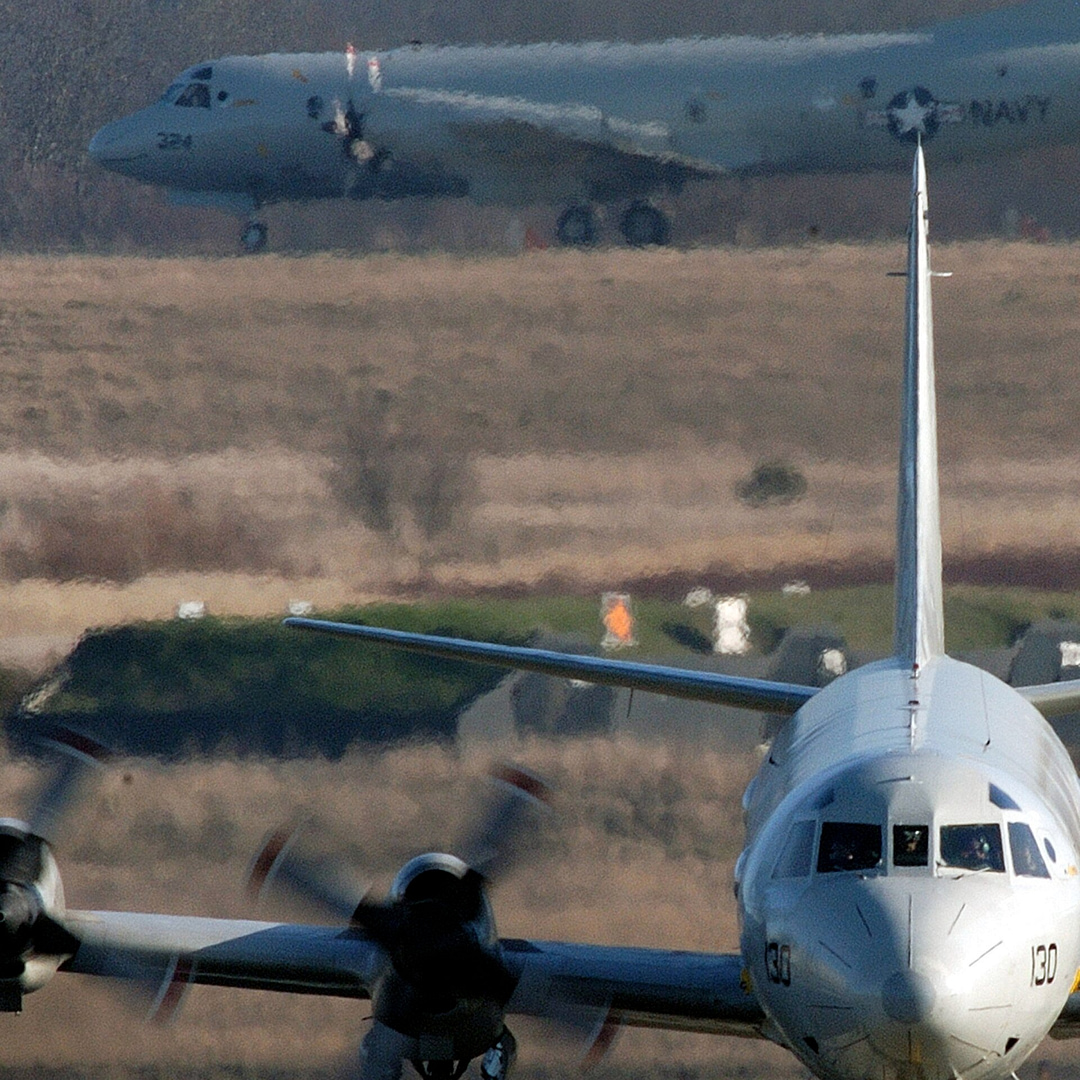
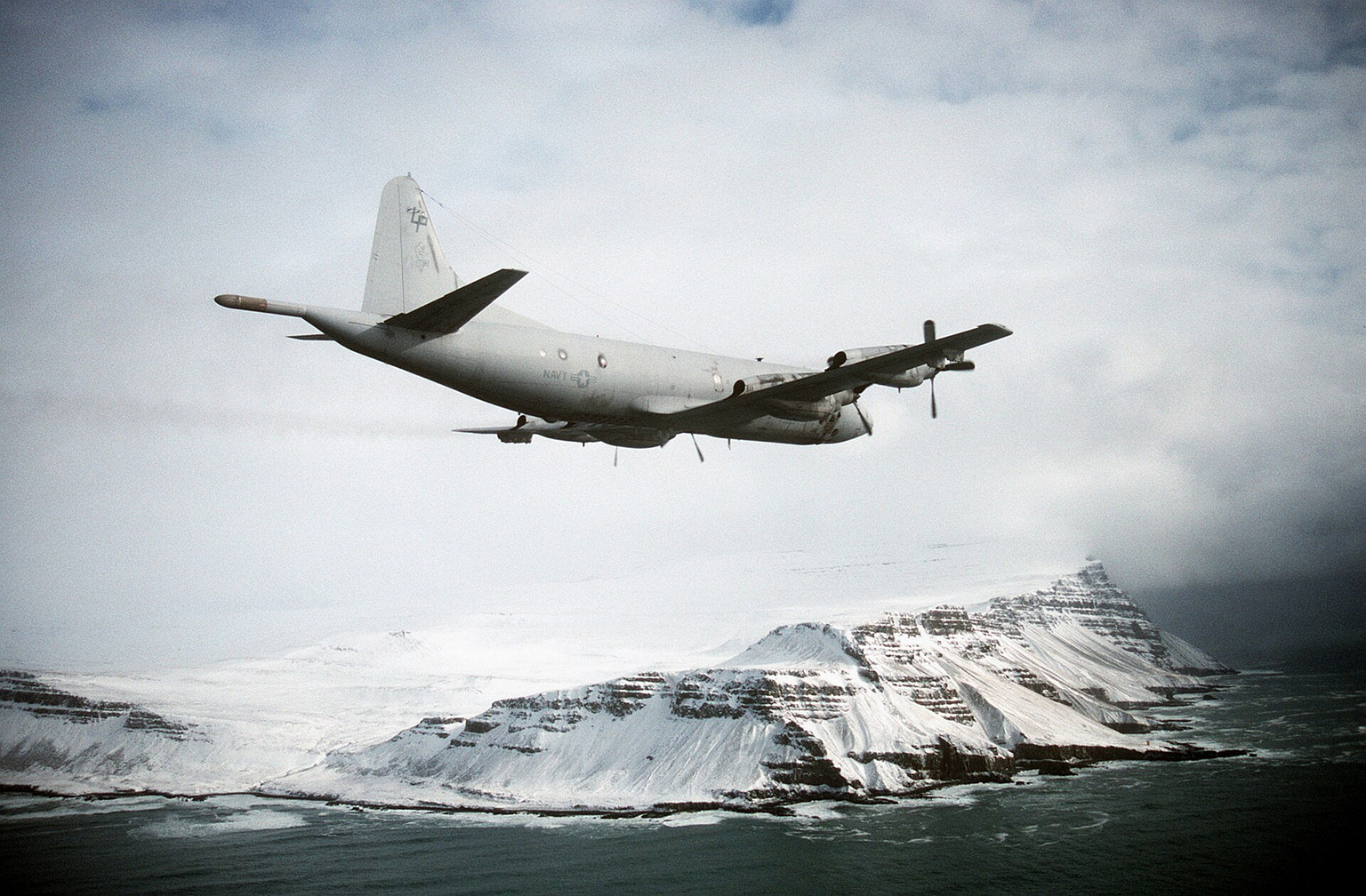
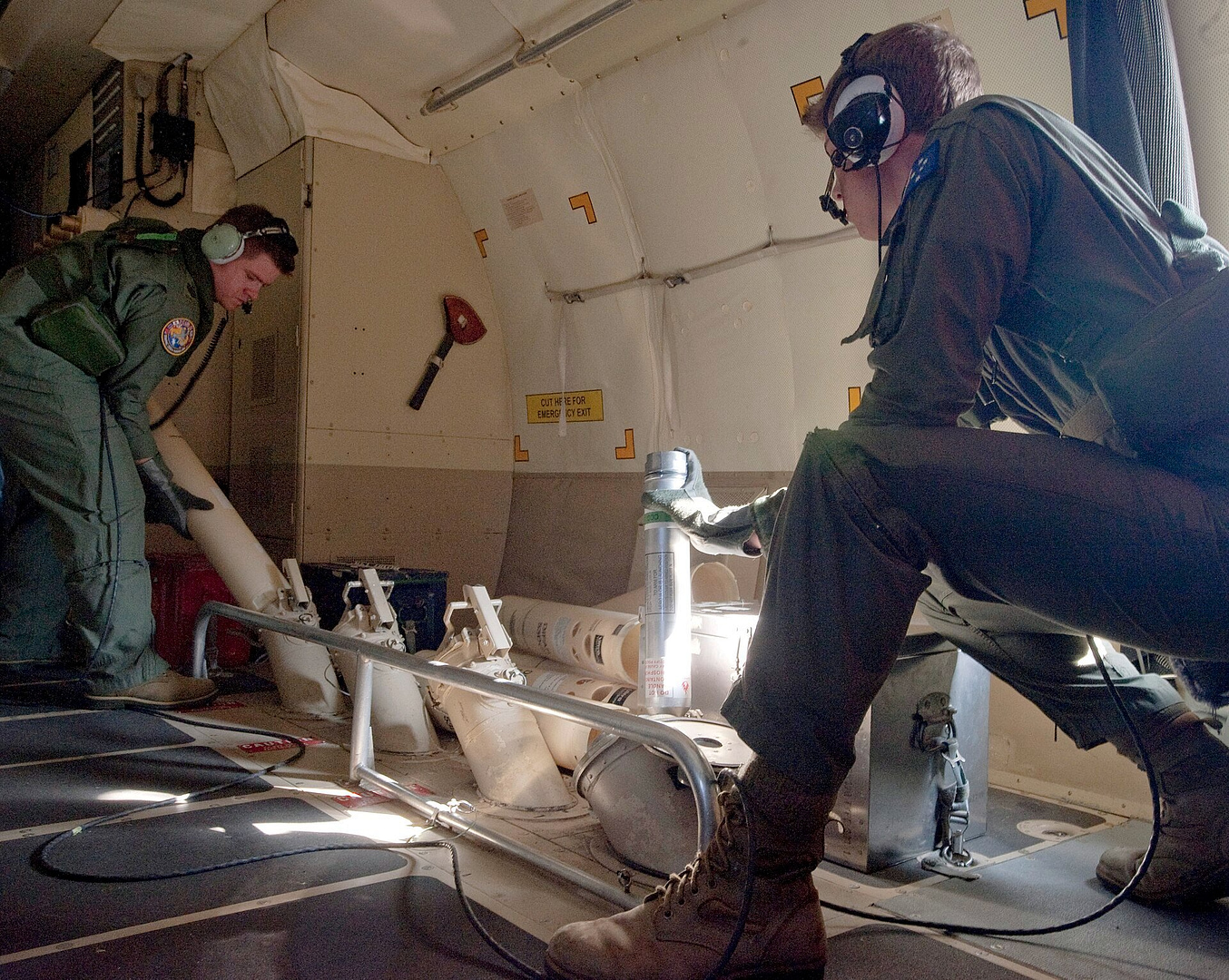
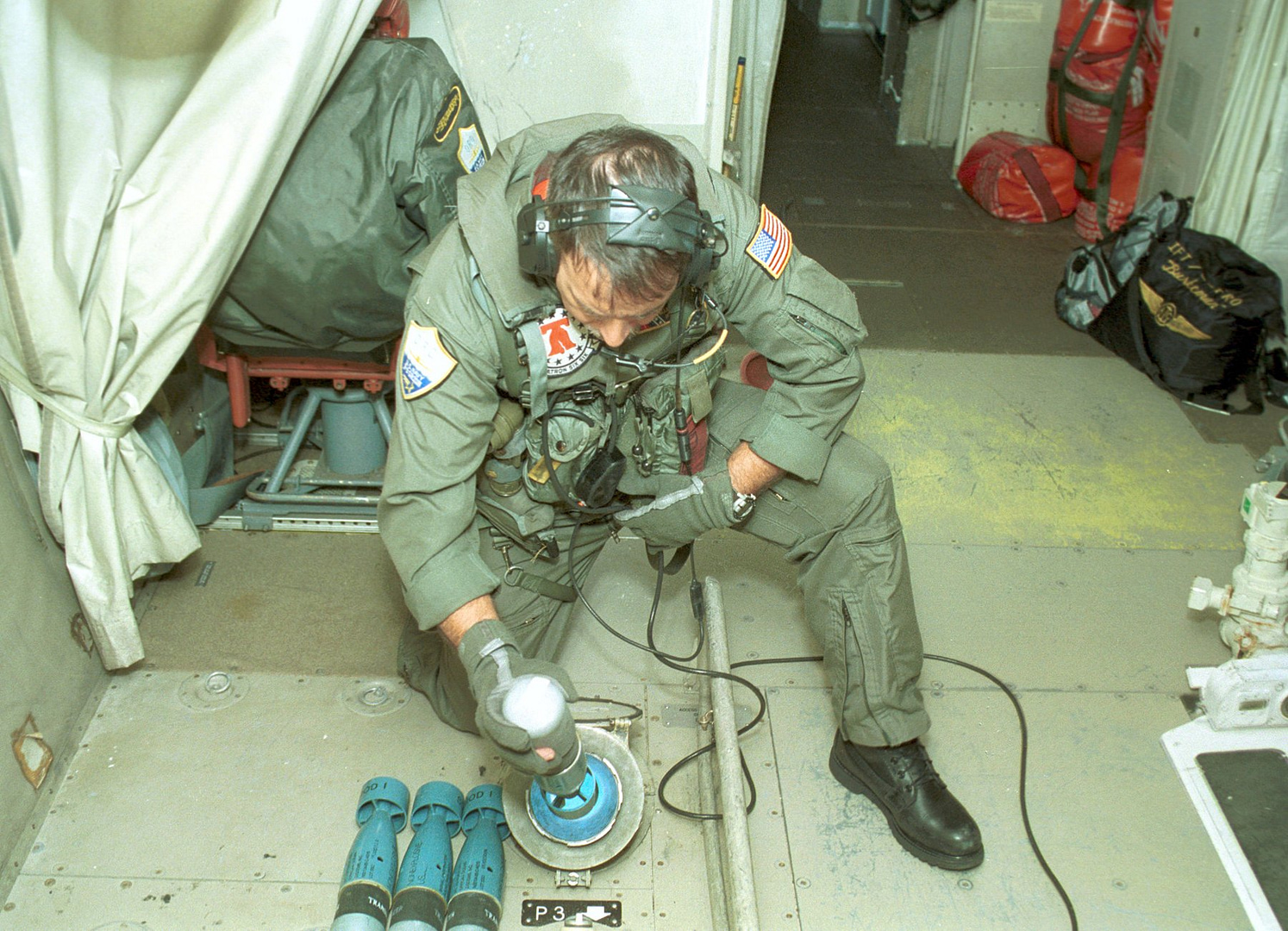
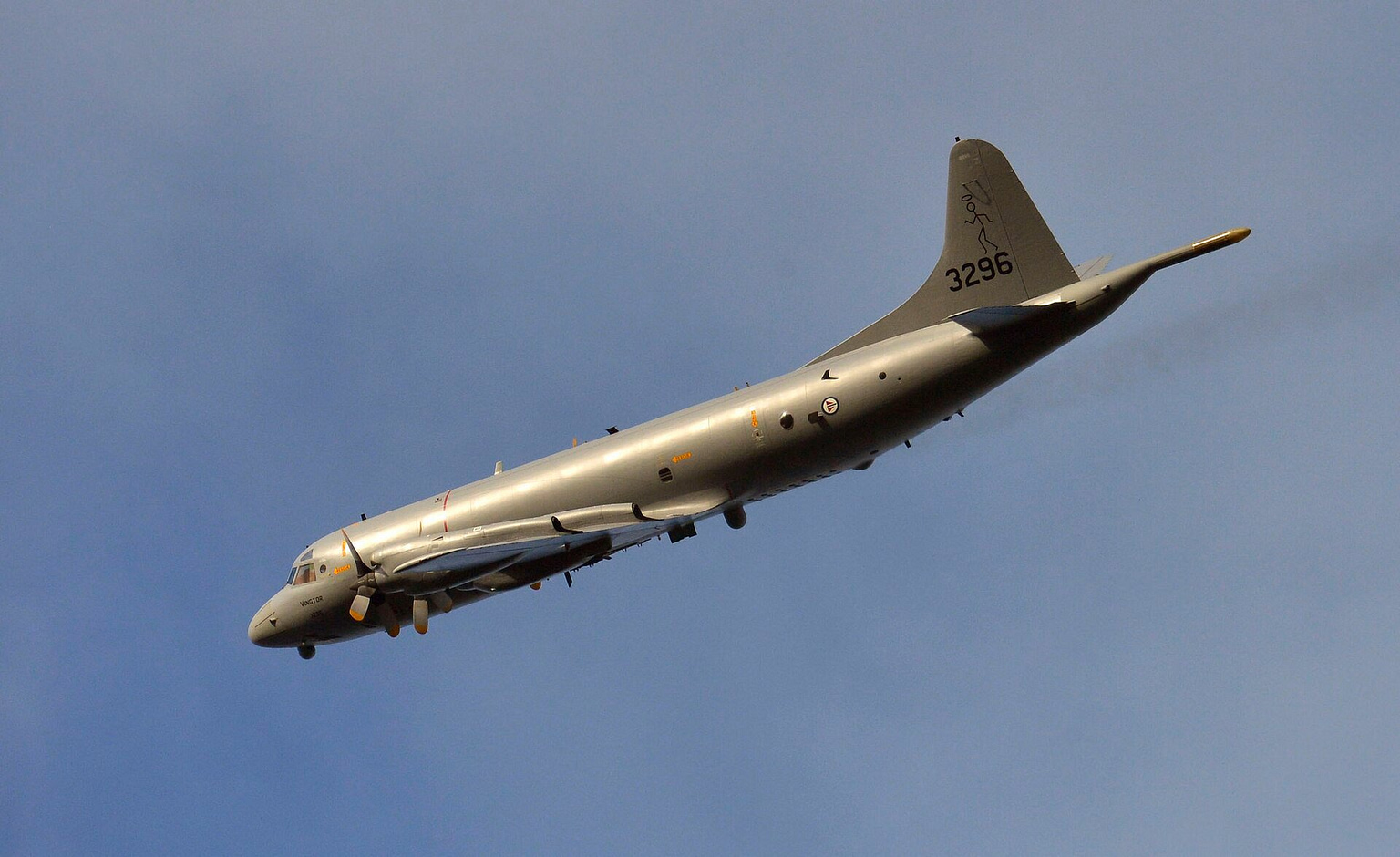
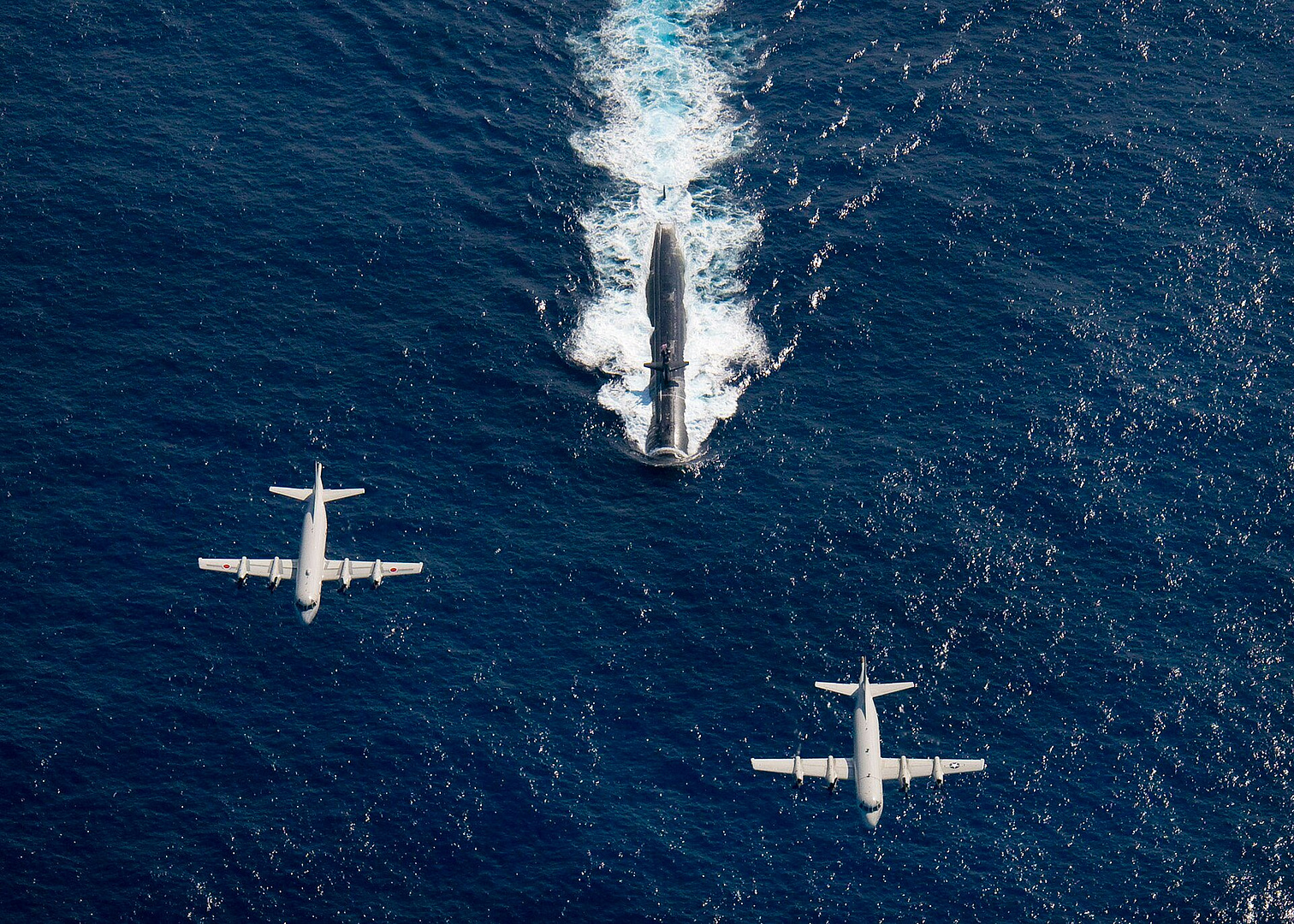
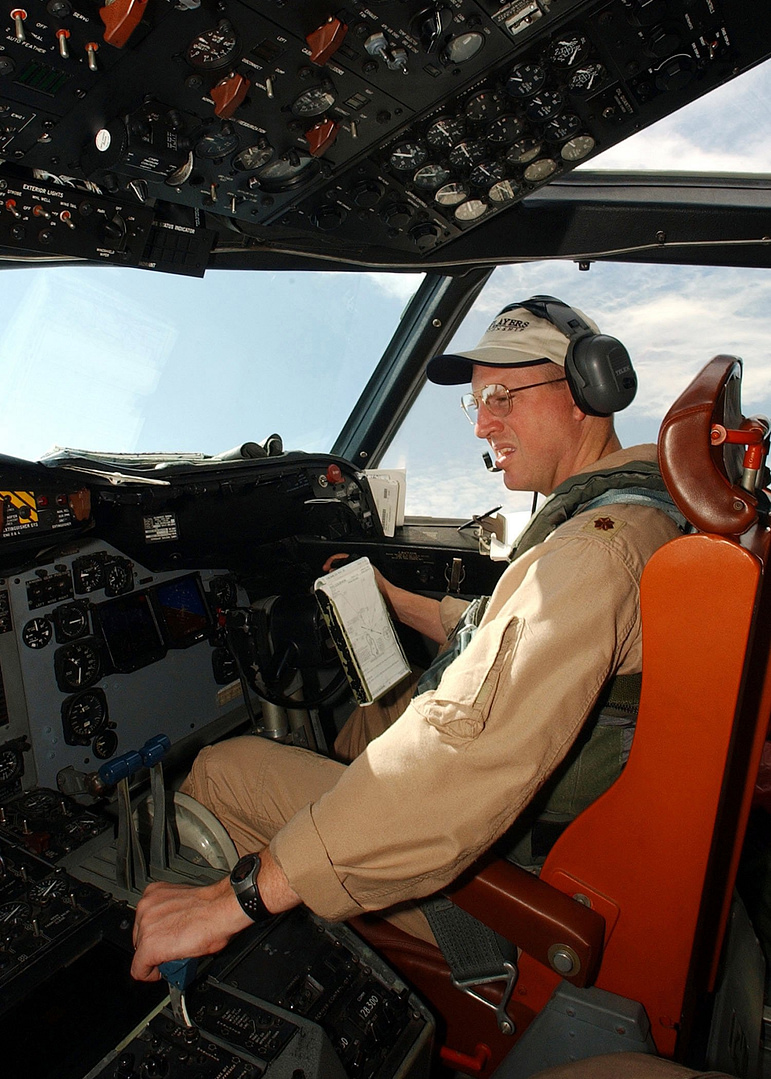
Click any photo to enlarge. All images are public domain (U.S. Navy / U.S. Department of Defense); credits in each caption.

Watch
The Lockheed P-3 Orion on film
If you have never seen an Orion work a patrol, this footage shows the aircraft and its anti-submarine and maritime-surveillance mission in the crew’s own environment — the low-level flying, the sensor stations and the long hours over open water that defined the type for more than sixty years.
“A Look Inside P-3 Orion – Anti-Submarine And Maritime Surveillance Mission” by AiirSource Military — official U.S. Navy footage (~123,000 views).
Operations Overview
Where the Lockheed P-3 Orion flew: origin, operators and derivatives
The Orion was designed and built in the United States and exported to some twenty nations across NATO, the Pacific, South America and the Middle East. Use the toggles below to explore its manufacturer, its current military operators, the nations that have retired it, and the licence-built and derivative fleets. Categories overlap — the United States, for instance, is both origin and operator — and the tooltip for each country lists every category it belongs to.
Origin & manufacturer (blue): the United States, where Lockheed designed and built the Orion and the US Navy was its largest operator.Current military operators (olive): nations still flying upgraded P-3s or derivatives — including Japan, Canada (CP-140 Aurora), South Korea, Chile, Portugal, Greece, Brazil, Pakistan and others.Former operators (dark grey): nations that have retired the P-3, such as the Netherlands, Spain, Australia, New Zealand, Norway and Iran.Notable users & derivatives (light grey): Japan’s Kawasaki licence production and Canada’s CP-140 Aurora derivative. Categories overlap; the tooltip lists them all.
By the Numbers
The Lockheed P-3 Orion’s service record
Figures are approximate and vary between variants, operators, upgrade standards and sources; treat them as indicative rather than exact. What is not in doubt is the headline: the Orion has served for more than sixty years, been built in the hundreds, and flown with some twenty nations — a record of longevity and reach that few military aircraft of any kind can match.
Questions & Answers
Lockheed P-3 Orion: your questions answered
The Orion prompts a lot of questions — about its unlikely airliner origins, its submarine-hunting tools, its huge export list, and whether an ordinary enthusiast can ever fly in one. Here are the essentials, with the contested figures flagged as approximate.
Can I fly in a Lockheed P-3 Orion?
No. The P-3 Orion is an operational military maritime patrol aircraft, not a bookable experience, and MiGFlug does not offer P-3 Orion flights. Preserved examples can be seen in museums around the world, but airworthy Orions are government-operated — flown by navies and by NOAA — so there is no civilian P-3 you can charter or ride in.
However, you can fly in genuine military jets today with MiGFlug — everything from the L-39 Albatros jet trainer to the supersonic MiG-29 Fulcrum. If the Orion has given you a taste for real military aviation, that is where to start. See migflug.com/flights-prices.
Why does the Lockheed P-3 Orion use turboprops instead of jets?
Because its job is endurance, not speed. Four Allison T56 turboprops are far more fuel-efficient than jets at the low altitudes and low speeds where submarine hunting happens, letting the Orion loiter for up to sixteen hours — and stretch that further by shutting down engines on station. That is something a fuel-hungry jet could not match until the efficient, high-flying Boeing P-8 Poseidon finally made a jet worthwhile.
What was the Lockheed P-3 Orion used for?
Primarily long-range maritime patrol and anti-submarine warfare, using sonobuoys, a magnetic anomaly detector, homing torpedoes and depth charges. But over its long life it has also flown overland reconnaissance and signals intelligence, anti-ship strike with the Harpoon missile, search and rescue, drug interdiction, disaster relief and scientific research — including flying into hurricanes with NOAA.
How is the Lockheed P-3 Orion related to the Electra airliner and the P-8 Poseidon?
Directly. The Orion was developed from the Lockheed L-188 Electra airliner — a shortened fuselage, a ventral weapons bay and a magnetic-anomaly-detector tail boom added to a proven civil design. Its own replacement, the Boeing P-8 Poseidon — a maritime-patrol relative of the C-130 Hercules family’s Allison-engined world, but a jet derived from the Boeing 737 airliner — repeats the same trick a generation later, so both patrol aircraft trace their origins back to civilian airframes.
How long has the Lockheed P-3 Orion been in service?
The P-3 entered US Navy service in 1962 and is still flown by several nations more than sixty years later, making it one of the longest-serving maritime patrol aircraft ever built. The US Navy has now largely replaced it with the P-8 Poseidon, but upgraded P-3s remain in front-line service elsewhere, and NOAA still flies its research WP-3Ds.
Which countries fly the Lockheed P-3 Orion?
Around twenty nations have operated it over the years. Current or recent operators include Japan (with its large Kawasaki-built fleet), Canada (the CP-140 Aurora), South Korea, Chile, Portugal, Greece, Brazil and Pakistan; former operators include the United States (largely), the Netherlands, Spain, Australia, New Zealand, Norway and Iran. Figures and fleet status vary between sources.
Are any Lockheed P-3 Orions still flying?
Yes. Several air arms still operate upgraded P-3s, and NOAA flies two WP-3D “Hurricane Hunter” Orions on research missions — but all of these are government-operated, not privately flown, so there is no civilian P-3 you can book a ride in. To fly in a genuine military aircraft yourself, see MiGFlug’s fleet of jets.
How many Lockheed P-3 Orions were built?
Approximately 750 across all variants — roughly 650 built by Lockheed in the United States and more than a hundred licence-built in Japan by Kawasaki Heavy Industries. Exact totals vary between sources depending on how prototypes, conversions and derivatives are counted.
Why is it called the Orion?
The aircraft is named after Orion, the giant hunter of Greek mythology — a fitting name for an aircraft whose job was to hunt submarines across the oceans, and part of a US Navy tradition of naming patrol aircraft after the constellations and the sky.
Where can I see a Lockheed P-3 Orion today?
Preserved Orions are on display at museums including the National Naval Aviation Museum in Pensacola, Florida, and the Pima Air & Space Museum in Arizona, with many more entering collections around the world as operators transition to the P-8 Poseidon.
Fly Something Real
You can’t fly the P-3 Orion — these, you can
The Orion is an operational military aircraft, not a bookable ride — but MiGFlug does put civilians in the cockpit of genuine military jets, from Cold War trainers to supersonic fighters. If the Orion has given you a taste for the real thing, here is where to start.
Related Aircraft
If you like the Lockheed P-3 Orion, meet its relatives
The Orion sits at the meeting point of three traditions: maritime patrol, four-engined endurance, and Cold War anti-submarine warfare. These three aircraft each share part of its world — one its ocean-patrol mission, one its engines, and one its exact Cold War job done a different way.
 Flying boatPBY CatalinaThe legendary long-range maritime patrol flying boat of the Second World War — the Orion’s spiritual ancestor in the ocean-patrol role.
 Same enginesC-130 HerculesThe transport that shares the Orion’s four Allison T56 turboprops — the most successful military turboprop family ever built.
 Cold War contemporaryAvro ShackletonBritain’s piston-engined submarine hunter, doing the same Cold War job as the Orion with very different technology.
Sources & Further Reading
Where these Lockheed P-3 Orion facts come from
This page draws on museum records, naval-aviation archives, manufacturer histories, government operators and established aviation references. Contested figures — production totals, costs and current fleet status — are flagged in the text as approximate. Wikipedia is deliberately not used as a cited source, though Wikimedia Commons is credited as the source of the public-domain photographs.