
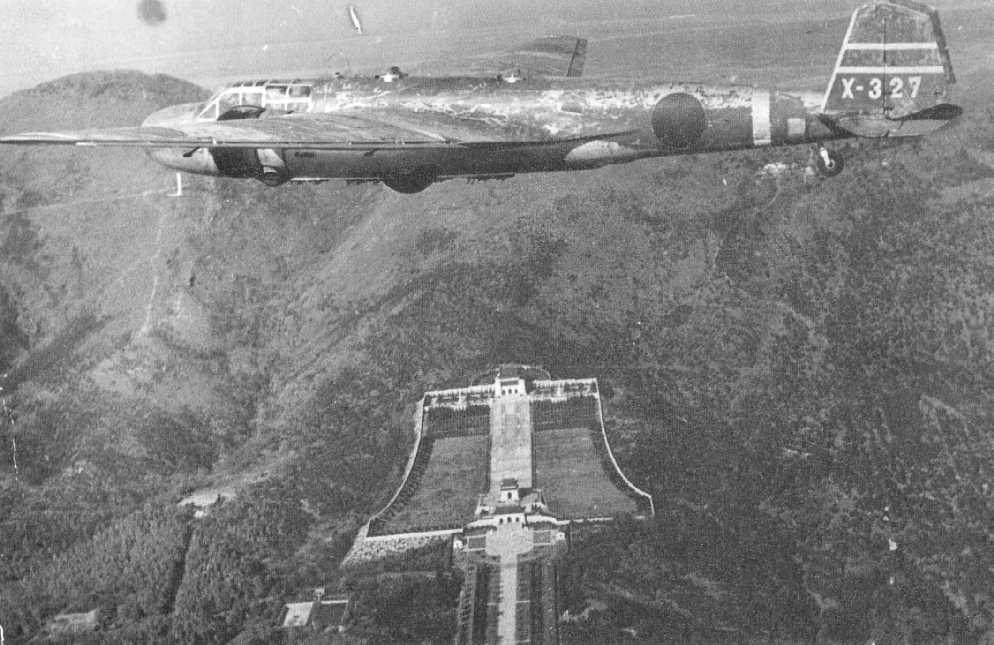
Mitsubishi G3M
“Nell”
The long-legged Imperial Japanese Navy bomber that flew the first trans-oceanic air raids in history — and then, off Malaya in December 1941, helped sink two British capital ships at sea and rewrote the rules of naval warfare.
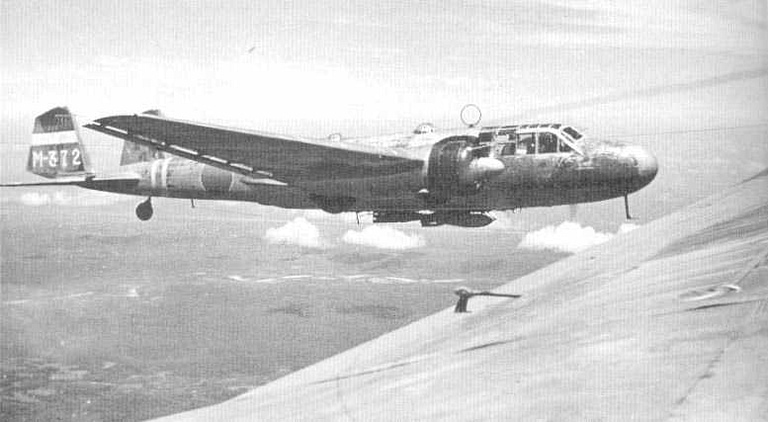
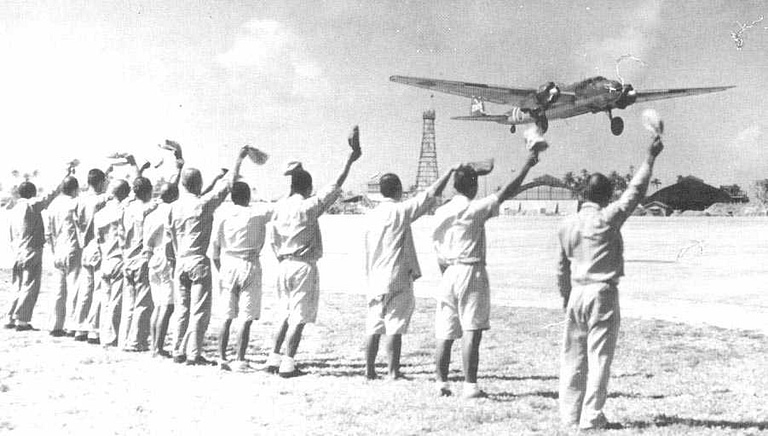
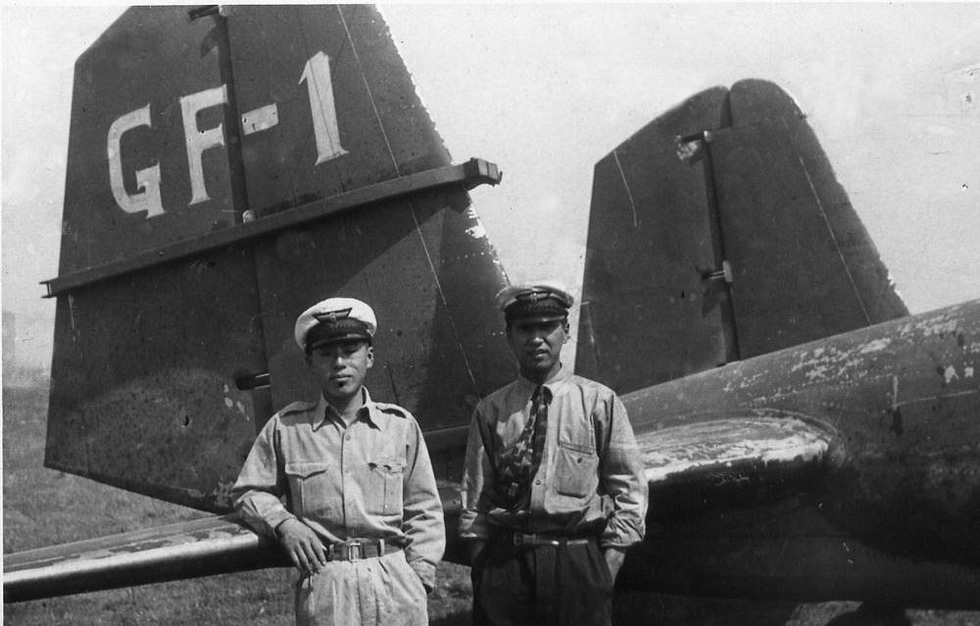
The Mitsubishi G3M “Nell”: the long-range bomber that changed naval warfare
In the early 1930s the Imperial Japanese Navy gambled on an idea most air forces thought impossible: a land-based bomber with enough range to reach out hundreds of miles over open ocean and strike ships and cities far beyond the reach of any carrier. Admiral Isoroku Yamamoto himself championed the requirement. Mitsubishi’s answer, designed by a team under Kiro Honjo, first flew as the Ka-15 prototype in July 1935 and entered service in 1936 as the Navy Type 96 land attack aircraft — the rikko. To Allied crews it would later become simply “Nell.”
What set the G3M apart was reach. A slim fuselage slung under a long, high-aspect-ratio wing and two Mitsubishi Kinsei radials gave it a ferry range of roughly 4,380 km — extraordinary for a twin-engine bomber of the mid-1930s. That endurance was proved dramatically in August 1937, when Nells flew the first trans-oceanic bombing raids in history, crossing the East China Sea from Formosa and Kyushu to strike Chinese cities. The unescorted bombers were savaged by Chinese fighters — an early, bloody lesson that range alone did not make a bomber safe.
The G3M’s defining hour came on 10 December 1941. Land-based Nells and G4M “Bettys” of the 22nd Air Flotilla, flying from Indochina, found the British battleship HMS Prince of Wales and battlecruiser HMS Repulse steaming off Malaya without air cover. In about two hours of level bombing and torpedo attacks the two capital ships were sunk. It was the first time capital ships defending themselves at sea, underway, had ever been destroyed by air power alone — a moment that ended the age of the battleship.
By then the G3M was already ageing. Lightly built and lightly armed, it was increasingly outclassed as the war turned, and from 1942 it was gradually replaced by the newer G4M and pushed into transport, patrol and training roles. Around 1,048 were built before production ended in 1943. Not a single complete example survives today — a strange fate for the aircraft that helped prove air power could rule the sea.
01The Mitsubishi G3M’s design brief: Yamamoto’s bet on land-based range
Japan’s naval treaties of the era limited its carrier and battleship tonnage, so the Navy looked for another way to project power across the vast distances of the Pacific. The answer, pushed hard by then-Rear Admiral Isoroku Yamamoto in the Naval Aviation Department, was a shore-based bomber whose reach would let a handful of airfields cover great stretches of ocean. The 1934 specification asked for range far beyond anything then normal for a twin.
Mitsubishi’s engineers, led by Kiro Honjo, achieved it by wrapping a very slim fuselage around a long, efficient wing and accepting light structure and modest defensive armament as the price of endurance. The result was fast and far-reaching for 1936, but the same choices — thin skin, no self-sealing tanks, few guns — would later make the G3M and its Betty successor dangerously vulnerable once they met modern fighters and massed anti-aircraft fire.
What makes the G3M Nell special
A wing built for range
The Nell’s long, high-aspect-ratio wing and slim fuselage gave it a ferry range near 4,380 km — remarkable for a mid-1930s twin. That reach let land-based Navy bombers strike targets hundreds of kilometres out to sea, the whole point of the design and the reason it could find and sink ships far from any carrier.
Two Mitsubishi Kinsei radials
Power came from two Mitsubishi Kinsei 14-cylinder radials — about 1,075 hp each in the definitive G3M2, rising to roughly 1,300 hp in the late G3M3. They pushed the Nell to about 373 km/h, fast enough in 1937 to worry defenders, though its edge faded quickly as fighters improved.
Range bought with fragility
Endurance came at a cost. The G3M carried no armour and no self-sealing fuel tanks, and its defensive guns — a 20 mm dorsal cannon and a few rifle-calibre machine guns — were light. Over China in 1937 and again later in the war, unescorted Nells burned easily when caught by fighters. It was a bomber optimised for reach, not survival.
02The Mitsubishi G3M’s trans-oceanic raids: the first over-water strategic bombing
On 14 August 1937, days after fighting flared at Shanghai, G3M units launched what are widely regarded as the first trans-oceanic bombing raids in history. The Kanoya Air Group flew from Taihoku (Taipei) on Formosa and the Kisarazu Air Group from Omura in Kyushu, crossing hundreds of kilometres of the East China Sea to strike Shanghai, Hangzhou and Nanking. No aircraft had ever mounted sustained strategic strikes across so much open water.
The raids proved the range concept spectacularly — and exposed its flaw just as sharply. Flying without fighter escort, the Nells were mauled by Chinese pilots, with the two groups reportedly losing something like 40 per cent of their strength within about two weeks. It was one of the earliest demonstrations that even fast, long-ranged bombers needed escorts, a lesson every air force would relearn the hard way over the next decade.
03The Mitsubishi G3M and the sinking of Force Z: the end of the battleship
On 10 December 1941 the British battleship Prince of Wales and battlecruiser Repulse — the core of “Force Z” — were caught off the Malayan coast near Kuantan with no air cover. Land-based bombers of the 22nd Air Flotilla struck in waves: G3M level-bombers and torpedo bombers of the Genzan and Mihoro air groups, joined by G4M torpedo bombers of the Kanoya group, roughly 85 aircraft in all, of which about 59 were G3M Nells.
In a running attack of about two hours the two ships were hit by multiple torpedoes and sunk, for the loss of only three or four Japanese aircraft. It was the first time capital ships free to manoeuvre and defend themselves on the open sea had been sunk purely by air attack — a result that stunned the Royal Navy and confirmed that the battleship no longer ruled the ocean. The G3M, a design already five years old, was at the centre of it.
Mitsubishi G3M2 Nell full specifications
Airframe & Performance
- クルー
- 5–7 (typically 7 on long missions)
- 長さ
- ~16.45 m
- 翼幅
- ~25.0 m
- 身長
- ~3.68 m
- Max takeoff weight
- ~8,000 kg
- Max speed
- ~373 km/h (~232 mph) at ~4,180 m
- サービス天井
- ~9,130 m
- 範囲
- ~2,700 km normal · up to ~4,380 km ferry
- First flight
- July 1935 (Ka-15 prototype)
- Built
- ~1,048 all variants (1936–1943)
Propulsion, Armament & Cost
- Engines
- 2 × Mitsubishi Kinsei 14-cyl radial
- Power (each)
- ~1,075 hp (G3M2) · up to ~1,300 hp (G3M3)
- Defensive guns
- 1 × 20 mm dorsal cannon · several 7.7 mm MG
- Offensive load
- 1 × 800 kg torpedo, or ~800 kg bombs
- Manufacturer
- Mitsubishi · also built by Nakajima
- Allied name
- “Nell” (transports: “Tina”)
- Unit cost
- No reliable public figure exists
- Cost per flight hour
- No reliable public figure exists
04The Mitsubishi G3M’s cost: why no reliable price exists
There is no credible unit cost or cost-per-flight-hour figure for the G3M in the public record. It was a wartime product of the Imperial Japanese Navy, procured through the Navy’s own arsenal-and-contractor system rather than sold on any open market; contemporary yen pricing was not published, and a great deal of Japanese industrial documentation was destroyed in 1945.
Any specific dollar or yen figure attached to a G3M online should be treated as unverified. Production figures are firmer but still vary between sources: roughly 1,048 aircraft were built in total, the great majority by Mitsubishi with a substantial batch by Nakajima, though the exact manufacturer split differs from reference to reference and should be read as an estimate.
The G3M Nell: from record-breaker to obsolescence
The requirement
The Navy, urged on by Isoroku Yamamoto, asks Mitsubishi for a land-based bomber with unprecedented over-water range.
First flight
The Ka-15 prototype flies in July 1935, revealing a slim, long-winged twin built around endurance.
Enters service
Accepted as the Navy Type 96 land attack aircraft — the rikko — later codenamed “Nell” by the Allies.
Trans-oceanic raids
Nells fly the first over-water strategic bombing raids in history, from Formosa and Kyushu against Chinese cities — and take heavy losses.
Around the world
The G3M-based “Nippon” makes a 52,886 km goodwill flight around the globe for the Mainichi Shimbun newspaper.
Force Z sunk
G3M and G4M bombers sink HMS Prince of Wales and HMS Repulse off Malaya — the first capital ships lost to air power at sea, underway.
Eclipsed
Increasingly outclassed, the Nell is supplanted by the newer G4M and shifts toward transport, patrol and training work.
End of the line
Production ends in 1943 after about 1,048 aircraft; surviving Nells serve secondary roles to the war’s end. No complete example survives today.
From the record: twelve G3M Nell stories
Yamamoto’s long-range gamble
Denied battleships by treaty, the Navy bet on a bomber that could reach far out to sea.
Read the full story
A wing built for endurance
Mitsubishi bought the Nell’s range with a long, slim wing and very light structure.
Read the full story
The first raids across an ocean
On 14 August 1937 Nells crossed the East China Sea to bomb Chinese cities.
Read the full story
The price of no escort
Unescorted over China, the Nells were torn apart by defending fighters.
Read the full story
Two hours that ended an era
Off Malaya on 10 December 1941, the Nell helped sink two British capital ships at sea.
Read the full story
Bomber and torpedo plane in one
The G3M could level-bomb from altitude or come in low with an 800 kg torpedo.
Read the full story
The Nell that flew around the world
In 1939 a civil G3M circled the globe on a goodwill flight for a Japanese newspaper.
Read the full story
Why the Allies called it “Nell”
Allied intelligence gave Japanese aircraft simple Western reporting names.
Read the full story
A bomber that burned
Light structure and unprotected tanks made the Nell easy to set alight.
Read the full story
Old before the big war
By 1942 the five-year-old Nell was already being pushed aside.
Read the full story
From bomber to transport
Beyond the bomber, the G3M served as a passenger and cargo transport.
Read the full story
The bomber that left no survivors
Not one complete G3M survives, despite its enormous historical importance.
Read the full story
The G3M Nell in pictures
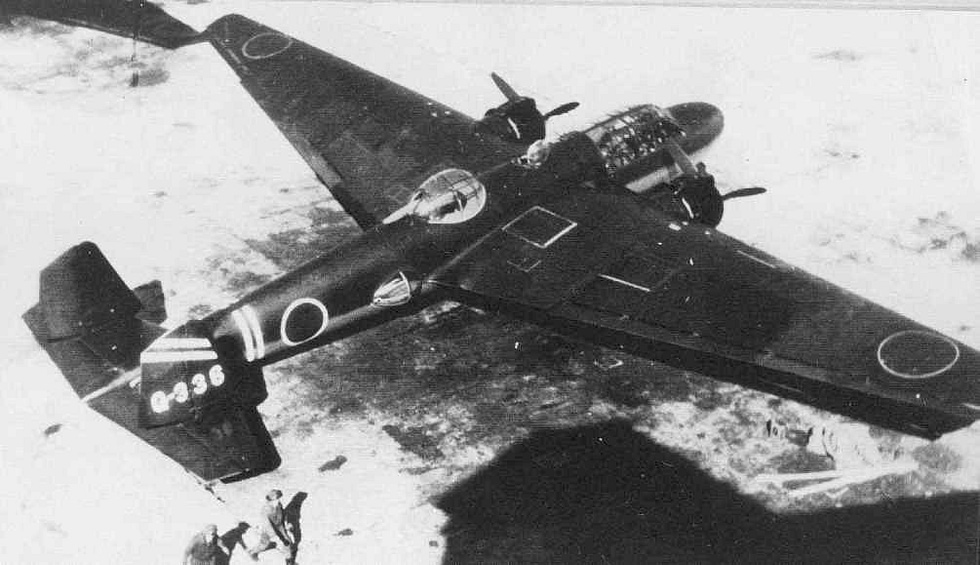
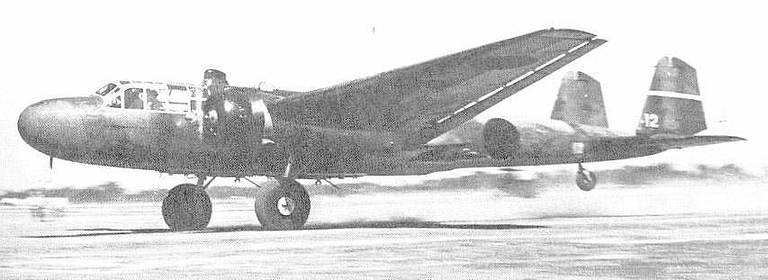
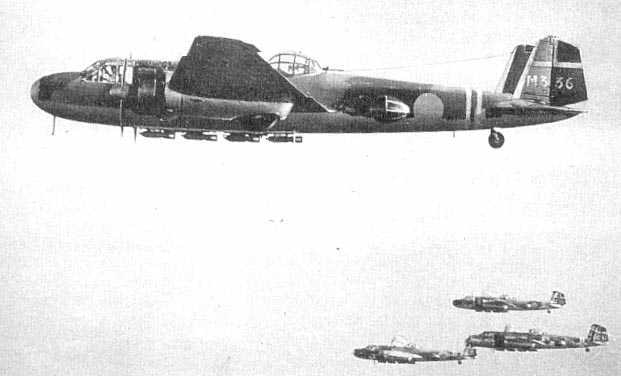
The G3M Nell in motion
History of the Mitsubishi G3M “Nell” bomber in WWII — a dedicated documentary tracing the type’s design, its pioneering trans-oceanic raids and its role in sinking Force Z. A useful visual introduction to an aircraft that is rarely filmed.
Where the G3M Nell flew
The G3M Nell’s combat record: range, torpedoes and the fall of Force Z
The G3M’s record is one of pioneering reach and a handful of history-changing strikes rather than air-to-air victories. It opened the war in China with the first over-water bombing raids ever flown, played the leading role in sinking two British capital ships off Malaya, and supported the sweep through the Philippines and the Dutch East Indies — before its own fragility and age pushed it into second-line roles.
Compare the combat record of every military aircraft. Figures are best-available estimates and are hedged where sources disagree.
Everything people ask about the Mitsubishi G3M Nell
Can I fly in a Mitsubishi G3M?
What was the Mitsubishi G3M, and why “Nell”?
What is the G3M most famous for?
How long was the G3M’s range?
Why was the Nell considered vulnerable?
How many G3M were built, and who built them?
Does any G3M Nell survive today?
You can’t fly the Mitsubishi G3M.
These, you can.
Some legends only live in museums — others are fuelled and waiting. MiGFlug has put civilians in real military jet cockpits since 2004.
 Fly the L-39 AlbatrosThe world’s most-flown jet trainer — aerobatics included
 Fly the F-104 Starfighter“The missile with a man in it”
 Fly the MiG-21The Cold War’s most-produced jet
 T-33シューティングスターを操縦しようAmerica’s first jet trainer
 Fly the DH VampireA piece of early jet history
 Fly the S.211Agile Italian jet trainer
 Fly the MB-326The classic Aermacchi jet
 Fly the MiG-15The Soviet legend of the Korean War
Continue the tour
Every fact, checked
- The Pacific War Online Encyclopedia — G3M “Nell”Technical specifications, variants and service history of the Type 96 land attack aircraft.
- HistoryOfWar.org — Mitsubishi G3M “Nell”Design origin, the Kinsei-engined variants and the type’s combat career.
- Pacific Eagles — Trans-Oceanic Bombing of China, 1937Detailed account of the first over-water strategic raids and the losses the Nells suffered.
- Navy General Board — The loss of Prince of Wales and RepulseThe 10 December 1941 air attack, unit-by-unit, and the end of the battleship era.
- NavWeaps — Force Z Order of BattleBreakdown of the Japanese air strike: Genzan, Mihoro and Kanoya air groups and their aircraft.
- Pacific Wrecks — Mitsubishi G3MSurviving-airframe status: crash sites, recovered relics and the absence of a complete survivor.
- AirVectors (Greg Goebel) — The Mitsubishi G3M & G4MDevelopment narrative linking the Nell to its Betty successor.
- René J. Francillon, Japanese Aircraft of the Pacific War (Putnam) — via Naval EncyclopediaThe standard printed reference from which most G3M specifications and the ~1,048 production figure derive.