
Douglas B-66 Destroyer
The US Air Force’s twin-jet tactical bomber, reconnaissance and electronic-warfare aircraft — born from the Navy’s Skywarrior, remade for the land, and turned in Vietnam into an indispensable radar-jammer that shielded the strike packages from the SAMs.
ストーリー
The Douglas B-66 Destroyer: from Navy bomber to Vietnam jammer
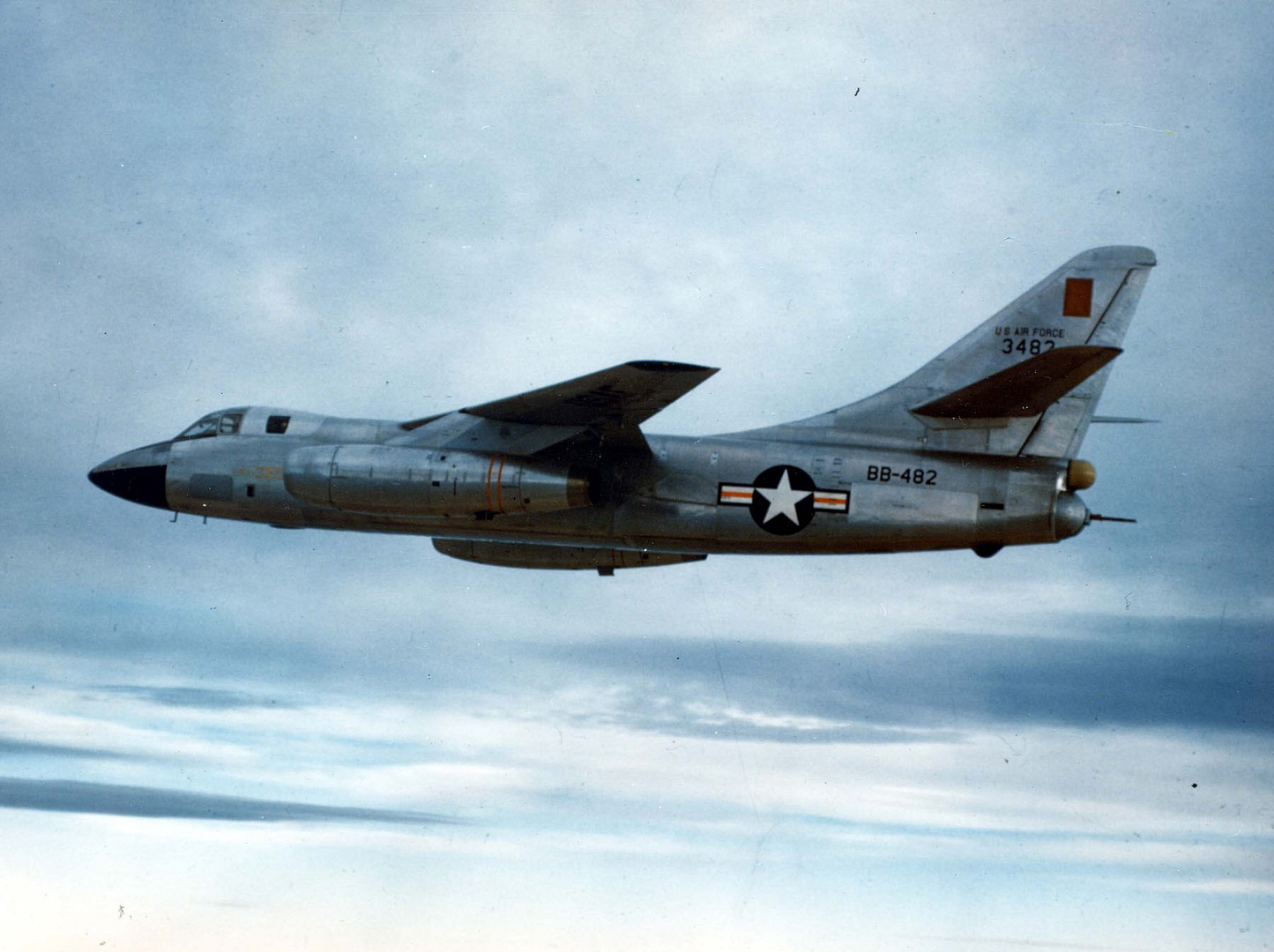
The Douglas B-66 Destroyer is one of those Cold War aircraft that is far less famous than the work it did. Ordered as a straightforward tactical bomber for the United States Air Force in the early 1950s, it ended its career as something quite different and far more important: the electronic-warfare aircraft that, in the skies over North Vietnam, jammed enemy radar and surface-to-air missiles and helped keep American strike aircraft alive. Along the way it served as a bomber, a photographic and electronic reconnaissance platform and even a weather aircraft. It was never glamorous, and never built in large numbers, but the Destroyer earned a quiet, vital place in the history of air warfare.
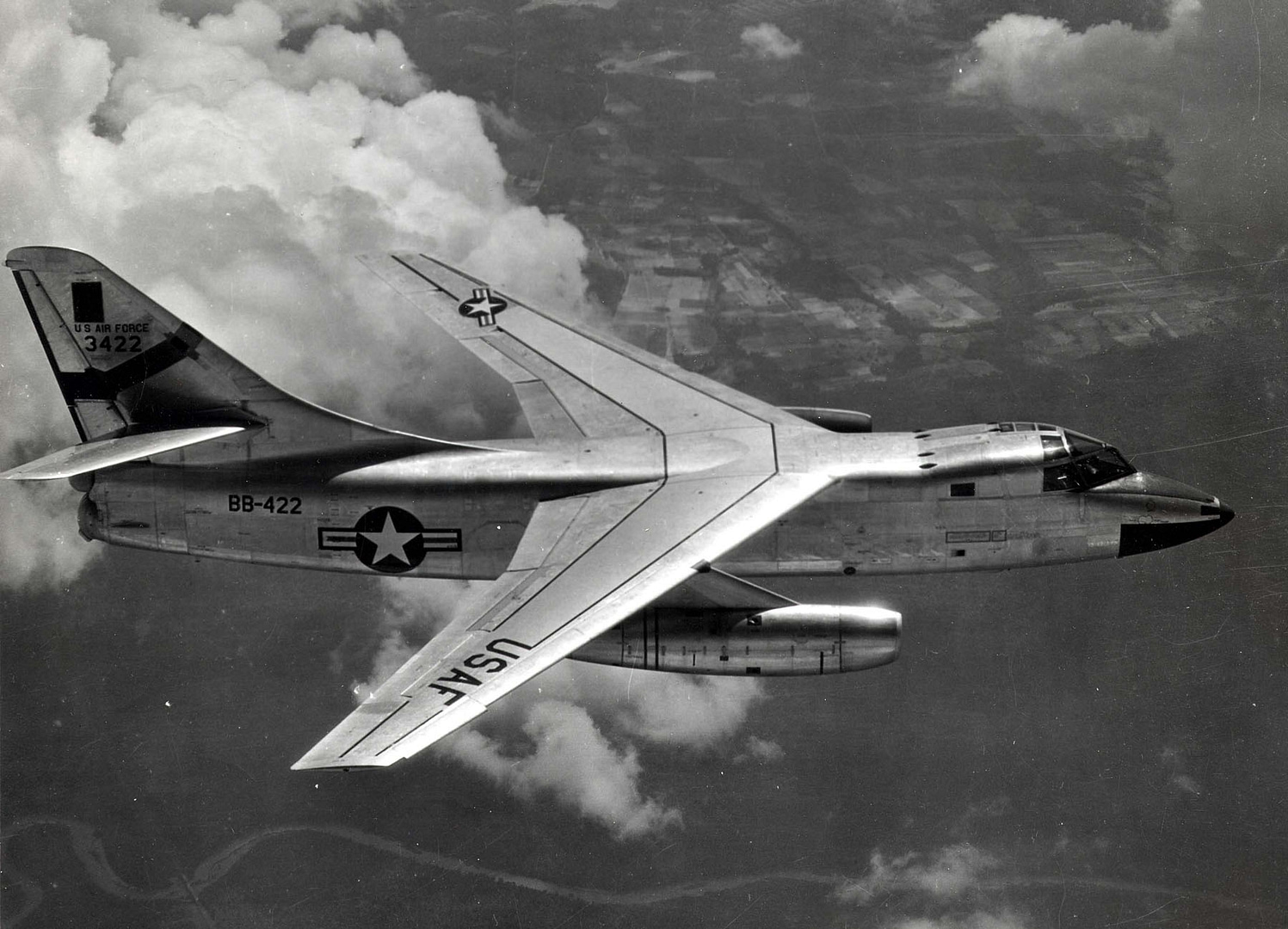
The B-66’s origins lie with a very different aircraft: the US Navy’s Douglas A-3 Skywarrior, a big carrier-based strategic bomber. When the Air Force wanted a modern twin-jet tactical bomber, adapting the existing Skywarrior looked like a fast, low-risk route to it. In practice, though, the land-based Air Force aircraft was redesigned so extensively that it shared surprisingly few parts with its naval parent. The two aircraft look like close cousins, and they share a basic configuration, but under the skin the Destroyer was very much its own machine.
There is a telling detail in the aircraft’s development: the very first Destroyer to fly, in 1954, was not a bomber at all but a reconnaissance prototype, the RB-66A. From the outset the Air Force wanted the type as much for its cameras as for its bombs, and the reconnaissance versions were developed in parallel with the bomber rather than as an afterthought. It was an early sign of where the Destroyer’s real value would lie — in gathering information, and later in manipulating the electronic spectrum, rather than in dropping ordnance.
“Built as a bomber, remembered as a jammer — the Destroyer’s finest hour came protecting other aircraft over Vietnam.”— the B-66’s place in history, in a sentence
The changes ran deep. The Destroyer used different engines — Allison J71 turbojets in place of the Skywarrior’s Pratt & Whitney units — and was given equipment for the low-level tactical mission the Air Force had in mind. Most significantly for the men who flew it, the B-66 was fitted with ejection seats for all three of its crew. The Navy’s Skywarrior famously lacked them, a grim distinction that gave that aircraft a dark reputation among its crews; the Air Force insisted its Destroyer would let its men get out. It was a humane and important difference between the two designs.
The pure bomber version, the B-66B, was actually the smallest part of the story: only a modest number were built as tactical and nuclear-capable bombers. Far more numerous, and arguably more important from the start, were the reconnaissance versions. The RB-66B was a dedicated photographic-reconnaissance aircraft, including a night-photography capability, and it formed the largest single production batch. The RB-66C was a specialised electronic-reconnaissance and intelligence aircraft, carrying extra operators to gather and analyse enemy electronic emissions. A weather-reconnaissance version, the WB-66D, rounded out the family. For much of its early career, in other words, the Destroyer was more a set of eyes and ears than a bomb-carrier.
The reconnaissance mission carried Cold War risks of its own. In one notable incident in the 1960s, an RB-66 strayed across the border into East German airspace and was shot down; its crew ejected and were held for a time before being returned. Episodes like this were a reminder that, even away from open war, the Destroyer’s reconnaissance crews operated at the tense edge of the Cold War, where a navigational error near a hostile frontier could have grave consequences.
It was the electronic side of the aircraft that would define its legacy. As the science of electronic warfare matured through the late 1950s and 1960s, the Destroyer’s roomy airframe and reconnaissance heritage made it a natural platform for jamming equipment. Reconnaissance aircraft were converted, and new-build capability added, to create the EB-66 series — aircraft packed with powerful jammers and electronic-countermeasures gear designed to blind and confuse enemy radar. When the United States went to war in Vietnam, the EB-66 was ready, and it found itself at the very centre of one of the most intense electronic battles ever fought.
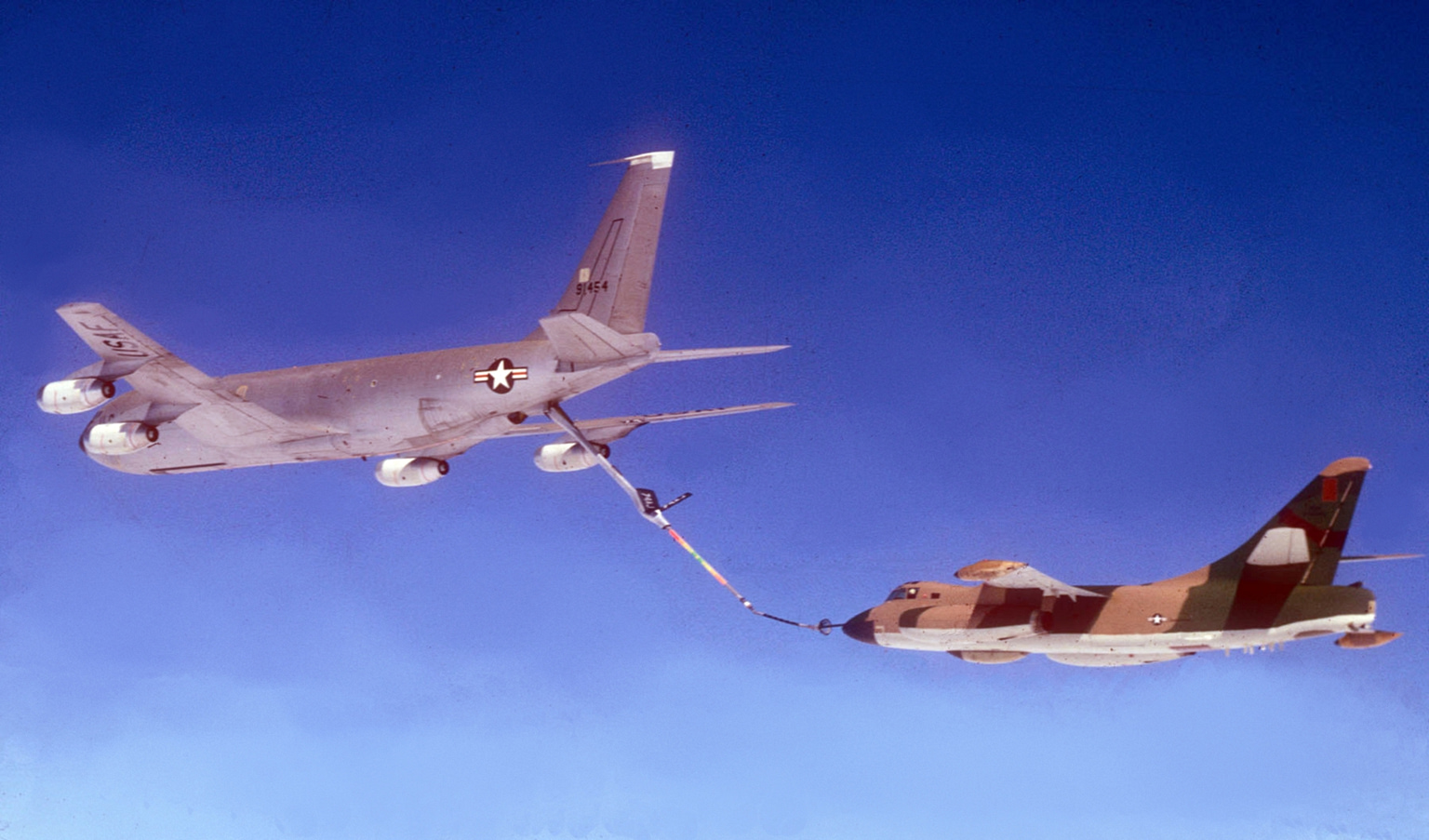
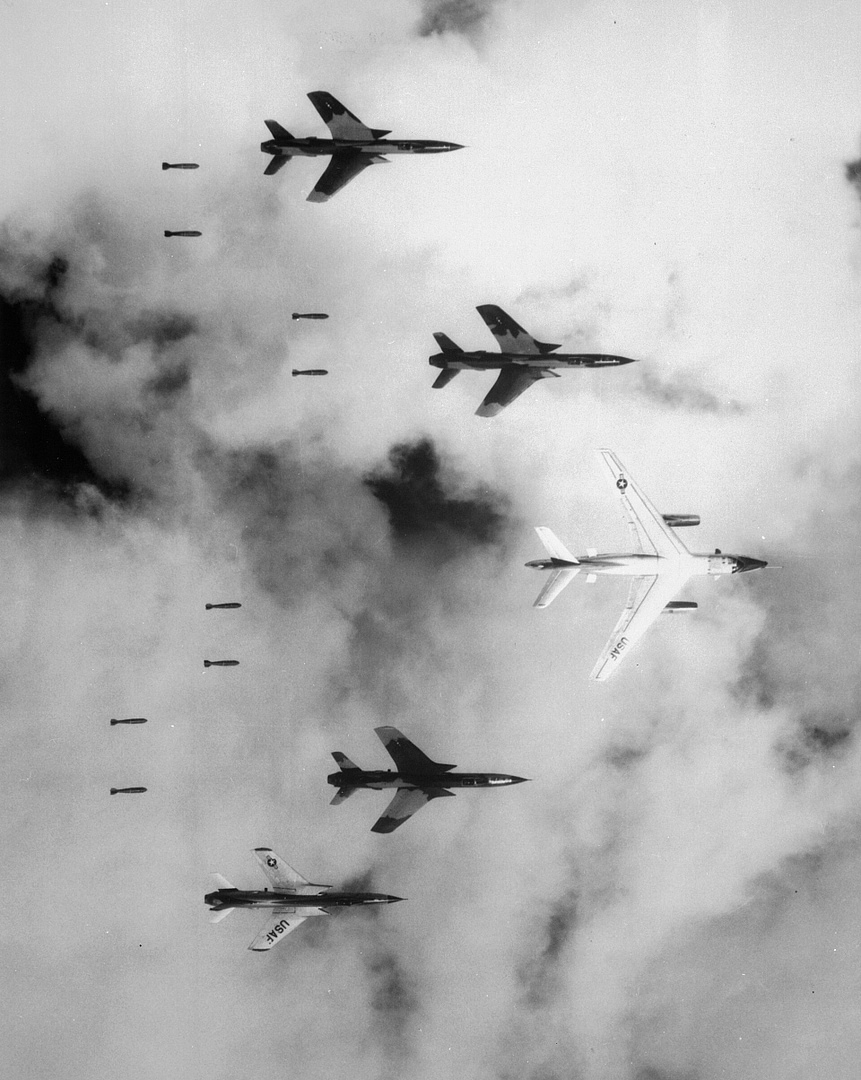
North Vietnam built one of the densest air-defence networks the world had yet seen, thick with radar-guided anti-aircraft guns and, above all, the Soviet-supplied SA-2 surface-to-air missile. American strike aircraft — F-105 Thunderchiefs and F-4 Phantoms laden with bombs — had to fly into this lethal environment day after day. The EB-66 was one of their most important protectors. Flying with the strike packages, or orbiting at stand-off distance, the Destroyers jammed the enemy’s early-warning and missile-guidance radars, degrading the defences and giving the strike crews vital warning and cover. Where the EB-66 jammed, the SAMs and radars struggled to see.
The electronic contest was never static. As the EB-66s jammed, the North Vietnamese refined their radars and tactics to work around the interference, and the Americans in turn modified their equipment and methods — changing orbits, frequencies and formations. Early in the war the Destroyers could sometimes accompany strikes fairly closely; as the missile threat grew, they were increasingly pushed to jam from safer stand-off distances. It was a running technological duel, fought in the invisible spectrum, and the Destroyer was one of its central protagonists.
This made the EB-66 a high-value target, and the North Vietnamese hunted it. The aircraft’s work took it into the heart of the defended airspace, and some were lost — to the very SA-2 missiles they existed to counter, and at least one to a MiG interceptor. The most famous of these losses came in 1972, when an EB-66 was shot down and the days-long effort to rescue its sole survivor became one of the largest and most costly search-and-rescue operations of the entire war — a story later told in books and on film, and remembered for the many lives risked, and lost, in the attempt to bring one man home. It is a sombre reminder of how dangerous the electronic-warfare mission had become.
By the standards of fighters and strategic bombers the Destroyer was not fast — a subsonic aircraft with a top speed around Mach 0.8 — and it was never intended to fight its way out of trouble. Its value lay in what it carried and what it could do to the enemy’s electronics, not in performance. That made it vulnerable, and utterly dependent on tactics and on the fighters around it, but it also made it indispensable: in the missile age, a strike package without electronic protection was a package in mortal danger.
For the crews, the electronic-warfare mission was a peculiar kind of ordeal. Where the strike pilots dived in, dropped their bombs and left, the EB-66 often had to hold a steady orbit for long minutes so its jammers could do their work — a large, unarmed, subsonic aircraft loitering near some of the deadliest air defences on earth, knowing all the while that it was a priority target. It demanded a particular sort of nerve, and the men who flew the Destroyer in that role earned a quiet respect from the strike crews whose lives their jamming helped protect.
The Destroyer’s deeper legacy lies in what it proved. The EB-66 helped establish the dedicated electronic-warfare escort as an essential part of any modern strike — the principle that specialised jamming aircraft must go in alongside the bombers if the force is to survive against radar-guided defences. That lesson, learned the hard way over North Vietnam, shaped the aircraft that came after it, from the EF-111 Raven to the carrier-borne Prowler and, later, the Growler. When those newer jammers fly today, they carry forward a doctrine the unglamorous Destroyer did much to write.
The B-66’s front-line career was relatively short. Only around 294 were built in all versions, and by the mid-1970s the survivors were worn out and being replaced by newer, more capable electronic-warfare and reconnaissance aircraft. The type was retired, its Vietnam service its lasting monument. A number of Destroyers are preserved today in museums in the United States, the only country ever to operate the type, where they stand as reminders of an aircraft that did difficult, dangerous and largely unseen work — the bomber that became a jammer, and helped a generation of American aircrew survive the deadliest air defences of their war.
01From Skywarrior to Destroyer: the A-3 origin+
The B-66 began as an adaptation of the US Navy’s Douglas A-3 Skywarrior, a large carrier-based strategic bomber. When the US Air Force wanted a modern twin-jet tactical bomber in the early 1950s, taking the proven Skywarrior design and reworking it for land-based use promised a quicker, cheaper path than an all-new aircraft.
The two aircraft are close relatives and share a family resemblance — a shoulder-mounted swept wing, two podded engines and a glazed nose — but the B-66 was intended for a different service, a different basing concept and a different mission. That gap between the two, greater than it first appears, shaped everything about the Destroyer’s design.
02So redesigned it shared few parts+
Although it looks like a Skywarrior, the B-66 was redesigned so thoroughly for Air Force tactical use that it ended up sharing surprisingly few components with its naval parent. It received different engines, a revised structure freed from the demands of carrier operations, and equipment tailored to the low-level tactical role the Air Force envisaged.
This is a common point of confusion: the A-3 and B-66 are often assumed to be near-identical, but they are better thought of as separate aircraft from a common ancestor. What began as a straightforward adaptation became, in effect, a new design — a reminder of how different the Navy’s carrier world and the Air Force’s land-based world really were.
03Ejection seats for all three crew+
One of the most significant differences between the Destroyer and the Skywarrior was a matter of life and death. The Navy’s A-3 famously lacked ejection seats, its crews relying on a bail-out hatch that was notoriously hard to use in an emergency — a shortcoming that earned the aircraft a dark nickname among the men who flew it.
The Air Force would not accept that. The B-66 was fitted with ejection seats for all three of its crew, giving them a real chance of escape if the aircraft was hit or failed. In an era when the electronic-warfare mission would take the Destroyer into the most heavily defended airspace on earth, that decision mattered enormously, and it stands as one of the clearest distinctions between the two related designs.
04The B-66B tactical and nuclear bomber+
The version that gave the aircraft its designation — the pure bomber, the B-66B — was in fact the smallest part of the family. A modest number were built as tactical bombers, capable of carrying conventional or nuclear weapons in an internal bomb bay, intended to strike battlefield and interdiction targets in a European war.
In the event, the bomber role was overshadowed almost from the start by the reconnaissance and, later, electronic-warfare versions. The Destroyer is one of those aircraft whose name reflects its original intent rather than its actual career: designated a bomber, it is remembered far more for reconnaissance and, above all, for jamming.
05The RB-66: reconnaissance, the most important early role+
From the beginning, reconnaissance was arguably the Destroyer’s most important role. The RB-66B was a dedicated photographic-reconnaissance aircraft, and it was built in the largest numbers of any version — carrying cameras for day and, notably, night photography, using photo-flash equipment to illuminate targets in darkness.
This gave the Air Force a fast, jet-powered tactical reconnaissance capability at a time when knowing what lay over the next ridge, or behind enemy lines, was vital. For much of its early service the Destroyer earned its keep not by dropping bombs but by bringing back film, and the RB-66 was the backbone of US tactical photo-reconnaissance in the later 1950s.
06The RB-66C: electronic reconnaissance and intelligence+
Alongside the camera-carrying RB-66B came a very different, more secretive version: the RB-66C, a specialised electronic-reconnaissance and intelligence aircraft. Instead of cameras it carried receivers and analysis equipment, and a larger crew of electronic-warfare operators, to detect, locate and study enemy radar and electronic emissions.
The RB-66C was the aircraft that first turned the Destroyer decisively toward the electronic mission. Gathering the electronic order of battle — mapping where enemy radars were and how they worked — was essential intelligence in the Cold War, and it laid the groundwork for the jamming role the type would take on in Vietnam. These aircraft were the ancestors of the EB-66 jammers.
07The WB-66D weather-reconnaissance version+
The Destroyer family even included a weather aircraft, the WB-66D. Fitted with meteorological equipment, these aircraft gathered weather data over potential operational areas — information that was crucial for planning strike and reconnaissance missions, since weather could make or break an operation.
The WB-66D is a reminder of how versatile the basic airframe proved to be. A design conceived as a tactical bomber was adapted into photo-reconnaissance, electronic-reconnaissance and weather roles, each drawing on the aircraft’s range, speed and internal volume. The weather version was a small part of the fleet, but it rounded out a remarkably broad family of variants.
08The EB-66: electronic warfare is born+
The Destroyer’s defining role emerged as the science of electronic warfare matured. The aircraft’s spacious airframe, generous power and reconnaissance heritage made it an ideal platform for the bulky, power-hungry jamming equipment of the era. Reconnaissance aircraft were converted and capability was expanded to create the EB-66 series — dedicated electronic-warfare and countermeasures aircraft.
The EB-66 carried powerful jammers designed to swamp enemy radar with noise, along with equipment to detect and analyse threats. Its job was not to destroy the enemy but to blind him — to deny his radar operators a clear picture and his missiles a clean lock. As American involvement in Vietnam deepened, this capability would prove not merely useful but essential.
09Vietnam: jamming radar and the SAMs+
North Vietnam assembled one of the densest and most modern air-defence systems the world had yet seen: layered radar-guided guns, interceptors and, most dangerous of all, the Soviet SA-2 surface-to-air missile. Into this the United States had to send waves of strike aircraft, and the EB-66 became one of their key protectors.
Flying with the strike force or orbiting at stand-off range, the EB-66s jammed the enemy’s early-warning and missile-guidance radars, degrading the defences and buying the strike crews time and warning. In the cat-and-mouse of measure and countermeasure that followed — as the North Vietnamese adapted their tactics and the Americans adapted their jamming — the Destroyer sat at the heart of one of the most intense electronic-warfare campaigns in history.
10Escorting the strike packages+
The EB-66 rarely worked alone; it was woven into the strike “package” — the carefully organised formation of bombers, fighters, defence-suppression aircraft and support aircraft that went into North Vietnam together. The Destroyer’s jamming was one layer of protection among several, coordinated with the flak-suppressing “Wild Weasel” aircraft and the fighter escort.
This made the EB-66 a force multiplier: a single jammer could help protect many aircraft at once. But it also tied the Destroyer’s fortunes to the package it served — it had to be there, in the danger zone, when the strike went in. The electronic-warfare crews flew some of the most demanding and least visible missions of the air war, their success measured in the strike aircraft that came home.
11A high-value target: losses, and the 1972 rescue+
Because the EB-66 was so valuable, the North Vietnamese did their utmost to destroy it, and the mission took the aircraft into the most dangerous airspace of the war. Some Destroyers were lost — to the very SA-2 missiles they were built to counter, and at least one to a MiG interceptor. The electronic-warfare aircraft, for all its power, could not always protect itself.
The most famous loss came in 1972, when an EB-66 was shot down and the effort to rescue its sole survivor grew into one of the largest and most costly search-and-rescue operations of the whole war, later recounted in books and on film. Many aircraft and aircrew were risked, and lives were lost, in the days-long attempt to bring one downed airman home. The episode is remembered with great respect, and it stands as a stark measure of the risks the Destroyer’s crews accepted.
12The Allison J71 and the aircraft’s performance+
The Destroyer was powered by two Allison J71 turbojets, mounted in underwing pods. They gave the aircraft respectable range and a top speed of around Mach 0.8 — subsonic, in keeping with a tactical bomber and reconnaissance aircraft of its generation rather than a fighter.
The J71 was not the most celebrated of engines, and the Destroyer was never a high-performance aircraft. But raw speed was not the point. Its worth lay in its payload, its sensors and, above all, its jammers. In the electronic-warfare role the EB-66 needed endurance and electrical power far more than it needed speed, and the aircraft delivered what its mission actually demanded.
13Retirement and surviving Destroyers+
The B-66’s career was relatively short. Only around 294 were built across all versions, and by the mid-1970s the surviving aircraft were worn out and increasingly outclassed. They were retired as newer electronic-warfare and reconnaissance aircraft took over the mission, ending the Destroyer’s two decades of service.
A number of Destroyers are preserved today, all in the United States — the only country ever to operate the type. Examples can be seen in American aviation museums, including the National Museum of the United States Air Force, where they represent an aircraft whose importance far outran its fame: the tactical bomber that became one of the most important electronic-warfare aircraft of the Vietnam War.
Design & Engineering
How the Destroyer was built: a Skywarrior remade for the land
The B-66 took the layout of the Navy’s Skywarrior and reworked it so thoroughly — new engines, ejection seats, tactical and electronic equipment — that it became a distinct aircraft, and ultimately a first-rate jamming platform.
Skywarrior roots, new machine
A shoulder-wing twin-jet derived from the A-3 Skywarrior, but redesigned so heavily for land-based Air Force use that it shared few parts with its naval parent.
Seats that saved lives
Unlike the Skywarrior, the Destroyer gave all three crew ejection seats — a humane, vital difference for an aircraft bound for the deadliest airspace of Vietnam.
A platform for electronics
Roomy, powerful and long-ranged, the airframe proved ideal for cameras, sensors and above all the bulky jammers that made the EB-66 indispensable.
仕様
Douglas B-66 Destroyer specifications: dimensions, performance and cost
| タイプ | Twin-jet tactical bomber / reconnaissance / electronic-warfare aircraft |
| クルー | 3 typical (more in electronic versions); all with ejection seats |
| 長さ | ~22.9 m (75 ft 2 in) — approx. |
| 翼幅 | ~22.1 m (72 ft 6 in) — approx. |
| 身長 | ~7.2 m (23 ft 7 in) — approx. |
| Max takeoff weight | ~38,000 kg (~83,000 lb) — approx. |
| Engines | 2 × Allison J71-A-13 turbojets (~10,200 lbf each) |
| 武装 | Internal bomb bay (conventional/nuclear) on bomber; twin 20mm tail guns on early versions; EW versions unarmed |
| Max speed | ~940 km/h (~585 mph / Mach ~0.8) — approx. |
| 戦闘半径 | ~1,500 km (~900 miles) — approx., varies by role |
| サービス天井 | ~12,000 m (~39,000 ft) — approx. |
| First flight | 1954 (RB-66A) |
| Introduced | 1956 (US Air Force) |
| Retired | mid-1970s (EB-66 electronic-warfare) |
| Number built | ~294 (all versions) |
| Main variants | B-66B (bomber); RB-66B/C (recon); WB-66D (weather); EB-66B/C/E (EW) |
| Operators | United States (USAF) — only operator |
| Unit cost | not reliably recorded (1950s procurement) |
| Cost per flight hour | not reliably recorded |
14The Destroyer’s variants, from B-66B to EB-66+
The Destroyer family was small in numbers but broad in role. The B-66B was the pure bomber; the RB-66A and RB-66B were photographic-reconnaissance aircraft; the RB-66C was an electronic-reconnaissance and intelligence version with a larger crew; and the WB-66D was a weather-reconnaissance aircraft. The largest single batch was the camera-carrying RB-66B.
Later, many of the reconnaissance aircraft were converted into the EB-66 electronic-warfare series — the B, C and E jamming variants that saw such intense use over Vietnam. This progression, from bomber to reconnaissance aircraft to dedicated jammer, traces the Destroyer’s evolution from its intended role to the one for which it is actually remembered.
15The Douglas B-66’s cost: what the records show+
As with most 1950s military aircraft, there is no single reliable, transparent public figure for the B-66’s unit cost, cost per flight hour or total programme cost. It was procured through Air Force contracts in the mid-1950s, and consistent lifetime cost data for a type produced in modest numbers and repeatedly reconfigured is not available in a usable form.
Rather than repeat an invented figure, we list the cost fields here as “not reliably recorded.” What can be said is that the Destroyer was a specialised aircraft built in relatively small numbers — around 294 of all versions — and that its later electronic-warfare conversions represented a further significant investment in capability that proved its worth many times over in Vietnam.
16B-66 versus A-3 Skywarrior: telling them apart+
The B-66 and the A-3 Skywarrior are frequently confused, and understandably so — they share a designer, a basic layout and a strong family resemblance. But they are separate aircraft. The A-3 was a US Navy carrier-based strategic bomber; the B-66 was a US Air Force land-based tactical aircraft, and it was redesigned so heavily that it shared few actual parts with the Navy machine.
The key practical differences: the B-66 had different engines, structure suited to land rather than carrier operation, tactical mission equipment and, crucially, ejection seats for all its crew — which the A-3 lacked. Think of them as close cousins rather than the same aircraft in different colours. The Navy flew the Skywarrior; the Air Force flew the Destroyer.
17Surviving B-66 Destroyers and where to see them+
Because the type was built in modest numbers, retired decades ago and flown only by the United States, surviving Destroyers are relatively rare and are found in American museums. Preserved examples — including electronic-warfare and reconnaissance variants — can be seen at US aviation collections, among them the National Museum of the United States Air Force.
These survivors are valuable precisely because the aircraft was never famous. They preserve the memory of a type that did essential, largely unseen work — the reconnaissance flights, and above all the electronic-warfare missions over Vietnam that helped so many other aircraft survive. For anyone wishing to see a Destroyer, the United States is the place.
Timeline
The Douglas B-66 Destroyer through the years
The USAF seeks a modern twin-jet tactical bomber and turns to an adaptation of the Navy’s A-3 Skywarrior.
The first Destroyer, an RB-66A reconnaissance prototype, takes to the air — already reflecting the type’s reconnaissance emphasis.
The B-66 enters US Air Force service in its bomber and reconnaissance forms.
The RB-66B photo-reconnaissance aircraft becomes the backbone of US tactical photo-reconnaissance, joined by the electronic RB-66C and weather WB-66D.
As electronic warfare matures, reconnaissance Destroyers are converted into EB-66 jamming aircraft.
EB-66s deploy to Southeast Asia, jamming North Vietnamese radar and supporting strike operations as the air war intensifies.
EB-66s become central to the electronic battle against the SA-2 missile and radar network, escorting and protecting strike packages.
An EB-66 is shot down and the days-long effort to rescue its survivor becomes one of the largest search-and-rescue operations of the war.
As American involvement in Vietnam ends, the ageing EB-66 fleet winds down.
The last Destroyers are retired, replaced by newer electronic-warfare and reconnaissance aircraft; survivors pass to US museums.
Stories & Eyewitnesses
The Douglas B-66 Destroyer in stories: the moments that defined it
Born from a Navy bomber, remade for the Air Force, and turned into the jammer that shielded the strikes over Vietnam — the Destroyer’s history told through the moments that stuck.
Navy Roots
From the Skywarrior
The B-66 grew out of the Navy’s A-3.
The Destroyer was adapted from the US Navy’s carrier-based A-3 Skywarrior as a land-based tactical bomber for the Air Force.
They look like cousins — and, under the skin, that is roughly what they are.
Its Own Machine
Few shared parts
Redesigned so heavily it was a new aircraft.
Despite the family resemblance, the B-66 was reworked so thoroughly for Air Force use — new engines, new structure, new equipment — that it shared few parts with the Skywarrior.
Better thought of as a separate design from a common ancestor.
Seats to Live
Ejection for all three
The humane difference from the A-3.
The Navy’s Skywarrior lacked ejection seats, a grim shortcoming for its crews. The Air Force insisted its Destroyer have them for all three men.
In the deadly skies of Vietnam, that decision mattered enormously.
Named a Bomber
The B-66B
The pure bomber was the smallest part.
Only a modest number of Destroyers were built as pure B-66B tactical and nuclear bombers — the role that gave the aircraft its name.
Reconnaissance and jamming would define its actual career.
Eyes
The RB-66 recon
Reconnaissance was the key early role.
The RB-66B photo-reconnaissance aircraft, built in the largest numbers, gave the Air Force fast jet tactical reconnaissance by day and night.
For years the Destroyer earned its keep bringing back film, not dropping bombs.
Ears
The RB-66C
Electronic reconnaissance and intelligence.
The RB-66C carried receivers and extra operators to detect and study enemy radar and emissions — the aircraft that turned the type toward electronics.
It was the ancestor of the EB-66 jammers.
Weather
The WB-66D
Even a weather aircraft.
The WB-66D gathered meteorological data crucial to planning strike and reconnaissance missions — another role for a remarkably versatile airframe.
Bomber, spy, jammer and weatherman, all from one design.
The Jammer
The EB-66 is born
Electronic warfare became its legacy.
Roomy and powerful, the airframe was ideal for jamming gear. Converted and expanded into the EB-66 series, it became a dedicated electronic-warfare aircraft.
Its job was not to destroy the enemy but to blind him.
Vietnam
Against the SAMs
Jamming the SA-2 missile network.
Over North Vietnam’s dense defences, EB-66s jammed early-warning and missile-guidance radars, degrading the SA-2 threat to American strike aircraft.
Where the EB-66 jammed, the radars struggled to see.
The Package
Shielding the strikes
Woven into the strike formations.
The EB-66 flew as part of the strike package, its jamming one layer of protection alongside Wild Weasel and fighter escort.
A single jammer could help protect many aircraft — a true force multiplier.
Hunted
A high-value target
Losses to SAMs and a MiG.
Because it was so valuable, the enemy hunted the EB-66. Some were lost — to the very SA-2s they countered, and at least one to a MiG.
The jammer, for all its power, could not always protect itself.
1972
The famous rescue
A downed EB-66 and a costly SAR.
In 1972 an EB-66 was shot down, and the days-long rescue of its sole survivor became one of the largest and most costly search-and-rescue efforts of the war.
Remembered with respect for the lives risked — and lost — to bring one man home.
Retired
Preserved in America
Gone by the mid-1970s.
Around 294 were built; by the mid-1970s the worn Destroyers were retired and replaced by newer aircraft.
Survivors are preserved in US museums — reminders of an aircraft more important than famous.
Photo Gallery
The Douglas B-66 Destroyer in photographs
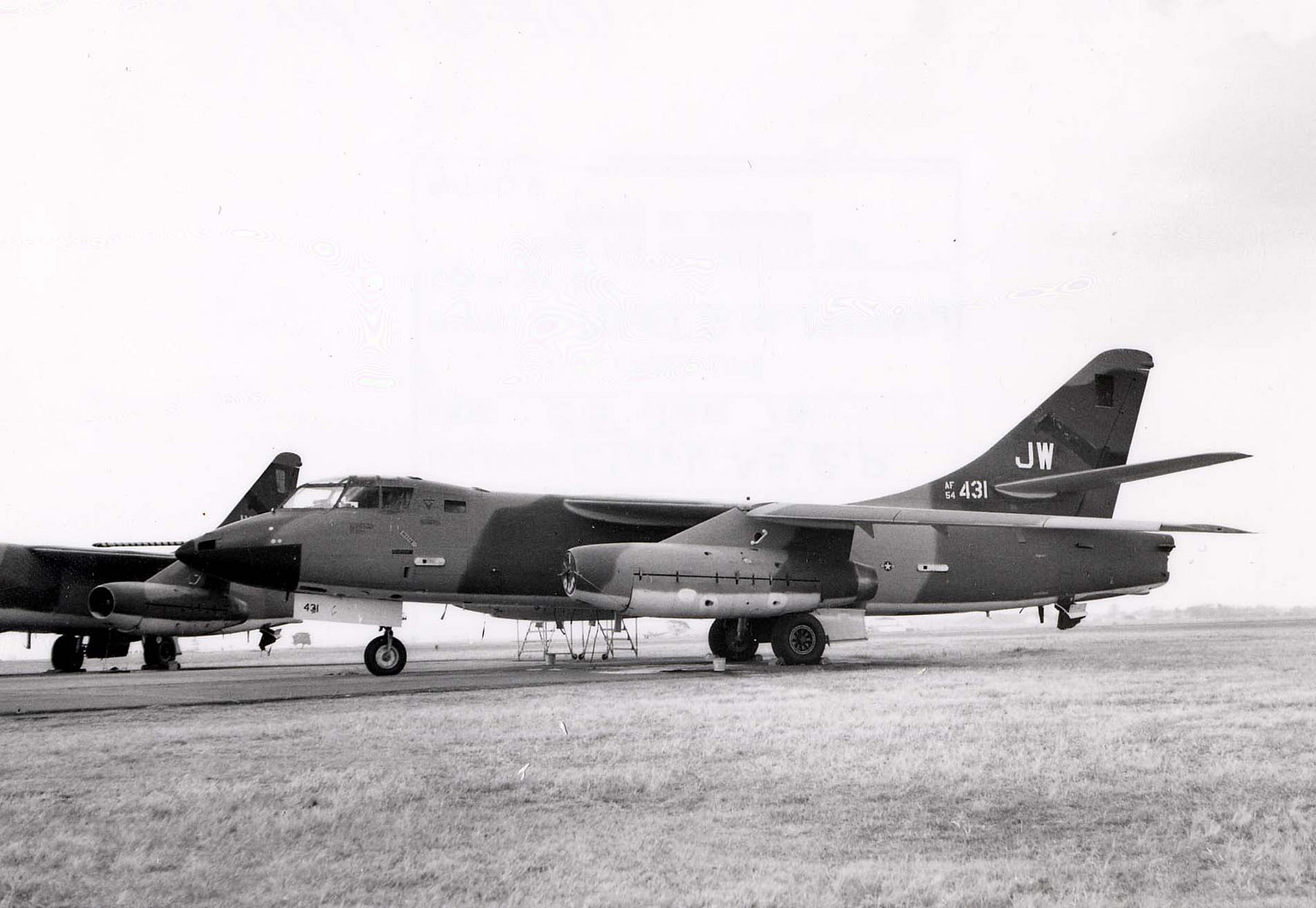
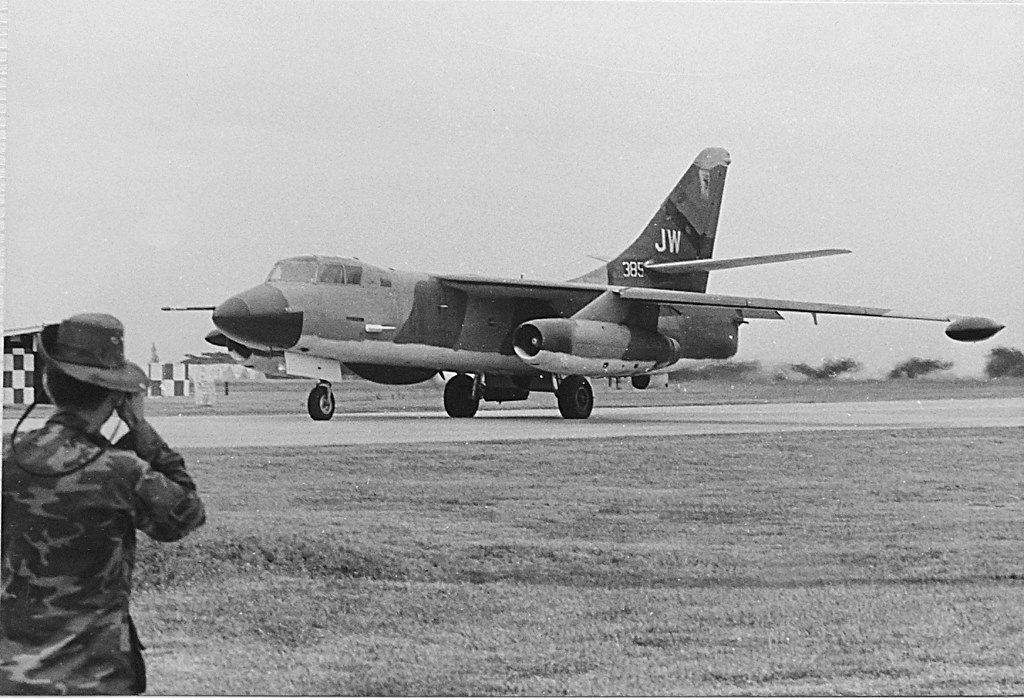
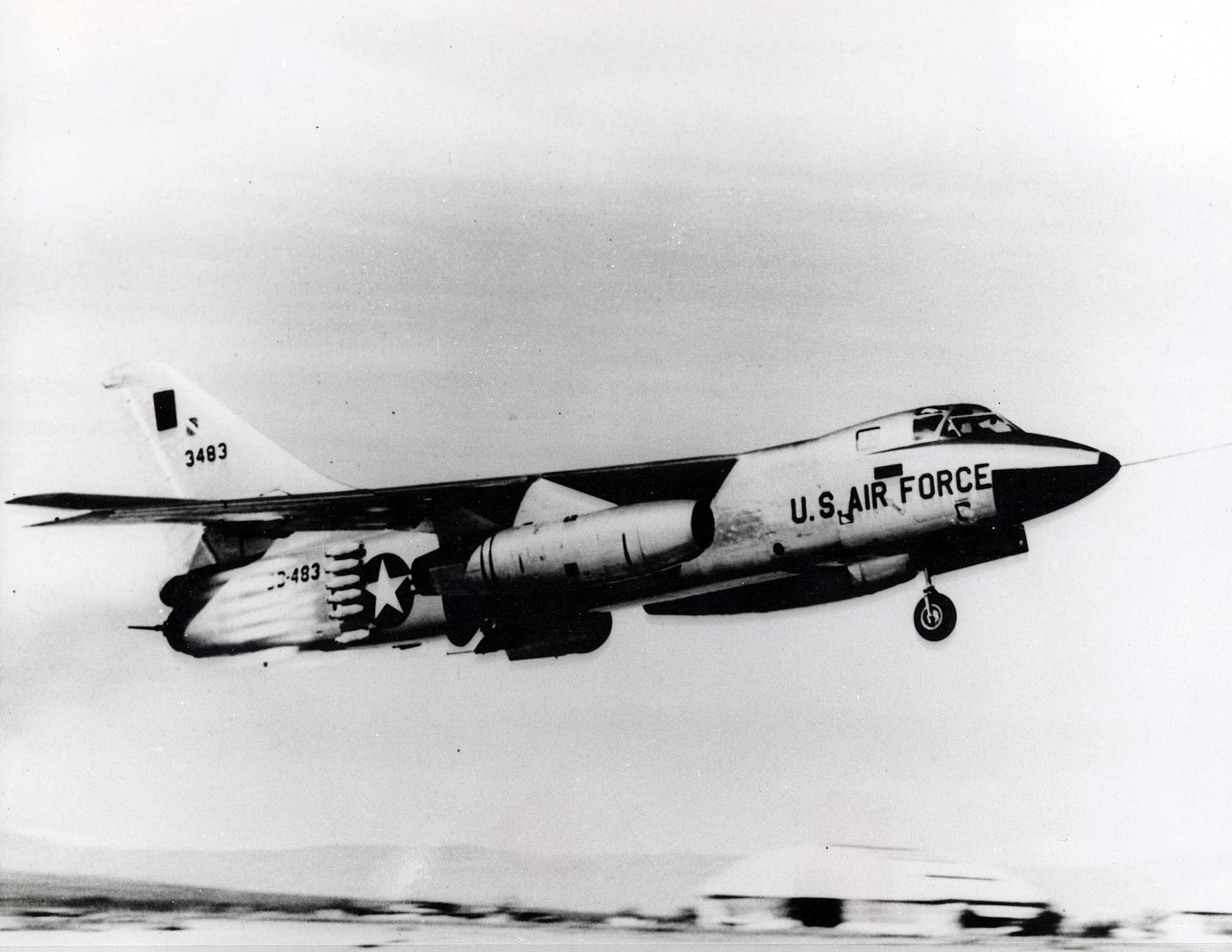
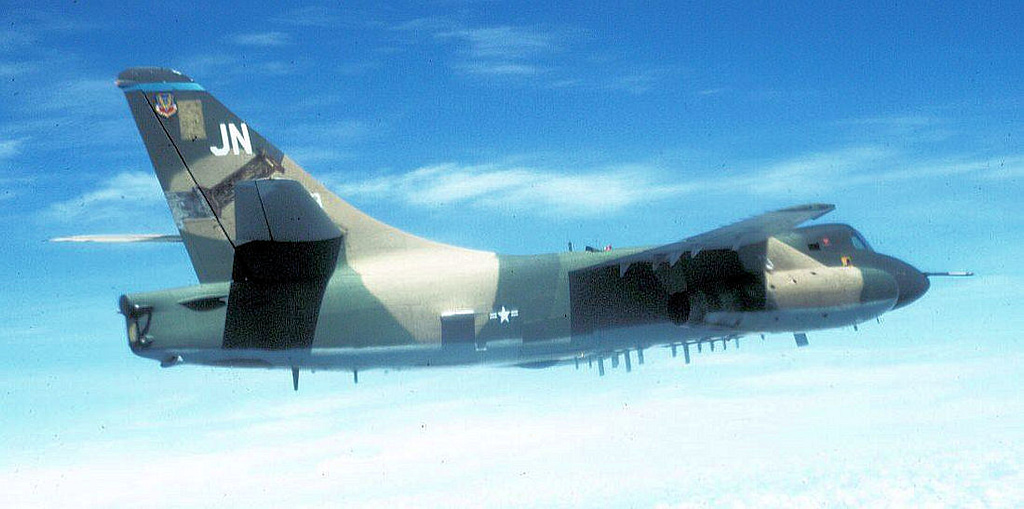
US Air Force and museum photographs of the Destroyer and its variants, each credited to its source and licence. Click any photo to enlarge.
On Film
The Douglas B-66 Destroyer on video: a documentary history
A look at the Douglas B-66 Destroyer — its Skywarrior origins, its reconnaissance work and its vital electronic-warfare role over Vietnam.
“Douglas B-66 Destroyer” by Dark Skies (approx. 166,000 views at time of writing; running time ~9 minutes) — a documentary on the Destroyer, its Skywarrior origins and its reconnaissance and electronic-warfare career.
Operations Overview
Where the Douglas B-66 Destroyer flew: an operator map
Designed, built and flown by the United States alone. The Destroyer had no export customer and no foreign operator — every aircraft served the US Air Force, so this is a single-nation map. Hover or tap for detail.
Categories: Design, Manufacture & USAF Service (United States) · Surviving Airframes (United States). The Destroyer was operated only by the US Air Force, so both categories fall on a single country.
Service Record
The Destroyer’s record: the jammer that shielded the strikes
The B-66’s significance lies in the breadth of its roles and, above all, in the electronic-warfare work that made it indispensable over Vietnam.
Questions & Answers
Douglas B-66 Destroyer: your questions answered
Can I fly in a Douglas B-66 Destroyer?
No — there is no bookable B-66 flight experience, and MiGFlug does not offer one. The type was retired in the mid-1970s and the survivors are static museum aircraft, none of which fly. If what you actually want is the real thing — strapping into a genuine military jet and flying it — you very much can do that today in other types. MiGFlug arranges flights in real fighter jets and warbirds around the world. Start here: migflug.com/flights-prices.
Why is the Douglas B-66 Destroyer historically important?
The B-66 was the US Air Force’s twin-jet tactical bomber, reconnaissance and electronic-warfare aircraft of the 1950s and 60s. Its most important legacy is the EB-66 electronic-warfare version, which became vital in the Vietnam War — jamming North Vietnamese radar and surface-to-air missiles and helping protect American strike aircraft in some of the most heavily defended airspace ever fought over.
How is the B-66 different from the A-3 Skywarrior?
They are separate aircraft from a common ancestor. The A-3 Skywarrior was a US Navy carrier-based strategic bomber; the B-66 Destroyer was a US Air Force land-based tactical aircraft derived from it, but redesigned so extensively — different engines, revised structure, tactical equipment and, crucially, ejection seats for all three crew (which the A-3 lacked) — that it shared few actual parts with the Navy machine. Close cousins, not the same aircraft.
What was the EB-66’s role in Vietnam?
The EB-66 was an electronic-warfare aircraft. Over North Vietnam it jammed enemy early-warning and missile-guidance radars, degrading the dense air-defence network built around the Soviet SA-2 surface-to-air missile. Flying with or near the strike packages of F-105s and F-4s, it helped blind the defences and protect the strike crews — a force multiplier that made it one of the most important support aircraft of the air war.
Were any B-66s lost in combat?
Yes. Because the EB-66 was so valuable, it operated in dangerous airspace and was actively hunted. Some were lost — to the SA-2 missiles they were built to counter, and at least one to a MiG interceptor. The most famous loss came in 1972, when a downed EB-66 triggered one of the largest and most costly search-and-rescue operations of the war to recover its sole survivor, a story later told in books and on film. These losses are remembered with respect.
What were the main versions of the B-66?
The main versions were the B-66B tactical/nuclear bomber; the RB-66A and RB-66B photographic-reconnaissance aircraft (the RB-66B was built in the largest numbers); the RB-66C electronic-reconnaissance and intelligence aircraft; the WB-66D weather-reconnaissance aircraft; and the EB-66B, C and E electronic-warfare versions, many converted from the reconnaissance aircraft, which saw such heavy use in Vietnam.
Who operated the B-66 Destroyer?
The B-66 was operated only by the United States Air Force. There was no export customer and no foreign operator. Around 294 were built across all versions, and they served from 1956 until the mid-1970s, when the last EB-66 electronic-warfare aircraft were retired.
Was the Douglas B-66 Destroyer a good aircraft?
As a pure bomber it was unremarkable, and it was never fast or glamorous. But judged by what it actually did, the Destroyer was very successful: an excellent reconnaissance platform and, above all, a superb electronic-warfare aircraft whose EB-66 version proved genuinely indispensable over Vietnam. Its worth lay in its sensors and jammers, not its performance — and by that measure it more than earned its place.
Fly For Real
You can’t fly the B-66 Destroyer — but these, you can
No B-66 is a bookable ride today. The urge behind it — to strap into a real military aircraft and actually fly — is very much still bookable. MiGFlug puts you in genuine fighters and warbirds around the world.
Fighter Jet Flights
Take the controls of a real ex-military jet with an experienced pilot.
All flights are operated by MiGFlug’s vetted partners with professional pilots. Browse every option and current pricing at migflug.com/flights-prices. MiGFlug does not operate Douglas B-66 Destroyer flights — no bookable example exists.
Related Aircraft
If the Douglas B-66 Destroyer interests you, explore these
Sources & Further Reading
Where this Douglas B-66 Destroyer history comes from
Note on figures: dimensions, performance and production numbers for the B-66 vary between sources and by variant, and are hedged here as approximate. Cost fields are listed as not reliably recorded because trustworthy 1950s procurement cost data is not consistently available. Combat losses and the 1972 search-and-rescue operation are summarised respectfully and factually; readers seeking full accounts should consult the specialist histories. The B-66 was derived from, but is a distinct aircraft from, the US Navy’s A-3 Skywarrior. A number of Destroyers are preserved in US museums.