
Douglas AC-47 Spooky
“Puff the Magic Dragon”
The first American fixed-wing gunship — a WWII-era Dakota transport turned night dragon, pouring minigun fire from a slow banking turn to save hamlets and outposts across Vietnam.
The AC-47 Spooky: a transport turned night dragon
By the mid-1960s the war in South Vietnam had a cruel rhythm. In daylight, American air power dominated; after dark, the Viet Cong emerged to overrun the isolated hamlets, Special Forces camps and outposts that dotted the countryside. Fast jets screaming overhead could not deliver sustained, accurate fire onto a single besieged fort in the dark without hitting the friendly troops packed inside its perimeter. What the defenders needed was an aircraft that could loiter for hours and put a continuous, precise stream of fire exactly where it was wanted.
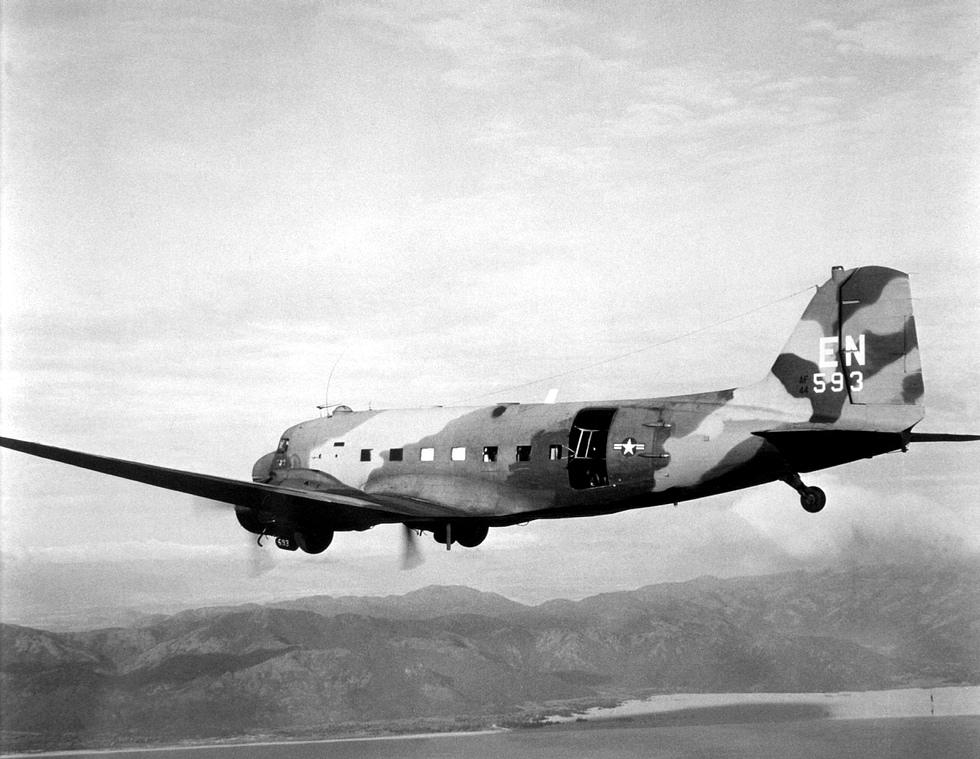
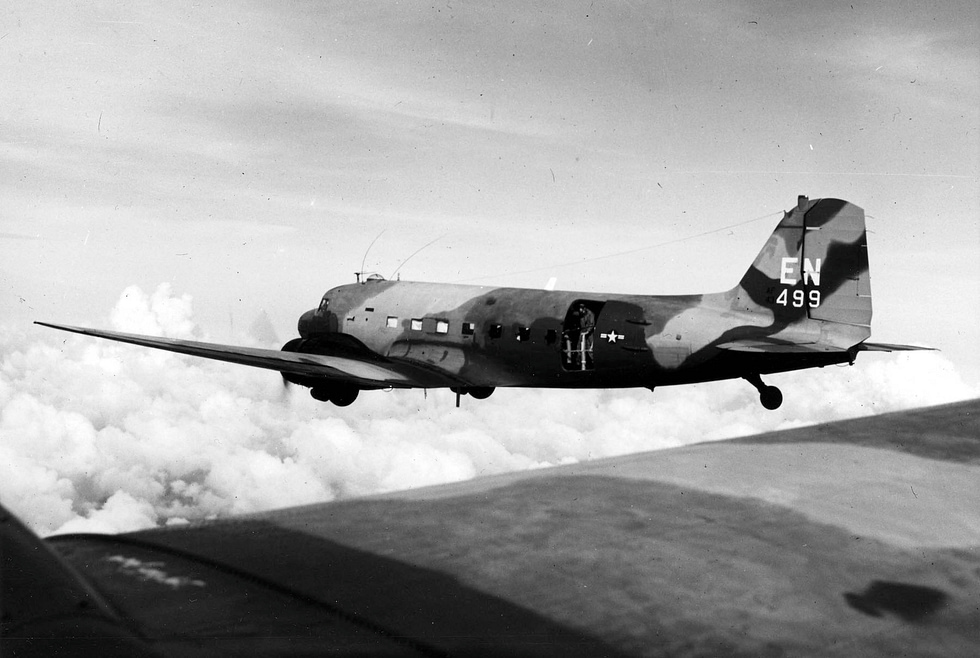
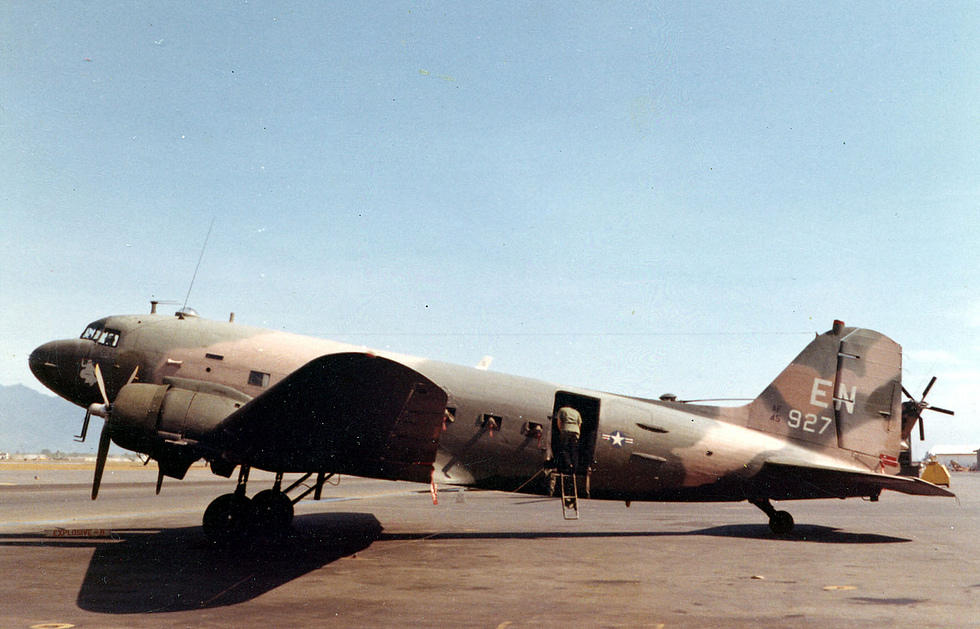
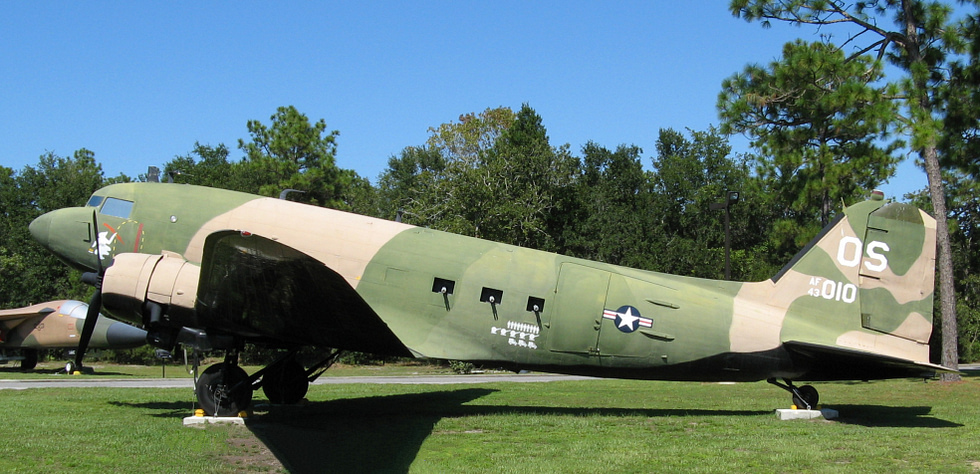
The answer was an old idea finally made to work. Firing sideways from a banking aircraft — so that a steady turn keeps the guns trained on one spot on the ground — had been demonstrated as far back as the 1920s and was revived in the early 1960s by engineer Ralph Flexman and a small circle of believers. The U.S. Air Force tested it under Project Tailchaser and then bolted three side-firing 7.62mm miniguns into the left side of a C-47 — the military version of the Douglas DC-3 airliner, a rugged transport that had already flown through the Second World War as the Dakota and Skytrain.
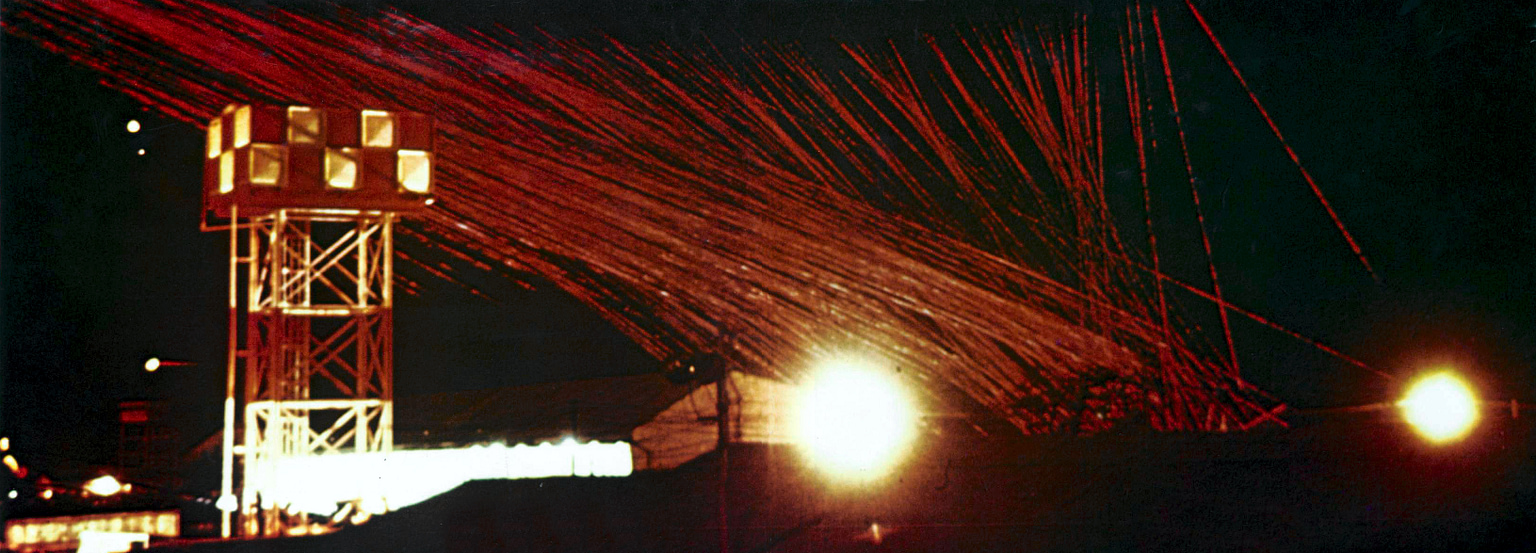
It worked spectacularly. On its first combat missions in December 1964 the gunship — first designated FC-47, soon redesignated AC-47 — broke night attacks that had been overwhelming outposts. Circling in a left-hand “pylon turn,” the pilot could saturate an area the size of a football field in seconds. To the South Vietnamese troops below, the solid rope of glowing tracer pouring from the sky earned it the name Dragonship; the Americans gave it the radio call sign “Spooky” and the affectionate nickname “Puff the Magic Dragon,” after the Peter, Paul and Mary song then on the radio. It also carried powerful magnesium flares to turn night into day.
Spooky flew the dangerous, unglamorous work of close air support and night defence, and it is remembered for saving countless defenders — a much-repeated claim holds that no outpost it defended was ever overrun. Its crews paid for that record: on 24 February 1969, gravely wounded, Airman First Class John Levitow smothered a burning flare inside his aircraft and dragged it out before it could destroy the ship, an act that earned the Medal of Honor. By the end of the decade the AC-47 was handed to the South Vietnamese, Lao and Cambodian air forces as the far heavier AC-130 took over — but every side-firing gunship since traces its bloodline directly to Puff.
01The AC-47 Spooky’s origins: how the pylon-turn gunship idea finally flew
The concept of firing sideways from a circling aircraft was not new — it had been shown to work in the 1920s and 1930s — but it was revived in earnest in the early 1960s. Bell engineer Ralph Flexman championed the idea, and after wind-tunnel and flight studies the U.S. Air Force ran live tests under Project Tailchaser. Captain Ronald Terry and a small team fitted podded 7.62mm miniguns to a C-47 and proved that a gentle left bank held the guns steadily on a ground target. Rushed to Vietnam for a combat evaluation in December 1964, the gunship’s results were so dramatic — broken sieges, shattered night attacks — that the type was adopted almost immediately and a dedicated squadron formed in 1965.
What makes it special
A gunship built from a 1930s airliner
The AC-47 was a converted C-47 Skytrain — the military DC-3, one of the most rugged and plentiful aircraft ever built. It was slow and unpressurised, but it could loiter for hours at low altitude carrying guns, tens of thousands of rounds and a load of flares. Surplus airframes were everywhere, making the gunship cheap to field when the war demanded it.
Three side-firing miniguns
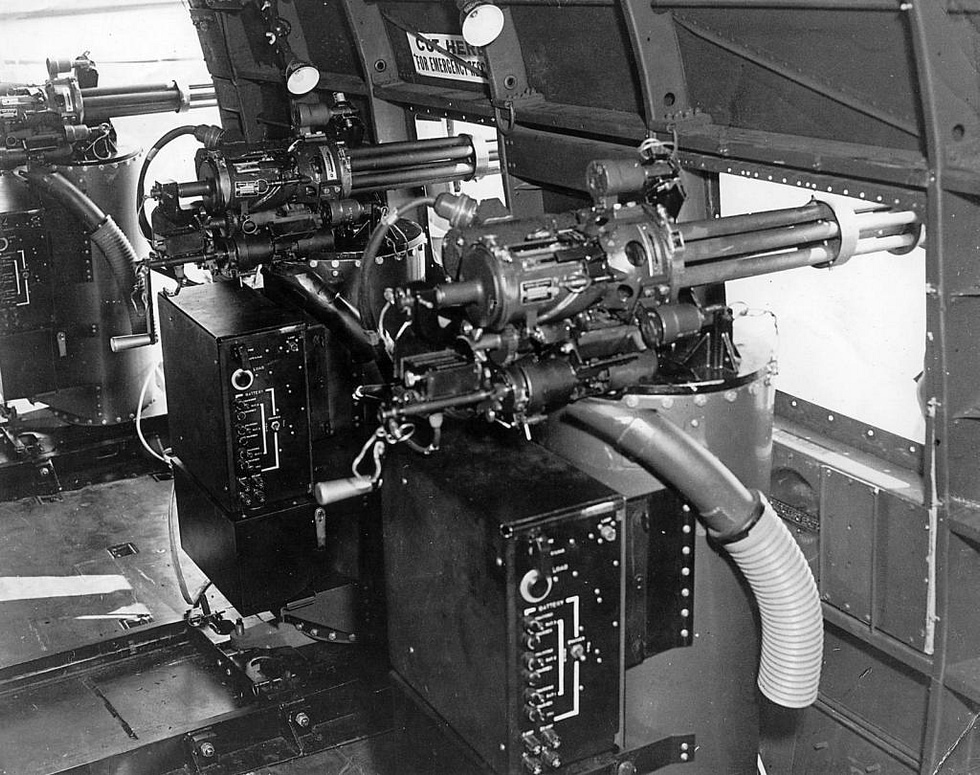
Its weapon was three 7.62mm General Electric miniguns (SUU-11 gun pods, later the MXU-470 module; the GAU-2/M134 family), all pointing out of the left side through the rear windows and cargo door. Each could fire up to 6,000 rounds per minute, usually set lower in service. Fired together they laid down an almost unbroken curtain of fire.
Flares that turned night into day
Spooky carried up to about 45 Mk 24 magnesium flares, each burning at roughly two million candlepower. Dropped over a contact, they stripped the enemy of the cover of darkness and let the crew — and the defenders on the ground — see what they were fighting.
02The AC-47 Spooky’s guns: how three miniguns saturated a target
Each minigun was an electrically driven six-barrel Gatling firing the 7.62×51mm NATO round. A single gun could reach 6,000 rounds per minute; with three firing, Spooky could put thousands of rounds into a small area in seconds. Carrying on the order of 24,000 rounds, it is commonly said the aircraft could place a bullet into every square yard of a football-field-sized area in a few seconds — a vivid claim that is widely repeated and gives a fair sense of the density of fire, even if the exact geometry is hard to pin down. Every fifth round or so was a tracer, which is what produced the unbroken glowing line the troops below described.
03The AC-47 Spooky’s tactics: flying the pylon turn at night
Because the guns were fixed to fire out the left side, the aircraft itself was the aiming system. The pilot rolled into a steady left bank — a pylon turn — at roughly 3,000 feet and around 120 knots, pivoting the aircraft around an imaginary pole planted on the target. Sighting through a simple gunsight in his side window, he walked the fire onto the enemy while circling. It was deadly effective but left the slow, low, predictable gunship exposed to ground fire, which is exactly how several were lost.
Full specifications
Airframe & Performance
- クルー
- 7–8 (pilots, navigator, engineer, loadmaster, gunners)
- 長さ
- 19.43 m (63 ft 9 in)
- 翼幅
- 29.41 m (95 ft 6 in)
- 身長
- 5.16 m (16 ft 11 in)
- Max takeoff weight
- ~13,000–14,000 kg
- Attack / loiter speed
- ~120–175 kn
- Max speed
- ~370 km/h (~230 mph)
- サービス天井
- ~7,300 m (24,000 ft)
- Endurance
- ~6–7 hours on station (reported)
- 範囲
- over 3,200 km (2,000+ mi)
Propulsion & Systems
- Engines
- 2 × Pratt & Whitney R-1830 Twin Wasp
- Power (each)
- ~1,200 hp radial
- 武装
- 3 × 7.62mm GAU-2/M134 miniguns
- Rate of fire
- up to 6,000 rounds/min per gun
- Ammunition
- ~24,000 rounds of 7.62mm
- Illumination
- up to ~45 Mk 24 magnesium flares
- First combat
- December 1964 (as FC-47)
- Converted
- ~53 C-47s to AC-47D
- Unit cost
- No fixed price (converted from existing airframes)
- Cost per flight hour
- No reliable public figure
04The AC-47 Spooky’s cost: what a converted gunship was worth
Because the AC-47 was not built new but converted from surplus C-47 transports already in the inventory, there is no meaningful flyaway unit price for it — the “cost” was mostly the guns, ammunition-handling gear, flare systems and the labour to install them onto an airframe the Air Force already owned. No reliable public cost-per-flight-hour figure exists for the type either. Any precise dollar figure attached to an AC-47 should be read as an estimate; its real value lay in taking a cheap, abundant, decades-old airframe and turning it into a weapon that was, hour for hour, extraordinarily effective at night defence.
From D-Day Dakota to Vietnam dragonship
The gunship idea revived
Engineer Ralph Flexman and the USAF revisit side-firing fire support; Project Tailchaser tests miniguns on a C-47.
First combat
The FC-47 flies its combat evaluation over South Vietnam and shatters night attacks on outposts.
“Spooky” is born
Redesignated AC-47; the 4th Air Commando Squadron forms and the names “Spooky” and “Puff the Magic Dragon” take hold.
Nightly defence
AC-47s orbit hamlets, forts and Special Forces camps across South Vietnam, dropping flares and pouring fire onto attackers.
Levitow’s Medal of Honor
Wounded aboard Spooky 71, A1C John Levitow throws himself on a burning flare and drags it clear, saving the crew.
Passed to new hands
The USAF begins retiring the AC-47, handing aircraft to the VNAF, Laos and Cambodia as the AC-130 and AC-119 arrive.
Gunships reborn abroad
New AC-47T “Fantasma” conversions enter service in Latin America for counter-insurgency night work.
Still on patrol
Colombia keeps modernised AC-47T Fantasma gunships flying — the Spooky concept in its sixth decade.
From the flight line: twelve Spooky stories
Why the outposts kept falling
By night the Viet Cong owned the ground; by day US air power owned the sky. The gunship was built to close that gap.
Read the full story
A circle of fire, revived
Firing sideways from a banking aircraft was a 1920s idea; the USAF finally made it a weapon in 1964.
Read the full story
The nights Spooky saved a fort
On its first combat outings in December 1964 the gunship broke night attacks that had been overrunning outposts.
Read the full story
How “Puff” got its nickname
South Vietnamese troops watching the glowing tracer called it the Dragonship; the Americans borrowed a folk song.
Read the full story
A wall of fire
Three miniguns firing together could lay an almost unbroken curtain of rounds onto the ground.
Read the full story
Flying a circle to aim
With fixed guns, the pilot banked left and pivoted the whole aircraft around the target.
Read the full story
John Levitow and the loose flare
Riddled with shrapnel, A1C Levitow smothered a burning flare and dragged it out before it could destroy the aircraft.
Read the full story
Turning night into day
Spooky dropped million-candlepower flares that robbed the enemy of the darkness.
Read the full story
“Nothing we defended was overrun”
A widely repeated claim holds that no hamlet or outpost defended by Spooky ever fell.
Read the full story
Passed to new hands
As the AC-130 arrived, AC-47s went to the VNAF, Laos and Cambodia for their own night wars.
Read the full story
From Spooky to Spectre
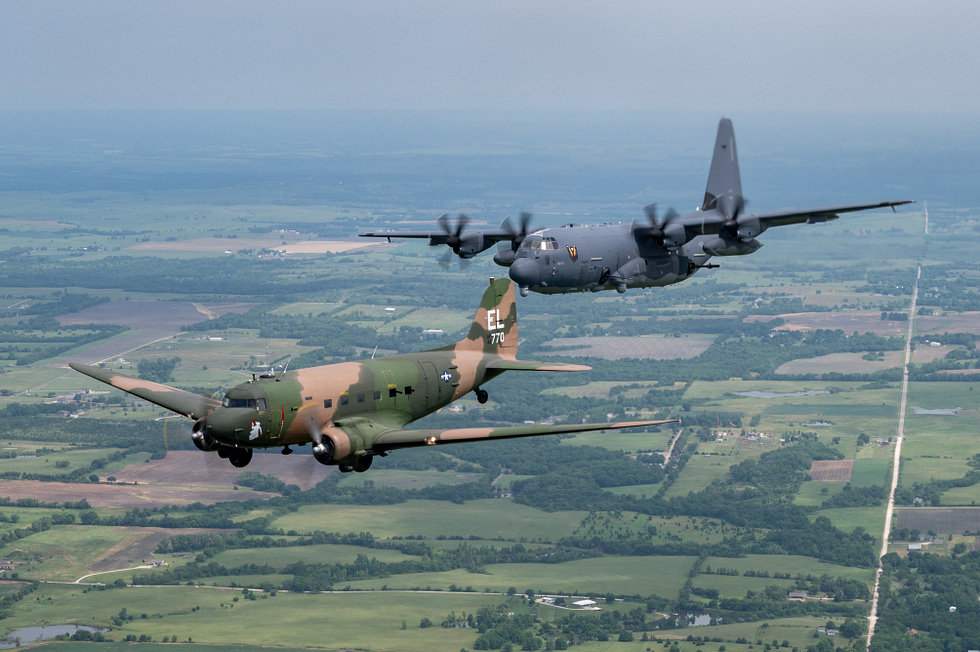
Every side-firing gunship since — the AC-130 above all — descends directly from the AC-47.
Read the full story
Colombia’s Fantasmas
Modernised AC-47T Fantasma gunships still fly counter-insurgency missions decades after Vietnam.
Read the full story
The AC-47 Spooky in pictures
The AC-47 Spooky in motion
Dark Skies: The Douglas AC-47 Spooky — Puff The Magic Dragon. A well-produced documentary on the birth of the gunship, the pylon turn and the Vietnam night war — one of the most-watched Spooky films on YouTube.
Where the AC-47 Spooky flew
The score that defines it
The AC-47’s record is not measured in air-to-air kills — it never fought other aircraft. It is measured in sieges broken and defenders kept alive. As the first fixed-wing gunship it rewrote how air power supported troops on the ground at night, and it did so with a weapon converted from a decades-old transport.
Compare the combat record of every military aircraft. Figures as of August 2026.
Everything people ask about the AC-47 Spooky
Can I fly in a Douglas AC-47 Spooky?
Why is the AC-47 called “Puff the Magic Dragon”?
What guns did the AC-47 Spooky carry?
How did the AC-47 aim its guns?
Who was John Levitow?
Is the AC-47 the same as the AC-130?
Are any AC-47 gunships still flying?
You can’t fly the AC-47 Spooky.
These, you can.
Some legends only live in museums — others are fuelled and waiting. MiGFlug has put civilians in real military jet cockpits since 2004.
 Fly the L-39 AlbatrosThe world’s most-flown jet trainer — aerobatics included
 Fly the F-104 Starfighter“The missile with a man in it”
 Fly the MiG-21The Cold War’s most-produced jet
 T-33シューティングスターを操縦しようAmerica’s first jet trainer
 Fly the DH VampireA piece of early jet history
 Fly the S.211Agile Italian jet trainer
 Fly the MB-326The classic Aermacchi jet
 Fly the MiG-15The Soviet legend of the Korean War
Continue the tour
Every fact, checked
- National Museum of the U.S. Air Force — Douglas AC-47DPrimary reference for the gunship’s development, armament and Vietnam service.
- NMUSAF — Airman 1st Class John L. LevitowOfficial account of the 24 February 1969 Medal of Honor action aboard Spooky 71.
- Smithsonian National Air and Space MuseumReference for the C-47 / DC-3 airframe and its wartime lineage.
- Air Force Historical Support DivisionGunship development, Project Tailchaser and the 4th Air Commando Squadron.
- HistoryNet — Spooky Gunship OperationsOperational history, tactics and the pylon turn in Vietnam.
- The Aviationist — The Spooky Story of the AC-47Armament, flares, conversion numbers and the nickname’s origin.
- War History Online — 50 Years of C-47 GunshipsThe lineage from Vietnam Spooky to Colombia’s AC-47T Fantasma.
- The War Zone — Where AC-47 Gunships Still FlyColombia’s modernised Fantasma gunships in current service.