
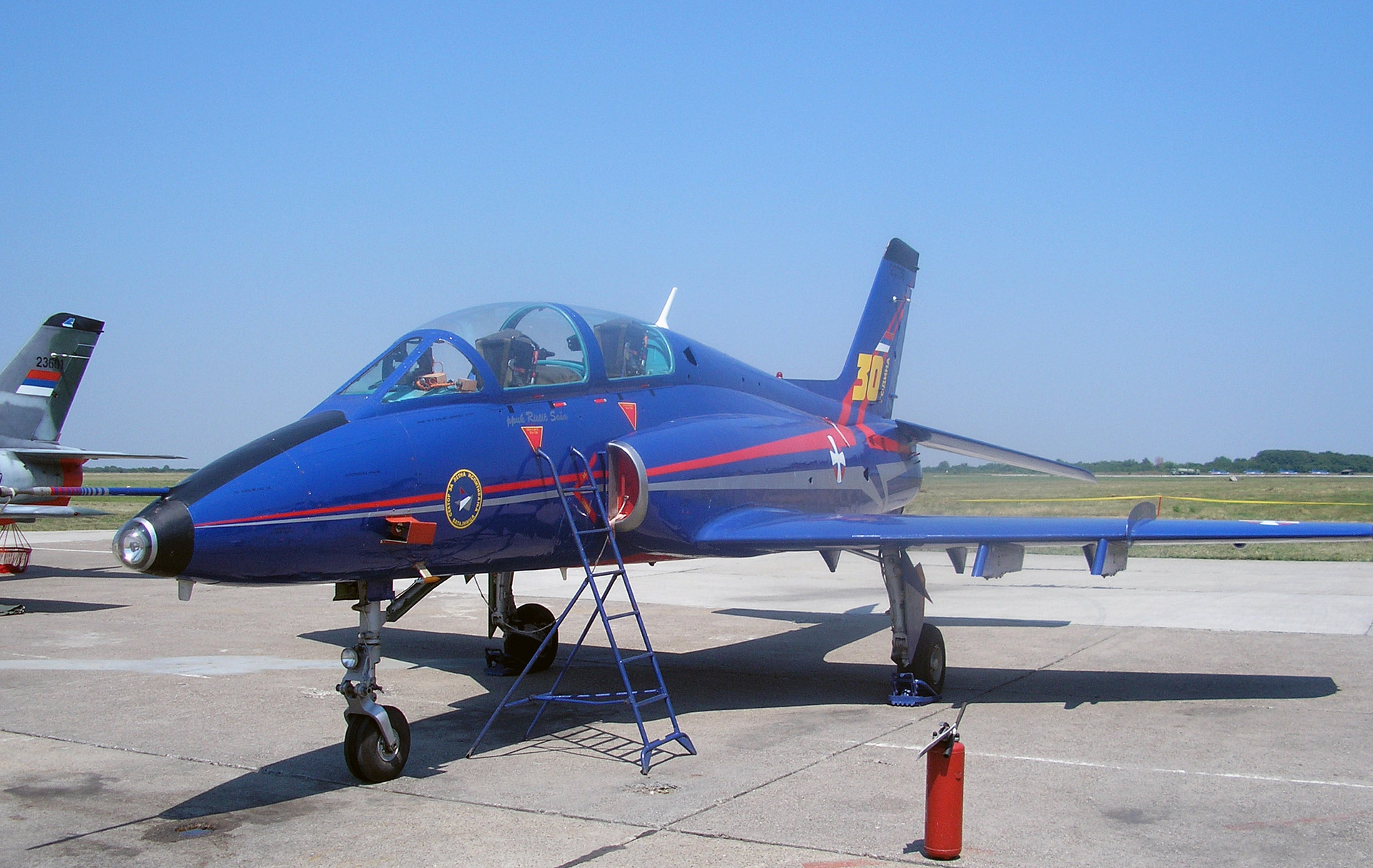
Soko G-4 Super Galeb
“Yugoslavia’s Jet Trainer”
A swept-wing jet built in Mostar to teach a generation of Yugoslav pilots — a home-grown advanced trainer and light-attack aircraft powered by a single licence-built Rolls-Royce Viper.
The Soko G-4 Super Galeb: Yugoslavia’s home-built jet trainer
By the 1970s the Yugoslav air force needed a modern jet to carry pilots from basic flying into fast-jet training. Its straight-wing Soko G-2 Galeb and ageing Lockheed T-33s were falling behind, and buying Western or Soviet trainers sat awkwardly with Yugoslavia’s non-aligned, self-reliant defence policy. The answer was to build one at home. The aircraft manufacturer SOKO, based in Mostar in what is now Bosnia and Herzegovina, developed an all-new swept-wing jet: the G-4 Super Galeb.
The prototype first flew on 17 July 1978, and series aircraft entered Yugoslav service in the mid-1980s. Where the old G-2 had a straight wing and side-by-side lineage, the G-4 was a cleaner, faster machine — a swept wing, a stepped tandem cockpit with the instructor raised behind the student, and a single licence-built Rolls-Royce Viper turbojet. It was designed to do two jobs: teach advanced and weapons handling, and, with underwing stores, fly as a light ground-attack aircraft. Roughly 85 airframes are commonly reported to have been built, though exact totals vary between sources.
The Super Galeb became a familiar sight at Yugoslav air shows, flown by the Leteće Zvezde (“Flying Stars”) aerobatic team. When Yugoslavia broke apart in the 1990s the fleet passed to the successor air arms — principally FR Yugoslavia (Serbia and Montenegro) — and G-4s were used in a light-attack role during the conflicts of that decade. A number were destroyed on the ground during the 1999 NATO air campaign over Kosovo. A small export batch went to Myanmar. Today the type is largely retired, with surviving airframes in reduced service and in museums.
01The Soko G-4 Super Galeb’s origins: replacing the G-2 Galeb and the T-33
Yugoslavia had a long tradition of building its own combat aircraft, from the J-1 Jastreb to the G-2 Galeb, part of a deliberate policy of defence self-sufficiency for a country that stood between the two Cold-War blocs. By the mid-1970s the first-generation G-2 Galeb — a straight-wing jet dating to the early 1960s — and imported T-33s could no longer bridge the gap to modern fast jets such as the MiG-21 and the home-grown J-22 Orao.
SOKO’s response was not a rework of the Galeb but an essentially new aircraft that kept only the famous name. The G-4 introduced a swept wing, a more powerful Viper engine, modern ejection seats and a proper weapons capability, making it usable as both a lead-in fighter trainer and a light attack platform. The result was one of the more capable indigenous trainers of its generation from outside the major aerospace powers.
What makes the Soko G-4 Super Galeb special
A single licence-built Rolls-Royce Viper
The G-4 is powered by one Rolls-Royce Viper Mk 632 turbojet, built under licence in Yugoslavia and rated at roughly 17.8 kN (about 4,000 lbf) of thrust. The Viper was a proven, forgiving trainer engine used across many Western jets; a single non-afterburning unit kept the Super Galeb simple, robust and cheap to run — exactly what a training fleet needs.
A swept wing and stepped tandem cockpit
Unlike the straight-winged G-2, the Super Galeb has a modestly swept wing for higher subsonic speeds and a stepped tandem cockpit — the instructor sits raised behind the student for a clear forward view. Modern ejection seats and updated avionics made it a genuine lead-in trainer for fast jets rather than a basic hack.
Trainer and light attacker in one
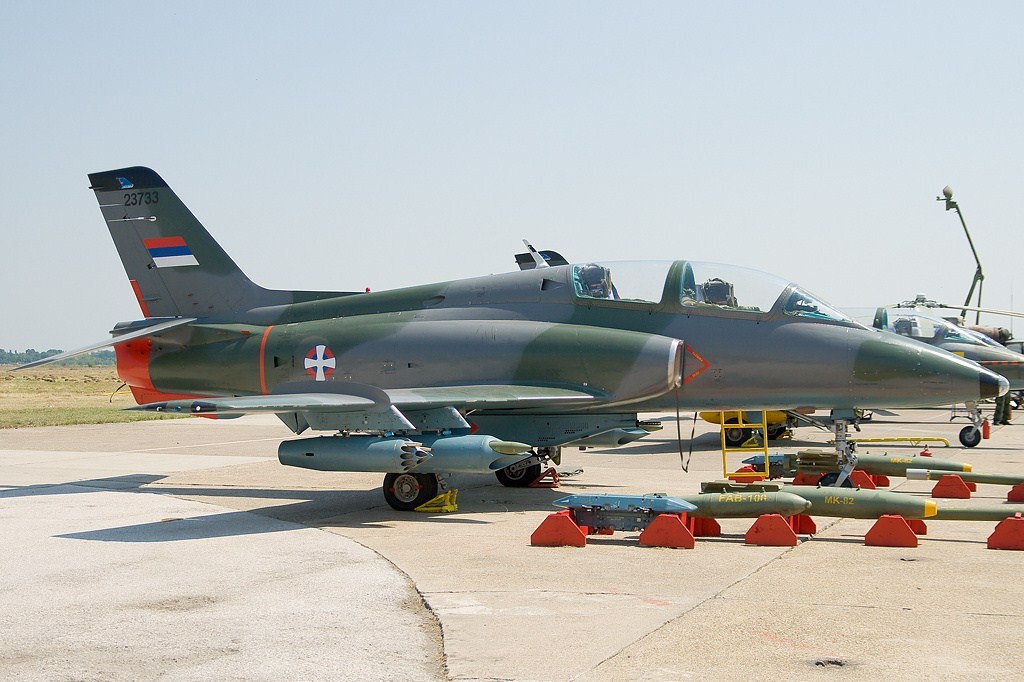
Four underwing hardpoints let the G-4 carry gun pods, unguided rockets, bombs and, in later configurations, guided weapons. That dual capability — teaching by day, striking if needed — is why the type saw combat use in the 1990s despite being designed first and foremost as a school aircraft.
02The Soko G-4 Super Galeb’s engine: the licence-built Rolls-Royce Viper
The Bristol Siddeley (later Rolls-Royce) Viper began life as a British target-drone engine and grew into one of the most widely used trainer turbojets in the world, powering the Jet Provost, Strikemaster, MB-326 and many others. Yugoslavia produced the Viper Mk 632 under licence, giving SOKO a reliable, well-understood powerplant without depending on either Cold-War bloc. The single non-afterburning engine limits the G-4 to high-subsonic speeds — around Mach 0.86 — but delivers the docile handling, low running cost and easy maintenance that a training aircraft is built around.
03The Soko G-4 Super Galeb in the light-attack role: from schoolhouse to strike
Like many jet trainers, the Super Galeb was designed from the start to double as a light-attack and counter-insurgency aircraft. Its underwing stations could carry gun pods, rocket launchers and bombs, and the type was used in ground-attack sorties during the Yugoslav wars of the 1990s. Later upgrade proposals — sometimes referred to as the G-4M — aimed to add modern avionics and guided weapons, though these were produced only in very small numbers. As with any light-attack conversion of a trainer, its combat value lay in low cost and availability rather than survivability against modern air defences.
Soko G-4 Super Galeb: full specifications
Airframe & Performance
- クルー
- 2 (tandem, dual controls)
- 長さ
- 12.25 m
- 翼幅
- 9.88 m
- 身長
- 4.30 m
- 空虚重量
- ~3,250 kg
- Max takeoff weight
- ~6,330 kg
- Max speed
- ~910 km/h · ~Mach 0.86
- サービス天井
- ~12,850 m
- Ferry range
- ~1,900 km
- 負荷制限
- +8 / −4 g
Propulsion, Armament & Programme
- エンジン
- 1 × Rolls-Royce Viper Mk 632-46
- Thrust
- ~17.8 kN (~4,000 lbf)
- ハードポイント
- 4 underwing stations
- 武装
- 23 mm gun pod, rockets, bombs; IR AAMs
- First flight
- 17 July 1978
- Introduced
- mid-1980s
- Built
- ~85 (estimated)
- Unit cost
- No reliable public figure
- Cost per flight hour
- No established public figure
04The Soko G-4 Super Galeb’s operating costs: why no reliable price exists
The Super Galeb was a product of the Yugoslav state industry, built for the country’s own air force and never marketed on an open Western dollar market, so a firm flyaway unit price simply does not exist in the public record. The one export deal — a small batch to Myanmar in the 1990s — was not accompanied by reliably published per-aircraft figures. No credible cost-per-flight-hour number exists for the type in open sources either. As a rule of thumb a single-engine subsonic trainer like the G-4 is far cheaper to operate than a supersonic fighter, but any precise dollar figure attached to a Super Galeb should be treated as an estimate rather than a sourced fact.
The Soko G-4 Super Galeb: from Yugoslav school jet to Cold-War relic
A swept-wing successor is sought
The Yugoslav air force looks for a modern jet to replace the straight-wing G-2 Galeb and imported T-33s in advanced training.
First flight
The SOKO prototype makes its maiden flight on 17 July 1978 from Mostar.
Enters service
Series Super Galebs join the Yugoslav air force as advanced trainers and light-attack aircraft.
The Flying Stars
The Leteće Zvezde (“Flying Stars”) aerobatic team adopts the G-4, making it a fixture of Yugoslav air shows.
The Yugoslav wars
As the federation breaks apart, G-4s are used in light ground-attack sorties by the successor air arms.
NATO air campaign
During Operation Allied Force over Kosovo, a number of G-4s are destroyed on the ground at their airfields.
Export to Myanmar
A small batch of Super Galebs is delivered to the Myanmar air force, the type’s only foreign operator.
Twilight
Largely withdrawn from front-line use, the Super Galeb survives in reduced numbers and in museums across the former Yugoslavia.
Twelve stories of the Soko G-4 Super Galeb
The name that outlived the aircraft
“Galeb” means seagull — a name SOKO kept even though the G-4 was an all-new design.
Read the full story
Why Yugoslavia built its own trainer
Non-aligned and self-reliant, Yugoslavia preferred to design its own aircraft rather than depend on either Cold-War bloc.
Read the full story
A British engine, built in Yugoslavia
The G-4’s Rolls-Royce Viper was a British design produced under licence in Yugoslavia.
Read the full story
The Flying Stars
The Leteće Zvezde aerobatic team made the Super Galeb a star of Yugoslav air shows.
Read the full story
A stepped tandem cockpit
The instructor sits raised behind the student — a layout built for teaching.
Read the full story
Trainer by day, striker if needed
Four underwing hardpoints let the school jet carry gun pods, rockets and bombs.
Read the full story
A fleet divided
When Yugoslavia fell apart, its Super Galebs were split among the successor states.
Read the full story
Losses on the ground
During the 1999 NATO air campaign, a number of G-4s were destroyed at their airfields.
Read the full story
The Myanmar customer
The Super Galeb’s only foreign operator was the Myanmar air force.
Read the full story
The G-4M that barely was
A modernised Super Galeb with new avionics and guided weapons was built only in tiny numbers.
Read the full story
The factory and its fate
SOKO’s Mostar plant, where the G-4 was born, did not survive the wars intact.
Read the full story
Where the Super Galebs are now
Retired G-4s survive in reduced service and in museums across the region.
Read the full story
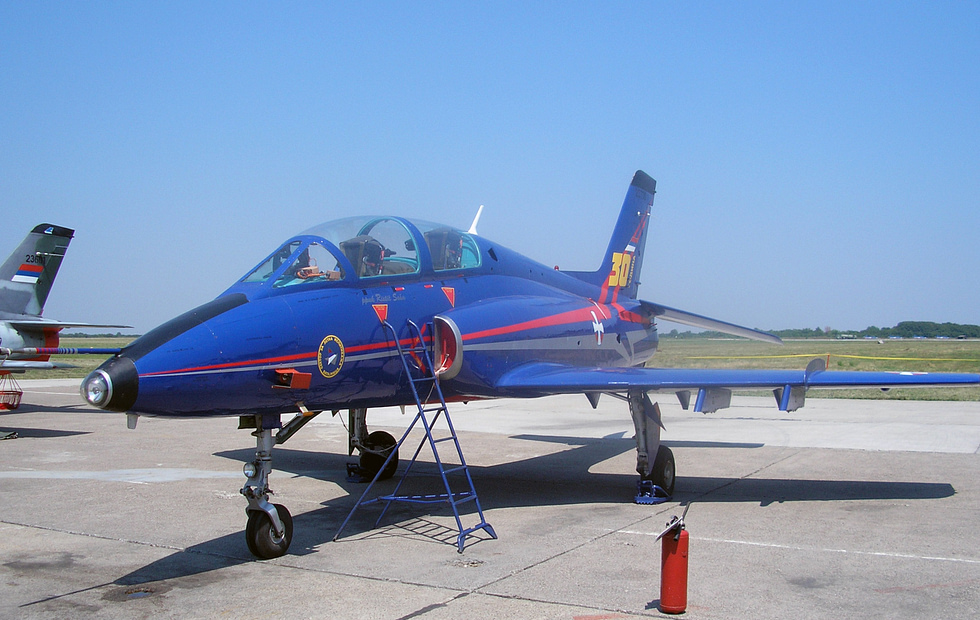
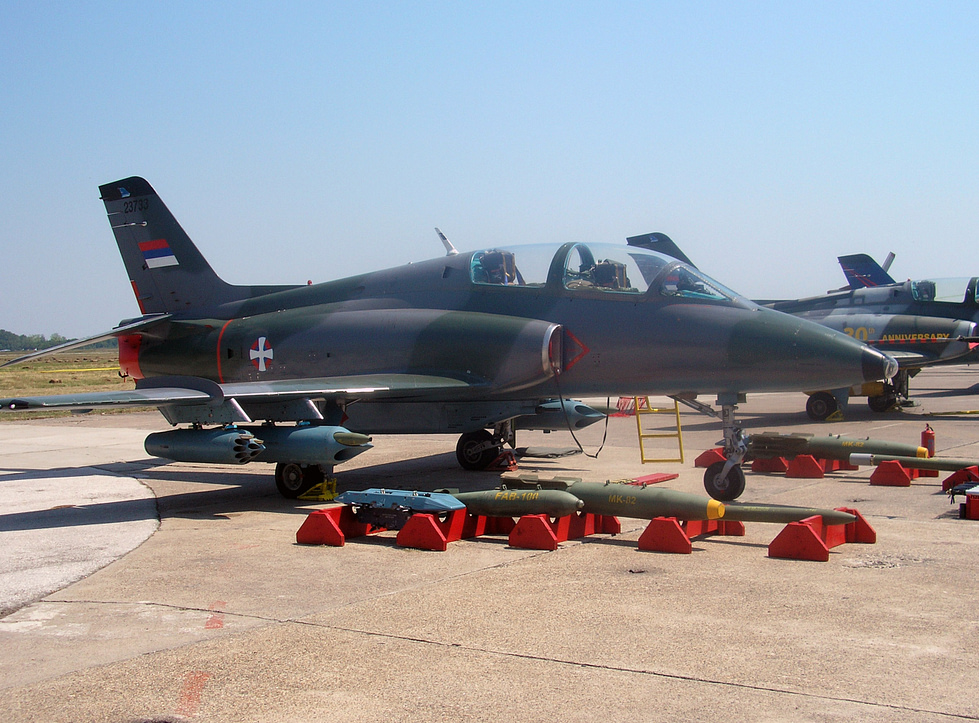
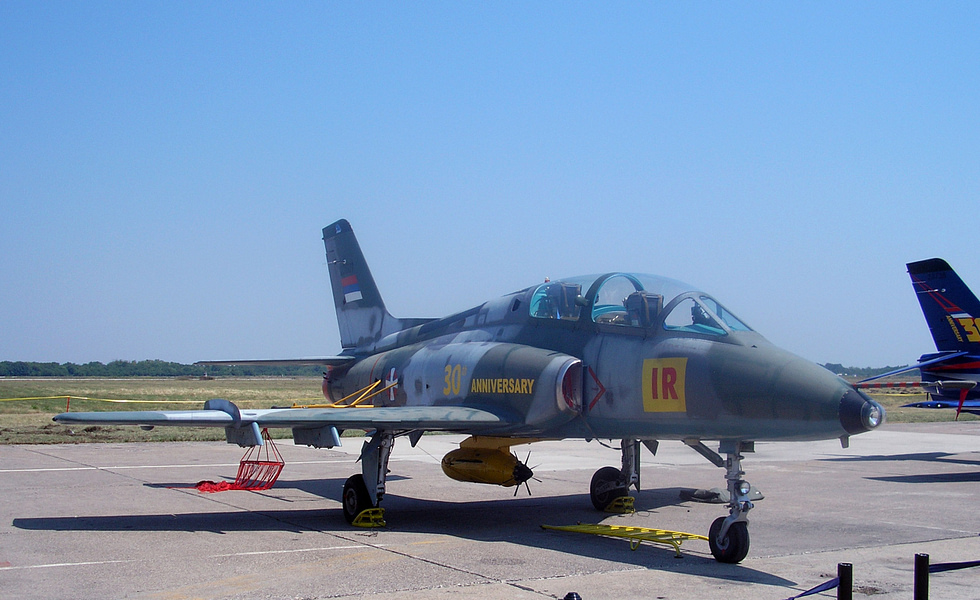
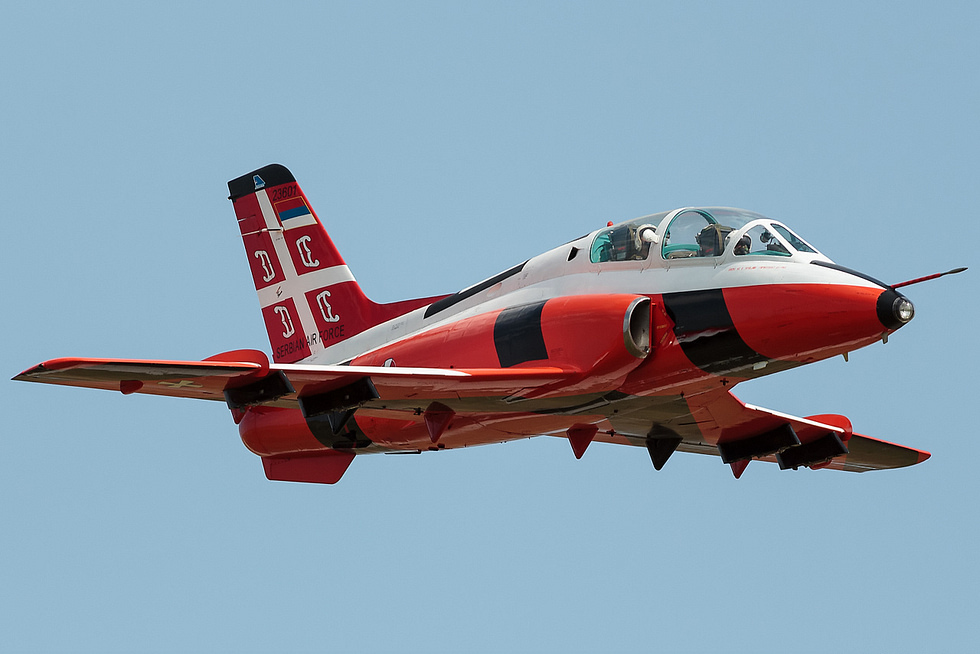
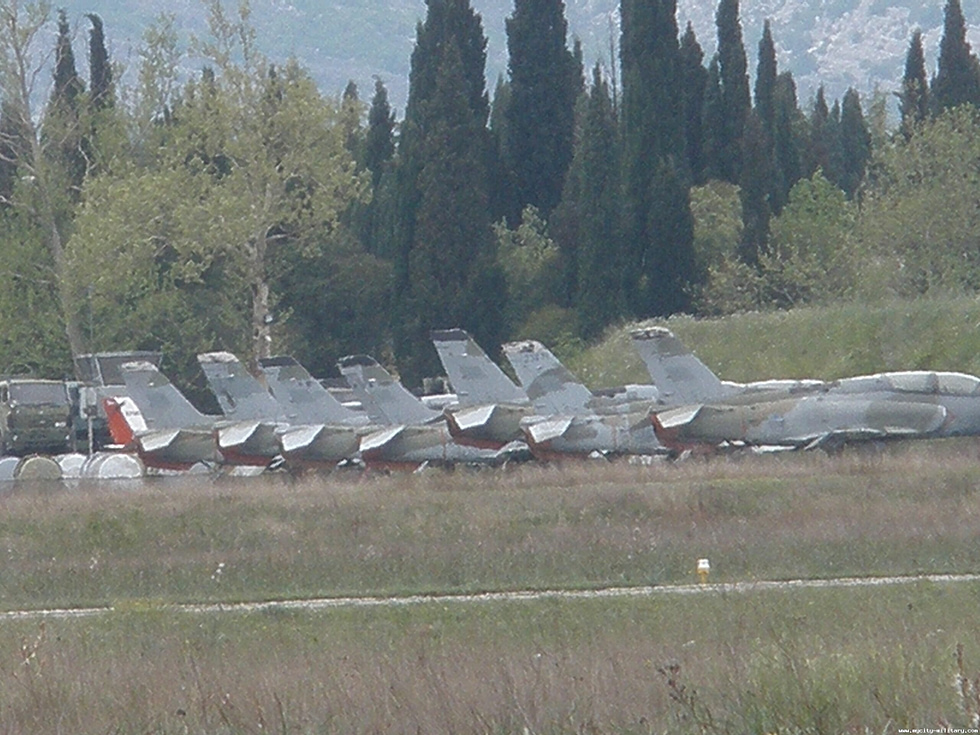
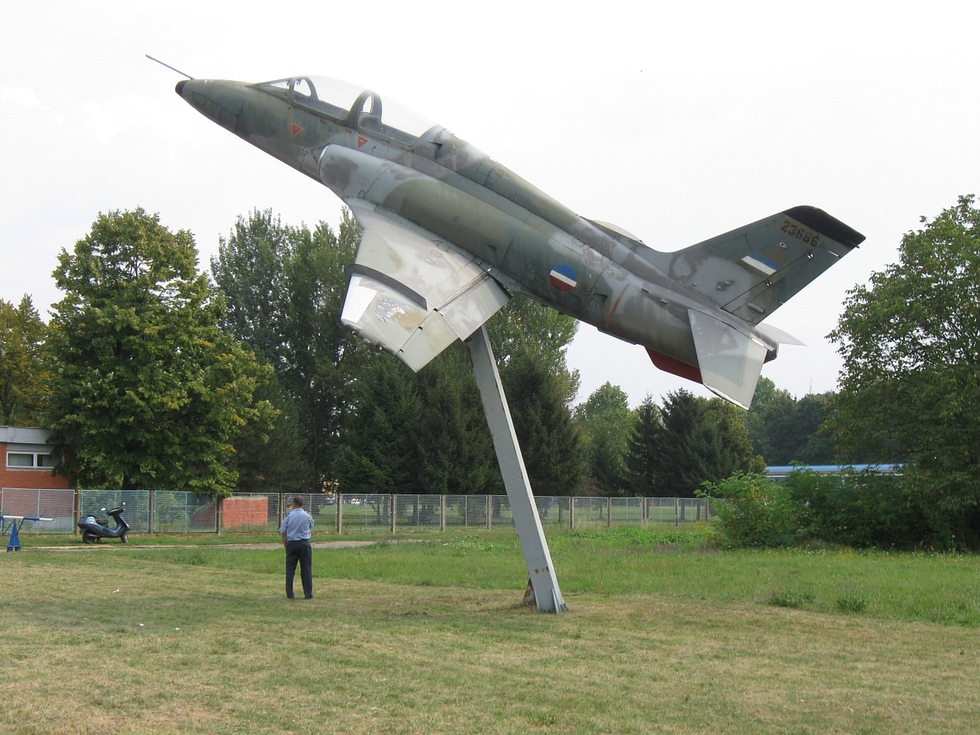
The Soko G-4 Super Galeb in pictures
The Soko G-4 Super Galeb in motion
Serbian Air Force Soko G-4 Super Galebs at work — formation flying, low passes and pattern work at Batajnica. Footage via the Gouto aviation channel.
Where the Soko G-4 Super Galeb flew
The Soko G-4 Super Galeb in service and combat
The Super Galeb was built to teach, not to fight, and it has no confirmed air-to-air victories. Its combat use came in the light-attack role during the Yugoslav wars of the 1990s, flying ground-attack sorties with gun pods, rockets and bombs. Its heaviest losses were suffered on the ground — a number of airframes were destroyed at their airfields during the 1999 NATO air campaign rather than in the air.
Compare the combat record of every military aircraft. Figures are best-available estimates and vary between sources.
Everything people ask about the Soko G-4 Super Galeb
Can I fly in a Soko G-4 Super Galeb?
What is the Soko G-4 Super Galeb?
How fast is the Soko G-4 Super Galeb?
What is the difference between the G-2 Galeb and the G-4 Super Galeb?
How many Soko G-4 Super Galebs were built?
Did the Soko G-4 Super Galeb see combat?
Who operated the Soko G-4 Super Galeb?
Is the Soko G-4 Super Galeb still in service?
You can’t fly the Soko G-4 Super Galeb.
These, you can.
Some legends only live in museums — others are fuelled and waiting. MiGFlug has put civilians in real military jet cockpits since 2004.
 Fly the L-39 AlbatrosThe world’s most-flown jet trainer — aerobatics included
 Fly the F-104 Starfighter“The missile with a man in it”
 Fly the MiG-21The Cold War’s most-produced jet
 T-33シューティングスターを操縦しようAmerica’s first jet trainer
 Fly the DH VampireA piece of early jet history
 Fly the S.211Agile Italian jet trainer
 Fly the MB-326The classic Aermacchi jet
 Fly the MiG-15The Soviet legend of the Korean War
Continue the tour
Every fact, checked
- Museum of Aviation, BelgradePreserved Yugoslav aircraft, including the SOKO Galeb family, and their service context.
- The Aviation Geek ClubDevelopment and service history of the SOKO G-4 Super Galeb.
- Key.AeroProfiles of Yugoslav and Serbian air power and the Super Galeb trainer/light-attack role.
- Scramble — Dutch Aviation SocietyOperator, serial and fleet reference for the former Yugoslav and successor air arms.
- AirVectors (Greg Goebel)Technical overview of the SOKO jet trainers and the Rolls-Royce Viper engine.
- FlightGlobal / Flight International archivePeriod reporting on the G-4 programme and the licence-built Viper.
- AerobaticTeams.netThe Leteće Zvezde (Flying Stars) display team and their Super Galebs.
- The AviationistThe 1999 NATO air campaign and the loss of Yugoslav aircraft on the ground.