

Polikarpov I-153
“Chaika” (Seagull)
The gull-winged biplane the Soviet Union sent into a monoplane war — a nimble, retractable-gear fighter that won over Mongolia in 1939, then was slaughtered in the skies of 1941 and reborn as a rocket-armed ground-attacker.
The I-153 Chaika: a biplane born a decade too late
By the mid-1930s the fighter world was going monoplane, but the Soviet Union still believed in the biplane. Combat over Spain seemed to show that a tight-turning biplane could out-dogfight faster monoplanes, and the VVS wanted a new machine that married that agility to modern features. Nikolai Polikarpov’s answer was the I-153 — a thorough modernisation of his earlier I-15bis, first flown in 1938.
Two things set it apart. It brought back the gull-shaped upper wing of the original I-15 — the feature that gave the type its nickname Chaika, “Seagull” — for better pilot visibility and cleaner airflow. And, remarkably for a biplane, it had a manually retractable undercarriage, the wheels cranked up by hand into the fuselage to cut drag. Powered by an 800 hp Shvetsov M-62 radial and armed with four fast-firing ShKAS machine guns, it was arguably the finest biplane fighter ever built.
It was also obsolete before it was finished. The Chaika first tasted combat against Japan over the Khalkhin Gol in 1939 and did well, and it fought through the Winter War against Finland. But when Germany invaded in June 1941, roughly 1,500 I-153s were still on strength — and against the Messerschmitt Bf 109 the biplane was hopelessly outclassed. It survived by changing jobs, hanging RS-82 rockets and light bombs under its wings and going to war against tanks and troops instead of fighters.
01Why the Soviet Union built a new biplane fighter in 1938
The lesson Soviet planners took from the Spanish Civil War was ambiguous. Their monoplane I-16 was fast but tricky; the biplane I-15 could out-turn almost anything. Rather than commit fully to the monoplane, the VVS hedged — it kept developing both. The I-153 was the high-water mark of the biplane branch: gull wing, retractable gear, a more powerful engine and four machine guns. On its own terms it was excellent. The problem was strategic, not technical. While Polikarpov perfected the biplane, Germany was fielding the Bf 109, and the entire category the Chaika belonged to was becoming a dead end. By 1941 its virtues — agility, short-field performance — could not offset the brutal reality that it was 100 km/h slower than its enemies.
What makes the I-153 Chaika special
The gull wing that named it
The Chaika’s upper wing bends down to meet the fuselage in a gull shape — the feature that earned it the name Seagull. Beyond looks, the arrangement raised the wing roots clear of the pilot’s eyeline for better forward and upward visibility, and let the bracing struts be shorter and cleaner. It was a signature Polikarpov touch, carried over from the earlier I-15.
A biplane with retractable gear
Very few biplane fighters ever hid their wheels; the I-153 did. Its main undercarriage retracted by hand crank into wells in the fuselage sides, twisting flat as it came up. It was heavy, slow to operate and a workout for the pilot, but it cut drag enough to matter — a genuinely modern idea grafted onto an old-fashioned airframe.
Four guns, then rockets
The Chaika carried four 7.62 mm ShKAS machine guns, among the fastest-firing guns of their day, giving it a heavy volume of fire for a light fighter. When it was outclassed as a dogfighter it was re-roled for ground attack, carrying up to six RS-82 rockets or light bombs — one of the first fighters to fire air-to-ground rockets in anger.
02The I-153 Chaika’s engines: from the M-62 to the M-63
Most I-153s were built around the Shvetsov M-62, a two-row radial of roughly 800 hp derived from the American Wright Cyclone — the same engine family that powered the I-16. It gave the Chaika a top speed of about 425 km/h, brisk for a biplane but far short of a modern monoplane. A later batch of around 400 aircraft received the more powerful M-63 of about 1,100 hp, pushing speed closer to 440 km/h. No amount of extra power, though, could rewrite the aerodynamics of two wings and a fixed forest of struts and wires.
03Why the I-153 Chaika was obsolete against the Bf 109
The Chaika could out-turn almost anything in the sky — but in 1941 turning was no longer how air combat was won. German pilots flying the Bf 109 used energy tactics: dive from height, fire in a single fast pass, and climb away before the nimble biplane could bring its guns to bear. With a speed deficit of around 100 km/h, the I-153 could rarely force the turning fight it wanted. Thousands were destroyed in the opening months of Barbarossa, many on the ground. The survivors found a second life at low level, where their agility and rocket armament made them useful against ground targets.
Full I-153 Chaika specifications
Airframe & Performance
- クルー
- 1
- 長さ
- 6.17 m
- Wingspan (upper)
- 10.0 m
- 身長
- 3.0 m
- 翼領域
- ~22.1 m²
- 空虚重量
- ~1,350 kg
- Max takeoff weight
- ~1,960 kg
- Max speed
- ~426 km/h (M-62) · ~440 km/h (M-63)
- サービス天井
- ~11,000 m
- 範囲
- ~470–740 km
Propulsion, Armament & Production
- エンジン
- 1 × Shvetsov M-62 (or M-63) radial
- Power
- ~800 hp (M-62) · ~1,100 hp (M-63)
- Guns
- 4 × 7.62 mm ShKAS machine guns
- Ordnance
- Up to 6 × RS-82 rockets or ~200 kg bombs
- First flight
- 1938
- Built
- ~3,437 (1938–1941)
- Unit cost
- No reliable public figure (Soviet state product)
- Cost per flight hour
- No reliable public figure exists
04The I-153 Chaika’s cost: why no reliable figure exists
The I-153 was built in Soviet state factories and never sold on an open market, so there is no meaningful flyaway unit price and no credible cost-per-flight-hour figure in the public record. Wartime Soviet production was measured in plan targets and raw-material allocations, not dollars. Any precise price attached to a Chaika today is an estimate or a conversion exercise, not a sourced number — which is why we list both cost rows as unknown rather than invent a figure.
From Spanish lessons to the Eastern Front
The gull-wing ancestor
Polikarpov’s I-15 biplane, with its distinctive gull upper wing, enters Soviet service and later fights in Spain.
Spanish lessons
Combat over Spain convinces Soviet planners that an agile biplane still has value — and prompts a modernised successor.
First flight
The I-153 flies for the first time and enters production — gull wing, retractable gear and four ShKAS guns.
Khalkhin Gol
The Chaika makes its combat debut against Japan over the Mongolian border, holding its own in fierce dogfights.
The Winter War
I-153s fight over Finland; Finnish forces later capture and operate around 21 of the type themselves.
Barbarossa
Roughly 1,500 Chaikas face the German invasion. Outclassed by the Bf 109, many are destroyed in the first weeks.
Rockets and ground attack
Survivors switch to low-level ground attack with RS-82 rockets; China had already received around 93 aircraft.
Recovered and restored
Airframes pulled from Russian lakes and swamps are rebuilt to fly — several in New Zealand — and put on museum display worldwide.
From dogfight to ground attack: twelve I-153 Chaika stories
The biplane that refused to die
Spanish combat convinced the Soviets to build one more biplane fighter — the best one yet.
Read the full story
Why they called it Seagull
The bent-down upper wing gave the fighter its nickname: Chaika, the Russian word for seagull.
Read the full story
Cranking up the wheels
Unusually for a biplane, the I-153 hid its landing gear — by hand.
Read the full story
Debut against Japan
Over the Mongolian steppe in 1939 the Chaika met the Japanese air force and gave a good account of itself.
Read the full story
The retracting-gear ruse
Soviet pilots are said to have baited enemies by lowering their gear like a slower, older biplane.
Read the full story
Fighting over Finland
The Chaika flew against Finland in 1939–40, in a war that would later see Finns flying the type themselves.
Read the full story
Massacre at dawn
On 22 June 1941 hundreds of Chaikas were caught and destroyed, many still on the ground.
Read the full story
From fighter to tank-buster
Outclassed in the air, the Chaika found a second career firing rockets at ground targets.
Read the full story
The Chaika goes east
Around 93 I-153s were supplied to China to fight the Japanese.
Read the full story
Cannon, floats and more
The Chaika spawned experiments from 20 mm cannon to a turbo-supercharged high-flyer.
Read the full story
Buried in the lakes
For decades the Chaika survived only where it had crashed — at the bottom of Russian lakes and bogs.
Read the full story
Seagulls fly again
A handful of rebuilt Chaikas fly at airshows, and museums preserve others around the world.
Read the full story
The I-153 Chaika in pictures


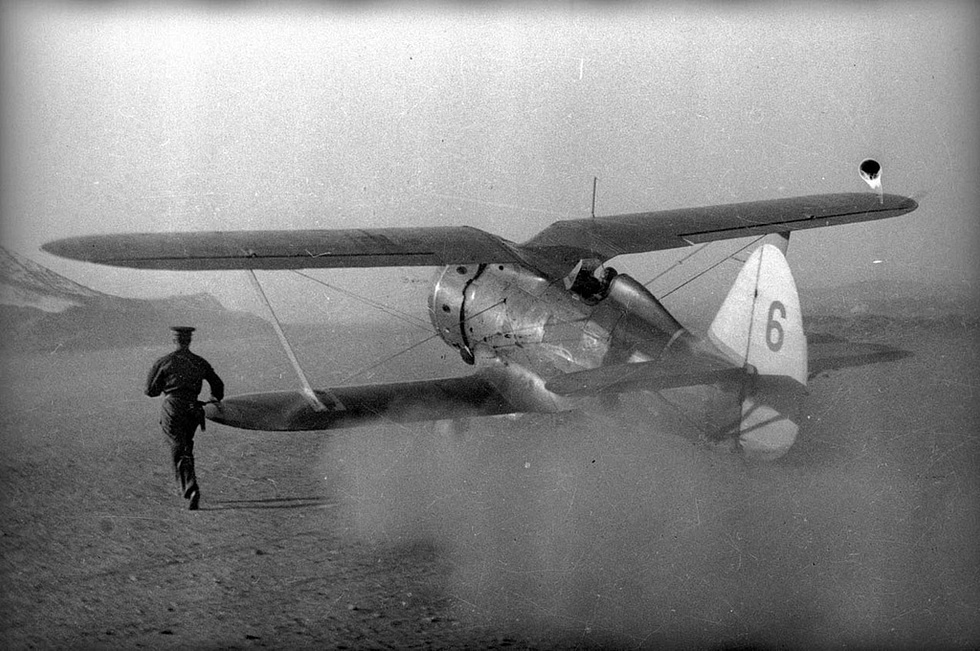
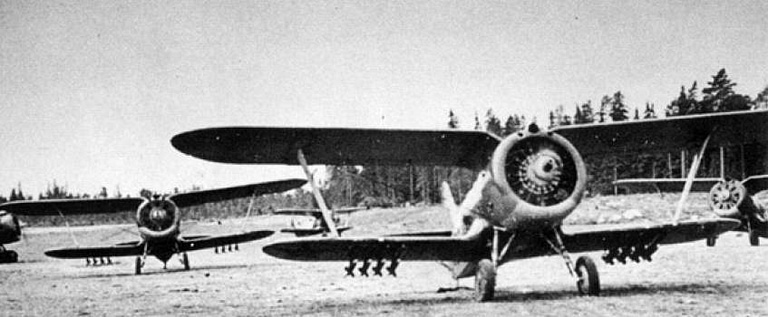
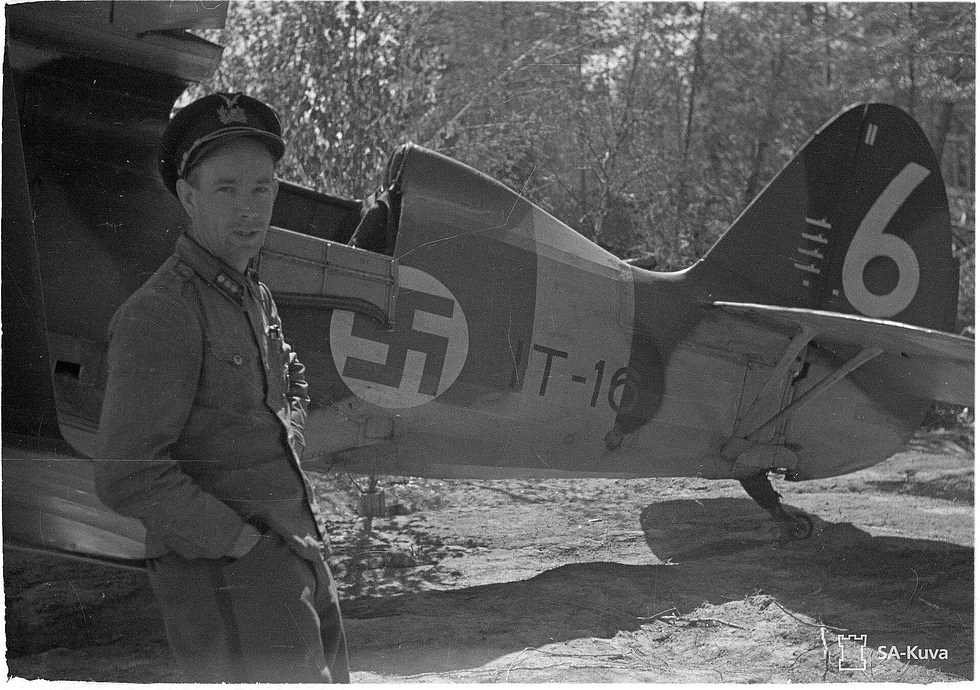
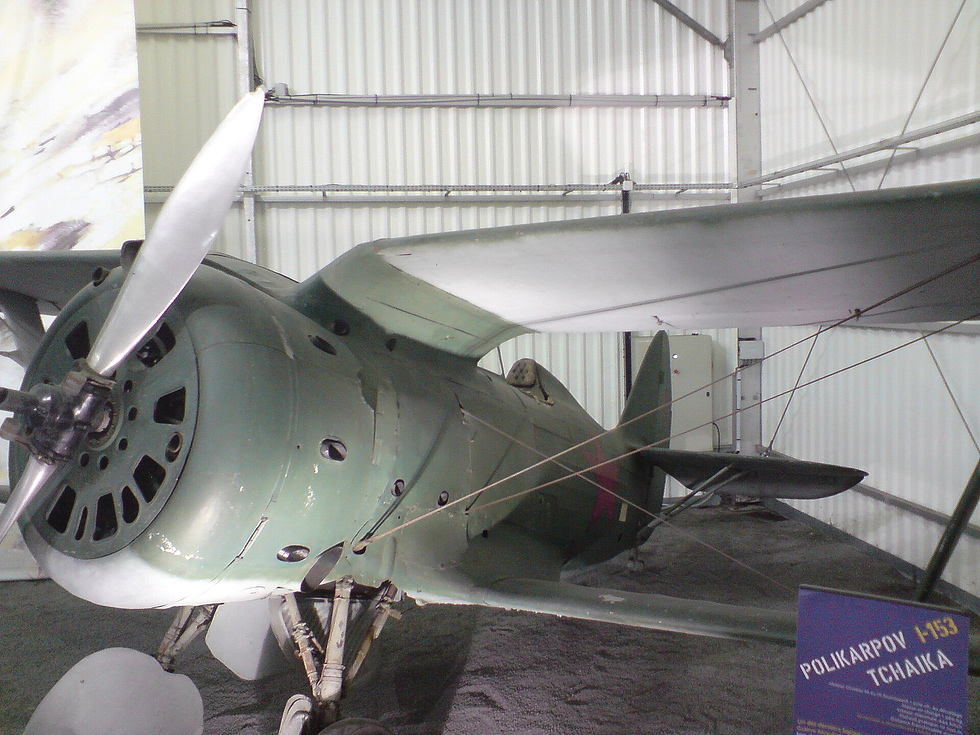
The I-153 Chaika in motion
A short history of the Polikarpov I-153 Chaika — its gull wing and retractable gear, its combat debut against Japan, and its hard war on the Eastern Front.
Where the I-153 Chaika flew
The I-153 Chaika’s combat record
The Chaika’s war splits neatly in two. As a fighter it peaked early — holding its own against Japan over Khalkhin Gol in 1939 and fighting through the Winter War — then was overwhelmed in 1941 by faster German monoplanes. As a ground-attack aircraft it soldiered on, one of the first fighters to fire salvoes of rockets at ground targets.
Compare the combat record of every military aircraft. Contemporary loss figures for 1941 are estimates and vary between sources.
Everything people ask about the I-153 Chaika
Can I fly in a Polikarpov I-153 Chaika?
What does “Chaika” mean?
Was the I-153 any good in combat?
Why did it have retractable landing gear?
How many I-153s were built?
Who else flew the Chaika besides the USSR?
Are any I-153s still flying today?
You can’t fly the I-153 Chaika.
These, you can.
Some legends only live in museums — others are fuelled and waiting. MiGFlug has put civilians in real military jet cockpits since 2004.
 Fly the L-39 AlbatrosThe world’s most-flown jet trainer — aerobatics included
 Fly the F-104 Starfighter“The missile with a man in it”
 Fly the MiG-21The Cold War’s most-produced jet
 T-33シューティングスターを操縦しようAmerica’s first jet trainer
 Fly the DH VampireA piece of early jet history
 Fly the S.211Agile Italian jet trainer
 Fly the MB-326The classic Aermacchi jet
 Fly the MiG-15The Soviet legend of the Korean War
Continue the tour
Every fact, checked
- History of War — Polikarpov I-153 ChaikaProduction totals, engine variants, armament and combat history including Khalkhin Gol and Barbarossa.
- Military Aviation MuseumRestored airframe s/n 6316 recovered near Murmansk; Finnish capture and operation of the type.
- Military FactoryGeneral specifications, dimensions and variant summary for the I-153.
- Silver WingsDesign background, the gull wing and retractable undercarriage, and service use.
- VVS Air WarSoviet Air Force operational history and the Eastern Front ground-attack role.
- Aeropedia — Encyclopedia of AircraftDevelopment lineage from the I-15 and I-15bis and technical detail.
- Fédération Aéronautique InternationaleReference for aviation records and period performance context.