

Macchi C.205 Veltro
Italy’s “Greyhound” was one of the finest fighters of the Second World War — able to trade blows with the Spitfire and the Mustang — yet it arrived too late and in too few numbers to change the war.
The Macchi C.205 Veltro: Italy’s finest fighter, and its great might-have-been
Take the elegant Macchi C.202 Folgore, give it a bigger German heart, and add cannon that finally let it bite — and you get the Veltro, the aircraft many historians rank as the best fighter Italy fielded in the Second World War.
By 1942 the Regia Aeronautica had a problem. Its best fighter, the Macchi C.202 Folgore, was a joy to fly and a match for most Allied aircraft in a turning fight, but it was chronically under-gunned — just two rifle-calibre-to-heavy machine guns firing through the propeller — and its licence-built Daimler-Benz DB 601 engine, while good, was being left behind by newer Allied types. The obvious fix was more power. Daimler-Benz had already produced the larger DB 605, and Fiat took out a licence to build it in Italy as the Fiat R.A.1050 R.C.58 “Tifone” (Typhoon). Bolt that engine onto a refined Folgore airframe and you had the Macchi C.205 Veltro — “Greyhound” — the lead aircraft of Italy’s so-called “Serie 5” fighters.
The airframe those engineers were working with was itself a thoroughbred. It came from the drawing board of Mario Castoldi, the Macchi designer whose Schneider Trophy racing seaplanes had made Italy a byword for high-speed flight in the 1920s and 1930s. Castoldi’s fighters carried that racing DNA: clean, low-drag lines, light and responsive controls, and a balance in the air that pilots loved. The tragedy of the line was that this world-class aerodynamic talent was for years shackled to engines and factories that could not keep pace. The Veltro is the moment the shackle briefly came off.
The transformation was dramatic. The prototype first flew on 19 April 1942, and the production Veltro reached roughly 642 km/h (399 mph) — competitive with the Spitfire Mk IX and the P-51 Mustang it would soon meet in combat. Just as important, the definitive Veltro finally solved the firepower problem by adding two 20 mm MG 151/20 cannon in the wings alongside the pair of 12.7 mm Breda-SAFAT guns in the nose. For the first time an Italian fighter could hit as hard as it flew.
Give the Folgore a German heart and cannon that finally bite, and you have one of the war’s great fighters — and one of its great might-have-beens.
The Veltro entered service in the spring of 1943 and drew immediate praise from the pilots who flew it. In skilled hands it could hold its own against anything in the Mediterranean sky. But it arrived very late in Italy’s war, and Italian industry — hammered by bombing, short of materials and never geared for mass production — built only a few hundred. Commonly cited figures put total production at around 262 aircraft, a rounding error next to the tens of thousands of Spitfires, Mustangs and Bf 109s. However good the Veltro was, there were never enough of them, and they came too late to matter strategically.
Then history split the aircraft in two. After Italy signed an armistice with the Allies on 8 September 1943, the Veltro found itself flying on both sides of the same war — with the fascist Aeronautica Nazionale Repubblicana in the German-aligned north, and with the Italian Co-Belligerent Air Force alongside the Allies in the south, while the Luftwaffe evaluated and used a handful of its own. After the war, Egypt bought Veltros and flew them in the 1948 Arab-Israeli War, a quiet coda to the career of one of the finest fighters almost nobody got to build in numbers.
01The Macchi C.205 Veltro’s family tree: Saetta, Folgore, Veltro
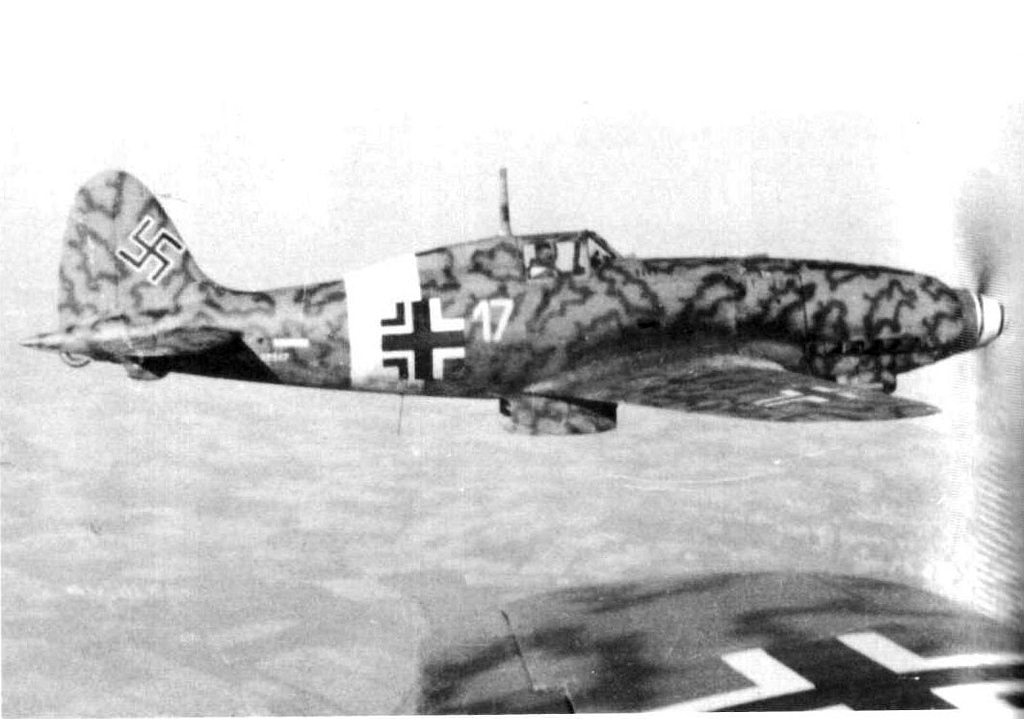
The Veltro is the last and best of a clear line of Macchi fighters, and it is worth keeping the three straight. The Macchi C.200 Saetta (“Lightning bolt”) of 1939 was powered by a Fiat A.74 radial engine; it was rugged and manoeuvrable but slow, with a draggy, blunt nose and weak armament. The Macchi C.202 Folgore (“Thunderbolt”) of 1941 kept the Saetta’s excellent airframe but replaced the radial with a licence-built Daimler-Benz DB 601 inline engine, transforming performance and giving the type its distinctive slim, pointed nose.
The Macchi C.205 Veltro (“Greyhound”) of 1943 took the next step: the still more powerful DB 605, licence-built by Fiat as the R.A.1050 R.C.58 Tifone. Airframe-wise the Veltro is a lightly modified Folgore, which is exactly why the two are so easily confused. The quick tell is the engine and the guns: a radial-nosed Macchi is a C.200; a slim inline nose with only cowl machine guns is usually a C.202; a slim inline nose with 20 mm cannon bulges in the wings is the definitive C.205.
02The Macchi C.205 Veltro’s engine: a licence-built Daimler-Benz DB 605
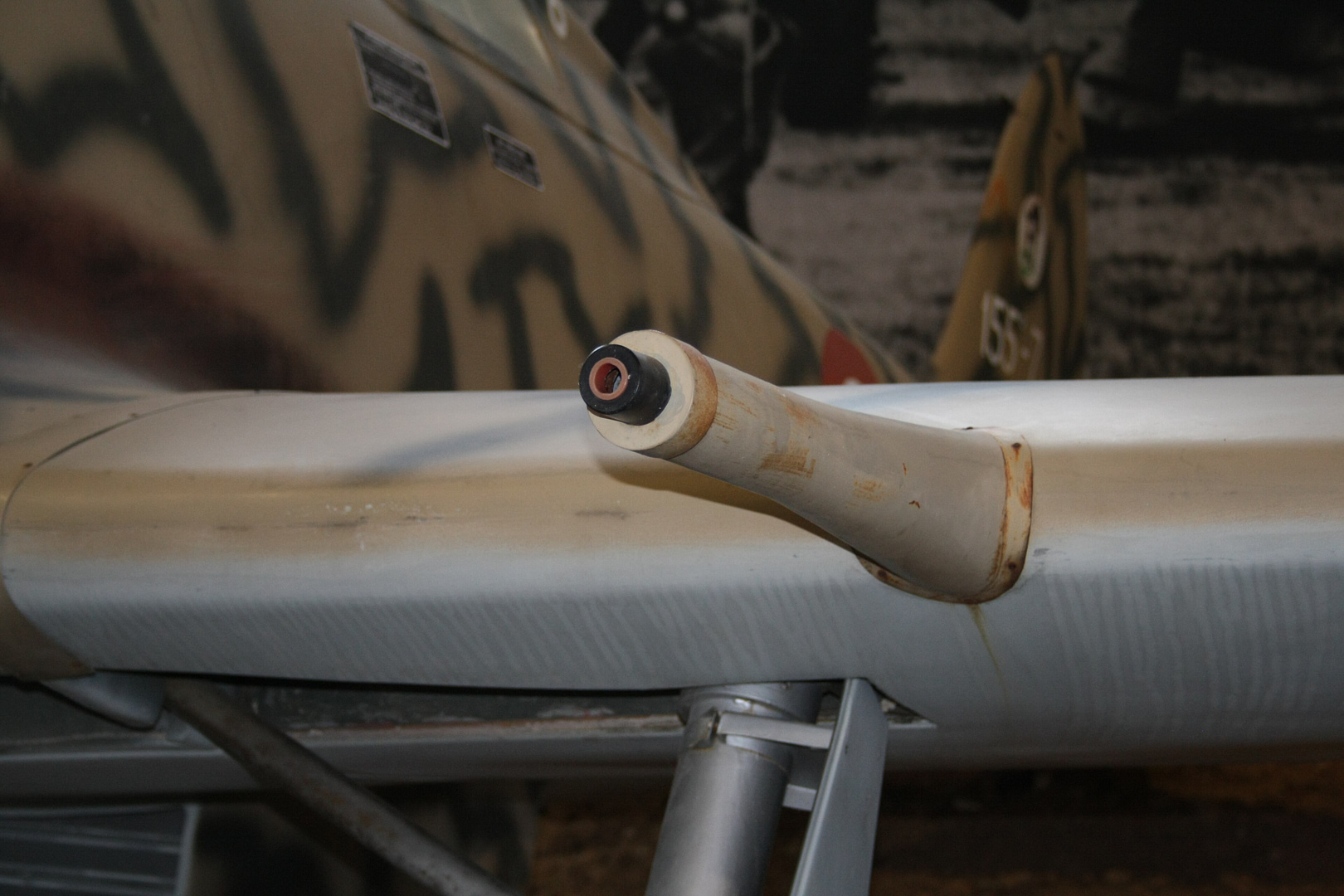
The heart of the Veltro was the Fiat R.A.1050 R.C.58 Tifone — not an Italian design but a licence-built copy of the German Daimler-Benz DB 605A, an inverted V12 of about 35.7 litres. In the Veltro it produced roughly 1,475 PS (around 1,455 hp) for take-off, a substantial jump over the DB 601-derived engine of the C.202 Folgore.
Licence production is the key to the whole “Serie 5” story. The same Tifone engine powered the three great Italian late-war fighters — the Macchi C.205, the Fiat G.55 Centauro and the Reggiane Re.2005 Sagittario — which is why they are grouped together. It is also the Veltro’s Achilles’ heel: Fiat could never build the complex Tifone in the numbers Italy needed, so engine supply, not airframe design, was the real ceiling on Veltro production.
03The Macchi C.205 Veltro’s armament: from under-gunned to genuinely dangerous
The single biggest criticism of Italy’s earlier fighters was firepower. The C.202 Folgore, and the earliest C.205 airframes built like it, carried just two 12.7 mm Breda-SAFAT machine guns in the cowling (sometimes with a pair of light 7.7 mm guns in the wings). Against armoured, self-sealing Allied bombers and fighters that was simply not enough — pilots could out-fly an opponent and still fail to bring it down.
The definitive Veltro fixed this by adding two 20 mm MG 151/20 cannon in the wings, keeping the two 12.7 mm guns in the nose. The MG 151 was the same excellent German cannon carried by the Bf 109 and Fw 190, and it transformed the Veltro from a beautiful but toothless dogfighter into an aircraft that could destroy what it hit. This armament evolution — early two-gun aircraft versus the later cannon-armed version — is one of the most important things to understand about the type.
What made the Macchi C.205 Veltro so good
Three things set the Veltro apart: a clean, honest airframe inherited from the Folgore, a powerful licence-built German engine, and — at last — a hard-hitting cannon armament.
A refined, honest airframe
The Veltro kept the Folgore’s beautifully balanced, all-metal airframe: light, strong and free of vices. Pilots consistently praised its handling and its ability to stay with Allied fighters in a turning fight, which made it forgiving to fly and deadly in experienced hands.
The Tifone engine
The licence-built DB 605 gave the Veltro roughly 1,475 hp and a top speed near 642 km/h, closing the performance gap with the Spitfire Mk IX and the P-51. The slim inline installation kept frontal area low and preserved the type’s clean lines.
Cannon that finally bit
Two 20 mm MG 151/20 in the wings turned a graceful but under-armed fighter into a genuine killer. For the first time an Italian fighter could match its flying qualities with the firepower to knock down armoured bombers and fighters alike.
04The Macchi C.205 Veltro versus the Spitfire and the Mustang
What earns the Veltro its reputation is that it could genuinely compete with the best Allied fighters it met in 1943. Its top speed of around 642 km/h put it in the same class as the Supermarine Spitfire Mk IX, and it retained the superb low-speed handling and turning ability of the Folgore line. Italian and German pilots who flew it rated it among the best fighters available on the Axis side.
The honest caveats matter, though. The Veltro’s climb and high-altitude performance, while good, did not dominate; its radio and some systems lagged; and above all it was available in tiny numbers against Allied air forces that could put up hundreds of Spitfires, Mustangs and Thunderbolts at once. A superb fighter flown by a handful of veterans can win individual dogfights but cannot win command of the sky. That is the Veltro’s story in one sentence: excellent, but far too few and far too late.
05The Macchi C.205 Veltro’s production problem: why only a few hundred were built
For all its quality, only around 262 Veltros are commonly cited as built (sources differ, and some counts run a little higher or include converted C.202 airframes). Compare that with roughly 34,000 Bf 109s or more than 20,000 Spitfires and the scale of the problem is obvious.
The bottleneck was not the airframe but the engine and the state of Italian industry in 1943. The complex licence-built Tifone engine was slow and difficult to produce; raw materials were scarce; factories were bombed; and the September 1943 armistice threw the whole industrial base into chaos, splitting it between the German-occupied north and the Allied south. The Veltro is the classic example of a war-winning design that a losing industrial situation could never deliver in war-winning quantities.
The Macchi C.205 Veltro’s war: 1943 to Egypt
The Veltro’s combat career lasted barely two years, but it packed in more twists than most fighters see in a decade — a triumphant debut, an armistice that split it in two, and a strange post-war afterlife.
When the first Veltros reached the Regia Aeronautica in the spring of 1943, Italy was already on the defensive. The Axis position in North Africa had collapsed, Sicily was next, and Allied bombers were ranging ever deeper into Italian airspace. Into this desperate situation came a fighter that Italian pilots had been waiting years for: fast, beautifully balanced and — in its cannon-armed form — finally able to hurt the enemy. Units such as the 1° and 51° Stormo took the Veltro into action over the Sicilian Channel, Pantelleria, Sardinia and the approaches to the Italian mainland, and in the hands of experienced pilots it gave a very good account of itself against Spitfires and American fighters and bombers alike.
But there were never enough. A trickle of a few hundred aircraft, spread thin across a crumbling front, could not stem an Allied air force that operated in the thousands. The Veltro won dogfights; it could not win the air war. And then, on 8 September 1943, Italy signed an armistice with the Allies, and the aircraft’s story fractured along with the country.
In the German-occupied north, Mussolini’s rump fascist state raised a new air arm, the Aeronautica Nazionale Repubblicana (ANR). Its fighter groups, flying the Veltro and the closely related Fiat G.55, threw themselves against the massive USAAF daylight raids of 1944, fighting alongside the Luftwaffe and almost always outnumbered. Their war was a grinding, attritional defence of northern Italian cities and industry, and it burned through pilots and aircraft alike.
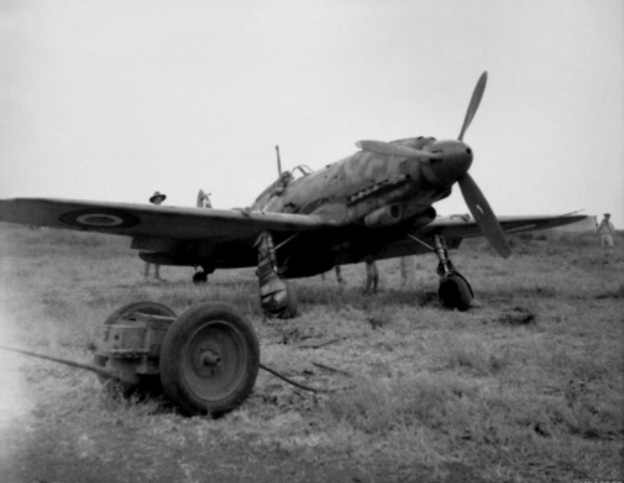
In the Allied-aligned south, meanwhile, the Italian Co-Belligerent Air Force (Aeronautica Cobelligerante Italiana) flew its own surviving Veltros — now, extraordinarily, on the same side as the Spitfires and Mustangs they had recently been fighting. Their numbers were modest and their front-line role limited, but the sight of a Veltro in co-belligerent markings is one of the war’s most poignant images of a nation and an air force torn cleanly in half. The Luftwaffe, for its part, evaluated and operated a number of Veltros itself, completing the aircraft’s improbable service across all three combatant camps in Italy.
When production finally ended in 1944 with only a few hundred built, it looked like the end of the story. It was not quite. In the late 1940s Egypt turned to the international arms market and acquired Veltros — accounts differ on exactly how many and in what condition, with figures ranging from a dozen or so to several dozen — and flew them in the 1948 Arab-Israeli War. It was a fittingly strange final chapter: an Italian fighter with a German engine, that had fought on every side of Italy’s own civil war, ending its combat life in the deserts of the Middle East.
Macchi C.205 Veltro full specifications
Figures are for the definitive cannon-armed C.205V and are drawn from established reference sources; several are approximate and vary between references, so contested values are flagged.
| クルー | 1 (pilot) |
|---|---|
| エンジン | Fiat R.A.1050 R.C.58 Tifone — licence-built Daimler-Benz DB 605A, inverted V12 |
| Power | ~1,475 PS (≈1,455 hp) for take-off |
| 最高速度 | ~642 km/h (399 mph) at ~7,200 m (estimate; varies by source) |
| サービス天井 | ~11,000 m (~36,100 ft) |
| 範囲 | ~950–1,040 km (~590–650 mi) — figures vary |
| 上昇率 | ~6,000 m in ~7 minutes (approx.) |
| Armament (definitive) | 2 × 20 mm MG 151/20 cannon (wings) + 2 × 12.7 mm Breda-SAFAT (cowl) |
| Armament (early series) | 2 × 12.7 mm Breda-SAFAT only (as C.202 Folgore) |
| Bomb load | Up to 2 × 160 kg bombs (optional) |
| 長さ | 8.85 m (29 ft 0 in) |
|---|---|
| 翼幅 | 10.58 m (34 ft 8 in) |
| 身長 | ~3.05 m (~10 ft) |
| 翼領域 | ~16.8 m² |
| 空虚重量 | ~2,581 kg (estimate) |
| Loaded weight | ~3,408 kg (estimate) |
| First flight | 19 April 1942 |
| Service entry | April 1943 (Regia Aeronautica) |
| Number built | ~262 (figures vary; some sources ~265) |
| Manufacturer | Aeronautica Macchi, Varese (Italy) |
| Unit cost | Not reliably recorded (WWII) |
| Cost per flight hour | Not applicable — no airworthy example |
Values marked “estimate” or “varies” should be treated as approximate. Weight, range and climb figures in particular differ between references and between sub-variants.
06The Macchi C.205 Veltro’s variants: Serie I, Serie III and the cannon Veltro
Production Veltros are usually divided into early and late series. The first Veltros (sometimes grouped with the “Serie I” aircraft) were built essentially like the C.202 Folgore, armed with only the two 12.7 mm cowl guns. The later, definitive aircraft (the “Serie III” and similar) added the two 20 mm MG 151/20 wing cannon that define the type in most people’s minds.
The Veltro also gave rise to the experimental C.205N Orione, a longer, heavier development with a redesigned airframe intended to improve high-altitude performance and firepower; it did not enter series production. When people say “Macchi C.205” they almost always mean the cannon-armed C.205V Veltro, and that is the aircraft described on this page.
07The Macchi C.205 Veltro’s operating costs: why there is no cost-per-hour figure
Unlike the modern jets in the MiGFlug fleet, the Veltro has no meaningful operating-cost figure. Wartime unit costs for Italian fighters were not reliably or consistently recorded, and the currency and economic chaos of 1943–45 Italy makes any single number misleading.
More to the point, there is no airworthy Macchi C.205 anywhere in the world. Every surviving original is a static museum exhibit, so there is no fuel bill, no maintenance cost and no cost-per-flight-hour to quote — the honest entry in the specifications table is simply “not applicable.” If you want to know what flying a genuine warbird-era or jet fighter actually costs today, the aircraft MiGFlug operates are a far better guide.
08The Macchi C.205 Veltro’s rivals: the Serie 5 fighters G.55 and Re.2005
The Veltro was not the only Italian fighter built around the licence-produced DB 605. It was the lead member of a trio of “Serie 5” designs, and its two stablemates are worth knowing. The Fiat G.55 Centauro was slightly larger and heavier, with an even better high-altitude performance and a heavier standard armament of three 20 mm cannon plus two machine guns; many pilots and engineers — reportedly including German evaluators — rated it the best of the three, though it was more complex and slower to build. The Reggiane Re.2005 Sagittario was the most aerodynamically radical, with a beautiful elliptical wing, but it was built in only tiny numbers.
The Veltro’s advantage over both was pragmatic: because it was essentially a re-engined C.202 Folgore, it could be put into production fastest, using existing tooling and an airframe the factories already knew. In a country desperately short of time, that made the Veltro the most numerous of the Serie 5 fighters — even though “most numerous” still meant only a few hundred aircraft.
09How to identify a Macchi C.205 Veltro at a glance
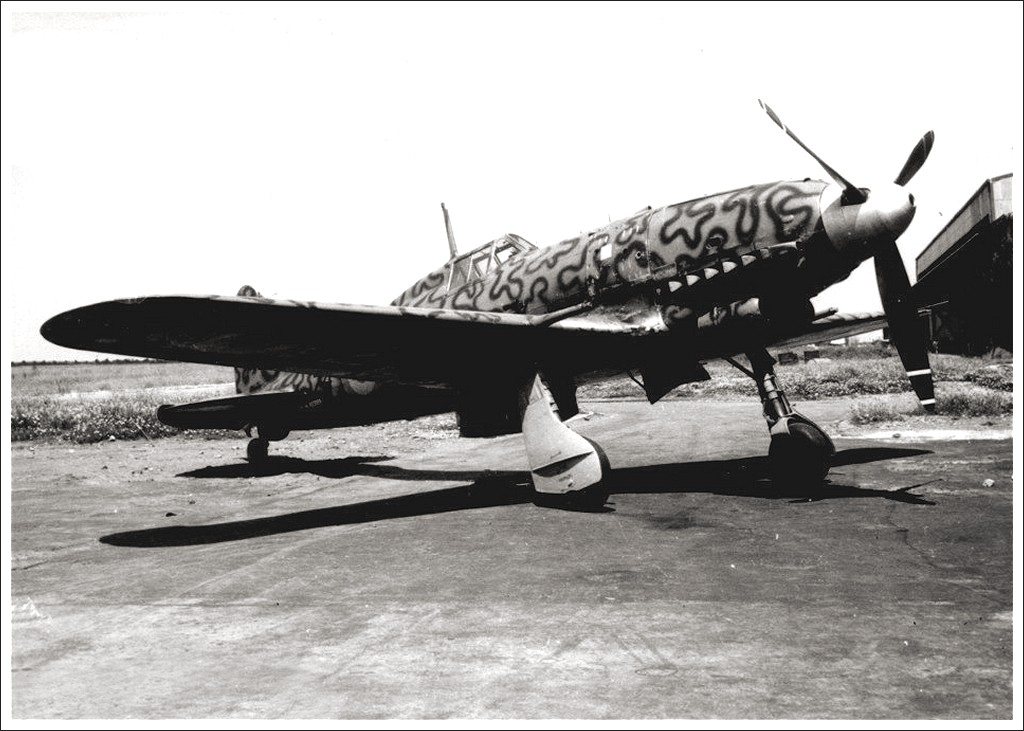
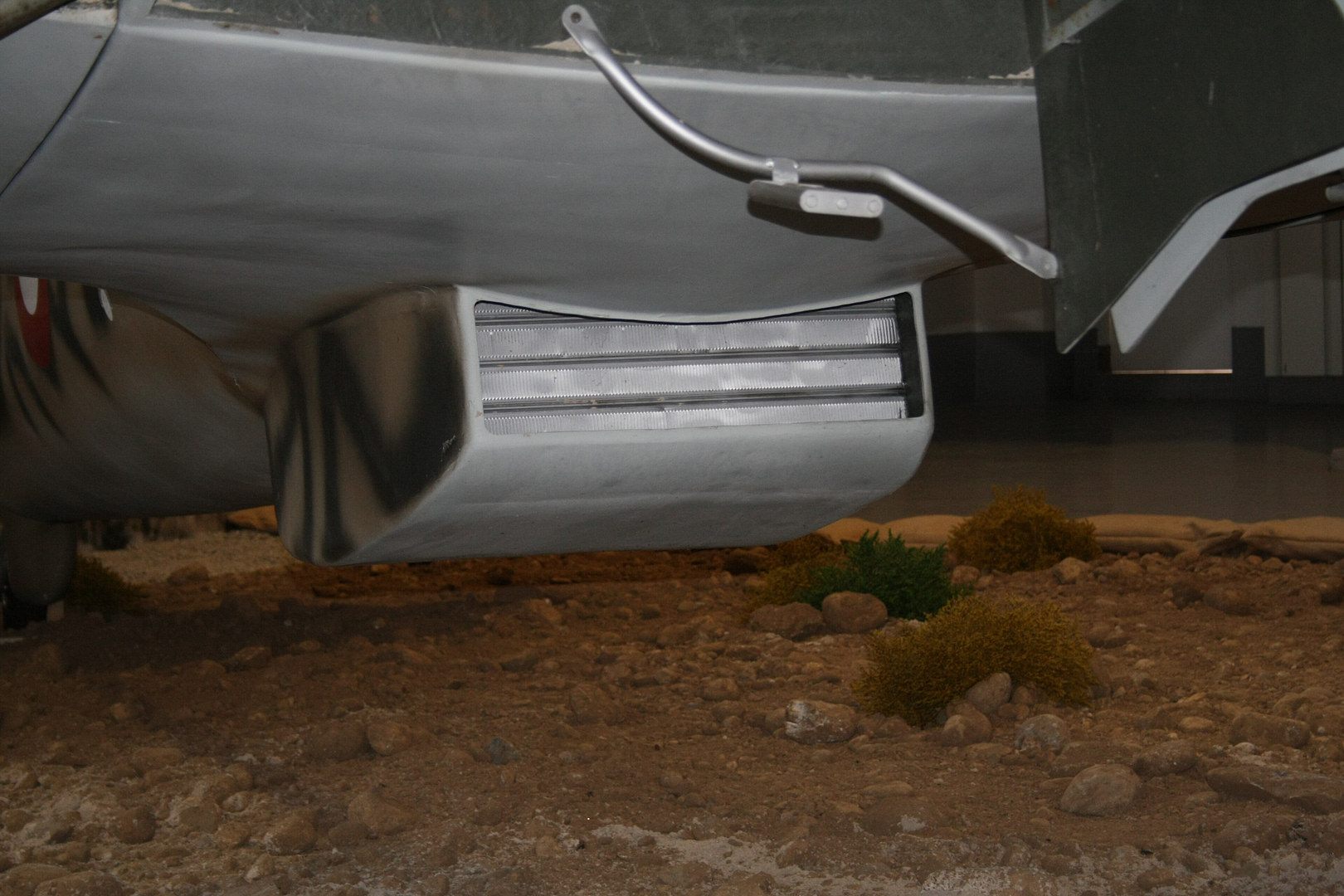
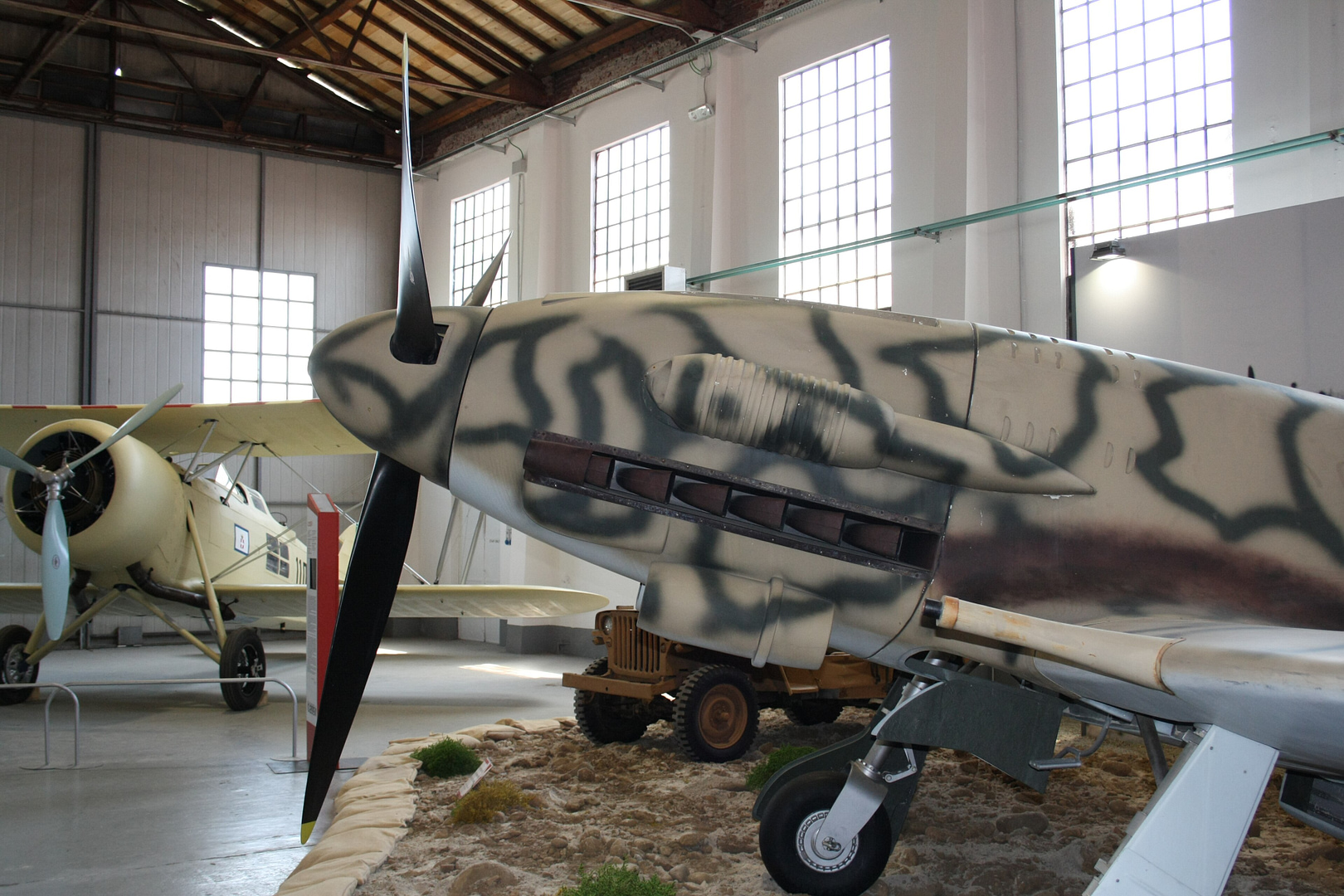
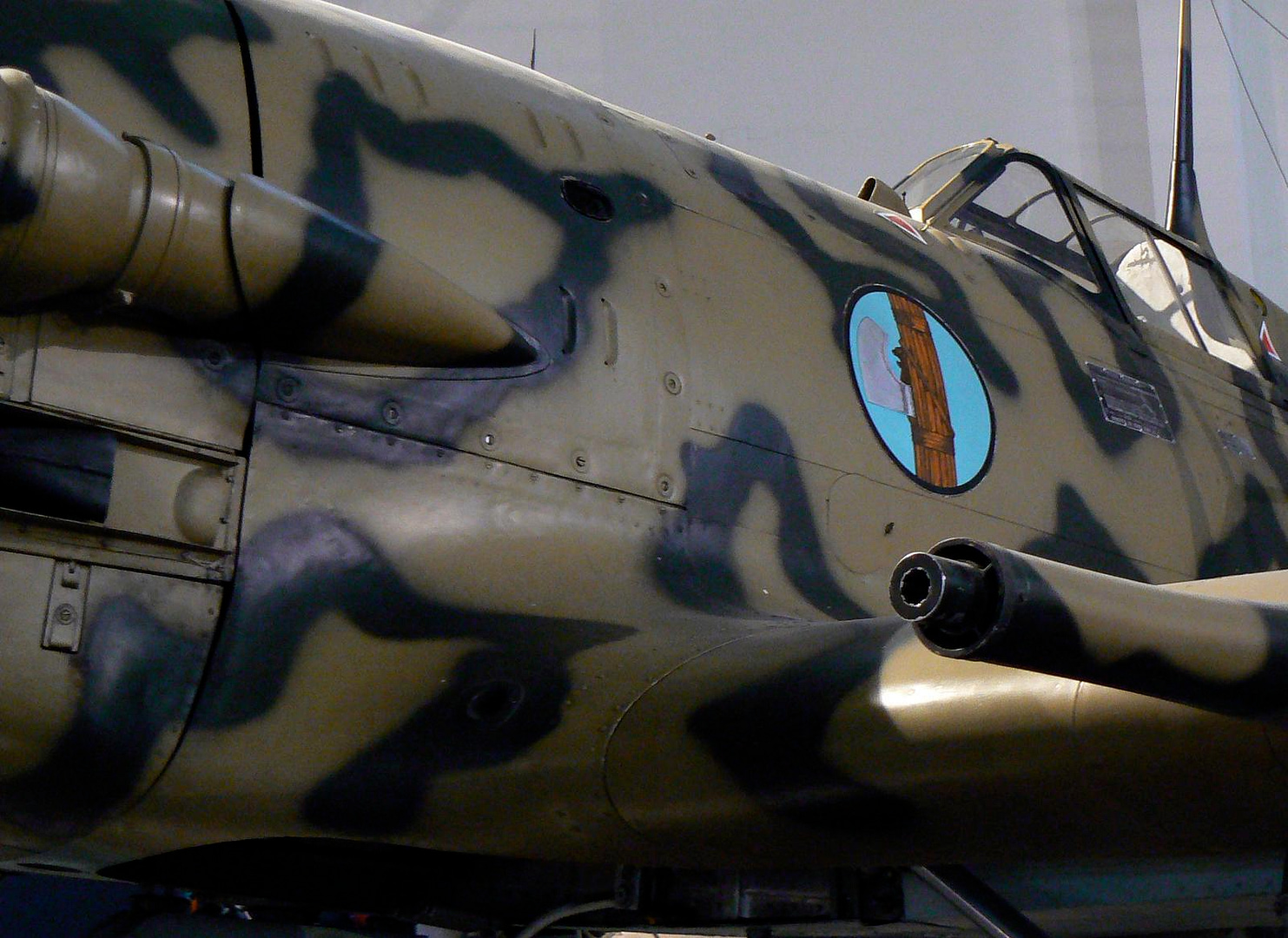
Telling the Veltro apart from its close relatives, and from other wartime fighters, comes down to a few features. First, the nose: the Veltro has the slim, pointed nose of an inline-engined fighter, with a small ventral radiator bath under the belly — nothing like the blunt radial cowl of the C.200 Saetta. Second, the wings: the definitive Veltro carries a 20 mm cannon in each wing, giving it small gun fairings the two-machine-gun C.202 Folgore lacks. From head-on the two 12.7 mm troughs above the engine are also visible.
Against German types the confusion is understandable, because the Veltro shares the DB 605 engine and MG 151 cannon with the Bf 109. The giveaways are the Veltro’s more rounded, tapering wingtips and tail, its distinctly Italian proportions, and — on preserved aircraft — Regia Aeronautica, ANR or Co-Belligerent markings rather than Luftwaffe crosses. When in doubt, look for the greyhound’s clean, elegant lines: the Veltro was one of the best-looking fighters of the war as well as one of the best.
10The pilots and units who flew the Macchi C.205 Veltro
The Veltro was concentrated in Italy’s most experienced fighter units. The 1° Stormo Caccia Terrestre was among the first to convert, taking the type into action over the central Mediterranean in 1943, and other front-line Stormi and Gruppi followed. Because it went to elite units, the Veltro was often flown by veteran pilots who could exploit its qualities to the full — one reason its combat reputation stands so high relative to the small numbers involved.
After the armistice, the aircraft’s pilots were divided as surely as the aircraft themselves. In the north, ANR fighter groups — men who had chosen to keep fighting alongside Germany — flew the Veltro and G.55 in the desperate defence of 1944. In the south, former comrades flew surviving Veltros for the Co-Belligerent Air Force. It was, for many Italian airmen, a war fought against people they had trained with, in aircraft they knew intimately — a human dimension that makes the Veltro’s story unusually poignant.
11The Macchi C.205 Veltro’s legacy: why an obscure fighter is so admired
By any measure of impact, the Veltro was a minor aircraft: too few, too late, on the losing side. And yet it is remembered and admired out of all proportion to the numbers built. The reason is that it represents a genuine “what if” — proof that Italian designers and engineers, given the right engine, could build a fighter as good as anything in the sky. Historians reach for the Veltro when they want to show that Italy’s aeronautical talent was never the problem; industrial capacity, strategy and timing were.
For enthusiasts, the Veltro’s appeal is also aesthetic and emotional. It is a beautiful aircraft with a dramatic, tragic story — a thoroughbred that arrived at the finish just as the race was lost, and then found itself flying for every side of a broken nation. That combination of excellence and might-have-been is exactly why the Macchi C.205 Veltro earns a place in a museum devoted to the greatest aircraft ever flown, even though only a handful survive and none has flown for decades.
The Macchi C.205 Veltro: a short, dramatic career
The predecessors. The radial-engined C.200 Saetta and the DB 601-powered C.202 Folgore establish Macchi’s line of clean, fine-handling but under-armed fighters.
First flight. The C.205 prototype takes to the air, essentially a Folgore airframe fitted with the more powerful licence-built DB 605.
The Tifone. Fiat begins licence production of the DB 605 as the R.A.1050 R.C.58 Tifone, the engine shared by the whole “Serie 5” of Italian fighters.
Into service. The first Veltros reach Regia Aeronautica units; the definitive version adds two 20 mm MG 151/20 wing cannon.
Combat debut. Veltros fight over the Sicilian Channel, Pantelleria, Sardinia and southern Italy, defending against Allied raids and escorting.
The armistice. Italy changes sides. The Veltro fleet is split between the German-aligned north and the Allied south.
A fighter on both sides. The fascist ANR flies the Veltro in the north; the Italian Co-Belligerent Air Force flies it alongside the Allies in the south; the Luftwaffe evaluates and uses a handful.
Production ends. With only a few hundred built, Veltro manufacture winds down as Italian industry collapses.
The Egyptian coda. Egypt acquires Veltros and flies them during the 1948 Arab-Israeli War (reported fleet figures vary widely).
Survivors. A small number of original Veltros survive in Italian museums; none is airworthy.
Twelve things worth knowing about the Macchi C.205 Veltro
Scroll through the episodes and details that make the Veltro one of the most interesting fighters of the war.
A German engine on an Italian thoroughbred
The Veltro was born from a simple, powerful idea: take the excellent but under-powered C.202 Folgore and give it the bigger Daimler-Benz DB 605. Macchi’s chief designer Mario Castoldi — the same engineer behind Italy’s record-breaking Schneider Trophy seaplanes — had already given the Folgore its superb aerodynamics. Adding the more powerful engine unlocked the airframe’s full potential and launched Italy’s “Serie 5” of late-war fighters.
“Greyhound,” and a family of hunters
Veltro means greyhound. It sat in a menagerie of evocative Italian fighter names — Saetta (lightning bolt), Folgore (thunderbolt), and the rival Fiat G.55 Centauro and Reggiane Re.2005 Sagittario. The naming captured the speed and grace Macchi’s designers built into a fighter that looked fast standing still, all slim nose and clean, tapering lines.
19 April 1942
The prototype flew for the first time in April 1942. On paper and in the air it was a clear step up over the Folgore. But it would take almost a year of engine licence-production and factory tooling before Veltros reached front-line units — a delay that would prove costly, because by the time the aircraft was ready in numbers, Italy’s strategic position had already collapsed.
Over Sicily and Pantelleria, 1943
The Veltro first saw combat in the spring of 1943, defending the central Mediterranean and escorting over the Sicilian Channel and the fortress island of Pantelleria as the Allies closed in on Italy. The first unit to receive it, the 1° Stormo, took it into action almost immediately, and pilots quickly found they finally had a fighter that could meet the latest Spitfires on equal terms.
A match for the best
Pilots and historians rate the Veltro among the finest Axis fighters of the war, able to hold its own against the Spitfire Mk IX and the P-51 Mustang. It combined the Folgore’s beautiful handling with real speed and, at last, heavy firepower. In skilled hands it could win the individual dogfights that mattered — the problem was never the aircraft, but how few of them there were.
Beautiful, but under-gunned
Early Veltros inherited the Folgore’s great flaw: an armament of just two 12.7 mm Breda-SAFAT machine guns. Against armoured, self-sealing Allied aircraft that was marginal — a pilot could out-fly an enemy, get on his tail, hit him repeatedly and still watch him fly home. Italian fighters had suffered from this “beautiful but toothless” problem since the start of the war.
Cannon in the wings
The definitive Veltro added two 20 mm MG 151/20 cannon in the wings — the same hard-hitting German weapon carried by the Bf 109 and Fw 190. At a stroke the Veltro went from a graceful dogfighter that struggled to score, to a fighter that could tear apart what its flying qualities let it catch. This armament evolution is the single most important thing to understand about the type.
At war with itself
After the 8 September 1943 armistice, the Veltro suffered a fate almost unique in aviation history: it fought on both sides of the same war. Some aircraft ended up with the fascist ANR in the German-aligned north, others with the Italian Co-Belligerent Air Force in the Allied south — the same fighter, in the same national markings-turned-enemy, over the same country.
The ANR’s defenders
In the German-aligned north, Aeronautica Nazionale Repubblicana pilots flew the Veltro against the overwhelming daylight bomber streams of the USAAF and their fighter escorts, almost always heavily outnumbered. ANR Veltro and G.55 units fought a bitter, losing defensive battle over northern Italy in 1944, and their pilots earned respect even from the Luftwaffe alongside which they flew.
Co-belligerent Veltros
In the Allied-aligned south, the Italian Co-Belligerent Air Force operated surviving Veltros — including aircraft such as MM 92289, preserved to this day — now flying on the other side of the front. Their role was more limited and their numbers small, but they are a vivid reminder of how completely the armistice tore Italy’s air force in two.
Evaluated by the Luftwaffe
The Luftwaffe took a serious interest in the Serie 5 fighters and used or evaluated a number of Veltros in Italy after the armistice. It is a striking curiosity: a German air arm flying an Italian-built fighter powered by a licence-built German engine and armed with German cannon — the DB 605 and MG 151 having come full circle back into Luftwaffe service.
Egypt and the 1948 war
After the war Egypt acquired Veltros — a mix of refurbished and, by some accounts, newly completed airframes (reported totals vary widely) — and flew them during the 1948 Arab-Israeli War. It was a final, obscure combat chapter for a fighter that had already fought on every side of Italy’s own war, and it kept a handful of Veltros flying into the late 1940s.
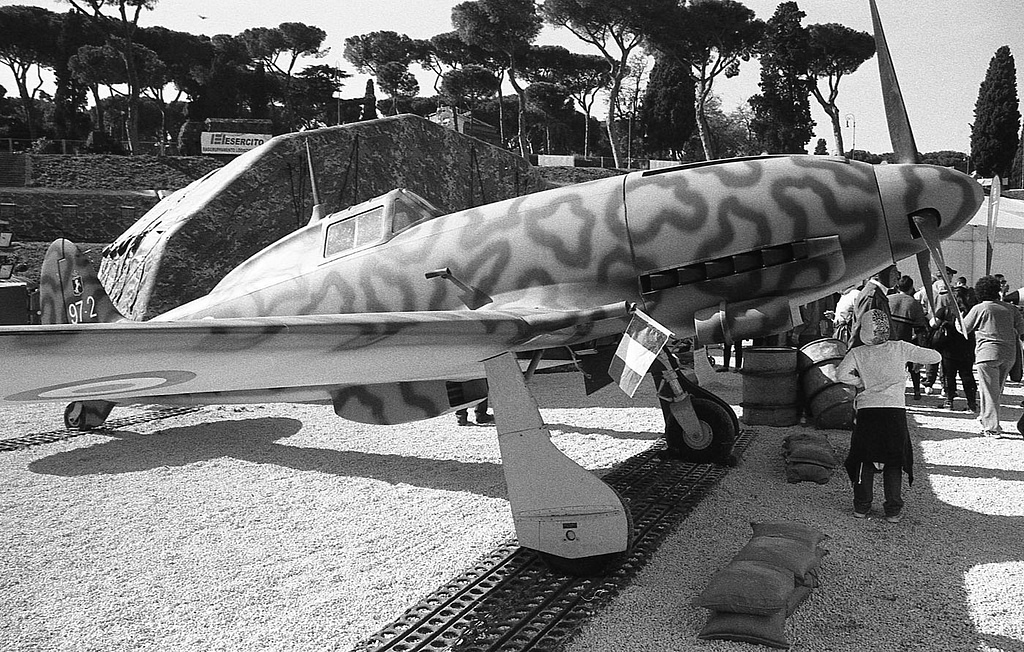
Macchi C.205 Veltro in photographs
Wartime images and surviving museum aircraft. Click any photograph to enlarge. All images are public domain or Creative Commons, credited in the captions.
The Macchi C.205 Veltro on video
A focused, well-produced history of the Veltro from the aviation channel IHYLS, covering the type’s development, armament and short combat career.
“The (Short) Peak of Italian Fighters: Macchi C.205 Veltro” — IHYLS (aviation history channel), published March 2024, ~106,000 views at time of writing. The Veltro is an obscure type, so no single documentary reaches the millions of views a Spitfire video might; this is among the best dedicated treatments available.
Where the Macchi C.205 Veltro flew
Origin and manufacture, wartime operators and theatres, the post-war export to Egypt, and where surviving airframes are preserved. Hover (or tap on mobile) a country for details; use the buttons to toggle categories.
The Macchi C.205 Veltro by the numbers
The Veltro’s story is not one of huge totals but of quality against scarcity: a first-rate fighter available in tiny numbers, flown in 1943–45 by the Regia Aeronautica, the ANR, the Italian Co-Belligerent Air Force and the Luftwaffe, and post-war by Egypt.
Macchi C.205 Veltro: your questions answered
Can I fly in a Macchi C.205 Veltro?
No. There is no airworthy Macchi C.205 Veltro anywhere in the world — every surviving original is a static museum exhibit, and MiGFlug does not offer flights in this aircraft. However, you can fly in several genuine military jets and warbird-era fighters today. MiGFlug flies aircraft such as the Hawker Hunter, MiG-29 Fulcrum, MiG-15, L-39 Albatros, F-104 Starfighter and T-33 Shooting Star. See the full list and prices at migflug.com/flights-prices.
Was the Macchi C.205 Veltro a good fighter?
Yes — it was excellent. The Veltro is widely regarded as one of the best Axis fighters of the war, able to hold its own against the Supermarine Spitfire Mk IX and the North American P-51 Mustang. Its weakness was not quality but quantity and timing: it entered service only in 1943 and was built in very small numbers, so it had little strategic impact.
What engine did the Macchi C.205 Veltro use?
The Fiat R.A.1050 R.C.58 Tifone, which was a licence-built copy of the German Daimler-Benz DB 605 inverted V12. It produced roughly 1,475 hp and gave the Veltro a top speed of about 642 km/h. The same engine powered the other “Serie 5” Italian fighters, the Fiat G.55 and Reggiane Re.2005.
How many Macchi C.205 Veltros were built?
Commonly cited figures put total production at around 262 aircraft, though sources vary and some counts run a little higher or include converted C.202 airframes. Either way it was a very small number — a few hundred against the tens of thousands of Spitfires, Mustangs and Bf 109s built during the war.
How fast was the Macchi C.205 Veltro?
Its top speed was about 642 km/h (399 mph) at around 7,200 m. That put it in the same performance class as the best Allied fighters it faced in 1943, such as the Spitfire Mk IX.
What was the Macchi C.205 Veltro’s armament?
It changed during production. Early Veltros carried only two 12.7 mm Breda-SAFAT machine guns, like the C.202 Folgore, and were under-armed. The definitive version added two 20 mm MG 151/20 cannon in the wings, greatly improving hitting power and turning the Veltro into a genuinely dangerous fighter.
Did the Veltro really fight on both sides of the war?
Yes. After Italy’s armistice with the Allies on 8 September 1943, the Veltro served with the fascist Aeronautica Nazionale Repubblicana (ANR) in German-aligned northern Italy and with the Italian Co-Belligerent Air Force alongside the Allies in the south. The Luftwaffe also evaluated and used a number of them.
What is the difference between the Macchi C.205, C.202 and C.200?
They are three generations of the same Macchi fighter line. The C.200 Saetta had a Fiat radial engine; the C.202 Folgore replaced it with a licence-built DB 601 inline, giving the slim pointed nose; and the C.205 Veltro used the more powerful DB 605 (built as the Tifone) and, in its definitive form, added 20 mm wing cannon.
Are there any surviving Macchi C.205 Veltros?
Only a small number of originals survive, all in Italian museums — for example the Italian Air Force Museum (Museo storico dell’Aeronautica Militare) at Vigna di Valle, with others and reproductions elsewhere in Italy. None is airworthy, so the Veltro can only be seen as a static exhibit.
What does “Veltro” mean?
Veltro is Italian for “greyhound.” It fits Macchi’s tradition of fast, evocative fighter names alongside the C.200 Saetta (“lightning bolt”) and C.202 Folgore (“thunderbolt”), and it suited an aircraft whose slim, tapering lines really did look like a hound built for speed.
Who designed the Macchi C.205 Veltro?
It was developed by Aeronautica Macchi around the earlier work of designer Mario Castoldi, famous for Italy’s Schneider Trophy racing seaplanes. The Veltro was essentially his C.202 Folgore airframe fitted with the more powerful licence-built Daimler-Benz DB 605 engine and, in definitive form, heavier cannon armament.
Where can I see a Macchi C.205 Veltro today?
The best-known original is at the Italian Air Force Museum (Museo storico dell’Aeronautica Militare) at Vigna di Valle, near Rome. A C.205 is also displayed at the Museo della Scienza e della Tecnologia in Milan, and components and a reproduction are held at the Volandia museum near Milan Malpensa. All are static exhibits — there is no flying example anywhere.
Fly a real fighter with MiGFlug
The Macchi C.205 lives only in museums now. But the thrill of a fast military aircraft is very much bookable today — from Cold War jets to warbird-era classics, flown with professional pilots.
Explore more fighters in the museum
Where the facts on this page come from