
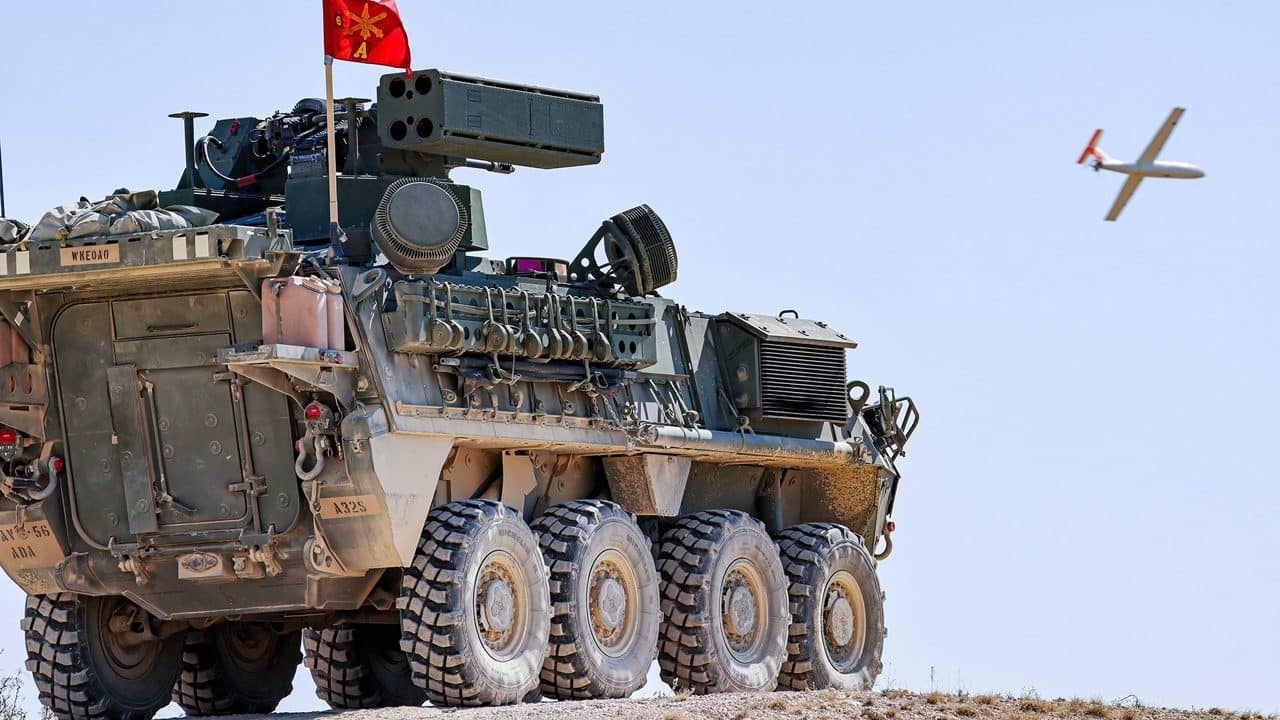
The US Army has looked hard at Ukraine and drawn a precise, uncomfortable conclusion: there is no longer any such thing as a safe place on a battlefield. Its answer, formalised in a redesignation ceremony at Joint Base Lewis-McChord on June 18, is a new kind of division — one built to make the enemy’s battlefield just as unsafe, by saturating it with drones.
The unit is the 7th Infantry Division Multi-Domain Command – Pacific, or 7th ID MDC-PAC. On paper it is a merger: the 7th Infantry Division’s two Stryker brigades combined with the 1st Multi-Domain Task Force’s long-range sensing, fires, cyber, space and electronic-warfare units. In practice, its commander describes something closer to a doctrine shift — infantry manoeuvre welded to drone mass, coordinated by AI.
Quick Facts: 7th ID Multi-Domain Command – Pacific
| Activated | June 18, 2026, Joint Base Lewis-McChord, Washington |
| Structure | 7th Infantry Division (two Stryker brigades) + 1st Multi-Domain Task Force |
| Commander | Maj. Gen. Bernard J. Harrington |
| Concept | Sense-and-strike drones, decoys and EW drones linked by an AI-driven “agentic” command system |
| Area of operations | The Indo-Pacific — from Arctic Alaska to jungle in the Philippines and Hawaii |
Overwhelm by Volume
Maj. Gen. Bernard J. Harrington, the new command’s first commander, laid the concept out with unusual clarity when he introduced the unit to reporters, as The War Zone documented.
Strip away the acronyms and the idea is simple: so many drones, of so many kinds, that an adversary’s air defences cannot cope. Sensor drones find targets. One-way attack drones hit them. Decoy drones — a trick learned from Russia’s mass Shahed barrages against Ukraine — soak up interceptor missiles and, in Harrington’s words, “deplete potential magazine depth.” Electronic-warfare drones blind whatever is left.
The connective tissue is an “agentic” AI command-and-control system — software that routes sensor data, repositions drones and matches targets to shooters on its own. Harrington calls it “soldier-on-the-loop, not in-the-loop”: humans monitor and can override, but no longer click approve on every step.
Catching Up With a War It Isn’t In
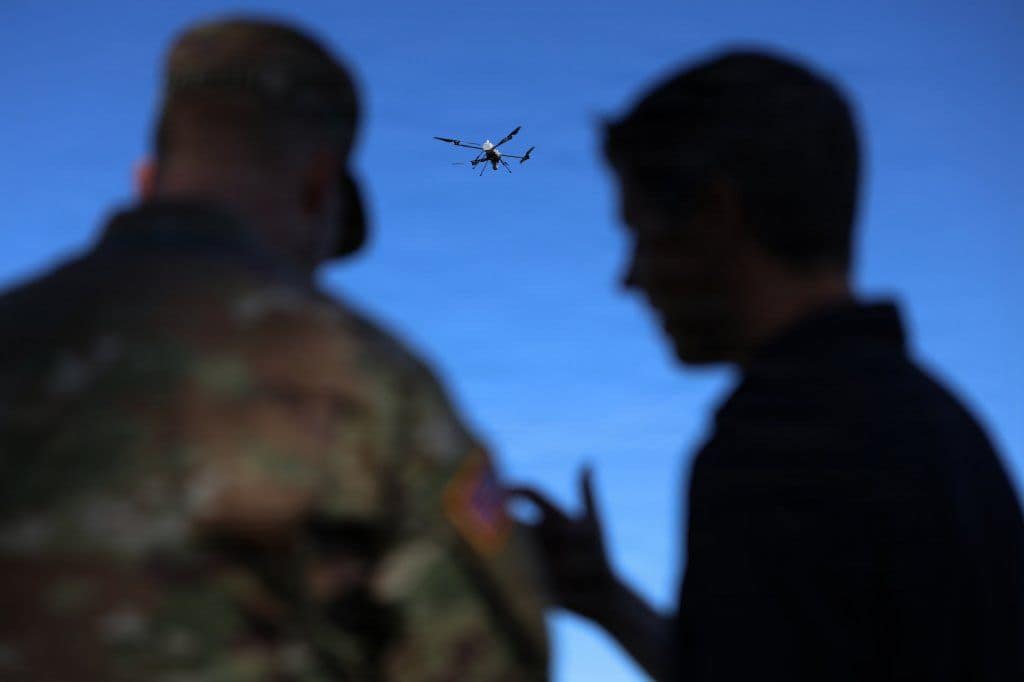
The unspoken context is that the US Army is behind. Ukraine and Russia iterate combat drones on weekly cycles; China mass-produces every class of drone at scales the Pentagon openly worries about. US Central Command only recently used its first long-range one-way attack drones in combat — LUCAS, a design reverse-engineered from Iran’s Shahed-136. The Army has now set itself a goal of buying a million drones within a few years. Senior officers have been blunt about the gap.
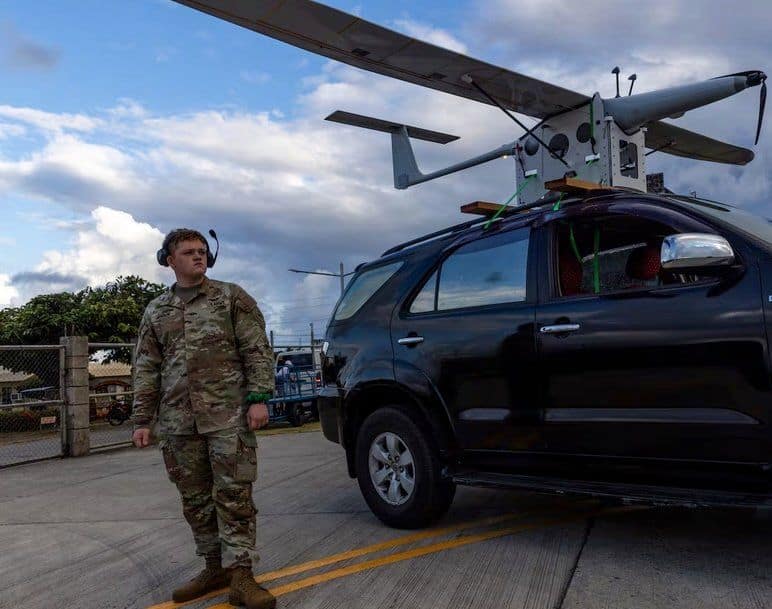
The Pacific makes the problem harder still. USARPAC commander Gen. Ronald Clark points out that a single operating box in Southeast Asia — Cambodia to the Philippines to Indonesia and back — covers roughly the same area as Europe from the UK to Finland to Spain. The command will need drones that work in Arctic cold, jungle humidity and desert heat, often at extreme ranges.
Decoys, Deception and What Comes Next
The decoy element deserves attention, because it inverts a lesson the West learned the hard way. For three years, cheap Russian decoys have forced Ukraine to spend scarce interceptors on empty airframes. This is the same play, run in reverse — and it only works if your drones are cheap enough to waste. That, more than any single aircraft, is the revolution the Army is chasing.
Notably, the officials introducing the command never once said the word “China.” The new unit, Clark insisted, is “not tied to a specific adversary.” Nobody in the room needed the map explained to them.
The command is barely two weeks old, and hard questions remain: which drones, how many, how fast, and whether Army procurement can move at the speed of the war it is imitating. But as a statement of intent, the 7th ID MDC-PAC is unambiguous — the US Army’s future Pacific fight will be fought, in large part, by machines flying in swarms. The activation ceremony and briefing are worth watching in full:
Sources: The War Zone (TWZ), US Army / USARPAC, DefenseScoop, Stars and Stripes
Related Questions
What is the 7th Infantry Division Multi-Domain Command Pacific?
The 7th ID Multi-Domain Command Pacific (7th ID MDC-PAC) is a reorganised U.S. Army division built to saturate a battlefield with drones. Formalised at Joint Base Lewis-McChord on 18 June 2026, it merges the 7th Infantry Division's two Stryker brigades with the 1st Multi-Domain Task Force's long-range sensing, fires, cyber, space and electronic-warfare units.
What are multi-domain operations?
Multi-domain operations is a U.S. military concept of fighting seamlessly across land, sea, air, space and cyberspace at once, so effects in one domain support the others. The 7th ID MDC-PAC embodies this by welding infantry manoeuvre to long-range fires, electronic warfare and drone mass, coordinated with the help of artificial intelligence.
What lessons did the US Army take from the war in Ukraine?
The Army concluded from Ukraine that there is no longer any safe place on a battlefield, as cheap drones and long-range sensors expose troops everywhere. Its answer is to make the enemy's ground just as unsafe by fielding drones in mass. Similar thinking is driving navies toward expendable strike drones.
When was the 7th ID MDC-PAC activated?
The unit was formalised in a redesignation ceremony at Joint Base Lewis-McChord on 18 June 2026. Rather than a brand-new formation, it is a merger of existing units, combining the 7th Infantry Division with the 1st Multi-Domain Task Force to create a division designed around drone mass and multi-domain effects.
What is a Multi-Domain Task Force?
A Multi-Domain Task Force is a U.S. Army formation that concentrates long-range sensing, precision fires, cyber, space and electronic-warfare capabilities in one unit. The 1st Multi-Domain Task Force's assets were folded into the new 7th ID MDC-PAC, giving a traditional infantry division reach and effects across multiple domains.
How are drones changing ground warfare?
Drones are making the battlefield transparent and lethal everywhere, so armies now plan to both defend against them and deploy them in mass to overwhelm the enemy. Coordinated by AI and paired with infantry, drone swarms are becoming central to doctrine, raising hard questions about autonomy, such as when machines are allowed to decide to fire.

0 Comments