
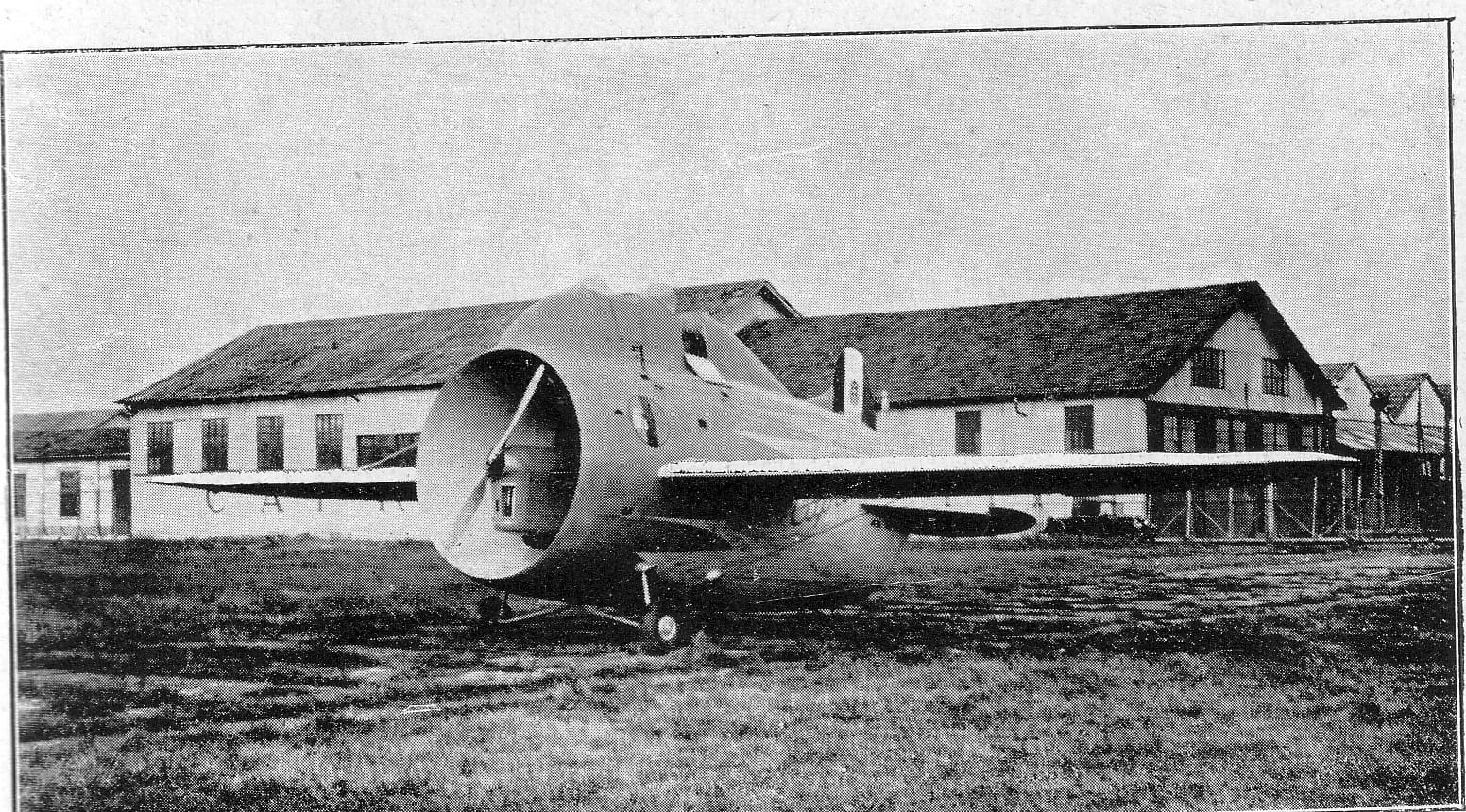
It looks like someone strapped wings and two open cockpits onto a beer keg and pushed it off a hill. Short, fat and hollow, the Stipa-Caproni is routinely voted one of the ugliest aircraft ever to actually fly. And yet this 1932 Italian oddity quietly sketched out an idea that powers nearly every airliner you have ever flown on.
Behind the barrel was a genuinely brilliant man and a genuinely brilliant — if drag-soaked — idea.
QUICK FACTS
| Aircraft | Stipa-Caproni — the “flying barrel” |
| Designed by | Luigi Stipa; built by Caproni, Italy |
| The idea | An “intubed propeller” — the whole fuselage was a ducted fan |
| Engine | 120 hp de Havilland Gipsy III, mounted inside the barrel |
| First flight | 7 October 1932, pilot Domenico Antonini |
| Top speed | Just 81 mph — but a landing speed of only 42 mph |
An engine inside a barrel
The designer was Luigi Stipa, and his concept had a name: the “intubed propeller.” Instead of hanging a propeller out in the breeze, Stipa shaped the entire fuselage into a tapered tube — a venturi — and put the propeller and a 120-horsepower de Havilland Gipsy III engine inside it. The duct squeezed and accelerated the airflow before it left the back of the aircraft, using Bernoulli’s principle to wring more thrust out of the same engine. In other words, the whole aeroplane was one big ducted fan.
The execution was charmingly low-tech: mostly wood, a mid-mounted wing, and two crew sitting in tandem in a little hump on top of the barrel.

Did it actually work?
On 7 October 1932, test pilot Domenico Antonini took the flying barrel into the air — and the physics held up. The intubed propeller really did improve the engine’s efficiency, just as Stipa had calculated. The airfoil-shaped interior of the duct generated extra lift, giving the aircraft a remarkably low landing speed of just 42 mph and a healthy rate of climb. It was even noticeably quieter than its contemporaries.
There was, however, a fat problem — literally. That barrel of a fuselage created so much aerodynamic drag that it cancelled out the efficiency it had won, and the Stipa-Caproni topped out at a leisurely 81 mph. Italy’s air force took one look and politely declined.
The barrel that predicted the jet
Here is the twist that turns a punchline into a footnote in aviation history. Stipa’s intubed propeller is, in essence, an ancestor of the ducted fan — and, by extension, of the turbofan engine that hangs under the wing of almost every modern jet. The Kort nozzle developed in 1934 leaned on the same principles, and more than a few historians trace a direct conceptual line from this wooden barrel to the high-bypass engines of today.
Period footage of the original survives, and it is worth a watch — there is something hypnotic about that stubby tube hauling itself into the sky.
A flying barrel, reborn
The idea refused to die. In Australia, the firm Aerotec Queensland built a three-fifths-scale replica, and in October 2001 pilot Bryce Wolff coaxed it into two short hops of around 600 metres, climbing to about six metres — behaving, witnesses said, much as the original had seventy years earlier.
The Stipa-Caproni never won a contract, never broke a record, and never lost its place on every “ugliest aircraft” list ever written. But it was right about something important long before anyone else was. Sometimes the silliest-looking machine in the room is the one quietly seeing the future.
Sources: Wikipedia; Vintage Aviation News; HistoryNet; Flight Journal.
Related Questions
What was the Stipa-Caproni?
The Stipa-Caproni was an experimental Italian aircraft of 1932, nicknamed the flying barrel. Designed by Luigi Stipa and built by Caproni, its entire fuselage was shaped into a tube enclosing the propeller and engine — effectively the world's first flying ducted fan.
How did the Stipa-Caproni work?
Its fuselage was a tapered venturi tube with a 120-hp de Havilland Gipsy III engine and propeller mounted inside it. The duct accelerated the airflow before it exited the rear, using Bernoulli's principle to wring more thrust from the same engine — making the whole aeroplane one big ducted fan.
Did the Stipa-Caproni actually fly?
Yes. Test pilot Domenico Antonini first flew it on 7 October 1932 and the physics held up: the ducted design improved engine efficiency, generated extra lift for a low landing speed, and was noticeably quieter than its contemporaries.
How fast was the Stipa-Caproni?
It topped out at just 81 mph. The barrel-shaped fuselage created so much drag that it cancelled out the efficiency the duct had won. Its one standout quality was a remarkably low landing speed of about 42 mph.
Why was the Stipa-Caproni never mass-produced?
Despite proving Stipa's theory, the fat barrel fuselage created too much drag, capping speed at a leisurely 81 mph. Italy's air force took one look and politely declined, and it remained a one-off experiment.
What is a ducted fan?
A ducted fan is a propeller or fan enclosed in a shroud or tube, which improves efficiency and thrust compared with an open propeller. The 1932 Stipa-Caproni was an early flying example, and the same principle lives on in the turbofan engines under modern jets.
Who designed the Stipa-Caproni?
It was designed by the Italian engineer Luigi Stipa, who conceived the intubed propeller, and built by the Caproni company. It first flew in 1932 with test pilot Domenico Antonini at the controls.
Did the Stipa-Caproni influence the jet engine?
In concept, yes. Its ducted intubed propeller is essentially an ancestor of the ducted fan and, by extension, the turbofan engine under almost every modern jet. Historians trace a conceptual line from this wooden barrel to modern jet propulsion.
Related Posts
The 10 Ugliest Aircraft Ever Built (That Actually Flew)
0 Comments