
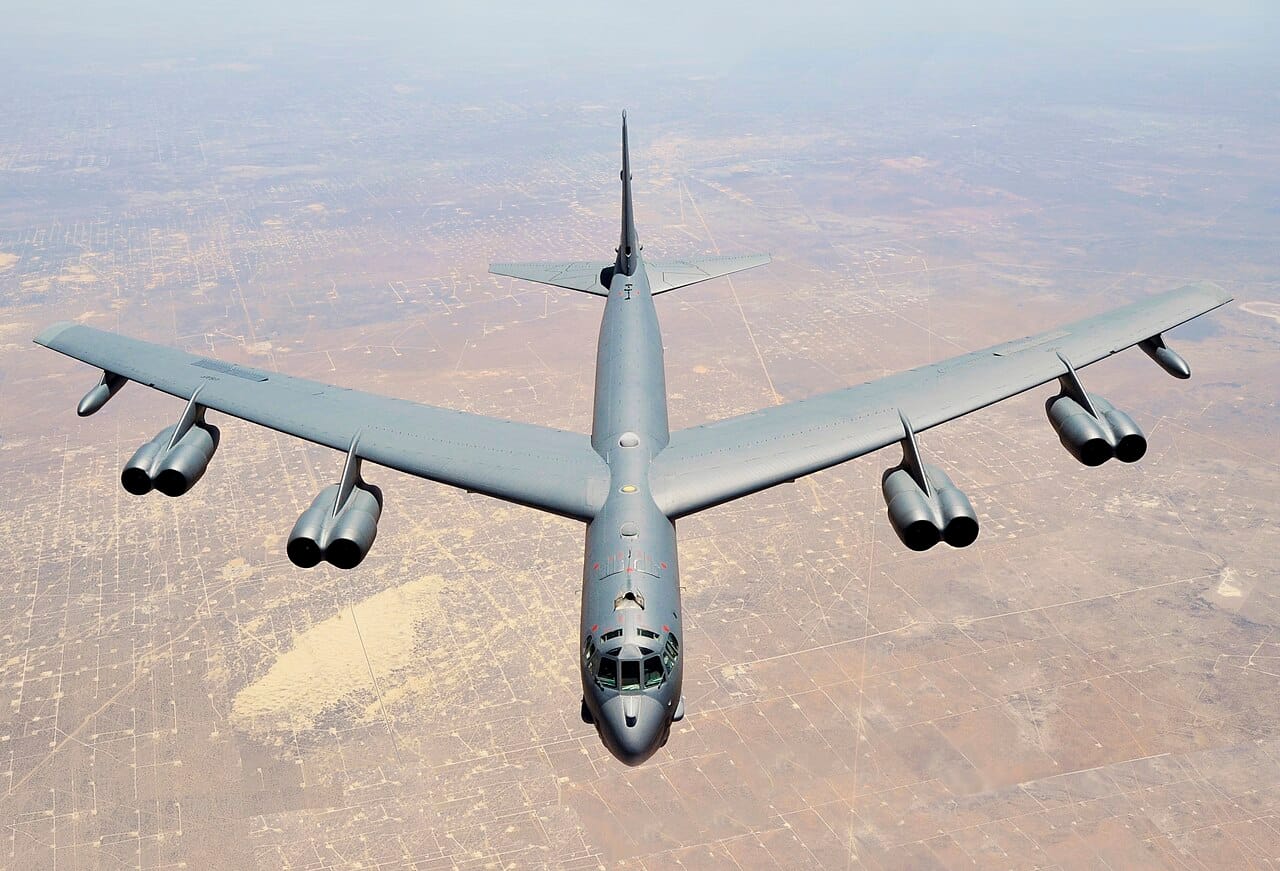
The United States plans to rely on the AGM-181 to keep its airborne nuclear deterrent credible deep into the 2050s. To get there, it has exactly one aircraft cleared to test the missile: the B-52, a bomber whose last airframe rolled off the line in 1962. The newest weapon in the arsenal is being validated by the oldest aircraft carrying it, and the arithmetic is beginning to bite.
A Government Accountability Office review, reported this week, found that the Long-Range Standoff missile programme has already slipped its schedule — not because of the missile, but because the bombers it needs are too often unavailable to fly.
It is a quiet, structural problem, and the kind the U.S. Air Force cannot simply buy its way out of.
Quick Facts
| Weapon | AGM-181A LRSO (Long-Range Standoff nuclear cruise missile) |
| Prime contractor | Raytheon |
| Replaces | The AGM-86B ALCM, fielded in 1982 |
| Test platform | B-52H — the only aircraft currently carrying it in tests |
| Fleet | 75 B-52H airframes, roughly 50–55% mission-capable; one dedicated test jet |
| Status | 9 of ~36 test flights flown; operational testing slips to September 2027; IOC around November 2030 |
One Jet, Too Many Jobs
The math is unforgiving. The Air Force operates 75 B-52H bombers, and just one of them is explicitly assigned to test and evaluation. Everything the LRSO programme needs — captive-carry flights, separation tests, guidance trials — competes for that single tail, against a fleet whose mission-capable rate has hovered around 50 to 55 percent in recent years. When half the fleet is in depot or awaiting parts on any given day, the test line is the first thing to stall.
The general responsible for the portfolio put the problem plainly.
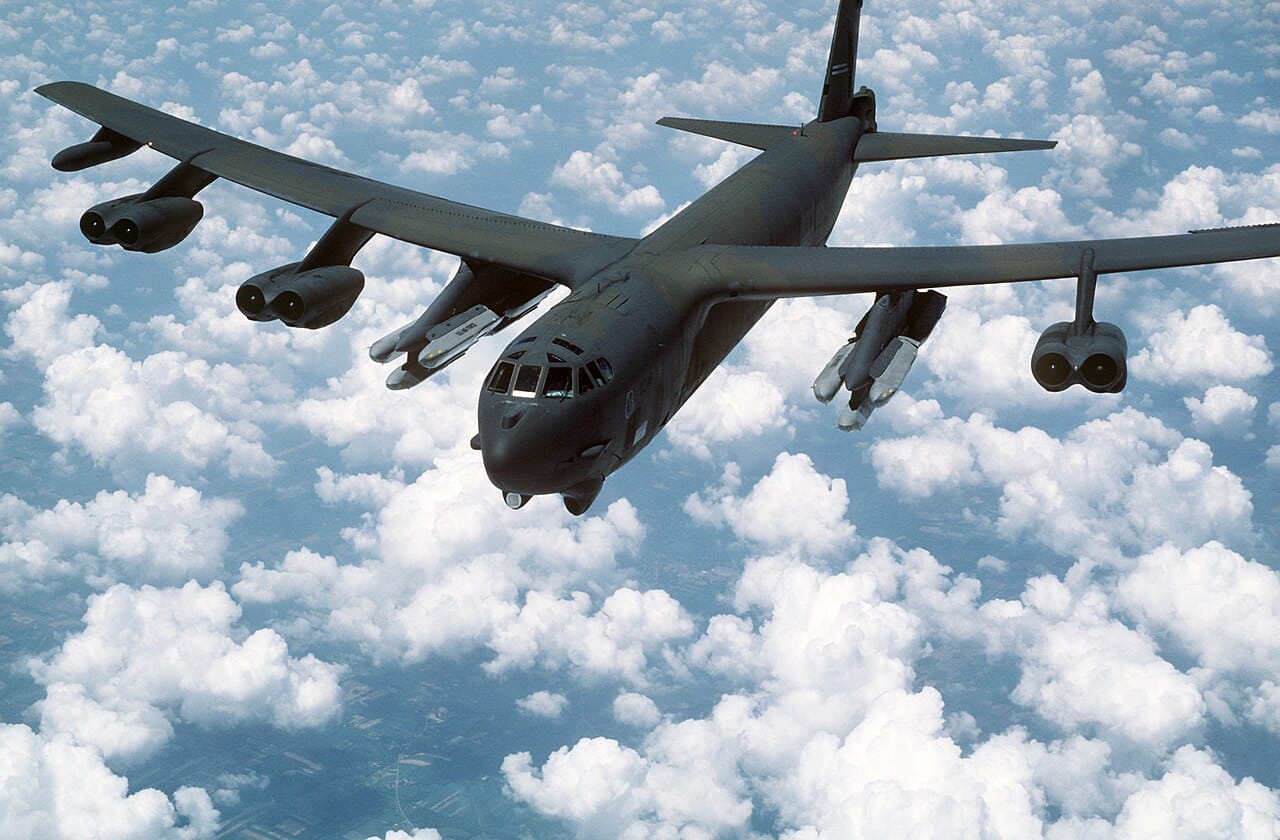
That tension is only going to grow. The same B-52 fleet is simultaneously being re-engined and re-radared under the sweeping B-52J modernisation, flying real-world deterrence sorties over Europe and the Middle East, and standing nuclear alert. The LRSO test campaign is one more claimant on an aircraft that is already asked to be everywhere at once.
A Four-Month Slip, and Counting
According to the GAO, the low availability of the legacy bombers has already pushed the missile’s initial operational capability back by about four months. Since October 2024 the programme has managed nine test flights, six of them in the past year. Another 27 are needed before operational testing can begin, now scheduled for September 2027, with initial operational capability targeted around November 2030.
The delays are not free. A one-year production stretch driven by budget pressure added roughly 347 million dollars to the programme’s cost — the familiar penalty of slowing a weapons programme down rather than speeding it up. None of this reflects a fault in the missile itself; the AGM-181 has performed as expected in the flights it has flown. The bottleneck is airframe hours.
The B-52 has outlived every bomber designed to replace it — and is now the indispensable test bed for the weapons that will keep it relevant.
Why It Still Matters
The AGM-181 is meant to replace the AGM-86B, an air-launched cruise missile that entered service in 1982 and whose stealth and reliability have eroded against modern air defences. As the air-breathing leg of the nuclear triad, a credible standoff missile lets the bomber force strike without flying into the teeth of enemy radar. A slip in LRSO is therefore a slip in the pacing of America’s deterrent modernisation.
The irony is hard to miss. The B-52 will carry both the missile it is retiring and the missile meant to replace it, well into a fifth operational decade. For now, the limiting factor on the newest weapon in the inventory is simply how many hours the oldest bomber in the inventory can spare.
Sources: The War Zone; U.S. Government Accountability Office; U.S. Air Force.

0 Comments