

In an era when a laptop can simulate airflow over a wing in hours, you might assume the wind tunnel has become a museum piece. After all, Computational Fluid Dynamics — CFD — has transformed aerodynamic design, allowing engineers to model millions of flow conditions without building a single physical model. Yet every major aircraft program, from the Boeing 777X to the F-35, still relies heavily on wind tunnel testing. The reason is straightforward: the real atmosphere does not always behave the way equations predict.
Wind tunnels remain one of the most important tools in aerospace engineering precisely because they deal in physical reality rather than mathematical approximation. They reveal phenomena that simulations miss, validate designs before they carry passengers, and provide the ground truth against which all computational models are calibrated. Far from being obsolete, wind tunnels are busier than ever — and the data they produce is more valuable than at any point in their 150-year history.
Quick Facts
- Francis Wenham built the first wind tunnel in 1871; the Wright brothers built their own in 1901
- NASA operates dozens of wind tunnels across multiple research centers
- The largest wind tunnel in the world (NFAC at NASA Ames) has an 80 × 120 foot test section
- Hypersonic tunnels can produce speeds above Mach 10 — over 7,600 mph
- A single wind tunnel test campaign can cost $500,000 to several million dollars
How a Wind Tunnel Actually Works
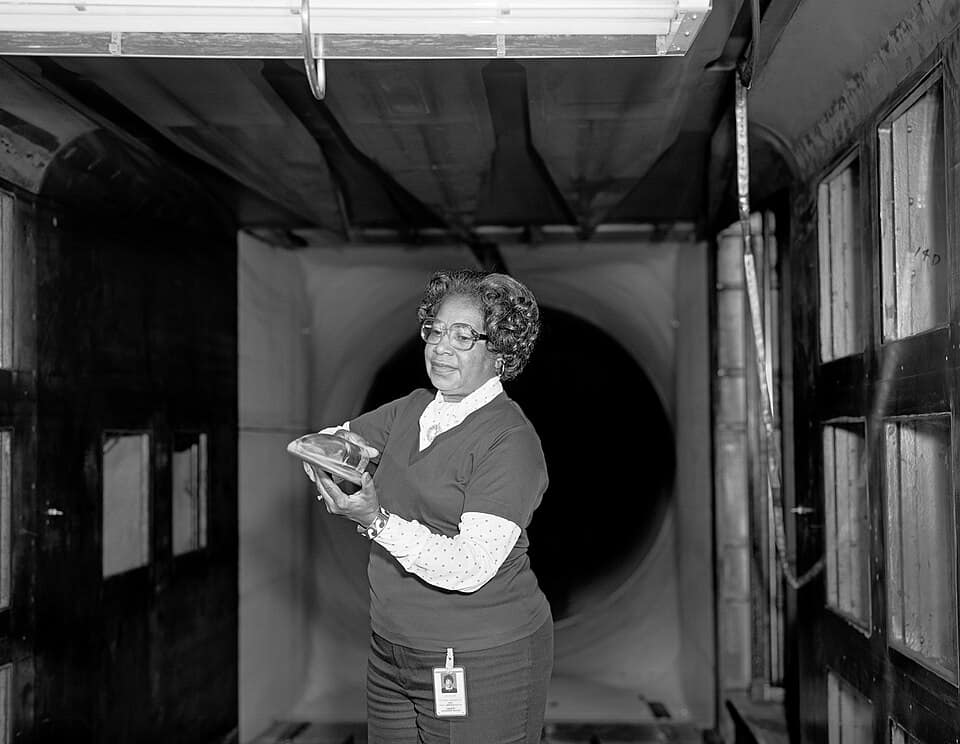
The basic concept is deceptively simple: move air over a stationary model instead of moving the model through air. In practice, this requires extraordinary engineering precision. A typical closed-circuit wind tunnel consists of a settling chamber with honeycomb flow straighteners and fine mesh screens that remove turbulence, a contraction section that accelerates the air smoothly, the test section where the model sits on a force-measuring balance, and a diffuser that slows the air before it returns through the circuit.
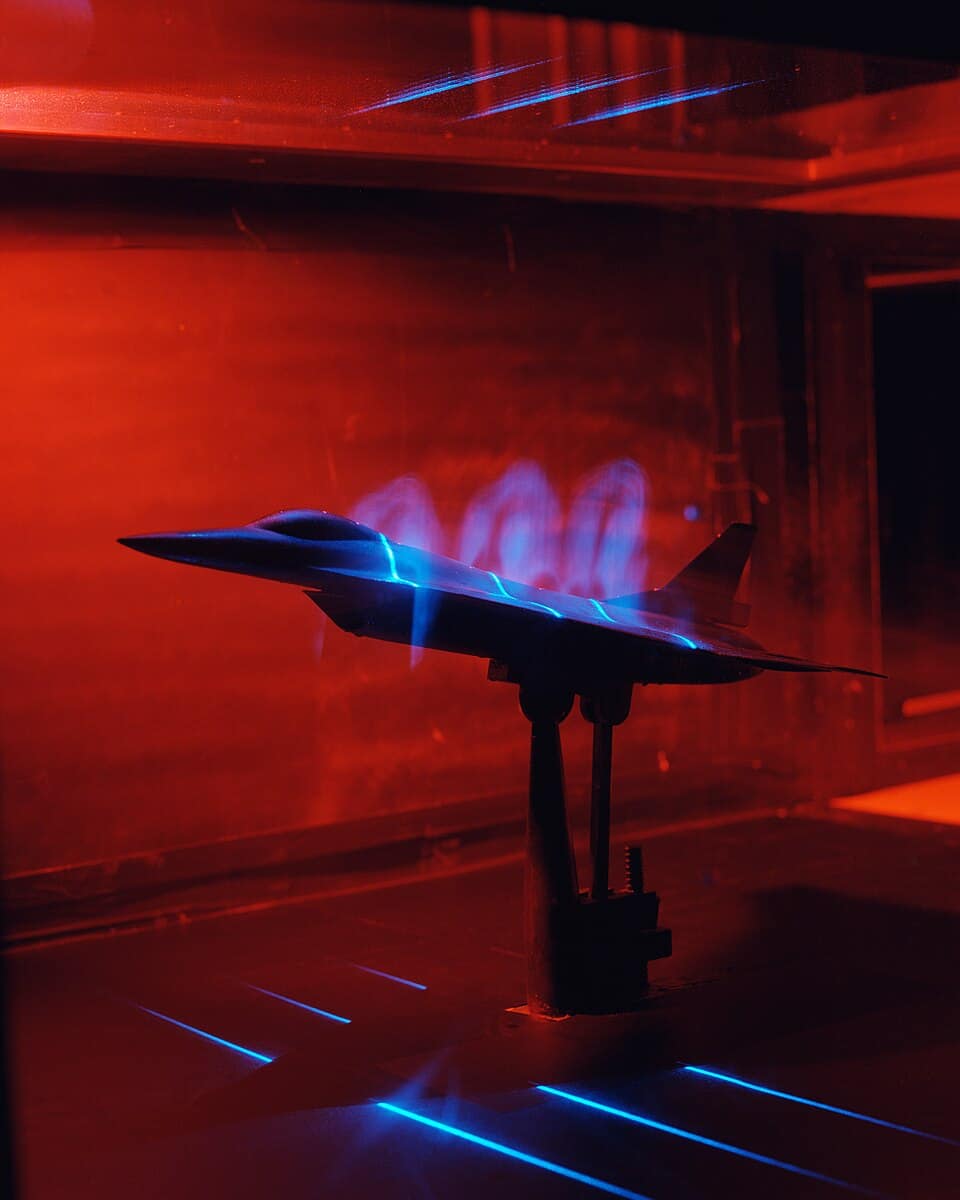
The test section is where the science happens. Models — typically scaled between 1:10 and 1:50 — are mounted on multi-component force balances that measure lift, drag, side force, and moments simultaneously with extreme precision. Hundreds of pressure taps drilled into the model surface record local pressure distributions. Flow visualization techniques including oil flow, tufts, and laser-illuminated smoke reveal the structure of airflow patterns that no sensor array can fully capture.
Types of Wind Tunnels
Wind tunnels come in vastly different configurations depending on the speed regime they need to simulate. Subsonic tunnels operate below Mach 0.8 and handle everything from commercial aircraft to buildings and automobiles. Transonic tunnels cover the critical range from Mach 0.8 to 1.2, where shockwave interactions make aerodynamic behavior particularly complex and difficult to compute. Supersonic tunnels reach Mach 1.5 to 5, and hypersonic facilities push beyond Mach 5 into the realm of reentry vehicles and scramjets.
Each type uses different drive mechanisms. Subsonic tunnels typically run continuously using large fans or compressors. Supersonic and hypersonic facilities often operate in "blowdown" mode, releasing compressed air from massive storage tanks for test runs lasting seconds to minutes. Some extreme hypersonic tunnels use combustion-heated or arc-heated air to simulate the thermal conditions of atmospheric reentry, where temperatures can exceed 3,000 degrees Celsius.

Why CFD Has Not Replaced the Tunnel
Computational Fluid Dynamics has made extraordinary advances since the 1980s. Modern CFD can model complex geometries with billions of grid points and capture many flow features that would have required tunnel testing a generation ago. So why do aerospace companies still spend millions on physical testing?
The answer lies in turbulence — the chaotic, multi-scale phenomenon that dominates most real-world flows. Fully resolving turbulence computationally (Direct Numerical Simulation) remains far too expensive for anything but simple geometries at low speeds. The turbulence models used in practical CFD are approximations, and they can produce errors of 10-20 percent or more in drag prediction for complex configurations. When a 1 percent error in drag translates to millions in fuel costs over an aircraft's lifetime, that uncertainty is unacceptable.
What Engineers Learn That Surprises Them
Some of the most valuable wind tunnel discoveries are the ones nobody predicted. Flutter boundaries — the speeds at which structural vibrations become self-reinforcing and potentially catastrophic — are notoriously difficult to predict computationally but can be observed directly in aeroelastic tunnel tests. Store separation behavior, where missiles or bombs detach from an aircraft at high speed, involves complex unsteady aerodynamics that still requires tunnel validation. And ice accretion testing, conducted in specialized icing tunnels, reveals how ice shapes form on wings and engine inlets in ways that no current simulation fully captures.
The Future of Physical Testing
Rather than replacing wind tunnels, modern computing has made them more productive. Digital twin approaches combine tunnel data with CFD to build validated models that can be extended computationally. Advanced measurement techniques like Particle Image Velocimetry (PIV) and pressure-sensitive paint capture data at resolutions unimaginable a generation ago. And machine learning is being applied to tunnel data analysis, identifying flow patterns and correlations that human analysts might miss.
Major investments continue to flow into wind tunnel infrastructure. The European Transonic Windtunnel in Cologne, which can simulate flight Reynolds numbers by pressurizing the test section with cryogenic nitrogen, remains fully booked years in advance. NASA's commitment to maintaining its tunnel portfolio through the 2040s reflects a broad consensus: in aerospace engineering, there is no substitute for watching real air flow over a real shape. The physics always has the final word.
Sources: NASA Technical Reports Server, AIAA Journal of Aircraft, European Transonic Windtunnel GmbH, Boeing Aerodynamics Research
Related Questions
What is a wind tunnel?
A wind tunnel is a facility that moves air over a stationary scale model to study aerodynamic forces, rather than moving the model through the air. A typical closed-circuit tunnel has a settling chamber, a contraction section that accelerates the air, a test section where the model sits on a force-measuring balance, and a diffuser.
Who invented the wind tunnel?
Francis Wenham built the first wind tunnel in 1871. The Wright brothers built their own in 1901 to gather lift and drag data for their early designs. The technology is over 150 years old, yet it remains one of the most important tools in aerospace engineering.
Are wind tunnels still used today?
Yes. Despite advances in Computational Fluid Dynamics (CFD), every major aircraft program, from the Boeing 777X to the F-35, still relies heavily on wind tunnel testing. Tunnels reveal phenomena that simulations miss and provide the ground truth against which computational models are calibrated.
How does a wind tunnel work?
It moves air over a stationary model instead of moving the model through the air. A closed-circuit tunnel uses honeycomb flow straighteners and fine mesh screens to remove turbulence, a contraction section to accelerate the air smoothly, and a test section where a force balance measures lift, drag, side force and moments at once.
How big is the largest wind tunnel?
The largest wind tunnel in the world, the NFAC at NASA Ames, has an 80-by-120-foot test section, large enough to test full-size aircraft. NASA operates dozens of wind tunnels across multiple research centers, ranging from small benchtop units to these enormous facilities.
What is a hypersonic wind tunnel?
A hypersonic wind tunnel produces airflow above Mach 10, over 7,600 mph, to study vehicles at extreme speeds. These specialized facilities let engineers observe the intense heating and airflow behaviour that ordinary tunnels and computer simulations cannot reliably reproduce.
How much does wind tunnel testing cost?
A single wind tunnel test campaign can cost from $500,000 to several million dollars. The expense reflects the precision engineering involved and the value of physical validation before a design ever carries passengers. Early aerodynamic mistakes could be deadly, as with the Christmas Bullet that killed both its test pilots.
How are wind tunnel models tested?
Models, typically scaled between 1:10 and 1:50, are mounted on multi-component force balances that measure lift, drag, side force and moments simultaneously. Hundreds of pressure taps record local pressures, and flow-visualization methods such as oil flow, tufts and laser-lit smoke reveal airflow over complex shapes, including variable-sweep "swing" wings.
0 Comments