

It is the morning of 7 January 1991, and Dick Cheney is about to do something a Defense Secretary almost never does. Standing at the Pentagon podium, the war in the Persian Gulf only days away, he announces that he is killing one of the Navy’s most important programs outright. Not trimming it. Not pausing it. Killing it. The aircraft in question has cost the taxpayer some $5 billion — and not one of them has ever left the ground.
The jet was the A-12 Avenger II, and to this day it holds a strange distinction: one of the most expensive aircraft America never built.
- What: the McDonnell Douglas / General Dynamics A-12 Avenger II — a stealthy, carrier-based flying-wing attack jet
- Nickname: the “Flying Dorito,” for its triangular shape
- Mission: replace the U.S. Navy’s A-6 Intruder from the mid-1990s
- Cancelled: 7 January 1991, by Defense Secretary Dick Cheney
- The damage: around $5 billion spent — and only a full-scale mockup ever built. It never flew.
- Legacy: the largest contract termination in Pentagon history at the time, and a legal fight that dragged on for 23 years
A chip-shaped revolution
On paper, the A-12 was thrilling. Born from a secret 1980s program to give the Navy a stealth bomber of its own, it was a tailless flying wing shaped like an almost perfect triangle — a silhouette so distinctive that everyone, eventually, called it the “Flying Dorito.” It was meant to slip past Soviet defences, fly off a carrier deck, and replace the venerable A-6 Intruder by the mid-1990s.
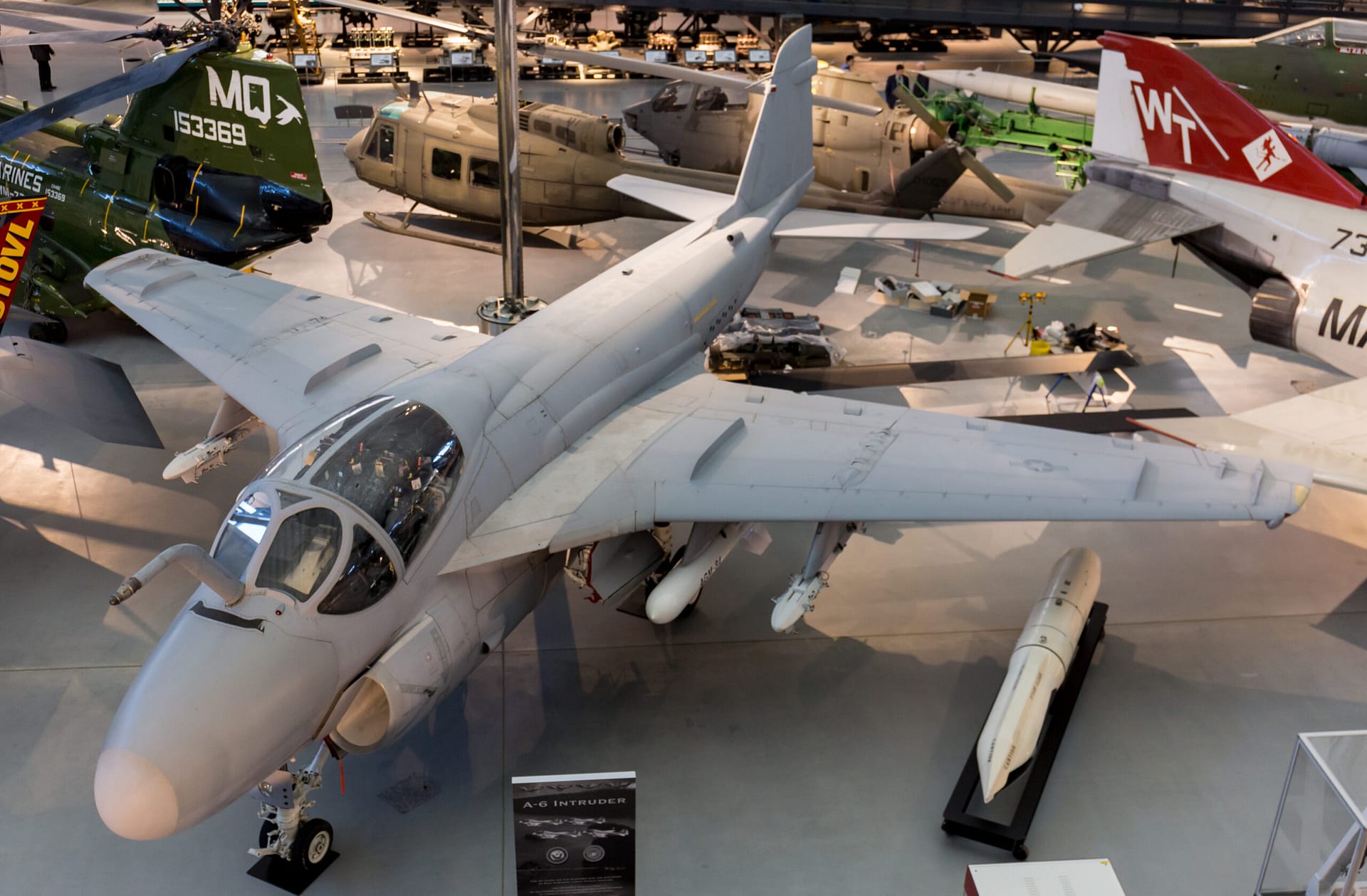
The McDonnell Douglas and General Dynamics team won the contract in January 1988, and for a while the future looked angular and black and very advanced. Then physics and accounting arrived together.
Too heavy, too late, too expensive
Stealth in the 1980s meant exotic materials and shapes that engineers were still learning to build. The A-12 fell behind schedule, blew through its budget, and — most damning for a carrier aircraft — ballooned to roughly 30% over its design weight. On a runway, extra pounds are an inconvenience. On a carrier deck, where a catapult flings the jet off the bow and an arresting wire yanks it back down, weight is close to a matter of life and death.
Cheney’s frustration was simple and devastating: the people running the program could no longer tell him what it would cost or when it would work. So he ended it — the largest contract termination in Pentagon history at the time.
The cruellest irony
Here is the part that still makes engineers wince. Cheney cancelled the Navy’s stealth jet roughly ten days before the Gulf War began — the very conflict in which the U.S. Air Force’s F-117 Nighthawk would step out of the shadows and prove, on live television, that stealth worked spectacularly. The Navy had just torched its own stealth future days before stealth had its coming-out party.
The wreckage outlived the program. The fight between the government and the contractors over who owed whom dragged through the courts for an astonishing 23 years, finally settling in 2014. The Navy, meanwhile, made do — leaning on ever-upgraded F/A-18 Hornets to fill a gap a stealth bomber was supposed to take. A genuine carrier-based stealth striker would not arrive until the F-35C, a generation later.
And the Flying Dorito itself? It survives as a full-scale mockup in a museum — a sleek black triangle that promised to change naval warfare, cost a fortune, and never once felt the wind under its wings.
Sources: The National Interest; 19FortyFive; Megaprojects; U.S. Department of Defense records.
Related Questions
What was the A-12 Avenger II?
The A-12 Avenger II was a planned stealthy, carrier-based attack aircraft for the U.S. Navy and Marine Corps, built by a McDonnell Douglas and General Dynamics team. Its flat, triangular flying-wing shape earned it the nickname 'Flying Dorito.' It was meant to replace the A-6 Intruder, but was cancelled in 1991 before any aircraft ever flew.
Why was the A-12 called the 'Flying Dorito'?
Because of its shape. The A-12 was a tailless flying wing in the form of an almost perfect isosceles triangle — a sharp-edged, dark, snack-chip silhouette that immediately earned it the affectionate nickname among aviation watchers.
Why was the A-12 cancelled?
The program was massively over budget and behind schedule, and the aircraft had grown about 30% over its design weight — a serious problem for a jet that had to launch from and land on aircraft carriers. In January 1991, Defense Secretary Dick Cheney cancelled it, saying no one could tell him what it would finally cost or when it would be ready.
How much money was wasted on the A-12?
Roughly $5 billion was spent and only a full-scale mockup was ever built — the aircraft never flew. At the time it was the largest contract termination in Pentagon history, and the dispute between the government and the contractors over who owed what dragged through the courts for 23 years, finally settling in 2014.
What replaced the A-12?
The Navy never got a stealthy A-6 replacement from the program. Instead it leaned on upgraded versions of the F/A-18 Hornet — eventually the larger F/A-18E/F Super Hornet — to carry the strike load the A-12 was meant to take on. A true carrier-based stealth strike aircraft would not arrive until the F-35C, decades later.
0 Comments