
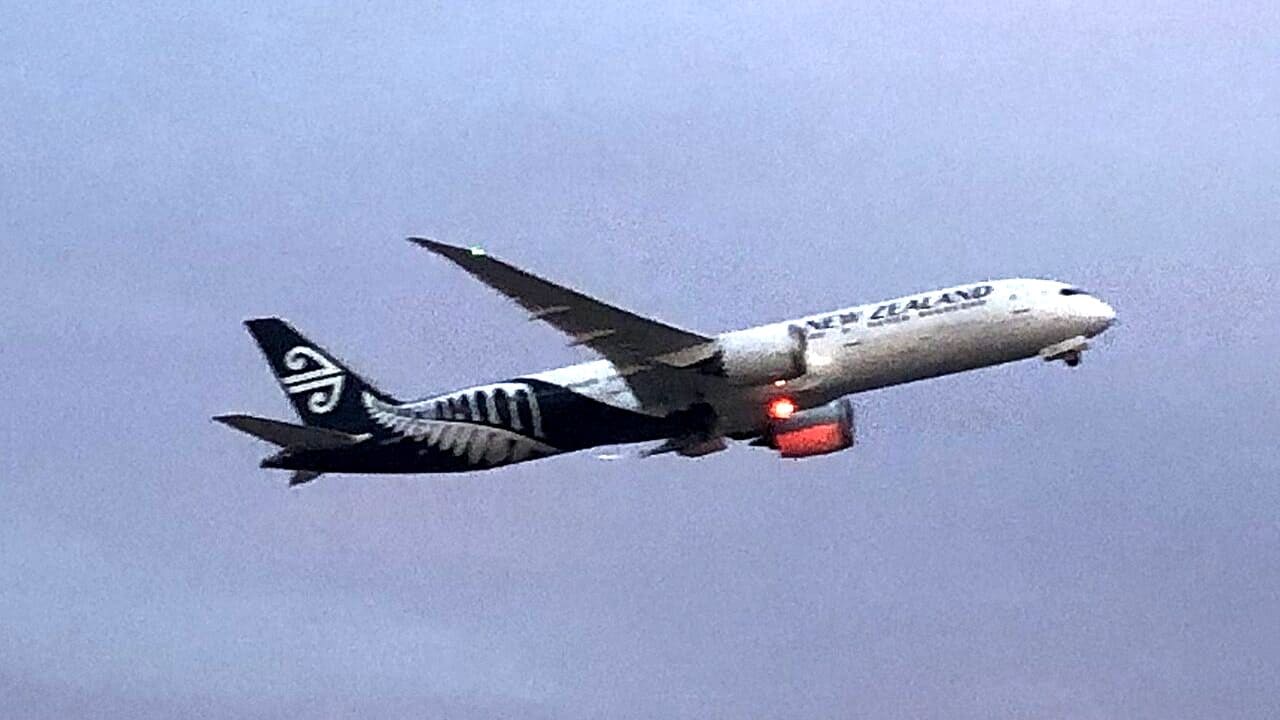
In the red dirt of Alice Springs, in the middle of the Australian outback, a Boeing 787-9 sat parked for the better part of a year — not broken, not retired, just waiting for engines. On June 28 it finally flew home to Auckland, and with it, Air New Zealand quietly closed one of the most frustrating chapters in its history: for the first time since the Rolls-Royce Trent 1000 crisis began, the airline has no widebody aircraft in storage.
Two days later, the twelve-year-old Dreamliner, registration ZK-NZD, was back where it belonged — carrying paying passengers across the Pacific to San Francisco.
Quick Facts: Air New Zealand’s Engine Recovery
| The milestone | No widebody aircraft in storage for the first time since the Trent 1000 engine shortage began |
| The last one back | 787-9 ZK-NZD — parked at Alice Springs since September 2025, ferried home June 28, back in service June 30 |
| Peak of the crisis | Five of Air New Zealand’s fourteen 787-9s grounded at once |
| The cause | Global shortage of Rolls-Royce Trent 1000 engines and overhaul capacity |
| What’s next | Two new 787-9s delivered by end of 2026; new routes from Christchurch to Singapore, Tokyo and Perth |
The Crisis That Grounded a Fleet
Air New Zealand did nothing wrong. Its Dreamliners were fine. But the Trent 1000 engines that power them have been a global headache for years — durability problems mean the engines need overhauls far more often than planned, and the world’s repair shops simply couldn’t keep up. With spare engines unavailable, airlines faced an absurd situation: perfectly good aircraft with nothing to hang under the wings.
At the worst point, five of Air New Zealand’s fourteen 787-9s were grounded — more than a third of its long-haul Boeing fleet. For an island nation at the end of the world’s longest air routes, that wasn’t an inconvenience; it was a structural problem for tourism and trade.
Engine Swaps in the Outback
The recovery plan had a distinctly practical Kiwi flavour. Long-term parking is scarce in Auckland and New Zealand’s damp climate is unkind to stored jets, so the grounded Dreamliners went to the dry desert air of Alice Springs. Then, rather than letting engines sit idle on parked wings, the airline sent teams into the outback to pull them off and feed them into the overhaul pipeline.
It worked. One by one the Dreamliners came home, and with ZK-NZD’s return the storage line at Alice Springs is empty — at least of Air New Zealand widebodies.
Growth Mode, Finally
With the full fleet flying, the airline is shifting from damage control to expansion: a completed cabin retrofit programme, two factory-fresh 787-9s arriving by the end of the year, and new routes linking Christchurch with Singapore, Tokyo and Perth.
There’s one caveat in the fine print: two of the airline’s Airbus A320neos remain grounded with Pratt & Whitney engine issues — down from six at the peak. The era of the perfectly healthy airline fleet, it seems, isn’t quite back. But after years of parked Dreamliners, an outback with no Air New Zealand jets in it counts as a very good week.
Sources: Air New Zealand, FlightGlobal, AeroTime, Simple Flying
Related Questions
What was the Rolls-Royce Trent 1000 crisis?
The Trent 1000 crisis refers to durability problems with Rolls-Royce's Trent 1000 engines that power many Boeing 787 Dreamliners, forcing airlines to pull engines for repeated inspection and overhaul. The resulting shortage left carriers like Air New Zealand with jets parked for want of engines, a problem that dragged on for years before finally easing in 2026.
Why were Air New Zealand's Dreamliners grounded?
Air New Zealand's Boeing 787-9s were grounded not because they were broken but because there were not enough serviceable Trent 1000 engines to keep them flying, as engines cycled through a backed-up overhaul pipeline. For an island nation at the end of the world's longest air routes, having widebodies sitting idle was a structural problem for tourism and trade.
Why were the stored jets kept in Alice Springs?
Air New Zealand parked its idle Dreamliners at Alice Springs in the Australian outback because long-term parking is scarce in Auckland and New Zealand's damp climate is unkind to stored jets. The dry desert air preserves airframes, and teams even travelled into the outback to pull engines off parked wings and feed them into the overhaul pipeline.
Which engine powers the Boeing 787 Dreamliner?
The Boeing 787 Dreamliner is offered with two engine choices: the Rolls-Royce Trent 1000 and the General Electric GEnx. Air New Zealand's fleet used the Trent 1000, which is why the type's durability issues hit the airline so hard. Engine reliability is central to safety, as dramatic dual-engine failure incidents show.
When did Air New Zealand return its last stored 787?
The last stored jet, 12-year-old 787-9 ZK-NZD, had sat at Alice Springs since September 2025 and was ferried home to Auckland on 28 June 2026. Two days later it re-entered service carrying passengers to San Francisco, marking the first time since the Trent 1000 crisis began that the airline had no widebody in storage.
Why does engine availability matter so much for airlines?
For a carrier flying long, thin routes, every grounded widebody removes significant capacity that is hard to replace, hurting schedules, tourism and trade. Engine shortages can idle otherwise healthy aircraft for months. The economics of parking and returning big jets echo other widebody sagas, such as the A380's on-again story.

0 Comments