

On a freezing afternoon in May 1942, on a frozen lake near the Ural town of Bilimbay, a stubby green aeroplane the size of a fighter trainer crouched on the snow. It carried no propeller. In its tail sat a steel chamber fed by red fuming nitric acid and kerosene — a combination that ate through metal, scorched skin and choked the lungs. The whole machine held barely two minutes of fuel. A 33-year-old captain named Grigory Bakhchivandzhi climbed in, lit the rocket, and was hurled into the sky faster than any Soviet aircraft had ever climbed.
The Bereznyak-Isayev BI-1 was the Soviet Union's answer to a nightmare: German bombers over its cities and no interceptor fast enough to reach them in time. The idea was brutal in its simplicity — strap a pilot to a rocket, fire him straight up at a raid, let him make one or two firing passes, then glide home dead-stick. It worked, briefly and brilliantly. Then it killed the man who flew it.
It is one of aviation's most daring and least-remembered experiments. This is its story.
Quick Facts — Bereznyak-Isayev BI-1
- Type: Single-seat rocket-powered point-defence interceptor
- Designers: Aleksandr Bereznyak & Aleksei Isaev, OKB-293 (chief designer V. F. Bolkhovitinov)
- Engine: Dushkin D-1A-1100 liquid-fuel rocket motor — red fuming nitric acid + kerosene, ~10.8 kN (2,430 lbf) thrust
- First powered flight: 15 May 1942, pilot Grigory Bakhchivandzhi (Koltsovo airfield)
- Powered endurance: roughly 1–2 minutes on a full propellant load
- Armament: two 20 mm ShVAK cannon (never fired in flight)
- Built: 9 prototypes (BI-1 through BI-9)
- Top speed reached: ~675 km/h (419 mph) in testing; estimated ~800 km/h (500 mph) on the fatal dive
- Fate: Programme abandoned as turbojets matured; Bakhchivandzhi killed 27 March 1943
A weapon born of desperation
The roots reach back to 1932, when Sergei Korolev — later the architect of Sputnik and Gagarin's Vostok — began experimenting with rocket-powered flight. By 1940 the idea of a rocket interceptor was circulating among Soviet designers. Two young engineers at Viktor Bolkhovitinov's design bureau, Aleksandr Bereznyak and Aleksei Isaev, sketched a tiny aircraft that could almost climb vertically. Their colleague Boris Chertok, who later helped run the Soviet space programme, recalled being astounded by the numbers.
Then, on 22 June 1941, Operation Barbarossa changed everything. Suddenly a fast-climbing interceptor was not a curiosity but a potential lifesaver. After a report reached the Kremlin, Bolkhovitinov's team was ordered to build the aircraft — and given just 35 days to do it. The engineers visited their families, then moved into the factory and effectively lived there until it was finished.

The name “BI” officially stood for Blizhnii Istrebitel — close-range fighter — but everyone understood it also stood for Bereznyak and Isaev. The aircraft they built was crude by necessity: a low-wing monoplane just 6.4 metres (21 ft) long, skinned in 2 mm plywood with a bonded fabric covering, its first prototypes assembled with the help of local furniture workers. Two 20 mm ShVAK cannon sat in the nose. Empty, it weighed around 805 kg (1,775 lb).
Everything about it was a compromise in the service of one goal: get to altitude faster than anything else alive.
The engine that tried to kill everyone
The heart of the BI was the Dushkin D-1A-1100, a liquid-fuel rocket motor designed by Leonid Dushkin. It burned tractor kerosene as fuel and red fuming nitric acid as oxidiser — the “A” in its designation stood for Azotnokislotny, nitric-acid, distinguishing it from the liquid-oxygen engines other Soviet teams favoured. On a good day it produced about 10.8 kN (2,430 lbf) of thrust, throttleable down to a fraction of that.
Nitric acid is a monstrous thing to handle. It corroded the aircraft's own tanks, which had to be replaced periodically. It burned skin and seared lungs. Crews kept tanks of soda solution standing by to neutralise spills.
That description — from test pilot Konstantin Gruzdev, after a flight in which a landing skid sheared off on take-off — gave the aircraft its enduring nickname: the “devil's broomstick.” The phrase captured both the violence of the acceleration and the sense that the machine might turn on its rider at any moment.
It nearly did, more than once. On 20 February 1942, during a full ground test, the engine exploded. The nozzle was blasted into the lake and the engine head struck the back of the pilot's seat, slamming Bakhchivandzhi into the instrument panel. Pressurised nitric acid from a ruptured line drenched the engineer Arvid Pallo; quick-thinking mechanics plunged him head-first into a tank of soda solution. His glasses saved his eyes; his face stayed stained yellow for days. Afterwards, a steel plate was bolted behind the pilot's seat.

Fifteen minutes of glory, three minutes at a time
On 15 May 1942 at Koltsovo airfield, Bakhchivandzhi made the first true powered flight. With a reduced propellant load and the engine de-rated, the BI-1 climbed to 840 metres (2,760 ft) and reached 400 km/h (250 mph). He shut the engine down after about a minute when a warning light showed it overheating, then glided in — landing so steeply that the main gear broke on touchdown. He walked away unhurt and reported that, rough landing aside, the aircraft handled well. The whole flight lasted 3 minutes and 9 seconds.
It was the first powered take-off of a Soviet rocket plane, and the watching engineers knew they had witnessed something new. Over the following months further flights pushed the envelope. In January 1943, with the engine finally opened to full thrust, Gruzdev hit 675 km/h (419 mph). On 21 March 1943 Bakhchivandzhi reached a climb rate of 83 metres per second — roughly 16,000 feet per minute, far beyond any piston fighter of the day.
A concise documentary on the BI-1 programme — design, engine and test campaign.
For a few brief flights, the BI did exactly what its designers had promised: it went up like nothing else. But the powered phase of every flight was measured in seconds. With a full load of propellant the engine could burn for under two minutes. The interceptor was, in effect, a guided firework with a pilot — thrilling, and almost impossible to use as a practical weapon.
Period Soviet footage described as test flights of the BI-1 under Bakhchivandzhi, winter 1942 (Russian-language).
The dive that ended it
On 27 March 1943, Bakhchivandzhi took the third prototype up for what was only the seventh powered flight of the type. The early part went well. Then, about 78 seconds in, after he pushed the throttle, the aircraft nosed over into a steep dive of around 45–50 degrees and drove into the ground. The crash instruments were destroyed, but estimates of his final speed range from roughly 800 to 900 km/h.
At the time, no one understood why. The cause was something aerodynamicists were only beginning to grapple with: as the aircraft approached the speed of sound, shifting airflow over the wing and tail produced an uncontrollable nose-down pitching tendency — what would later be called Mach tuck. Soviet engineers did not isolate the mechanism until wind-tunnel tests some four years later. Bakhchivandzhi had flown straight into a wall of physics that the world's best minds had not yet mapped.
His death cast a long shadow over the programme. The air force grew wary; a plan to mass-produce dozens of armed BI-VS interceptors was cancelled. Bolkhovitinov pushed on, building prototypes up to BI-9, even fitting one with ramjets and another with an improved Isaev rocket engine. But the writing was on the wall.
Why it is forgotten — and why it mattered
By the mid-1940s the turbojet had arrived, offering the speed of a rocket without the suicidal endurance or the flesh-eating propellants. The BI's central flaw — that it could fly under power for barely two minutes — was unfixable. Rocket interceptors were a dead end, in Moscow as in Germany, where the Messerschmitt Me 163 Komet ran into the same brutal arithmetic.
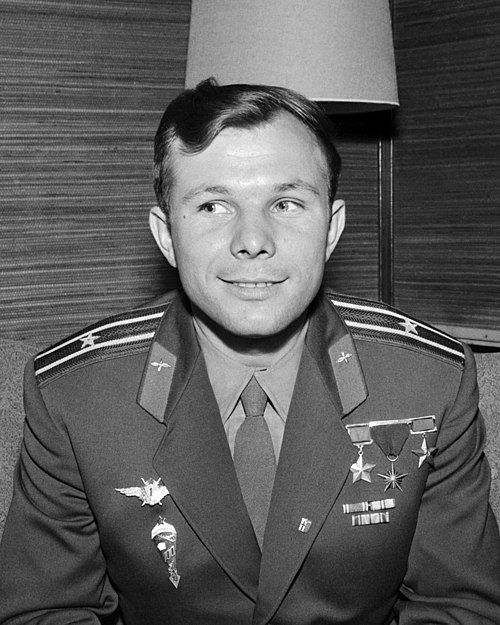
And so the BI slipped out of memory. For years, few outside the test-pilot fraternity even remembered Bakhchivandzhi's name. Only in 1973, thirty years after his death, was he made a Hero of the Soviet Union. Yuri Gagarin, who knew exactly what it had cost to open the door to high-speed and ultimately spaceflight, did not forget him.
The real legacy of the BI was not the aircraft but the people. Bereznyak went on to found a leading Soviet cruise-missile bureau. Isaev became one of the giants of Soviet rocketry, building the liquid-fuel engines that pushed cosmonauts into orbit. The desperate little plywood rocket plane that flew for three minutes at a time turned out to be a training ground for the men who reached the Moon's far side — where, fittingly, a crater now bears Bakhchivandzhi's name.

Sources: Wikipedia (Bereznyak-Isayev BI-1; Grigory Bakhchivandzhi); Boris Chertok, Rockets and People (NASA History Series); Yefim Gordon, Soviet Combat Aircraft of the Second World War; Bart Hendrickx & Bert Vis, Energiya-Buran; Michel van Pelt, Rocketing Into the Future; HistoryNet, “The Devil's Broomstick.”
Related Questions
What was the Soviet BI-1 rocket plane?
The Bereznyak-Isayev BI-1 was a Soviet single-seat rocket-powered interceptor of World War II, designed for rapid point defence. Powered by a liquid-fuel rocket motor, it first flew under rocket power on 15 May 1942 — one of the earliest rocket-propelled aircraft to fly.
How long could the BI-1 fly on rocket power?
Only about one to two minutes on a full load of propellant. Like other early rocket aircraft, the BI-1 traded endurance for a blistering climb: it was meant to launch, intercept a bomber almost immediately, then glide back to land.
What fuel did the BI-1 use?
Its Dushkin rocket motor burned a combination of red fuming nitric acid and kerosene, producing around 10.8 kN of thrust. The corrosive, volatile propellants made the aircraft extremely dangerous to fly and maintain.
When did the BI-1 first fly?
The BI-1 made its first rocket-powered flight on 15 May 1942, piloted by Grigory Bakhchivandzhi at Koltsovo airfield — one of the world's first flights by a purpose-built rocket interceptor.
What happened to the BI-1 program?
Only about nine prototypes were built and it never entered service. Test flying revealed dangerous handling near its speed limits, and pilot Grigory Bakhchivandzhi was killed in a later flight, helping bring development to an end.
Was the BI-1 ever used in combat?
No. The BI-1 remained experimental — its two 20 mm ShVAK cannon were never fired in flight. With barely a minute or two of powered endurance and serious safety problems, it never became an operational interceptor.


0 Comments