
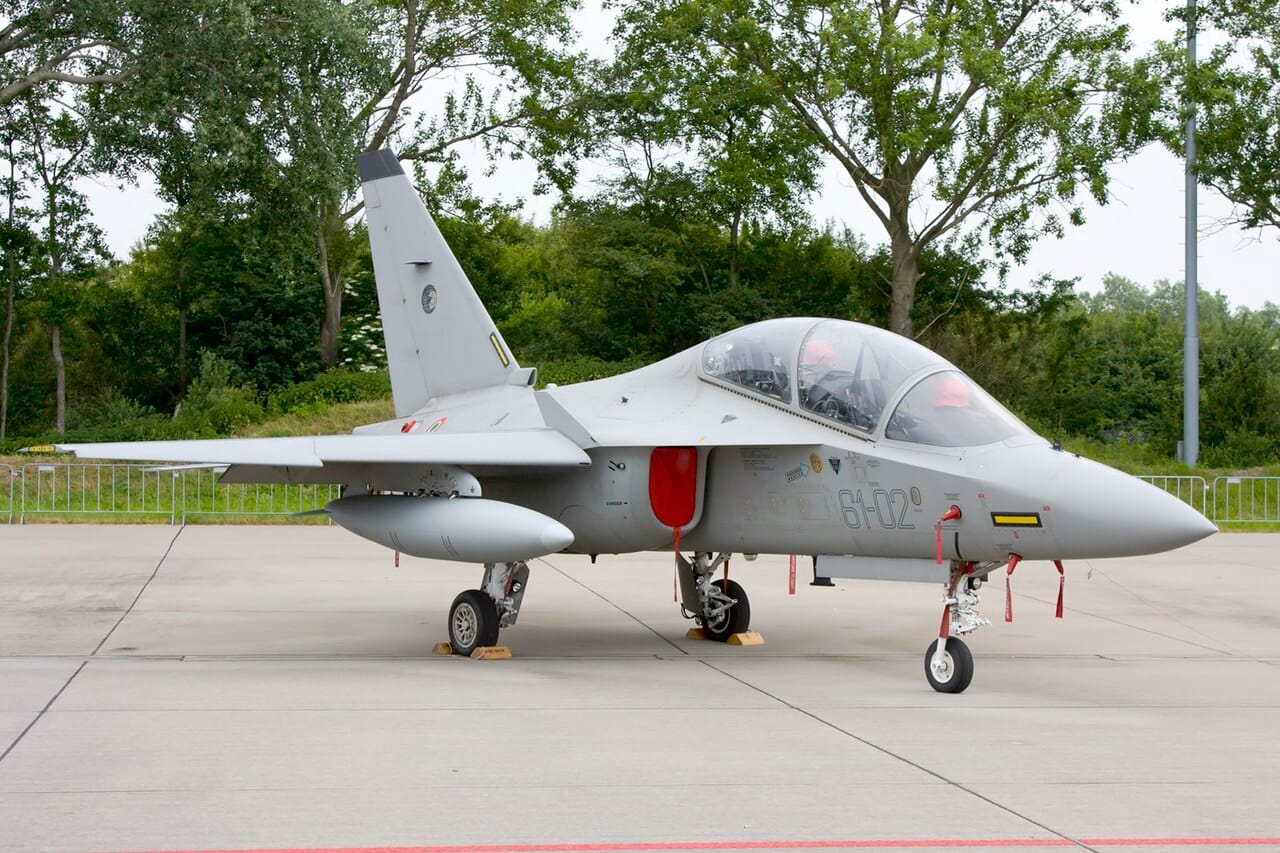
When you buy a front-line fighter, you also have to solve a quieter problem: how to train the pilots who will fly it. On 16 June 2026, Canada took a major step toward an answer — and the jet it chose is Italian.
On the sidelines of the G7 summit in France, Canadian Prime Minister Mark Carney and his Italian counterpart Giorgia Meloni formally launched negotiations for Canada to acquire Leonardo’s M-346 Master advanced jet trainer. Sources put the figure at around 30 aircraft — the machines that will teach the next generation of Royal Canadian Air Force pilots before they ever strap into a fighter.
QUICK FACTS
What: Canada opens negotiations to buy Leonardo M-346 Master jet trainers
Announced: 16 June 2026, on the sidelines of the G7 summit in France
Who: Canadian PM Mark Carney and Italian PM Giorgia Meloni
How many: Around 30 aircraft under discussion
Programme: Canada’s Future Fighter Lead-In Training (FFLIT)
Why Leonardo: RCAF crews already train on the M-346 in Sardinia, Italy
A gap on the flight line since 2024
Canada has had a hole in its training pipeline. The RCAF retired its BAE Systems CT-155 Hawks in 2024 and has spent years hunting for a modern replacement under its Future Fighter Lead-In Training programme — the course that bridges a student pilot and a fast jet like the F-35 Canada is now buying.
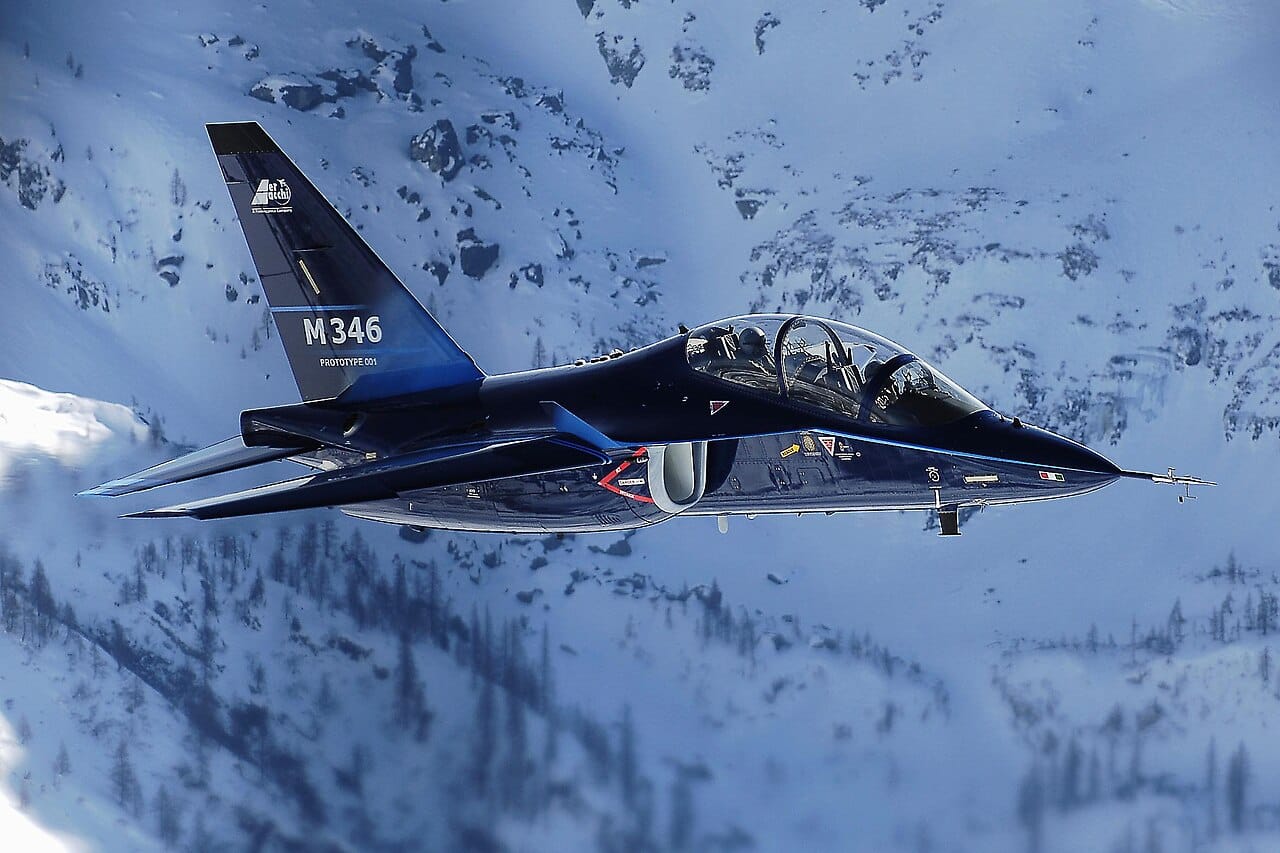
The M-346 is built for exactly that job. It is a twin-engine advanced trainer that can mimic the handling and sensors of a modern fighter, letting students fly demanding missions on a cheaper, safer aircraft before moving up.
Why Italy had the inside track
Canada did not lack options — American and South Korean manufacturers pitched their own trainers. But Leonardo started with a quiet advantage: Canadian pilots and instructors already fly the M-346 at the International Flight Training School in Sardinia, where several NATO air forces send students. They know the cockpit, the flight model and the mission systems.
That familiarity, plus Ottawa’s stated “build-partner-buy” approach of teaming with trusted allies, made the Italian jet the natural front-runner. Choosing it also deepens defence-industrial ties between two NATO members at a moment when Europe and Canada are both rethinking how closely to bind their militaries together.
From talks to tarmac
Negotiations are not a signed contract, and numbers and timelines can still shift. But the political signal sent at the G7 is clear: Canada has picked its horse. If the deal closes, the distinctive twin-tailed Master will become the aircraft on which a generation of Canadian fighter pilots earns its wings.
Sources: FlightGlobal; Aviation Week; Breaking Defense; The Globe and Mail; The Defense Post.
Related Questions
What is the Leonardo M-346 Master?
The Leonardo M-346 Master is a twin-engine advanced jet trainer built by Italy’s Leonardo. It teaches pilots the handling and sensors of modern fighters like the F-35 on a cheaper, safer aircraft before they move to front-line jets. The same M-346 has also featured in crewed-uncrewed drone teaming experiments.
Why is Canada buying the M-346?
Canada opened negotiations on 16 June 2026 to acquire around 30 M-346 trainers under its Future Fighter Lead-In Training (FFLIT) programme. The jets will bridge student pilots to fast jets such as the F-35. Royal Canadian Air Force crews already train on the M-346 in Sardinia, Italy.
How many M-346 trainers will Canada buy?
Sources put the figure at around 30 aircraft. The deal, launched on the sidelines of the G7 summit in France, is still under negotiation, so the numbers and timelines could shift before any contract is signed.
What replaced Canada’s old jet trainers?
Canada retired its BAE Systems CT-155 Hawks in 2024, leaving a gap in its training pipeline. The M-346 is the proposed replacement under the Future Fighter Lead-In Training programme, preparing pilots for the F-35 Canada is acquiring.
Who makes the M-346 Master?
Italy’s Leonardo builds the M-346. It competes globally against trainers from the United States and South Korea — a rivalry also seen in U.S. Navy competitions, where Boeing declined to bid for the Navy’s next trainer.
What is an advanced jet trainer?
An advanced jet trainer mimics the handling and mission systems of a front-line fighter, letting student pilots fly demanding missions cheaply and safely before moving to expensive combat jets. Strong demand for them has fuelled multi-billion-dollar trainer competitions worldwide.
0 Comments