
In the 1960s, American spy satellites scanning the Caspian Sea brought back pictures of something that should not have existed: a 92-metre, jet-powered hybrid of ship and aircraft, skimming the water at 500 km/h. The CIA called it the Caspian Sea Monster. The Soviets called it Korabl Maket. Then the USSR collapsed, the project rusted in port, and the world forgot.
This week, the Monster came back — with Mandarin instructions.
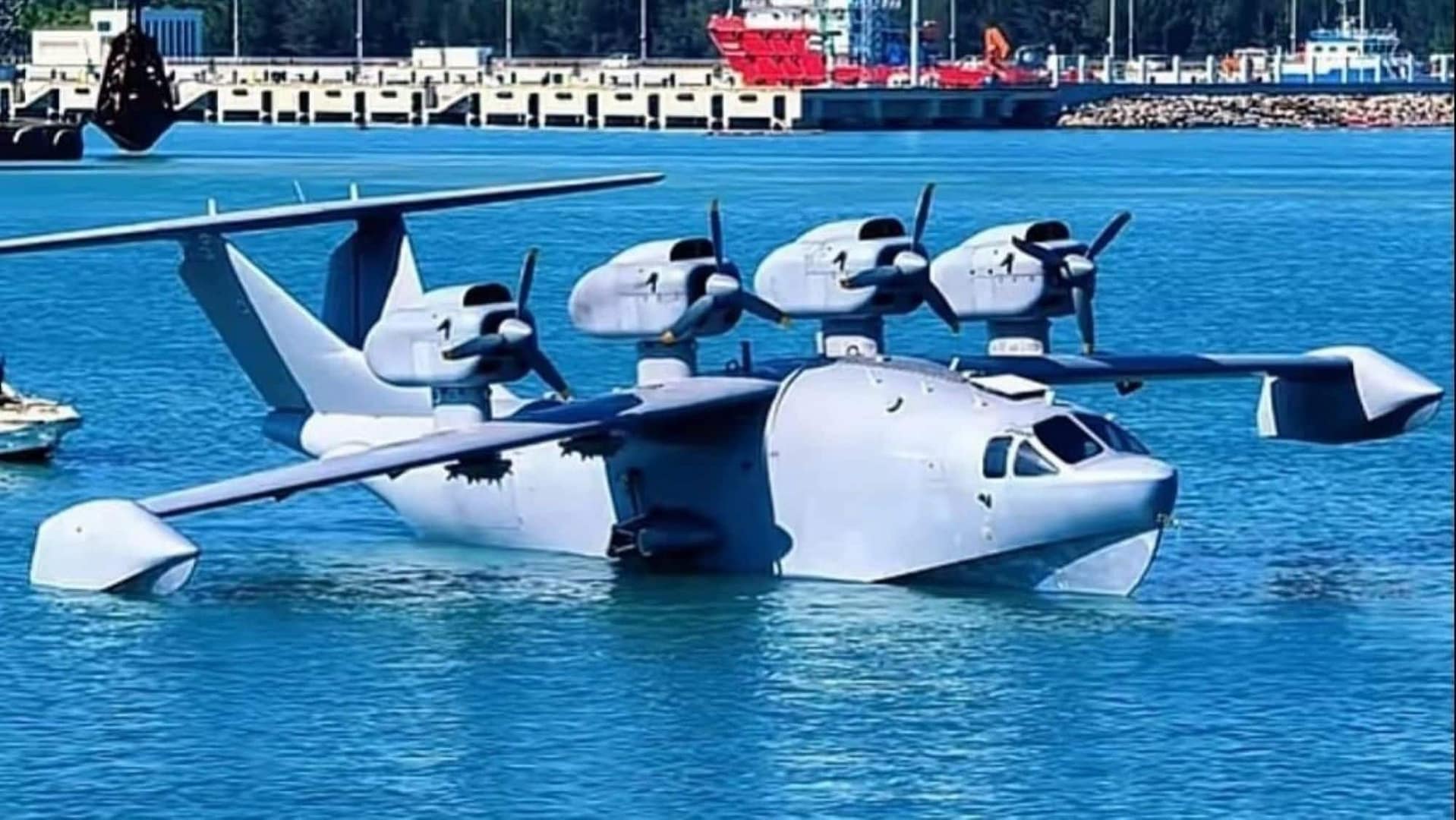
The clearest images yet of China’s “Bohai Sea Monster” just surfaced, and the analysts who track Chinese naval programmes are doing the maths. What Beijing has built is bigger than the Lun-class, more practical than the KM, and aimed squarely at the one military problem the United States has been pretending was solved: how to resupply a contested island in the western Pacific before anything that floats gets sunk.
Quick Facts
- Aircraft: Chinese four-engine wing-in-ground-effect (WIG) vehicle, unofficially “Bohai Sea Monster”
- First sighted: July 2025, Bohai Sea coast
- Latest sighting: May 2026 — clearer images plus visible underwing pylons
- Power: Four top-mounted turboprops with three-blade propellers
- Tail: Joined V-tail, with a square dish antenna above the cockpit (HF/VHF/UHF comms)
- Pylons: 4 underwing hardpoints visible — presumed for anti-ship missiles or torpedoes
- First identified by: Submarine analyst H I Sutton (July 2025); latest analysis by Andreas Rupprecht
- Closest analog: Soviet Lun-class missile carrier, 1987
What the new images actually show
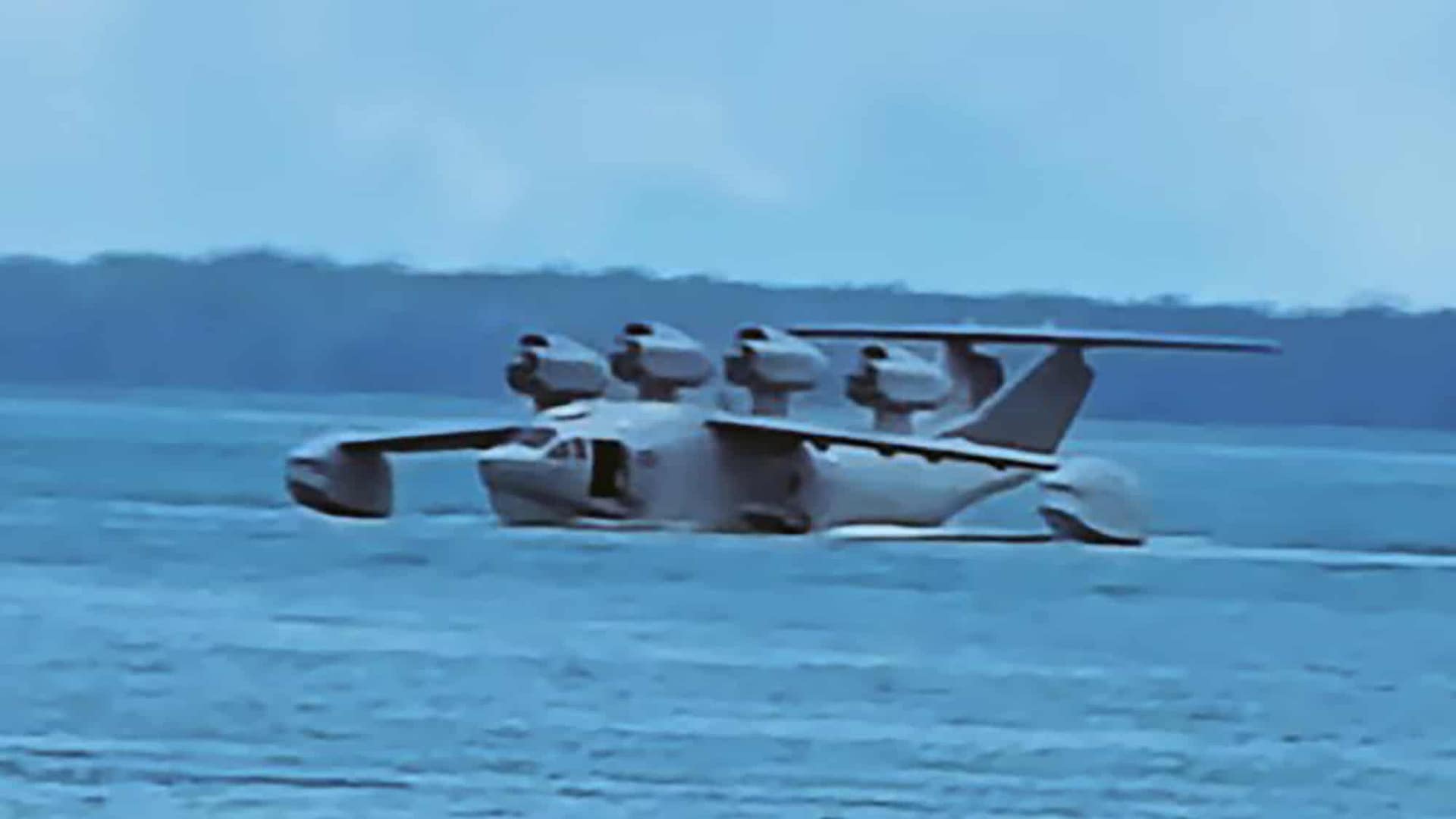
The aircraft was originally dubbed the “Bohai Sea Monster” after the location where it was first photographed in July 2025, in the northwestern part of the Yellow Sea. The first image, grainy and partial, showed a large four-engine craft moving on the water near a Chinese seaport. Analysts could just make out the basic configuration. A second sighting in May 2026, shared on X by leading Chinese-military analyst Andreas Rupprecht, gave the world the clearest view yet — and a surprise.
The clearer photos reveal four hardpoints under the wings — two of them clearly fitted with pylons under the visible starboard wing. Symmetry suggests two more on the port wing as well. These are not the marks of a cargo-only ekranoplan. These are weapons stations. Rupprecht was the first to flag it.
One detail the second sighting confirmed: the “monster” is smaller than originally estimated. Comparing it to the seaport infrastructure in the background, observers now consider it far smaller than the roughly 73-metre Soviet Lun-class. An observer in the comment thread under Rupprecht’s post, “Fay”, has suggested this is a technology-demonstrator prototype, and that the operational aircraft will be scaled up to roughly the size of the Y-15 medium tactical lift aircraft and will use the same four WJ-10/AEP500 turboprop engines — or larger.
A revival of the strangest idea in Cold War aviation
An ekranoplan is one of those concepts that sounds like a hoax until you see one move. Fly an aircraft within roughly one wingspan of a flat surface and a thick cushion of compressed air forms underneath, dramatically reducing induced drag. The result is a machine that’s heavier than any seaplane should be allowed to fly, faster than any ship has any right to move, and almost invisible to radar that’s looking for things in the air.
The Soviets ran with the concept harder than anyone. The KM “Caspian Sea Monster” first flew in 1966. The 380-tonne Lun-class — armed with six anti-ship cruise missiles — followed in 1987. They were fast, low, brutally efficient at sea level, and operationally nightmarish: they couldn’t climb out of ground effect, couldn’t fly in rough seas, and burned fuel like a furnace. When the USSR ran out of money, the programme died.
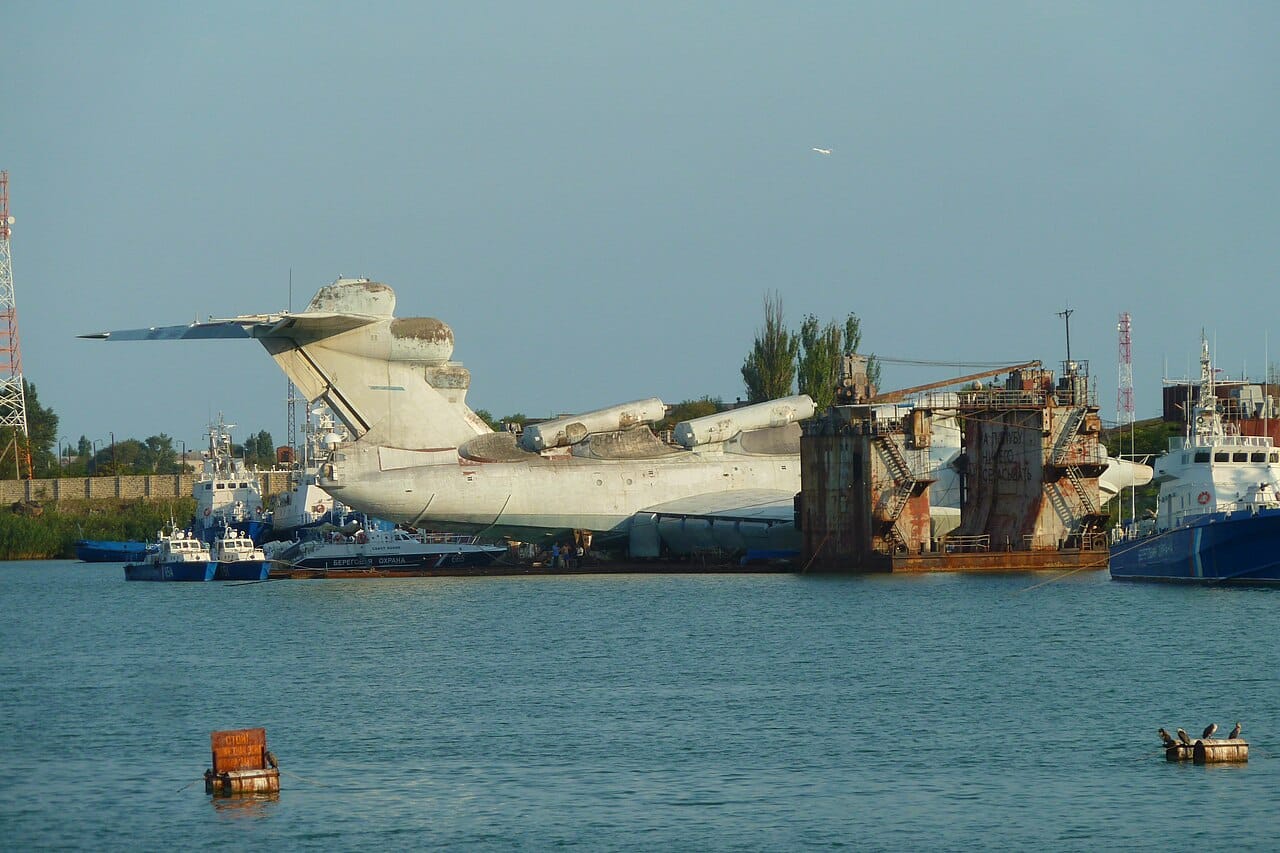
For four decades the design language sat in textbooks. Russia toyed with revivals. Iran built a much smaller version. The Americans funded the DARPA Liberty Lifter feasibility studies but cancelled the programme in July 2025 — just weeks after the Chinese aircraft first appeared. Nobody else actually built one at scale. Until the Bohai photographs surfaced.
Why China would actually want one of these
The problem with reinforcing an island in the South China Sea during a shooting war is that surface ships are slow and easy to find. Cargo aircraft are fast but can be intercepted by fighters. An ekranoplan is the awkward third option: it moves at 400–500 km/h, flies at 1–5 metres above the water (below most radar horizons), and can carry the kind of payload that needs a landing craft to deliver. If you’re Beijing, planning around a Taiwan-strait scenario, that triangle of speed-stealth-capacity is exactly the missing piece. The newly-visible weapons pylons add a strike role — the same multi-mission logic that drove the Soviet Lun.
It also explains the deployment location. The Bohai Sea is a sheltered, shallow, military test bed adjacent to major shipyards. Nearby Dalian is where China’s first home-built carrier, the Shandong, was photographed for years before it sailed. China clearly wants this thing seen and understood — just not in operational detail.
The big unanswered question is no longer whether the Bohai Sea Monster exists. It’s how many they intend to build, at what final size, and whether the production aircraft — if it ever appears — will deploy with the Marines on Hainan or with the PLA Navy at Ningbo. The next set of satellite passes will tell us.
Sources: The Aviationist (Parth Satam, 25 May 2026), Andreas Rupprecht on X, Naval News, The War Zone, Covert Shores (H I Sutton), Aerospace Global News, Defense Mirror.
Related Questions
What is China's Bohai Sea Monster?
The Bohai Sea Monster is an unofficial nickname for a large Chinese wing-in-ground-effect (WIG) vehicle, or ekranoplan, first photographed in July 2025 along the Bohai Sea coast. It has four top-mounted turboprops with three-blade propellers, a joined V-tail, and four underwing hardpoints likely meant for anti-ship missiles or torpedoes.
What is an ekranoplan or wing-in-ground-effect vehicle?
An ekranoplan, or wing-in-ground-effect (WIG) vehicle, is a hybrid of ship and aircraft that flies just metres above water, riding a cushion of high-pressure air trapped between its wings and the surface. This lets it travel far faster than a ship while staying below radar. The Soviet Union pioneered the concept with its Caspian Sea Monster.
What was the Caspian Sea Monster?
The Caspian Sea Monster was a giant Soviet ekranoplan spotted by US spy satellites in the 1960s: a 92-metre, jet-powered hybrid of ship and aircraft skimming the Caspian Sea at around 500 km/h. The CIA coined the nickname, while the Soviets called it Korabl Maket. It pioneered the wing-in-ground-effect technology China is now reviving.
Who identified China's new ekranoplan?
The Bohai Sea Monster was first identified in July 2025 by submarine and naval analyst H I Sutton from satellite and coastal imagery, with later detailed analysis by China military expert Andreas Rupprecht. Clearer images surfacing in May 2026 revealed its V-tail, turboprop layout, and underwing pylons, sharpening assessments of its likely military role.
What military advantages does a wing-in-ground-effect craft offer?
A WIG craft flies low and fast, slipping beneath radar coverage while carrying heavy loads over long distances, which suits moving troops, supplies, or anti-ship missiles quickly across contested seas. China's design echoes the Soviet Union's Cold War experiments with radical machines, whose Lun-class missile carrier of 1987 is its closest analog.
0 Comments